From the birth of Bossa Nova to Carnegie Hall, the legendary bandleader discusses the serendipity of a life spent blending Brazilian rhythm with American jazz.
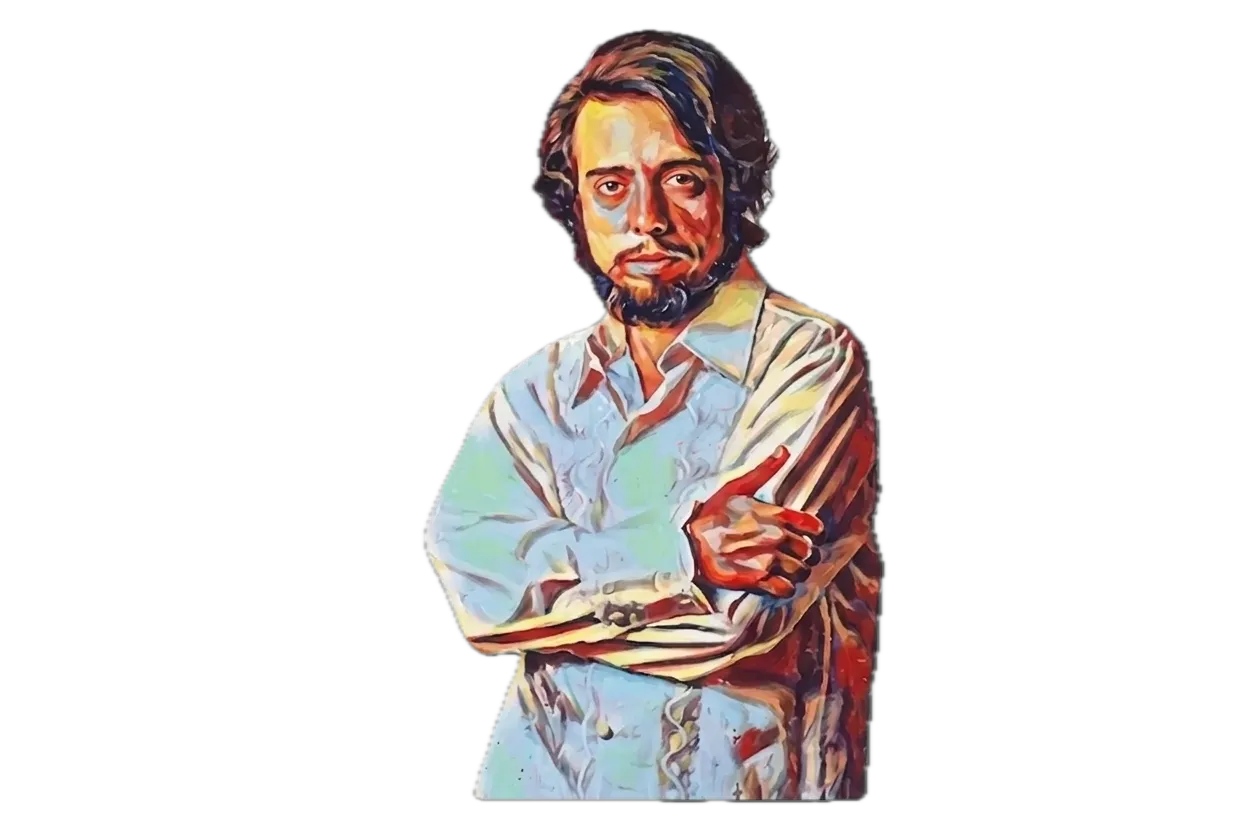
Sérgio Mendes: My father used to listen to Tango, because we were close to Argentina, and there was a composer named Carlos Gardel, and I remember listening to that. My father was playing many kinds of things.
I started learning classical music, which I still love, and I played Brazilian music, and some jazz. I think the first time I heard Sinatra—that was really like, “Wow, this is amazing,” And my father was listening to a lot of Brazilian artists as well, from those days. Talking about the early 40’s and early 50’s, so that’s what he was listening to. But I think one time he played a Sinatra album, and I fell in love with it.
Sounds Visual: And Dave Brubeck’s song “Take Five” was also a big early inspiration for you, right?
SM: Yeah, absolutely. I fell in love with the composition, the song, Paul Desmond’s solo, and Brubeck’s solos, and I loved that. That was all new for me. I never heard those things before. So that was my initiation into jazz.
SV: The late 1950s saw the rise of Bossa Nova, a sophisticated fusion of traditional Brazilian rhythms, jazz, and pop. What was your experience during that era?
SM: Yeah, I was there, we’re talking about ’58, ’59, ’60. And I was working in a small little club, [Antonio Carlos] Jobim was there, All the great composers in that music were just amazing…and I was part of that movement. So it’s a historical thing for me that, again, for me to be around that time, because it’s when Brazilian music was really flourishing. And beautiful, and great melodies, and fantastic songs.
During the Bossa Nova days, the whole world fell in love with Jobim’s songs, including jazz musicians…everybody became totally fascinated by those melodies. For the jazz guys it was something totally fresh to all of us and then to be inspired by a Brazilian composer like Jobim, and the whole world was inspired by that.
At the same time, I was listening to Art Blakey & the Jazz Messengers, Horace Silver, Miles [Davis] and Coltrane, because you know I loved the improvisations, I loved the harmonies, so I was living in those two great worlds of Brazilian music and Bossa Nova, and bebop jazz.
SV: Can you give me a glimpse into your creative process?
SM: When I wrote “So Many Stars” and songs like that, I guess they just came to me, and luckily I was able to get great lyricists like Marilyn and Alan Bergman, and then I wrote the music for [the movie] “Rio.” That’s a different thing because you have the movie telling you what to write,
Doing [the music for the movie] “Rio” that was such a great new experience for me. And working with the director, Brazilian Carlos Saldanha, which was great, and a great composer here in L.A., John Powell, was such a great experience for me because it was all fresh. But I don’t have a process per se. If I’m writing a song for a new album, I’ll sit at the piano and see what I come up with.
I think melody is the first thing. Melody and harmony. The reason I mention that is because I don’t write lyrics, so if I’m writing an instrumental there’s no problem, but of course I’m gonna always [focus on] melody and harmonies, but then I’m gonna need lyrics. Like when I wrote this song, and my wife said, “This song [“Don’t Say Goodbye”] would be perfect for John Legend to write a lyric.” He loved the song and wrote lyrics. I’m not a lyric writer, unfortunately, but lyrics are so important. Cole Porter, Irving Berlin, even Jobim had people writing lyrics from the beginning of his career.
SV: Your version of the Jorge Ben song “Mas Que Nada” with Brasil ’66 is often credited with helping to popularize Brazilian music on a global scale and became one of your signature songs. How did the success of this song influence your career trajectory?
SM: The great thing about that song, I think, again is the melody, and the arrangement, and the sound of Brasil ’66, and the fact that the whole world identified with that very simple chant.
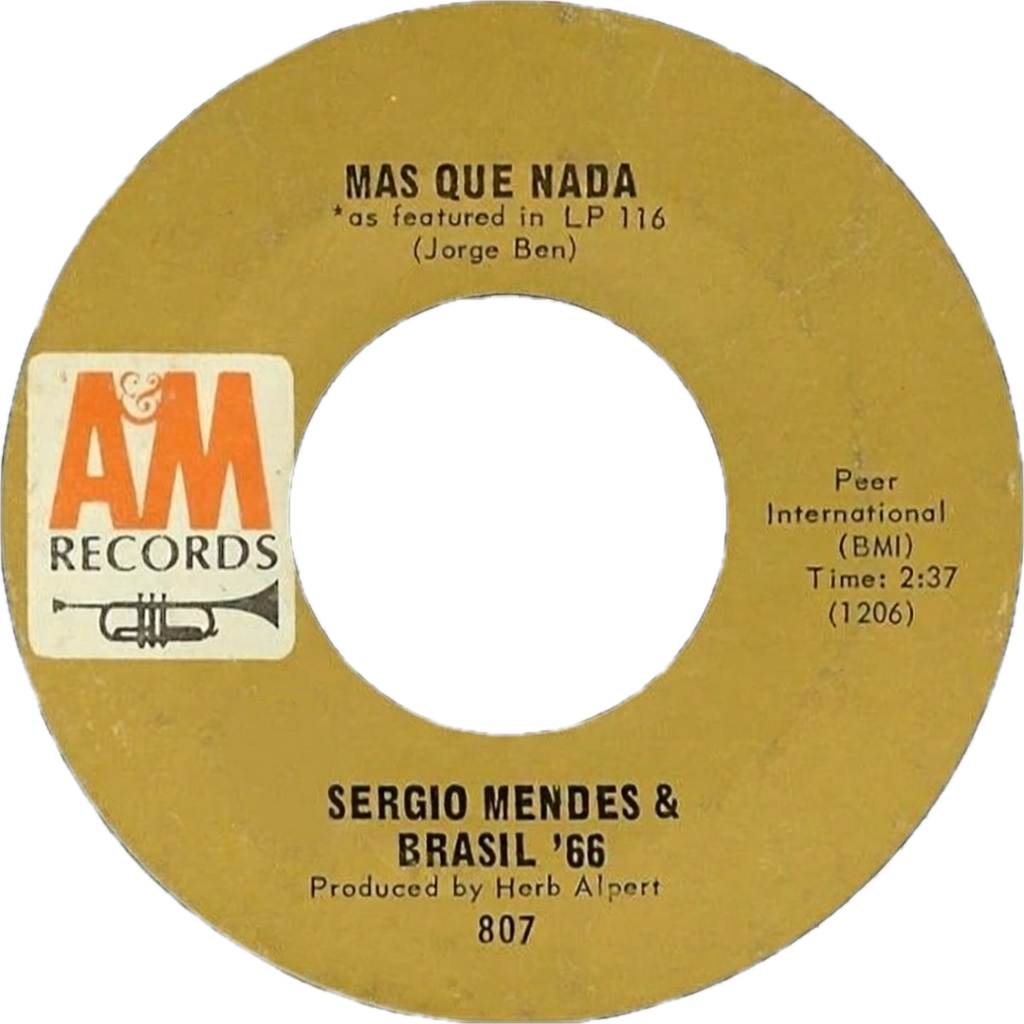
If you think about it, it’s not a complicated melody. I recorded it the first time in ’66 and had a hit again with the Black Eyed Peas in 2006, so that’s 40 years later, and until today, that song is kind of magical, you know.
SV: Your 1968 rendition of Bacharach and David’s “The Look of Love” famously infused the classic with a distinct Brazilian flair. Could you walk us through your creative process for reimagining such an iconic track and making it unmistakably your own?
SM: I heard the record by Dusty Springfield, and when I heard the melody, I thought, [with the right arrangement] “That would be a great Brazilian Bossa Nova melody kind of thing.” So that’s how that arrangement of that came to me. And Burt Bacharach was a friend, I liked him very much, but I first heard it on [Dusty’s] record.
When [I’m] playing, I’m not thinking. I’m playing whatever comes in my mind at the time, and try to be free from any kind of…You know, it’s just a very liberating experience to play, to comp singers, to improvise.
They’re all parts of being a musician and playing. I don’t have any formulas. It was just whatever feels right at the time.
Each experience is different. If you do a concert, it depends where you are. You’re gonna play certain songs that became popular there…the important thing is to be sincere, and to play what comes from your heart at the time. Let it go, you know. That’s what I tell my band. And I have a great band of singers and musicians. So, we’re all very much free, and although there’s an arrangement and everything, everybody has a chance to express themselves.
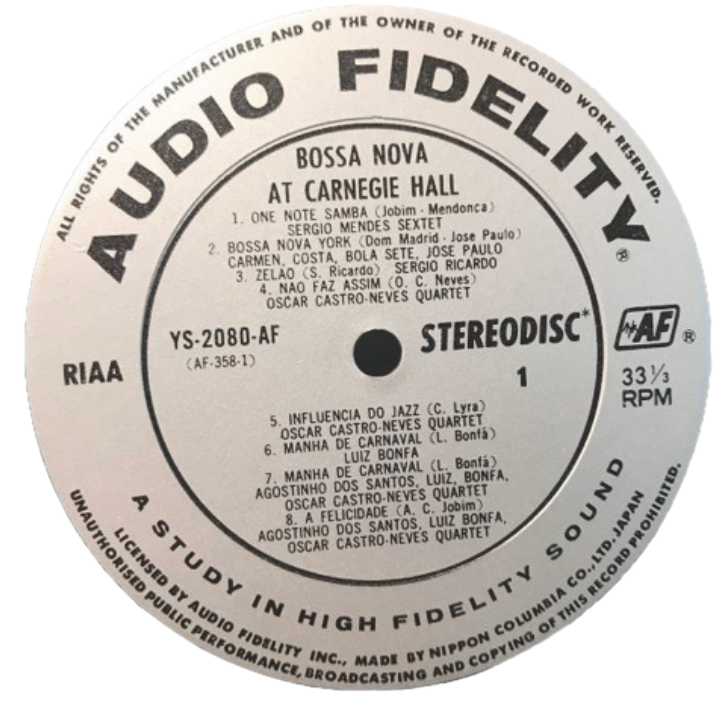
SV: Before we began the interview, you and I briefly spoke about the role of fate and serendipity in your life and career. Certainly your talent speaks for itself, but there was also some good luck on your side as well. For example—being there in the epicenter of the Bossa nova movement, and coming to New York and getting to play alongside Dizzy Gillespie, Stan Getz, and Cannonball Adderley at a now-legendary 1962 Carnegie Hall concert when you were just 22. [The concert, “Bossa Nova At Carnegie Hall,” was held on November 21, 1962, and played a pivotal role in Bossa Nova’s cultural history and its swift emergence as a cornerstone of Brazilian music and American jazz.] So let’s talk about serendipity for a moment, and how you feel it may have played a part in your amazing career.
SM: First of all, I think [“serendipity”] is a beautiful word. And I think a lot of things in my life, they happen…because people call it fate, people call it luck, I think it’s all those things actually. It’s a combination of hard work and fate and destiny and whatever you want to call it.
But I prefer to use the word “serendipity” because those were things I never planned in my life. It was not in my books, not even in my dreams. Like, coming to Carnegie Hall, and doing the album with Cannonball Adderley, and meeting all my idols, like Dizzy Gillespie and Stan Getz, and so many others that I met in ’62. So it’s been a nice ride, you know.
Great, wonderful things have happened to me. The meeting with Sinatra and touring with him a couple of times. It’s all in the documentary [“Sérgio Mendes in the Key of Joy!”, 2020].
We’re lucky to play all over the world for different cultures, different audiences, and music is just magical, you know. How you can get together and communicate with people from different cultures and different places. It’s just a great thing. I’m lucky to be a musician, and to be still traveling and working everywhere.
I’m happy for all the records I’ve made, the people that enjoyed that music and are still playing it. It’s been a great ride.
SV: Sérgio, thanks for joining me.
SM: Thank you so much.
Sérgio Mendes passed away on September 5, 2024.