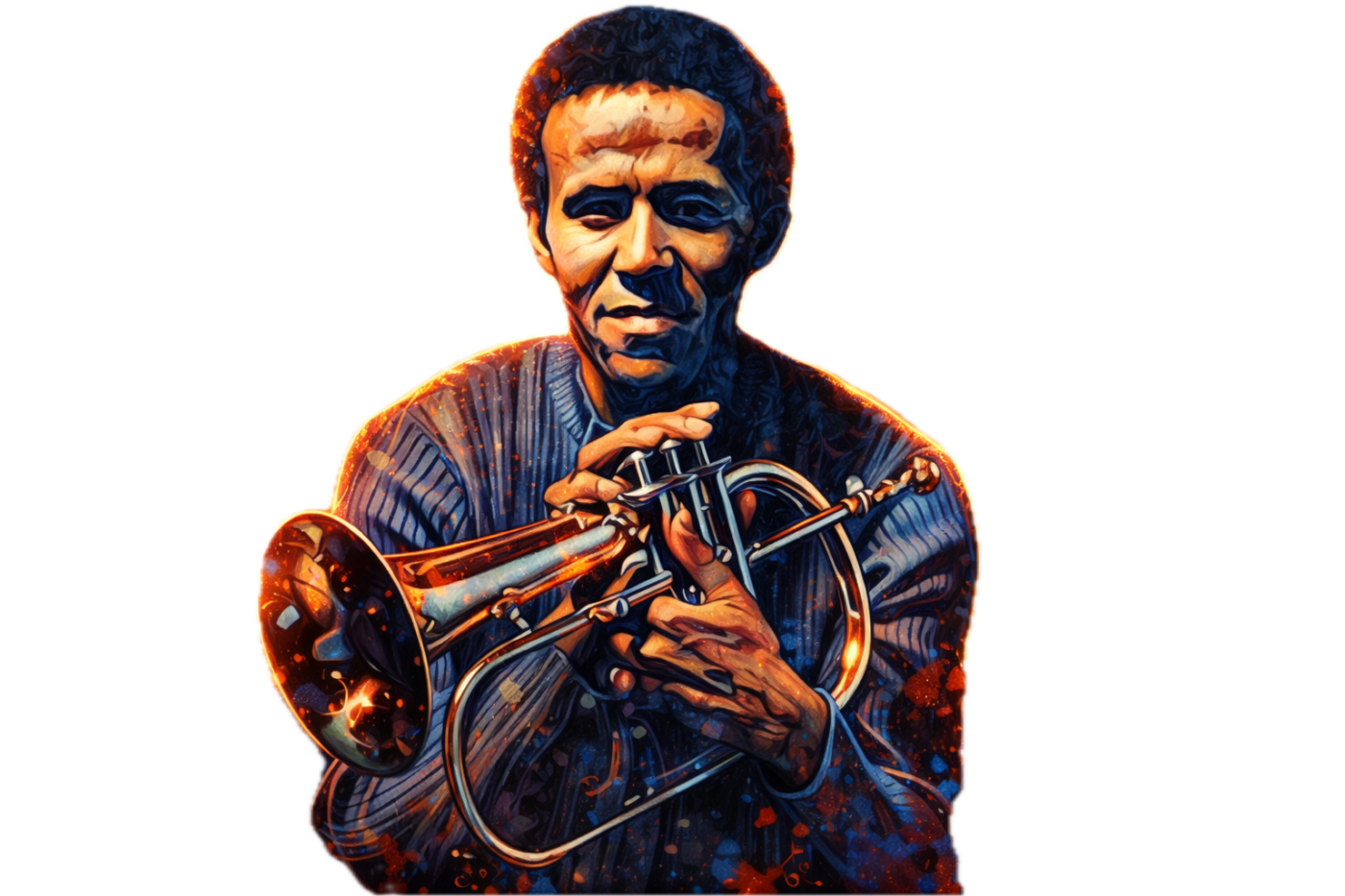
Dr. Eddie Henderson is a dual-career legend: a psychiatrist and master trumpeter. From first lessons with Louis Armstrong to Herbie Hancock’s Mwandishi band, his journey defines the peak of jazz fusion.
Eddie Henderson: My journey starts when I first started playing the trumpet. I was in elementary school, and I actually wanted to play clarinet because my best friend did, but they ran out of clarinets, and so my mother and her brother—who were original Cotton Club dancers—knew everybody in show business. My mother’s brother had a trumpet, so he gave it to me, and my mother took me down to the Apollo Theater with one of her best friends, to see Lena Horne and Sarah Vaughn. They were both good friends of my mother. I was still in the fifth grade, and they introduced me to Louis Armstrong. That was the beginning of my journey.
When I was nine, Louis Armstrong—though I didn’t know who he was then—gave me my first trumpet lesson on his own horn. I later took private lessons and returned the next year to play “Flight of the Bumblebee” for him. He was impressed and gave me a book of his transcribed solos inscribed, “To little Eddie, you sound wonderful. This is to warm your chops up. Keep playing. Love, Satchmo.”
I remember I looked at my mother and said, “Who’s this cat, mommy?” I was ten years old, I [still] had no idea of his stature.
And then when I went to high school in San Francisco, I went to the San Francisco Conservatory taking lessons once a week from the first trumpet in the San Francisco Symphony, studying classical music from 1954-1957. Just classical. I wasn’t really that exposed to “jazz,” even though my stepfather at that time was a doctor at that time to all the famous, notable jazz people in the country. For example, Duke Ellington, Count Basie, Billie Holiday, Bill Evans, Cannonball Adderley, Miles Davis, Dizzy Gillespie, Joe Louis the boxer, Sugar Ray Robinson. I thought these all were just normal people, and on and on.
And so, that particular week Miles Davis was staying at our house the whole week when I was in highschool. I never played with Miles, he just gave me some pointers at the house. It wasn’t like a formallesson, just little bits of things. Miles didn’t talk like a normal teacher. [laughs] But over the years, just by observation and seeing him, I put it together myself. And I was just taking lessons once a week, not that really into the trumpet that much, and then Miles Davis took me, in his car, to hear his band in which he had John Coltrane and Cannonball Adderley, I think [with] Wynton Kelly, Paul Chambers, and Philly Jo Jones. When I heard that, the light went on in my head, and I thought to myself, “That’s what I wanna do for the rest of my life.” [laughs]
After high school, my stepfather kept telling me I should be a doctor. I didn’t want to do it, but he made the prophecy that I wasn’t as smart as him, and he was a doctor, and [said] that’s the closest thing to God. And [kept saying] I wasn’t as smart as him, so I said, “Oh yeah? Watch.” So I went out of my way to get into medical school, studied very hard, went to the University of California undergraduate. [After three years in the Air Force, Henderson enrolled at the University of California, Berkeley, graduating with a B.S. in Zoology in 1964.]
Got accepted to medical school at Howard University in Washington, D.C. While I was back east, and so close to New York, I’d drive up every weekend and get exposed to people like Freddie Hubbard, and Lee Morgan, and all the jazz cats, so to speak.
I had this vow I made to myself to finish medical school to prove my stepfather wrong. [laughs] So that’s the only reason I became a doctor. But my heart was really pulling towards music.
And then after I finished medical school and did my internship, I didn’t know what residency to do. So I looked at surgery, pediatrics, gynecology. It was on call every other night for four more years in the hospital. Then I saw psychiatry was once every 45 days, so I said, “A-ha!” Gave me more chance to play music.
So I started my second year of my psychiatric residency [in San Francisco], and Herbie Hancock just happened to come through town and needed a trumpet player because his regular trumpet player, Johnny Coles, was on sabbatical with Ray Charles. I knew Herbie, but we never talked about music. When he was with Miles, all we talked about was sports cars. So he decided to take a chance on me, just for that one week in San Francisco, to play his music. He had a skeleton rehearsal, and I knew the music anyway just from listening to the record. I could read very well, and so he said, “You read really well,” but he didn’t know I was just playing from memory, from the records. So that one week turned into 3 years.
I’m really indebted to Herbie for taking a chance on me, a nobody at that particular time. And by playing with him, the higher echelons of jazz players—Joe Henderson, Jackie McLean, Roy Haynes, Art Blakey, Elvin Jones—they would all call me to work with them. They would tell me, “Well, your credentials are in order, Eddie. You played with Herbie.” And so, I didn’t have to go through the trenches. I played with Herbie Hancock, and that just shot me right to the top. It’s really a fabulous journey that I’ve been on. I started right at the top.
Henderson’s week long engagement with Hancock ended up leading to a three year gig with Hancock’s newly-formed Mwandishi band, a group that combined funk, fusion, and avant-garde experimentation into a mind-bending cocktail. With Henderson on trumpet and flugelhorn, the band released their first self-titled album in 1971 on Warner Bros.
EH: When I first joined, we were playing the music that the previous sextet was doing, like “Fat Albert Rotunda,” “Speak Like A Child,” that kind of repertoire. And only after a month of getting together with Billy Hart [drums], Buster Williams [bass], Benny Maupin [bass clarinet, alto flute], and Herbie, and Julian Priester [tenor and bass trombone], the music organically changed when we were in Chicago and doing one tune that Herbie wrote. It was a thirty second commercial for Eastern Airlines, and we titled it, “You’ll Know When You Get There.” It was just a melody.
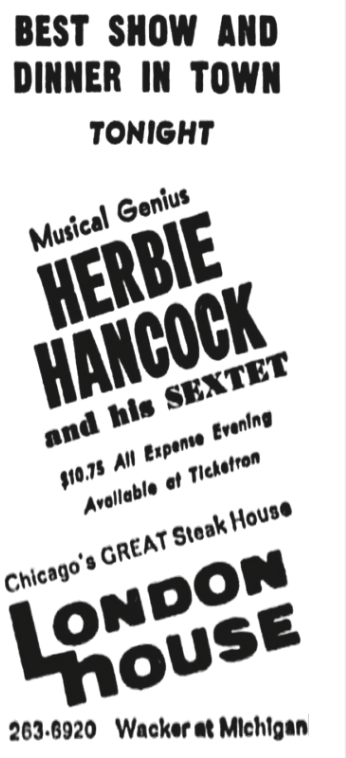
So we decided, rather than have changes, let’s just see what happens organically, like an interplay, and that’s when the concept of the Mwandishi band kind of took of. We were in Chicago for one month at the London House, and “Ostinato” was a 15/8 song that was the focal point of the Mwandishi group. That was a dedication to [feminist political activist] Angela Davis. That music was reflective of what was going on in society at that particular time, the turmoil. And everybody in the band had a Swahili name: we named Herbie “Mwandishi,” which means composer. Buster Williams was “Mchezaji,” which means player. Billy Hart was “Jabari,” which means inner strength. Benny Maupin was “Mwile”—body of good health. Julian Priester was “Pepo Mtoto”: spirit child.
And they named me “Mganga,” which meant doctor of good advice. And so that perpetuated up until this day. This was the time of the advent of black power, black consciousness was happening, and that band stayed together three and a half years, and worked nine months a year. It was just like a cosmic collage, musically, for me, and that was my first experience ever going out on the road. It blew my mind.
I remember one time specifically in Boston, usually people played two sets, or three sets, and take intermission. When we got to Boston by the second time, we had been so used to playing long solos and extended compositions like “Wandering Spirit Song” or even “Ostinato,” we played one tune from 9:30 until 2:00 [a.m.], no intermission, just one long extended piece. And we just got so involved in it, and I remember right in front of me, some man had a heart attack. The band saw it, the EMS came in and carried him away, but we never stopped playing. Nothing stops the music. [laughs]
Henderson’s second album with Hancock’s Mwandishi band, “Crossings,” was released in 1972 on Warner Bros.
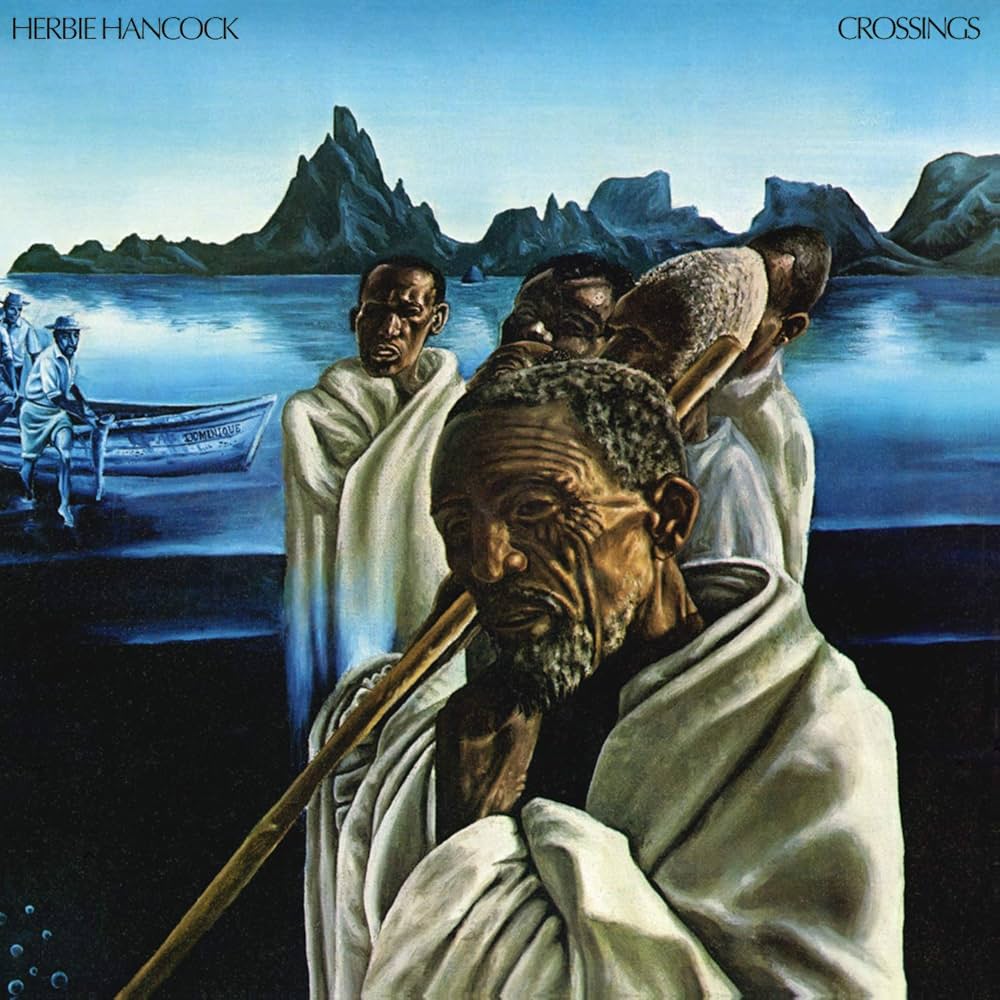
EH: It was just a magical chemistry of the personnel. Sometimes you play with other personnel and it doesn’t work as well. That was just a cosmic event. The band had a thing where they would call me “rookie of the year,” because I was the last one to have gotten out there traveling. And Herbie had a thing with me—they would never give me the changes, or the chords, to the tunes.
I’d ask Bennie Maupin, “Can I see your music?” He said, “No, hell no.” So I’d ask Buster Williams, “Can I see your music, the chord changes?” He said, “Oh man, you can’t play changes anyway. Hell no.” So we’re at the record date, and I asked Herbie, “Can I see the changes?” ‘Cause I’m starting to get mad, like they were trying to disrespect me. I asked Herbie, “Can I see the changes? You want me to solo on this?” Herbie said, “No. Just play the way you play. That’s cool.” I said, “No shit.” [laughs] And so I started from the other end.
After the Mwandishi experience, I realized I had to go back and clean up my shortcomings and weaknesses in playing conventional changes. I just made up my own vocabulary with that band, and whatever you played with that band was cool.
Henderson recorded one more album with Hancock and the Mwandishi band [“Sextant,” 1973, Warner Bros.] before the group dissolved. But Henderson quickly made his mark as a leader with two acclaimed albums on the independent Capricorn Records label: “Realization” [1973] and “Inside Out.” [1974]
Produced by Skip Drinkwater, whom Henderson met through guitarist Norman Connors, these albums prominently featured the Mwandishi band, including Hancock on electric keyboards, Bennie Maupin on reeds, Patrick Gleeson on synthesizers, Buster Williams on bass, and Billy Hart on drums. They also included contributions from drummers Lenny White and Eric Gravatt, along with future Headhunters percussionist Bill Summers. Both albums highlighted a funky, avant-garde electric fusion style that echoed Henderson’s earlier collaborations with Hancock.
EH: When [Mwandishi] ended, Art Blakey hired me for about 3-4 months. That didn’t work out as well, because I was out in the cosmos [laughs] after playing with the Mwandishi band. So that’s when I moved back to San Francisco, and actually practiced medicine for about ten years. I had my medical license, walked into a Doctor’s office, and said, “I’d like a job, but part-time. I’m really into music, so if I get a tour, I have to go.”
So Dr. Jackson was so nice, he said, “Well, lad, just let me beat a bongo and come with you,” and laughed. And he hired me. I only worked four hours a day and he gave me full doctor’s salary, and even when I’d have to go six or seven weeks at a time on tour, he’d pay me even when I wasn’t there. So, I had my cake and ate it at the same time.
Playing with Herbie really put me on the map, then I was self-sufficient and financially secure by working as a doctor in San Francisco, where there’s a club called the Keystone Corner. Art Blakey, Elvin Jones, Max Roach, Jackie McLean, Dexter Gordon—when they’d come to town, they would all hire me. So I didn’t have to come to New York. When the Keystone closed about 1984 or so, San Francisco dried up, so I quit the doctor’s office and moved to New York where my mother was still living and everybody knew me already. I started right at the top again. Is that what they call serendipity? [laughs]
Sounds Visual: Eddie, let’s talk about your first solo record, “Realization,” for a minute. Incredible that this was your debut, your playing is so distinctive and emotive. I read one review of “Realization” that described the record as “forward-thinking, urban space-jazz fusion,” which really sums it up. Even though the music is challenging at times, it never feels unwelcoming.
EH: It almost had all the same Mwandiswhi members, except for Julian Priester. It was done about a year before the Mwandishi band broke up, and everyone was kind enough to let me record it under my name. That record was more of how the band sounded in person, as opposed to the Mwandishi record was a little more watered down, I think, for commercial appeal. But “Realization” was full-throttle how the band sounded in person.
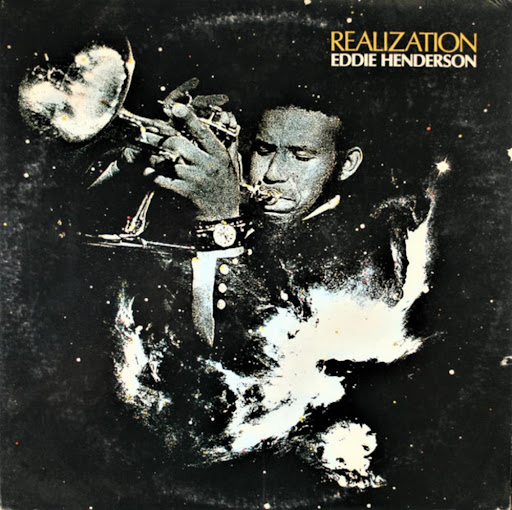
“Inside Out” had the “Mwandishi” personnel again, and on a song like “Fusion,” on one of the takes, the band kept playing, and I started to cut it off, but someone told me,“Shut up, Eddie!” And the rhythm section just kept playing over and over again. And we used that take for me to overdub after the fact. [laughs] I’m glad I didn’t stop the tape.
SV: Eddie, your third solo record, “Sunburst,” [Blue Note, 1975] is one of my absolute favorite jazz-funk LP’s from this era. It has a more tightly structured sound than your previous two albums, and the funk influence is certainly more prominent. Was this a conscious choice on your part, or was this more of a sound that producer Skip Drinkwater had envisioned for you?
EH: It was the producer’s choice, because he had Alphonso Johnson as the bass player, Harvey Mason on drums. I wasn’t really into that at that particular time, but they more or less schooled me, and the record company bought me the wah-wah pedal, the phase shifter, and the echoplex. This was a day before the record date. I was like a little kid in a candy store. [laughs] And luckily, by God’s grace, everything worked out perfectly. It sounded like I knew what I was doing. Total beginner’s luck. [laughs]
SV: I love “The Kumquat Kids” from this record.
EH: That was Alphonso Johnson’s tune. The horn parts were the only thing that were written. But it was basically just that bass line, and I play over the top. And when I recorded it, I remember the way I had it in my mind, was the way Miles Davis played on his album “Jack Johnson.” It was that kind of feeling, like a shuffle.
There was only one take we did. It felt so good, I said, “Why do another one? That’s it.” And then the song “Galaxy” was a bass line [hums the bass line], because I had the opportunity to play with Pharoah Sanders and that just reminded me of his kind of tune, “The Creator Has A Master Plan,” but with a different bass line that I put into there.
Henderson’s next record, “Heritage,” [Blue Note, 1976] continued in the jazz-funk idiom, and opened up with a James Mtume song that became a rare groove classic: “Inside You.” [“Inside You” was later sampled by Souls of Mischief and Jay-Z.]
EH: He didn’t write it out, he was just sitting right next me while I was playing that melody, singing it in my ear. [laughs] (Mtume played congas and percussion on the “Heritage” LP.)
During this period, Henderson joined Capitol Records and released three albums, starting with 1977’s “Comin’ Through,” produced by Drinkwater. These works expanded on his earlier music, pushing further into a crossover style that leaned toward dance-oriented jazz-funk rather than a more ethereal sound. In 1978, he achieved a hit in the U.K. with the disco-influenced track “Prance On” from the album “Mahal.” His time with Capitol reached its peak in 1979 with “Runnin’ to Your Love,” which combined disco and soul elements.
While his work was somewhat overlooked as “commercial” in the years after jazz fusion, Henderson’s electric recordings gained significant traction among hip-hop and electronic artists and are often recognized, alongside the contributions of Miles Davis and Herbie Hancock, as key influences on the evolution of trip-hop and acid jazz.
SV: Eddie, talk to me about “Prance On.” This is a really popular cut of yours I’ve heard, and seen, on so many compilations.
EH: “Prance On” was a real catchy tune. I don’t know how to classify it. But the DJ in England made a mistake. It was a 33 RPM record, and he made a mistake and played it in England as a 45. This is right at the advent of the disco era. It sounded absurd to me [laughs], but it clicked in right with the disco beat, and people in England went crazy over it, even to this day. When I go to England, even a quarter of a century later, they say, “Can you play ‘Prance On?’” [laughs] Well, that really put me on the map in England, and they’re still talking about that record.
Henderson moved to New York full-time in 1985, leading to a slowdown in his solo recordings as he focused on his medical career. However, he remained active, collaborating with artists like Billy Hart and Leon Thomas.
His 1989 album “Phantoms” marked a return to regular recording, showcasing an acoustic hard bop style. Throughout the ’90s, he released several albums, including “Inspiration” (1994) and “Dark Shadows” (1995), blending influences from Davis with his own aggressive post-bop lyricism. This evolved further into the 2000’s with albums like “Time and Spaces” (2004) and “Precious Moment” (2006).
In addition to his solo work, Henderson played with the Mingus Big Band and joined the Cookers ensemble alongside notable musicians. He became a regular at New York’s Smoke nightclub, releasing several albums there, starting with “Collective Portrait” in 2015. He celebrated his collaboration with Hancock in 2016 with “Infinite Spirit” and followed up with “Be Cool” in 2018 and “Shuffle and Deal” in 2020. In 2023, he reunited with drummer Mike Clark for “Kosen Rufu.”
SV: Eddie, it was a pleasure to chat today.
EH: My pleasure too, my friend. Call anytime.