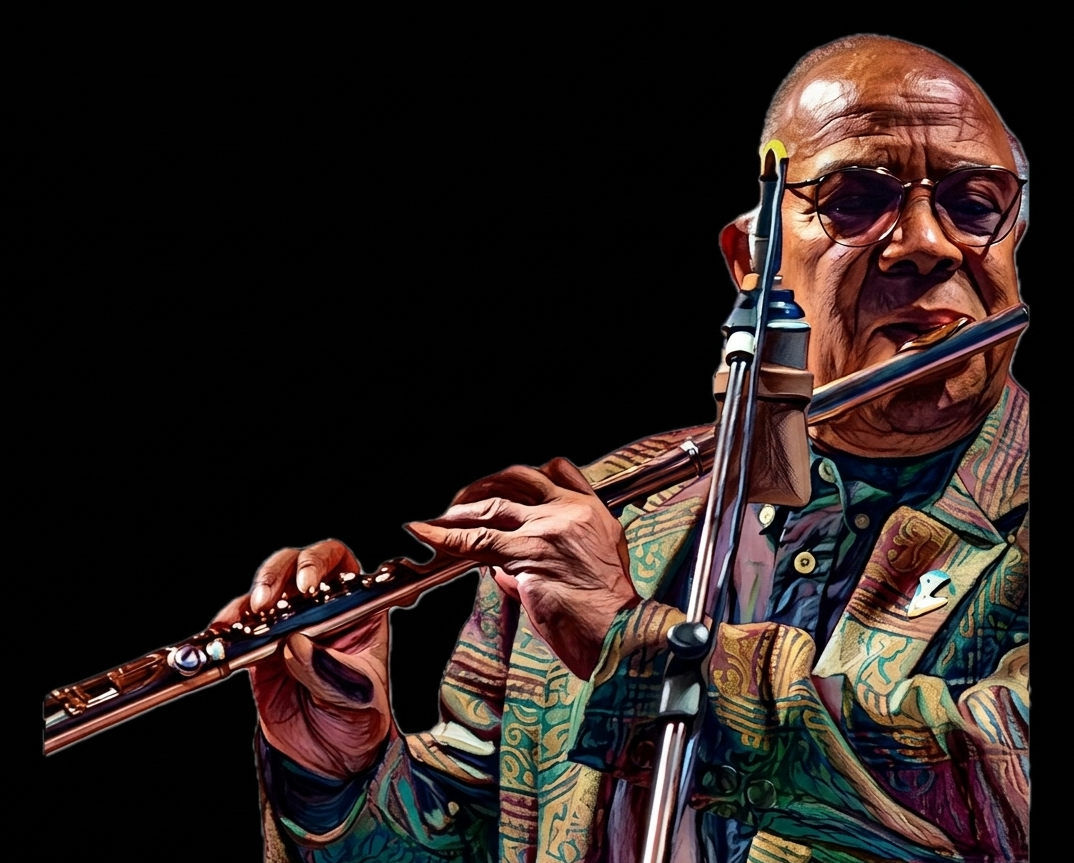
The revered multi-instrumentalist reflects on his journey from his Indianapolis church to the heights of the Blue Note era. He shares memories of Sun Ra, Wayne Shorter, and Freddie Hubbard, offering a spiritual look at a life dedicated to jazz.
James Spaulding: The journey begins in Indianapolis with my father, who was a jazz musician in his time. My mother was a very spiritual person who brought me into the church, and made me realize the spirit of the lord. So, that’s really been my motivation, and that’s gonna be my path until I leave here, so I’m very grateful and blessed to have that inspiration and love from my family.
My father used to bring home all these old ’78 [RPM] recordings of Charlie Parker and Dizzy Gillespie, like “Jazz at the Philharmonic” [1946]. I had a very firm grounding in my world of this music called jazz.
Sounds Visual: And James, you actually started off playing the bugle?
JS: Yeah, the bugle [laughs]. A little plastic bugle my father brought home somehow and let me have it. And I was just blowing on it, and getting a sound. And then eventually the sound started getting a little bit smoother [laughs]. That was fun. That was a gift from him to me, so I had some trumpet chops when I went into grade school. I got a trumpet from the school, they had some instruments, so I picked up the trumpet.
I was learning the thing, getting my embouchure together. It was quite a journey. In grade school I learned to read notes. We lived right next door to my grade school. I could just walk to school every morning. I was in a little school band in high school. And it didn’t last long, I was able to find some musicians that was like-minded, same age. We were all in our teens. So we had a lot in common, we all got together. They’re all dead now. They’re all gone. It’s weird.
Spaulding also began to learn saxophone and clarinet, and also taught himself how to play the flute.
JS: Yeah, I taught myself. I was able to go into the band room where they had instruments stacked on top of each other, old instruments for that particular school. And I grabbed me a flute, and dusted it off, and asked the teacher if I could bring it home. He said, “Go ahead, take it home.” And that’s when I was able to practice it, and get my flute chops together. Lasted about half a semester. But it was fun. I can still remember some of the good things. I just did a little gigging here, playing with this little band I was with, called the Monarch Combo. It’s in [my] book. [“Learning the Score: A Jazz Memoir,” Speetones Book Publishing, 2019]
Then after that my father encouraged me to join the Army [in 1955], and apply for [and was then accepted] into the Army Band, that was at the time called Fort Harrison Marching Band. That’s where they shipped me to, to continue my music education. It was quite a…some bad omens in that place, but anyway I was able to delete them.
After being discharged from the army at age 20, Spaulding eventually moved to Chicago. When he got there, he sought out tenor saxophonist Johnny Griffin, who gave him some invaluable advice.
JS: I always wanted to hear Johnny Griffin, or see him, so I went got to Chicago, I had the opportunity to go see him play at this place called the Flame. I had to see go see Johnny Griffin at the Flame, man.

I met his mother, I asked her, “Where can I find him?” I just wanted to see him play the saxophone so fast. [laughs] And when I went up there to go see him, I heard one set of him playing. He had the worst rhythm section that I heard in my life. But anyway, he got through that. So, during the break and intermission, I went backstage to meet him and I was asking [him] about musical notes, and techniques.
The only thing that stuck with me, Justin, the only thing that really made sense to me—and he made it make sense when I listened to him play—he said, “Play what you feel.” That was his advice to me on expression. Being able to play what I was feeling at the time always felt pretty good…it contributes to your spiritual thrust, spiritual inspiration.
During his time in Chicago, Spaulding eventually became part of Sun Ra’s Arkestra.
JS: Yeah, well, I was there, I made these jam sessions they were having at different places in Chicago, and the one that I made, Sun Ra was at the club. And I was with some of his band members, [saxophonist/clarinetist/percussionist] John Gilmore, [saxophonist/bassist] Pat Patrick. He had some outstanding players in the band during that period. We really learned a lot from each other. And Sun Ra—oh man, he had so much knowledge about everything.
He opened up my ears to hear more sounds. Like when you hear John Coltrane play, he goes beyond what you’re supposed to hear, and you put together in your mind. It’s almost godlike that he had the ability to do that.
So [Ra’s] music was coming from another place, and all the knowledge that he knew about music, he just melded it all together and was able to create this music. You can still hear that creativity moving right through his music. It never stops.
When I got to Chicago, I saw things changing. I saw the spirit sort of dying away from the environment. Like, where there were clubs, there were jams, where musicians could jam, take your horn to the club and the guy would ask you, “You got your horn? Why don’t you come on up.” You’d take your horn out of the case, he’d invite you up to play. None of that happens anymore. I saw it dying and dwindling or something, you know, Justin? It was like watching somebody die. I don’t know if you’ve ever seen anybody die before, it pulls on you for a long time.
It was a wonderful gift for me to be in Chicago with Sun Ra, and his band. We had a chance to go on the road. We went to Indianapolis once, my hometown, we played at the YMCA. That was wonderful. A lot of people showed up. A lot of people learned about Sun Ra. That period went so fast.
Spaulding worked as a freelance studio musician and sideman in Chicago and Indianapolis before relocating to New York around 1962 or 1963. After arriving in Manhattan, Spaulding met Duke Pearson, an A&R man/producer for Blue Note records. Pearson was a fan of Spaulding’s playing, and began to call him for session work.
JS: Freddie Hubbard, that was my first recording [for Blue Note], “Hub-Tones” (1962). Freddie got me that record date with [Blue Note co-founder Alfred Lion]. Duke Pearson was the A&R man, so he approved me. Freddie wanted me on that date. That was the place to record, to be recorded, for real jazz, [where] the musicians were really building up the music and reputation and the respect. That was quite an experience.
SV: James, one of the many strenghts you brought to these sessions, and artists, is that you’re a multi-instrumentalist—you played both sax and flute.
JS: Oh, wow, I was thinking about that. Back then, I’m playing two instruments, and getting paid for one. [laughs] Nobody else brought it my attention until you brought it up! Now that I’m thinking about that, I could have gotten more money if they had recognized that I was playing two different instruments, and soloing on two different instruments. Nobody except you has even acknowledged that.
Spaulding began to get regular work as a Blue Note studio musician.
SV: James, the first Blue Note artist I wanted to ask about working with is Wayne Shorter. You’re on “The Soothsayer” (1965), “The All Seeing Eye” (1965), and my personal favorite, “Schizophrenia.” (1967).
JS: Oh man, working with Wayne was like magic. He’d invite me over to his home, to his apartment. His wife prepared dinner for us. He played the piano for me, we looked at the music we were gonna record. He was just a beautiful person, man. A very spiritual person.
The next day we had to rehearse at the studio [Lynn Oliver Studios], and I met Duke Ellington. He walked in to rehearse his band. It was an exciting time, and we’d go out to the Blue Note Studios (Rudy Van Gelder’s studio in Englewood Cliffs, New Jersey), we would get that together out there and finish the music, dress it up, and get it ready for recording. It takes a lot of work. People don’t realize what goes into this music, what has gone into it. But it’s already here to stay.
SV: “Schizophrenia” features a great original composition from you called “Kryptonite.”
JS: That was my little quickie. Wayne said it was okay with him. So we recorded it, I rehearsed it at home first, and then recorded it. A lot of people liked that one too.
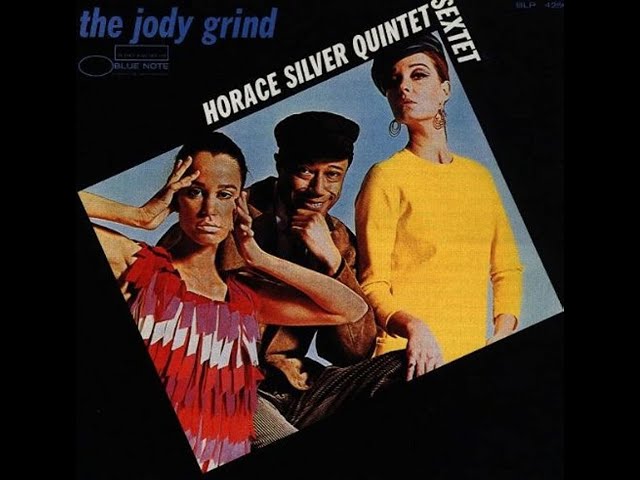
SV: James, let’s talk about some more Blue Note sessions: the next one in my stack I want to ask about: Horace Silver’s “The Jody Grind,” from 1967. Awesome date here.
JS: Oh man, that was so beautiful. To meet him, first of all, I heard about him before I met him. I was thrilled to shake his hand. And then Duke Pearson called me and told me he wanted me to go over to Horace Silver’s apartment and rehearse with him. I said, “What?! Okay.” [laughs] That was exciting. So I went over to his apartment, and rehearsed with his grand piano he had there. That was beautiful. We worked on most of the music right there from the record date in his apartment. I had all the music laid out for me. There was only one time for that [playing with Silver].
SV: Still with Blue Note here–let’s briefly talk about McCoy Tyner. You’re on his 1968 LP, “Tender Moments.”
JS: Oh, God, there ain’t nothin’ to say about McCoy [that hasn’t already been said]. He was phenomenal. He and ‘Trane were like brothers, like a team. They were really in tune with each other. Musical thinking, you know? McCoy could just play by himself for a whole hour.
SV: Jumping out of Blue Note for a minute, you also joined Max Roach’s band for a while in the mid ’60’s.
JS: Oh man, that was another phenomenal person. Freddie Hubbard got me that gig, too, with Max. The first day when [Freddie & I] started working together, Freddie told me that Max wanted to check me out. He had heard about me, and he told Freddie to bring me along at the rehearsal they had. He wanted to hear what I sounded like. So he immediately liked my playing. I got the gig at the time. It was at the Five Spot. In fact, I did go over there that night—‘Trane was playing. I think Monk was on piano, and I’m trying to remember who was on drums. Place was packed, smoke filled the club.
With Max, Jymie Merritt was on bass, Ronnie Matthews [was on piano]. That was a group, man. We went to Europe together—Max took us to Europe when he had a jazz tour that [promoter] George Wein put together. Max was an incredible drummer, man. He and Art Blakey—two of the greatest drummers, man. It was a blessing to work with them. I learned so much from those guys, just listening to them talk.
I was there one night at the Five Spot when Art Blakey came in, and sat in on Max’s gig. Max asked Art Blakey to come up and play and take a solo, and Art just tore the drums up, man. Took Max’s drumsticks and threw them up in the air [laughs]. Can you believe that? Can you imagine seeing that happen? I was sitting there looking at Art Blakey. Then Max got up there and did his solo, and he did something else and got the same admiration. Yeah man, those were the days. What happened to that time, Justin? Where did all those days go, man?
SV: I’m so jealous, not only as a jazz fan, but as a drummer, that you were around all the heaviest cats—Max Roach, Art Blakey, and Elvin Jones. You and Elvin are actually both on a 1964 Blue Note date with guitarist Grant Green called “Solid.”
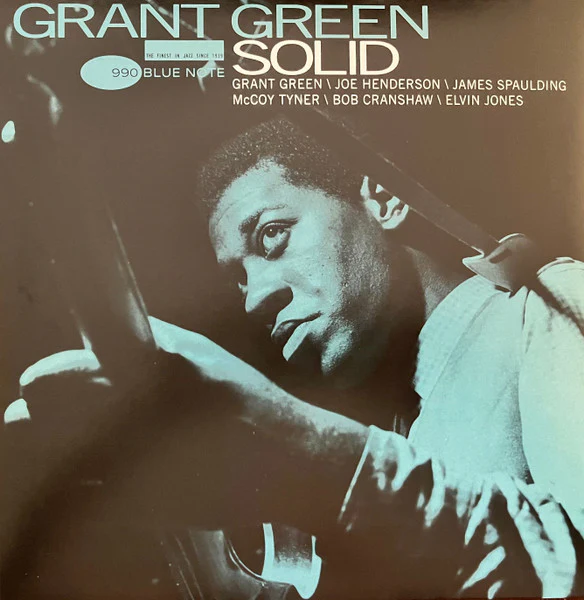
JS: Man, Elvin would stun me. [One night] going home from a gig, he was playing in the next band coming up. I had to go back home to New Jersey, and drive back from the [jazz club] The Half Note. [One night after seeing Elvin] it started to rain outside. And there was thunder and lightning, right?
So I was on my way out the door to get into my car to go home, so I heard Elvin playing as I was leaving, and he was dropping bombs that were all in sync with the lightning and thunder, man. It was chilling, man. I thought about that on my way back home. I could still hear Elvin’s drums, right? His drums were thundering all through that night I was driving home. He was still in my head, can you believe that? It was almost like he levitated off the ground, like the bandstand was rising, from the energy he was projecting. Can you dig it?
SV: I’m a huge fan of [vibraphonist] Bobby Hutcherson’s work—you’re on a few of his great Blue Note LP’s as well. [“Components,” 1965 and “Patterns,” 1968]
JS: [“Components”] was my second recording date with Freddie. Bobby, man, wow. I worked a few gigs with him out in California. He made so much sense with those vibes, man—you could hear the bell tone so well, too. Enjoyable to play along with a vibe player that can make those chords come out so clearly.
SV: Freddie Hubbard’s name has come up a few times in our conversation—let’s talk about one of my favorite of his late ’60’s LP’s, this one on Atlantic from 1968: “Backlash.”
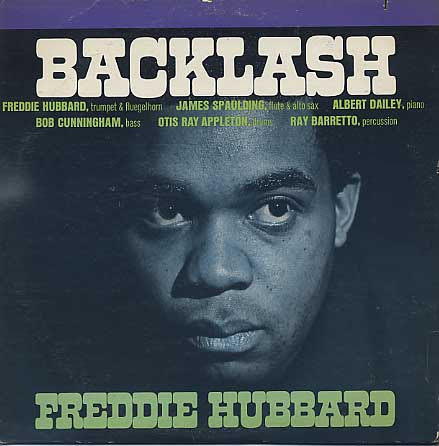
JS: “Backlash,” wow. [Freddie] thought he was gonna make a hit recording, something more commercial with a blues backbeat. He was trying to get into that blues thing, trying to write something for dancers. I could tell he was going in that direction, away from bebop.
In 1969, Spaulding contributed flute to Pharoah Sanders’ pioneering spiritual jazz masterpiece “TheCreator Has A Master Plan,” featured on the album “Karma.” (Impulse)
JS: He was beautiful. I recently tuned into the radio and heard “The Creator Has A Master Plan.” Oh man, so inspiring. He really left a legacy along with John Coltrane. Both of them are kindred brothers in the music. He sounded just like ‘Trane in certain phrases he would play, you know? In fact, I’m gonna listen to [that record] later tonight.
Spaulding also recorded a super rare 45 under his own name, released on East Records in 1970. The A-side is a tune called “Uhuru Sasa,” and the flip side is called “Give It Up.” It has sold for over $1,000 online and remains a holy grail for crate diggers.
JS: [Those were recorded] at a studio I worked in. I had a little job working in the recording studio, taking wires off the floor, unplugging certain wires out of the units. And I would clean up, and go get coffee. [laughs] And I asked the guy who owned the studio if I could bring some musicians in there to record a couple songs I had. He said okay, he was nice about it, he didn’t charge me a nickel.
In 1975, Spaulding earned a Bachelor’s Degree in Music from Livingston College in New Jersey, where he also served as an adjunct professor of flute. His daughters, Gina and Yvonne Spaulding, graced the cover of his debut solo LP, “The Legacy of Duke Ellington,” released that same year. His original suite, “A Song of Courage,” was performed with a full orchestra and choir at Voorhees Chapel on the Rutgers University campus, funded by a grant from the National Endowment for the Arts.
JS: That was quite thrilling, quite amazing. We did the recording [as] a tribute to Dr. Martin Luther King, to his legacy. I had a bunch of musicians from Brooklyn come out to Brooklyn and record.
In the mid-1970s, Spaulding joined Duke Ellington’s band and subsequently released several records under the Muse label. He later established his own label, Speetones, through which he continued to release music. His 2019 memoir serves as both a cautionary tale and practical guide for aspiring musicians, highlighting the importance of preserving the voices of those who shaped this quintessentially American art form.
JS: I just want to have people come together, share the music and the love for one another, and just be grateful and thankful for the wonderful things. The creator has a master plan. Truth and peace and happiness for every man. It’s a wonderful world if we could just pull it together and end the fighting and the wars, the killings, and the murders, and the guns, and all the troubled things that are happening. I’d like for people to come together as human beings, to bring their hearts together in song. That’s about all I would like to see happen.
I look forward to moving on to better things and doing more presentations. I’m only 85 [laughs], and am barely walking. But that’s where I’m at now, Justin. I hope I can stay around a little longer and play some more. I still feel like playing sometimes.
SV: James, thank you so much for your time and memories today. I wish you all the best.
JS: Okay, Justin. Thank you so much man, I appreciate you.