
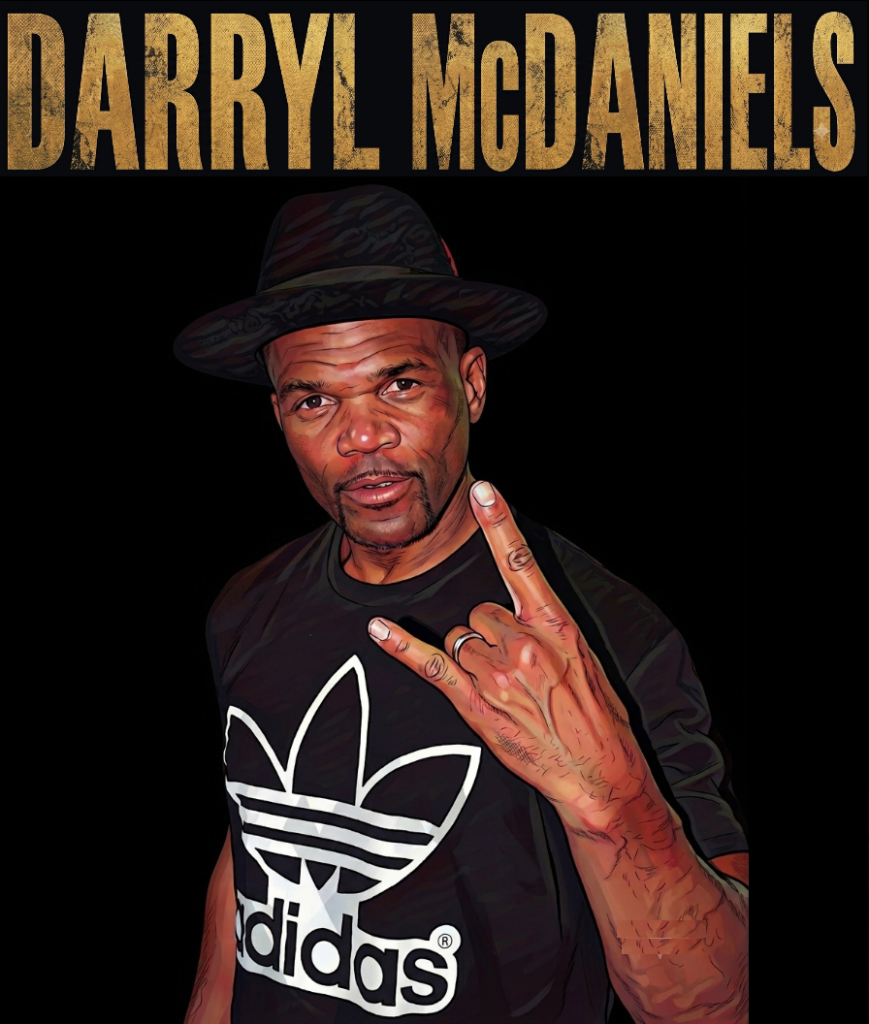
Darryl “DMC” McDaniels on the comic-book roots of his artistic alter ego, the sacrifices behind Run-D.M.C.’s rise, and why authenticity outlasts every trend the industry tries to sell.
___
Raised in the Hollis neighborhood of Queens, New York, McDaniels was born to an unwed mother and placed in the New York Foundling home. He remained a ward of the state until he was one month old, at which point he was placed with the McDaniels family, who eventually adopted him. Raised as a Catholic, he attended St. Pascal Baylon Elementary School, followed by Rice High School in Harlem and later St. John’s University in Queens.
In his youth, McDaniels was influenced by rock and folk music, but he developed a passion for hip-hop in the 1970s after hearing the work of Grandmaster Flash and the Furious Five. By 1978, he had taught himself to DJ using equipment he and his brother, Alford, purchased with proceeds from a neighborhood comic book sale. During this time, he performed under the stage name “Grandmaster Get High.”
In late 1978, McDaniels sold his DJ equipment after his friend Joseph “Run” Simmons acquired his own setup. Once Jam Master Jay—widely regarded as the premier young DJ in Hollis—joined their circle, Run convinced McDaniels to shift his focus from DJing to rapping.
Sounds Visual: Darryl, I’d like to start with this question: what made you switch from DJing to rapping once Run got his own equipment?
Darryl McDaniels: Oh, it was probably because when I first heard “Rapper’s Delight,” right? When I first heard it, I wasn’t like, “I’m gonna do that,” you know? I still didn’t know what hip-hop was. The only reason why I liked “Rapper’s Delight” was the raps about Superman. I was a comic book head, right? And that talked to me; I was like, “Oh wow, they’re talking about superheroes.”
For the first early hip-hop, it was another form of disco. The DJ played the records, people danced, and you know, they played the records on the radio. But people like Flash, The Treacherous Three, or Kool Herc were doing something different than what they did on the radio. But that appealed to the street. But I still wasn’t with it—I’m into comic books, I’m into the 1930s horror movies– Boris Karloff, Lon Chaney.
But when I heard “Rapper’s Delight,” and they were talking about superheroes, that was like, a release. But I still wasn’t with it, still a DJ. But then my brother brought home a record called “Superappin’.” And that title got me. ” I was like, “What’s ‘Superrappin’?” It was by Grandmaster Flash and the Furious Five. Now, I wanted to be a DJ; everybody wanted to be a DJ because everybody wanted to be Flash, because what he would do as a DJ was incredible.
I remember getting my hands on a record by Grandmaster Flash and the Furious Five. When I dropped the needle, it sounded completely different from ‘Rapper’s Delight.’ ‘Rapper’s Delight’ was a long, structured track featuring three emcees, each taking turns with extended verses—one after the other—followed by a break. It had a specific vibe, but it was distinct from what I was hearing on the Flash record. That’s because ‘Rapper’s Delight’ was rooted in the older club-style hip-hop of the era—a scene most of us younger kids weren’t even aware of yet, simply because we weren’t old enough to get into the clubs.
But when I put the needle on that Grandmaster Flash and the Furious Five record, first of all, I was like, “What is the Furious Five?” It’s not like some supervillains, or so I thought. So that right there was appealing to me. But when the needle hit that record, it was something totally different. It was a party, right? Everybody was rocking the house, screaming in the basement, shaking, and it didn’t look like everybody else on the Billboard charts.
When I heard that, I was like, “Oh shoot, you could tell stories about who you are over other people’s music.” And I ran and got a pen. I was like, “Oh, I could talk about Darryl. I can talk about my mother, my father, my backyard, and things that I do.” That was the thing that made me want to be the MC. Before, it was all about just being a DJ—you know, the precise and specific DJs, “Clap your hands,” and all that. But I was like, “You know what? [I’m gonna write] about me and how awesome I am.”
SV: You commuted three trains and two buses to Rice High School in Harlem instead of walking ten minutes somewhere closer. What did that teach you?
DM: It taught me that if you venture out, you realize that all those biases and prejudices that exist in the world are wrong. Unless you go somewhere yourself, you won’t realize that people are just like you. Everything you hear about somebody else’s place isn’t true.
When I got to Rice, I was able to go to Harlem. Now, if you look at the movies, you see this perception of Harlem—”Up in Harlem,” super tough. But when you get there, you find these creative kids doing art and dancing and talking about comic books—no different from what was going on in Queens. We came from a lower-middle-class neighborhood. Fortunately for me and Run, our fathers didn’t pass away early; most of us had both our parents in the house. We had backyards, we had fences, our fathers watered the lawns. I went to Catholic school my whole life—Catholic elementary, Catholic high school, Catholic college.
You might think I was different from those kids in the Bronx or Harlem, but it wasn’t about being “better.” The world thought I was going into a war zone, but then you find this beautiful culture called hip-hop. If you read the newspapers back then, it was all about the Bronx burning and street gangs. But the crazy thing is, a lot of those street gangs turned their lives around; they became DJs and MCs, started preaching positivity, and told people, “Don’t gang-bang, don’t do drugs.” It taught me that everything I was seeing during the Blaxploitation movie era wasn’t the full truth about Harlem, the Bronx, and Manhattan.
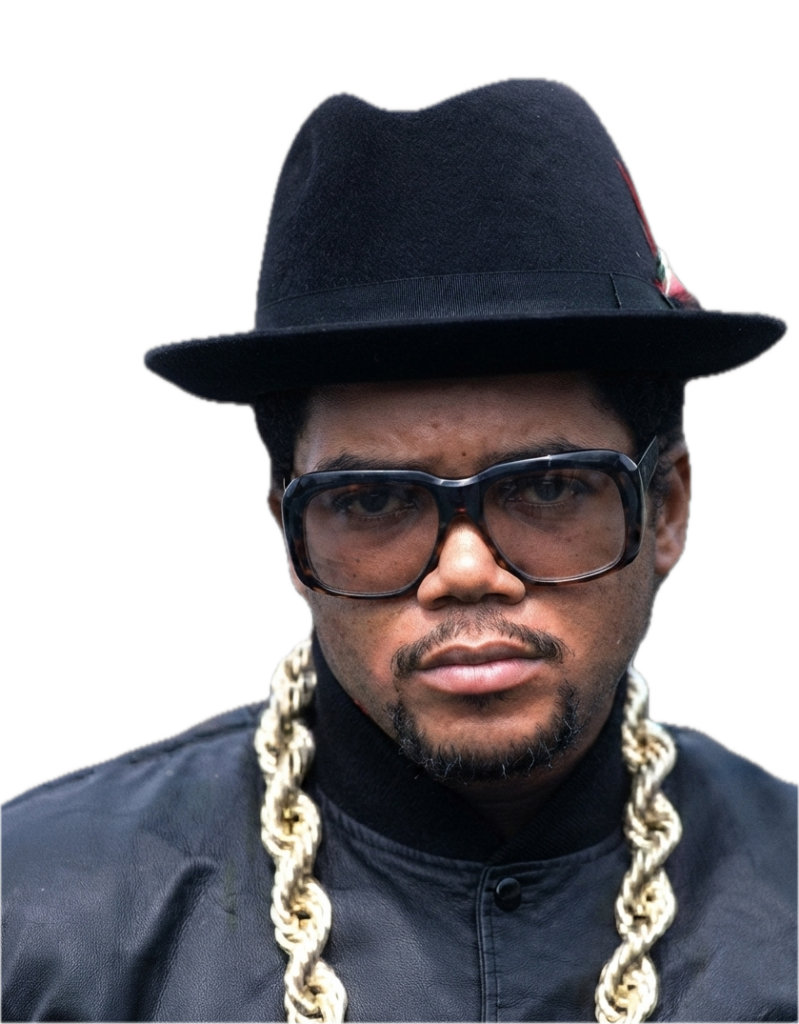
SV: Right, and I noticed that reporters often made a big deal of your middle-class upbringing, questioning whether you were “real” enough.
DM: Right, exactly. They wanted to pigeonhole us. But the reality is, we were just middle-class kids. We weren’t what they expected, but that didn’t make us any less real. And what I mean by that is, in our neighborhood, it was good. Hollis, Queens was our version of 42nd Street. You know, Harlem, the Bronx, and parts of Brooklyn—their whole neighborhoods had that intensity. For us, it was really just a certain corner or a certain street that was like that.
But you know, on my block, your mother was my mother, and my mother was your mother. If I did something stupid or said a bad word, your mother would smack me upside the head, and my mother wouldn’t be mad about it—she’d be right there with her. That’s the beauty of our neighborhood; everybody cared. You didn’t get away with anything.
SV: It also seems like your neighborhood also really looked out for kids with talent.
DM: Yeah, absolutely. Even for a kid like me who had both parents—if somebody’s father wasn’t around, or if somebody’s mother passed away, the whole neighborhood would rally around them. You’d get told, “You treat that boy nice,” or “You treat that girl nice—she just lost her mother.” Everybody made sure that kid grew up not feeling alienated.
It’s so different now with social media and everything. Kids today feel more and more isolated. And when you look at the way some politicians act, they’re just knuckleheads in front of them, leading by example.
They’re just seeing that behavior, so of course kids in school are going to think that the unfortunate person isn’t worth anything. Back then, it was different. We looked out for the person with less, for the person with a disability, for the person who was struggling. Now, they’ve become the butt of the joke, which is just so crazy.
SV: You mentioned comics a few times in that prior segment–did you really sell your comic collection to help buy your first turntables?
DM: Yep. It was my brother, Alfred—he’s three years older than me. His best friend, Anthony Wallace, had built his own DJ setup out of his mother’s speakers and a mixer. Then, Anthony got a second job and bought brand-new Technics turntables—the professional set. My brother had to be down with his friends, so he came home and told me, “Yo, Darryl, we need to get turntables.”
We had a problem, though: back then, if you didn’t sell weed, you didn’t have money. I didn’t sell weed, so I had to find another way. Back then it was called “reefer”—if you didn’t sell reefer, you didn’t have money in the ’70s and ’80s. My brother and I had an attic full of Marvel comics. He said, “We’re gonna do a neighborhood sale and get the money for two turntables and a mixer.” We made flyers on loose-leaf paper and tacked them onto trees and telephone poles.
And get this—the first person to ring our doorbell to buy those comics was Joseph Simmons. Before the whole hip-hop thing, Joe would come to my house to buy comics and then go home. That was in seventh grade. A year later, in eighth grade, he’s back at my house to play basketball, he discovers my rhyme book, and the rest is history. I’ve talked to him about it since, and he remembers it all perfectly. Everyone in the neighborhood wanted turntables, but I was the only one who had to sacrifice my comic collection to make it happen.
I sold every single comic book I owned—I had this huge, beautiful collection—just to get that gear. But it was worth it. That was the sacrifice that started it all.
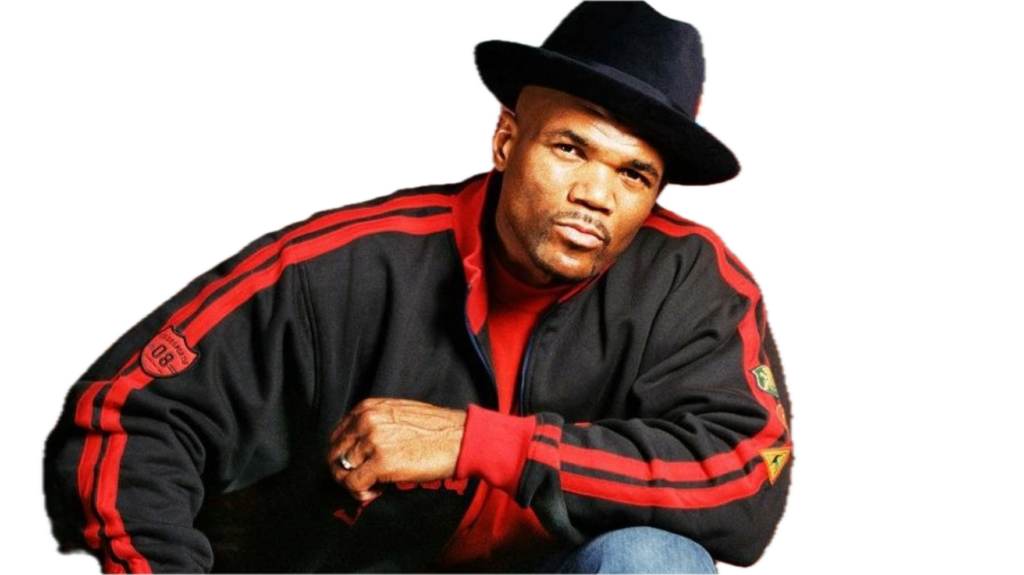
SV: Let’s me ask about your signature frames for a moment. I know you dealt with your fair share of teasing for wearing glasses as a kid, so how did they evolve from a source of insecurity into such an iconic, defining part of your image? Were they a way to also channel the comic book heroes you grew up with?
DM: Yeah, it was my alter ego. It’s funny—Run was the one who told me, “D, those glasses are gonna be famous.” One day we went to the movies together. My mother always made me bring my glasses because I couldn’t see the screen without them. We were sitting there, and I pulled them out and put them on. Joe looked at me and went, “What’s that?” because we were never in the same classes in school—he’d never actually seen me wear them before!
When we were in class, I needed them to see the board, but when we went to recess, I’d take them off so they wouldn’t get broken. So, when Joe saw me in that movie theater, he was seeing a side of me he’d never encountered. He looked at me and said, “D, those glasses are gonna be famous one day.” I had no idea what he was talking about!
But for me, coming from that superhero standpoint—look at Peter Parker or Clark Kent. These were superheroes who were nerdy, geeky, awkward, and clumsy. That’s how the world was treating me, but in my imagination, I knew something they didn’t. My “weakness”—what people thought made me less of a person—actually became my superpower.
I always tell kids, “Don’t be ashamed.” People thought I was less capable because I needed help to see. I had a disability, essentially, but I owned it. When I’d get on the mic, I’d be shouting, “D is for doing it all the time / And for the rhymes that are all mine / C is for cool, cool as can be!” And when people would ask, “Run, why does D wear those glasses?” I’d just yell, “SO I CAN SEE!”
It was so powerful, Justin. It reached a point where people who didn’t even need glasses started wearing them just because of the way I owned mine.
SV: Pivoting back to music–tell me about what happened the day that Run found your private rhyme book and recruited you on the spot.
DM: Yeah, well, you know, my rhyme writing was basically like my diary. I wouldn’t write about what I did every day; I’d write about things I liked. So, Run at the time—this is crazy—Run is 15 years old, and he’s a professional rapper already. He’s a protégé of Kurtis Blow. And at the time, Kurtis Blow had “The Breaks.” People don’t know how influential Kurtis Blow is. Everybody else in the early years was on independent labels; Kurtis Blow was the first rapper signed to a major label.
So, Run was the DJ for Kurtis Blow. Run would come off the road every week from all the performances he was doing—he was performing with Grandmaster Flash, Treacherous Three, Sugarhill Gang, Crash Crew. So he was coming home with a performance tape of all these guys and girls who were making these records. So we would go in my parents’ basement, listen to the tapes, and we were DJing. So, usually, I would hide my rhyme book when Joe [Run] was coming over because I didn’t want him to see it—it was my diary. I was writing for me.
But just one particular day, I forgot to hide it, and I looked up and he had it in his hand. I ran over to him and tried to grab it from him. When I started grabbing at him, he was like, “What is this? This must be something!” He held it from me and he opened it up and he just read some of the words, and he was like, “You wrote this?”
And I was like, “Yeah, you know, it’s a hobby.” And he just said these words—I’ll never forget this, we were in eighth grade, it was 1979—and he says, “When my brother lets me make a record, I’m putting you in my group.” Just like that.
Now, I looked at him and said, “What? Are you serious? I don’t do this for real!” (laughing) Kurtis Blow, Grandmaster Flash—you can hear it, dude. This was just like me playing with my G.I. Joes. It’s the same way kids play with their Barbie dolls—that was hip-hop to me. It’s like me playing with my army men. You remember the little bags of green army men? So, that’s what it was to me.
And Joe and I, we graduated eighth grade from elementary school, and we went to totally different high schools. I’ll never forget it—and I’m writing all through this time. I graduated twelfth grade from Rice High School in Harlem. What was good about Rice was that it was an all-boys Catholic school, but the students there were kids from the Bronx, Harlem, and Manhattan. So, when I got to Rice in ’79, they had all the live performances of these guys making records from ’79 back to ’73. I’m getting a solid, hard-core education on what pop culture is. Now, that was all records, but I had everything from ’79 to ’73. So, I’m writing, I’m writing, I’m writing.
I graduated in the class of ’82 from Rice. I come home, you know, you send your resume out, and I get a letter in the mail saying I got accepted to St. John’s University. I ran to the basement and wrote a rhyme about it. That was in June of ’82. I wrote, “DMC in the place to be, I’m going to St. John’s University / Since kindergarten, I acquired the knowledge / After twelfth grade, I’m going straight to college.” That was June ’82. I would document everything in my diary. Then, in ’82, the phone rings—it’s Joe.
“What’s up, Darryl?” “What’s up, Joe?” “Remember when I told you four years ago, if my brother lets me make a record, I’m putting you in my group?” I was like, “Yeah?” He says, “Grab your rhyme book, D. We’re going to the studio.”
We went into the studio and we made “It’s Like That” and “Sucker M.C.’s.” These were side singles, because if you remember, there was no album—it was all singles. Hip-hop was only on the radio on Friday and Saturday nights. I was in my second semester at St. John’s University when I took a leave of absence because I knew I’d be going back. And I’ve been answering for everything ever since.
SV: “Sucker M.C.’s” was originally supposed to just be a solo track for Run, right?
DM: Yeah. If you listen to it, he’s on it three times. Now, Russell didn’t want me in the group because—and here’s what’s funny—Run’s name is what it is, and then there’s the big man upstairs. God, Yahweh, Buddha, the Great One, the Almighty—whatever you want to call Her, I thank God is a female because my grandmother and mom are so cool. But whoever you want to call God, He has a sense of humor.
See, the group was originally “Run-D.M.C.” It just so happens the initials of my name were D.M.C. So, Russell let me perform a side track with Joe, but he only let me record because, in Russell’s mind, I was just Joe’s knucklehead friend—I didn’t do this for real. So Russell thought, “I’m going to call the group Run-D.M.C. because if this knucklehead doesn’t work out, I’m still safe. I’ll just say, ‘Run!’”
So we did “It’s Like That” together. Russell let me do it because I wrote a lot of the material. But in the early years, everything was a single—it was like disco, giant 45s. With those singles, it was an A-side and a B-side. “It’s Like That” was the A-side. But Joe goes in and does “Sucker M.C.’s.” To get Russell to believe in me, Joe told me, “You’re going to put a rap on the next record.” And I’m like, “Joe, I didn’t write much for ‘Sucker M.C.’s,’” and Joe said, “Shut up, just go say your newest rhyme.”
My newest rhyme was that St. John’s University rhyme. So, when I put that rhyme on the record, for the rest of the studio session, Russell didn’t even care about Joe. Everybody that would come to the studio, he’d say, “Play these rhymes, play these rhymes!” He was talking about, “D-M-C, in the place to be, I’m going to St. John’s University.”
So, Joe was kinda smart. Joe always knew I was writing. And Russell’s thing was, “He’s not you, he’s not the Furious Five, he’s not Kurtis Blow.” So Joe was like, “I’m gonna let D show you who he is.” And when I hit that “Sucker M.C.’s” rhyme, Russell was like, “Oh wow, maybe it could be something.”
SV: I wanna talk about “King of Rock” for a second. Did you write that as a teenager,
aiming straight at Elvis and the whole rock establishment?
DM: Yeah, because whatever was happening—when we put out “It’s Like That,” then we put out “Hard Times,” “Sucker M.C.’s,” and then we got a little buzz—they said, “We’re gonna do a whole hip-hop album.” Now, the industry and the critics were like, “Okay, we’ll give you these little singles.” You know, “The Message,” “Planet Rock,” “The Breaks”—Funky Four Plus One was actually the first hip-hop group on Saturday Night Live, right? And then there was Debbie Harry. Debbie Harry was in all of these clubs. People forget Debbie Harry made a rap record called “Rapture,” talking about Flash and Fab Five Freddy. Debbie Harry was in the scene while it was happening.
That’s why she did “Rapture.” So, in the beginning, it was just all singles. You had these hip-hop groups in the Bronx and Harlem, and a couple of people in Brooklyn like Whodini, E.S.G., Magic Mike, and all that. Then, when we did the Run-D.M.C. album with “Rock Box,” which got us on MTV—the industry and the critics were like, “Okay, we’ll give it to you. You proved you could do a whole hip-hop album, but we’ll give it two years, because this is gonna die.” They thought it wasn’t gonna last—that it was gonna go out like the hula hoop or the Slinky.
But me, being a comic book-reading kid, I felt like this hip-hop thing was always an adventure. I always thought I had dope rhymes—which I did—but my whole career, even now, I just pretend to be the most powerful MC in the hip-hop universe. I’m playing this superhero on the microphone. My old Catholic school-kid self, Darryl McDaniels, transforms into the mighty King of Rock the second I touch the mic—at least in my stupid little head.
So, when all these critics and industry people were saying, “It’s a fad, it ain’t gonna last,” I didn’t take it personally because I wasn’t even sure if it was gonna last myself! But while I was in it, it was the dopest thing ever. It just gave me another reason to write. And I never wanted to be in “show business.” The music I grew up with wasn’t even “Black music”—that was my mother’s side of the music.
Like I said at the beginning, I was just a kid. All I cared about were comic books, God, villains, and the Wolfman. I didn’t have music that felt like mine. But with my father playing the radio in my room, there were three things happening on WABC in New York: Harry Harrison, Dan Ingram, Cousin Brucie. Every Saturday at 12:00, the Black guy, Don Cornelius, played Soul Train; then at 1:00 on ABC, the white guy, Dick Clark, had American Bandstand. That’s where I was seeing everyone I heard on the radio.
As a kid, I said, “If I do music, I want to do what the folk-rockers and groups like Queen are doing.” That’s Freddie Mercury! He sings, he performs—to me, he was just phenomenal. In my mind, it was the rock records: The Beatles, The Stones, Queen, Procol Harum, Janis Joplin, Jimi Hendrix, Harry Chapin, and Bob Dylan—the storytellers. I loved the loud guitars and the hard drums. But I had a problem: I couldn’t sing like Freddie Mercury, and I didn’t have a band like Queen.
But hip-hop gave me a superpower. I didn’t need to sing, and I didn’t need a band. I could just stand up, steal somebody else’s music, and make my own song. So, when they started saying hip-hop wouldn’t be around, I decided, “I don’t want to be the ‘King of Rap.’” Because at the time, Melle Mel was the King of Rap. Kurtis Blow was the King of Rap. When you’d go see the Furious Five, they’d say, “Grandmaster Flash and the Furious Five, with the King of Rap, Melle Mel!” Or if you saw Kurtis Blow, he’d do “The Breaks,” then “Christmas Rappin’.” But it wasn’t until this came out that it changed everything.
Those guys were the Kings of Rap. So I said, “You’re saying my hip-hop universe isn’t gonna be around? Fine.” I’m going for the jugular. I’m going for Elvis’s throne. I want Mick Jagger to get up off the throne when I walk into the room and say, “DMC, come sit down.”
Just imagine a comic book cover called The King of Rock. It’s a picture of me with my mic, my mighty powers. You turn the first page, and I’m on a horse, raising my sword, yelling, “I’m the King of Rock, there is none higher / Sucker M.C.’s should call me Sire!” I was telling the industry and the business, “You can take my money, you can take me off the radio, you can stop letting me in the studio—but I’m still gonna rock.”
I don’t need your permission to exist. I won’t stop rockin’ till I retire. That was my motivation behind the record. It was just me making a statement that y’all don’t determine what’s cool or what’s not. Even if we go away, we can still get on these microphones and perform. We started this without show business, so we don’t need show business. I’m flattered to be let in, but don’t tell me that I’m not worthy. Originally, I have to give Russell [Simmons] credit because that verse didn’t come until the end of the song; it was my ending statement. My “King of Rock” thing wasn’t me bragging; it was me singing. I was saying, “If you stop letting me on the radio, I’ll just go back to my basement.”
Before we had Rick Rubin, our first producer was Larry Smith. For the first two Run-D.M.C. albums—Run-D.M.C. and King of Rock—Larry Smith was the guy. Larry is one of the greatest hip-hop producers ever. He held it down for five years. He produced those albums and Kurtis Blow’s records, too—I tell his kids all the time, they have to make a movie about their father.
SV: Yeah, you once said that Larry’s musical arsenal and influence was equal to Dr. Dre’s…
DM: He was phenomenal. Think about what he did: “It’s Like That,” “Sucker M.C.’s,” “Rock Box,” “King of Rock,” “Five Minutes of Funk.” Larry Smith was the Jimmy Jam and Terry Lewis of hip-hop. He was a master. DJ Premier always says, “Larry inspired me.” Larry was no joke; he did rock, rap, punk, and hip-hop. He took the music and elevated it. You remember the comic book character Underdog? And the villain was Simon Bar Sinister? My nickname for Larry was Bar Sinister, the Music Minister.
He’d get so excited—he was a bass player in a funk band, so he knew all the jazz players, the rock players, the funk players, and the blues players. When we were doing “Rock Box” and “King of Rock,” he’d say, “Don’t worry, I know this cat named Eddie Martinez.” If you look up Eddie Martinez’s resume, he played with everybody. Even though people thought we were just rapping, Larry made us musicians.
SV: Let’s talk for a minute about how Jam Master Jay joining changed the group’s dynamic. Can you speak on that a little bit?
DM: Me and Run, we were all over the place. But once the records started hitting and we started getting calls for live shows, Russell said, “You need a DJ.” Jay was the best DJ in the neighborhood. The reason why Jay was so good is that, at the time, there were two types of DJs: the hip-hop DJs, who would bring all the breakbeats to the cuts and scratching, like Flash and the Treacherous Three, and then the DJs like Frankie Crocker who played on the radio.
Jay could play the party, he could do the block party, and he could do the radio. He was multi-skilled. When we asked him to join, he was like, “Hold up—you mean you’re going to pay me to do what I do for free? What I’m doing anyway? You’re going to pay me?” That’s when we got Jay.
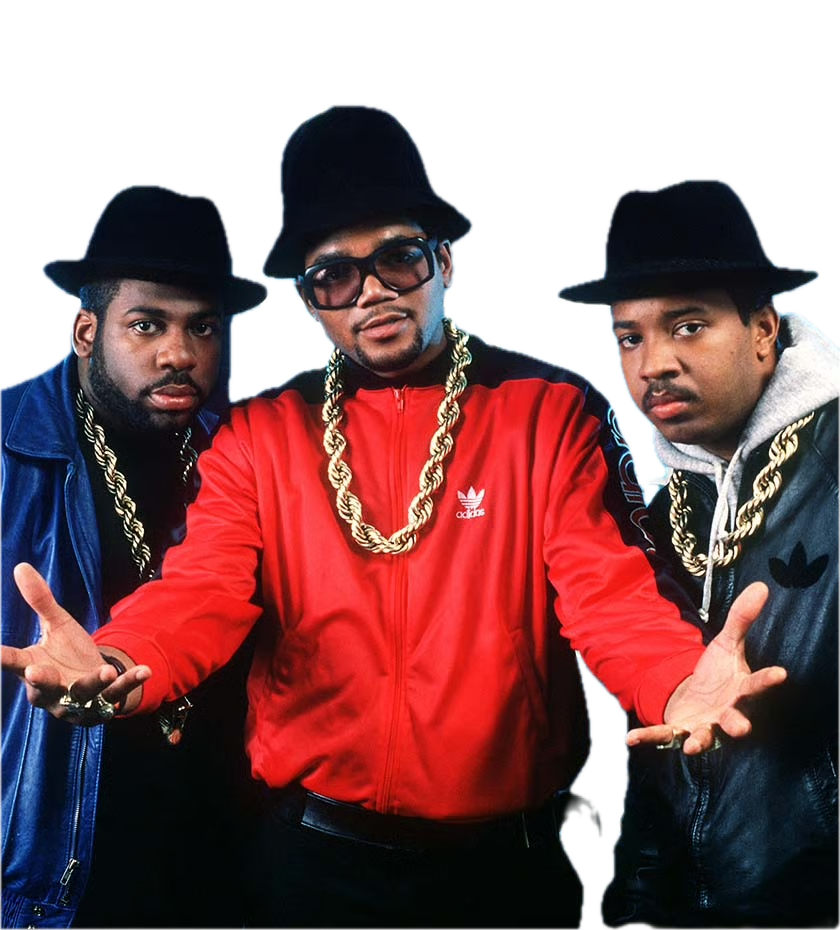
Beyond just DJing, he gave us our look. The leather hats, the Adidas—that’s how Jay and DJ Hurricane dressed when they went to high school. It wasn’t just “Run-D.M.C. style”—we took the style that existed in the street and put it on TV. It was the culture of every young, poor person in hip-hop. Jay brought that signature feel. Once we had a real DJ, we could actually do scratching on the records. We weren’t just recreating popular R&B or funk songs; we were elevating them. Even if we didn’t use a drum machine or a keyboard player, we used the drummer—we used Jay.
We had a real guitar player, and when it came to scratching, we had a real DJ do the real scratching. So, Larry and Jay brought authenticity to what we were doing with this hip-hop thing.
SV: And in terms of the style aspect that Jay brought—did the gold chains come from him, or were you guys doing that already?
DM: Yeah, him and Eric—they wore the gold chains. Me and Run weren’t even thinking about no chains! We didn’t know to go get the gold. When we started getting money in the early days, if you look back at it, me and Run were just wearing Kangols. Everyone was wearing Kangols back then—LL was wearing them, too. If you look at the cover of the Grandmaster Flash and the Furious Five The Message album, the only guy who was really wearing “hip-hop style” was Cowboy. Melle Mel and the others, they were dressing like the Rolling Stones or Parliament-Funkadelic because that’s what their musical influences were.
But our musical influence was the street. We were like, “If a rapper wears a Kangol, what are we going to wear in the video?” So, the Adidas, the Kangols, the gold chains, the leather jackets, and the leather pants—that was all Jay. Jay gave us our signature look.
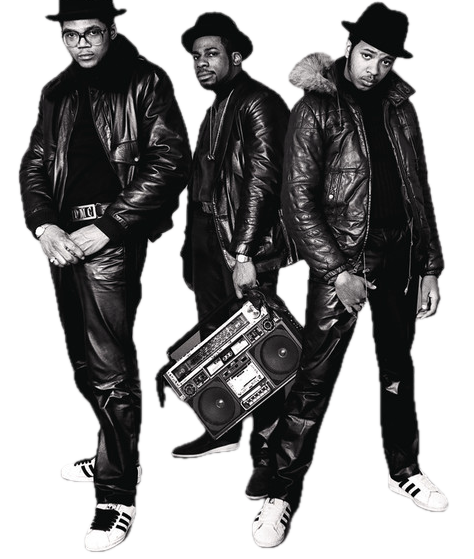
SV: Since you mentioned the Adidas, I have to ask about this because it’s such a visceral memory from my childhood—how important and influential that look was to my friend group. How did it feel from your perspective watching fans adopt the Adidas look? And has that feeling changed since seeing new rappers try to do the same thing with their own fans?
DM: Well, we were the first non-athletic entity to receive an endorsement. Before us, you had to be an athlete to get that kind of attention. We changed that whole game. But we can’t take all the credit—we were just the first to do it in the entertainment business. It happened because Run-D.M.C. was the face of this emerging culture. We have to give it up to the young boys and girls who created the culture before us. Before the album covers, before MTV—the way Run-D.M.C. dressed was just how the young people in New York were already dressing.
Once the world saw us, Run, D.M.C., and Jay became the poster children of hip-hop, which was a huge responsibility. But I think people miss the point sometimes: it wasn’t about fortune and fame; it was about what Run-D.M.C. represented. I tell Adidas this all the time—it’s what we stood for that allowed us to get that deal, and it’s what allowed Adidas to come back from the dead. Before us, they were just for athletics; they were just sports. We were the ones who switched Adidas to “lifestyle.” We were that.
But the reason why it worked for both of us—and why it worked for Adidas—is because when you see those three stripes now, it represents unity, positivity, and authenticity. You know, it represents something good. It wasn’t about anything negative. We were never the celebrities getting in trouble, right? We represented something that was universal to everyone—Black, white, Jewish, whoever.
That’s why we were able to achieve that. When those people held those sneakers up, it was a recognition of something good. It wasn’t like we were just hawking a product for fortune and fame. We were making this product become a representation of something that was good for all of us.
SV: The three of you grew up in pretty different corners of the same neighborhood — your quiet side, Jay’s block-party epicenter, Run’s business side. How’d that mix shape the sound?
DM: It resonated because it wasn’t just about the Black community—it was about every community, every nation, every race. Everyone knows a “Run,” a “D.M.C.,” and a “Jay.” It’s so cool. It’s the uncle, the cousin, or the brother who steps in to stop a fight, or who tells the police, “You leave them alone, or I’ll walk over there myself.”
Run is the friend that never shuts up! You could look at any TV show, movie, or cartoon, and he’s that character. D.M.C. is the nerdy guy with the thick glasses who always has a book in his hand. We’ve got so many friends—all the Jewish friends from back in the day, the people who loved hip-hop—everyone saw themselves in us. That was the thing about Run-D.M.C.
At the time, a lot of groups were defined by “The Message”—it was all about the politics, the ghetto, the funky stuff. People considered early hip-hop to be “Black ghetto music.” That was the box they were put in. But if people were to go back and listen to what those artists were doing at the block parties before they made records, they were talking about everything—waking up in the morning, going to school, their sneakers, going to McDonald’s. Run-D.M.C. came along and asked, “Why can’t we talk about our total lives? Why can’t we talk about the stuff we’re actually living?” We wanted to embrace the reality of our lives, problems and all.
We came in being comic book readers, and I had to make some adjustments. I was thinking, “Okay, we’re rhyming about the heroin, we’re rhyming about the gangs, we’re rhyming about the broken glass everywhere.” But why was nobody rhyming about the ice cream truck in the park before the guy got stabbed? Why was nobody talking about the girls playing hula-hoop, or the boys and girls on the handball courts and the basketball courts?
When you listened to the early rock guys, they were talking about the party and the jam, but they were also talking about social issues. They were looking out their back doors. Even someone like Jim Croce—Bad, Bad Leroy Brown—he was thinking about pop culture. We said hip-hop could do that, too. And it did; it absolutely did.
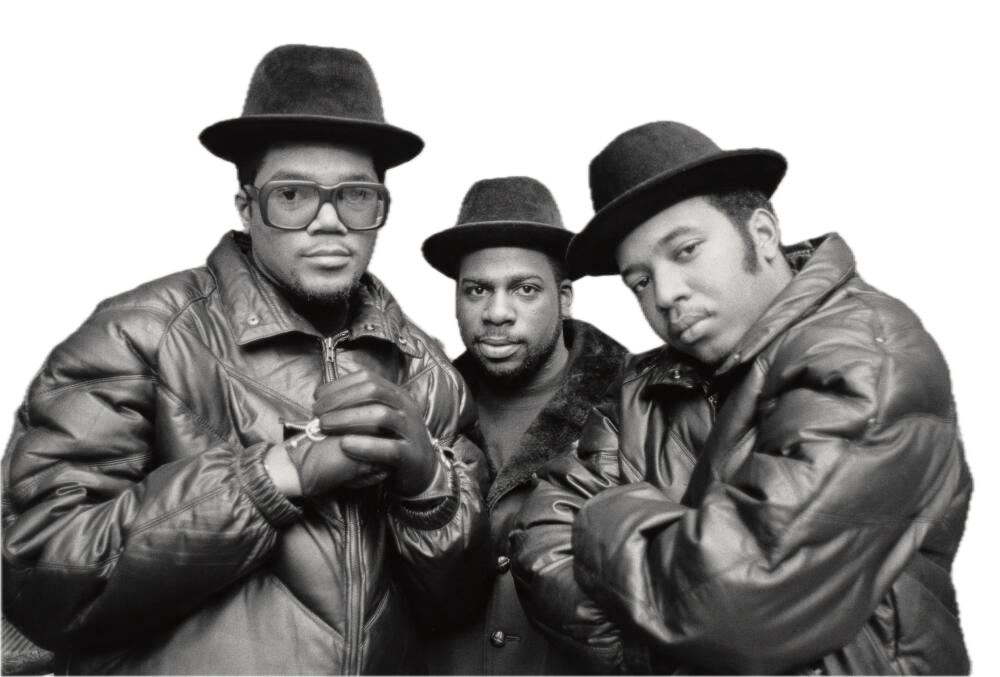
SV: It can be difficult for people today to grasp just how rare fame was in the 1980s. In our current era, anyone can post a video from their phone and find themselves enjoying “15 minutes of fame” before the day is out. Given that, could you talk about the jarring transition of going from a regular college student in Queens to becoming a global icon overnight?
DM: It’s funny you say that because, like you noted, everybody’s a “celebrity” now. It’s not necessarily inspiring anymore. It’s just, “Okay, you’re famous,” and that’s why people look down on others. But for us—people don’t understand—you could be the rock star, the athlete, or the musician, but in the ’80s in New York City, when you went to where the “famous people” were, it wasn’t just other celebrities. It was journalists, photographers, authors, and artists like Keith Haring or Basquiat.
If you went to a club in the ’80s, you’d be walking through and go, “Oh shoot, did Debbie Harry just walk by? Oh my God, Madonna just walked by. Oh my God, The Beastie Boys, the Ramones, oh, Basquiat just walked by! There’s Fab Five Freddy! There’s Nelson George!”
What made hip-hop so special here in New York City was that we didn’t all just want to be rappers—there are too many rappers now. Back in the day, you didn’t have to be a rapper to be part of the culture. You could be Dapper Dan the designer. You could be the guy who had the style, the guy who had the vision. It was a whole ecosystem of creators, not just a bunch of people trying to be famous.
People had car services, taxi businesses, car washes—that’s what I’m trying to say. Anything creative that was benefiting the listener, the viewer, or the user of the product, that was the “specialness” of being a celebrity. Back then, you didn’t have to be a rapper to be part of the scene. Now, it feels like everybody in the room wants to be a rapper.
That was the difference. You had Spike Lee running around; you had filmmakers, artists, journalists, rappers, MCs, bass players, musicians, and eclectic agents. It was special because it was a community of creators. It wasn’t just, “everybody’s a rapper.”
SV: Right. Nowdays, every single person with a smartphone is a “content creator.”
DM: Exactly. Which is cool, but is that all we can be? When I go to high schools and middle schools, I tell them that hip-hop didn’t just create rappers—it created journalists, filmmakers, writers, and poets. Look at what Lin-Manuel Miranda did with Hamilton—he was influenced by hip-hop, but he didn’t just make rap records and go on tours; he did something new with it. Whether it was clothing, breakdancing, or filmmaking, if you were a creator giving something back to the people, you were welcome.
As Run-DMC geared up to record Raising Hell, they aimed to evolve their sound, ultimately crafting a groundbreaking masterpiece that redefined hip-hop’s commercial potential. This iconic album shattered genre boundaries and solidified the group’s legacy as architects of the golden age of hip-hop.
SV: Darryl, I wore my cassette copy of Raising Hell down to nothing when I was a kid—I listened to that tape so much that it eventually snapped. It remains one of my all-time favorite albums to this day. Could you take me back to that time and tell me what the experience of making that record was actually like?
DM: Raising Hell was basically us saying that Run-D.M.C. is the beat and the heartbeat of hip-hop. You look at who was around us then—KRS-One was taking off, Public Enemy was coming up—it was like, “Oh my God.” Hip-hop was about to explode and change the world.
For us, Raising Hell was the moment where we had to prove that if this didn’t work—if our first album and King of Rock were just flashes in the pan—then we were done. Raising Hell solidified us. It said, “You can never forget us, and you can’t touch us.”
With all the phenomenal talent coming up—Gang Starr, DJ Premier—Raising Hell was our way of representing as a whole. We didn’t have to make drug records, we didn’t have to make gangster records, and we didn’t have to battle anybody. Raising Hell was for Run-D.M.C. to prove that we were the best MCs and DJs you would ever see. It wasn’t just about the records; it was about the thing they call hip-hop. If you look up the definition of hip-hop in the dictionary, you should see Run-D.M.C. and Jam Master Jay right there.
If you Google “what is hip-hop,” that’s what Raising Hell was for us. It was our “make it or break it” moment—our “use it or lose it” period.
I mean, the way that album changed the vibe of the music was incredible. When you put it on, everything shifted. You go from “Peter Piper” to hearing Run doing the beatbox—trying to be like Buffy from the Fat Boys—and then there’s me, D.M.C., rhyming about my family, my brother, my mom… that was raw. As weird as it sounds, nobody was doing that. Nobody was rhyming about their actual home life in that way.
People always ask me in interviews, “Who do you think is better, Jay-Z or Biggie?” and I’ll say, “Public Enemy.” I don’t have to choose! You’ve got KRS-One, who is phenomenal live; Big Daddy Kane, who is phenomenal live; and Doug E. Fresh, who is the one—he changed the whole title of what an artist is.
But when it comes to the art of the microphone and the turntable, Jam Master Jay never used pre-recorded stuff. I’ll never forget, when we did Live Aid, the wind was blowing the needles right off the records, but he kept going. Raising Hell solidified us as the standard. It showed everyone that the thing they are—that every rapper is—they are because of how we did it.
We weren’t just talking about record sales or fortune and fame; we were talking about the DJing and the MCing. Every MC wanted to be Run-D.M.C., and every DJ and producer wanted to be Jam Master Jay. Raising Hell did that for us.
SV: Is it true that you didn’t know “Walk This Way” was even an Aerosmith song at first? Obviously the breakbeat was well known…
DM: You’re right—we knew the break, but we didn’t really think of it as an Aerosmith song at first. In those days, DJs would scratch the labels off the records so nobody knew what they were playing. To us, it was just “Toys in the Attic,” track four. We knew it was a breakbeat; we didn’t realize it was Aerosmith until Rick Rubin told us. He said, “That’s the group called Aerosmith.” We gave him a look like, “Oh… okay.”
If you go on YouTube today and search “Flash & Melle Mel 1978,” you can hear Melle Mel, Mr. Ness, and Scorpio of the Furious Five rhyming over “Walk This Way” because it was just a breakbeat that everybody used. Flash, Charlie Chase, Kool Herc—everyone played it. Our original plan was just to sample it and rap our own lyrics over the top. We had no intention of re-recording the song the way the band did it. We thought of it just like James Brown’s “Funky Drummer”—it was just a break we needed for the park and the block parties.
People forget that “Walk This Way” wasn’t even a massive hit when Aerosmith first dropped it in the mid-70s. When we found it, it was just the perfect beat. For us, it was always going to be: sample the record, and then Run and I talk about how good we are.
People think it was our first rock-rap record, but it wasn’t! “Rock Box” was the first rock-rap record, and it was the first rap video on MTV. We already had “Rock Box” and “King of Rock” under our belts. Even on Raising Hell, our initial plan for “Walk This Way” was just to put our own rhymes on it. Rick Rubin was the one who said, “No. Do the record the way the band originally did it.”
And he was a genius for it. If Run and I had just rapped over the original Aerosmith track, people would’ve just said, “Oh, remember when Run-D.M.C. did an Aerosmith cover?” But Rick was smart. He made us re-record it, and then he brought Aerosmith in to perform it with us. Rick knew that when people were channel-surfing and landed on MTV, they needed to see Run-D.M.C. and Aerosmith together. That changed everything.
It wouldn’t have changed the world if it was just us rapping over their track. But that video? That was the game-changer. It was the first time people saw two different generations, two different worlds, actually working together. It was a total stroke of genius.
SV: The first time you guys played it live, what was it like watching that rock crowd and that hip-hop crowd collide?
DM: The rock crowd loved it, and the hip-hop crowd that knew the history loved it, too. Some people initially wanted it to be more like “Rock Box” or “King of Rock,” but once they saw us live—watching Run and me switching off on the mic exactly like we did on the record—they were like, “Oh, wow. Now we get it.”
At first, Run didn’t even want to do it in front of the hip-hop crowd. But Jam Master Jay said, “No, we have to do it,” because DJ Red Alert was already playing it on the radio. Red Alert knew what that record was because he’d grown up DJing in the Bronx; he’d played “Walk This Way” as a breakbeat his whole life. When he heard us doing the record over, exactly like the band, he couldn’t believe it. He told us, “‘Peter Piper’ is cool, ‘My Adidas’ is cool, but that ‘Walk This Way’ is the one.”
It became the big one everyone remembers. People say it gave birth to everything from Limp Bizkit to Blink-182. Those bands were already doing their thing, but “Walk This Way” gave everyone the permission to use that artistic license.
SV: “Raising Hell” opens with “Peter Piper,” one of the all time great rap songs. Is it true that Michael Jackson really beatboxed for you guys and wanted a “Peter Piper”-style track?
DM: That meeting was absolutely surreal. We met Michael in 1988 at his Paramount studio in Santa Monica. We walk in, and there’s Bubbles the chimp—I’m not kidding, Bubbles had on overalls and sneakers! Michael walks in with his mask and the glove, and the Beastie Boys were there too.
Michael looks at us and says, “I really love the record you did with Aerosmith, but I don’t want to do that. I want to do something like ‘Peter Piper’.” And I swear to God, you have to tell the world this: Michael Jackson did the beatbox way better than Doug E. Fresh! He started doing this rhythm, and he says, “I want to do a rap.” He starts spitting these lines, and I’m just standing there, floored.
It never came out just because of the logistics. We were still riding the high of Raising Hell and were constantly on the road touring. When we were ready, he wasn’t available; when he was ready, we were off in another country. It’s my favorite ego joke: “Why didn’t you make a record with Michael Jackson?” I tell them, “You don’t make a record with a legend like that—you just have a ‘disaster’ that didn’t happen!” But the way he bonded with Jay was something else. He knew exactly what he wanted—he wanted the 808s, the scratches, the whole Run-D.M.C. sound. Can you imagine? The King of Pop and the Kings of Rock meeting in the middle? It would have been the biggest thing on Earth.
SV: I also read something that I thought was fascinating—that Profile Records wanted to stop pressing vinyl, and the group basically said, “We quit” until they backed down. Can you talk to me about that?
DM: Yeah, that was during the CD era. The labels were so stingy, man—so selfish. I told them, “Look, if the record industry ends tomorrow, hip-hop lives on. Rock lives on. Bands are always going to be able to play.” I told them, “You are not going to take away our foundation.”
They wanted to say, “Everybody’s buying CDs now, we’re only printing CDs.” We told them, “Okay, we quit.” Because Jay wasn’t DJing with CDs. He had to DJ with actual vinyl records. He had to have that wax. So, we held our ground, and they gave in. They kept pressing the vinyl.
It’s up to the people in the industry to fight together. Imagine if all the rappers got together and told the radio stations, “You have to stop playing only the ‘bitch,’ ‘hoe,’ and ‘get high’ records. We need more records about school, about life.” Hip-hop used to be such a beautiful, balanced era. You could play a song by N.W.A., and right after that, you could play “Parents Just Don’t Understand.” Now? It’s all one-note. It’s nonsense.
We aren’t saying you have to stop the message records or the party records, but you need to play Biz Markie’s “Just a Friend,” too. The problem is the influence. It’s reached a point where young men think they have to be a gangster to be a rapper, or young women think they have to be twerking and looking a certain way to be successful.
I knew hip-hop was losing its way when the strip-club culture started taking over the airwaves. Don’t get me wrong, I’m not against anyone’s hustle, but when that’s all you see, it makes young girls think that’s the only way to be successful. We need more examples. We need to show them the MC Lytes, the Monie Loves, the Queen Latifahs. We need to show them that there are different paths. If we show them more variety, those girls can say, “Oh, I can do that,” or “I can do this.” We have to provide those alternatives.
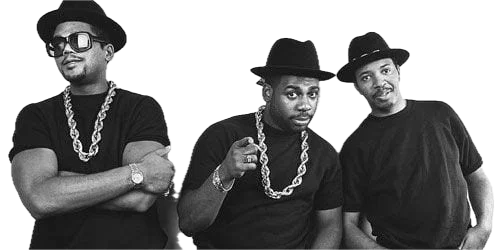
SV: What was the experience of making “Back from Hell” like?
DM: That record taught me that this music business can be really, really dangerous—spiritually, mentally, and physically. We called it Back from Hell, but we were only saying that because we had a new album out; in reality, we were still going through hell.
The reason Run-D.M.C.’s early hits were so huge was that Run was being Run, I was being D, and Jay was being Jay. By the time Back from Hell came around, we started looking at what everybody else was doing in hip-hop, trying to follow the trends. We didn’t come back from hell; we went into it.
And then Tougher Than Leather—that was delayed for two years. You know, all that music business stuff that you see in movies or read about in biographies? We never thought it would happen to us, but it happens to everybody. My goal was always just to be authentic to who we were, but when the business started telling me I couldn’t be me—when they wanted us to be like N.W.A. or other groups—that’s when my voice literally left me. It wasn’t a physical thing; it was spiritual. It was like Jay and Run wanted to do things that I didn’t want to do, and my voice just said, “I’m leaving.”
SV: Even though that was such a rough period for you, I have to mention that ‘Beats to the Rhyme’ still gives me chills every time I hear it.
DM: “Beats to the Rhyme” was one of the few tracks where we were really ourselves again. Everything else we were doing was trying to chase the trends, but when that track came out, it was so far ahead of people that they didn’t know what to do with it. Everyone was looking at Public Enemy or Biggie by then. But it wasn’t until years later that rappers and DJs realized, “Oh, wait—’Beats to the Rhyme’ is a banger!”
I’ve always said Run-D.M.C. probably should have called it quits after Raising Hell, like the Beatles did. We had our run, we did our thing, but you’ve got to know when to pivot.
I’d proclaim, “I wear these glasses.” I wasn’t wearing them to be cool or fashionable; the truth set me free. I needed them because I needed to see everyone. It was powerful—people would tell me that because I wore those glasses, they weren’t ashamed to wear theirs anymore. Run was right; those glasses became a part of my identity, and to this day, people tell me that seeing me own them gave them the confidence to stop hiding.
SV: That era of rap and hip-hop was so incredible. What was it about Big Daddy Kane’s “Ain’t No Half-Steppin’” that made you kick your friend out of your own car just to study it alone?
DM: Yeah! Runny Ray got into the car, and he jokingly said, “I found somebody better than you, D.” I’m like, “What do you mean?” He put on Big Daddy Kane. I kicked him out of the car! I drove around all day just listening to that. I thought, “My career is over!” It happened three times: when I first heard Rakim, when I first heard Big Daddy Kane, and when I first heard Kool G Rap. Mentally, I was able to truth it out, but I was in awe of them.
SV: Pete Rock shared some advice with you at one point in the nineties–what was it?
DM: The sound of hip-hop was changing, and everybody was chasing the next big thing. Pete Rock looked at me, dead serious, and said, “D, you ain’t gotta be nobody else. I just want D.M.C. on this record.”
That was 1993. I was worried about what N.W.A. was doing, what everyone else was doing. But Pete wanted me to stop worrying about how great Chuck D or Rakim or Big Daddy Kane were. He didn’t want my mind to get clouded. He told me to just be me. So, I went into that booth and I just did what I would’ve done when I was 15 years old, and it worked.
I wrote that verse for “Down with the King”: “I’m taking the source of a record, I’m keeping it hardcore / ‘Cause I’m the roughest and toughest that ever wrote and I’m meant for more / Like a flow, jam, check it / Other MCs can never swing with D / Because of all the things that I’m bringing / With me, only God could be a king to me / And if the God be in me, then a king I’d be.”
That was me finally saying, “I’m just gonna be the King.” It wasn’t about being better than anyone else; it was about the freedom of being authentic. There are two expressions I always keep in mind when I’m creating—they’re the foundation for everything.
SV: That advice reminds me of the maxim, “Be yourself–everyone else is already taken.”
DM: That’s it! That’s the truth. Nobody can be you better than you.
SV: I want to talk about adoption and identity for a minute, because I know this is something deeply personal that you’ve spoken about. Finding out you were adopted at 35—how did that change the way you saw the “Darryl” who had already spent 20 years living as DMC? And considering you had already written lyrics about your family tree years prior, what was that internal shift like?
DM: Man, well, first of all, it was traumatic and a shock. I was like, “What do you mean? What does this mean about who I am?” But what I realized—and what I started to see when I spoke about it—is that it was so powerful. People all across the world would come to me with a sigh of relief, saying, “Oh, thank you for talking about this.” It was like they were waiting for someone to give them permission to be open about their own stories.
But for me, personally, what it was—it was this realization that you have things about yourself that you don’t even know yet. You think you know your whole history, your whole makeup, and then suddenly, the foundation shifts. You realize that the “Darryl” everyone knew was built on a story that was only half the picture. It made me realize that identity isn’t just what you’re told; it’s what you discover when you’re finally brave enough to look for the truth.
Those mysteries are a part of your truth, and you have a right to feel whatever emotions come with them. Even if the truth is messed up, it is still your story. At first, I didn’t know how to handle it—I started drinking more. I was living a famous, “successful” life, but internally, I was spiraling.
What finally helped me was when someone told me: “You never start a book from Chapter Two.”
That hit me hard. I realized that all my years of Christmas in Hollis, Queens—all of that life I lived in front of the world—was Chapter Two of my existence. I didn’t even know what Chapter One was about. That realization is what helped me get sober. I told myself, “If I’m going to go look for Chapter One, I need to be sound in mind and body.” I wasn’t drinking because I was “celebrating” a new identity; I was drinking because I couldn’t deal with the shock. I needed to be clear-headed to handle whatever Chapter One contained.
Then, when I started talking about it publicly, my friends came to me and said, “Dee, you really loved some superhero stuff growing up, didn’t you?” I asked what they meant, and they pointed out that almost every hero I loved was adopted or suffered a traumatic loss of family. Superman, Batman, Spider-Man—they all lost their parents or their whole world. My therapist helped me realize that I wasn’t just attracted to those comics because the art looked cool; I was attracted to them because they were representing me and my unconscious story all along.
When I finally met my birth mother, she looked at me and said, “I know you’re dying to know why I gave you up.” That was the understatement of the century! But then she said the words that changed everything: “I gave you up to give you a chance.”
It’s like she knew I had a purpose—that I had to be exactly where I ended up. It’s crazy, right? It really is like a comic book for real.
I’m actually working on a Broadway play of my life now. It’s not just the Run-D.M.C. story; it’s about this mother who gives her baby up, and after he completes his mission—after he goes through the fire and finds himself—they finally find each other. My friend Rig Morales, the guy who convinced me to start my own comic book company, was the one who pointed it all out to me. He said, “D, you were given up just like Superman.”
Think about it: Clark Kent’s parents sat him down and said, “We love you, but you’re from another world.” My parents sat me down at 35 and said, “We love you, but you were a month old when we adopted you.” It’s all that hero stuff, but it’s real life. And my birth mother, she never gave me up—she gave me away. She gave me a chance. If that hadn’t happened, I wouldn’t be the D you know today. Everything would have been completely different. That’s it. It’s all panels in a comic book—each scene, each song, each influence.
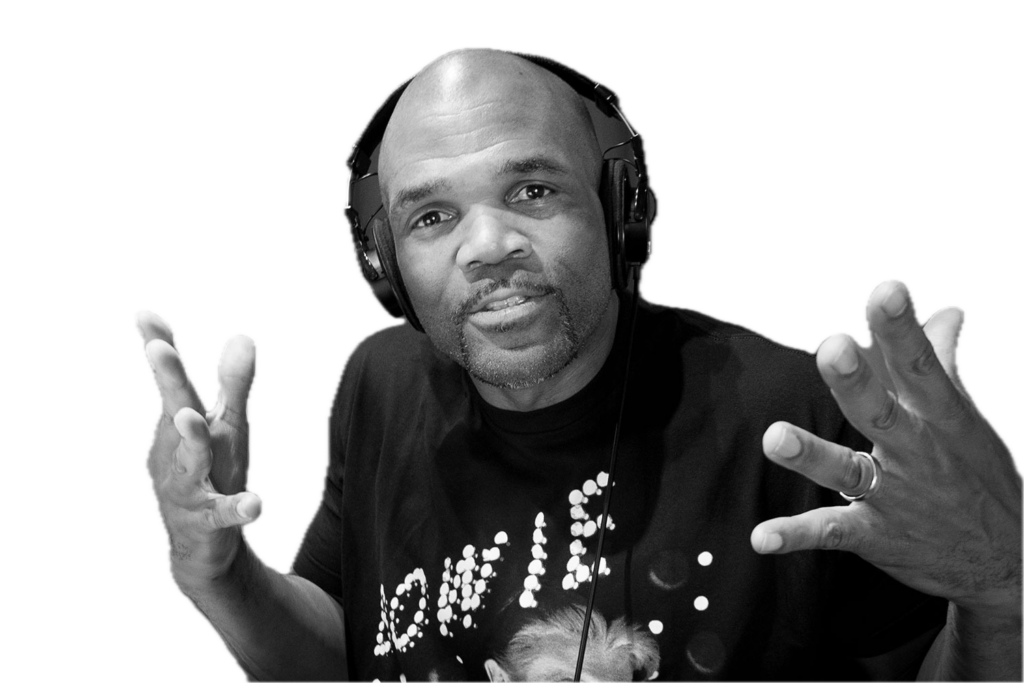
SV: On the topic of history, I have a two-part question: Do you think the digital era has killed crate-digging, or just moved it? And why do you think groups like Run-D.M.C., Public Enemy, and A Tribe Called Quest still hold up, while so much else has faded?
DM: Crate-digging still exists; it’s just gone underground again. And everything underground is authentic and real. Right now, you’ve got people who aren’t even rappers making hip-hop records just for the sake of the music business, just to move product. Hip-hop culture itself is fine, and DJing is fine. Breakdancing is even in the Olympics now—though they’re letting in people who aren’t really breakdancers, but we don’t worry about that.
The truth is, anything that is real, holy, and sacred to all nations and cultures will get diluted and destroyed once it’s commercialized. Once it’s commercialized, 99% of it isn’t authentic; it’s just hawking a product. Labels use the “hip-hop” label for marketing, and the consumer thinks it’s legitimate.
But groups like Run-D.M.C., Big Daddy Kane, Jurassic 5, or the West Coast legends like Ice Cube, King T, and E-40—anything authentic that wasn’t born out of just being “famous” or playing the Hollywood game—we’re untouchable. We’re always going to be here. Because of what we built, people will always try to exploit it. I’m not even mad at the exploitation itself; I’m only mad when it starts to affect human lives. When the gatekeepers and the executives are making 300 million dollars off of hip-hop, that’s when the exploitation starts to hurt the people who actually built the foundation.
That’s it. They make 100 million off it, but they’ll say, “We can’t play the positive records because nobody wants to hear it.” That is a lie. It is not true.
I remember when I did the show about searching for my birth parents. I was in Milwaukee, walking out of the gym, and this 13-year-old kid on a bike rolled up to me. He said, “Yo, you’re the man from that show! Thank you for doing that show about adoption. I’m not adopted, but it made me think about life differently. We need more of that.” He rode off on his bike.
The industry will tell you the audience only wants the negative stuff, but that’s just because the networks are scared. Every show about hip-hop seems to focus on “I was a drug dealer.” Why don’t we do the Public Enemy story? Chuck D was a graphic arts student at Adelphi University running a radio station! Why don’t we tell the stories of the females who weren’t dancing in strip clothes? That’s what made hip-hop unique—it gave you every point of view.
SV: I read that you often asked other artists, “Is what you’re doing good for the neighborhood, or is it just good for your bank account?” I love that.
DM: I remember KRS-One saying, “The most important thing is the people in that audience.” He’d say, “There’s always a mic, and there’s always a camera—you have an opportunity to change something.” That’s been the mission. Everything real and dope is underground now, where it belongs. We don’t need to be with everybody.
DMC’s latest musical endeavor, “She Gets Me High,” is a powerhouse collaboration featuring an all-star lineup of Sebastian Bach, Mick Mars, Duff McKagan, and Travis Barker.
SV: Tell me about how “She Gets Me High” came together.
DM: It’s funny—you’re asking me about that, and it really is the same principle of “doing it for yourself” that we’ve talked about all along. Originally, the producer on that track was Sonic; he’d done a lot of R&B and hip-hop stuff, and he came to me with this sampled version of Ram Jam’s “Black Betty.”
It was that same energy—taking something iconic and reinventing it. When you get people like Sebastian, Travis, and Mick involved, it’s not just about a “collaboration” for the sake of marketing; it’s about bringing that authentic rock-and-roll spirit back into the conversation. It was about creating something that hit that same raw nerve we were hitting back in the ’80s. When you have guys like that in the room, the energy is undeniable. It’s not about the business; it’s about that feeling.
And people forget this little piece of trivia: Ram Jam’s “Black Betty” was actually on the Super Disco Hip-Hop Breaks volumes. Because back in the ’80s, all those breakbeats the DJs were using—the stuff that was truly “the” stuff—they put them all on one compilation. So “Black Betty” was technically part of the hip-hop canon already.
Sonic, my producer, had been to a game at MetLife Stadium. You know how it is at hockey or football games—during the timeouts and the breaks, they’re pumping that arena rock. You’re hearing Black Sabbath, Mötley Crüe, Sum 41, Blink-182, Rage Against the Machine, Metallica, Run-D.M.C., and Ram Jam. Sonic had this idea to sample the record, but he came home and said, “Dee, we’re doing this thing, but we can’t just do it with samples. You’ve got to do this record live.”
Suddenly, my dilemma became, “How do I put a real band together to play this?” I had no management, no label assistance, no lawyers, no A&R. It was just me.
So I go to this party—a party I didn’t even want to go to—and Travis Barker was there. Now, understand, I’m sitting there with this sampled version of a track and this massive ambition, but no roadmap. Travis walks up to me, and he looks me dead in the eye and says, “D…”
He says that most people just want to jump on the Run-D.M.C. train or try to redo “Walk This Way” all over again. He knew, and I knew, that to do it right, we had to build something new from the ground up, with real live energy, just like those bands in the stadium. He saw the vision, and that was the spark that changed everything.
It was surreal. Travis said, “D, I was there since ‘Rock Box.’ If there is ever anything you need, let me know.” I told him, “Travis, this is crazy, but I’ve got this track covering Ram Jam’s ‘Black Betty’ and I want you on it.” He said, “Done.” He sent me the drums, and I already had Sebastian Bach on the vocals.
But then, I’m in a meeting in Cologne—one I didn’t even want to take, but I was just there to learn the process—and the phone rings. The lady holding the meeting says, “Oh my God, I’m so sorry, it’s Mick Mars on the line.” I told her, “Take the call!” She says, “Mick, I’m sorry, I’m in a meeting with DMC from Run-D.M.C.” And Mick goes, “DMC? From Run-D.M.C.? I love those guys!”
She puts him on with me, and we start this great back-and-forth—mostly about hats! We were geeking out over each other’s headgear. Then Mick says, “Darrell, is there anything I could ever do for you?” I almost fell out of my chair. I told him, “Mick, I’ve got Sebastian on vocals, Travis on drums, and we’re doing a version of ‘Black Betty.’ You want in?”
He didn’t even hesitate. He said, “I’m in L.A. You get your ass to L.A. I’ll make Nikki Sixx give us a studio.” I flew out at 11:00 AM, and Nikki was there, jokingly telling his people to lock everything up because Run-D.M.C. was in the building! I was sitting right there next to Mick Mars while he recorded every single one of his guitar parts.
So, just like that: Sebastian, Travis, Mick, and me. We had the band. All we needed was a bass player—and that’s when things got a little difficult! Darryl McDaniels: It’s incredible, man. We tried to get Flea, but he was busy touring. But Flea was so humble—he told me and Sebastian, “Go find Bootsy Collins.” He wanted to hear Bootsy on this track. So we reached out, but Bootsy was out on the road too. After a few dead ends, Sebastian just said, “You know what? I’m gonna roll the dice.”
No lawyers, no agents, no corporate suits. He just direct-dials Duff McKagan. And you know how it is—Duff just picks up! Sebastian tells him, “I got D.M.C., Travis Barker, and Mick Mars on the track,” and Duff goes, “What’s this about?” When he heard it was a cover of the Ram Jam version of “Black Betty,” he loved it. He told us, “Send it over, you’ll have my bassline in 24 hours.”
And he did. That’s how it came together. It was completely organic.
Duff told me something that really stuck with me. He said what’s so good about this record, especially in such divided times in this nation, is that it shows four generations of music rocking and rapping together. Nobody’s arguing, nobody’s mad about political affiliations or religious beliefs or skin color. It’s just people working together. Duff said, “This is what the world needs right now.”
It felt like the same thing we did with Steven Tyler back in the day—taking that mic stand and knocking down that wall. We were doing it all over again. Sebastian, Travis, Mick, Duff—everyone just rallied around the idea because they all said the same thing: “Yo, I love those guys. I’m on it.” It was like being a little kid calling up friends to come over and jam. Everyone just wanted to be part of the music.
SV: Let me ask you this–what is the one question nobody ever asks you about your life or career that you wish they would?
DM: You know, everybody always asks about the “What happened?” or “How did you do that?” or “What was it like to be famous?” They always want to talk about the result—the gold records, the MTV awards, the stadium tours.
But nobody ever asks me: “D, what was the most important thing you had to let go of to become the person you needed to be?“
Because everything we talked about today—the glasses, the adoption, the addiction, the struggle to be authentic when the industry wanted a product—it all came down to subtraction. It wasn’t about “how do I get more famous?” It was about, “How do I strip away all the ego, the expectations, and the lies I was telling myself, just to find the guy who was reading comics in the attic?”
People think the journey is about adding things to your life, but for me, the hardest and most important work was letting go of who I thought I had to be so I could finally find out who I actually was. I wish people asked about that, because that’s the real story—that’s the Chapter One I finally got to write.
That question—”Why are you happy all the time?”—is something I get a lot. People see the fame, the success, and they assume it’s a constant state of perfection. Nobody is happy all the time. But I am happy when I get to do what I love, and honestly, you don’t even have to pay me for it. Fame doesn’t guarantee happiness; sometimes the stuff you get paid the most for is the stuff that makes you the most miserable. My life is no different from anyone else’s—whether you’re a teacher, a plumber, or a pilot, we’re all human beings dealing with the same internal realities.
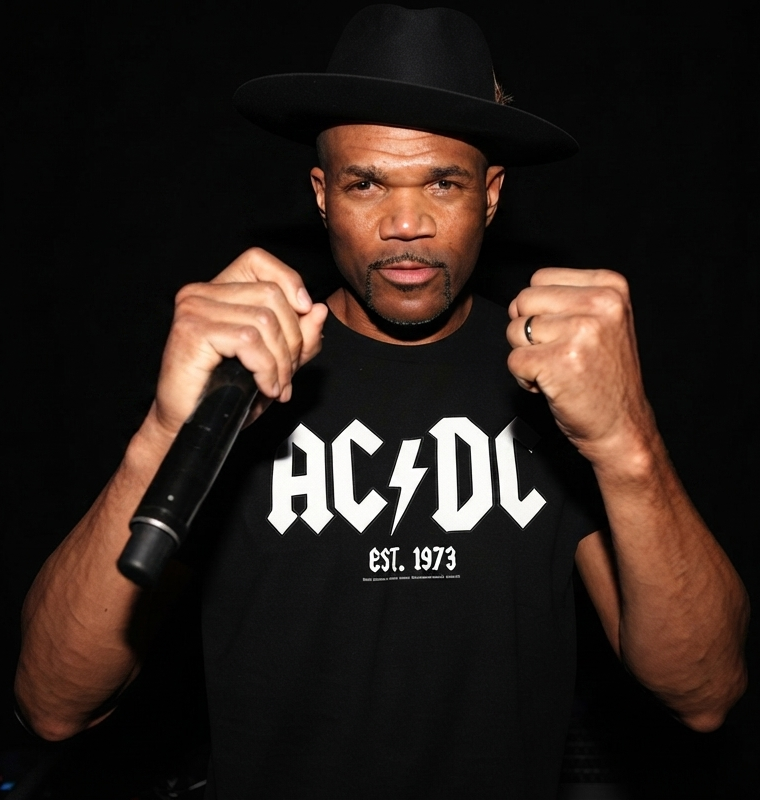
SV: You’ve been so incredibly candid about your struggles. We’re living through a real crisis of meaning and purpose right now so I appreciate you sharing your journey. Final question: what do you want people to remember about your character, not necessarily your music?
DM: I just want them to realize that who you are is given to you so somebody else can see who they are. So many people wanted to be Run-D.M.C. or be like D.M.C., but they didn’t have to be me. They just had to do the thing that made them feel like, if they did it, they could be something.
Run-D.M.C. kind of broke the mold. Before we came along, all the records sounded the same—the same R&B-disco style. We broke that wide open. We gave birth to rap in hip-hop for guys like Biggie and all those that came after. When we first came out, everybody tried to sound like us. But when we stayed true to doing what we were doing, everybody else realized they could be themselves, too. Whether it’s E-40 or Salt-N-Pepa, it’s all about being real. I hope people see themselves in my journey.
SV: D, this has been such a huge treat to speak with you. I can’t thank you enough.
DM: This was awesome, man. One of my best interviews. Thank you! I’m dropping a four-song EP for November’s Black Friday Record Store Day, so let’s definitely talk then. Keep on drumming, man. We need the beat!
Leave a Reply
You must be logged in to post a comment.