
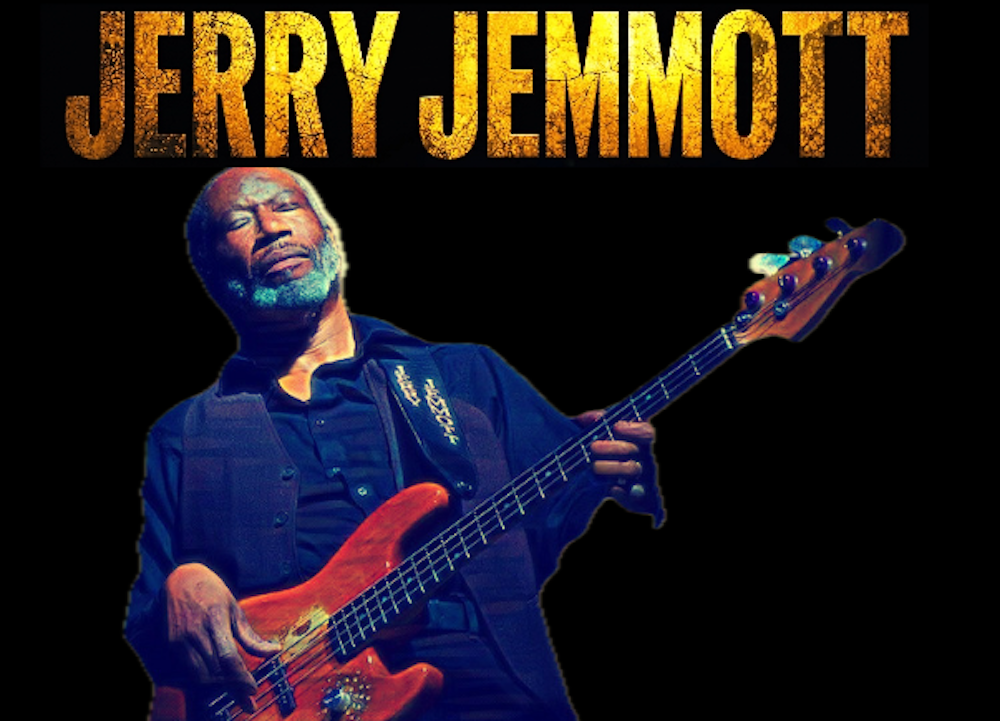
From a withdrawn, injury-marked childhood to becoming one of soul and blues’ most influential bassists, Jerry Jemmott turned instinct, feel, and Buddhist-rooted discipline into a career built on service — reshaping the sound of Aretha Franklin, B.B. King, King Curtis, and Wilson Pickett, cutting “Think” days after Dr. King’s assassination, and later mentoring a young Jaco Pastorius through his own struggles.
___
Sounds Visual: You were on stage at five as a tap dancer at Carnegie Hall, but you’ve also described a childhood marked by brain injuries, falls, being knocked out by poles and things like that, which left you withdrawn, without ambition, and with some real damage — well before the accident everyone knows about. What was that childhood actually like from the inside, before music gave it a shape?
Jerry Jemmott: Very uncertain, very paranoid. I knew a lot of things, I experienced a lot of things. After you get one traumatic brain injury — it’s historically been said, which I found out when I wrote my memoir in 2016, though I didn’t know it at the time — that once you get one, you get another one. And it’s much harder for people to deal with. I was very unable to draw. I had suicidal thoughts. I didn’t see any future at all. I had no ambition, no desire to do anything — except girls. Funny how that never changed. But that was a no-no too, so I was completely screwed.
SV: Then comes the car accident that put you in the hospital for weeks. When you came home, you ended up hearing Miles Davis’s ‘Round Midnight, which was the only jazz album your sister owned, and something about the bass suddenly stood out to you for the first time. What do you think actually changed, physically or perceptually, in that moment?
JJ: Well, first of all, I was told I was in the hospital for two weeks — I have no recollection of any of it. I remember running out my door, facing the kid, and that’s the next thing I knew. I’d kind of predicted it — my best friend had gotten hit by a car the year before, and I always thought I’d be next. And sure enough, I was.
I remember going to a local funeral and coming home and getting back in bed, and that’s when I put on the same music my sister always played — she had Odetta, Nina Simone, the Kingston Trio, Peter, Paul and Mary. My mother liked classical music. My father played bass — I’d been around symphony orchestras, been to tap dance recitals, been to Young People’s Concerts as a kid. But I had no real interest in playing music or being part of music. I wasn’t doing much of anything, really.
But for some reason, that moment, coming home and getting back into bed with the music on — I heard the bass just jump out at me, and I said, “I want to do that.” I could hardly even hear the bass in the mix, but the way Paul Chambers played it was so intuitive, so liberating, that I thought — this is something I could do. Nobody could really hear the bass anyway. If I made a mistake, it would probably be fine — I’d be in the background, not up front on stage, not seen. That suited my persona at the time, being shy. Everything about it felt like something I could feel comfortable doing. And that’s how it clicked for me.
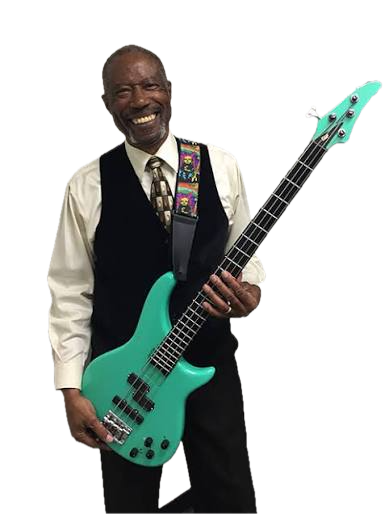
SV: You chose it partly because you assumed mistakes could go unnoticed back there. Do you think that limitation forced you to develop a kind of musical awareness based on feeling rather than hearing?
JJ: It was probably subconscious — I had a feeling, almost a mission, to make the bass sound good, to make the music sound good, the way Paul did. So it was about whatever it took. I didn’t know the technique yet — that came later, learning about pickups and electric bass and so on, but at first I was playing upright, pretty straight-ahead, between the classical training with the bow to get the intonation right, and playing gigs three or four nights a week. That gave me a real sense of freedom.
In fact, reading was a bit of a blessing for me, because I couldn’t always hear pitch clearly — I had to learn where B-flat was, and I knew going in that I’d have struggles. But I overcame them because I could read what was in front of me. That’s what got me into the high school orchestra as principal bassist, and everything moved forward from there — basically built on my ability to read.
SV: After that year of formal classical training — before you had any real interest in practicing, and with your mom reportedly knowing your injuries and clumsiness better than anyone — how important was that reading and technical foundation to everything that came after, even though your real love was jazz?
JJ: It was crucial. It was the foundation that affected everything — it’s what let me go to a high level. I was saved by that training. I actually stopped taking formal lessons after the first year, because I started working professionally around age twelve — I got a gig playing three or four nights a week. But I still played in the high school orchestra, so I stayed connected.
When I got to high school, I decided I wanted to audition for the All-City High School Orchestra, and at that point I got another teacher — a guy who played in the New York City Opera Orchestra — who really refined my playing. I managed to get third chair. Eddie Gomez had second chair — he’d have had first, but he was ahead of me the whole way up. I came up watching guys like him, Harry Hall, Mike Fetty — I knew exactly where I was lacking, what I might never be able to do. But I always figured, even with my limitations, I could be among the best. I didn’t dwell on it — I just kept working hard. That’s all I could really trust myself to do, to get better.
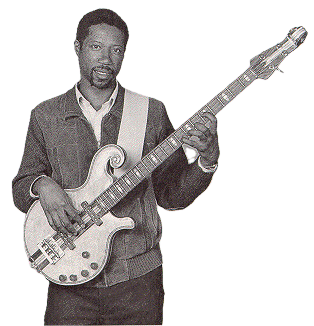
SV: You were gigging in bars serving alcohol — three or four for a dollar — as a really tall twelve-year-old, with a mom who’d already introduced you to wine and beer at home. How did you navigate that world without it swallowing you?
JJ: That’s the whole thing that saved me — it wasn’t like getting drunk on a gig. I’d have a drink, sure, but I never got drunk on a gig. I saw other people who would, and they’d get knocked out, and that would hold the music up. It actually made me stronger — made my role even more prominent, because I could still play through it.
We’d play stuff off the jukebox, basically — take a song, they’d cut the jukebox off, and we’d play the same song live off “payment,” like a piano bar. That really built up my foundation. I had all kinds of levels of playing coming up — duos, trios, quartets, rehearsal bands, orchestral playing. That well-rounded experience, all the way up, was something I was really fortunate to have before I ever picked up an electric bass.
SV: You once said the only certainty in your childhood was failure. What allowed a kid with that internal narrative to keep showing up and pushing forward once the bass gave him something to aim at?
JJ: The fact that I kept working on it — I wasn’t going to give up on the music. In spite of my inabilities, I worked harder. That’s the only thing that kept me from dwelling on failure — working harder, being more judicious, listening harder, being more intuitive. I found that just feeling what the title of a song was gave me the confidence and conviction to play my own interpretation. I saw people’s reactions to my playing, and that gave me the boost — the sense that, “Okay, you’re doing the right thing.” Maybe it had been done before, but whatever I was doing felt right to me.
SV: You eventually missed your own graduation because you were three miles away at a rehearsal.
JJ: Yeah — we had a regular gig going with a guy named Phil, and it had completely slipped my mind that graduation was that day. This was in February — I think February 9th. I would’ve had to go home, get my suit dry-cleaned, get a tie — and I just said, forget it, I’m not going. It wasn’t important to me at that point, because I was so invested in the music. That’s what I wanted to do.
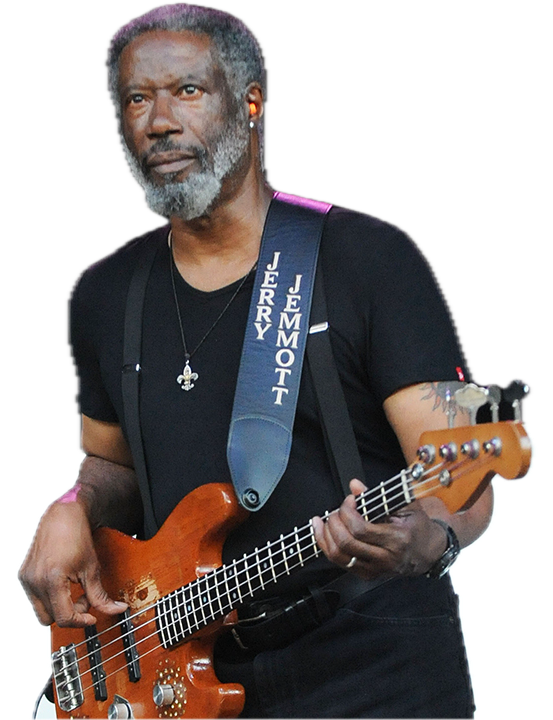
SV: Let’s talk about switching from upright to electric. Around seventeen or eighteen, after about six years on upright, you switched over. You’ve said you disliked the tone at first — you bought a cheap Fender Jazz and an Epiphone amp out of a pawn shop. What kept you playing an instrument you found physically and sonically awkward at the start?
JJ: What motivated me to even pick it up, even though I couldn’t stand the sound at first, was this — I found myself playing with a group of young guys closer to my own age than I normally played with. I usually played with older men. These guys were trying to play like Miles Davis — copying all the negative stuff Miles was known for, ignoring the audience — and that pissed me off. I didn’t want to be part of that.
Above: “Ain’t Got No / I Got Life” – Nina Simone | ’Nuff Said! (RCA Victor, 1968) — Jerry Jemmott anchors the track’s buoyant shift into liberation, driving Simone’s iconic Hair medley with a syncopated, soul-drenched bassline.
At the same event, there’d be five or six bands playing at once — a calypso band, a Latin band, a jazz band, a vocalist band — and one band in particular wouldn’t take requests, or they’d take people’s money and then play something else entirely. I realized, this isn’t happening, I want to play with that band over there. So I said, once I get back from a gig I had coming up in Bermuda, playing straight-ahead traditional music, I’m going to get myself an electric setup. And that’s exactly what I did. That was my motivation, strictly that — not some grand plan, just that I wanted to play for the people. I got over the sound eventually. I started developing my own sound, worked on it until it became tolerable to me.
SV: Coming from a jazz background, where musicianship meant harmonic complexity — how did you mentally reconcile moving into R&B, blues, and pop sessions, where the standard was simplicity and repetition instead?
JJ: It took a while — it was a growing process. You scale it down, cut it down, and you realize less is more effective. It’s more rhythm-oriented, which I liked anyway, so it was cool. There was also a precision to the intonation that really motivated me to go deeper, because now I wasn’t thinking about whether something was sharp or flat — everything was locked in.
But I still have hand problems with my fingers, from all the physical and mental issues over the years — I still have trouble with my second finger to this day, so a lot of what people call “ghost notes” in my playing actually came from that. I just learned to love it. I said, hey, that’s cool — and I became less critical of myself and more committed to developing my own style, more committed to making the music sound good.
SV: Which you certainly did. You’ve also talked about initially feeling that radio R&B lacked funk from the bass chair, and thinking you needed to show them what to play. How quickly did studio reality humble that instinct, and what replaced it?
JJ: It was never really a humbling thing — it was more like a one-time thought. Early on, I heard a recording that pissed me off — the song was great, but the bass was lacking, and it was so obvious what was missing. So I told myself, one time, I’m going to show them what to play. That became my mission, basically, without me even consciously thinking about it afterward. It’s only in hindsight, once I started getting accolades and recognition as one of the bass players who changed the way the instrument was played, that I realized — well, that’s just what happened. It wasn’t something I worked at trying to prove. It just turned out that way.
SV: Your early electric work included some of my favorite Latin bands — Pucho and the Latin Soul Brothers, Willie Bobo. How did that Latin rhythmic vocabulary, combined with your tap-dancing background, shape the rhythm-first approach that’s still audible in your playing?
JJ: It has — the cause and effect of it is amazing. I became a Buddhist in 1973, and that ties in with this terminology I’ve always believed in — cause and effect. I used to think of it as immediate, like dropping something and picking it up, but it goes deeper than that — past, present, and future, all connected. Everything you are is what you eat, what you experience — it comes into your playing, your thinking, your morality, your consciousness, your view of society, your upbringing, your values. All of it feeds into your commitment to do something positive in the world, which, in my case, comes from my family tradition — I come from a family of activists. Growing up, you’re taught you have to work twice as hard just because you’re Black. So you carry that mentality, and it’s just what you do.
SV: You’ve described walking into a studio like a man looking for a lifesaver — sometimes handed full charts, sometimes just a title and a feel. Walk me through a typical session. How much was reading, how much was invention, and how did you handle an arranger recycling one of your own lines back at you in a new key?
JJ: You’ve read my book — that’s where that line comes from. My statement about it came about because I realized that struggle was part of the attraction. I look back at my playing and a lot of times I was just going for it — I was often playing above my own head, and I had to work hard just to stay up with the musicians around me.
A lot of my early sessions were demo work. Once I started doing more “legitimate” work, so-called, with the expectation of reading, arrangers eventually realized my own ideas were often better than what they’d written down. So they’d just tell me, play what you think — or if I saw a good line already written, I’d embellish it, try to make it right, bring the music alive. That was really the whole idea, no matter what the actual notes were — bring the music to life.
SV: You’ve said your first impression of a song is usually the right one, and that you often knew a take was correct before you could explain why. What does a wrong groove actually feel like inside your body, and what does the right one feel like the instant before you can name it?
JJ: That’s a good question — let me think of an example. I don’t think I’ve ever really “named” a groove — I just know when something feels right or doesn’t sound right. I can get a physical reaction from bad music. I’ve had experiences in the audience where bad band music almost made me sick. But if I’m actually in the band playing, and creating, I can usually feel when something’s wrong before it gets to that point — it’s just a matter of feeling the message of the song.
One classic example: I got a call from Jerry Wexler to do a session for Aretha Franklin. He told me, “Bring your bass — I might use you, I might not.” He’d normally call musicians two weeks ahead of a session date — guys like Spooner Oldham, who’s still alive, we still talk occasionally — and he said he’d already done a run-through before. So he told me I might play, might not, but he wanted me at the studio anyway. Fine — I’d get paid either way.
Above: “You Send Me” – Aretha Franklin | Aretha Now (Atlantic, 1968) — Jerry Jemmott locks into a supple, melodic gospel-R&B groove, intertwining his fluid, syncopated basslines with Aretha’s soaring vocals.
I got down there at ten, no pressure to be early, but they were already deep into it. They worked on the song from ten until one, and I thought, I see why he called me down here — but I didn’t know when he’d actually bring me in. After the lunch break, he said, go on in, see what you can do. I’d already known, from ten that morning, what the groove should be — but they couldn’t hear it, they kept trying variations, all leaning toward a slick R&B sound that wasn’t resonating with what Aretha was actually singing, with the feel she set up in the first four bars.
So I went in and, in about three takes, we had it. I got to play with Tommy Cogbill on guitar — great musician, one of my favorite bass players in fact, even though he played guitar on that one — and he said, “I’m not used to hearing this — stay right here.” They’d been working on it all week at that point, so I basically saved the session.
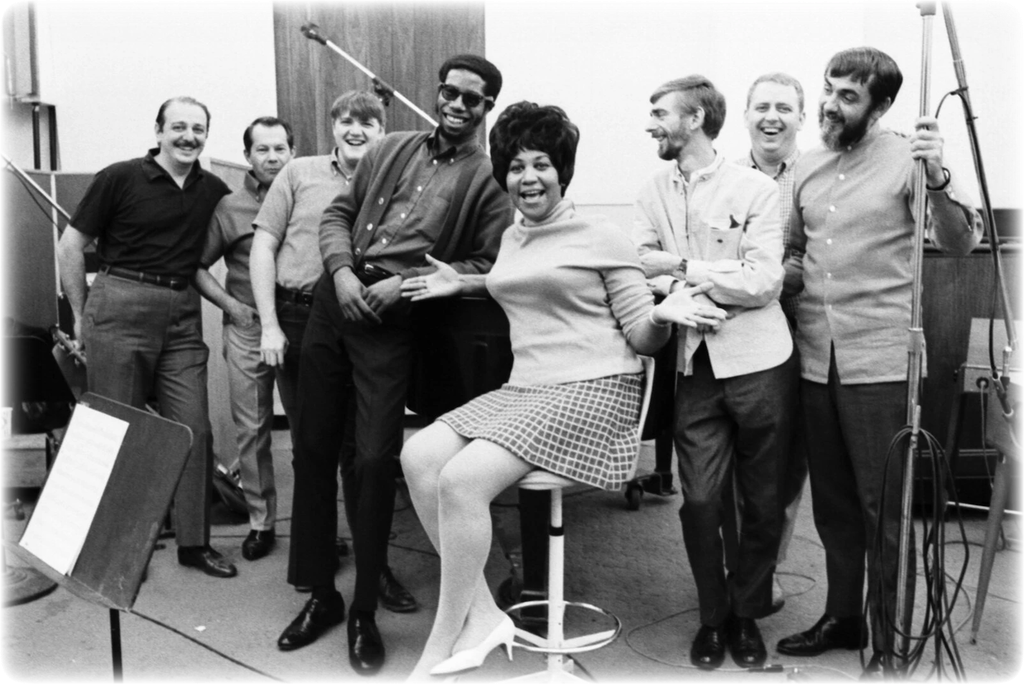
Above: Jerry Jemmott and Aretha Franklin at the Aretha Now sessions, 1968
SV: You’ve talked about acting out a song — picturing coveralls and a piece of straw for a country feel, living inside a title before you play a note. Is that still a deliberate technique, or has it become so automatic that you only notice it when it’s missing?
JJ: It’s something I still employ when I need it — if I have to go that deep. But usually I don’t have to consciously picture myself in coveralls. That doesn’t happen too often anymore.
SV: You once compared record-making to baking — the ingredients, the oven temperature, a three-minute cake. When a track flops, what’s the first ingredient you check?
JJ: When you say “track,” I think of it as a song. The first thing I think about is the vocal — usually I’m playing to support a vocal, though I’ve done a lot of instrumental jazz work too, no words at all. But regardless of whether there are words or it’s just notes, if the bass doesn’t support the melody properly, then it isn’t happening. Whatever’s underneath is supposed to support that melody, make it sound good the first time, better the next time, and even better each time after that — the same way jazz tradition works, where you start simple and each chorus builds more intensity. Except we only have three minutes to do it — not six, not ten. You’ve got to get in, tell the story, and get out. So the energy has to be upfront, and it has to keep developing as you go.
SV: You’ve also said the bass should be felt and not heard, even as engineers and producers kept pushing the bass up in the mix against your instincts — what you called “hijacking.” When did you stop fighting that, and did it change how you wrote lines going forward?
JJ: Oh yeah, I changed. I realized I didn’t have full control — this is what they wanted, and honestly, sometimes it sounded good, even if it wasn’t my intention to be that far out front. It became the accepted norm, and I had to go with it. It’s a growing process — sometimes you have your own ideas, and sometimes you just go along with someone else’s.
SV: Being a session musician meant hauling your own gear, answering your own phone, treating it like an ordinary job, which I know something about as a drummer too. Do you think the mythology that’s grown up around those Atlantic and Muscle Shoals records obscures how ordinary, and how hard, the actual work was?
JJ: After a while, the studios started supplying amplifiers, which made things easier — but at first we had to carry all our own gear. Drummers had to bring their own kits before they started using house drum tracks. Studios would pay for cartage, though — like we’d say in Mississippi, “We’ll play for nothing, but you’ve got to pay for the cartage,” meaning you had to pay to move the equipment.
It wasn’t really hard — you just showed up. Atlantic always had the gear ready. Muscle Shoals, I always brought my own bass. So there wasn’t much stress on that front — the stress was making music out of nowhere. That was the real work.
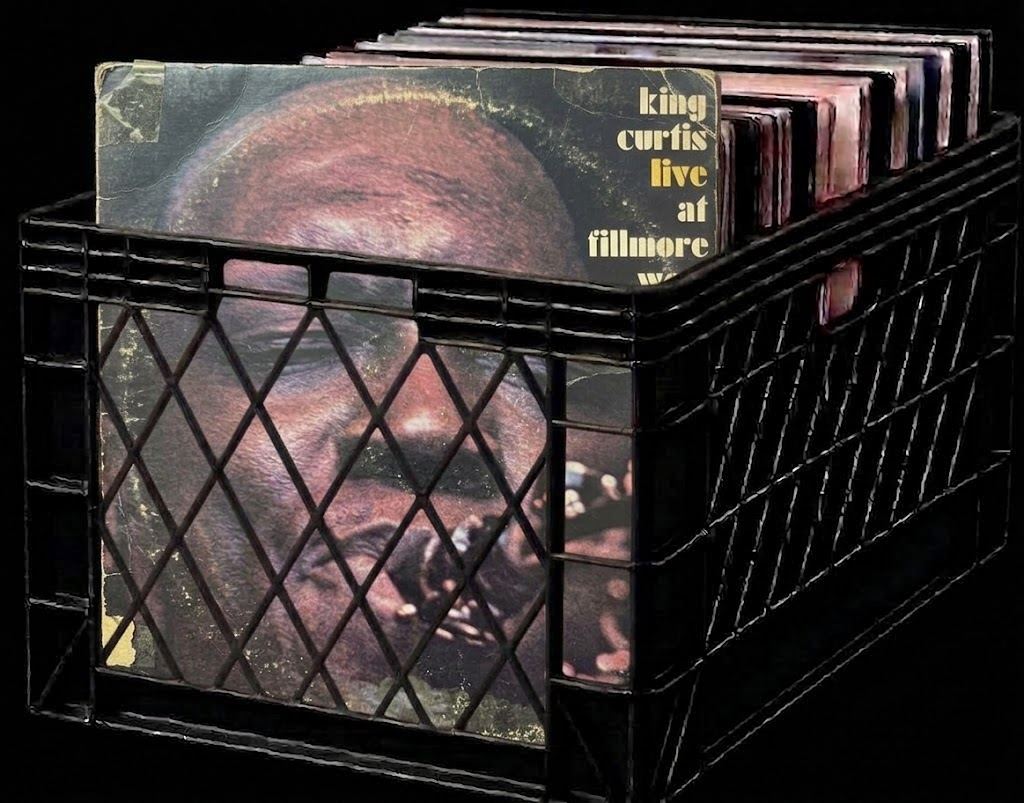
SV: Let’s talk about King Curtis for a minute. You’ve described your musical relationship with him as something you almost didn’t have to explain. What did he understand about you that other bandleaders didn’t?
JJ: We locked together — I guess he was sensitive to my sensitivity. I had a short fuse, but he never messed with me the way he did with everybody else in the band. He’d tease everybody, but never me. He felt something, and when we played together it was almost like a friendly competition — it was strong. I felt what he was doing, what he needed, and he liked the rawness of my playing. He’s actually the one who got me into playing more simply — because coming from the jazz tradition, my instinct was that every chorus had to be different, that was almost a mandate to me, never play the same thing twice. He got me into playing repetitively instead, when the song called for it.
SV: You initially resisted going back on the road, but Curtis said simply that he needed you, and that was enough. What does it mean to be needed musically by someone you trust that completely?
JJ: It means everything. We had a strong connection musically — it’s basically love, where you just feel what a person needs. I had the same thing with Aretha, and with a lot of musicians I’ve worked with. It’s a rapport — listening directly to Cissy Houston’s phrasing behind her, the whole interplay. It’s an honor to work with somebody like that, to support them. That comes from my nature — helping to elevate people. For me, it’s an honor to be in a position to help people.
SV: Even when you turned down full-time touring, Curtis still insisted on using you in the studio, which reportedly created some friction with the touring bassist, who’d get booed sometimes because audiences expected you. How did he manage that tension?
JJ: I don’t really know about that part — that’s what I’ve read too, honestly. Audiences could be expecting something else, I guess. It’s funny — I went to L.A. in 1971 to do the Aretha Franklin Live album, and when they called my name, someone said, “Jerry’s the only cat who can cut this with Aretha.” I said, yeah, that’s me — come on down. That was the first time I really felt I’d made an impact in music outside my usual circle.
SV: Curtis also taught you the discipline of settling on one strong idea rather than overplaying it — slowing down instead of showing off. Was that a lesson about bass playing specifically, or a larger lesson about restraint in life?
JJ: It’s hard to separate the two. Learning something from one context and applying it to another is funny — I’ve developed a color-sound music system, for instance, where I apply colors to musical notes. It’s gotten to the point where the notes become numbers, and the numbers become relevant to numerology, and it tells you something about a person’s name. Everything in life is reality-based, and every reality connects to another reality — when you start connecting the dots, you see the value that art brings to life, anybody’s life.
That’s become my mission now — this new chapter I’m in, devoting my time to what I call neuro-music education, using the mind, the person’s life and spirit, to make music, not just music for its own sake, but showing the interconnection between all these things. There’s real value there — a resource we need to tap into. Even with AI now, some of the research shows how vital it is for the brain to keep cross-referencing and learning new things. We have to teach AI what we know, the same way — it learns like a living entity, in real time. Right now, honestly, they can’t even fully control it. But that’s a whole other conversation.
SV: I know we touched on this earlier, but I want to drill down a bit more on “Think,” since it’s such a legendary track. Set the scene: it’s ten days after Dr. King’s assassination, you’re not even necessarily scheduled to play, and you sit for hours, in something close to physical pain, while the Muscle Shoals band searches for a groove that isn’t coming. What were you sensing that the other musicians in the room maybe weren’t?
JJ: I could tell they weren’t really listening — they weren’t in tune with the words coming out of her mouth, or the notes coming from her fingers on the piano. They were on a mission to sound slick — that’s the only way I can put it. Everything they tried was rhythm-and-blues slick, and that wasn’t it. It needed to be shouting, jumping — I call it country-to-gospel. That’s all it was, basically.
Above: “Think” – Aretha Franklin | Aretha Now (Atlantic, 1968) — Jerry Jemmott lays down one of soul music’s most iconic basslines, driving Aretha’s fiery call-for-freedom anthem with a muscular, syncopated groove and flawless rhythmic drive that defines the Muscle Shoals sound.
The key was picking up on the lead-in. I always tell musicians — it’s not just about the notes, it’s about picking up the lead into a phrase. That’s what really elevates a song. You know a singer’s phrasing… It wasn’t really a breakthrough about the notes — it was about finally playing with her instead of against the arrangement. I picked up on what was coming next. Music is about what’s next — what’s the next phrase, and how are you going to play it. That’s what I try to do in the things I’ve written since — what’s the next phrase, and how do you play it, physically, in terms of what it registers as. It’s like call and response, essentially — she was calling, and calling, and nobody was responding. When she started playing, I picked up on that pickup, and just played to it. That was it.
SV: When the session finally came together, in about three takes — once at least the tracking was done — was the relief purely musical, having it finally work, or was there also a quiet satisfaction in having been right the whole three hours while everyone else struggled?
JJ:Well, it wasn’t so much a “track” — this was a live session, everybody playing together in the room at the same time. So there was a great collective sense of, “This is it, this is it,” once we found it. I showed everyone the feel, we all recognized it, and I showed them the lick — note for note. Everybody learned it, everybody played it in the right sections, the way it naturally fell — you play it here, here, and here. That was the satisfaction — accomplishing what we’d been trying to do the whole time. It wasn’t about putting anybody down — the job was just finally getting done.
Normally, if a song isn’t working after the first hour or so, you move on to the next one and come back later, because you’re watching the clock on studio time. That’s the usual approach. What happened with “Think” was completely out of the ordinary.
SV: You ended up doing decades of work with Aretha — albums, tours, Live at Fillmore West. I think you two knew each other over forty years. How does that initial chemistry sustain itself across that much time?
JJ: Through memory — you remember something good, you never forget who worked. I was on the road with Gregg Allman, up in Detroit, and my friend Phil told me Aretha was putting a band together and looking for me — this was around 2010, 2011. I’d been trying for years to reconnect with her, record something, make it happen, and eventually gave up on it. But apparently she never forgot my playing. She reached out in 2014, along with other bass players she’d worked with over the years — Ralph Armstrong, Chuck Rainey, Kevin Brandon.
She reached out to me to do a specific show because Ralph had a prior commitment with his father he needed to keep. I didn’t think much of it at the time — I just heard something about a conflict — but I got a call from H.B. Barnum. They thought I still lived in New York, and wanted to know if I could recommend players, since they’d gotten stuck for a show in Europe. I recommended George Naha, who lives out that way. Everything came together, and she ended up hiring me for the following year, 2014 into 2015.
SV: Live at Fillmore is one of my favorite records. You described the first night at Fillmore as a bit of a train wreck, with the band only really catching fire later in the run. What did the band have to learn about itself in front of an audience that no amount of rehearsal could have taught it?
JJ: It’s stress, really. We’d played some of those songs before, in Houston. We just missed some cues here and there, and none of us had really rehearsed with the book in front of us — we weren’t fully comfortable with the material until the second or third night. Third night, we really had it together. First night, we had a couple of rough patches, but we got through it.
They didn’t use those first-night cuts on the original album, but if you get the full compilation release — I think they eventually pressed around five thousand copies of it — you can hear exactly what I’m talking about, right from the start, on one or two songs where it didn’t quite come together. Those were my parts — I know the mistakes I made, and you live with it. My name is attached to it, and that can mess with you when you have to sit with that. But I got stronger, and by the time we got to Montreux, we had it down. We were on a mission to get better, and the Montreux performance — which turned out to be the final one — was the best we ever played. There was a moment when Aretha came on stage there that was something special, something I’ll never forget.
SV: Let me ask you about B.B. King for a minute. On “The Thrill Is Gone,” you deliberately broke the standard blues triplet feel into sixteenths and eighths, working against B.B.’s vocal phrasing instead of locking into it. What made you trust that choice enough to commit to it?
JJ: I’d been doing that all my life — I never thought of it as doing anything deliberately unusual or technical, like sixteenths against a traditional triplet-based blues shuffle. I just knew it would work. I had some previous experience playing with him — earlier, when we made Live and Well — and the ideas I had were working with what he was doing. He liked it. Most of what he plays isn’t straight eighth-note shuffle — it’s mostly triplet-based shuffle — and from the moment I started playing with him, I started playing eighths, or sixteenths, against his triplets. That’s something I’d already been doing with other artists before that.
Above: “The Thrill Is Gone” – B.B. King | Completely Well (BluesWay, 1969) — Jerry Jemmott transforms a standard minor blues into a modern, crossover masterpiece, anchoring the track with a smooth, syncopated straight-eighth bassline and subtle half-step slides that lock effortlessly into Herb Lovelle’s groove,
I mention in my book how I played with Ray Sharpe — a remake artist who also sang with B.B. King — along with Leo Morris and [uncertain name in the original recording]. Leo Morris, you probably know, later became known as Idris Muhammad. We did some dates together, and it kind of validated my sense of funk. We’d play these gigs, mess around with the blues, and I realized — this must’ve been around ’64, ’65, ’66 — three years later, when I’m playing with B.B. King in the studio, I said, oh, he’s down with this too, really.
I’ve always just wanted to make history, make the music come alive, different every time. I did the same thing playing Willie Bobo’s boogaloo stuff — people dancing, having a good time, Ray happy with it. I just do what I hear, and what I heard against his triplets was eighths and sixteenths. But the real key was elevating what he was singing — that was always the goal, regardless of what it took rhythmically or harmonically. I figured it out and just went with it — like Miles used to say, I’ll play it for you and tell you what it is later.
SV: B.B. giving you songwriting credit was, by your account, one of the only times that ever happened in your career. What did that gesture mean, coming from a musician rather than a record label?
JJ: It was huge — it meant everything, coming from somebody who was truly the King of the Blues, still is. It showed his humanity, his awareness, which came through in his music — that’s why he earned that title. I’ve heard stories since then from people who worked with him for years on the road — his longtime drummer, actually, I’m blanking on his name —
SV: Tony Coleman?
JJ: Tony Coleman, thank you. He told me a lot of stories from sessions we did together, about his years with B.B. — how he treated audiences, how fair he was with people.
SV: Let me ask you a couple of things about Duane Allman and Muscle Shoals — I’m a huge Allman Brothers fan. You and Duane came from pretty different musical backgrounds, but found easy communication as fellow session players. What made that connection with him work?
JJ: King Curtis actually introduced us — we played together on a King Curtis session, that’s how I met Duane. I recognized his talent right away, he had something going on. I’ve read the Skydog biography — it’s pretty accurate as far as it goes, my partner had me read it — but there’s a lot they left out, real stuff that isn’t in there, and some of it’s just surface-level. But since you’re an Allman Brothers fan, I’ll tell you — a lot of that sound came from Floyd Miles. According to Gregg, they saw Floyd Miles perform at a talent show, introduced themselves, and he’s the one who really introduced them to rhythm and blues. That’s how it all started.
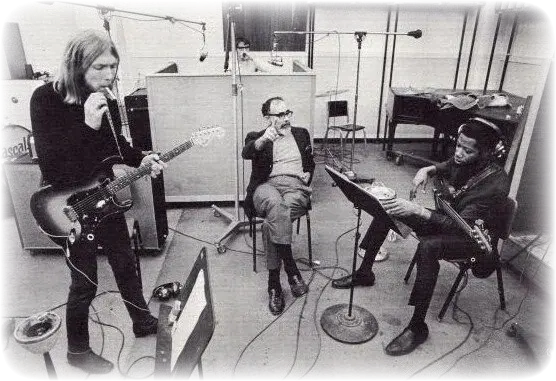
Above: Jemmott with Duane Allman (left) and Jerry Wexler on a session for Aretha Franklin, 1969.
SV: You and Duane both eventually walked away from the Muscle Shoals grind — over things like pay and respect, following a Wilson Pickett session. Looking back, do you feel like his path — forming a band — and yours — returning to New York — were two different answers to the same question, about what you wanted your life and music to be?
JJ: At the time, yeah. I only saw myself as a session musician — I never thought of myself as a performing artist, an author, a mentor, an educator. I just thought, well, I’m getting screwed here, I’ll go do jingles and film work with people I know. It was that simple for me. For him, it was, “I’m going to go home and start a band with my brother.” Just that simple. That was the decision, in the moment.
Above: “Hey Jude” – Wilson Pickett | Hey Jude (Atlantic, 1969) — Jerry Jemmott provides a muscle-bound soul foundation for Pickett’s scorching vocal performance.
SV: Fifty years later, with session musicians finally getting more consistent credit and royalties, sometimes, than they did back in 1969 — what would you tell a young bassist about protecting themselves in the studio, and what would you tell the 1969 version of yourself?
JJ: Keep better records — just keep records, period. I don’t really know what a 2020s session bassist’s life looks like these days. I get occasional calls, but there really haven’t been union sessions in about thirty years — it’s mostly cash sessions now. I try to do as many union sessions as I can, for the pension and health coverage. As a musician, you want to be in the union, get union pay, get some benefits — but that’s just not happening much anymore.
Rick Hall predicted this back in 1970 — he said the record business would get screwed with the advent of drum machines combined with computer synthesizers. He saw it coming, and just a year or so later, studios started closing down, work started drying up, and it’s basically been forgotten since. Everything’s automated now — musicians aren’t getting the work the way they used to, so you have to be aware of that and work with what’s available in the present. I’d say diversify as much as possible — learn many styles of music. That way you become the best version of yourself you can be.
SV: You discovered, years after the fact, that you’d been dropped from some of the official credits on some of Aretha’s ’69 sessions, despite photographic proof you were in the room, and you’re still sometimes misattributed on tracks like Gil Scott-Heron’s “The Revolution Will Not Be Televised.” Did discovering those gaps change how carefully you fought to get the record straight in your memoir?
JJ: Well, I discovered those gaps after my memoir was already done. As far as I knew going into the book, I was properly credited for “The Revolution Will Not Be Televised” and “People Got to Be Free.” But it turns out the record company botched the credits on the single release — put the wrong information down — which is understandable in a way, since people just assumed the bandleader was the main guy on everything, and they’d copy-paste credits from previous releases. On the album releases, I do get credit.
The issue is that sample-licensing payments come off the single’s metadata, not the album’s. So I’ve had to mostly let it go — with any kind of legal claim, the time and money it would take would probably outweigh what I’d actually recover.
Above: Jemmott played the electric bass on Heron’s classic song; Ron Carter is sometimes incorrectly credited on the full album.
I used to wonder how many times my work has been sampld, past “The Revolution Will Not be Televised.” Creativity comes often from a lack of something;-and in today’s world of sampling, the lack of creativity is appalling, but sometimes brilliant, with just a turn of a dial.
I recorded “My Way” on an album with Irene Reid, and it got a lot of attention. This one recording I did after being black balled for two years due to my beliefs was vindication. The album The World Needs What I Need. It would be sampled later by Kanye West and Lil’ Kim.
All this being said, it’s a great way of connecting the past with the present to create a future; but just acknowledge the source.Ther’s music in everybody. I’m aware of [other samples], and maybe someday there’ll be some restitution, but I’ve got bigger fish to fry right now — I’m working on my Name Game, and I’ve also got a friend who’s just gotten hit by a car making a U-turn while he was riding his bike. He’s coming home Monday, but he got badly hurt — traumatic brain injury, though thankfully he’s very lucid, he was an athlete, not too far from me in age, and he’s really coming together. I’ve had the chance to go to his facility and play my game with him and his therapist and the rest of the staff — it was really cool.
So I’m working on this Name Game — the whole idea of cross-referencing music with color sounds, and being able to help people with cognition, because music is so tied to cognition. We assign a color to it, a number to it — we can tell a person about the value of their name and make a song out of it on the spot. It’s mind-blowing.
SV: I do want to ask about the 1972 accident [Jemmott survived a near-fatal car accident in Manhattan in 1972 that also involved singer Roberta Flack and guitarist Cornell Dupree], since obviously that’s a major part of your story — it left you unable to play for years, and there was some guilt tied to it. When music has been your identity since childhood, what happens psychologically when the thing you use to understand yourself is suddenly taken from you?
JJ: The combination of not being able to play and the guilt was genuinely devastating. It kept me from touching the bass. It’s funny — I actually started chanting after the accident, because Richard Davis was a Buddhist, and he practiced true Buddhism. He saw me and said, you need help. And I was ready for it — I’d already had an experience seeing King Curtis, after he died on the fourteenth of August, that made me realize there was something out there about spirituality I needed to embrace and look into.
So that was already on my mind before the accident. Afterward, Richard told me to hold on and try chanting. I said, okay, I’m in — and it worked for me right away. I got a part in a play, right away, up in New York, no problem.
Above: Freddie Hubbard | A Soul Experiment (Atlantic, 1969) — Jerry Jemmott injects his trademark pocket-heavy R&B groove into Hubbard’s soulful jazz-funk crossover.
SV: Was there a specific practice or insight, once Richard Davis and Buddhism came into it, that first made picking the bass back up feel possible, rather than just another source of pain?
JJ: Actually, I started whistling — I’d never whistled in my life before that. I told myself, I need to get back into music somehow. That’s what led me back. I tried working with a record company at first, and that wasn’t really working out, but the whistling got me into a gig, even though that particular thing didn’t pan out either. Eventually I had to just get back into music and do my thing. That was around ’75, ’76.
SV: Comparing the player you were before the accident to the one who came back — was starting over frightening, liberating, or both?
JJ: Both. I realized I still had gaps in my knowledge, and that made me work harder. Around that time I also started teaching — I liked that idea. I started teaching in 1976. And ironically, back in 1970, right after I’d first started really taking off, someone had asked me to come stay at their house and take lessons, and I wasn’t interested at all. Sixty years later, here I am, looking for students to share my knowledge with and to get better myself. I find that with every lesson, I learn more than the student does — that’s just how it’s stayed to this day. But the gratification of seeing the light bulb go off in someone’s head is really a wonderful thing.
Above: “I’m On My Way” – Candido | Beautiful (Blue Note, 1970) — Jerry Jemmott provides a deep, syncopated soul-jazz foundation, driving Candido’s explosive Afro-Cuban percussion with an irresistible R&B pocket.
SV: Let me ask you a couple of things about Jaco Pastorius. You’ve said that when Jaco came to you, you recognized something of your own struggles in him. Did that recognition make him easier to understand, or harder, because you already knew what certain kinds of suffering can do to a musician?
JJ: I recognized that look immediately — I’d seen it before. There’s a woman, a former child actress, I met years later, and the moment I met her I thought, she’s got that same look. I didn’t know her background at the time, but I recognized it — the look that comes after a traumatic brain injury, or after the kind of trauma that leads to addiction. I’d heard Jaco struggled with addiction, though I didn’t know the source of it — but I knew that look, because I’d seen it in the mirror myself. So it wasn’t strange to me at all that he’d come to me, that he saw something of himself reflected in me. I understood all of that.
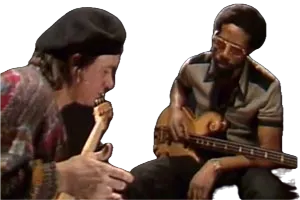
Above: Jemmott with Jaco Pastorius.
SV: You said he told you he heard desperation and energy in your playing. What do you think he recognized in you that you didn’t fully recognize in yourself at the time?
JJ: That’s exactly what it was — desperation and energy — he got it right. We knew each other very well, even without really knowing each other for very long. It’s like looking at someone drowning, fighting for a life preserver — how could you not be captivated by that? That’s the same energy I brought to my own playing — I was fighting for my life to produce it.
SV: If he’d lived longer, what do you think he still needed to learn — not necessarily about the bass, but about himself?
JJ: I think just relaxing more. Trusting more. Being more aware of himself, more aware of cause and effect — finding some path of spiritual grounding. I was fortunate — every accident I’ve had has, strangely, kicked me toward a better life. The car accident as a teenager led me to the bass. The 1972 accident led me to Buddhism, which has given me purpose for the rest of my life — that was over fifty years ago now, and I can still see life ahead of me.
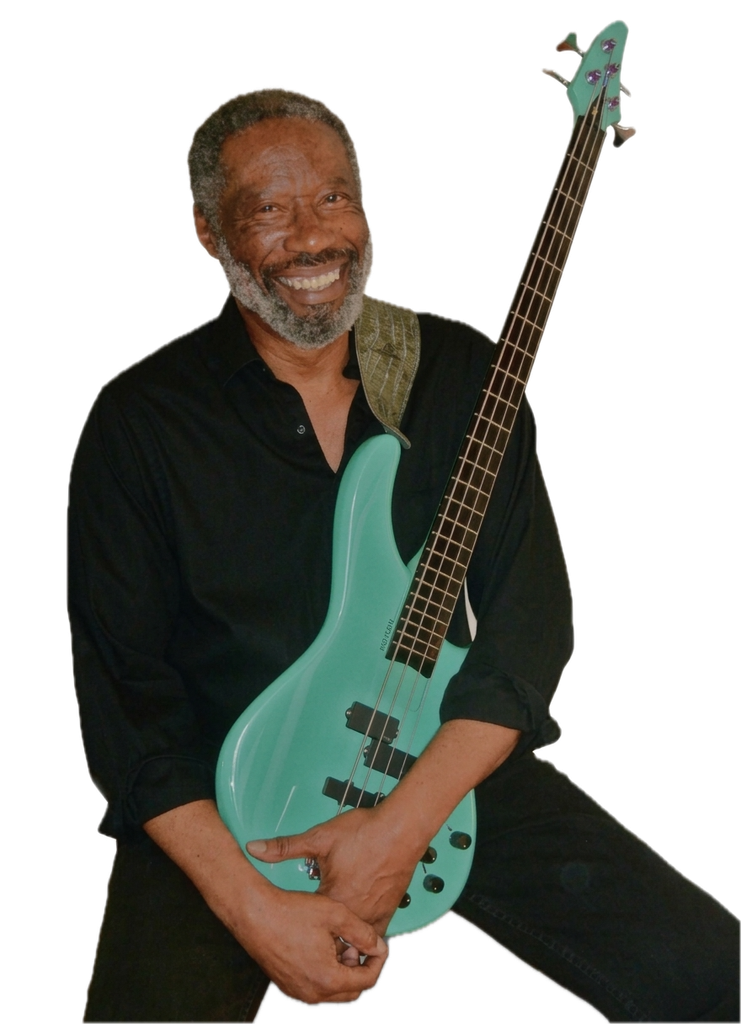
SV: You mentioned the color sound system — you spent a lot of your career succeeding on instinct, and later built this system connecting musical information to color, something people already sense intuitively. Did you build it partly because you wished someone had taught you that way?
JJ: It was hard to arrive at, but the idea of bringing families together in one room, on one screen, learning music, playing a game involving music, using colors instead of notes — that’s what we started developing around 1999. I’d read about a book on teaching music using numbers instead of notes, and I thought, why not colors instead — A-flat, D-flat, C-sharp, use color instead of the letter names.
I saw the whole thing play out in my head instantly back then — the idea that it would eventually be voice-activated, that you could talk to it and it would respond. But the technology wasn’t there yet — it was like trying to build the Empire State Building by hand. Now it’s available right on your phone. The technology’s finally caught up to where the game could actually exist.
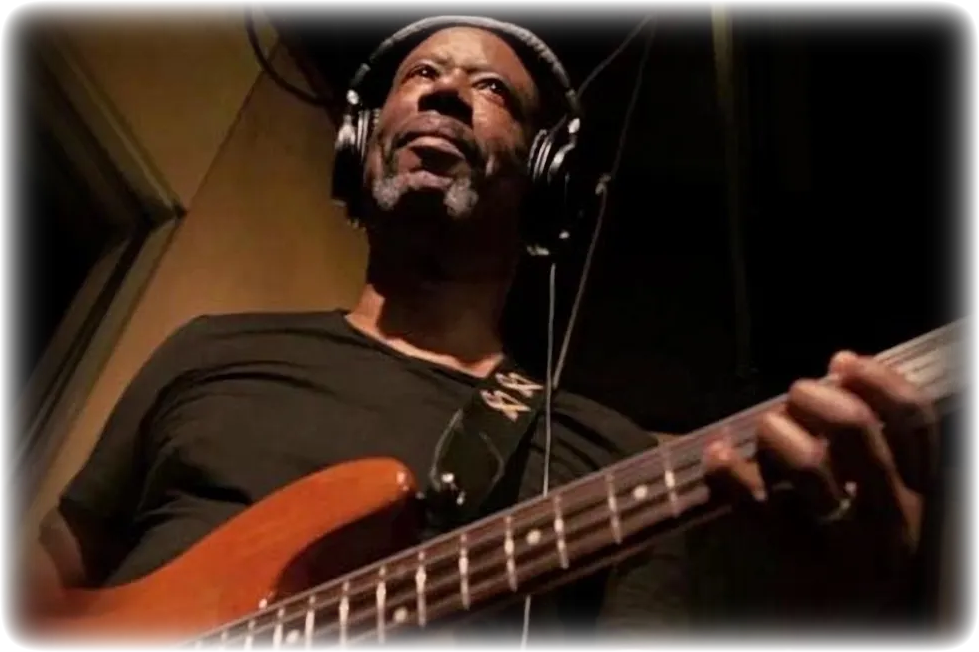
SV: How do you give a student enough knowledge to feel free, without giving them so much that they become afraid to make a mistake?
JJ: You tell them information is vital, but you have to learn it step by step — small bites. Once you give someone the basic breakdown of how music is made, it becomes a lot easier for them to move into higher learning. Everything in music is based on space, distance — it’s very precise. Once you understand the formula behind how music is made, it becomes simple.
SV: You once called yourself the poster child for succeeding in music without fully knowing what you were doing. Has building the color-sound system and writing the memoir made you more interested in demystifying what was once instinctive, or do you still wear that badge proudly?
JJ: It’s made me more aware. I’m formally self-taught, essentially — and I’ve come to realize, like Sonny Rollins said, you never stop learning in music, there’s always something more. I always knew that I didn’t fully know — but I also always knew I had enough to take a chance, and to figure out what I needed on the fly when I didn’t know something outright. So the fear of screwing up was always somewhat present, kind of paranoid for various reasons — but I’ve come to develop my own framework around it: solar energy, the five elements, the five components you have to master to keep developing.
Jaco had mental fortitude, physical endurance, commitment, conviction, compassion — we both had those last three, for sure. But he had more raw mental gift than I ever had — perfect pitch, photographic memory, that kind of thing I knew I’d never possess naturally. What I did develop is real pitch recognition cross-referenced with color — I can look at a note and know it’s indigo, or pink, or violet.
SV: Your original title for your memoir was I’m That Guy, and you ended up settling on Make It Happen. What shifted between those two ideas — from identifying yourself by what you’ve done, to identifying yourself by how you survived and kept moving?
JJ: I met the grandson of a famous songwriter — Richard Rodgers — whose son became a well-known Hollywood producer, and whose grandson I had dinner with once, through a mutual friend who’d told him a bit about me and my book. His grandson had a similar story — trying to get his own story told, but always overshadowed by his famous grandfather’s legacy instead.
Over dinner, he mentioned, offhand, “woke up this morning” — and it clicked with something I’d heard someone else say recently, about a title. He told me his honest impression was that the original title, I’m That Guy, didn’t really tell enough about me — it was catchy, snazzy, but incomplete. And he was right. I don’t like copying other people’s material, so I thought, come up with something better.
Then it hit me — Make It Happen. It’s a phrase, and a song, tied to a specific memory — a moment in 1975 when I was really struggling, living with the trumpeter Jimmy Owens for a bit, asking him if he could scrape together something for me, and he told me, “Make it happen.” Twenty minutes later, it happened. Ever since, whenever I sign an autograph, I write “Make It Happen.” I’ve been doing it for years — so that became the title. Simple as that. Good fortune, really — somebody being honest with me about the first draft.
Above: Jerry Jemmott with Kung Curtis.
SV: The book took a long time to write. Now that it exists, has it let you set the story down, or is there still something you’re carrying that only comes out in conversation, not on the page?
JJ: For sure — there’s still things I know that only come out when I’m talking. At some point with the book, I just had to tell myself, don’t let perfection be the enemy of the good, and get it out. It went back and forth between four different countries — India, Australia, Germany, back to Santa Monica — my friend in Germany finally helped me get it done. Reformatting issues, Amazon giving me trouble with the layout — finally I just said, let this go. My friends convinced me to make it a hardcover, specifically so it could get into libraries — forget the paperback and eBook for now, they said, this needs to be in a library. So I did — it’s a hardcover now, and it’s in the UCLA library, the Schoenberg library, and hopefully more libraries down the road.
But I’ve moved beyond the book at this point — I’m deep into the Name Game now. The book opened a lot of doors I expected it to open. It’s doing its job. It’s not making me a lot of money, but as an activist, most of what we do was never really about the dollar anyway — we do it because we have a mission.
SV: Was there a chapter or memory that, once you actually wrote it down, changed how you went back and heard your own old basslines?
JJ: I can’t really speak to changing anything specific — writing the book made me go back and revisit things, definitely, especially the Fillmore material — that whole experience with Aretha was special. But when it comes to playing things now, as a result of age and wear and tear, I play things differently. I actually laugh sometimes at the complexity of what I used to play — real chops, honestly, more than I could probably manage now, especially coming from the upright background. I got away with a lot back then, in the best sense — because that was my thinking at the time, and it worked. I was right for the time I came into. Everybody arrives at the moment they’re needed.
I’ll tell you something, since we’re on the subject of names — the reason I’m even here, named Jerry, is that my sister, at age two, met a little boy named Jerry and told our mother she wanted a brother named Jerry. At the time, my mother and father were separated — she’d just found out he was a bigamist and had kicked him out. My sister was too young to understand any of that, but she kept asking, insistently, for years, until 1945, when my mother finally relented, called my father back, and I was conceived that June. I was born in March of ’46. That’s genuinely the only reason I exist, and the only reason I was named Jerry.
SV: If a young musician discovered you today with no resume attached — no Aretha, no B.B., no Jaco, no Muscle Shoals — what would you want them to hear in your playing?
JJ: I guess honesty. Sincerity. The desperation, whatever’s actually there — how it moves, how it supports the music. I’d want them to hear whether my playing lives up to my own goal of supporting the music. That’s the answer, I think.
SV: What’s the question you’ve never been asked in an interview that you always wish someone would think to ask you?
JJ: I don’t know — I try, in interviews, to say what I have to say in a way that supports what I’m working on, gets my message out into the world. We’ve covered pretty much everything — what I’ve had to say, I’ve said. I’m satisfied. You’ve probably asked me things nobody’s asked before, honestly.
SV: What does legacy mean to someone like you, whose work has become part of musical history without you consciously setting out to preserve anything — and who, you’ve said, surprisingly owns very few of the records you played on?
JJ: The possibility of a future, of life going on — being able to still interact, still contribute. That’s my legacy, I think — the fact that I’m still able to contribute, still have something to offer.
SV: Really appreciate your time and the conversation, Jerry.
JJ: Thank you, I appreciate that. That’s enough for my life and music, and I hope you stay in touch — you get support from my Name Game too. I’ve sent you a link — you go to my website, spin the wheel, put in your soul energy, and you can play.
My partner’s been amazing on this — he’s the one who actually helped formulate a lot of it into something real. When I told him what his own name represented, it was like a light bulb went off for him, and he went to work overnight on it. We’re hoping to add a rhythm component to the software next, but we need funding to finish it properly — there’s so much more it could do. Once people lock into their memories through the color associations, going back to certain feelings, there’s a lot more the software could offer for cognition. Even I don’t think I’ve fully grasped the value of what we’re building — people have told me more about its potential than I imagined myself. It keeps getting bigger.
So right now I’m trying to get this software finished — looking for a grant, some kind of funding, because we’ve mostly relied on donations so far, and it’s hard doing this by myself. I’m hoping to connect with an organization like Idealist.org, get some more traction, because I really think this game could be a game-changer for mental cognition and musical education.
SV: You’re doing good things, my man. Thanks so much Jerry!
JJ: Fom my point of view, this interview’s one of the better ones I’ve done.
SV: Glad to hear that–thanks Jerry.
JJ: I try to be honest — the truth will set you free. When you tell the truth, it’s easy, it just flows out.
Leave a Reply
You must be logged in to post a comment.