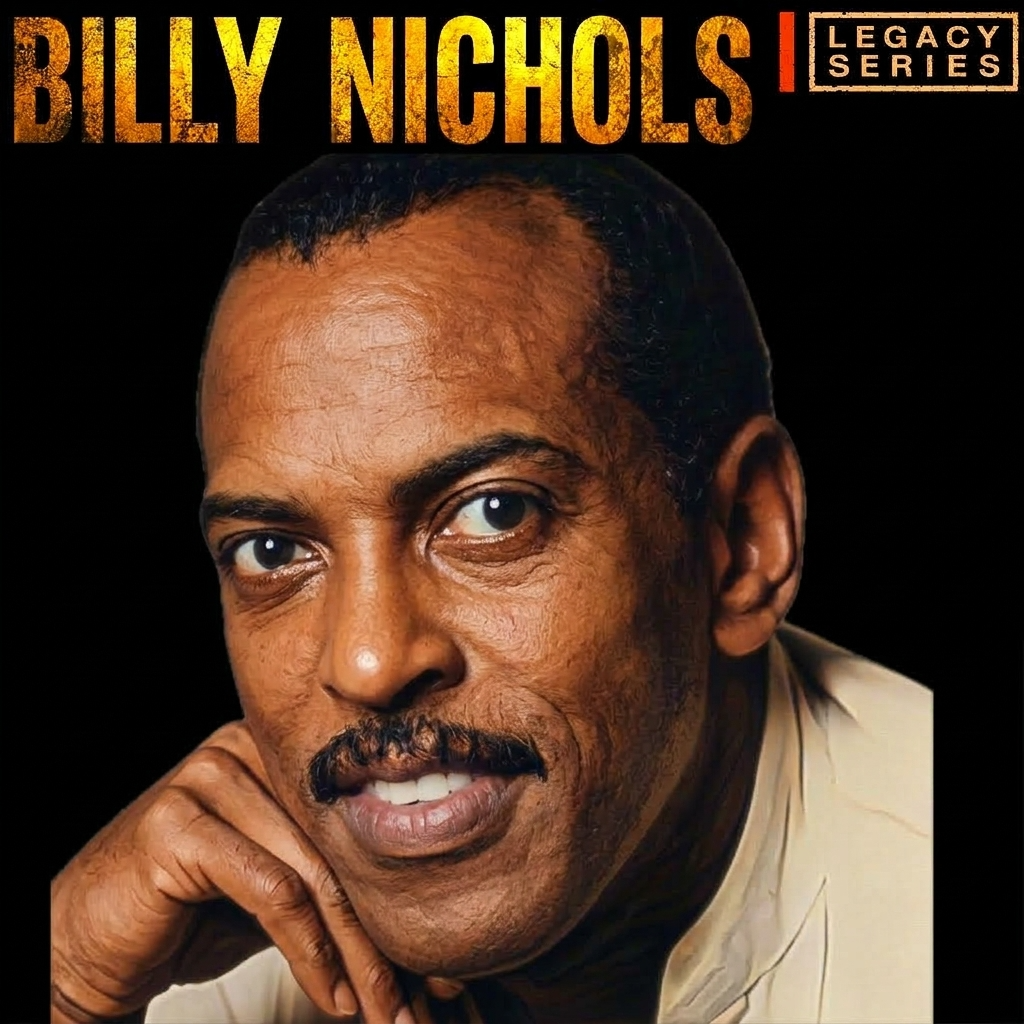
The Legacy Series cuts through the static to pay dues to the departed masters. In this installment, prolific Motown-era guitarist, writer, and producer Billy Nichols discusses how he shaped early R&B, disco, and hip-hop history—co-penning classic hits like Millie Jackson’s “Ask Me What You Want” and B.T. Express’s “Do It (‘Til You’re Satisfied),” crafting the landmark early rap track “The Adventures of Super Rhyme,” and providing heavily sampled material for modern hip-hop icons.
___
Billy Nichols: I was born in Mississippi, and my dad was a blues guitar player — I pretty much used to listen to him play. I grew up in a large family, nine of us all together, and I was number seven. By the time I came along, my dad had already taught everyone ahead of me, and he was near the end of his career, so I didn’t get an awful lot of direct teaching, but I listened a lot and paid attention.
My journey really started when we moved from Mississippi to Springfield, Massachusetts. I started fooling around with the guitar there, playing with my brothers and some other musicians around the city. After a few years I felt like I wasn’t going anywhere — I had a day job, but I wanted to be in music, and I was learning songs and playing little gigs on the weekends. Then one day a friend of mine, a bass player in a group, told me he was giving up music because he’d been forced to sign a contract he wasn’t happy with, and the only way out was to find a replacement. When he mentioned my name, the group was happy to have me. So I joined a group called Jimmy Vicck and the Victors — I quit my day job, this was the summer of 1963.
We had a manager based in Hartford, Connecticut, who owned a couple of clubs there, and we played around the Hartford area. He recorded us — a couple of songs, one called “Take a Trip With Me,” and the flip side, “I Need You.”
We got a little airplay around Springfield, but nothing major. By around November, it was pretty much over for us — we didn’t have enough new material for another record, nothing the manager liked. So I was stuck without a job, and I’d promised myself I wasn’t going back to the day job. I finished up the gigs with that group and told my mom to write to my uncle, her brother, who lived in Detroit, to see if I could come out there. I felt like I needed a bigger place than Springfield — somewhere with more opportunity. I wanted to write and produce songs.
She wrote to my uncle, and I left Springfield in January and headed to Detroit. I stayed with my uncle, who had a candy store with a jukebox in it, mostly blues records, and I used to listen to it constantly. I actually had two uncles in Detroit. My other uncle, Ike, came by one day with a lady named Gertrude — she asked my name, asked what I did, and told me to go get my guitar and play for her. I did, and she said she’d take me to some clubs, since my Uncle Alex wasn’t really the type to go out. She took me to a club called the Sensation Lounge in Detroit, to a jam session.
It was a huge club — dance floor, stage, musicians up there — an experience I’d never had in Springfield. You could put your name on a list to sit in, so I did, guitar in hand. But when I saw the talent there, I got intimidated — these people were incredibly talented, doing all kinds of things, and I was thinking, what have I gotten myself into.
Then they called my name. I’d learned a song called “Honky Tonk,” originally recorded by Bill Doggett, and there was a unique guitar solo in it that I’d learned to play. When I finished playing it, I was surprised by the applause I got, and people came up to the stage afterward — some of them ended up being instrumental in getting me a foothold in Detroit.
One of them, Hank Wilson, asked me to come to other jams with him, and we went to several clubs around Detroit. He took me to a club on East Jefferson — I can’t remember the name — where John Lee Hooker was playing. Hank played bass, we got up and played, and he got a nice ovation. While I was packing up my equipment, a kid came up to the stage and said, “Stay there, I want you to play with me” — his name was Tony Newton.
He went to get his bass, came back, and we played together. Tony really liked me and said he’d come by my place, and sure enough he did. He told me he had a gig coming up in Ionia, Michigan, and that I could stay with him so we could rehearse and be ready for it. So I moved in with Tony, left my uncle’s place. We rehearsed, the gig came up, we played about two weeks, and then the manager told us he had to let us go — not enough money to cover expenses.
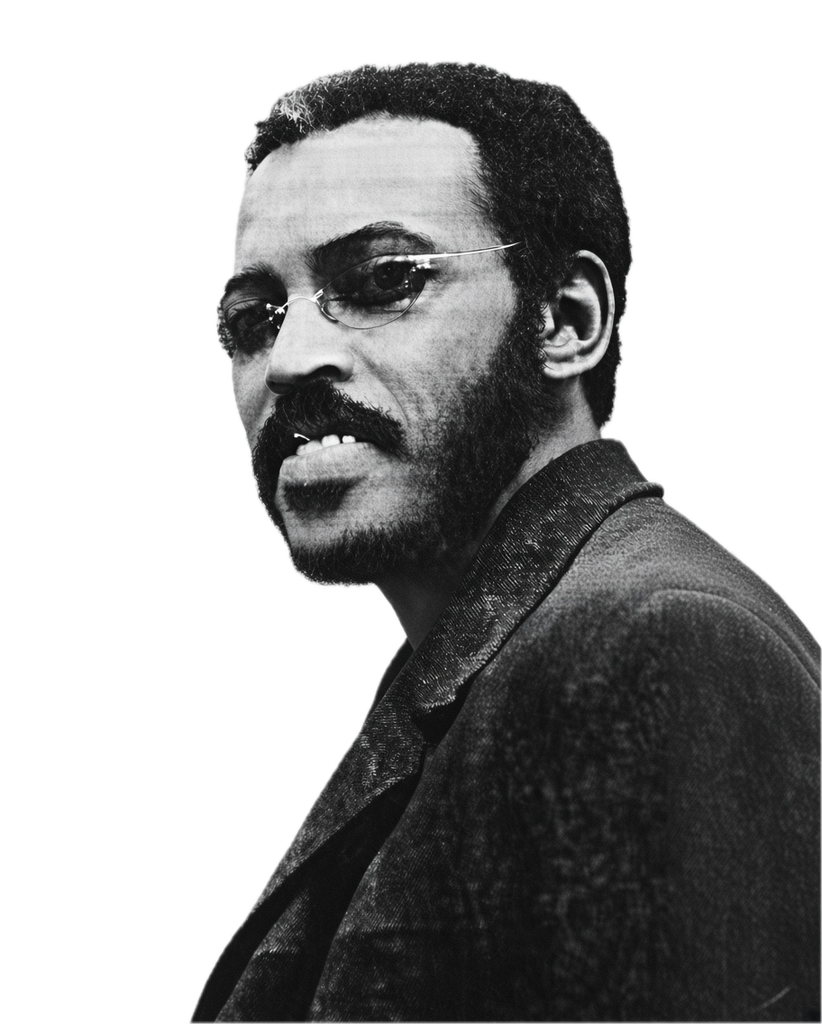
Before I played with Tony, I’d also met a young man named Eddie Hurt, a singer who’d worked with Andre Williams among others. He had a day job but had a gig coming up at the Greystone Ballroom, a famous Detroit club that booked touring R&B acts, and he wanted me to play that show with him. On that show I met Jimmy Ruffin, and another singer named Danny Woods, who eventually sang with Chairman of the Board — at the time he was just singing around the city, but he had a great voice, sounded something like Jackie Wilson. Danny and his manager wanted me to play for him at a club called the 20 Grand. I took that gig, and while I was playing there, a guy came up and introduced himself — Billy Henderson, a member of the Spinners, who were at Motown at the time. He said they needed a guitar player and asked if I was interested. I said yes.
Billy came and got me, and we rehearsed at one of the members’ houses, out toward Eight Mile Road. He took me down to the basement and introduced me to the whole group — Pervis Jackson, Henry Fambrough, George “Chico” Edwards, and Bobby Smith. They taught me their songs, their choreography, how to do the count-offs, and when the gig at the 20 Grand came up, I took it, and it went okay.
Up until that point my name had been William Nichols, but Billy Henderson said that was too formal, and they started calling me Billy Nichols from then on. After that gig, Billy Henderson mentioned he was a good friend of Marvin Gaye’s, and that Marvin was having his 25th birthday party — he asked if I wanted to come along. I said sure, and he took me to Marvin Gaye’s house. All these stars were there — Smokey Robinson and the Miracles, the Vandellas, the Marvelettes. He introduced me to Marvin Gaye directly, and I stood around not really knowing anyone else there. Marvin came over and noticed I hadn’t eaten anything, asked why, and I told him I didn’t eat meat, didn’t drink, didn’t smoke — he said okay, they’d find me something. That’s how I met Marvin Gaye.
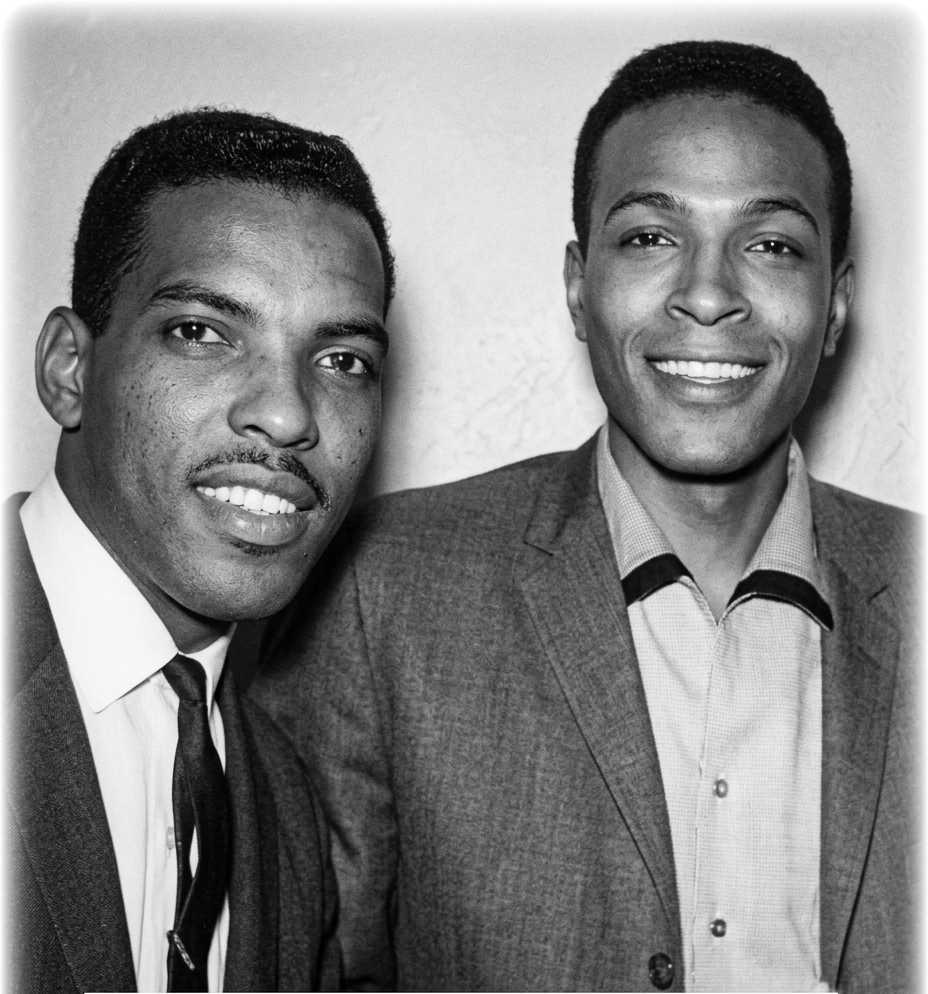
Above: Billy Nichols and Marvin Gaye
After that, Billy hooked me up with a gig for Marvin, who was going to Atlanta to play a club called the Peacock Lounge. Marvin set up an audition for me at Motown, with him and Berry Gordy present. I got my amp and guitar down there, and Marvin sat at the piano and started playing and singing some of his songs, telling me to join in. He stopped and said, “Billy, man, you pick up quick” — he probably didn’t realize I’d already been a fan and had been playing his music. He looked at Berry, who gave the nod that I was okay, and then Berry left the room. Next thing I knew, I was in Atlanta with Marvin Gaye — he’d take the Spinners along on many of his gigs as an opening act, so there I was with them and Marvin. On that show was blues singer Bobby Bland, one of my favorites, and I got to meet him too. The gig went well.
Back in Detroit, I was still staying with Tony. One day he came into the apartment gathering up his equipment — Motown had an audition for the Choker Campbell Band, the house band for Motown musicians, and Tony was headed over. I said, “You’re not going without me,” grabbed my amp and guitar, and we went to Motown on West Grand Boulevard. They took us to the basement studio, lined up a full band with horns and everything, gave us sheet music on stands, and Choker Campbell and a man named Hank Cosby — an A&R man — watched from behind a plexiglass screen in the control room. When we finished playing, Hank came running out pointing, “You, you, you, you” — Tony and I were the first two he picked. So we were in Choker Campbell’s band, and our first gig was in Cleveland, Ohio, at a club called The Music Box, a ten-day engagement.
Back in Detroit, Henry mentioned that Martha Reeves needed a guitar player, so he hooked me up with Martha and the Vandellas, and hooked Tony up with the Miracles — though we still played on the road with the Choker Campbell Band as part of the Motown Revue, going city to city. One of our first stops was the Apollo Theater. I played a couple gigs with Martha and the Vandellas after that, but she ended up firing me — I have to tell it like it is.
When I got back to Detroit, I told Hank, and he got me a gig with the Marvelettes instead — I went to their house, rehearsed in the basement with Bobby Rogers, who was also a member of the Miracles, and played with them a few weeks. After the tour ended, I was basically out of work in Detroit for a while, though occasionally Billy Henderson would call to make sure I had something to do — the Spinners weren’t working much themselves at that point, no hit record except the old one, “That’s What Girls Are Made For,” which they performed at every show.
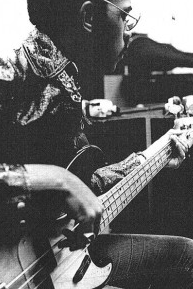
One day Billy came by and told me Marvin Gaye was down in Bermuda and needed a guitar player — he had a plane ticket ready for a ten-day engagement. I flew down, played the gig, came back to Detroit, then to New York, played the Fox Theater with Marvin, and then went on tour. The last gig I played with Marvin Gaye was in Kentucky — I remember it well because I actually met the Colonel from Kentucky Fried Chicken there.
Around that time I started feeling like I wasn’t fulfilling my real ambitions — I realized I wasn’t yet at the level of the veteran producers and writers I admired, and I wasn’t sure exactly what I was going to do next. Then a gentleman from Cleveland called, offering me a gig down there with a band at the same club I’d first played — The Music Box — and I took it. Lots of stars came through that club, many blues artists, and we backed all of them, though the weeks an act brought their own band, we were off and didn’t get paid.
During that time, the Spinners came through Cleveland, and Billy reminded me he’d said he’d come get me when they had gigs — and pulled out an itinerary showing they were booked solid for months. But I felt like the road wasn’t really for me — I wanted to write, and I’d already written a few songs while I was in Cleveland with all the downtime. I told Billy I wasn’t ready to go back on the road, and he was really upset — he wanted to make me an actual member of the Spinners, not just a guitar player, and I turned it down. He was frustrated, and when they left for another gig, I was in Cleveland stuck without work.
Then a guitar player named Russell Evans called and said an artist named Billy Stewart was coming through and needed a guitar player — Billy Stewart had a couple of hits, “Sitting in the Park,” “I Do Love You,” and others. I went down to the club — the band was already on stage. They sounded good. On their break, Russell introduced me to Billy Stewart, who took me into his dressing room, pulled out sheet music, and ran through the songs with me right there. I was on stage playing with them that same night, and I was really excited.
The next day at rehearsal, the whole band was already there waiting, and [band member] Rags told me the band had had a meeting and wanted me to be their leader. I think they’d heard I’d led Marvin Gaye’s band. Billy Stewart called me into the dressing room to confirm it, and I told him honestly I didn’t really want to go back on the road. He asked what I wanted to do instead, and I told him — I wanted to write songs and produce records. He asked if I had any songs, I said yes, and he said, “When we leave here, I’m going to Chicago, where I record — I’ll record your songs if you come on the road with the band.” That was all I needed to hear. I packed up and went with them, and sure enough, the first stop was Chicago, at Chess Records.
I met the Chess brothers, Phil and the other one — I was in awe, gold records on the wall, all these legendary blues artists who’d recorded there. I’d never been in a studio like that. The producer was Billy Davis, and he and Billy Stewart had us in the studio every day for ten days. Sure enough, he recorded my two songs — one called “Why Am I Lonely,” and another, “Love, Love.”
When we finished, Billy Stewart told me I’d have to split the songwriting credit with him — I hadn’t known that going in, but I didn’t really care, since the main thing I wanted was to get my songs out. He proposed instead that we each just take one song outright — he kept “Why Am I Lonely,” I kept “Love, Love.” That’s how we left it.
While in Chicago, Billy took us one night to a club owned by Pervis Staples, of the Staple Singers — Pops Staples and the family group had their own nightclub. Billy called me over at the bar and introduced me to someone he was talking to — Otis Redding. That’s how I met Otis Redding, while I was in Chicago with Billy Stewart.
We kept traveling, playing gigs in different towns, but the road life was getting to me again — I couldn’t concentrate on my writing while touring, and I really admired people like Smokey Robinson who could write hits while constantly on the road, but I wasn’t at that level. One of the acts on the bill with Billy Stewart, a comedian named Carl Fisher, found out I was disillusioned with touring and that I wanted to move to New York. Carl was from New York and knew a club owner there looking for a band. I didn’t technically have a band of my own, but I talked to some of the other guys in Billy Stewart’s band — the Soul Swingers — who were also a little disenchanted, and told them that the next time we played New York, I was probably going to call it a day with Billy.
Above: John Hammond’s album Source Point (1971): Nichols is featured as the primary bassist on all 11 tracks across the album.
Carl set up an audition for us in New York. During a break while we were playing the Apollo, we auditioned at a ballroom called the Crystal Ballroom for the owner, Ernie Smith, who liked the band and asked when we could start. I told him I wanted to give Billy Stewart six weeks’ notice so I wouldn’t leave him stranded with gigs already booked. We signed the contract to start in April. I went back out with Billy for the last couple weeks, told him what was going on, and then Bo and I left together and came to New York.
We started at the Crystal Ballroom, and I stayed there for three years. All kinds of artists came through, because the club had a relationship with a major New York DJ named Frankie Crocker, who had a big following on WWRL AM. Whenever the artists he played on the radio came to the Apollo, he’d bring them by the Crystal Ballroom — Al Green, Wilson Pickett, Etta James, Linda Jones, Joe Tex, the Dells, the Moments — nearly every act you could think of at the time. It was pure promotion for them, they’d just get up and sing one song, and we’d back them. My band gained a real reputation in New York because of it.
Above: “Modern Jive” by Pretty Purdie And The Playboys f rom the LP Stand By Me (Whatcha See Is Whatcha Get) (1971): Nichols plays rhythm guitar across all 9 tracks.
A horn player named Willy Bridges joined my band around then — another horn player, Pee Wee Ellis, also played with me for a couple months after leaving James Brown’s band; he’d co-written “Cold Sweat.” Willie Bridges introduced me to Juggy Murray, who ran Sue Records, home to Ike and Tina Turner, Inez and Charlie Foxx, Bobby Hendricks, Barbara George, and others.
Juggy had his own studio on 54th and 8th Avenue. Willie took me there for some recording sessions, but Juggy gave me a check that bounced — when I confronted him, he told me he was filing Chapter 11, his business going under. I told him, “You’ve got a studio — I’ll work in your studio with you, play on your sessions for free, if you’ll teach me how to produce records.” He agreed. Every day after his regular work I’d go up to the studio with him, playing on songs he’d recorded earlier, learning by being in the room.
In the meantime, he recorded a couple of songs I’d written — one with a singer named Vicky Baines, called “Sweeter Than Sweet Things,” from 1967. I also recorded with a group of his called the Soul Sisters, on a song called “You’ve Got Him Beat,” and I did a song of my own called “Shake a Leg.”
A few interesting things happened at Juggy’s studio. There was a writer there, Dutch Robinson, a strong singer with a great voice. He and I got close — he’d come by where I lived, and we’d sit around playing music. I had a couple of songs he really liked — one called “Here Today and Gone Tomorrow,” and another called “Trespassing on Somebody Else’s Property.” I had a little reel-to-reel tape recorder, and I wanted Dutch to sing those songs to present to Juggy, since his voice was so strong. He said he’d give them to Juggy — I gave him the tape. Next thing I knew, I was lying in bed listening to the radio and heard “Trespassing” credited to the Ohio Players.
I didn’t know anyone in the Ohio Players — when I got the actual record, Dutch’s name was on it alongside theirs, but not mine. When I confronted him, he admitted he’d wanted to join the group, and the only way in was to offer them the song. He promised the next one would have my name on it — that never happened.
Also while I was at Juggy’s studio, one day a bunch of songwriters and singers were hanging out there when the doorbell rang — you had to buzz people in from downstairs. Juggy asked who it was over the intercom, and a voice said, “Millie Jackson — now open the damn door.” Everybody looked around at each other, wondering who this was. She came up, and I thought she looked gorgeous — white boots, miniskirt. She had a demo to play for Juggy, who wasn’t impressed by it, but Millie and I hit it off right away and started talking.
As we left that day and walked up Broadway toward the subway, she was talking about what she wanted out of life — she had no hit records at the time, no record out at all — pointing at expensive designer cars in the dealership windows along Broadway, saying she wanted that kind of success. Then she turned and asked me what I wanted. It struck me that I didn’t really have an answer — I felt like I was already doing what I wanted just by being a writer, even though I wasn’t producing much yet. Materialistic things just didn’t occupy my mind the way they did for her. Later, Millie and I became very good friends and started working and recording together — I eventually wrote our first big hit together, “Ask Me What You Want” — but that all started that day at Juggy’s studio.
Juggy eventually got a partner, a Mr. Green, who bailed him out of bankruptcy. Mr. Green wanted to meet with me — he’d heard from Juggy how much he liked me, and thought I could maybe become like a Smokey Robinson figure for Sue Records. He set up studio time for me to record some of my own songs. Strangely, when I actually got in the studio, I choked — I couldn’t sing my own songs. Juggy and Mr. Green went back to the office, and when I went by later, Juggy had papers for me to sign releasing me from my contract with him. That was the end of that arrangement.
I still had my gig at the Crystal Ballroom, so I wasn’t without work. And because Willie Bridges had introduced me to the session-recording scene, I started getting a lot of studio work — sessions where they’d hire musicians without necessarily telling us who the final vocalist would be, we’d just play the music.
Going into the early ’70s, I was still in touch with Millie Jackson. The first song I wrote for her was called “A Little Bit of Something (Is Better Than a Whole Lot of Nothing)” — we recorded it and it was released on MGM, but it didn’t get much airplay, and Millie told me she was going to keep her day job rather than leave it for music at that point. I told her I’d keep working on material for us.
One day I was walking up 8th Avenue toward Juggy’s studio, singing a different song in my head — something like “Back Stabbers” — when suddenly the phrase “ask me what you want” popped into my head instead, completely unrelated to what I’d been singing. I realized this was a new song coming out of nowhere. I couldn’t wait to get home and put it down.
I called Millie right away and told her I had a song for her — she’d often come by my place after work, and we’d work on material together before she went home. I wrote the song out, explained her part and my part, and what it was about, but she wasn’t immediately enthused. She took the song and sat with it for six weeks before calling to say, “Billy, I got it.” She came by, sang it through right away, and when I sang along with her, I realized there wasn’t really a part in the song for me — it was entirely a song for Millie Jackson.
Eventually a man from Spring Records called me looking for a singer with a raspy voice, and I recommended Millie. She got a deal there, and her producer, Ray Fitzgerald, asked if I had any other songs, so I brought him “Ask Me What You Want.” He listened and told me it was a hit, and asked if I wanted a piece of the production — I said no, I didn’t want to touch it, since at that point I still had some doubts about myself, even though the Ohio Players situation with Dutch had shown me the songs had real potential — I just hadn’t had a hit fully under my own name yet. Long story short, the song became a hit for Millie.
While doing session work around that time, I met Bernard Purdie, Aretha Franklin’s drummer, who was friends with Galt MacDermot, the composer of the Broadway musical Hair. Galt was putting together a band for a new musical he was producing for the Delacorte Theater in Central Park — they did a Shakespeare play there every year, and this time he was scoring Two Gentlemen of Verona. He held auditions for the band; there were three guitarists there, and I felt like the least skilled of the three — they could all outplay me by a mile.
But after rehearsal, Galt approached me directly and said he wanted me to work with him on the play. I told him honestly I couldn’t sight-read well, and he said that was fine, they’d put it down on tape for me to learn by ear. He took me down to the theater and introduced me to Joseph Papp, who ran the Delacorte — Galt called everyone around the piano and told them to pay attention to what I was doing, and fired the existing piano player on the spot. I took over. Papp gave Galt a skeptical look, but the actors — actors just go with the flow — seemed fine with it.
Above: Galt MacDermot – Galt MacDermot Conducts Two Gentlemen Of Verona (1972): Nichols is credited as main guitarist across all tracks.
I worked with the actors, teaching them the music the way Galt had taught it to me. Papp told us we needed everything ready in five or six weeks, and we beat the deadline. Then we headed out to Central Park to rehearse for the outdoor stage. Galt brought in Harold Wheeler, who was already a very successful Broadway arranger and producer, playing Fender Rhodes and writing out the horn parts. We opened in Central Park, and the night we opened, when the play ended, the crowd stood and applauded for 20 minutes. I could see it in Joseph Papp’s eyes — the first time I’d ever seen him smile the whole time I’d been working there. Sure enough, we headed to Broadway after that. I was on Broadway with Two Gentlemen of Verona from ’72 to ’73.
When that run ended in ’73, I was primarily without a gig again — I could draw unemployment, that was about my income, since session work was sporadic. But other artists really liked my playing — I played on Roy Ayers’s album Ubiquity, the first one, and did some commercials with him too. Dennis Davis, Roy’s drummer, first heard me playing down in the Village at a place called LaMar’s Scene, liked what he heard, and brought me to meet Roy. Roy looked at me kind of funny at first because of all the wah-wah pedal effects I was using, which maybe didn’t fit typical jazz instrumentation, but Dennis convinced him to give me a chance, and Roy actually really liked me — wanted to take me on the road, but again, the road wasn’t for me.
Above: Tyrone Washington – Do Right (1974): Nichols was primary guitarist on the full album.
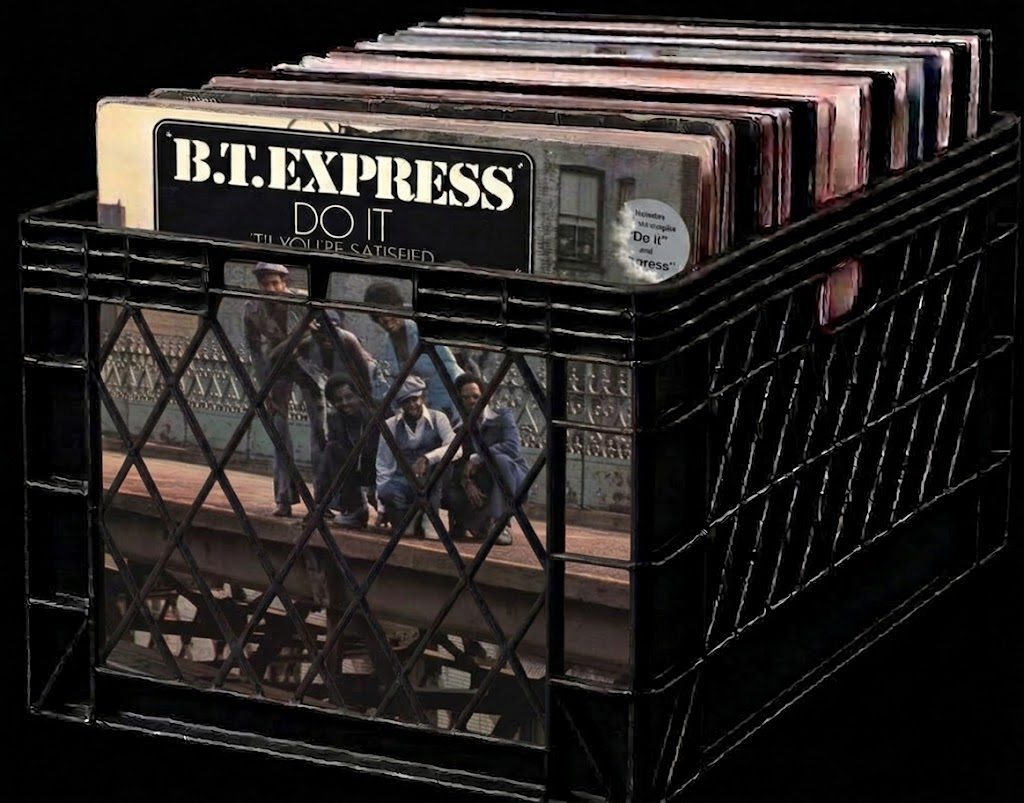
Instead I focused on writing a song called “Do It.” Juggy called me around then and asked what I was working on, and I told him I was writing another “Do It” song, but I worried there were already too many songs with that title out there — was there really room for another one? He stopped me and said, “Billy, if there’s a thousand hit songs called ‘Do It’ out there, and you write another one, guess how many that makes? A thousand and one.” That’s when I knew I had to finish “Do It (‘Til You’re Satisfied).” I focused on the right ingredients — some sexual undertone, some sense of instruction, telling somebody what to do. My first concept was actually addressing musicians directly — telling a horn player, “do it ’til you’re satisfied,” telling the guitar player the same — but then I realized not everyone plays an instrument, so I needed something broader. That’s when “whatever it is” hit me as the key phrase — that became the hook of the whole song.
I took it around to different companies, and no one wanted it — people told me it sounded dated, asked if I had anything else. I got discouraged, then realized the lyrics were too cluttered, so I stripped it down to just “do it to satisfy whatever it is,” cutting the other words out.
One day, Louis Reese, who’d played with me in Two Gentlemen of Verona, called — he knew I’d written “Ask Me What You Want” for Millie Jackson, and told me there was a dentist out on Long Island who liked his group and wanted to record them, but they needed material. I told him I had a song. He came by, I sang him “Do It,” he asked if I had more lyrics, I said yes, and I ended up cutting even more of the original words down. He said, “This is it.” He took the demo back to the group — the group was called King Davis and the House Rockers — and the dentist funded studio time out in Hempstead, Long Island. We recorded “Do It (‘Til You’re Satisfied)” — I played guitar parts, already had the bass line worked out, and their horn player, Carlos Ward, asked what horn lines to use, so I told him to copy my guitar parts, and that became the horn line in the song.
The producer, Jeff Lane, later told me they’d shopped the song around, and while remixing it one day, someone from a Sears Roebuck-affiliated distributor heard it in the studio and asked where it came from — took it to their record division, and the rest is history. It took off on its own once released. Fred [Frank, from Roadshow Records] called me from Texas one day and said when a DJ first put it on, the request board lit up like a Christmas tree — people calling in from everywhere. I thank God for that.
By the time the group’s album with that song came out, they weren’t called King Davis and the House Rockers anymore — they were BT Express. For their next album, they didn’t even call me to write anything else, which struck me as strange — my name was listed as a writer of “Do It (‘Til You’re Satisfied)” but wasn’t credited anywhere else on the album. It felt odd, but that’s how it went.
Fred Frank, who ran Roadshow Records, BT’s label at the time, associated with CBS, called me back later when they needed a full album — this time I was the producer. He needed the album, called Shout It Out, done in six weeks, and I delivered it. On the initial 12-inch release, I was properly credited as producer and writer, everything in order. But later, around Christmastime that year — we’d started recording in the fall — I’d been promised advance money that never came through fully.
When I went to collect my check from the lawyer’s office, it was only half what I’d been promised, and we had a falling out over it. When the final Shout It Out album came out, I was listed only as co-producer alongside the group, which upset me. This was around 1978. When I get that kind of upset, I can’t concentrate, can’t write — I was starting to learn the hard way that expecting integrity in that business was often the wrong way to think; it’s a dog-eat-dog business.
As time went on and the next BT Express album was due, Fred stopped taking my calls entirely — that was the end of direct contact for a while. Eventually he called my attorney instead, wanting me to do another album with the group since they needed material again. I was upset enough that I initially said no. My attorney told me Fred was willing to double the previous money and pay it upfront before I even went into the studio. I told my attorney the money didn’t matter as much — I’ve always lived by my principles, and while money doesn’t last, I have to live with my morals for the rest of my life. I met with the group and told them that was it for me — Shout It Out was the last thing I did with BT Express.
In 1979, I started working with a singer named Marsha. I wrote a song called “Give Your Body Up to the Music” — I’d always wanted to write the ultimate disco anthem, and disco was huge at the time, so I asked myself what could top that phrase for the genre. I wrote it out and was working with Marsha when a producer friend of mine, Andre, came by, heard the song, and loved it — we went into the studio and put down the tracks. But after we’d finished the instrumental tracks, Marsha called and said she couldn’t sing that kind of music anymore — she was engaged to a preacher who didn’t want her singing those kinds of songs, and she hung up. So I told Andre, and he said, “Billy, you sing it.” So I went in and sang “Give Your Body Up to the Music” myself. While we were waiting to find another singer, Andre took the song to West End Records, who loved it and released it under my own name.
Around that time I met a young man out in Brooklyn — actually I’d known him as a kid, since I knew his mother, who’d been a singer and had performed at the Crystal Ballroom with me back in the ’60s. She called and told me her son was attending Medgar Evers College and had a show on the campus radio station, interviewing people in the music industry because he wanted to get into the business himself. She set up an interview, and I went on his show — his name was Jimmy Spicer. He asked me about publishing rights and how that side of the business worked, and I explained it to him.
Rap was starting to take over as disco wound down, and Jimmy told me he had a little rap he called “Super Rhymes,” built over the instrumental of Vaughn Mason’s “Bounce, Rock, Skate, Roll.” He said kids loved that part where the DJ mixes records around. I thought it sounded like something. I recorded it at my house, and we shopped it around to companies who all turned us down. I knew a guy I’d worked with before, Mel Cheren, who had an independent label out of Brooklyn — I called him, told him I had this rap artist and song, and though he wasn’t especially into rap, he trusted me from past work and agreed to record it. We brought Jimmy Spicer into the studio and recorded “Adventures of Super Rhyme” — released in 1980 on Dazz Records.
While recording that song, Jimmy’s friend James Minor came through the studio, and he later became an artist on my own label — I started a label called Boss Records with James, who performed as Count Coolout.
Throughout the 1970s and 1980s, Nichols produced for various acts, including L J Waiters & the Electrifiers (“If You Ain’t Getting Your Thing” and “Can You Deal With It”), Funkhouse Express (“Chase Your Blues Away”), Full Force (“Turn You On”), Mary Clark, Mel Sheppard, Rena Romano, Jesse Gee (Gould), Paul Ives, P.C. Crew, Fantasy Force, and Charles T. Hudson.
He later revived his Boss Records label to release the 12″ single “Whip Your Body / Never Get Enough,” performing instrumental and vocal duties at New York’s Right Track Recording Studio. He went on to release two self-penned CD albums on Boss Records: Love Stuff (2003) and Same, Same Game (2007).
Nichols’ music gained widespread influence across the hip-hop industry, sampled by prominent artists including Will Smith, Beanie Sigel, EPMD, Master P, Ice Cube, P. Diddy, Jay-Z, Ludacris, Dr. Dre, and De La Soul. Additionally, a sample of his song “Do It” featured in Truth Hurts’ hit “Addictive,” earning him two BMI awards for most urban airplay in 2002.
By the ’90s, different things started happening in terms of my music — rap artists had really started sampling, and I believe sampling worked out really well for me. I’ve had lots of great samples over the years — I had a gold record through a sample used by Truth Hurts on her song “Addictive.”
De La Soul sampled a couple of my songs. Lots of artists sampled my work — Jay-Z had a sample, Diddy used one with one of his artists. Ludacris had a good one that ended up in the movie Rush Hour 2, and “Do It (‘Til You’re Satisfied)” ended up in several other films over the years too, like Kalifornia.
I never did much live performing myself — the one real stretch was after the disco period, playing the Paradise Garage with Larry Levan and a few other disco clubs around the city, but I never wanted to go back out on the road. That pretty much brings things up to today — I still write songs.
Sounds Visual: Thanks for telling me your story, Billy!
BN: Okay, no problem.
Billy Nichols passed away on November 30, 2025.
Leave a Reply
You must be logged in to post a comment.