
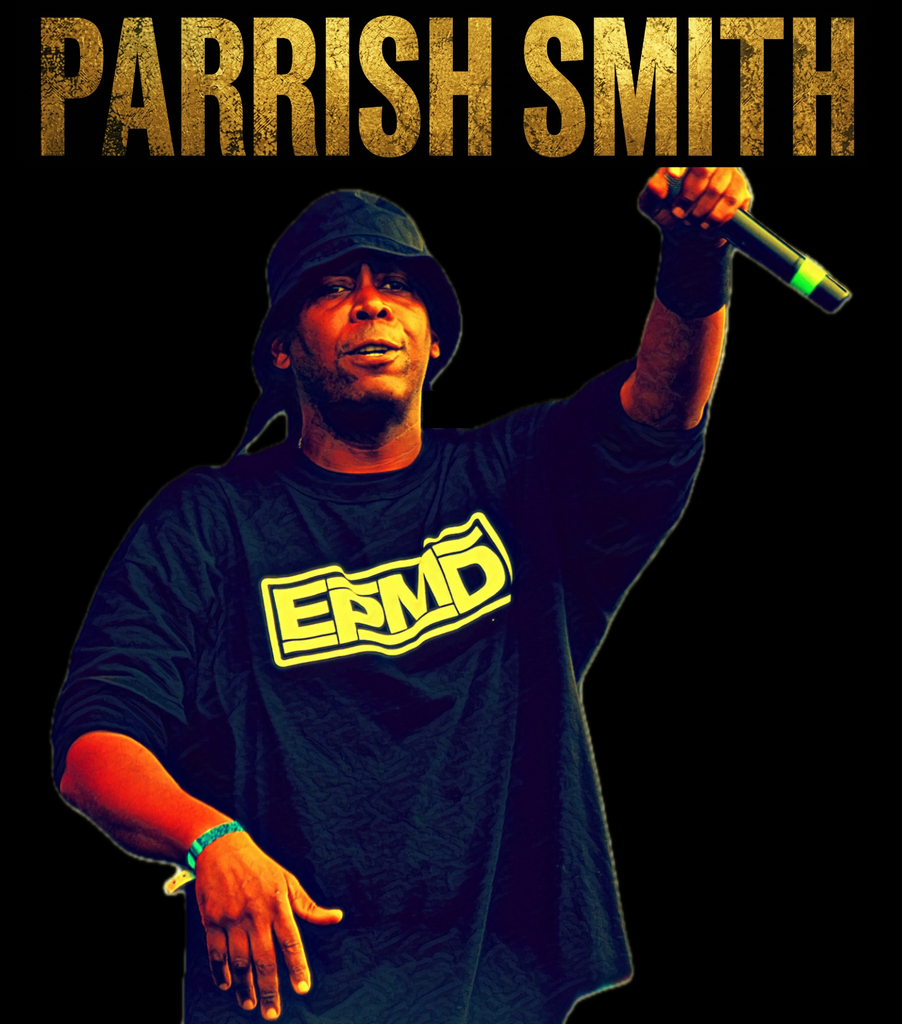
Rooted in the tree-lined streets of Long Island and built from three-a.m. radio tapes brought home from Bronx park jams, Parrish Smith turned an outsider’s obsession into hip-hop’s ultimate blueprint, forging EPMD’s golden-era legacy through relentless hustle, instinctual ear-training, and an unshakeable commitment to treating the craft like business.
___
Sounds Visual: I’d like to go back to the early days for a bit — how did growing up in Brentwood shape the sound you guys had, and maybe give you a different perspective from artists in the five boroughs?
Parrish/PMD: That’s a great question. I actually just did a song with my new artist, RJ Da Realst, called “Strong Island” — Long Island, “Strong Island,” like Chuck D and DMC used to say, is the sixth borough. Being out here with the trees and the grass, we always got slept on. The difference between being in the five boroughs and being out here is that in the city you didn’t have to go far to reach the hot spots — fashion, music, clubs, shows. From Long Island, you had to make an hour-and-fifteen-minute trek.
I come from a big family, seven of us, and my older brother James was a hip-hop head who put a record out back in the day called “Facts of Life.” He used to bring the Zulu Nation out from the Bronx to throw block parties in front of my mom’s house — graduation parties, that kind of thing. This was right before hip-hop was even called hip-hop.
There was a place in the Bronx called the Bronx River Community Center, and the T-Connection, where the MCs and DJs would set up the turntables, and around midnight they’d start playing break beats — stuff like “Seven Minutes of Funk.” My brother and sisters would bring those tapes back to the house, and I’d sit in the car at three in the morning just amazed, building the whole scene in my head. Eventually I started taking pieces of what I’d heard, looping it up in the studio, and giving it to hip-hop.
SV: You started out as a DJ before you were rapping. Do you still hear music first as a DJ, when you’re writing or producing today?
PMD: Yeah, that’s exactly right. The track comes first, and sometimes I get so deep in building it out that the rhyme shows up in the middle — the track’s fifty percent done, and next thing you know I’m writing the words to fit. So you’ve got to jot the idea down right then, because if you finish the beat first, sometimes the line you had doesn’t fit anymore, and now you’re forcing it, and you’re stuck.
SV: Did your father’s initial disapproval of you leaving football for hip-hop ever turn into pride? Was there a moment he really got it?
PMD: It was really about respect for my parents. I played football for thirteen years — thought I was really going to the NFL, because my older brother had lived that dream and made it happen, and I followed his lead. Football was the priority. Then I got to college, started watching TV, seeing LL Cool J, seeing “Rock the Bells.” I was sitting in my dorm room watching it, going to the keg parties, hearing “No Sleep Till Brooklyn” and “Brass Monkey.” I was watching it all from the outside. Next thing I know, I’m on Sleeping Bag Records, then Def Jam, doing a song with LL Cool J. I went from imagining it in my dorm room in ’86 and ’87 to being invited on the Run’s House tour.
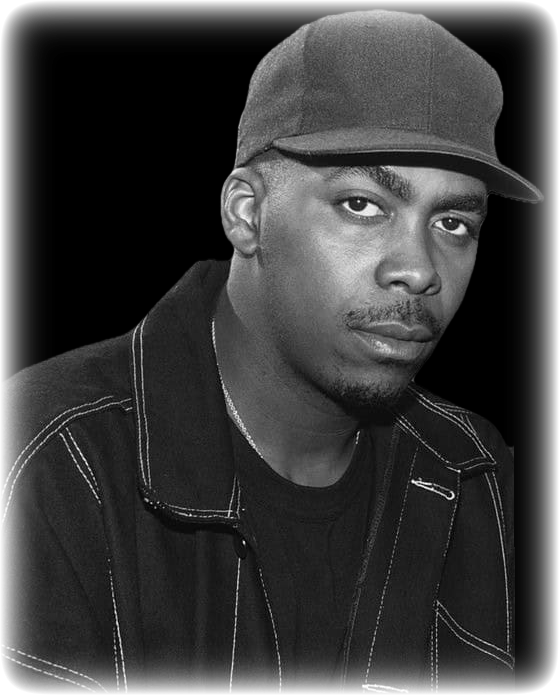
SV: You used tuition money and bakery earnings to fund your first demo. Did you have a backup plan if the Sleeping Bag deal hadn’t come through?
PMD: I definitely did think about it, and it goes back to my dad. Thirteen years of football means a lot of travel — Pop Warner, junior high, high school, then college level, traveling through Virginia, South Carolina, all over. My dad was at every game. So when I approached him about walking away from all of that, it came from a place of respect for everything he’d put into it. I told him, I really think I can make this happen. He gave me his blessing, but he was watching closely. I understood I was giving up my education and my football career, so I put everything into hip-hop instead.
SV: You mentioned your brother — Smitty “D “and the Rock Squad were part of your early exposure to hip-hop. Do you feel like he got the recognition he deserved?
PMD: No, I think, like me, he was ahead of his time. He came up before hip-hop really had a platform — you had one hour a night on WBLS with DJ Red Alert, and everybody would sit up waiting for his song to come on. When it finally did, the whole neighborhood would be running through the streets. You could see what that moment meant to people. But the industry just wasn’t ready for him yet.
SV: When Rodney C handed you the Wild Style instrumentals, did you grasp the significance of that in the moment, or does it feel bigger in hindsight?
PMD: At the time, everything was still imagination for me. He’d come around with a graffiti tag from way uptown, and just that in itself felt like hip-hop to me. After a certain hour the trains would stop running, so he’d ask my dad if he could crash on the top bunk and catch the train in the morning, and my dad would say sure, no problem. Meanwhile I’d be staring at his Run-DMC gear, his shell-toes, thinking, that’s what I want. The second time he came by, he saw my turntable setup downstairs — I’d gotten a whole rig for Christmas, two turntables, everything — and once he saw that, I was the man, because I was already DJing paid gigs at fourteen, fifteen, sixteen, junior high into high school. I had actual records, plain white labels, no writing on them. Big time.
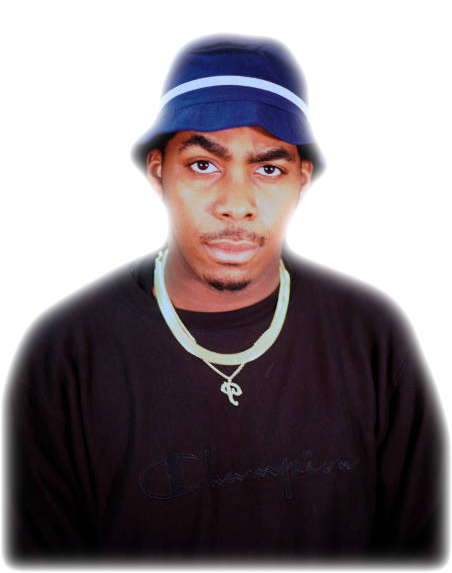
SV: You mentioned Red Alert — how did that near-miss shape how you approached the business side afterward?
PMD: I’d known Red Alert from when he used to come out to my brother’s block parties, so once I started getting into the business myself, I already had that connection. As things opened up, Red Alert became key, because people knew I had that link between Long Island and the Bronx — but we only had that one hour a night. The whole goal was either a world premiere with Mr. Magic, or getting Red Alert to play your record. He was from the Bronx River area, so he could relate to “Seven Minutes of Funk,” and he’d always tell me, “I’m gonna get you in, I’m gonna get you in.”
One night — and I’m not exaggerating — we were sitting at my father’s apartment waiting through that whole hour, nothing, and right as I was about to give up and turn the radio off, right at the very end, there it was. Our song came on. We ran through the neighborhood after that. We knew right then what we were part of. It’s funny you bring this stuff up, Justin–I don’t know where you dug that up!
SV: I did my research!
PMD: Those are the real questions, honestly. Early on, the first couple of albums, it was just about the strength of what we were doing. But questions about the process — how I actually built all this — those are for people who really get it. Without my brother blazing that trail, I honestly don’t know where I’d have started. He was signed to Tommy Boy, his stuff was on the radio — I used to watch him and think, how did he get here? I always saw it from the outside first, with imagination and rhymes, and that’s really the whole point of hip-hop — hip-hop is what you believe.
SV: I read that you and Erick used to talk about current events — things like the Bernhard Goetz subway shootings. How did you and Erick first realize your partnership had a sound nobody else had at the time?
PMD: Erick was new to my neighborhood — moved there in eighth grade, didn’t know many people, so I’d look out for him on the bus. In the mornings he’d start bringing me rhymes, and I noticed they were about worldly events. It was interesting — one night you’d see Bernhard Goetz on the news, and the next morning Erick would show up at the bus stop with rhymes about it.
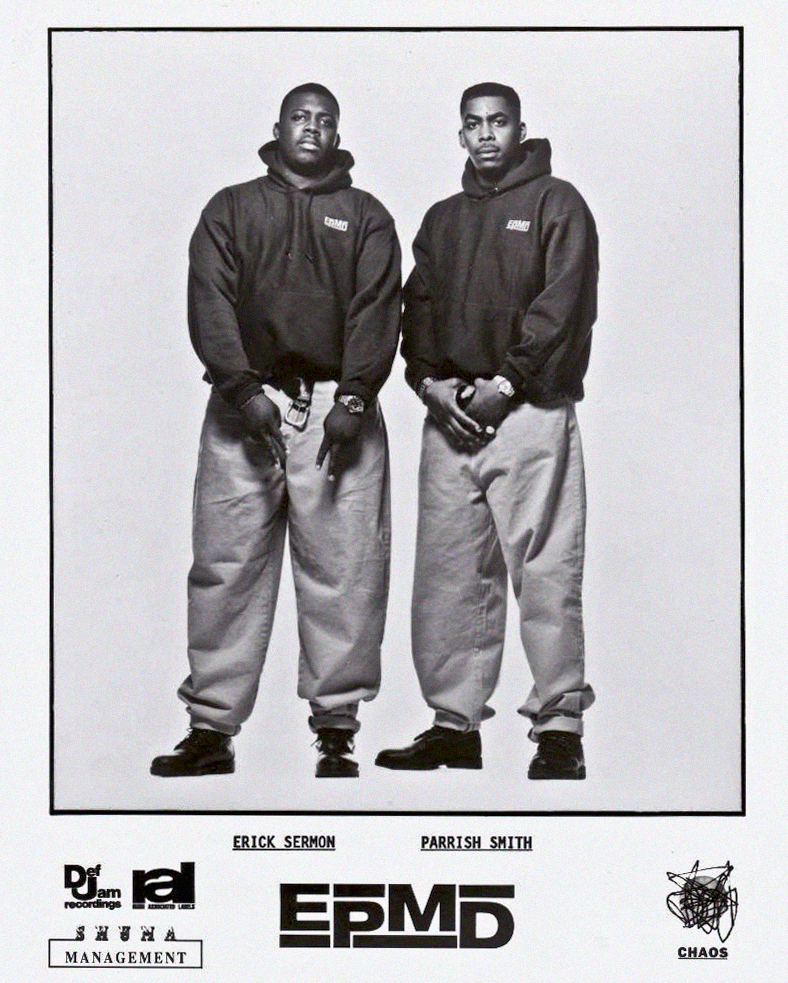
A lot of that discipline came out of pressure, honestly, because my older brother was serious — you didn’t cross him. He ran closed sessions when he was working on Smitty D and the Rock Squad, so I couldn’t just bring Erick in. I told Erick, let me go handle my session with my brother first, then we’ll figure something out. Eventually I got the studio number from my brother — which felt like a huge ask — and Erick and I started going in ourselves. I already had ideas built up just from all that time watching from the sidelines.
SV: When you two would freestyle about real events the very next morning, do you think that instinct for observation shaped how you wrote together later on?
PMD: Yes — this was right around when Run-DMC came out, before Rakim. Erick moving into the neighborhood in eighth grade lined up with us going down to Jamaica Avenue and Delancey Street to buy sheepskins, British Walkers, Clarks Wallabees — all the stuff that’s kind of missing from today, but that shaped how we approached everything. We’d go into the record stores with the turntables and echo chambers, hear Run-DMC blasting, and it became a mission — we had people to look up to, people who were actually out there doing it, and that pushed the writing further.
SV: Do you think the organic, almost accidental way you and Erick came together — him moving into the neighborhood, you going from DJ to rapper — is part of why the chemistry lasted?
PMD: Probably, yeah — but it also comes down to the fact that I’m from a big family, and we always looked out for people. If you moved into our neighborhood and you were into the music, you were welcomed in, whatever your role was — DJ, MC, whatever. Erick was the youngest MC around, kind of an outsider, which is probably why he was smart enough to just show up at my driveway. My brother’s crew already had a couple of MCs, one of whom went on to be in the group Groove B Chill, which later connected to House Party. That’s the lineage — it all stems from Smitty D and the Rock Squad. I remember my brother bringing tapes home with my older sister at four in the morning, me in the next room hearing it happen. That’s how I got here.
SV: I read that you wanted a group name you’d be happy to hear every day. Was there a runner-up name before EPMD?
PMD: In the beginning it was just “EPEE MD” spelled out differently — Erick was “E-Z” and I was “PMD.” That’s how it appeared on the first single, “It’s My Thing,” on Sleeping Bag Records.
But once we were around Biz Markie, Rakim, the whole Sleeping Bag/Fresh label crew, it became more of a branding decision. We brought in Eric Haze — I don’t know if you know him, but he does graphics — and he came up with the EPMD logo…
SV: …Which, to me, is iconic.
PMD: …Kind of like Run-DMC’s. We wanted our own name and identity, and I’m glad you brought that up, because people always gave us credit for using our real names in our rhymes — not just as an MC handle, but actually saying “Parrish Smith” and “Erick Sermon” in the songs.
SV: Once you were using your real names in rhymes, did that change how fans or the streets treated you personally?
PMD: No, I think it opened people’s minds — showed them it was okay to do that. Other artists picked up on it too, started using their real names more. It’s like Kobe Bryant — when he got into trouble and needed to reinvent himself, he created the “Black Mamba” persona. Same idea, but in reverse — sometimes you need an alter ego, sometimes you just need to be yourself. Either way, you do what you need to do to get the job done.
SV: What makes a verse effective to you — the writing, the voice, the rhythm, or the conviction?
PMD: It depends on what hip-hop needs at that moment. Back when we came up, you had Fantastic Freaks, Slick Rick, Big Daddy Kane, MC Lyte, Doug E. Fresh — you watched, you learned the “Ladi Dadi” style, and then it was your turn. When you step up to the plate, you have to know what’s at stake — how the fans see you, how other artists see you, how the haters see you. That’s what you’re writing into. You’re threading the needle somewhere between Run-DMC, Rakim, Big Daddy Kane, Slick Rick, but you also need that Doug E. Fresh energy to move the crowd.
I also think it’s important, from a writer’s standpoint, to write for the people who don’t have a voice of their own. You don’t have to get in over your head talking about world events, but you should show some awareness that you’re paying attention — because that’s part of why fans chose you in the first place, to represent them. You can be lyrical, but you still need real substance and real pain from your life that people can actually relate to.
SV: How did you and Erick divide creative responsibilities in the studio?
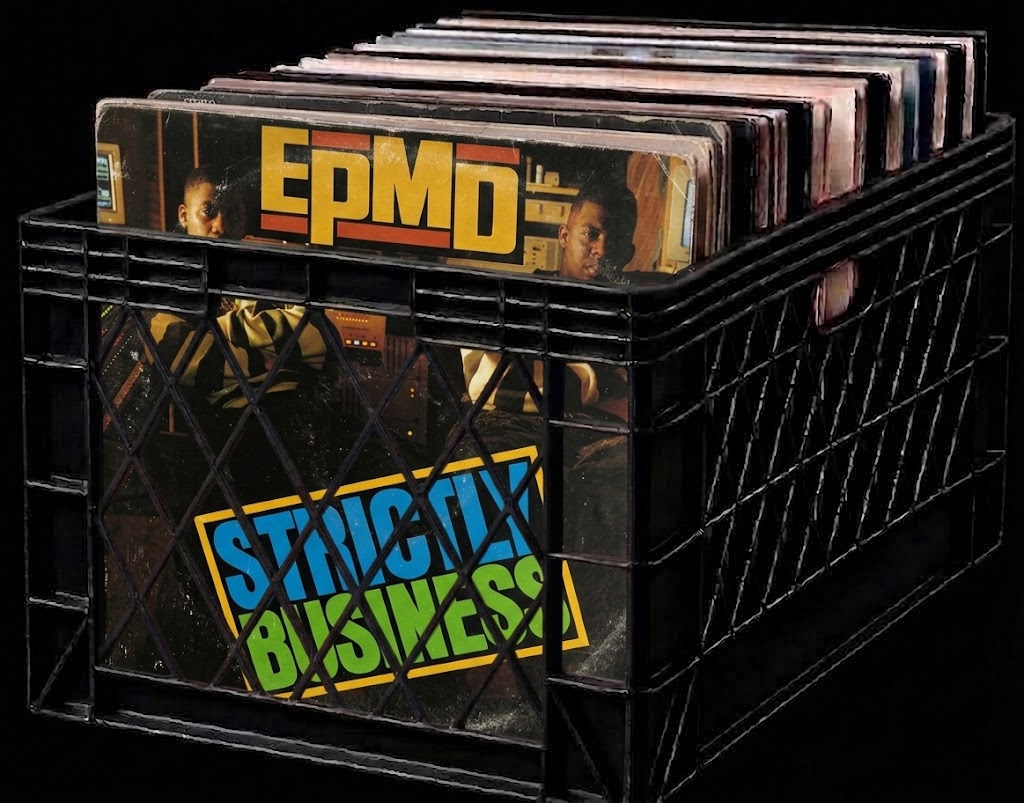
PMD: On the first single, “It’s My Thing,” and through the first three albums, I produced almost everything, except one song on Strictly Business — I learned a lot of that approach from Rakim’s blueprint. On the second album, Unfinished Business, I produced everything except “Total Chaos.” Third album, everything except “Brothers on My Jock.” By the fourth album, the business had grown so much I actually asked Charlie Marotta to come up to the mountains with me so I could teach Erick how to use my Roland W-30. By then EPMD needed two ambassadors, so Erick started taking on more of that weight, focusing on the business side and pulling samples together too.
SV: What’s the hardest part of sustaining a creative partnership over decades?
PMD: Respecting the fan base. We’re fortunate — some people call it a cult following — because we came up in the golden era and then had our own era after that. There are expectations that come with that. When we were out touring with Big Daddy Kane, Run’s House, Public Enemy, LL Cool J — the first thing you notice about those artists is nobody lip-syncs. That matters, because when you don’t lip-sync, you build a direct relationship with the audience. When you do, you’re competing with your own recording while the crowd sings over you. It’s a whole different, worse situation.
You’ve got to stay sharp — vocals crisp, music tight — because when you come from that camp, Run-DMC, Public Enemy, LL, Big Daddy Kane, Slick Rick, you saw guys from that era who scattered off in different directions and either thrived or didn’t. We were the youngest ones still around from that golden era. I watched Run-DMC at the fiftieth anniversary in 2023, going on stage at two in the morning and still ripping it like it was nine o’clock. You watch that and think, how could I possibly slow down?
SV: How do you know when a song is finished, versus just workable?
PMD: You keep the original formula without getting lazy. If “It’s My Thing” and “You’re a Customer” set a certain standard, you go back to that same place with every record. That’s why we’re known for never having a skip on our albums — that’s not an accident. You have to know where the game is, who’s the hottest artist out at the moment, because that’s what you’re really being measured against. If the hottest record out there is a ten and you release a seven, you’ve wasted your shot — and you might not get a second one. You’ve got to treat every song like it’s your last chance, and you’ll know when it’s right. You’ll feel it — there it goes, that’s the one.
SV: After Strictly Business, you basically stopped following any label’s release schedule and put music out on your own timeline.
PMD: Funny you say that — I never actually had to fight the label on anything, because everything went so smoothly out of the gate. We had contracts, but I never had to push back on them. That’s part of what made us who we became. You have to understand, that was just hip-hop back then — Sleeping Bag Records had Just-Ice, Mantronix, T La Rock, EPMD, Biz Markie— Def Jam had the Beastie Boys, LL, Public Enemy — that was the whole vibe we came out of.
SV: Dropping an album roughly every nine or ten months for years is a brutal pace. Did that schedule help or hurt the music’s quality, in hindsight?
PMD: I think it helped — it set the tone. Rakim came out, then came back nine months later, and that was the template we followed for our first two or three albums. As we started touring the world, things naturally slowed down a little. But that nine-month cycle was incredible while it lasted — it’s what carried us from records straight into touring Europe, Asia, all over.
SV: The “Jane” songs kept reappearing across your albums. Was that a running joke, or did it become something more?
PMD: In the beginning it was just a song. I was out one day, two guys started fighting, one pulled a gun, and I said, we’ve got to bounce. Before I pulled off I threw on a Joe Tex beat — I used to spend time with Bismark, who’d play me different beats, and sometimes I’d pass on one and it would turn into a hit for someone else later. This particular Joe Tex drum track, I brought it to Erick, and he just started rhyming about “Jane.” As we kept touring and dropping albums, it grew into a trilogy, and it became kind of a marker — as you mature, you realize sustaining anything, in business or relationships, takes balance. “Jane” was always the last song we recorded, a signal that the album was done.
SV: Strictly Business, Unfinished Business, Business as Usual, Business Never Personal — there’s an obvious theme. Why keep “business” in every album title?
PMD: You get it, Justin! That goes back to the conversation with my parents — when I told them I was stepping away from thirteen years of football and my education, I gave them my word that I’d take this seriously as a business. And once you’re actually in it, you realize everything is business — the electric bill, the gas in your car, the ink in the pen, all of it. So I kept “business” in every title as a reminder.
SV: For Business Never Personal, you left the city to record. What’s the most important business lesson you learned maybe too late?
PMD: We went up to a place with Charlie Marotta — that was a wild time, actually, because the director shooting the movie Juice had a cottage right next to ours.
As for lessons learned too late — you’re always learning, honestly. It depends what point in the journey you’re judging yourself from. If you start in ’87 and hit a rough patch by ’92, you assess that moment from where you are then, not from before you even had a contract — because you have to remember, you were lucky just to get a shot at all. Once you’re in it, it’s about how you respond to what happens, good or bad. Nothing’s really a loss. Everything’s a lesson as you grow.
SV: Tell me about the philosophy behind building the Hit Squad, and protecting artists in a predatory industry.
PMD: Hit Squad stood for “highly intelligent thinking, hit initial target.” The idea was to bring unknown MCs together under one umbrella. Back then the industry model was: build your buzz first, then we’ll talk. I wanted to skip that — take unknown artists, put them together, and take the game by force collectively. I’d already toured with Run’s House, Kool Moe Dee, Public Enemy, so I thought, why not go out as a whole crew and take on the hip-hop world together.
SV: Can you talk about discovering Das EFX and Redman?
PMD: Das EFX happened almost by accident. We’d just moved from Sleeping Bag to Def Jam, working on our third album, and there was this rap contest tied to Def Jam and Rush Management. Das EFX came in around ninth out of ten acts in the contest, but their style was completely different from everyone else’s. I met with them backstage, let the other group take the hundred-dollar prize, and offered Das EFX a recording contract instead. They took it, and that’s how I met them — we toured together on Business as Usual, and from there they built their own thing.
Redman was different. We were about to go on for a show in Jersey — I think MC Lyte or Bismark couldn’t make it, so we filled in last minute. After the show, backstage, there’s this kid in our dressing room, forty ounces in hand, wearing an afro. Now, understand — when you travel the world, nobody usually finds their way backstage, most people don’t even try. But Redman was already in our dressing room before we’d even left the stage. I thought that showed real hustle. We exchanged numbers, got back to Long Island, kept in touch, and next thing you know, Redman was signed.
SV: What’s one piece of advice you give young artists that almost nobody wants to hear?
PMD: [long pause] One day it will be over — never take a single day for granted. When you’re inside the magic of hip-hop, it feels like it’ll never end, because it’s so much fun — flying around the world with your friends, ripping stages, creating in the studio. But that’s a false sense of security if you’re not paying attention, because time doesn’t wait for anybody, and ten years can disappear off the calendar if you don’t have a plan. It’s the same as the NFL or NBA — people are realizing they need to think ahead, build a plan B, C, sometimes D. Have fun, live fully, but watch your money. Because the music changes, generations change — you can be hot today and cold tomorrow. But if you kept your name clean and people still respect you, you can always come back with a hit.
SV: What responsibility do pioneers like yourself have to protect the culture while still letting it evolve?
PMD: It comes down to staying out of your own way while still being authentic — because that authenticity is what drew people to you in the first place. What I learned is that young artists don’t want to feel talked down to. Early on, guys from our generation tried figuring out the new generation by talking at them instead of with them, and it created real friction. Eventually those conversations had to happen for things to move forward.
SV: What do you want people to understand about EPMD’s influence that often gets overlooked?
PMD: Two things. Our music is among the most sampled catalogs in hip-hop history, and the Hit Squad was the first crew of its kind. That sometimes gets lost. Also, people see me mostly as an MC or a businessman, but making beats was always my first love — it starts with the music, then comes the rhyme.
SV: I read that you’d knock past the “Do Not Disturb” signs at Rakim’s studio. Did that closeness make the lyrical back-and-forth harder or easier when it started?
PMD: It made me bolder, honestly, because even when you’re leading, you’re always a student if you want to keep growing. Rakim was just a couple towns over from me, from Brentwood to Wyandanch. I’d sit outside just in awe of his Mercedes before I ever knocked on his door. Seeing that made it feel possible for me too. I’d go downstairs past the “Do Not Disturb” sign, but if you’re humble and you don’t overstep and you show respect, Rakim always had something positive to send you back out with.
In competition, that’s a different story — Rakim is the architect, the master of that slow-flow style. When I was coming up, I wasn’t at his level yet, I was still learning. As we got older we’d talk about it and laugh — we were young, we were figuring it out. I’m still learning from him, from Big Daddy Kane, Slick Rick, Doug E. Fresh, because the more perspective you keep, the further you can go. If you remember where everyone came from — Doug E. was “Ladi Dadi,” Run-DMC had already done what they did, Rakim had already built his style, Big Daddy Kane came out of Bismark producing, MC Lyte was already established — and you stay humble in that lineage, you keep growing.
That said, I did outpace a lot of my peers once I built the Hit Squad. But in the end, it was my own brothers who supported me back to where I am now.
SV: I also read a comparison of that dynamic to Enter the Dragon — the student surpassing the teacher. Did you ever worry that could permanently change your relationship with someone like Rakim?
PMD: No, because honestly, I don’t think you ever truly “pass” the teacher. Once you believe that, you lose your balance and your sense of self. It’s like aging — you go from one to fifty and just keep being who you are, because people love your authentic self. If you ever get ahead of yourself, in my opinion, it never works out well for that person.
SV: How important was the Unsung episode for EPMD’s legacy?
PMD: It was fine, but honestly I was in more of a home mode than a music mode by that point, not like I am now talking about it. Still, I meant everything I said in it. We were unsung, but that had more to do with the position we put ourselves in — stepping away — than the industry or the fans, who always showed us love. I didn’t have much control over the edit, but when I showed up, I spoke from the heart, and I stood by what I said.
SV: What needs to happen to bridge the gap between newer fans and people who see hip-hop as a culture and vehicle for change, not just entertainment?
PMD: The ones who get left behind are the ones who stop growing — that’s what life is about, growth, not staying stagnant. We just did a sold-out show in Jersey with EPMD, Special Ed, Rakim, MC Lyte, Monie Love — real camaraderie behind the stage. Hip-hop is one of the biggest cultural exports America has, one of the most recognized things in the world. It’s on us to stay involved in shaping what it means, or someone else will define it for us.
SV: Why do you think hip-hop still isn’t taught in schools the way jazz, classical, or rock are? Do you think that day will come?
PMD: It’s getting there. It’s already in colleges — universities where artists teach classes and get paid for it. There are classes on Tupac, on Biggie, whole courses built around specific artists. My nephew, who went to Princeton, actually wrote a whole thesis on my catalog, and it’s sitting in the Princeton library. The world is catching up to hip-hop, and it’s important for people who were actually there to help bridge the conversation between generations.
SV: What do you think is mostly missing from rap and hip-hop today — leadership, respect, originality?
PMD: Leadership, number one. After the mid-to-late ’90s, a lot of us from that era just stopped actively working for a while — didn’t mean the culture died, though, especially overseas, where Europe and Asia kept embracing it. Once promoters and fans saw we were serious again and we started showing up, it was only a matter of time before we found our footing again.
Vinyl’s back everywhere I go — Foxwoods, LA, wherever, people bring records from ’88 for me to sign, and sometimes it’s a father with his twenty-year-old son having a whole debate about the music. Our showing up lets that conversation happen in a positive way. I remember one guy who saw me back in ’88, brought his son to a more recent show, and just lit up seeing Rakim on stage in person for the first time — now he’s got something real to share with his kid.
SV: Is there one part of hip-hop culture that’s healthier now than it was in the late ’80s?
PMD: Vinyl, for sure. I just visited the Rock and Roll Hall of Fame in Cleveland, and one of their gift shops is basically a beautifully curated vinyl store — felt just like being back on Jamaica Avenue or Delancey Street. They’ve got every genre in there, rock, jazz, hip-hop, soul, R&B, side by side, plus a venue for live performances. It reminded me of the old days, when mom-and-pop shops were the backbone of how music actually moved.
SV: Do you think today’s artists have it easier or harder without radio gatekeeping, but with different pressures?
PMD: Easier in some ways, but they’re missing a lot without even realizing it. With the technology in your hand now, you can blow up overnight, drop an album, and have instant success — but what they don’t get is the value of building real relationships: video outlets around the world, P1 radio stations, college radio. That’s how you actually build longevity — you go from New York up through Maine, down through Chapel Hill, brick by brick. A quick digital blowup is great until the algorithm changes, and then you’re stuck.
SV: What do legacy and longevity mean in a culture built on constant reinvention?
PMD: Never compromising what matters to your fans or your colleagues. If hip-hop loses its authentic foundation — the B-boy culture, the Cold Crush, King Tim III, Run-DMC’s “Rock Box” — if that root isn’t nurtured, the whole culture has nothing to stand on. You build real relationships state to state, shake hands, get your record played on the radio. Compare that to sitting alone at home watching your view count climb without ever shaking a single hand. That’s the distinction I try to help people understand.
SV: Looking back at everything, is there one standout memory that sits above the rest?
PMD: Honestly, it’s the moments of not knowing what was about to happen before it happened. Standing in a packed stadium and thinking, let’s go — not knowing that the next year I’d be sharing stages with Public Enemy and Run-DMC. Or building that ’68 Camaro I bought for $125 with a 350 engine, driving it out of the garage, not knowing it would end up connected to “Please Listen to My Demo.” When you look back at things like that, you realize — if that’s how it happened, then everything else probably followed the same pattern, if you’re paying attention.
SV: What drives your creative motivation today, compared to your twenties?
PMD: Knowing a lot more about life now — about real pain in the world. As much fun as we have, there are people in hospitals waiting on livers and hearts. You learn not to give yourself a pity party, not to run yourself into the ground when you understand what’s actually happening around you. That awareness moves you forward instead of giving you excuses.
SV: What still makes you want to get on stage after all the tours, splits, reunions, and everything the world’s been through?
PMD: Pure love for it. I’m from the golden era — there aren’t many of us left doing this. I studied a lot of the greats, watched what it looks like to go beyond just being “normal,” and I think about the point of coming this far without really appreciating it. Some artists go on stage, run through the motions, won’t even shake a fan’s hand out of fear or whatever reason — but there’s real growth in realizing that the guy in the crowd had to pay for parking, the woman had to find a babysitter, just to be there. So the least I can do is greet people at the edge of the stage, sign a record. Early in my career I didn’t do that. Later on, I understood how much it mattered to the relationship with the fans.
SV: If someone only heard one EPMD record and one PMD solo record, which two should they start with, and why?
PMD: Great question. For EPMD, I’d say “It’s My Thing,” because it says exactly what it is — that’s the foundation everything else built on. Once you’re in the game, if you lose focus, you risk drifting from what people actually love about you.
“It’s My Thing” is the imagination becoming reality — going from picturing it to actually living it, on the Run’s House tour. For my solo work, I’d pick Rugged-N-Raw, because that came from a period where I had to really look inward… I was still moving with Doc Ish, who was on the road with Erick — that man is one of the dopest producers in hip-hop, in my opinion. It’s a perfect example of reciprocity: I was at home, got a call from the road, “I sent you something, let me know what you think,” and that turned into the record.
SV: What’s coming up for you?
PMD: I’m excited right now. My next single is called “Back at It” — the video should be out in about three weeks, and the album’s about ninety percent done. I’m looking forward to getting back out there, having fun, because the industry’s changed a lot — distribution, radio, all of it’s shifting, and it takes patience to see where the pieces land. Back in my era, people were focused purely on being the dopest artist or B-boy or B-girl they could be, and that’s the spirit I want to bring back into this.
SV: Parrish–thanks so much for joining me today!
PMD: Justin, this was a great interview — honestly my first one like this, and I’ve got to be real, those were some different, great questions. It had everything to do with where I actually come from, how I got inspired, before we even got into the catalog and the EPMD stuff everybody already knows. None of that means anything without the foundation we talked about at the start.
Leave a Reply
You must be logged in to post a comment.