
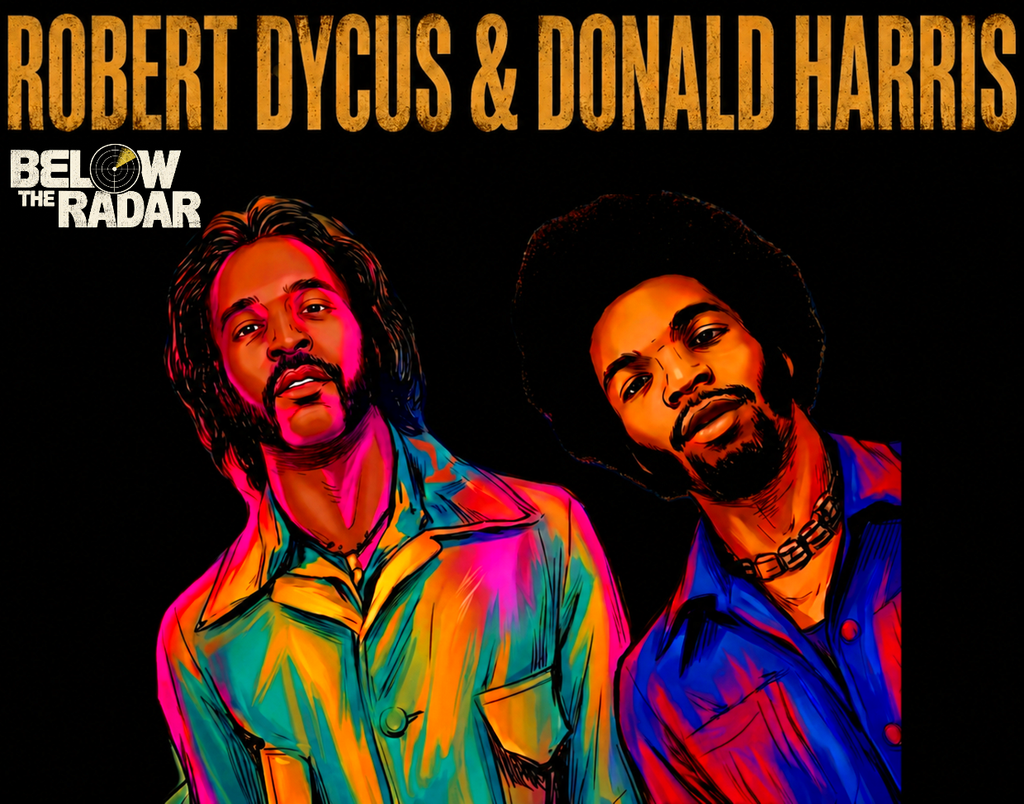
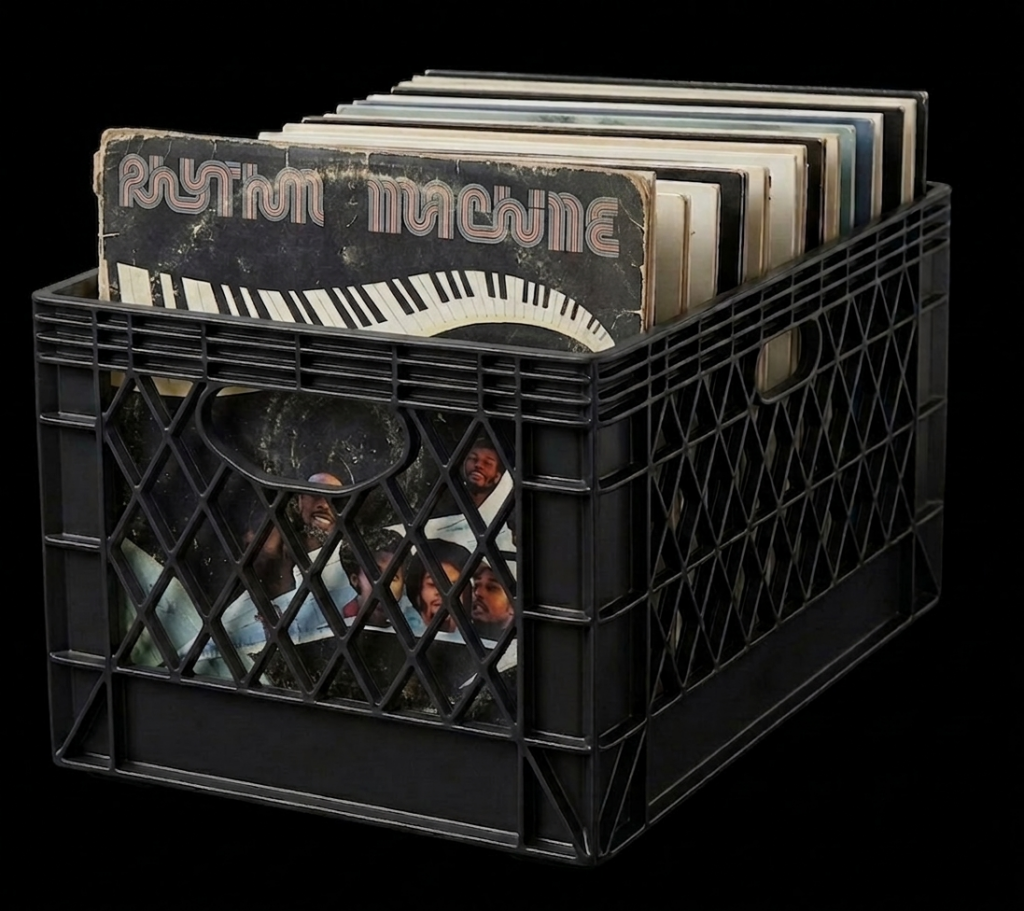
Below the Radar celebrates cult classic soul, jazz, and funk LPs by overlooked artists. Rhythm Machine’s self-titled 1976 album, once an obscure regional artifact, has evolved into a coveted jazz-funk masterpiece, capturing the raw, telepathic chemistry of a band that poured their souls into every groove despite the era’s crushing industry challenges.
___
Sounds Visual: Where does the journey start for you gentlemen?
Robert Dycus, drums: It started, for me, in Indiana. My brother played bass, and I decided I wanted to play drums. I kind of started there. I played about 10 days and I got a gig. I could kind of keep a beat. And that kind of went on from there.
It took about three or four years to really get it down. By the time we got on the road—which was an adventure—I learned a little bit more about the music and the drums, and it became more about the music instead of just having fun later on. Okay, we worked out really well. It kept me out of trouble, and it’s something I’m glad I done. I enjoyed it, and if I was younger, I would do it again.
SV: How about you, Don?
Donald Harris, saxophonist/vocalist/songwriter: I started out in Omaha, Nebraska—I’m not from Indianapolis like the other guys. The band that became the Rhythm Machine actually originated as The Highlighters.
I joined the group while I was still in Omaha. At the time, I was playing in a band—the name of which escapes me now—with the other saxophonist, Maride Williams. We were a two-horn section: I played tenor and Maride played alto. Maride eventually asked if I wanted to join the Rhythm Machine. I had always looked up to them; I’d been watching them since they used to come through Omaha as The Highlighters. They were a high-powered show band, and I knew they had an impressive history of recording and releasing records.
I was ready to join immediately, but I was at a crossroads: I was also running track at the University of Nebraska. Trying to balance a band schedule with collegiate athletics was brutal, and I kept pulling muscles. I decided it was safer to choose music, as that was what I truly enjoyed. While I did eventually return to college later on, I committed to the Rhythm Machine at that time. That is where I met Robert.
Being in a situation with guys I respected—the same guys I’d looked up to back when they were The Highlighters—was a great experience. This was around 1975–1976. It was a really special environment to be part of, and I even found out later that Robert Dycus is actually my cousin!
SV: Wow, really?
DH: We didn’t know it. I liked hanging around Robert because I learned a lot from these guys. They’re a lot older than I am.
RD: We’re all old now.
SV: So, Robert, you were with the legendary Highlighters band before Rhythm Machine…
RD: I was in the Highlighters, and then just before they changed the name to the Rhythm Machine. They had a different drummer before me. I don’t know what the deal was with him. I don’t know if he was just done playing, or they just was having difficulties.
By 1970, the relentless pressure and financial strain of constant touring had taken its toll on The Highlighters, prompting many members to depart and return to Indianapolis to strike out on their own. Undeterred and determined to maintain the group as a premier show band, James Boone and James Brantley immediately set out to assemble a new, high-octane lineup.
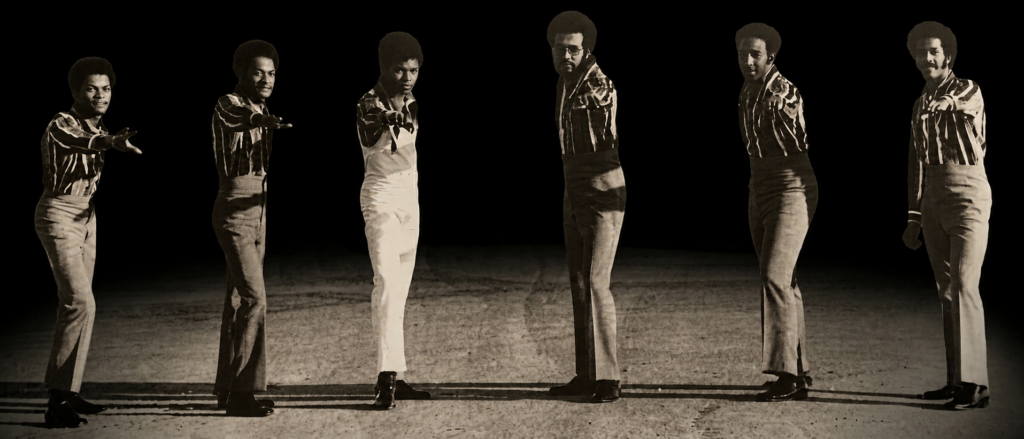
They recruited a powerhouse roster of talent to fill the ranks, starting with Boone’s cousin, Julius Mack, who joined on tenor saxophone after relocating from Louisville, Kentucky. They were joined by the phenomenal alto saxophonist Maride Williams, a native of Muncie, Indiana, as well as a young Kevin Farrell, whom Boone famously mentored and pulled from his sophomore year at Harry Wood High School to join the fold. Finally, the group added Robert Dycus, a local veteran fresh off a stint with Billy Ball who brought a deep, expert understanding of the funk sound to the band. Rhythm Machine’s drummer (before Robert Dycus) was Dwayne (Funky Buzzard) Garvin, who worked and recorded with Marvin Gaye for over ten years.
The band’s sole self-titled album was recorded and released in 1976, on the small Indianapolis label Lulu Records.
RD: We actually put that album together in my girlfriend’s house in Omaha. People thought it was a club, but it wasn’t. We were all struggling at the time, just playing here and there.
Then we started traveling. We had two booking agents and spent a long, long time on the road. We really wanted to be a self-contained group—we had dreams of being the next Earth, Wind & Fire or Kool & the Gang. It didn’t pan out that way, but I think that was everybody’s dream. We weren’t just studio musicians; as a whole, we were a great band.
We recorded it all in Michigan with [engineer] J. Bryce Roberson. I didn’t think it was quite ready, but [label owner] Jerry Herman and the guys wanted to press it right away, so we did.
DH: We went to Kalamazoo, Michigan, to record [at] Bryce Roberson’s Sound Machine Studio. That is where we cut most of the actual tracks for the Rhythm Machine, even though they had been put together in the basement beforehand. We did the bulk of the recording there, but because we were still traveling, we ended up finishing the project at Triad Studios in Des Moines, Iowa.
Both of those engineers are major players in recording history. Bryce Roberson came out of Chess Records; if I remember correctly, he recorded for Bo Diddley and worked with artists like Nancy Wilson. He was involved in hundreds of sessions at Chess. [A master of both the fretboard and the mixing console, Roberson was a pivotal figure in the music industry, serving as Chief Recording Engineer at Chess Records. Over a prolific career spanning nearly forty years as a touring guitarist, he performed alongside legends such as Nancy Wilson, T-Bone Walker, Howlin’ Wolf, Chuck Berry, and the psychedelic soul group Rotary Connection.]
A primary architect of the iconic “Chess Sound,” Roberson’s musicianship—spanning both bass and lead guitar—can be heard on hundreds of records released under the Chess, Ter Mar, and Universal labels. Beyond his studio and stage work, he maintained a deep passion for collaborating with The Highlighters, the band that would eventually evolve into the funk ensemble Rhythm Machine.
DH: Then, when we went to Des Moines to finish at Triad Studios, we were working with Tom Tucker. Tom went on to become the chief engineer at Prince’s Paisley Park in Chanhassen, Minnesota. They were both giants in the industry, and they both left behind such a massive recording legacy.
I remember during one session, [band member] Hopie Bronson was having issues with his Elka keyboard; the sound just wouldn’t stop sustaining. Bryce ended up playing a few parts on that, and he may have even tracked some guitar on a few of the songs. Kalamazoo was also where we connected with the Motown scene. We frequently played as the backing band for Motown acts that came through the area, like Junior Walker and Martha Reeves.
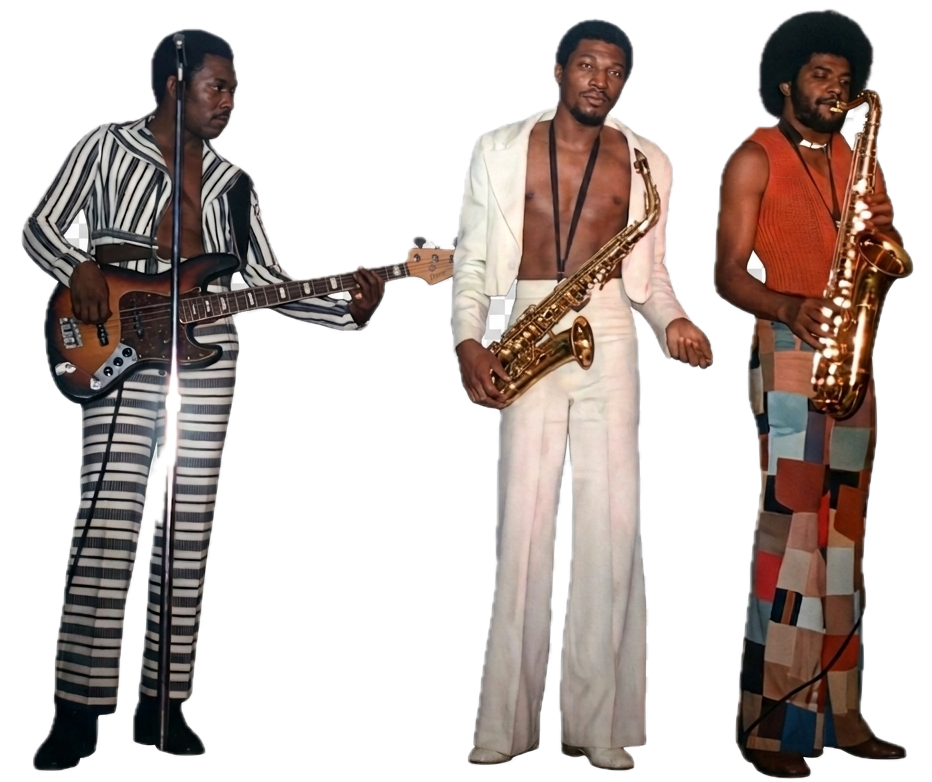
In 1976, while performing prior to their studio sessions at Uncle Dirty’s Sound Recorders in Kalamazoo, Michigan, Rhythm Machine drew an impressive audience, including Motown stars Martha Reeves and Junior Walker.
Walker, a personal friend of band members like James Boone—whom the group had frequently backed during their Indianapolis performances—attended specifically to hear the band’s new material and their new tenor saxophonist, twenty-year-old Donald Harris.
Throughout the performance, Walker stood directly in front of the horn section. Harris, who did not initially recognize the legendary saxophonist, later admitted that he likely would have “frozen solid” had he known who he was playing for. Following the set, however, Walker offered some high praise to the young musician, simply telling him, “You sound good.”
SV: Walking through the process: what was the atmosphere of those sessions for the Rhythm Machine record? Were you aiming for a specific sound, or was the texture of the record just a product of the studio environment you were working in?
DH: No, we were just going for a raw sound—partly because that’s all you get when you don’t have the budget for a second take. You don’t go back and try to “fix” things; you capture the performance, and that’s what the Rhythm Machine sound represents. We had already been playing this material in clubs, so when we went to record, we were just trying to replicate that energy. Take “Lil’s Place,” for example—we were trying to reproduce that party atmosphere on the track. In a way, I think we did. We were so busy being the music that we didn’t fully understand what it would eventually mean to the listeners.
SV: How did the songwriting unfold? Was it a group arrangement style, or were there specific architects for the rhythm section versus the melodic ideas?
RD: Donald and the other horn players coordinated the horn arrangements. Everyone had their own lane; nobody was told what to play. We just put our heads together, and it came out right. Nobody told me what to play on the drums—I was just playing what I felt and following the movement of the song. As a drummer, you have to lock in with the bass player. That’s your business.
DH: Exactly. That was the main focus—locking the groove down. Playing with Rhythm Machine is what really made me aware of the importance of space: how to create a moment where there’s nothing happening, and then drop that rhythmic element in. Boone was a busy bass player, and Robert was a very disciplined drummer. They would rehearse those grooves until they were rock-solid. Once that was locked, I would start hearing horn parts in my head. Maryide and I would work together to focus those parts—we’d pop these little textures in. It was a collaborative effort, even if there were some songs Maryide didn’t want to play on.
SV: When you were in the studio, how much attention were you paying to the technical side? Were you thinking about specific microphones, compression, or tape techniques to get that drum and bass texture?
RD: None of that. Everything was raw. I was just trying to remember my part and stay tight. I didn’t try to do anything fancy; I just played for the groove.
SV: Honestly, that is the best approach you can take.
DH: You also have to remember that we were working with engineers who had already mastered those techniques. When we walked into the studio, guys like Bryce Roberson—”Uncle Dirty”—already had hundreds of records under his belt. He knew exactly how he was going to mic the room. Same thing with Tom Tucker. If you can’t trust guys like that, I don’t know who you could trust.
SV: Let me throw a few song titles at you to see if they spark any specific memories. First, “Whatcha Gonna Do?” This track has a very specific tension and release. What was the impetus behind that arrangement? Was there a clear vision for the vocal interplay, or did that come together in the studio?
RD: That one was incredible. It really came together during rehearsal. That’s where the horn parts were born, and I basically approached my drumming by following those horns. It’s a pretty interesting track.
SV: And what about “The Kick”? Any specific memories there?
RD: Not really—like a lot of our material, it was created in Lil’s basement in Omaha. But “The Kick” was specifically an anti-drug song. It was meant to be a drug-prevention message. We were wondering why it took so long to get traction, and then James Brown came out with “King Heroin.” Our song ended up coming out right behind that.
SV: Let’s go through a few tracks from the record. If one jumps out, feel free to jump in. First up: “You Got Action, You Got Me.”
DH: Hopie came up with those signature instrument squeaks—that dit-it, dit-it—and I developed the groove and the horn parts. Interestingly, while we were developing the song at Allen’s Showcase in Omaha, Lalomie Washburn came through and heard it. If you listen to Chaka Khan’s “My Love Will Lift You Up,” you’ll hear remnants of our track. Lalomie clearly took that influence straight to Chaka.
SV: That’s amazing. Next is “Lil’s Place.”
DH: That was our party song. Boone came up with that main groove, and we decided to turn it into a full-blown club atmosphere. All that chatter and background noise you hear? We just made it up live in the studio as soon as the tape started rolling.
SV: What about “Put a Smile on Time”?
DH: That one has a story. It was being written in Lil’s basement while I was away at track practice. When I finally walked into the rehearsal, they were playing it, but it sounded way too rigid—too “on the beat.” I told them, “That’s just stiff.” Boone challenged me to come up with something better, so I started experimenting with the phrasing right there on the spot. Instead of the rigid version, I brought in the syncopation, which completely shifted the vibe. Maride loved it; he told me it made the whole song. It became a collaborative effort—I had a knack for hearing a rhythm and immediately “popping” a horn part over it. To me, that song is pure magic, and it’s a perfect showcase for Maride’s spirit.
SV: How about “Thought My Love Was Fine”?
DH: That’s me on lead vocals. I wrote the lyrics, and Boone helped shape the way the song shifts in and out of different moods. It’s a very long track, but it captures that era perfectly—the way we used to move a song through different phases.
SV: What’s the story behind “Brenda and Me”?
RD: That was all Boone. He wrote the lyrics and the concept. I spent a lot of time trying to figure out how to drum on it to make it stand out—focusing on the breaks, the stops, and the textures in between. It turned out to be a really cool song. I always thought the intro was a bit long, but I’ve always liked it.
It meant a lot to Boone because Brenda was his girlfriend. She was a beautiful girl, but she was dangerous behind the wheel—she drove extremely fast in that brand-new Mustang her dad bought her. Boone truly loved her. She got to hear the song before she passed away in a car accident; she knew it was for her.
SV: “Everybody’s Chippin”?
RD: That one is all Hopie. He was the architect behind that whole track. Whether you hear it as “Everybody’s Trippin’” or “People are Trippin’,” it all works. That’s pure Hopie.
SV: How about “You Make Me Feel Right, Think Right, Do Right”?
DH: That was Boone’s. Honestly, no one in the band wanted to play on it—we all thought it was terrible. I hated it. I was the only horn player on the track because Maride actually walked out of the studio; he point-blank refused to play on it.
SV: And the record ends with “Can’t Do Without You.”
DH: That’s an interesting song. It’s another one that captures the band, though it’s heavily driven by Boone’s lyrics.
Rhythm Machine’s self-titled record is a superb document of a band operating with telepathic precision. From the moment the needle drops, the listener is treated to a funky ride defined by razor-sharp playing and an infectious, nonchalant ease that only a seasoned touring act can deliver. The horn arrangements are nothing short of dazzling, featuring dizzying, syncopated ferocity, while the rhythm section—anchored by Robert Dycus’ incredibly precise and powerful drumming—provides a deep, funky bedrock. There is a palpable soul at the heart of the album, with a undercurrent that offers a fresh, off-the-beaten-path perspective on the genre.
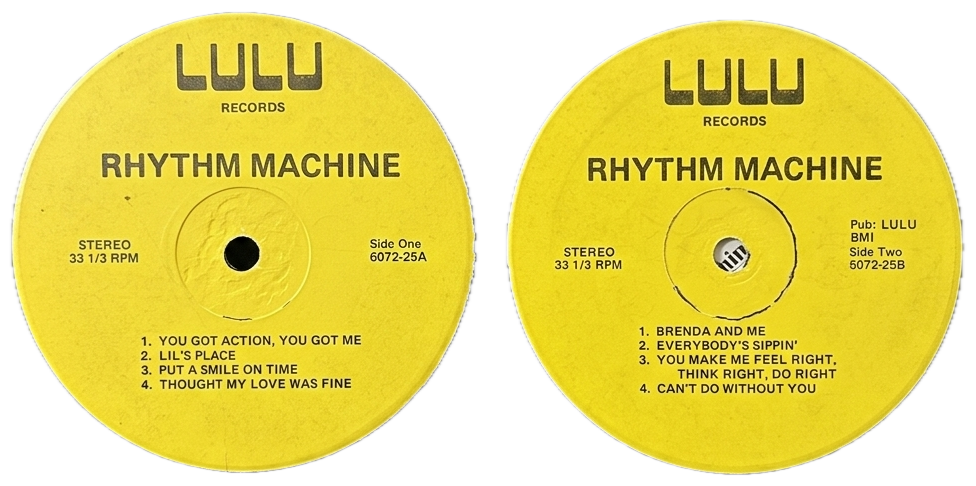
The songwriting is equally compelling, showcasing an uplifting spirit and an adventurous musical vision. “Put a Smile on Time,” perhaps the record’s shimmering centerpiece, remains a highlight of modern soul-funk with its buoyant falsetto harmonies, carefree shuffle, and bright, optimistic synth melodies. Other tracks, such as the hustling “Everybody’s Chippin” and the tender “Brenda and Me,” further illustrate the band’s versatility and gift for groove. The production is silky and liquid-like, allowing the guitars to shimmer, the keyboards to float, and the soprano saxophone to add a perfect, magical bite to the mix.
For years, the original 1976 pressing of Rhythm Machine lived a quiet existence far from the spotlight, likely gathering dust in the backrooms of independent record shops across Indianapolis or tucked away in forgotten collections throughout the Midwest. Because the ensemble was so deeply embedded in the local soul scene, their brilliance remained a well-kept secret, shielded from the broader national audience. It is highly unlikely that original copies ever surfaced at major New York record fairs or high-end collector gatherings during the band’s active years; instead, they remained elusive artifacts waiting for the right ears to find them.
That dynamic shifted dramatically as the global crate-digging community, beatmakers, and hip-hop producers began to scour every corner of the musical map for untapped, “dusty” drum textures and rare grooves. As these savvy explorers unearthed the album, its reputation began to skyrocket. Producers recognized that Rhythm Machine was a goldmine of breakbeats and melodic hooks, leading to its inclusion in highly influential collections and its eventual use in modern hip-hop production. This surge in interest transformed the record from an obscure regional curiosity into one of the most sought-after prizes in the vinyl world. Today, an original copy is a crown jewel for any serious collector, with rare examples fetching as much as $2,500—a testament to the enduring, undeniable magnetism of the music they created.
The long-standing mystery surrounding this rare gem has finally been resolved for a new generation of listeners, thanks to a beautiful, high-fidelity 180g vinyl reissue. Through a collaborative effort between the Madrid-based label Vampisoul and the renowned archivist team at Now-Again Records—who have spent years championing the lost stories of independent soul and funk—Rhythm Machine has been expertly restored from the original master tapes. This definitive reissue ensures that the music once confined to a handful of dwindling, high-priced originals is now accessible to the public, complete with the thoughtful liner notes and pristine production quality that such a legendary record deserves. By bringing this treasure back into circulation, the labels have successfully secured the band’s legacy, allowing their soulful vision to reach the global audience it was always destined for.
SV: What happened with the band after the album came out?
DH: Maride was killed in a car accident. He played at my wedding on August 4, 1979. He was killed just a week later, around August 11. I didn’t even know at the time because I was away on my honeymoon; it was devastating to come back to that news. That was the end of the band. To be honest, most of the guys are gone now. Donald, myself, and our guitar player—who is still in Indianapolis but has been impossible to reach—we’re the only ones left.
We did finally manage to recapture our publishing and songwriting rights, though. For 30 years, we didn’t see a dime from this project. We were held hostage by a deal that was supposedly made with Boone—an arrangement that legally couldn’t have been valid because a songwriter has to personally sign away their rights. The person handling the release knew it wasn’t a legitimate deal, but they pushed it through anyway just to get the record out.
RD: I’m really proud [the record is] still around. It means we’re leaving something behind. It wasn’t a “one-night wonder”—we put a massive amount of heart and hard work into those sessions. Having it “taken” like it was—bootlegged and reissued without our permission—is disappointing, but the music itself survived.
DH: Exactly. It was a deal made in total disregard for us. It’s been reissued many times, often without any “up-and-up” process. There are “white label” versions floating around in Europe, and I’ve even seen copies pairing Side A and Side B tracks that were never meant to be on the same release. But at the end of the day, the music is still reaching people. That’s what matters.
RD: [The record] did well in Japan, though. I was there playing with another group, and they told me, “Your record is taking off—it’s playing strong over here.” But that’s the reality of it: once it’s out of your control, if you don’t have the money to fight the legal battles, you’re pretty much out of luck.
SV: When you go back and listen to this record—and I know it’s approaching 50 years, which must be surreal—does it sound like the same music you remember making?
RD: I think so, though it’s very different listening to it now. I do listen to it occasionally. Sometimes I’m proud of it, and sometimes I’m not; we’re all our own harshest critics. Like I said, I was really against recording some of it because I felt we weren’t ready.
DH: Exactly. There were flaws we just had to live with. For example, my voice cracked really badly on “You Got Action, You Got Me.” People assume I was trying to mimic someone who was drunk, but no—my voice just cracked. I asked [Boone] if we could erase that part, and he said, “No.” Those are the kinds of things Robert is talking about. We didn’t have the luxury of a second take because studio time was just too expensive.
SV: What are you guys up to these days?
RD: I still play. I keep my drums set up in the garage; I even have a heater out there for the winter. I do sessions with different guys, though blues isn’t really my forte. I’ve played in a few groups here in Salt Lake—where I’ve lived for about 32 years—but the market for live music is tough. It’s hard to make a living playing venues when the pay is only $60 or $100.
DH: I am still actively promoting the Rhythm Machine catalog. We are still getting placements for our music—it’s just a different world now in terms of how you shop a catalog for film and commercials. [The band’s music has been featured on episodes of shows like “The Shield,” “Supernatural” and “Rescue Me.”] I’ve been leery about signing everything over, though, given the fight I’ve had to wage since 2008 to reclaim our publishing.
Since our 2016 reunion in London, I’ve continued to write, and I’m working on things that I hope will benefit all the guys. My main focus since Maride passed has been “Put a Smile on Time.” It’s a deeply meaningful song, and it reminds me of why I do this. I’m doing it for the musicians who are no longer with us—Hopie Bronson, Boone, Maride. They were major players, and it’s my purpose to make sure they aren’t forgotten. That’s why I value these interviews; they help keep our history relevant.
Leave a Reply
You must be logged in to post a comment.