
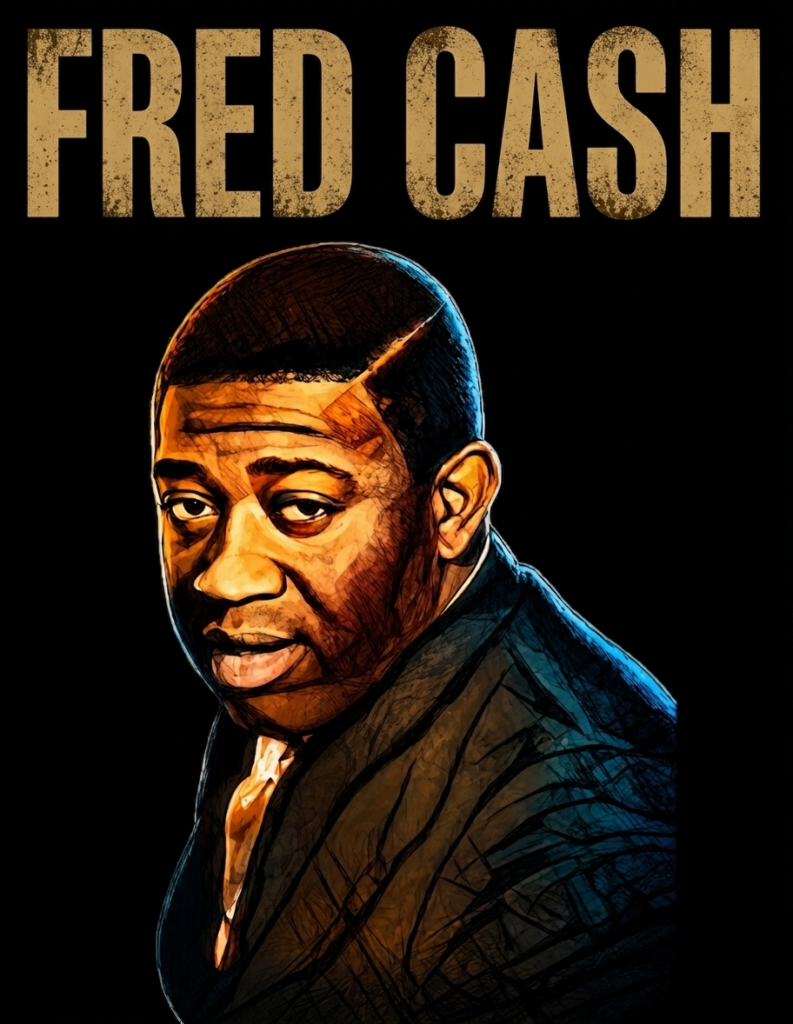
Legendary Impressions vocalist Fred Cash, the group’s final surviving member, recounts a lifetime of music that transformed personal struggles into timeless anthems—a journey that began with him sneaking out to perform in Chattanooga nightclubs and eventually led to him shaping the very sound of soul alongside Curtis Mayfield.
___
Sounds Visual: You grew up in a very musical household, attending church three times a day. How did those early experiences in the Beulah Baptist Church shape your vocal style and your eventual approach to professional performance?
Fred Cash: Well, it did a whole lot, you know. Sam’s father was a preacher—we’d go to my church together.
At twelve, Cash teamed up with his sixteen-year-old neighbor, Samuel Gooden, to form the Southland Jubilee Singers, performing regularly at Gooden’s church. Influenced by The Platters and Ray Charles, the two also spent their nights singing rhythm and blues out on the corner.
SV: You and Samuel Gooden began performing together when you were just twelve. Did you have any sense back then that music would become a lifelong career, or was it just a way to express yourselves as kids?
FC: Well, it was just a way of doing something, you know? Because we didn’t have a lot to do in Chattanooga. So that’s what we would do: sit on the corners and sing.
At the age of fourteen, Cash started performing at local nightclubs alongside Gooden, Arthur Brooks, and Emanuel and Catherine Thomas, appearing under the group name “Four Roosters and a Chick.”
SV: You famously snuck out of your bedroom window to perform in local nightclubs at age fourteen. Did your family ever find out?
FC: Well, they didn’t know because Sam and myself, we’d sneak out the window. Our friend would drive up and turn the motor off so the car would coast on by. I stayed up on the hill and I’d meet them down at the bottom of the hill; they’d crank up the car and we would go on to the nightclubs.
And [I’m] just so happy they never found out about it. If they did, they never said anything to me about, ‘Hey, where were you at?’ or whatever, you know? I’d come back in and go to bed. But that was just something that we loved to do—Sam and I—that’s all we had to do.
SV: What artists were you listening to, or inspired by?
FC: Oh…Ray Charles, and people like The Midnighters.
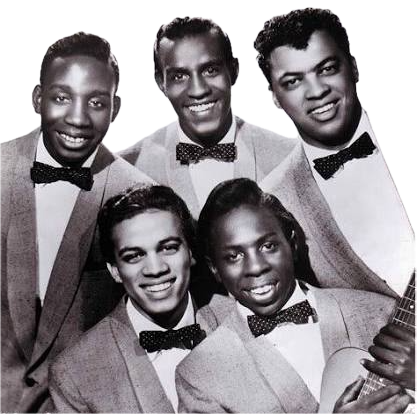
In 1957, when the Roosters moved to Chicago, Cash’s mother prevented him from going along. In the meantime, Arthur Brooks’s brother, Richard, met Jerry Butler—a tenor working as a short-order cook—at a Chicago YMCA. Butler, who performed with Curtis Mayfield in the Northern Jubilee Gospel Singers, later teamed up with the newly arrived Gooden and Brooks. Rebranded as The Impressions, the group scored their first hit in 1958 with ‘For Your Precious Love,’ released on Vee-Jay Records.
After Butler exited the group in 1959, The Impressions headed to Chattanooga to bring Cash back into the fold. Captivated by their momentum, Cash dropped out of his junior year at Howard High School to join them in Chicago. Under the guidance of songwriter Curtis Mayfield, the group moved to New York in 1960 to record for ABC-Paramount, yielding the 1961 smash ‘Gypsy Woman.’ The group’s trajectory changed again in February 1963, when Mayfield, Cash, and Gooden returned to Chicago, leaving the Brooks brothers behind in New York.
SV: What was going through your mind in 1959 when your friends returned to Chattanooga specifically to recruit you to join them in Chicago? Was it a difficult decision to leave Howard High School in the eleventh grade to pursue that opportunity?
FC: Well, at first we were all gonna leave and go to Chicago together, but my family wouldn’t let me go because I was the youngest one of all of them. They were just frightened for me to even go to Chicago, you know?
But soon after that—about six months later—when they recorded ‘For Your Precious Love,’ I wouldn’t be on that particular song. And they came back to Chattanooga and they were playing at the auditorium, and Jerry was getting ready to leave. They came and got me and said, ‘Hey man, you want to go back to Chicago?’ And I said, ‘I got to ask my folks and see what they say.’
And one of the fellows had a big roll of $1 bills. We thought that was a whole lot of money. But it was a bunch of $1 bills. My mama saw that, and she said, ‘Well, yeah, he can go.’ So I left and went on back to Chicago with them, and the rest is history.
Between 1963 and 1970, Cash, Gooden, and Mayfield continued as The Impressions. The group wasted no time in 1963, scoring a number-one hit with ‘It’s All Right’ and dropping their first full-length studio album, The Impressions.
SV: Since you mentioned you didn’t know the full extent of Curtis’s writing for others until later, what was your initial reaction when you finally started putting those pieces together and realizing how much of the Chicago sound he was shaping behind the scenes for artists like Major Lance and Gene Chandler?
FC: Well, I didn’t know about all of that until a few years later, when Curtis started writing for Major Lance and Gene Chandler and all these people. We recorded all of Major Lance’s songs—you know, like ‘Monkey Time,’ we did background on it—and a whole lot of artists. When Curtis wrote for these artists, we would do the background, and it was just a great honor to do it. We had fun doing it and were getting paid at the same time.
SV: That’s the best of both worlds right there. What was your first impression of meeting Curtis when you joined the group to replace Jerry?
FC: Well, I said, ‘This little guy, he’s a talented guy.’ You know, he was writing when he was about 12 years old—I think he wrote ‘Gypsy Woman‘ somewhere around 12 or 13 years old—playing the guitar and stuff. I said, ‘Man, this young guy, he’s into it.’ We just had a good relationship for a long, long time, and I admired him a whole lot for his writing. He was a good writer.
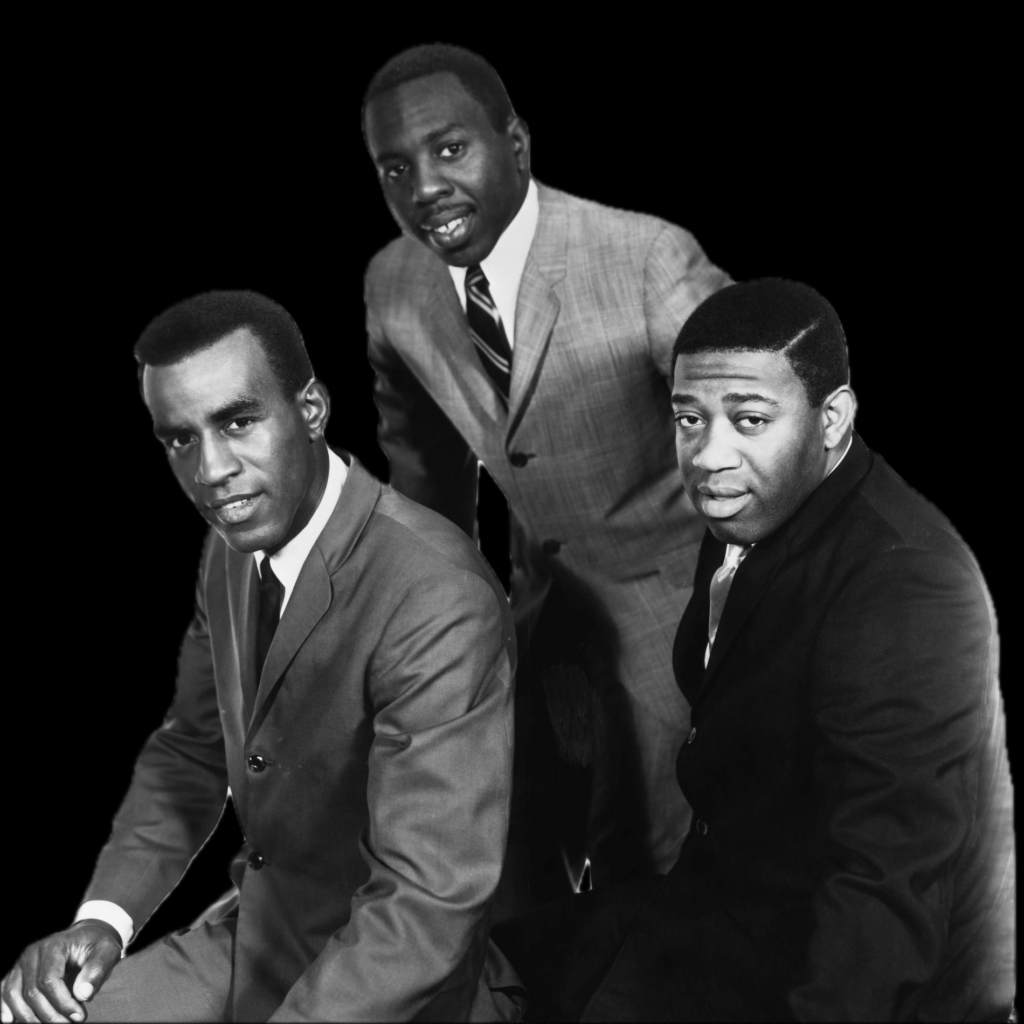
SV: How would you describe the creative chemistry between you, Curtis Mayfield, and Samuel Gooden during those early years in Chicago and New York? What made that specific trio work so well together?
FC: Well, one thing: we did a whole lot of rehearsing. Sam, Curtis, and myself—they’d come to my home, and we’d go down in my basement and rehearse for hours. We’d go over to Sam’s home and rehearse; Sam and Curtis were staying in an apartment at that particular time. We just knew that’s what we wanted to do, but we had to be different and everything had to be tight. That’s why we rehearsed so much. I enjoyed it because we were putting it together, and it showed when we hit that stage. It was tight, and that’s the way we wanted it to be.
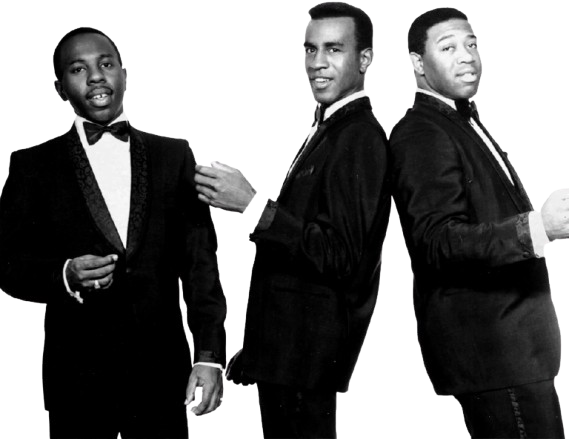
SV: Can you talk to me a little bit about the transition from the gospel music you were raised on to more of an R&B sound with the Impressions? Did you guys ever find it tricky to balance those two influences as the sound of the group evolved?
FC: Not really. That was very easy. A lot of the rock—like Ray Charles—a lot of that stuff came out of the church. That’s why I loved him so much. He had that soul, you know?
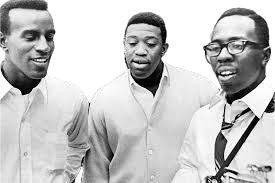
SV: Let’s talk about three-part harmony for a minute. How did you and the band divide up vocal parts and arrangements, and why did that three-part harmony sound so much fuller than a typical trio?
FC: Curtis had his guitar, and he would play the different notes for Sam and I to sing. That’s how we got that closeness. He’d take and play the note for Sam—”Well, now you do this one. Then I’m going to do this one. And Sam, you do that one.” And that’s how we really got tight as far as our harmonies worked and sounded.
SV: In the early days, how much of the sound was structured in the studio versus something that developed organically while going through your own vocal ranges on the road?
FC: Everything was done in rehearsal. When we got ready to go to the studio, we knew—hey—we had no time. ‘Cause the musicians, their chops—the horn players or whatever—you had to know what you were doing; you couldn’t just keep going over the song. We couldn’t afford to do that. We had to know what we were doing when we got to the studio. There was no time to learn.
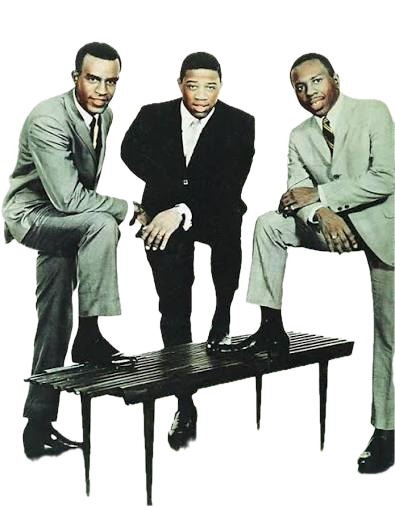
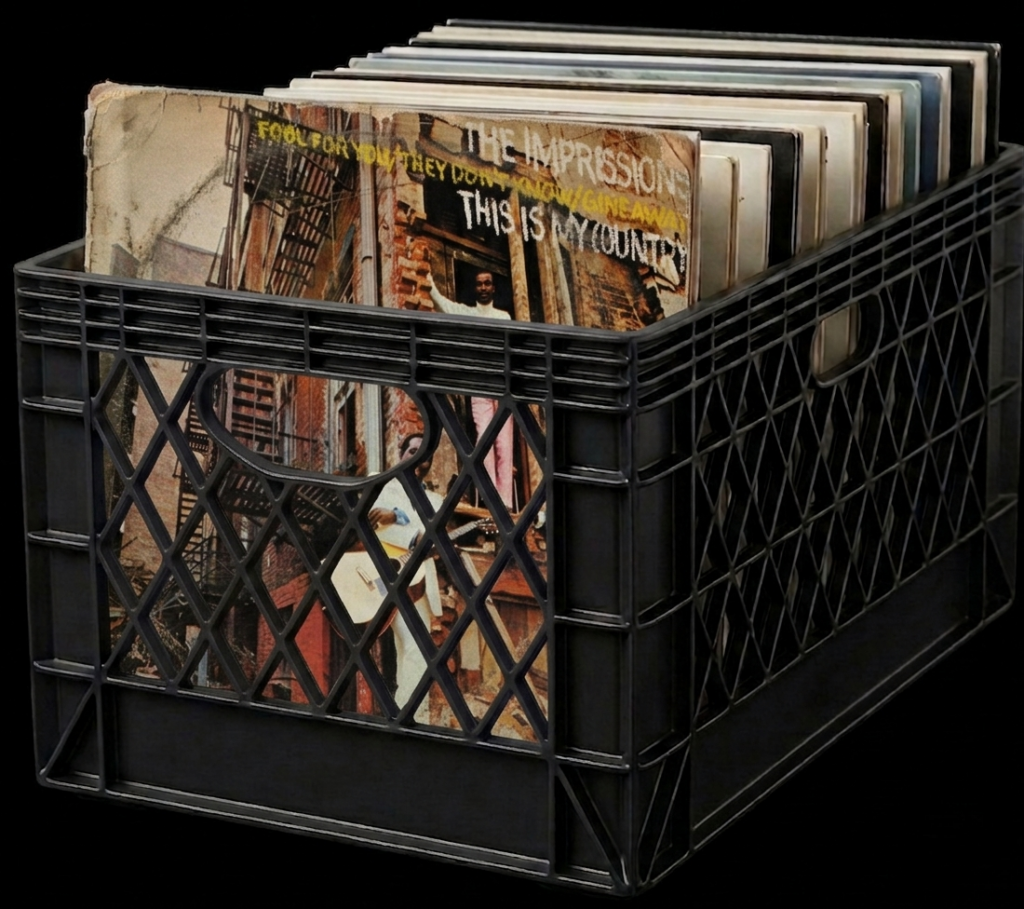
SV: Let’s talk about songs like “Keep on Pushing” and “This Is My Country.” They became anthems for the civil rights and social impact movements. What were your personal political thoughts during that time?
FC: Well, we saw what was happening with the country at that particular time. That’s why these songs came out. We had something that we wanted to say, and Curtis was writing such great tunes. We just had fun going in the studio recording them because we knew it was something meaningful to say.
SV: Fred, I’m curious if you ever felt uncomfortable or faced backlash for performing politically charged songs throughout the South?
FC: Man, we went all over the South singing these songs and didn’t have no trouble. We played for a lot of colleges—they would have these shows way back in the woods—and we played for a lot of white folks, and not one time could we say that we had problems. But we had to go through those little towns late at night with these Cadillacs and stuff, so the police wouldn’t see who was in those cars.
We traveled on tour with Jerry Butler and Major Lance, everybody had Cadillacs, but we didn’t want to get stopped. Most of the time, the cars were in the record company’s name, just in case the police pulled us over: “Hey man, whose car is it?” “Well, it belongs to the record company.” These are just some of the things we had to go through at that time.
SV: Let’s talk about “People Get Ready.” Did you realize at the time that music would become such a significant part of the cultural zeitgeist?
FC: Well, I tell you what: Curtis would write about three or four o’clock in the morning, and I’d hear a knock on the door. He’d come over and bounce all these songs off of me. “Fred, what do you think about this song?” And I’d tell him my honest opinion: “Curt, I think we got another hit record.” That goes for “People Get Ready,” “Keep on Pushing,” “We’re a Winner,” “Choice of Colors”—I was a sounding board for him. He had a lot of faith in what I thought about the songs.
SV: Was there a moment when you realized “People Get Ready” wasn’t just a record, but a piece of history that would be sung for generations?
FC: No, but I understood that it might be. I felt that it might be that kind of song that would carry on for a long time. And it did carry on for a long time.
SV: Were there other songs that the group recorded that you personally felt never got the attention they deserved?
FC: Well, most of these songs got the attention. ABC-Paramount did good pushing our music. They never interfered with us. We’d go in the studio—just three of us and Johnny Pate, who was our arranger—and they just let us do our thing.
SV: Is it true that “It’s All Right” was inspired by a phrase that you used to say?
FC: Yes, “It’s all right.” I used to say that all the time. “Hey man, it’s gonna be all right,” because we were having some difficult times sometimes. Curtis took those lyrics and that’s what he wrote the song about.
SV: Of all the vocal parts you’ve sung over the decades, is there one line or phrase that still gives you chills every time you hear it or perform it?
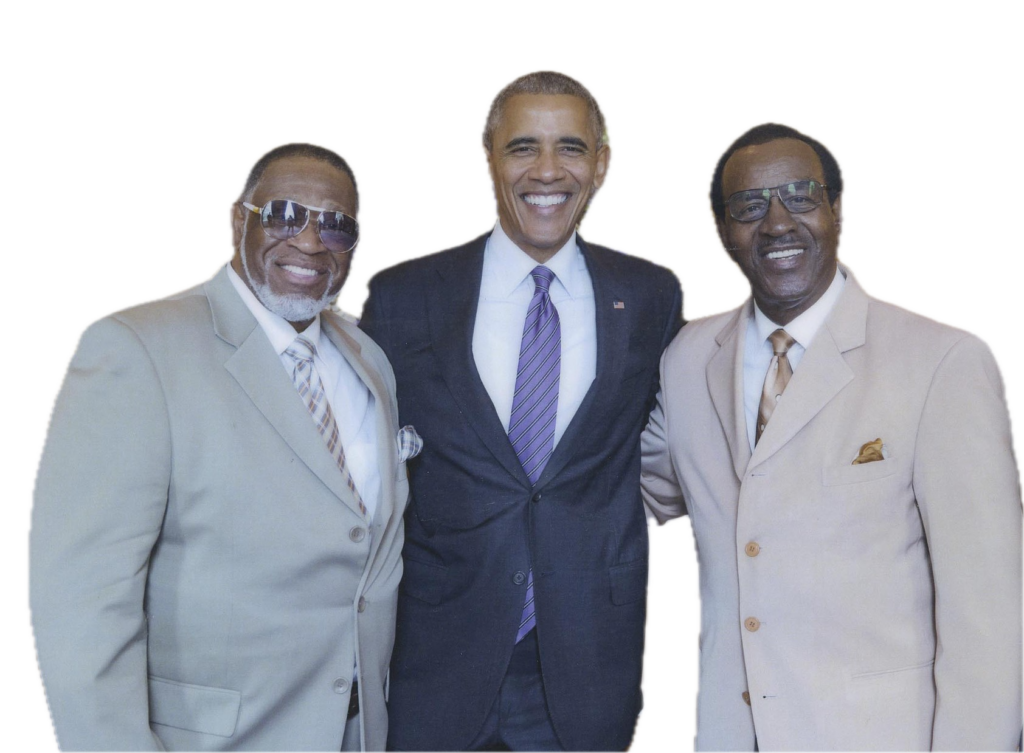
FC: Well, one particular song, “Keep on Pushing.” That’s one of my favorites. Even when we got rid of the guitar, Barack Obama invited us to the White House and we took pictures with him. That was on his playlist—as you know, he had a playlist—and we really enjoyed that.
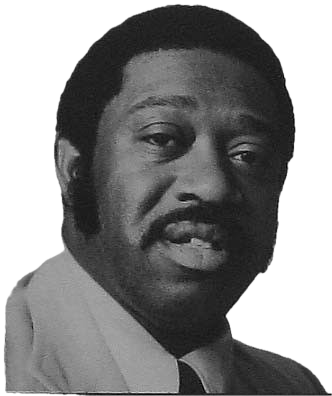
After graduating from Howard University, Donny Hathaway joined Curtis Mayfield as a house producer and musical director, where he elevated iconic Impressions tracks like “Choice of Colors” and the Impressions album The Young Mods’ Forgotten Story with his signature lush, socially conscious arrangements.
SV: Let’s talk about Donny Hathaway for a minute. Do you remember the moment you realized he had a talent to be a star in his own right?
FC: Donny Hathaway played keyboards with us for a while. I said, “God have mercy!” When I first heard him sing, I didn’t know he could sing like that. Between shows, we needed somebody to sing along with the band until we came on, and Donny Hathaway—I mean, he thrilled that crowd. We did a lot of college dates. That’s when I said, “Boy, we didn’t know that he could sing like that!” And then he and Curtis got together and did some stuff. Donny Hathaway was a talented guy.
SV: What was something Curtis taught you not necessarily through words, but just by watching how he operated?
FC: Well, like I said, he was just an original. He was the youngest of all of us. When we went in the studio, he’d know how to get with the arranger, who was Johnny Pate at that particular time. They’d get the head [of the song] together: “Hey man, this is what we need to do.” Because, like I said, we couldn’t just stay there and rehearse all day because we’d burn the horn players’ chops out. But he knew his music. That’s the way I should say that: Curtis knew his music.
SV: What did a normal day look like for you during the peak years of the Impressions? Were you constantly working, or was there more downtime than people might imagine?
FC: We worked a whole lot. So that’s why I don’t do nothing now—you’re one of the few interviews that I’m doing.
SV: I’m very honored by that, Fred. You worked with a variety of artists after Curtis’s departure in 1970. As a veteran of the group, how was your role as a stabilizing force in the vocal blend when the personnel shifted?
FC: Well, when Curtis left the group—what, 1969 or ’70?—somebody had to take over, and that left me with that bag as full as trying to put everything together and keep everything together. We kept auditioning people all over the country, and we finally got a few people who auditioned, but they weren’t able to do it; they couldn’t make the grade, and we had to send them back. It was a hardship trying to find the right person to replace Curtis—you can’t replace him. We just kept going until we could find somebody that was good enough, but no one was like Curtis.
In 1968, the group returned to the top of the charts with “We’re a Winner” and left ABC-Paramount to join Mayfield’s Curtom label headed by producer, Eddie Thomas. There, The Impressions produced two more albums before Mayfield left in 1970. Although Mayfield continued to serve as their occasional songwriter and producer, The Impressions remained on Curtom label through 1976.
SV: There was also a story you told about once helping B.B. King through his nerves during his first-ever show at the Apollo. What do you remember about that night?
FC: He was a little nervous about the crowd. Like the Royal Theatre in Baltimore—they didn’t like him, man. They’d bring eggs and tomatoes and stuff in the theater and throw them at you, you know? But we told B.B., “Hey man, just go out there and do your thing and everything will be alright.” And it was. They loved him.
After Mayfield’s tragic paralysis in 1990 and death in 1999, Cash and Gooden continued to perform, touring with Eric Clapton in 2001.
SV: Talk to me about the induction into the Rock and Roll Hall of Fame in 1991. What did that milestone mean to you personally?
FC: Listen, I got my Rock and Roll Hall of Fame [trophy] sitting right here, looking at it now. That was one of the highlights of my life to go back and do that. We went in with Tina Turner. We enjoyed it. We had our ups and downs just like everybody else, but something just stands out [about the experience] that you remember and love.
SV: You mentioned seeing teenagers in Spain or Europe singing along to your hits today. How does it feel to know your message still resonates with younger generations?
FC: Oh, I love that. I love it because these songs had a meaning. A lot of these young people today will come up and tell you how wonderful it is that we made these kinds of songs at that particular time.
SV: When young artists ask you for advice, what is something you find yourself telling them?
FC: Well, it depends on what they ask me. But most of the time, I would tell them just work hard and do the best that you can do. That’s all you can do. If this is what you love to do, work hard.
SV: Fred, people use the word “soul” a lot, but I’m curious how you would define it. What does it mean to put your soul into a song?
FC: Well, that means you put everything you got into it. And that’s what we tried to do with every song. That’s why we rehearsed so much—because we wanted it to be right.
SV: What do the Impressions mean to you in 2026, after all this time?
FC: Well, it means a whole lot, of course. That music is still out there. As a matter of fact, I was looking at the television about one or two o’clock the other night, and they had us on. This guy—I forget his name—but they had a lot of the old acts on. Gladys Knight and the Pips, a lot of our friends. We did “Precious Love” with Jerry Butler. I wouldn’t expect to see that, but that show came on.
SV: What for you has been the most rewarding part of this long journey? And conversely, what was the most challenging part?
FC: Well, just trying to make it, you know? Like when Curtis wrote “It’s All Right”—we put it together in the car between shows. We sat down and put that whole song together, and we went back to the studio in Chicago, got with our producer, and showed him what was happening. He went in and cut it. We sang that song, and it got such a great response that we went right on in the studio and cut it.
Same thing with “People Get Ready” in Philadelphia at the Uptown Theater. We had a show with the Temptations, the Miracles, and the Supremes, and everybody was singing. We finally had them sung out—I forget what night that was, but it was a holiday—and everybody was just acting crazy. We tried out “People Get Ready,” and the people erupted. We went back to Chicago and did the same thing. It was a great one.

SV: Is there a message you’d like to give to all of your fans and the people whose lives you’ve dramatically improved through your music?
FC: Well, we had a lot of people who supported us, and I appreciate it all, all of the years. They buy our music, and that meant a whole lot, because that music is taking care of us right now. I appreciate it for all the people that have went out and bought our music.
SV: Fred, again, I know you hardly do interviews, so this has been such a huge honor, and I am incredibly thankful for your time.
FC: You did a great job and I appreciate you, Justin.
Special thanks to Elijah Cameron at the Bessie Smith Cultural Center and the Chattanooga African American Museum for his invaluable assistance.

Leave a Reply
You must be logged in to post a comment.