
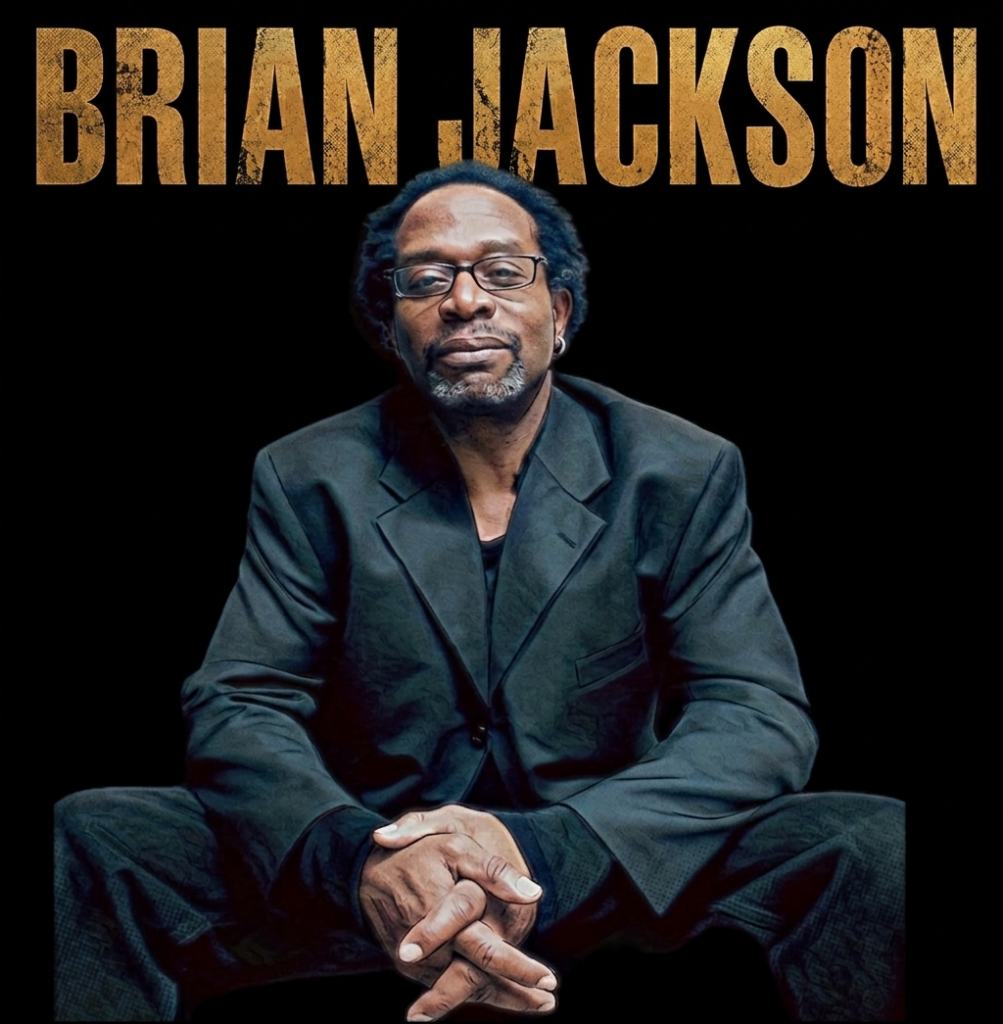
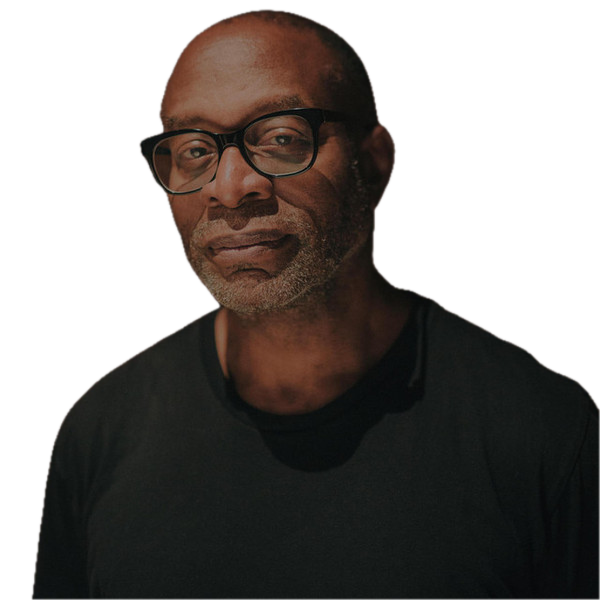
Whether exploring the limits of genre or embracing the freedom of eclectic collaboration, Brian Jackson has spent his career relentlessly chasing the singular “shape” of sound.
___
Sounds Visual: Where does the journey start for you?
Brian Jackson: I was born in Bed-Stuy, but I grew up in Crown Heights. When I was born, my dad and my uncle bought a house together in Flatbush, down the block from Erasmus Hall High School, where I eventually went to school. When my parents broke up, we moved to Crown Heights. I lived there from age five to 15, and at 16, I went to Lincoln University.
SV: You have an interesting story about your early music lessons and a mentor who provided a scholarship. Can you tell us about that, and about Mrs. Ross?
BJ: I’d been bothering my mom to take music lessons since I was about five. She finally relented when I was seven and let me study with her old piano teacher. I initially wanted to play drums, but that wasn’t going to happen in an apartment—and trumpet wasn’t the right fit for a five-year-old. We settled on piano. I only realized years later that the delay was because my mom was saving up to buy me a piano.
I went to study with Mrs. Hepzibah Ross—we called her “Aunt Heppie.” During my first lesson, she gave me scales to play. When I left, I was so excited to start, but I realized I didn’t have a piano. She had given me a piece of cardboard with keys drawn on it. I must have practiced on that cardboard keyboard for at least two months before we finally figured out how to get me a real piano. Maybe that’s why I still hear music in my head; I don’t always need to listen to the radio. People ask, “Aren’t you a musician? Don’t you want to hear music?” I just tell them I hear it in my head.
SV: Back then, if you wanted to learn jazz, you were expected to be rooted in classical European music. How did you feel about that at the time?
BJ: I didn’t have anything else to judge it by—that’s just what I was told. I later realized that most jazz musicians didn’t learn in a school; they learned by listening to records, repeating phrases over and over until they became part of their vocabulary. To me, it didn’t seem unusual at the time.
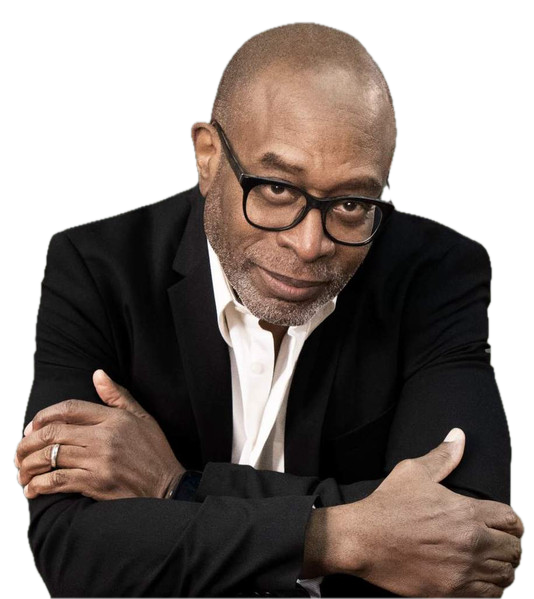
SV: Could you briefly talk about what the live music scene was like in New York back then?
BJ: Coming up in the ’60s and ’70s, there were only a few ways to hear music: radio or records. You had to find out how many places you could sneak into or which festivals were free. I’d refer you to Questlove’s movie for the vibe. The best way to hear what was happening was to attend things like the “Jazz Mobile,” where they’d load musicians like Elvin Jones onto the back of a truck and they’d just blow.
Clubs were also accessible; they didn’t cost millions of dollars to open in the heart of the community. For instance, the Blue Coronet in Bed-Stuy was on Franklin near Fulton. When I was 17, my father’s friend took me there to see Miles Davis—Miles, Wayne Shorter, Chick Corea, Dave Holland, Jack DeJohnette—all there. I could have walked there from my house.
SV: Tell me about the decision to attend Lincoln University. What was it like being in a space that shaped people like Langston Hughes and Thurgood Marshall?
BJ: The decision was based on the perceived culture nurtured by those who had been there—people like Thurgood Marshall, Langston Hughes, and Kwame Nkrumah. I thought that would be the place where Black intellectual thought and the arts were “popping off.” I was accepted, and I thought it was a sign. However, Lincoln wasn’t very forward-thinking in terms of the curriculum. The cultural growth I found there came from the students, not the institution.
SV: Speaking of Langston Hughes, what struck you about Montage of a Dream Deferred? I read that was one of your favorites…
BJ: Its economy. I don’t think I’ve ever read a poem so short that held such a wide variety of emotions while still making a point. It’s a marvel. To me, that set the standard for how words should be employed in the arts. It was definitely less than 100 words—maybe 50—yet it said things that others would have spent pages describing.
SV: It’s easier to write a novel than a short story…
BJ: Exactly. Another person like that is E.E. Cummings—pure genius.
SV: Let’s shift to your partnership with Gil Scott-Heron. What was your first introduction to him at Lincoln?
BJ: We met in a music room. I was fed up with the curriculum at Lincoln and spent many depressed days wondering where to go next. I knew I couldn’t just drop out during my freshman year; going back to my parents then would have been “no bueno.” I spent a lot of time in the music room writing songs because that was what I loved most. There were three pianos, and you didn’t have to be a music major to go in and start playing.
One day, this guy knocked on the door and asked if I wanted to participate in a talent show. I said, “Sure, I’m playing this song.” He said, “No, I’m playing another one, written by this guy next door.” That turned out to be Gil. The depth of his lyrics blew me away. I started sharing the music I’d been working on with him. I could write lyrics, but they didn’t come as quickly as I wanted; for Gil, he could write lyrics in five minutes.
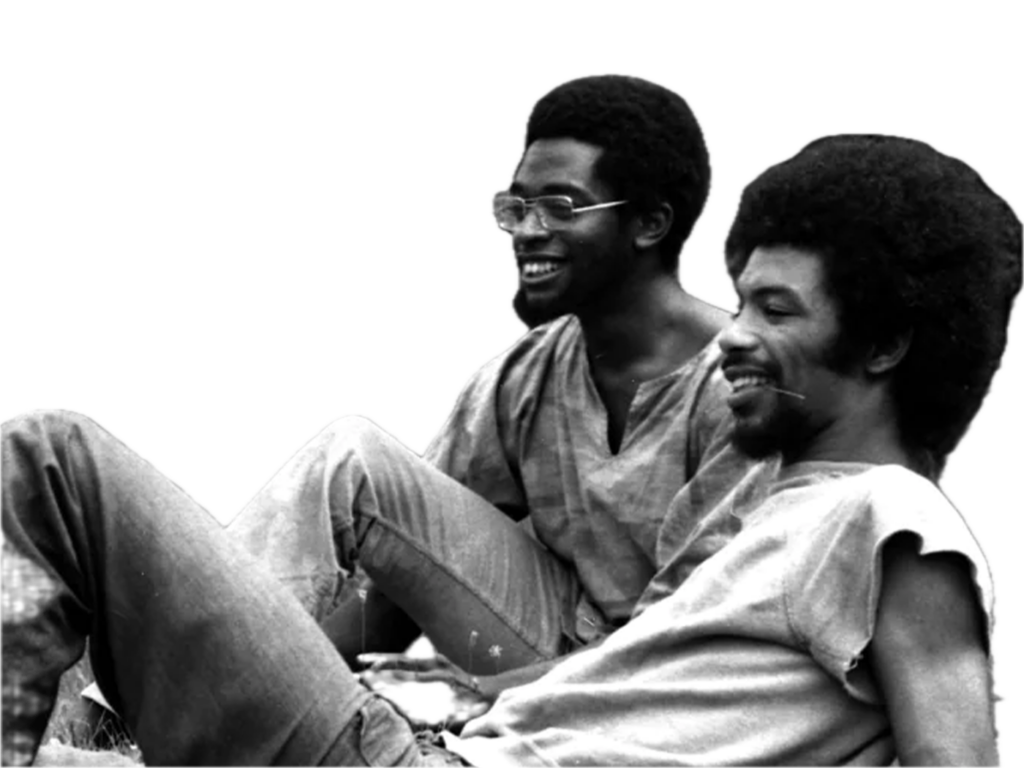
Gil Scott-Heron and Brian Jackson formed one of the most artistically symbiotic partnerships in soul and jazz poetry, beginning with Pieces of a Man in 1971 — an album that wove Scott-Heron’s incisive spoken-word lyricism with Jackson’s lush, tender piano arrangements. Together they created a body of work that defied easy categorization, blending blues, jazz, funk, and protest poetry into something wholly their own across landmark records like Winter in America and The First Minute of a New Day. Their collaboration gave voice to the Black American experience with an intimacy and political urgency that made their art feel less like music and more like a necessary conversation.
SV: Let’s talk about the creative process between you and Gil. I’ve read that you described your collaboration as a “Vulcan mind meld.” Can you talk about that–the unique chemistry you two shared?
BJ: We both spoke the language of music. We had a shared philosophy, influenced by reading about the science of color and sound. We believed that, in terms of dimensions, music occupied a higher plane than lyrics. Music was an unspoken language, and the message was contained within the music. Our job was to filter that essence into lyrics—to create a physical manifestation of what the music was already saying.
SV: When did you start getting co-billing as partners, and how did you manage the division of credit in retrospect?
BJ: We grew up in a “hippie-dippy” time, so we were against establishment things like contracts. Our word was our word; a handshake was a handshake. That worked for a while. But there are a lot of pressures in the music business, and eventually, other people got their hands in our business—sometimes without us even knowing.
In hindsight, what I say to young musicians is: no matter how tight your friendship is or how much you trust each other, put it on paper.
SV: An oral contract is only as good as the paper it’s written on. Was any of that complicated by the fact that Bob Thiele was initially interested in Gil’s poetry rather than your music?
BJ: The reason we didn’t re-sign with Bob was that he was a small operation and didn’t feel he had the resources to run a company without the publishing rights. Meanwhile, [people] were telling us, “Publishing is your pension; that’s what’s going to save you.” When we presented the idea that we wanted our publishing, it was a hard “no.” So, we left to start working on our own projects and maintaining our own publishing.
SV: You’ve spoken about the “rite of passage” in the studio with Ron Carter—a disagreement over a C11 versus a C7 chord. Did successfully defending your harmonic choice change how you asserted your creative vision for the rest of your career?
BJ: It’s an interesting perspective. When Bob Thiele produced that first album, he asked, “Who do you want on it?” I was 18. I just threw out everyone I had been listening to. I didn’t get Elvin Jones, but we got Bernard Purdie—the guy who played with Aretha Franklin. I wasn’t going to have a problem with that! We got Hubert Laws and Ron Carter.
I was 18 and still relatively new to jazz. I’d been playing for seven years, but I’d only been studying jazz chords for a bit. McCoy Tyner had come to Lincoln, and I appointed myself his host. I asked him how he came up with those chords, and he said, “Choose a root, and see what you can do with it.” That broke my head apart. It was how I wrote songs like “Pieces of a Man.”
I was comfortable with songwriting, but I wasn’t that comfortable as a player in a room with these masters. Bob hired Johnny Pate, an incredible arranger, to oversee the project. Johnny took my amateur charts and turned them into professional ones. But for some reason, he let me guide the process.
When Ron Carter asked me a question, I gave him an answer, but he was a perfectionist and didn’t accept it. He asked me a second time, and I tried again. By the third time, I was shook. I just said, “Well, what do you think?” He started laughing and said, “Man, I’m just messing with you.” After that, the session went smoothly.
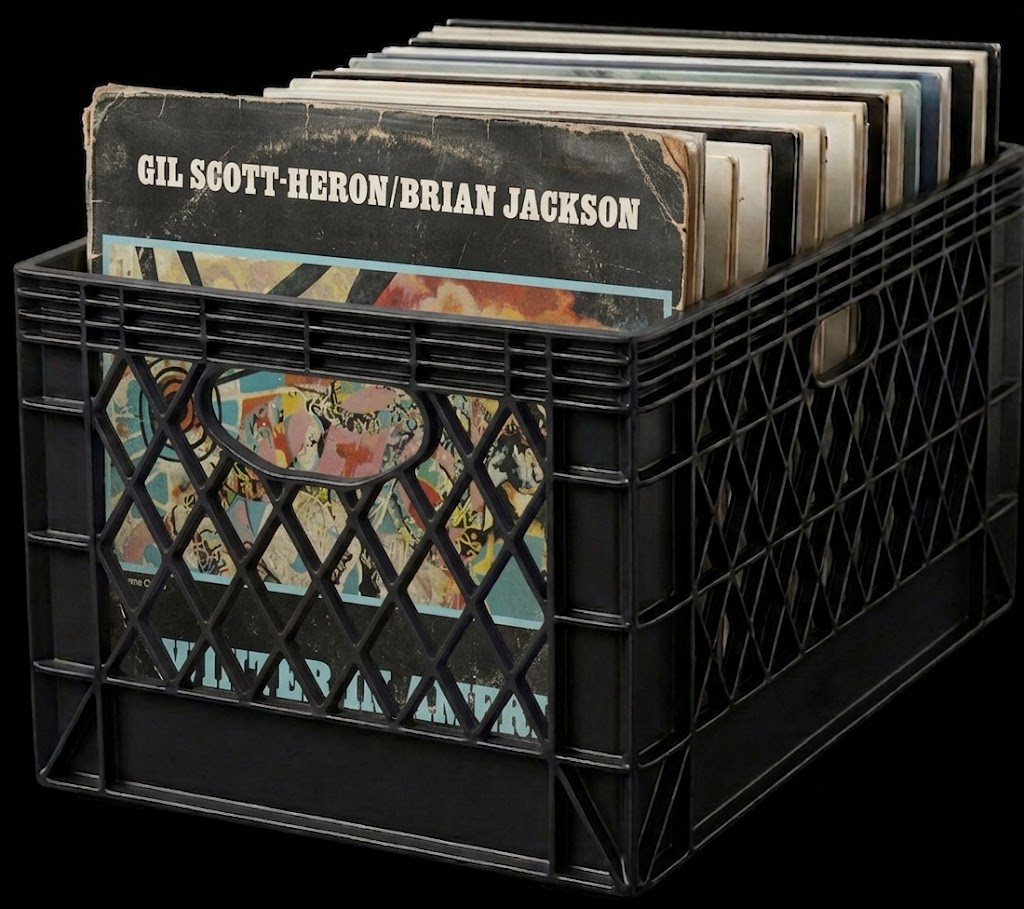
Winter in America (1974) stands as perhaps the most quietly devastating work of their partnership, a album recorded independently that captured a nation’s disillusionment in the aftermath of Vietnam, Watergate, and the slow death of the civil rights dream. Scott-Heron’s poetry had never been more mournful or precise, and Jackson’s flute and keyboard arrangements gave the record a spare, aching beauty that matched the weight of the words. Together they made something that felt less like a protest record and more like a elegy — grief rendered as art, intimate enough to feel personal and vast enough to speak for a generation.
SV: Let’s talk about Winter in America. You described it as a “musical novel.” Do you have any regrets about leaving some of the darker narratives—like the narrator in a mental ward—on the cutting room floor, or does it work better as a collection of songs?
BJ: That’s hard to answer. We left those songs out because they weren’t good enough—more so than continuity issues. Even though our original intent was a “musical book,” the music itself told us that cohesion was more important than the story. Those songs didn’t convey the emotional gravity we were trying to achieve.
SV: Given you were working on eight-track tape with a limited budget, do you think those limitations improved the record, or would Winter in America have lost its soul with a full orchestra and a polished facility?
BJ: It wouldn’t have been Winter in America without those choices. It was this unique work that I think made it stand out among everything else being done at that time, so I don’t have any regrets about that. I do often listen to it and wish we had made different choices musically and production-wise, but in the end, I don’t think the limitation of tracks would have caused us any problems. We decided to go bigger because Jose Williams was one of the greatest engineers.
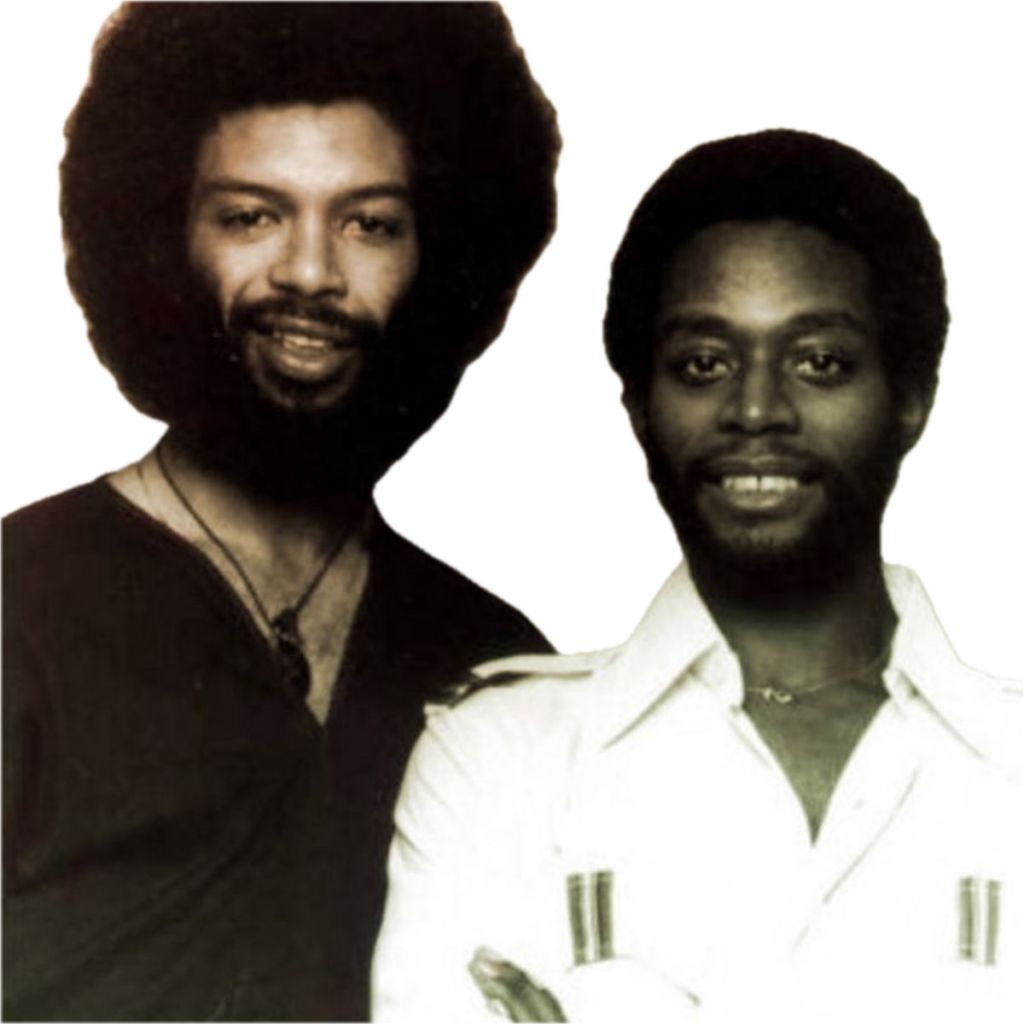
SV: You’ve once said that you hate that the record is still “so goddamn relevant.” As you continue to perform these songs decades later, how do you balance the artistic satisfaction of a timeless work with the bleak reality that the social conditions you were documenting haven’t fundamentally changed?
BJ: It’s humbling to still be listened to by so many following generations. I don’t compartmentalize it, but the work has proven itself to be timeless. On the other hand, it also proves itself to be timely. That’s where I run into difficulties. What I try to do is re-contextualize it.
For instance, with “Winter in America,” I’ve started re-envisioning it not as a dirge, but as a celebration. It wasn’t just about the fall of a nation; it signaled the fall of an empire. I can’t envision an empire that people wouldn’t be glad to see the end of. That’s what we have to look forward to. The only thing that ever changes is change—you can’t stop it, so you might as well help it along.
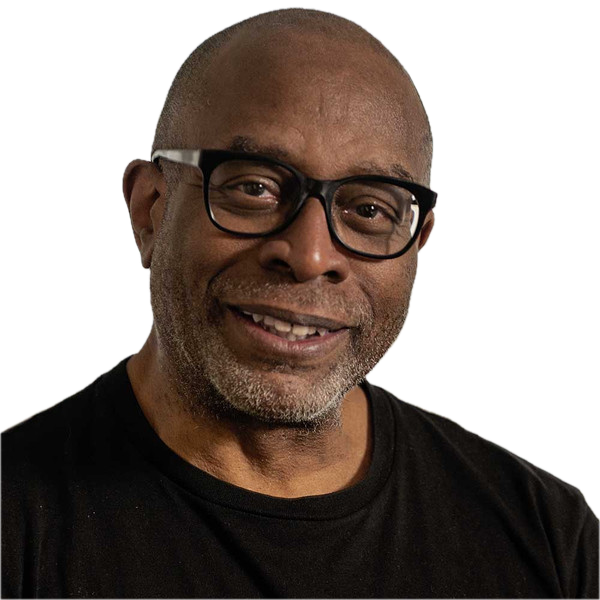
SV: Was there ever a time where his lyrical direction completely transformed your initial musical intention into something you hadn’t envisioned?
BJ: Recently–there was a song we did in 1980 called “Push Comes to Shove”–while putting together a show with Yasiin Bey, he asked me about that song. As I took a look at it and listened to the words—as a man 50 years older than when we did that song—something really jumped out at me and inspired me to do a completely different take and arrangement.
SV: You’ve noted that Gil’s tendency was sometimes to “bang people over the head” with a message, whereas you preferred a more allegorical or oblique approach. Can you speak on that?
BJ: I felt Earth, Wind & Fire and Stevie Wonder were my role models for messaging because fewer people would be alienated by it. A big part of our message was about unification. If you want to unify people, you can’t make them feel like outsiders. You have to make them understand they are part of the family. Just the fact that they showed up means they see things the way we see things. We don’t need to get too deep into the weeds and start cutting each other’s throats. Whether we are able to express it or not, we all have the same general idea of how we would like to see change.
SV: Gil had a unique talent for reporting from the “other side” of experiences—like the self-fulfilling prophecy of addiction. Do you think that requirement to maintain the persona of the “conscious, tortured reporter” for the sake of the audience and industry could have eventually limited the range of stories you two were allowed to tell together?
BJ: Maybe it became romanticized in some sense, as it often has with other artists—Tom Waits, Sly Stone, Billie Holiday. The list is endless. I can’t rule out the possibility that some of that was in there.
SV: I wanted to ask about Bridges. You pointed out the irony of the poster for that album, which paired a revolutionary slogan with a $10.99 price tag. How do you reconcile the need for broad commercial reach with the risk of the message being commodified by the same Madison Avenue tactics you were critiquing?
BJ: It’s crazy, right? We were watching TV, and there were commercials for McDonald’s, Burger King, Avis, and airlines. All of them were using Black music—rhythm-heavy tracks, very funky, with great studio musicians like Ron Carter and Bernard Purdie. I thought to myself: if they can sell burgers, cars, and airlines like this, why can’t we do that with what we’re trying to present? Which is, for want of a better phrase, revolutionary thought.
SV: Eventually, the band’s sound moved towards improvisation. How did it feel when you realized Gil was taking the band to a gig without informing you?
BJ: I was always trying to find musicians who understood my vision. I was very eclectic—I liked everything. I liked what I was hearing in electronic music, fusion, and post-bop. I was listening to Jimi Hendrix, the Isley Brothers, Sly & The Family Stone, and Cream. My music, playing, and writing reflected that.
I came from the Miles Davis school of thought about songwriting and performing: if it’s on a record, there’s no sense for me to play it. I admired people who were able to take something they had done and perform it in a way that was barely recognizable, yet still rooted in the original. To me, it was a challenge and a puzzle. Gil didn’t feel that comfortable with that. I ended up with a band of musicians who were comfortable with it and enjoyed it. We kind of selfishly went down those roads without considering Gil’s limitations.
At some point, I realized he was feeling that. He tried to take over the leadership of the band, which confused me. We had a conversation about it, and he said, “I’m a blues singer. I’m basically going to be singing the blues.” I realized at some point I overstepped the boundaries of our musical relationship. I felt bad because I realized we weren’t necessarily expanding at the same rate. He certainly appreciated what we were doing, but he didn’t necessarily feel like he could keep up with it.
SV: You once said that the music industry seems to have a hard time “counting past one,” referencing the “man in the shadows” experience on SNL. Can you talk about that, and the point where the industry tries to rewrite history?
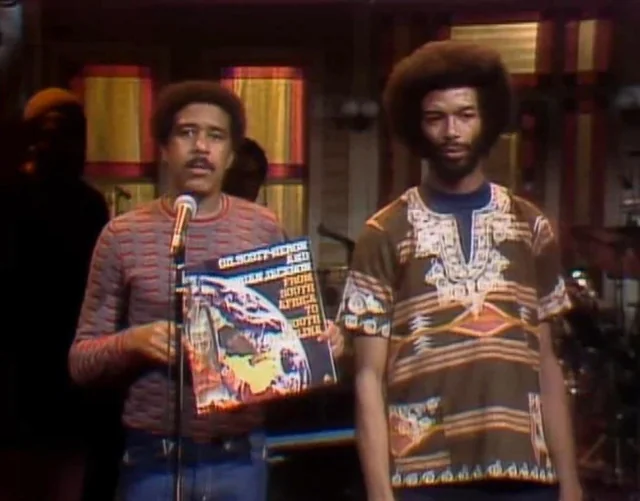
Above: Gil Scott-Herson with Richard Pryor, 1975.
BJ: How far back do we have to go? That was the premise when I came into it. We could rattle off so many names where it started as one—Michael Jackson, for instance. The list goes on and on. It’s more expedient and cost-effective to single out one person and spend all your time turning them into a godlike figure. A god is a single entity. If you place somebody on a pedestal, there can’t be room for anybody else because that would mean others could possibly have that same status. The point of making someone into this godlike idol is to ensure they remain unattainable by everyone else. That’s the myth that has to be designed, and it’s meant for only one person.
SV: You described your time with the TONTO synth system as life-changing. How did that environment alter the way you hear compositions today compared to using modern digital presets?
BJ: Today, you’re able to do that on your own. You’re able to shape sounds without an electronic engineer in the room with you—as opposed to back then, when there were only two people who could work that machine. I learned a lot about sound synthesis with Malcolm Cecil, but if I had been left to devise a system like that, I wouldn’t have been able to do it. Now, you can put one of those on your phone.
SV: Can you talk about the work you did with TONTO on “We Almost Lost Detroit”? You were trying to musically paint the environment of a bubbling nuclear waste site.
BJ: I always try to paint a musical picture. My greatest successes would be “We Almost Lost Detroit,” “Winter in America,” and the intro to “Shut ‘Um Down.” There were examples where we were able to visually paint the picture of what we were talking about.
After nearly a decade of defining a generation, the partnership between Gil Scott-Heron and Brian Jackson quietly dissolved around 1980. Their final collaborative album was a poignant signpost, already fractured by the creative and personal tensions pulling them apart. Their parting was more than the end of a musical duo; it was the fracture of a rare artistic kinship.
From 1983 to 2017 Jackson was a programmer and project manager in the IT Division of the City of New York.
SV: Talk to me about making the transition from music to computer programming.
BJ: It was easy because it’s numbers. Music is numbers. Computers use numbers to represent human life and human thought.
SV: How did you become affiliated with Kool & The Gang for the Something Special album?
BJ: A friend knew the guys. I had been out of work after the split with Gil and was turned down by 15 record companies. They held auditions, and I got the job. I had four days to learn all the material before our first tour date. I had the best grasp of the material emotionally and was able to fill the chair. It was one of the most beautiful experiences I’ve ever had. Later, they asked me to come to the studio. Ronald said he had something he thought could use my touch. It was a ballad called “Pass It On,” and he was right. I ended up playing on “Take This Love” as well.
SV: So much of the music you made alongside Gil has been sampled. What are your thoughts on sampling?
BJ: I don’t have a problem with sampling. Sampling is a creative tool, just like a synthesizer was. People told me I would put bass players out of work if I played a Moog bass or decimate string sections if I used a string synthesizer. But the positive is that I don’t have to spend thousands of dollars to hear something I have in my head. Eventually, you can replace those sounds with live musicians unless it sounds better the other way. Creativity needs options. I’m not opposed to sampling being one of those options.
SV: When you’re writing now, does your choice of specific analog gear dictate the composition, or do you still prioritize the piano-based motifs?
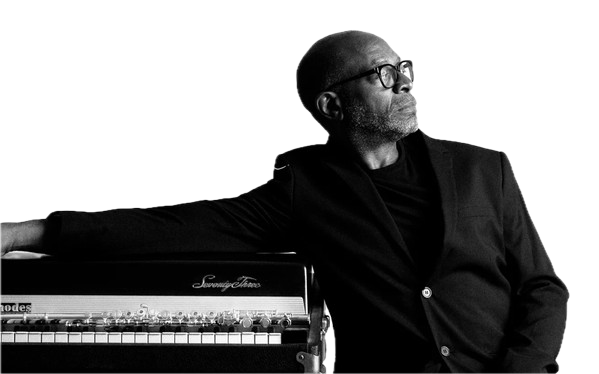
BJ: I’m a changes-based kind of writer. I want to do unusual chord changes, and they still sound best to me on a Fender Rhodes. I always start there, then force myself to branch outward for a more orchestral vision. But I want to hear the chord changes first before anything else goes on.
SV: You’ve mentioned that rather than learning phrases note-for-note, you focused on internalizing the shape of a phrase to capture the feel. Looking back, do you feel that shape-based approach allowed you to maintain a singular personal voice?
BJ: I had no choice; it was just how I learned. I didn’t have the focus to copy licks over and over again because I would spin off on something and write a song based on it. I’m basically a songwriter, and everything else is in service to those songs.
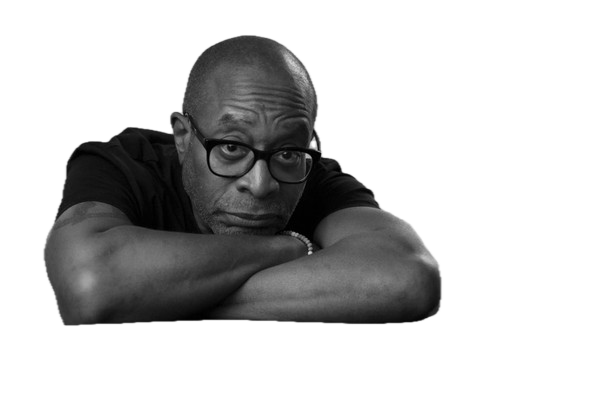
SV: You have previously noted that your message tends to resonate more effectively with international audiences. In your view, is there a fundamental difference in how those audiences engage with and interpret the Black American experience compared to domestic listeners?
BJ: I think in the US, access is the issue. Many major cities have a high consciousness level, but the country is so vast that it’s difficult to negotiate the spaces where that culture is recognized. It’s sad that so many talented people have nowhere to express it.
SV: You’ve also given a very sobering answer in some of the pieces I’ve read about what you consider progress for the Black community—you said that access to bank loans and degrees don’t protect anyone from systemic violence. When you look at the landscape of “conscious music” today, do you feel that the music acts as a genuine catalyst for the systemic changes we haven’t seen yet, or do you view the music more as a necessary sanctuary for those who are already living through that reality?
BJ: Yeah, you know, I feel that’s a tough question because, yes, music can catalyze; it can motivate change. But for those who are considering it, and those who are in it, I think that the music probably serves better to heal them when they need it, to affirm their resolve when they need it, and to make them feel like they’re not as alone.
I feel like music, and lyrics, and words, can only serve to come down to the next level, which is action. But they are not action. Right, but they are not action. If it serves that purpose—if people can glean the action and draw strength and meaning from that music—then it serves its purpose.
SV: Brian, how did the Jazz is Dead thing actually come together — did Adrian and Ali come to you, and did you know pretty quickly that the chemistry was real?
BJ: Regarding the Jazz Is Dead series, that came as a total surprise. I went into the studio with Adrian Young and Ali Shaheed Muhammad expecting a show, and we ended up experimenting. It felt like the experimental spirit of Bitches Brew—it was dark, moody, and allowed for great freedom.
SV: You once stated that you had to return to music in 1998 because otherwise, you felt you would die. Now that you’ve worked with artists like Adrian Younge and Ali Shaheed Muhammad for Jazz Is Dead, does this feel like a continuation of the same tree, or a different set of motivations?
BJ: Oh no, I’m still on the same tree, man. They get it. Not only have they studied what I’ve studied, but they’ve gone beyond it. We’re still getting nourishment from the same roots.
SV: Tell me about the tribute you made to Milton Nascimento. What was it like recording with his original collaborators in the same studio where Milton worked?
BJ: It was a mind-blowing opportunity. I had been working with a Brazilian cultural safe haven called SESC. Through that, I became friends with a spoken-word artist named Rodrigo. We wanted to embody the concept of US-Brazil artistic collaboration—Milton Nascimento and Wayne Shorter were the blueprint. His music is essentially protest music. Rodrigo rounded up many of the artists Milton worked with in the 70s, and we recorded in the same studio Milton worked in.
I’m an outsider who understands some of it, but not all of it; interpreting it through my Brooklyn eyes and ears made it fresh for them and for me. Rodrigo Amado was able to get us into the studio in Brazil where Milton recorded, which used to be an RCA studio.
It was an incredible experience. The concept was that I am an outsider who understands some of the music, but not all of it. Interpreting it through my Brooklyn eyes and ears made it fresh and interesting to them as musicians, and I think that’s what made it interesting to the people who hear it. We were even able to get Milton to sing on one track.
SV: As you collaborate with a new generation using digital tools that make perfect production effortless, how do you intentionally leave space for the human, vulnerable imperfections that you identify as keys to accessibility?
BJ: I try to do everything live. We’ve all been trained to expect perfection—rhythmically and harmonically. Things are definitely more precise now, which some might say is “less human,” but it has caused us to view our own roles with more precision. Most drummers today can play to a click track effortlessly. If a human being can play more accurately, why not? It’s still a human being, so there are still going to be tiny variations. I don’t think our minds have been so trained that tiny variations annoy us.
SV: Do you think it’s the duty of a musician to be an explicit educator, or does the music carry that truth on its own?
BJ: Well, there’s two questions. Number one: a musician doesn’t need to do it if he doesn’t feel it, but the music will do it anyway. It’s capable. You don’t have to be a teacher if you’re a musician. You can just be a musician. If you’re a musician who is moved by the culture and the heritage, that’s going to be in the music. It’s impossible for it not to be.
SV: I’ve read that you’ve expressed a strong distaste for the word “jazz,” describing it as a condescending term that ignores the rigor and weight of the music. Given that you’ve lived through the bop era and the hip-hop revolution, do you feel the music has finally outgrown the label?
BJ: I think so. If we don’t call it jazz, what are we going to call it? [laughs] I’m not willing to come up with another name for it. It’s just like a lot of words; they become part of the culture. They may seem off-color, but what else explains it better? I wish it had started out another way, but it’s up to us to change the meaning. It’s a word that, for better or worse, has a lot of weight to it.
SV: Given that you’ve spent your career confounding experts by blending genres, do you feel that the lack of genre-defined boxes in the era of streaming algorithms is a net win for creative freedom, or does the sheer volume of digital content make it harder for an artist to maintain focus on a clear communal message?
BJ: I don’t think it makes a difference anymore. It didn’t matter then, and it matters even less now. We used to be in every bin possible—the rock bin, R&B bin, the jazz bin, the pop bin. It didn’t matter then, and I can’t see why it would matter now.
SV: Can you talk to me about the Now More Than Ever collaboration with Louis Vega and Kenny Dope?
BJ: I ran into them about 25 years ago through our mutual friend, Ron Trent. I was having recognition problems that put a damper on my ability to record and create new music. Ron introduced me to the underground dance scene—people like François K and Danny Krivit. When I was introduced to them, they immediately knew who I was.
I began to take what they were trying to do more seriously, and I realized it matched what I was trying to do—mixing genres and reproducing songs in new ways. I had wanted to collaborate with them since I heard their remixes of Curtis Mayfield and Donna Summer. After my first album with BBE, my label head, Peter Adarkwah, asked me what I wanted for a follow-up, and we called Louis and Kenny. We ended up with 19 songs, a three-vinyl set featuring Lisa Fischer, Moodymann, Black Thought, Leroy Burgess, and many others.
SV: As someone who has mentored younger artists through CTE programs and your own teaching, how do you help them find their “second self”? Is that stage persona something that can be taught?
BJ: If you love what you create enough to defend it, and if what you create has a chance in this world, you are the one who has to take up its cause. It’s just that simple. If you are the one meant to do that, the song will tell you what to say.
SV: What do you hope young musicians take away from the lessons you share, especially regarding the messiness of life and the drive to create?
BJ: I always tell them the same thing: just live. If you live long enough, you’ll see it all. The day you decide you’ve had enough could be the day you get that one call. You just have to keep living and keep your hands open to the universe, and it’s going to fill them with something.
SV: Brian, thank you so much for your time today!
BJ: Oh, what a pleasure. I’m really happy to talk to you.
Further listening:
Gil Scott-Heron & Brian Jackson: Pieces of a Man (1971)
Gil Scott-Heron & Brian Jackson: Free Will (1972)
Gil Scott-Heron & Brian Jackson: Winter in America (1974)
Gil Scott-Heron & Brian Jackson: The First Minute of a New Day (1975)
Gil Scott-Heron & Brian Jackson: From South Africa to South Carolina (1975)
Gil Scott-Heron & Brian Jackson: It’s Your World (1976)
Gil Scott-Heron & Brian Jackson: Bridges (1977)
Gil Scott-Heron & Brian Jackson: Secrets (1978)
Gil Scott-Heron & Brian Jackson: 1980 (1980)
Will Downing: Will Downing (1988)
Roy Ayers: Drive (1988)
Will Downing: Come Together as One (1989)
Gwen Guthrie: Hot Times (1990)
Brian Jackson: Gotta Play (2000)
M1, Brian Jackson & The New Midnight Band: Evolutionary Minded (2013)
Brian Jackson, Ali Shaheed Muhammad & Adrian Younge: JID008 (2021)
Brian Jackson: This Is Brian Jackson (2022)
Brian Jackson & Masters at Work: Now More Than Ever (2026)
Leave a Reply
You must be logged in to post a comment.