
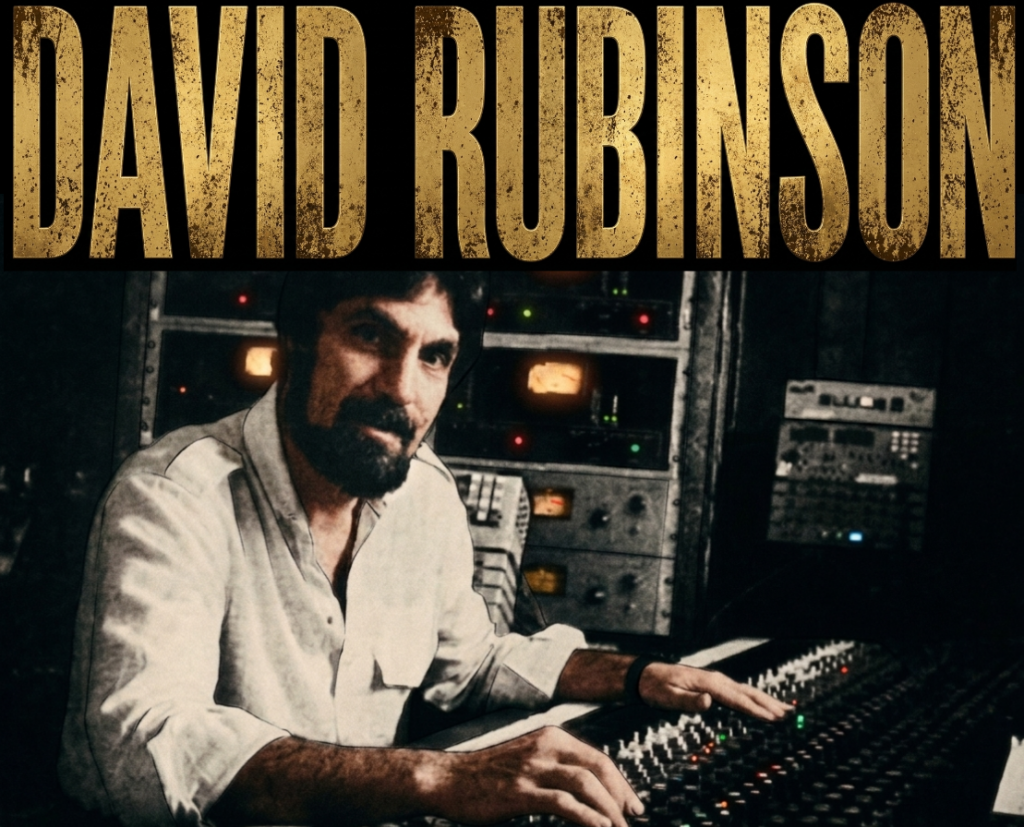
Producer David Rubinson traces his path from directing theater at Columbia and boldly recruiting Leonard Bernstein for an Off-Broadway production into a decades-long career shaping the sound of artists like Herbie Hancock, the Pointer Sisters, and Santana—while reflecting on the philosophy of capturing live, spontaneous synergy over studio perfection.
___
Sounds Visual: You went from an English degree at Columbia kind of straight into production. What was it that really got you into the studio rather than say journalism or academia?
David Rubinson: Well, you have to look back at my bio. I was involved with drama and the performing arts and theater. So at Columbia, I was the president of the Columbia Players. I directed shows. And that was my future. I was going to produce and direct theater in New York.
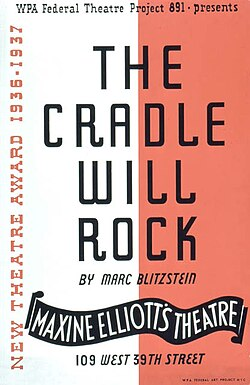
So, right after I graduated, let’s see, 1963, me and two friends who I’d worked in the theater with at Columbia produced a show Off-Broadway called The Cradle Will Rock. [It] was a Work Projects Administration project that was done in the ’30s and we reproduced it. And I got Leonard Bernstein to work on it! I was 20 years old.
SV: That’s amazing.
DR: I mean, I called him up and he said, “Oh yeah.” So I went and we raised the money. And my first job in the record business was at Capitol Records. And I got fired in 1964 in January. I got fired and I went and started producing this show Off-Broadway, and I went to Columbia Records with the rights because Leonard Bernstein was, you know, musical director and all that stuff. And we made a deal for the soundtrack rights for the show.
Well, I got to meet Goddard Lieberson, and the lawyer when he negotiated the deal with me was like five days. And Goddard Lieberson—who I don’t know if you know him. He was the greatest man I ever met in the music business. He said, “David, what are you doing these days?” I said, “Nothing.” He said, “Come work for me.” So I did. And that’s how I got into Columbia Records–that’s how I started.
SV: You ultimately worked with incredibly diverse acts, from psychedelic rock to Moby Grape to the jazz funk of Herbie Hancock. How do you decide when to leave your own fingerprint on a record and when to step back and let the artist’s vision lead?
DR: I always let the artist’s vision lead. I never considered that I put my fingerprints on anything. I don’t have a sound. You know, you can always tell the root of a Rudy Van Gelder record. In the past, when the record companies had a full plantation going on with a broader set of artists, they brought in producers and the producers ran the session and gave the record to the company—what they wanted. I didn’t want to do anything like that.
And for example, with Herbie: Warner brought me in because I made some hits for Warner Bros. And they said, “Okay, so are we something to Herbie, bigger hits?” And that was by 1971. And we delivered a record called Mwandishi, which was the furthest thing from a hit anybody could imagine. And it was his vision. And my job was to facilitate his vision. Not just to facilitate it, but to distill it. That’s the difference: to still show the audience and the listener could hear it most powerfully and efficiently.
SV: In your early career, you also were noted for having “the audacity to lead complex arrangements without formal training.” So my question is: how did cultivate the confidence to trust your ear over established rules of production?
DR: Well, I can read music, but I couldn’t compare myself to school musicians. Whatever the artist was doing, that’s where we went. And if they were complicated arrangements, I could do that. If it was Taj Mahal with three guys, we could do that. Whatever it took.
There were times with, for example, with the Pointer Sisters, in which I took a much stronger hand in arranging the music. But it wasn’t something where I walked into the studio and said, “Okay, girls, this is what we’re going to do.” It captured the sound. And what came out was always organic to what this album was. I did have a formal musical journey, but nothing where I could sit and write an arrangement for strings. I could read the chart.
SV: You started in the Columbia Records system, but later transitioned into the independent world with David Rubinson and Friends and The Automatt. How do you think that transition changed, or did it change, the relationship with the actual sound of records that you made? Did that change it?
DR: Well, when I was with Columbia, I had to use a union engineer. I wasn’t allowed to touch the board, edit the tape, move the microphone, mix. There was the IATSE and the union said you can’t touch the board.
I did a session with Taj live at the Fillmore and it came out as The Real Thing. It was a great record [recorded] live. The first night the engineer made a mistake, and I reached over and made him fix a mistake on the board, and they threw the tapes away.
SV: Wow.
DR: So I had tremendous obstacles when I was at Columbia, right. And when I went to San Francisco, I joined Bill Graham, but then we went into business together. I brought Fred Catero with me, my engineer. The brilliant, famous, incredible Fred Catero. And I guess I learned how to be a sound engineer. But the sound of the records was the sound we wanted to make, rather than the sound we were stuck with working with some union guys.
SV: Let me ask you about Bill Graham for a second in the San Francisco scene, since you just mentioned that. Being deeply involved in that Bill Graham and Fillmore ecosystem, how do you think that the live energy of San Francisco in the late ’60s informed the way that you approached studio recording for bands like the Chambers Brothers or maybe Santana?
DR: I really never connected with the San Francisco energy. I loved a lot of the bands, a lot of the music. But what I did was, I found that there was no bed of knowledge in San Francisco. I could record, how to publish your songs, how to produce, how to arrange. Before, I started a free school. And we taught engineering, arrangement, history of music. We gave away free studio time and we let people come in and make their own records and do what they wanted. So we told them, “Here’s where you put the mics for the bass. This is how you layer the brass if you want to get that sound.” And I had to do that because there really wasn’t a lot of people who knew what they were doing. And I was kind of an outsider.
And with Santana, I didn’t give them enough room to breathe. But with Cold Blood or the Pointer Sisters, of course, I did. The Chambers Brothers have nothing to do with San Francisco. I found them in New York. And we worked completely together to develop the sound that they had.
SV: I want to talk about Herbie. The Headhunters record really to me feels like a lightning-in-a-bottle moment. Can you just walk me through the atmosphere a little bit of that studio, or was there a hard part about blending Herbie’s acoustic jazz roots with kind of the new synthesizer-heavy funk sound?
DR: I want to go back. Headhunters was not a lightning in a bottle. We rehearsed our asses off. We worked on that music for months. We went to different clubs in LA and San Francisco. We taped everything every night, listened back. “Well, maybe this goes there and maybe this comes here.” And it was extremely organic. There was no sense of, “Hey, I have an idea in the studio.” We all knew exactly what we were going to do.
Except it was when I introduced Herbie to the synthesizer. Before, we had worked together on three electronic records. Mwandishi right through three electronic records before we did Headhunters. And there was no synthesizer.
Now, if you know Time Has Come Today by the Chambers Brothers or an album I did called The United States of America–which if you don’t know it, you should listen to it–that was all synthesizers. And I had done that in ’68, ’69.
So I knew about it, but with Herbie it was all echo effects and reverberation and Echoplexes and mods. But with the Headhunters, the bass part on Chameleon was done with a synthesizer. The bass part. And it happened when he went through the studio with Patrick Gleason to try to do the bass part. And Pat hooked him up and they made the bass part, which was his first time using a synthesizer.
Now before then, we had put Pat in his live band. Right after Mwandishi, on the two records after, Pat joined the band playing synthesizer. So we were adding in Bennie Maupin and everybody, plus Pat as a member of the band with a whole rack of Moogs and E-mu stuff. Herbie did not play, but Pat played the synthesizer. So when we went to do Headhunters, Pat was no longer in the band. It was only Herbie and Harvey [Mason], who was not in the Headhunters before, and Paul Jackson, who was not in the Headhunters before. And they came in and Herbie went to Pat Gleason’s studio and recorded the bassline. So that was his first synthesizer part. And it wasn’t a lightning in the bottle at all.
We had worked on Harvey’s idea for Chameleon. I remember it was in Redondo Beach or Newport Beach—the club down there, a very famous club. I would book a hotel and go there. We’d record and discuss what was happening. Then Herbie came up and we basically stuck them in the Keystone Korner in San Francisco, playing three sets a night, and that’s where the music generated. When we went in the studio, it was capturing what they already had established.
SV: You produced the Apolcaypse Now soundtrack, which is legendary for its intense technical challenges. Could you share some insights into that production experience?
DR: It was an amazing production experience because Francis Coppola is such a genius. But the real genius was Walter Murch. His idea was to make everything organic, sort of that the sound effects, the music, gunshots, the cops, the sounds, all blended together to become a sound environment. So we produced all the music on synthesizer. There were very few acoustic instruments. I think Fred’s father who composed the music, Carmine, was a classical flutist and his flute is there in the scene singing, but basically synthesizer.
And it was really hard because in those days, there was no sync. The only sync was on a 3M syncing device. And you didn’t have digital recording. You had tape machines and ten or twelve dubbers like big film playback machines, and all had to rewind and playback again because you’re recording on film when you transfer the sound. So we recorded in my studio. It was put on a 24-track tape, it was mixed down to a Dolby surround, and then put on a real film. And really hard to do because the syncing mechanism was terrible and it was really laborious, but Walter Murch is a genius in the multi-track world.
So when you hear the helicopters, and that very famous scene with the sunset, and the helicopters come over the hill, and over the mountain into the sunset with the red sun behind them, and you hear the whirring of this helicopter combined with a synthesizer and our score—the helicopter sounds were made with synthesizers. And the score of course was just incredible and that’s really the essence of what Apocalypse Now was. We were inventing new technology as we went along. It was an incredible challenge and took us nine months to do the music, but it wasn’t really the music. It was the sound. And I take enormous pride in that.
SV: Regarding “Time Has Come Today”—the use of tape feedback and echo reinsertion was groundbreaking for the era. Where did that concept originate, and how did the band react when they first heard the result?
DR: A lot of people had used what you call reinsertion, which is correct for that period. And the way you did it was you regulated the speed of a—you had tape echo. It’s a very, very, very old technique, right? And that’s the famous sound of the old country records, you know, where they use that kind of slapback echo. Or you would take the echo chamber and delay—you delay the return from the echo chamber onto a tape machine and play that back. So that’s the famous vocal sound and guitar sound from country music and rock and roll in the ’50s.
But what happened was if you took that sound and you fed it to the sync of a tape machine, picked it up again and put it back with the start of the feedback of itself, and that was called reinsertion. And gradually it made it uncontrollable, a very hard-to-control loop. So you hear it going ba-ba-ba-ba. But the key part here is the band had been doing effects with that song live for months. We first recorded the song without all that, and then they came back to redo the record. And they had been out on the road live doing that song with a lot of echo and feedback and stuff. But when we went in the studio, I did all that in the booth. They had never heard it before. They were hearing that effect for the first time when they were recording live. And I wanted it that way so they would react in a completely spontaneous way and not be prepared and not be rehearsed.
So it was one take and it started with Lester’s cowbell and he went, tick-tock, straight tick-tock, and I started to add the tape loop so it goes tick-tick-tick-tick, and gradually—and he was freaking out, he’d never heard that before. And the band, the guys were singing “time” and it would go time-time-time, and finally that’s what it is and the whole thing started feeding back on itself. And it inspired them to go even further than they’ve ever gone before.
It was a completely live, spontaneous, cooperative thing and it was absolutely phenomenal. All of us working together, all spontaneous, live at the time. And of course I had a switch, so when the time came in the song for the drum fill, for Brian’s drum fill, it was just mind-blowing. Midnight, one o’clock in the morning. It was just mind-blowing. Nobody had ever heard anything like it. So that’s the story of Time Has Come Today.
SV: Often times on this series we “peel back the curtain” on the creative process. Can you briefly talk about how you approach a project from its initial concept through to the finished album?
DR: This is very important. Every record, the technique, the process was different. I mean, you don’t tell Herbie Hancock what to play. You don’t rearrange the song. You don’t dictate how it goes. You would involve him in the whole process. That was me. I think my main contribution was involving him in the post-production, the mixdown and the whole recording process where he really hadn’t been involved. So he was really involved in the mix, recording, sound. And I didn’t see myself as having any technique and I don’t think my records sound the same. Certain kinds of records, they sound the same, but my records don’t sound one to the other the same. So my creative process was in fact to peel back the curtain on the artist. And the style we picked to record wasn’t really a process; it wasn’t a style of mine, it was what fit the project at the moment.
The one thing I really cherished was recording live. You don’t take Patti LaBelle and overdub the vocals for hours. You let her loose in the studio, you know? And when she sings the band reacts, and when the band reacts, the synergy is incredible. And the result is much greater than the sum of the parts. And it’s the same with Carlos, the same with Armando Peraza and his band. It was all done live. Very important to have it all done live. I don’t like the modern recording techniques, one instrument at a time, where no one has to worry about mistakes. They make mistakes and they change and they fix them. I don’t like the fixing. I like the mistakes and the live process.
Above: Tower of Power’s 1970 track “Sparkling in the Sand,” produced by David Rubinson.
SV: In your view, what is it about jazz that makes it uniquely suited for deep artistic exploration?
DR: Well, I’m not one to talk, I’m not an expert on jazz, but I will say that all the musicians creating music in the moment, in the moment, and being creative, sensitive and reacting to each other in the moment—that’s spontaneity. That invention is what jazz is about. And when you’re a jazz artist, you can’t be anywhere else. You can’t be worrying about your taxes or thinking about politics or who you’re gonna fuck after the session—although of course you can, if it inspires you. But you’re there, you have to be present. You can’t be thinking, “Let’s see, B minor seven, I’m gonna play this in this mode, oh, Herbie’s playing this, so I’m gonna play that.” That’s what you have to be. You can’t predetermine much what you’re gonna play. You can’t rehearse your solos, although some people do.
Above: “Jessica,” produced by David Rubinson, for Herbie Hancock’s 1969 album “Fat Albert Rotunda.”
And I think it’s best summed up by a story I heard about Miles with Wayne. They were walking down the street when Wayne was young and they were saying, “You know, what should I play?” And they were walking down the street and the guy in front of them tripped on the sidewalk and stumbled, and Miles said, “Play that. Play what happens when you’re not expecting it. Play what’s spontaneous and a mistake, unplanned. Play that.” The other quote I would give you is from Wayne Shorter, which is that composition is improvisation slowed down, which I think is really a key to understanding how people compose this right jazz music.
SV: Given that many genres have deep roots in social commentary, do you believe music has a responsibility to engage with the important issues of its time?
DR: I believe an artist has an obligation to his society and to his fellow humans. I don’t call it politics, but I think all creative expression has an obligation to express the truth in every form and that the composer and the musician are obligated to express this spontaneous truth, whatever that is. Whether that’s what you call the important issues—no, it’s expressing whatever the truth is at the moment for that person, whether it’s political or it’s important issues or not, expressing the truth for everybody. And the more the artist expresses the truth, the more people relate to the artist, because that artist expresses their truth. So that’s what I can say about that.
Above: Malo’s “Suavecito,” produced by David Rubinson, for their self-titled 1972 LP.
SV: How did you know when a take was truly “right”—technically, emotionally, and commercially? Do you find that those three factors often pull in different directions?
DR: Well, sometimes it’s take one. And sometimes, you just know it’s the right take. You can’t analyze it. You know yourself, that’s the one. And some people disagree. But it’s all about how it’s played. You can’t judge by anything except your heart. Technical things can be fixed, but the heart has to be there. That’s the one everybody goes with. I’ve rarely been in a situation where people disagreed. I really haven’t. Can’t remember a time where someone said, “Oh, yeah, that’s the one,” and I said, “No, man, maybe we should do one more.” I never had that. You know, it’s always, “Oh, yeah, that’s it.”
SV: You produced a ton of Herbie’s albums, spanning the acoustic Mwandishi years into funk and electronics. How did your role with him shift as his sound kept changing, and what made that such a long-running partnership?
DR: Yeah, I did 34 Herbie Hancock records. That’s a lot. It’s amazing, actually. My role with him never shifted; it was always the same. I was the medium where Herbie could produce the music to reach the people. I was the way he could reach, he could express what he wanted to express to the people. So the music was distilled as he wanted to express. That’s really what I did. Sometimes I had ideas. Sometimes I liked sounds and wanted to do certain sounds. Sometimes I had strong suggestions. And I contributed a lot. I don’t know if I produced anything. I think I was a means to get what he wanted out to the people.
And the long-running relationship was because we really loved each other, man. From the very beginning. You know, we love each other now. I see him every time I can see him in concert, seeing him in August. You know, we grew up together. I mean, I started to work with Herbie when I was 28 and he was 34. And we were—I didn’t know anything. I didn’t know about producing records, you know? And he knew about producing records. And he was already a star, and we really liked each other. He was very funny, and we got along really well. And that’s why I ended up managing him too, because he didn’t have anybody. So I said, “Okay, I’m gonna do this.” You have to have so many contrasts to really work, and I worked that way. It really is from love and friendship that I can all see.
Above: Herbie Hancock’s “Do A Thing,” produced by David Rubinson, for the Death Wish soundtrack in 1974.
SV: You’ve worked with a ton of artists—you mentioned the Pointer Sisters earlier, for example—who were transitioning between genres, like going from a certain sound to a more crossover sound. Is there a specific secret for keeping a performer confident when they’re trying something risky or new?
DR: I think giving artists confidence is maybe the most important thing a producer can do. Everything else [is secondary]—you’re sharp, you’re flat, whatever—but really building the confidence of the artist is deeply important. Maybe the most important thing you can do.
I did a good job of that. That’s my job. What I tried to do was make it safe. That was the job. Make it safe to take chances, go out on a limb, make mistakes, you know? And I just say, “Look, do it again. There’s no mistakes. Just go for it, whatever it is.”
And I also used to always record live in the studio. Band, vocals, everybody. Because the music was synergistic; it was the sum of the parts. More than the sum of the parts if it was all happening at one time. If you put down like they do now, if they put down drums, bass, guitar, then they come in and overdub the vocals, overdub the guitar solo—there’s no synergy, there’s no common energy, and it’s only the sum of the parts. Everybody in the room at the same time, then you get much more than the sum of the parts. You get real synergy.
SV: Looking at the way music is produced today and DAWs, and even remotely a lot of times, what’s the one thing you think we’ve lost from that sort of hands-on era?
DR: We’ve lost synergy. There are very few records that I hear that sound live.
But the way Black music has gone, [it’s] all done with synthesizers and computers. Because when Patti Labelle went to the studio with a band, she’d take it like it was live. I mean, we’d write out the charts for the chords and everything, right? No problem. She wasn’t going to be stuck with a chart. So, we would go wherever she took it. The human element. Same with Herbie all the time. And my job was to make it safe.
Above: Taj Mahal’s 1968 track “The Cuckoo,” produced by David Rubinson.
And when artists can go now and fix everything—the Auto-Tune and whatever they use—it’s not very soulful. It’s perfect, but it’s not soulful.
SV: Yeah, exactly. I’s removing that human element to avoid the crack of a voice, or the snare drum that comes in just a hair of a second too early. Or it’s out of tune.
DR: Life is out of tune. Music is out of tune.What makes a string section sound so good is that nobody’s playing exactly the same pitch. So the different stones and the stone tones in terms of physics are much richer when they’re not all perfectly in pitch. Because it builds all kinds of overtone series, which are much more complex.
SV: Ss there a single record that you feel maybe more than others truly represents the “David Rubinson sound?”
DR: What represents me is a lack of sound. What represents me is I have no style. And I have no genre that I love more than others. I love the Moby Grape album. I love Taj’s album. It couldn’t be more different. But I don’t have a stamp on them both. So my taste in music was so Catholic and so wide growing up that I could love it all. I have no judgment: “This is good music, that’s bad music.” No, I could take the Pointer Sisters and win a Grammy for a country music song, recorded in Nashville, and then do something completely different next week with Wah Wah Watson or Ray Parker.
SV: I wanted to just ask another question about founding The Automatt. That was obviously a massive undertaking. How do you think that the ability to automate mixing processes changed maybe the artistic possibilities for the projects that you produced there?
DR: Well, talking about the music I produced originally…in general, it’s part of the whole control, plantation thing of record companies. Of course, you go and you make the record and you bring it in, right? And the record company can say, “You know, in the bridge, we want to hear more French horn. Or you know, I don’t like that guitar, take it up.” Okay, go back in, push the automate, place the mix back and you tweak it. So the record companies have producers in unlimited control, which is really too bad. Clive Davis, bless his heart, used to have people go in and redo mixes 20 times.
And I think having that control ruins the spontaneity. Because when you can fix it in the mix, you look for perfection rather than the truth. Because mixing is synergy also. You’re one of the musicians and you’re playing back the music with your fingers, and sometimes things get too loud.
SV: Is there a record on your personal sort of highlight reel, or is there a project or specific track that you felt like didn’t get the attention that it should have when it came out?
DR: Oh, oh yes. Unfortunately, I have a lot of them…
SV: I was listening to the Voices of East Harlem record this past week, which I adore.
DR: Yeah, that’s a great record. Right On Be Free should have been a hit record. The song Giant Step by Taj Mahal should have been a single. Teach Me Tonight by Phoebe Snow should have been a single. And there were a couple of records by Herbie which almost made it, but didn’t make it. I thought “I Thought It Was You” was a hit record. What do I know. And most of all, maybe the worst example was Patti Labelle. Jesus, we made some fantastic records.
SV: You’ve been based in France in recent years. I’d like to just hear a little bit about what life looks like now for you. Do you still find yourself drawn back to music or mentoring in any way?
DR: No. I live half the year in the United States and half the year in France. And in 2009, I decided I couldn’t take another minute in the United States. And I was absolutely right. I took up the study of regenerative farming and permaculture, and it’s changed my life. If I didn’t have grandchildren in the United States, I would never come back.
SV: David, you’ve spent a lot of lifetime to me capturing the spirit of what I love about music—not just the notes or the frequencies, but the raw human spark that happens when musicians lock in together. When you look back at this massive body of work, from the experimental edges of Mwandishi to the global impact of something like Headhunters, what do you think is the fundamental truth about music that technology, the fame, and the industry charts were all just secondary to? In other words, what’s the one thing about the act of creating music that you hope hasn’t been lost to time?
DR: Well, it’s very platonic. Achievement is irrelevant. It’s the spirit and the life that counts. When people play music, they transmit an incredible spirit and spiritual content that’s inconceivably profound. And when people get lost in the achievement—like Plato pointed out—”I made this much money, I got that famous, I had monster hits, I got famous and people know me, and I made money, and I had gold records, I achieved this, I achieved that.” That’s very destructive. And you can tell, because as soon as people get off the human, spiritual part, they get lost. And they end up making records or music or poetry for the achievement rather than for the poetry, the spiritual content. Seen it over and over again.
SV: : Looking back, what do you consider to be the defining highlights of your career?
DR: Apocalypse Now and Time Has Come Today are certainly two of them. I think one of them is Hey Joe by Tim Rose because that was really my first pop record. I made a lot of classical records or show album kind of records, but that was really my first—the first time I was allowed out of the classical music department and allowed to create a pop recording by an artist. Allowed—I wasn’t allowed before that. It was Hey Joe and it really meant a tremendous amount to me. Bernard Purdie, if you please, on that record is phenomenal. It really was my first and the first time I ever heard one of my records on the radio, which was amazing, just amazing. So that was a major career highlight.
Of course, working with Taj, that was ’65, ’66. And Moby Grape was ’66 as well. But then working with Herbie Hancock for the first time was 1971. That was a real highlight and he was such a genius. And we broke—I don’t know if you’ve ever heard the record Mwandishi, but that broke as many barriers as Time Has Come Today. And to harken back, if I can just digress, I made a record called The United States of America which used a lot of the early Buchla techniques and a lot of tape techniques from before. And we used a lot of them with Herbie. And that was ’71. And then the next couple of records I made with Herbie were really technologically very innovative and took a lot of chances. Took a lot of chances. So I think that was a highlight. And then of course, Headhunters was a great highlight as well.
Recording with the Pointer Sisters was fantastic. Santana is fantastic. So I had a lot of incredible career highlights. So I think those defined me, though you asked for defining highlights and I think those highlights define me in a certain way.
SV: Thanks a lot, David. I really appreciate all the music you’ve given us and your time.
DR: Very good. Thanks a lot.
Leave a Reply
You must be logged in to post a comment.