
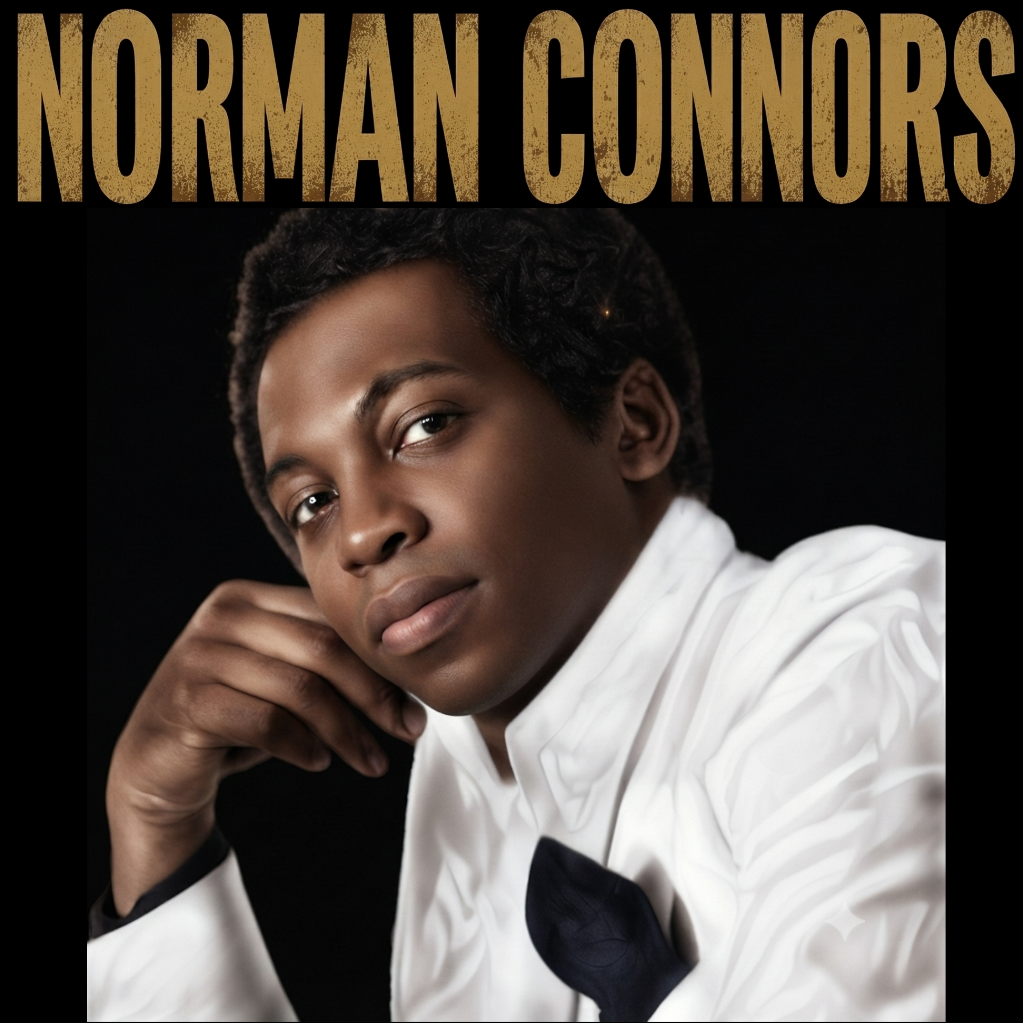
Norman Connors’ lifelong rhythmic ingenuity and the mentorship of jazz icons like Miles Davis and Max Roach empowered him to develop a distinct, polyrhythmic drumming style that bridged the gap between complex jazz and melodic R&B.
___
Norman Connors is a pivotal figure who bridged the gap between avant-garde jazz and sophisticated R&B, crafting a polished, soul-infused sound that defined the smooth jazz fusion era. His highly produced, melodic albums remain essential staples in crate-digging culture, consistently sampled by hip-hop producers for their rich textures and timeless arrangements.
Sounds Visual: Norman, what first drew you to drums in Philly, and how did your early background in tap dancing and roller skating influence your rhythmic approach as a kid?
Norman Connors: Well, if I’d kept with the tap dancing, I think I would have been at least like a Gregory Hines. I was a tap dancer, and the girl who was in our troupe — she was Lola Falana, remember her? Spanky DeBrest grew up in my neighborhood. He was a bass player. And Lee Morgan grew up in the neighborhood. And Lex Humphries the drummer. And McCoy Tyner lived in West Philly. He used to come and they’d rehearse across the street at Spanky DeBrest’s house every day. I’d go there in the summertime and watch the rehearsals — I was maybe six or seven years old. They were teenagers.
That’s how I fell in love with the drums, because Lee Morgan came and played at my elementary school once. When I heard that, I was hooked.
SV: You met Miles Davis at 13—who famously fell to the floor laughing before telling you to “knock on my door”—and sat in for Elvin Jones at a John Coltrane performance during middle school. What were those moments like, how did mentors like Miles and Max Roach shape your differing philosophies on rhythm and stage presence?
NC: Max Roach and all the top jazz players who came to Philly would play at two clubs and stay a week. One was called Pep’s, up the block from another club called the Showboat. Everybody went back and forth — John Coltrane would be at Pep’s, Miles would be at the Showboat, Cannonball Adderley too.
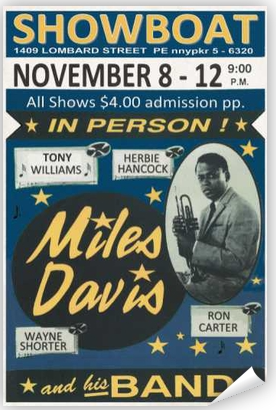
That’s the way it was. I got to know all the musicians because the guys I was hanging with, and my uncle, would take me there. I was too young to be in there, but they’d let me come in.
Elvin Jones went to jail for a bit, and the people at the club knew me — knew my drumming — so I’d sit in with different people. I sat in with Roland Kirk, I sat in with Cannonball, I sat in with Art Blakey…
As for Miles — I was thirteen, and I was dressed like him. My mother worked at a garment manufacturer, and I used to model the clothes on hangers in the showrooms, so they’d give her all the free samples. I had a whole closet of clothes — twenty-five or thirty suits, all kinds of shoes and hats. I used to look at photos of Miles wearing a scarf, and that’s where I got the scarf from. My generation didn’t really do that yet — I started wearing the scarf because of Miles, but nobody knew that’s where I got it from.
SV: Miles told you your polyrhythmic playing was “too busy” for him, but also told you not to change it. Did that feel like a rejection or a compliment at the time, and how do you view it now looking back on your development?
NC: I was over there with Miles almost every day for four or five years straight. I was one of the very few people he would hang with. Most people, he’d play with them, but he wouldn’t hang with them. He treated me like a son — wanted his own sons to be like me.
Duke Ellington came to see him once, and Miles told Duke I was a genius. Duke lived in a hotel downtown in Manhattan, and I used to go sit with him — they had a cafeteria he ate at every day at two o’clock, and I’d sit next to him and pick his brain, ask him a million questions. I asked him once, “Am I getting on your nerves?” He said, “No, I really like this.”
So my mentors were Miles and Max Roach. Max really liked me too — I’d go to Miles’ house in the daytime and Max’s house in the evening. They really liked me. I moved to New York to work with either Miles or [Coltrane] — didn’t matter which. My style — the style I developed — was more like Elvin’s. I used a lot of cross-rhythms and polyrhythms, and Miles told me it was too busy for him, but he told me not to stop. He said I had something unique, and that I was going to be a big star. I didn’t like hearing that at the time. But he was right. And he told me Coltrane would love me — and Coltrane did love me.
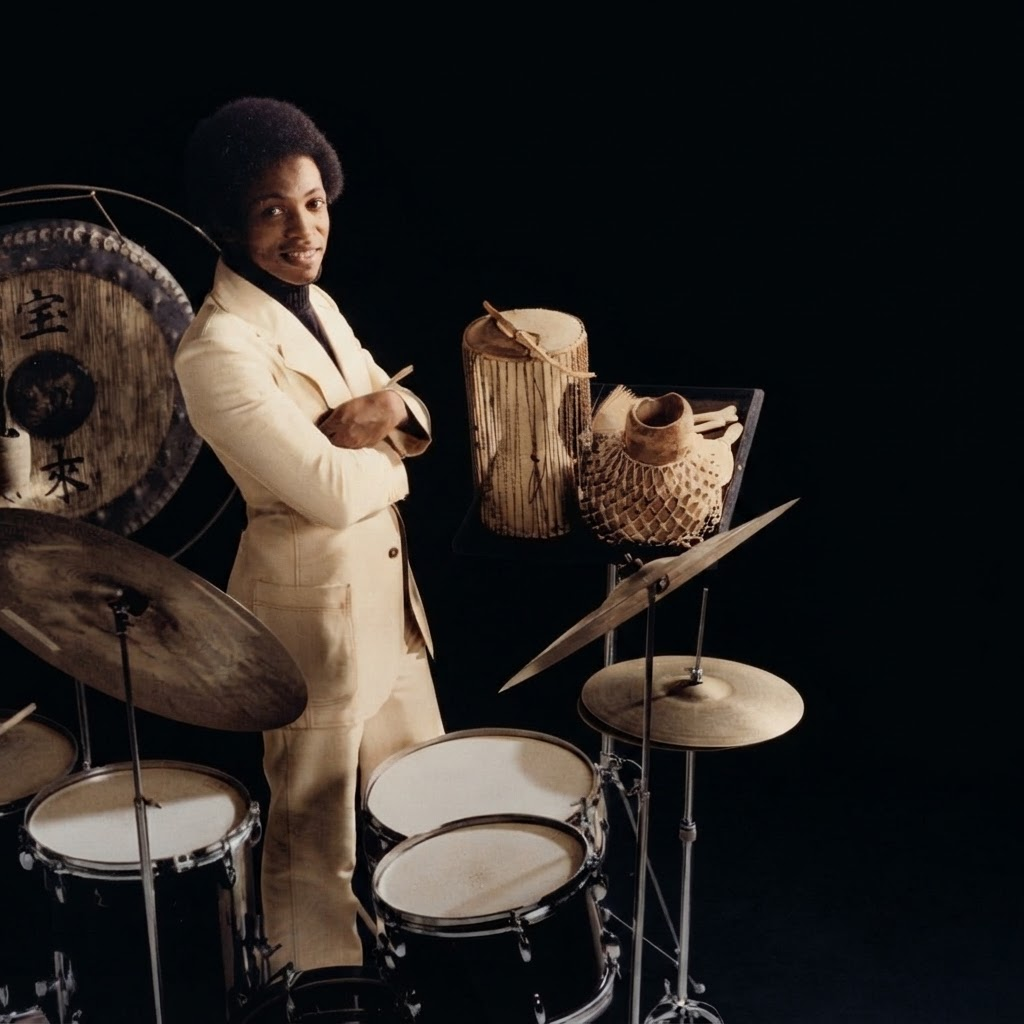
I never got the chance to play in Miles’ band, but I was always around them — went to the gym with them, ran errands, and he’d cook for me and give me money. I moved to New York with twenty dollars, and when I ran out, I went and knocked on his door. He used to call me “Little Philly.” He asked, “You live in New York now?” I said yeah. He said, “You got money?” I said I don’t have anything. He went and came back with a stack of dollars.
SV: How critical was the cross-disciplinary bohemian scene in Philadelphia–hanging with painters and poets, and playing weekend sessions at spaces like “The Last Way Out” with Alfie Pollitt, Sonny Fortune, and Byard Lancaster–to developing your sensibilities before stepping into professional sessions and gigs with Pharoah Sanders at age 17?
NC: Wow, you know about those guys? Are you from Philly?
SV: I’m not, but I did a lot of reserarch before our conversation.
NC: Me and Alfie Pollitt had a club called The Last Way Out. Everybody packed it every weekend, coming in from Germantown and everywhere. It was packed, and there was a whole lot of talent that came through — I played drums behind a lot of great cats. I can’t remember everybody, but I knew everybody. We really had something going on there for a while.When I was fifteen, I played and toured with Billy Paul for a while.
There was an organ group I was part of too — guitar and violin player named Johnny Stiles, and the organ player was Luther Randolph. We recorded one single called “Crossroads.” I think I was about fifteen.
SV: So how did you link with Pharoah?
NC: Pharoah came through when I was playing with [Coltrane’s group] — Pharoah was in the group, and everybody knew John needed a horn player, because John was the greatest horn player in the world to my people. I got a chance to play with them for about three days. Coltrane always had the horn in his mouth, even on the breaks. And McCoy was quiet too — didn’t talk much. That was one of the best experiences of my whole life as a musician. I played with them at the Village Vanguard too.
Jimmy Garrison told me Coltrane really liked me and was trying to get me in the group — they had another drummer they weren’t happy with. So they were trying to get me in. And then John died.
I did record with [Pharoah] — I think it was around fifty years ago now. [Connors plays drums on several albums with Sanders from 1972-1981]. That’s the magic of Karma, working with Pharoah. When John died, Pharoah called me. Pharoah was a big guy. Sonny Sharrock was a bass player on some of that too.
SV: Let’s talk about artistic evolution — going from jazz into the quiet storm sound that you helped pioneer.
NC: I had a certain style. I played with Sonny [Sharrock], with Archie Shepp, with Pharoah, with Coltrane once or twice. I was in that realm, and for some reason my style fit those guys — but I could also fit in the more straight-ahead style, like Philly Joe Jones or Jimmy Cobb. Miles kept telling me: you’ve got something, keep developing it, and you’re going to be big. So that’s what I did.
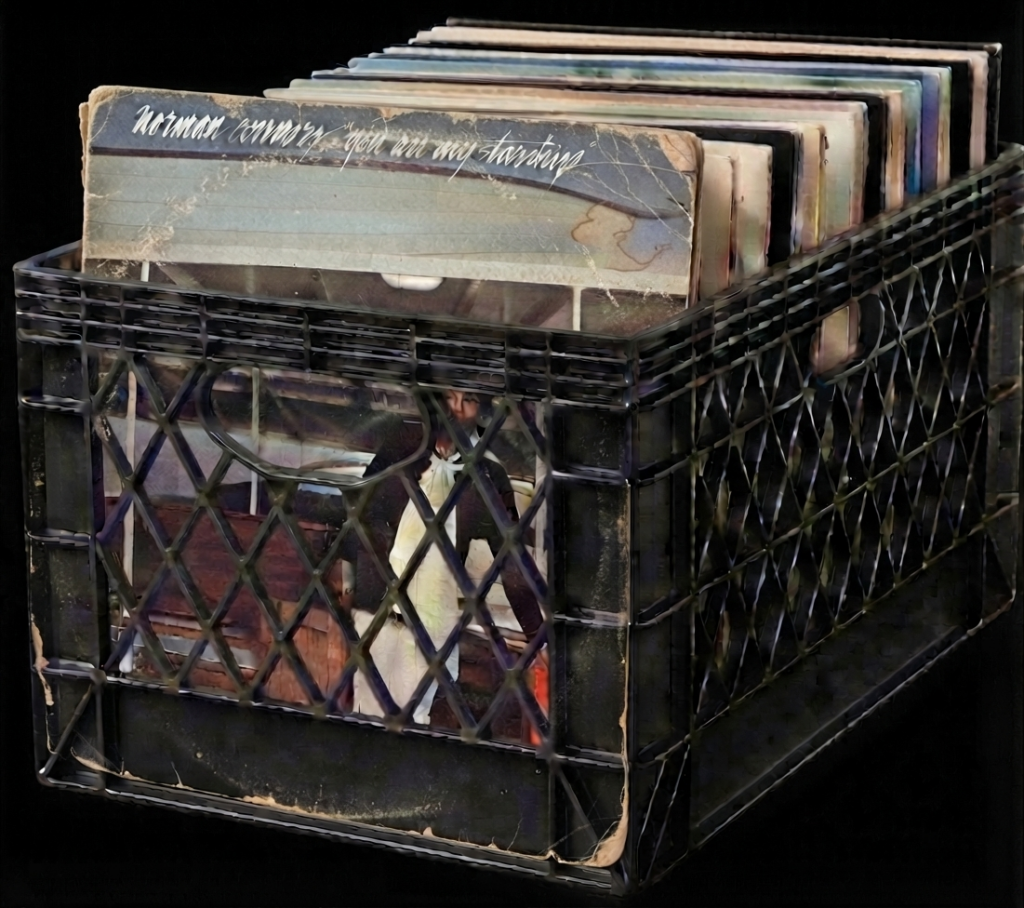
SV: The lush jazz-and-soul fusions you did with Michael Henderson and Jean Carn really laid the blueprint for quiet storm. When you were doing something like “You Are My Starship,” did you realize you were creating a new lane, or were you just chasing a feeling?
NC: Miles was always changing — I watched him go through groups with Philly Joe Jones, Wynton Kelly, Paul Chambers. I studied all of it. I was there when he got Michael Henderson — took him straight from a Motown gig. I was there when he got Ron Carter and Tony Williams. I saw all of it.
I didn’t change my own style, because I was around Coltrane and Pharoah and Sun Ra and Albert Ayler — that’s who I was getting gigs with. Then I started playing with Weldon Irvine, Sonny Fortune… a couple of years with Jackie McLean too. So I was around those artists.
But inside me…I used to sing when I was younger, tap dancing, playing piano, then drums. I grew up wanting to be a doo-wop singer. I never told anybody that, because everybody knew me as a jazz drummer, deep in the jazz world. But there was another side of me that I kept secret — I was into R&B just as much. All the Philly vocal groups, the Stylistics, Blue Magic — I was into that. Ray Charles, Stevie Wonder, the Reflections… that was another part of me. I knew that music too, but I kept it a secret because I was always around the jazz cats.
That didn’t come out publicly until Michael Henderson left Miles and came to work with me — him, Reggie Lucas, a couple others. Their sound was a little different, and Miles and Herbie’s music was changing around then too — Miles went more jazz-rock, and Herbie’s stuff went all over, from smooth jazz to jazz-rock to space music. I noticed all that and told myself: these guys are changing, I’m going to change too.
So when I got Michael and his songs, I developed them — I knew I had to reach the doctors and lawyers and college students who used to come see me, the people who made up my audience. I felt I could reach them by being melodic — not “smooth jazz,” I never liked that word — but more R&B-leaning, while still staying creative. I was trying to find a way to be creative and still get played on the radio, to reach not just jazz people but everybody else too.
Above: Starship Orchestra’s 1980 track “New York, New York,” produced by Norman Connors.
SV: When you started making those records, did you ever feel misunderstood by jazz purists, or did you simply follow where the music wanted to go without seeing those worlds as separate?
NC: I was friends with a lot of those cats, and I’m sure some of them talked among themselves — probably said I was selling out, or getting more commercial. But I didn’t think I was. I thought I was still the same, just with a different pulse, a different way of doing it.
I wasn’t really trying to be different — when I went into the studio, I had to hold back on the polyrhythms I used to play, because that’s what made the music sound right, sound better. So I stopped playing all that in that context, even though I could still do it. I had two different sides to me. When I was around the R&B people — Motown, Smokey, Richie — I was R&B. When I was around the jazz cats, I was jazz. I kept those two lives.
Then my records started selling more than anybody else’s — I started getting gold and platinum albums, and at one point I was outselling Miles. I never told him that. He was such a mentor to me, and I loved him so much, I didn’t want him to know. Miles would just say, “I thought I was the man.” I’d think to myself, no matter what, I’m really outselling you.
SV: When did you begin thinking like an arranger, and how do you balance space versus feeling in your groups?
NC: Creed Taylor and his label — I really liked what he was doing with his artists, and I studied that. I told myself I could do that too, so I started doing it my own way.
Donny Hathaway always wanted me to produce him, but Columbia wouldn’t let him — they told him they didn’t need outside producers. I always wanted to give Donny a record. Same with Chaka Khan — she was always so busy, and it kept our schedules from lining up, but I always wanted to record with her and it just never came together. I felt bad about that.
I couldn’t record with Whitney either — I was on the road so much, sometimes a hundred dates a year with Phyllis Hyman. Clive Davis would ask, “You got anything for Whitney?” I’d say I had something to check on, but I was too busy. He wanted me and Rick James to be movie stars along with the music — I told him I couldn’t run around trying to do that too, I was already booked solid all year.
SV: Have you ever finished a record, listened back the next morning, and realized you’d produced something completely different from what you intended — or built a master arrangement around an accidental studio mistake?
NC: I always knew where I was going from the beginning — I always heard the end of it before I started. That was true even on my first four albums, the jazzier ones, with Herbie Hancock, Stanley Clarke, all those guys, and Gary Bartz. Those were natural for me — that’s just me being a jazz musician.
But when I got around Michael Henderson, that was different, because nobody really knew what to do with him at first. He was a very talented guy, but everybody just thought of him as a bass player. I told Miles that Michael was more than a bass player, but Miles never really saw it that way.
Miles was always chasing Coltrane’s sound — always talking about needing a horn player like Trane. I told him Pharoah was the closest thing to Coltrane there was, that when Pharoah played “in,” he sounded just like Trane. I told Miles that over and over. He kind of stopped talking to me for a while about it — I think he was actually thinking it over — but he just couldn’t bring himself to make that choice. I told him, “If you got Pharoah, you’d go up two notches.” He never really paid it any attention.
I did get to have Pharoah with me for a year eventually, and I got Phyllis Hyman to sing with him on one album.
SV: You have a legendary track record for launching and elevating great vocalists — Phyllis, Jean Carn, Michael Henderson, Glenn Jones — before they were household names. What’s your process for identifying a voice that can’t be taught, or for translating a gospel-trained background into a secular crossover hit?
NC: I always loved Stevie Wonder, like everybody did, but Donny Hathaway was my key. If I could find somebody who sounded something like Donny, I felt like I had something. Every singer who came to audition for me, I was listening for that. Phyllis had it — something between Phyllis and Nancy Wilson and Jean Carn, that was my sound, and I used those references to put everything together.
I loved Nancy Wilson too. She actually told me, before she passed, that Phyllis had become her favorite singer.
SV: Michael Henderson initially didn’t think he could sing, but you pushed him through. What made you so certain, and how do you handle vocalists in the studio to capture that one emotionally complete take?
NC: Michael didn’t think he could sing. We were together all the time, even back when he was with Miles — he’d hang with me. But I was the only one who knew that if he went deep down inside himself, he had a young Marvin Gaye in there. I said, I’m going to reach down and get it out of him.
When we did “Starship,” it took forty takes. He got so mad at him he wouldn’t speak to me for a while. But once the record came out and started selling, he called me every day. I knew he had it.
Honestly, I put a lot of myself into Michael, because I used to sing when I was younger and I should have never stopped — I had a certain thing going. But I got so deep into drums, so into Max Roach, then Miles and Coltrane, that I stopped singing. Once I got around all those great singers, I felt like I’d make a fool of myself trying to sing around them. But I had it, once — I sounded something like Michael Henderson. When he did “Valentine Love,” “Starship,” and the duets with Phyllis, that was me all over again, in a way. I never told him that.
SV: Were there any artists you believed in as strongly as Phyllis or Michael that you couldn’t convince record executives to sign?
NC: Ollie Woodson. I thought he was much more than people gave him credit for at first. I figured if I could get him into the studio for a whole album, he’d fly, because he really had it. There was another guy — Spencer Harrison — who passed away. He would have been like a Luther Vandross. He had a deal, I think for three hundred thousand dollars, and he died.
SV: A lot of your jazz peers stayed purely instrumental, but you almost always featured a vocalist. Was that commercial instinct, or the Philly R&B vocal-group tradition living inside you?
NC: When I was six or seven, my mother took me to drum and piano lessons, and there was a theater in Philly called the Earle Theatre. Big bands would come through — Count Basie, Lionel Hampton’s band — and my mother would get us seats. Every one of those bands had a singer who’d come out at the end. I studied that. All of them had singers.
I told my mother right then — that’s going to be me. I always wanted a great band, but I always wanted a great singer too. That stuck with me even after I met Miles — I still wanted both, just on different sides of what I did.
Above: Al Johnson’s 1980 track, “I’m Back for More,” produced by Norman Connors.
SV: You’ve spent a lifetime recognizing greatness in other people. Looking back, what’s the hardest talent to spot before the rest of the world sees it?
NC: I think because I was so young, around all these great artists as a teenager, I got good at recognizing talent. I never really had a problem spotting it — when I saw someone great, I went for it. By the time I got to Buddah Records, they trusted me enough that anything I wanted to promote, they’d promote. I took advantage of that. And then Clive Davis came and got me — gave me a good deal when he started his label. I was the first act signed to it, really.
SV: Let me ask about record labels, since you mentioned Clive. You chose Buddah over Atlantic — what drove that?
NC: Atlantic wanted to put me strictly into a soul bag. Buddah was interested because they knew how close I was to Miles, and they figured if they got Miles too, they’d get another hundred thousand out of the deal. So I asked Miles about it, and he told me to slow down — that they were trying to move too fast. I couldn’t get Miles to record with me. I felt bad about that, so I got Eddie Henderson instead, who sounded like Miles.
Buddah got me an apartment — the man who owned Buddah owned apartment buildings, on 53rd and 7th Avenue. Aretha Franklin lived in the same building, a woman who owned restaurants, the manager of New Kids on the Block — they all lived there. Buddah didn’t care whether I paid rent or not. I had a private chauffeur, and they paid for all of it. They spoiled me, and I became one of their biggest sellers — Grover Washington was the biggest for the first few years, but then I passed him.
Everything was going great — anybody I wanted to bring in, they’d sign, and they gave me plenty of money to work with. Then Clive came and got me, took me to his restaurant, and gave me the biggest jazz deal there was — a few million dollars and a guarantee on six albums. He’d say, “Here’s two hundred thousand dollars, go make the record” — over and over.
SV: If you could point listeners toward one album or track from your catalog that was misunderstood or overlooked at the time — or a project like This Is Your Life — which one do you think best captures your true original vision?
NC: Dance of Magic, our first album. I had Herbie Hancock, Ron Carter, Buster Williams — I thought that was one of my best records. It was a great jazz record. At the time, I wasn’t as tuned in to the politics of the business — I figured if you made a great album, you’d get the money and the recognition, but it turned out to be more complicated than that.
This Is Your Life ended up going gold eventually, but it took years — it didn’t happen right away. It sold around 350,000, then 400,000, and it just kept selling year after year. Clive told me it was one of his favorite records for a long time. But “Starship” — I had no idea it was going to be as big as it became. It was huge.
SV: How do you feel contemporary jazz fusion and the quiet storm sound have evolved into today’s streaming era?
NC: Fusion — Billy Cobham was very successful in that lane, and Joe Zawinul too. All those guys were my friends, and I appreciate their musicianship, but I was never into that kind of music myself. Stanley Clarke still does that fusion stuff now, and I think it’s kind of a waste — everybody knows he’s one of the greatest bassists in the world, and I agree, but I don’t care for that particular music.
SV: How does balancing commercially viable music with personal artistic expression provide an advantage in the studio, according to the quote?
NC: I know exactly what radio wants — I’ve always had that down, and I know when I go into the studio to make a record, it’s going to connect on the radio. Other songs, I make just because I’m musically into them, as an expression, and I know those aren’t going to connect the same way, but I do them anyway because I’m into them musically. That gives me an advantage, and I keep that to myself.
As for the streaming politics — I’m not into people getting robbed. That’s just crazy.
SV: Do you remember the first time you realized your music was being sampled?
NC: That threw me a little. I was at a Rock the Bells concert in California, and Dr. Dre was there. When I came in, they announced my name, Dr. Dre came up to me and said I was the “king.” And I was wondering — king of what? He’s got all the money. I didn’t really know much about his music at the time, or understand his talent the way people talked about it — I knew he’d made deals and all that, but I didn’t know that much about the rap side of things, if I’m honest.
Above: Norman Connors featuring Michael Henderson’s “You Are My Starship” (1976), sampled by Guru on “Insert B [The Real Deal] Nobody Knows” (1995)
But for some reason, all the rap guys like me, and they love “Starship.” Guys still call me to clear it — some just go ahead and use it and say, we don’t care, we’re doing it. It doesn’t stop. It just keeps going. My whole thing is — why? What do they see in it?
SV: I think it’s because you created a genre with a really distinct sonic fingerprint, and people want to draw from that. Let me ask this — and maybe the answer is no — has there ever been a session musician who completely changed a song in one take, even though they weren’t meant to be the focus of the recording?
NC: When I brought Phyllis in, even though she was brand new, I knew what I was going to get. I knew the song and the arrangement, and if she sang it right, it was going to be big — I knew that going in. She did “Betcha by Golly, Wow” in one take.
SV: A lot of the producers I’ve talked to for this series have said there was a particular sound or sonic texture they chased throughout their career but never quite captured the way they heard it in their head. Did you have something like that?
NC: On the straight jazz side, I always got exactly what I wanted. When I moved into the more radio-friendly, commercial material, that’s the only place I could point to — but even then, I always felt like I got what I set out to do. I never really had that problem. It was always positive for me.
SV: Was there ever a recording session where you realized, while the tape was still rolling, that you were making something that would outlive all of you?
NC: “The Creator Has A Master Plan” — that one told me right away. “Starship” — I knew that was going to be one of the greatest songs ever recorded, that it would take time, but everybody would eventually get it.
SV: If you could sit silently in the control room and watch one of your sessions again, not to change anything, just to experience the energy, which one would you choose?
NC: Our first album, Dance of Magic. I had all these stars around me, and I was younger than all of them — Stanley Clarke was younger than me, but everybody else was older. I was scared to death. Herbie Hancock, Eddie Henderson — it felt like heaven in that room.
When I heard the playback, I was amazed. The bass work that Sonny Sharrock and Stanley Clarke did together was unbelievable — I think it’s some of Stanley’s best work, even if he wouldn’t say so himself. I know it is.
SV: What about this: if you could invite the Norman Connors of 1975 into the studio today, what advice would you give him before he counted off the first tune?
NC: I’d tell him: if you knock on the door, keep knocking — the next day will come.
SV: You did the Royalty project with a lot of different collaborators–tell me about that.
NC: I put some of my classic material into it — “Starship,” “Betcha by Golly, Wow,” This Is Your Life — I was trying to show all my friends how much they mean to me, and always have. I wanted to put together an album that would last forever — a collection, something that would just keep selling. Something for everybody.
SV: Looking back over this amazing career, what achievement brings you the deepest satisfaction as a musician?
NC: My first four years, I was purely in the drumming world. But now, I think it’s the producing — putting everything together and sitting back and listening to the final product.
At one point, people used to compare me to Quincy Jones — this was before he worked with Michael Jackson. My record company would even run these contests: who do you like better, Norman Connors or Quincy Jones? I think at that time I was moving in a direction a lot of people liked even more. But once Quincy did Michael Jackson, that was it — what can you say to that? He did it magnificently. I had a crack at working with Michael Jackson myself at one point, but Quincy’s the one who made it happen, and it became one of the best-selling records in history.
SV: If someone were making a movie about your life, and you had to pick one behind-the-scenes moment — not an obvious hit-record moment — what would it be?
NC: Playing “My Favorite Things” with John Coltrane and McCoy Tyner. We started the set with “Impressions,” and I thought I was going to lose it — but by the time we got to “My Favorite Things,” that was the greatest thing that ever happened to me.
SV: Fifty years from now, what do you hope musicians and producers are still getting from your catalog and your approach to the art form?
NC: I have a certain style — nobody else’s. I was influenced by certain people, but I never tried to copy anybody. I have a way of doing things that’s mine. I’d hope to go down in musical history as somebody great who had a real style of his own — the way Miles has a style, the way Herbie has a style, the way Coltrane has a style. I think Norman Connors, at this point, has earned a style of his own too.
SV: Absolutely. Thanks so much for your time, Norman.
NC: Thank you.
Leave a Reply
You must be logged in to post a comment.