
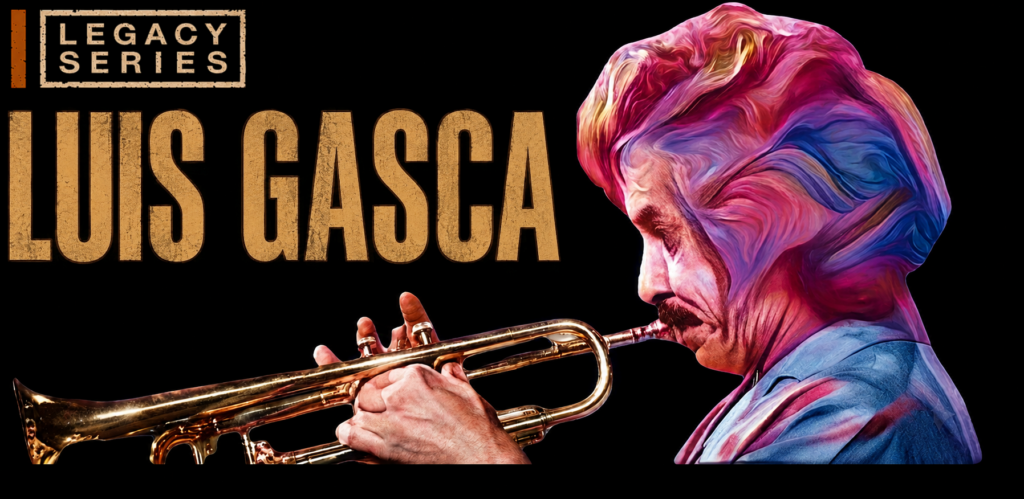
The Legacy Series cuts through the static to pay dues to the departed masters. In this installment, trumpeter Luis Gasca discusses how his career took him from a scholarship at Berklee to sharing stages and studios with the likes of Mongo Santamaría, Janis Joplin, and Santana—a journey through jazz, Latin music, and rock and roll marked equally by triumphs and personal struggle.
___
LUIS GASCA: I started in Houston, Texas when I was in high school. They announced that if anyone wanted to be in the band to go see the band teacher. So I went to see him, and rented a trumpet for five dollars a month. That’s how I got started.
SOUNDS VISUAL: What drew you to the trumpet, specifically?
LG: The military was a wonderful thing for a lot of young people, because it gets you out of your neighborhood if you’re a poor white, or poor black, or poor Latin, or anything. The military service would give you two pairs of shoes, six pair of pants, five shirts. So anyone that’s not doing that good, you go into the military, you might wind up in Hawaii. You might wind up in Germany or Europe.
This [military] guy came to my house. He got out of the hood and he had a trumpet with him. He was in the Navy, and he had his Navy whites on, and so he looked real good. He opened up the case, and they used to use real velvet, so the blue velvet in the case, with the shiny gold instrument, it was impressive when you’re like a ten year old kid. That was the first time I saw a trumpet in my life. It was like a shiny object. So when they announced it in school [as an option], it was an opportunity for me to play that shiny object, and make it part of my studies.
It’s interesting, because first of all, you’re dealing with a piece of metal. If you look at it, it’s pipes and tubing. So, manually speaking, a clarinet is made out of wood, a violin is made out of wood. But with a trumpet, you’re talking to a piece of metal, so you have to bypass that extension of yourself psychologically. If it’s cold outside, the instrument is cold as hell. And if it’s hot outside, the instrument is hot as hell. You’re dealing with a metallic object, and when you think of something and a mini second later, that idea comes to the horn. But it’s not gonna come to the horn unless you know the horn itself, and that comes through hours of practicing.
The instrument is like a canvas—there’s nothing on it until your mind and brain and feelings come through that piece of instrument and then it’s called “music,” whether it’s jazz, or Latin, or whatever. And in your musical life, what did you put on that piece of canvas? With my limited resources and education, the results [of my career] aren’t too bad, Justin. [laughs]
There was a young kid in the [school] band that lived in the projects, and he sang and played the bass. He later became famous, and I saw him everyday. His name was Kenny Rogers. He was in high school with me. Very nice young man, everybody liked him.
I studied quite a bit in high school, and I didn’t know anything else but music. One time this guy came in and said, “Luis…Bird died.” And I didn’t know who Bird was. I said, “Who’s Bird?” And man, he said, “You’re an idiot!” [laughs] So I remember that day Charlie Parker passed away, because that guy told me I was an idiot, and I have to agree with him. [laughs] Then I remember when Clifford Brown also died in his car crash. I wasn’t in high school anymore. [Around that time, I] was impressed by Maynard Ferguson, of all people, because he played so high [on the trumpet] and then another guy told me to listen to Miles Davis, so I forgot about Maynard. [laughs]
I was in charge of the high school band. We went to a concert and competition, and I won first place [in trumpet]. And at that particular time, Texas was extremely racist [towards Mexicans and minorities]. It didn’t bother me because my dad had told me, “Luis, you’re no better or worse than anybody else. Don’t let none of that junk affect you.” It didn’t bother me being in this beehive of racism as a Mexican-American in Texas. The only reason I won first place in trumpet is because the judges were from [other states], and they were not as racist. Otherwise, in 1957, we wouldn’t have won. The judge was [actor/jazz musician] Charlie Rogers, and he was a great jazz enthusiast. The other judge was Chuck Suber, who was the publisher of DownBeat magazine. He was from the Chicago area.
The prize for winning was a scholarship to the Berklee School of Music. I didn’t even know where Boston was. I’m from the barrio in the Fifth Ward in Houston. And next thing I know I got a scholarship to go to Berklee, and then about twenty years later, I found out that [in] that year only two people were awarded that scholarship: me and Joe Zawinul. I met him the first day he got to the states, and that first day we both went to see Thelonious Monk in Boston at Storyville, a jazz club. Monk played a set and then he went down to the restroom. Everybody was waiting for him to come out of the restroom, and he wouldn’t come out. The place was packed, so they called the paramedics, and somebody took him out in a straight jacket. [laughs] So there was me and Joe Zawinul seeing Monk for the first time in our lives. He was nuts. [laughs]
I was fortunate because when I went to Berklee, [saxophonist] Charlie Mariano was teaching there, the alto player. [Trumpeter] Herb Pomeroy’s big band was there, it was a great band. [Trumpeter] Bill Chase was there, [trumpeter] Paul Fontaine, [saxophonist] Jimmy Mosher, and at the same time, I played with Herb’s band, not in the A band, but in the C band. And [multi-instrumentalist] Jaki Byard [who played with Pomeroy] was outstanding, this guy could play everything backwards. He was very underrated. Fantastic.
I used to play at the Wigwam Club in Boston. So all of a sudden, I’m in the minor leagues, but on the way to the majors because I was around so many good musicians. And half of Duke [Ellington’s] band was from Boston, so Duke was around all the time. They played at the Sheraton Hotels. [Drummer] Sam Woodyard, [saxophonist/clarinetist] Harry Carney, [saxophonist] Johnny Hodges. So I got a chance to see Duke’s band many times. And [Count] Basie would come into town often with [singer] Joe Williams, so I had an opportunity to see a lot of people.
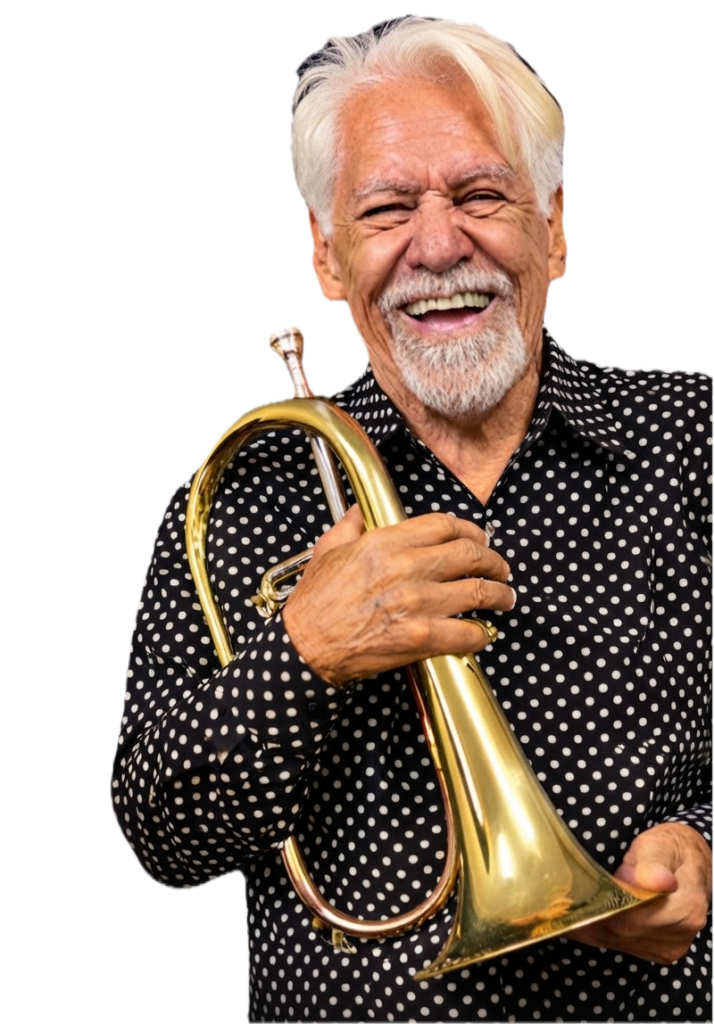
On the weekends sometimes I’d go to New York City to see [Latin jazz musicians] Tito Puente and Machito. I’d see Miles Davis with John Coltrane and Bill Evans, and another time with [pianist] Red Garland and [bassist] Paul Chambers. I even got to talk to John Coltrane one time. Charlie Mariano introduced me to him, and I think it was at the Five Spot. So I was very fortunate because New York and Boston, to be there in the late ’50’s and early ’60’s, was something that I’ll never see again, and neither will a lot of other people.
I remember going to Cafe Au Go Go in [Greenwich Village] New York, and the marquee said, “Stan Getz Quartet” and underneath it said “The John Coltrane Quartet,” on the same bill. [I saw bassist/composer] Charlie Mingus with [trumpeter/composer] Donald Byrd. I went to Chicago to see Miles at the Sutherland Hotel on the Southside, and there was a young man playing the piano at this hotel, and he was downstairs and Miles was with his group upstairs. I became friendly with the piano player, and his name was Herbie Hancock. When I made my first album, Herbie had left Miles, and he played on my first record. So I was very fortunate.
I stayed in Boston for about a year and a half, and that gave me an opportunity to get an eastern education, because I was street. I had a pretty good ear, and was self-taught, had perfect pitch that I had developed. But I had no formal training when I got to Boston. To be a great musician, you have to be able to use your ear. So, if you don’t have any formal training, basically you’re a street musician. But if you get the formal training, going to college and studying the classics AND the street, then you become an all-around musician. Miles had the street and the education. Chick, Herbie…they all had classical education along with the street knowledge. I was mainly more instinct, like an animal in the jungle. I was limited, and I used my limitation the best I could, so I didn’t do that bad.
SV: So where did you end up after your time in Boston?
LG: Well, they didn’t really have any beans and rice in Boston, at least not the kind I was used to, so I said “I better get outta here.” And it was too cold. So I moved to California, stopped in Texas to see my mom and dad, and then went to L.A. at about twenty. A lot of great orchestras and trumpeters were coming out of L.A. And I wanted warm weather, and I was there for three months playing in Latin bands with outstanding trumpet players. I had an opportunity to experience the west coast part of jazz music, and I became part of it.
I got a call from [Cuban bandleader/pianist/composer/arranger] Pérez Prado to audition for him. He was the hottest thing in the world when I joined up with him. I knew what he wanted, he wanted a big sound. He said, “You’re hired.” He was paying me five hundred a week. We went to Japan for two months. I never worked so hard in my life. That was the first time I went into the major leagues. Prado’s band had some excellent musicians, and I was in the big time making good money. We also went to Hawaii and Las Vegas.
After a while, as much as I liked it, it was time for me to move on, and after playing [Prado’s massive hit] “Cherry Pink and Apple Blossom White” five hundred times, I was sick and tired of it. [laughs] I was bored easily, so I left Prado’s band and came back to Texas.
[Trumpeter] Marvin Stamm came to town, he was with [pianist/composer/arranger] Stan Kenton, and he said, “Hey, Luis, there’s an opening in the horn section.” Stan Kenton had a band, and he had four mellophoniums [a brass instrument used in marching bands in place of French horns]. So I was a part of the mellophone horn section. Marvin got me on [the gig], and then I’m traveling on a bus with Stan Kenton and his orchestra, and got off a year later. It was a wonderful trip, and it was a hell of a band.
I started getting a little known when I recorded mellophonium with Stan Kenton. I had also played on a great Stan Kenton record called “Adventures in Time” [Capitol, 1962]. The album featured arrangements and compositions by Johnny Richards, and I played on a wonderful song called “Artemis and Apollo,” which I love to this day.
It was very nice for me to be with Stan’s band, but then it was time to go too. How many times can you play “Intermission Riff?” About that time, I said, “Hell, I’m moving to Mexico.” There were great movies and musicians and bands there at that time. They put me on the A-team in Mexico City, and I worked in the studios and had a television job.
When I was in Mexico, Cannonball Adderley and [trumpeter/composer/arranger] Gerald Wilson came, so I had a chance to talk to them while I was there and see them. I was married at that time, and that didn’t work out, got a divorce, and then I went to Acapulco. I had a jazz job playing every night for four months. It was a good band. There was a guy who had a crush on the singer we had in our band, and his name was [lyricist] Hal David. A lot of people used to come through.
From there, I went back to Los Angeles. I had lost my confidence once I got divorced, so it was time for me to get back to the states. The first thing I did was go see Miles Davis. I’m in San Francisco [at Davis’ gig], Miles passed right by me, and patted me on the shoulder. I could have died.
I got a call from Pete Christlieb, a great tenor player from the Tonight Show band, and he said, “Luis, there’s an opening in Woody Herman’s band. We’re going to Europe. You wanna go?” I didn’t think I had the confidence. And he said, “Well, get in the band, and if you don’t like it, then you can bounce soon.” The other great trumpet player in the band was Oscar Brashear. It was a great band. We had [trombonist] Carl Fontana, [trombonist] Slide Hampton, [pianist] Albert Dailey, [saxophonist] Sal Nistico, [saxophonist] Cecil Payne. And I recorded an album with Woody called “Concerto for Herd.” [Verve, 1968].
When I was in Vegas with Woody, this bass player, Victor Venegas—from [Cuban percussionist] Mongo Santamaria’s band—came up to me and say, “Hey Luis, we’ve got an opening with Mongo. You wanna go?” I said, “Yeah, why not?” So I left for Mongo and stayed two years and three albums with him, which was a great, wonderful experience. The Cuban thing is a different thing. It’s a little turn [in the rhythms and accents], and the only way you can get that turn is by living with the Cubans, playing with them. It’s the “and one” [emphasis].
Jazz is “one-two-three-four.” But the Cuban thing—that’s why you don’t need a drummer. It’s so exciting because of that “and one,” so it’s constantly pushing the rhythm. It’s like a ball coming down a hill, so it just keeps rolling and rolling and picks up that momentum. So I was still learning the Cuban thing, which helped me later on when I did some Latin albums later on for myself.
One time, Mongo showed me something interesting. He said, “Hey Luis, I want you to see this.” It was a letter that Mongo had from John Coltrane. John called him apologizing becauseTrane had done well with “Afro Blue.” [Hums the melody] The record company listed John Coltrane as the composer of “Afro Blue” [when it was actually Santamaria’s composition.]
And that was a mistake they made. They hadn’t crossed their t’s and dotted their i’s. Trane felt terrible about that, and wrote Mongo a letter. [laughs] So Mongo showed me the letter, and I thought that was interesting. So I had a good time, and after playing “Watermelon Man” for two years, it was time for me to go.
When I was with Mongo, Mongo was on Columbia Records, and the producer Joel Dorn wanted Mongo to record with Atlantic, and Mongo said, “I can’t go, I’m with Next thing I know, I’m working with Joel Dorn. He also did “First Time I Ever Saw Your Face” [from Roberta Flack’s debut album “First Take,” Atlantic, 1969]. I didn’t know him that well, and he said, “What do you want me to do? That way, when we go in the studio, we won’t go round and round. You do what you want.”
That gave me the green light. I called Herbie Hancock, [saxophonist] Joe Henderson, [flautist] Lew Tabackin, [flautist] Hubert Laws. The cream of the crop. Mongo and Bernard Purdie [were on the session], I had two rhythm sections. And Mickey Roker was on drums too. Chuck Rainey and Richard Davis were on bass. Mark Levine was playing piano and helping me a lot. And Joe Gallardo, a trombone player from Texas [was on the session]. I also brought in [percussionists] Julito Collazo, and Marty Sheller.
So I did my first album when I was twenty seven in New York City [“The Little Giant,” Atlantic, 1969]. I never made a penny on it. Never got one letter, it was like I didn’t exist.
“The Little Giant” fused various musical styles, incorporating soul jazz, Latin rhythms, and elements of modal improvisation. Featuring intricate and expansive arrangements by Gasca and Mark Levine, the work is slightly reminiscent of Duke Pearson’s compositions from the late 1960s, but the record blasts through with a wild intensity that sets it apart from the herd. Despite the incredible lineup of talent and wonderful performances throughout, the album came and went with hardly any promotion from Atlantic Records.
LG: I was walking down the street in Hollywood after recording the album, and I see that Atlantic Records has a huge display for Led Zeppelin, which sold 17 million copies. And then [another display] for Aretha Franklin’s “You Make Me Feel Like A Natural Woman.” And then I looked down at the bottom, and here’s my album. [laughs] That was a good feeling.
I had rented a house in L.A. from a guy named Sal Mineo. He [acted in] “Rebel Without A Cause” with James Dean. I rented his house and I wasn’t going anywhere, I was tired of traveling. One day, I got a call and it was the office of Albert Grossman. He was Bob Dylan’s manager. They offered me some work [with Janis Joplin], and I had two questions: “How much does it pay, and where is the tour going?” “Well, it’s going to Copenhagen, and Europe for two months.” I said, “Well, I got an ex wife over there, and a stepdaughter. What does it pay?” “We’ll pay you $900 a week with all expenses.” So I said, “I’ll take it.”
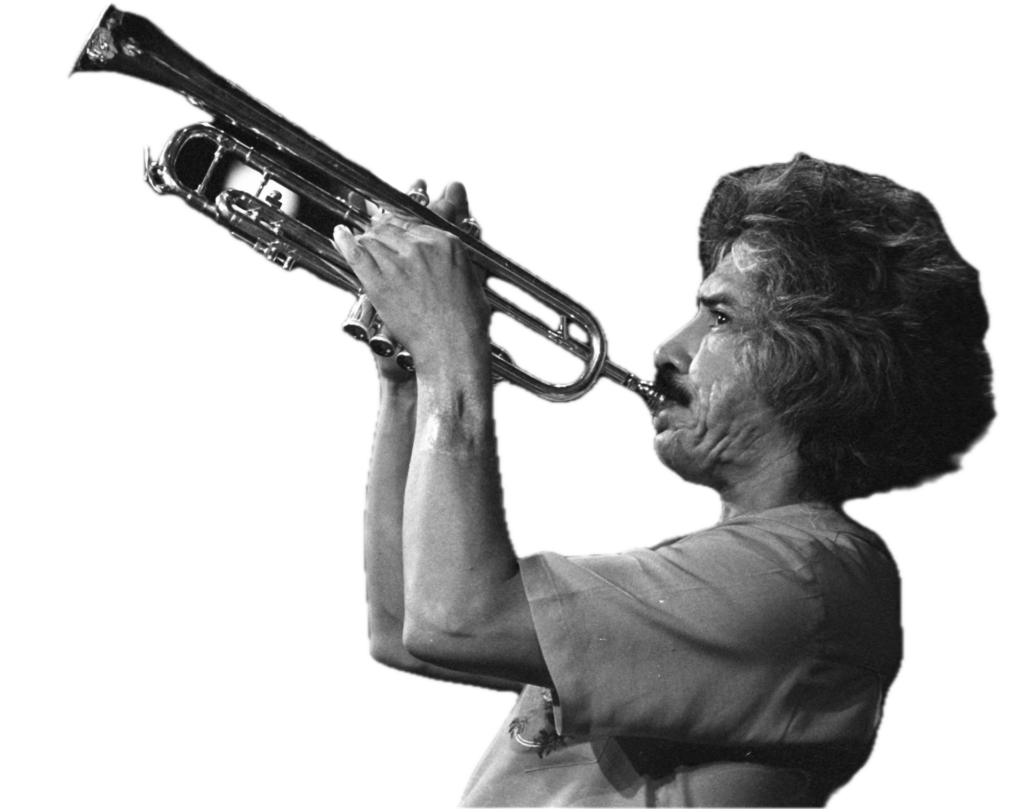
So that was my first time going into the world of rock and roll, which is another animal. I went down there to [Grossman’s] office, they had been looking at trumpet players all over the world, and someone had told them, “The guy to go to is Luis Gasca. He can travel, he’s not married.” Good trumpet players made a lot of money in L.A. or New York City. It was a lot of money then. Next thing I know I’m in Europe, and we [also] ended up recording her album [“I Got Dem Ol’ Kozmic Blues Again Mama!” Columbia, 1969].
I went to the management office and they had a check for me for $2,000 and they said, “Don’t ask us for any more money for at least two days.” They didn’t want me to bother them. So the world of rock and roll had a lot of money, I made good money. So I joined Janis and did Woodstock with her. We got there a week ahead of time. It was a junkie band with Janis, including Janis. Grossman needed to get us there early or the band wouldn’t show up. [It reminded me of a time] I went to see Miles and Coltrane, and Trane and Philly Jo Jones didn’t show up because they were junkies.
Playing with Janis was fine, but again I tired of…everybody in rock and roll was a star. Even the roadies are stars. Egos up the ass. And I come from a world of Mongo, McCoy Tyner, and Cannonball Adderley, Oscar Peterson, Count Basie, Maynard Ferguson, and Trane. Jazz is a humble world. They’re all humble and very very nice. And you don’t realize these people that can play so well can also be so nice. So in the world of rock and roll, it was a bunch of bullshit. And I handled it for about a year, and then I got strung out big time, like everyone else. The only difference is I’m still here and alive to talk about it. [laughs] So [during that time] I also met Jimi Hendrix. He used to stay at the Chelsea Hotel.
When Janis passed away, I moved to San Francisco and I was the go-to trumpet player for rock and roll. Then I went with Santana, and then I found what real money was. I think, at the time, I was a catalyst for people coming to San Francisco [to play jazz and record]. Herbie Hancock started coming to San Francisco. [Engineer/producer] David Rubinson did the same thing. I had a band in San Francisco. Before me, there was a guy with Janis’ band called [saxophonist] Snooky Flowers, and he opened for me. His group was Snooky Flowers and the Headhunters. And then, I had a bass player with me called Paul Jackson. He went on to play with Herbie.
Once he settled in San Francisco, Gasca quickly gained recognition as a versatile musician and started collaborating with some of San Francisco’s top acts, including Carlos Santana. He would go on to appear on albums like Santana’s third album “Santana” [Columbia, 1971], Cal Tjader’s “Agua Dulce”[Fantasy, 1971], Van Morrison’s “Tupelo Honey” [Warner Bros., 1971], George Duke’s “The Inner Source” [MPS, 1974], Bob Weir’s first solo album “Ace” [Warner Bros./Grateful Dead, 1972] and Malo’s self-titled debut album [Warner Bros., 1972]. He also did some live gigs with Jefferson Airplane’s Marty Balin for his short-lived Bodacious DF project.
SV: You’re also on a great date led by [saxophonist/flautist] Hadley Caliman, and the LP is called “Iapetus” [Mainstream, 1971]. Had to mention that one.
LG: I was the straw boss with Mongo’s band, and the sax player, Bobby Porcelli, was leaving and they needed an alto player. So I auditioned this audition player in Philadelphia. He couldn’t read that good, so I showed him the parts. His name was Sonny Fortune. So, then they need a tenor player, I said, “Well, there’s a guy out in L.A., and his name is Hadley Caliman.” So I got Sonny and Hadley Caliman in Mongo’s band. Hell of a band.
So Hadley was a good friend of mine, and then I got him in with Santana. When he passed away [in 2010], the great producer Orrin Keepnews called me and he said, “Luis, Hadley died. Will you come down and do a eulogy?” I went there and [vibraphone/marimba player] Bobby Hutcherson was there, and then he later passed on. So I was able to talk about Hadley a little bit.
Hadley was a great, great tenor player. He looked real young but he was about sixteen years older than I was. He had enough [talent] to take him to play with artists like Eric Dolphy [both recorded as youngsters with Roy Porter’s big band] and Dexter Gordon. Toward the end, he still sounded good and had gone to Europe with Freddie Hubbard. I was glad to see him make it, because he was a good player and I felt like I had helped a little bit, directly or indirectly.
In 1972, Gasca recorded his second album as a bandleader, a masterpiece entitled “For Those Who Chant” [Blue Thumb Records]. Featuring four sprawling tracks, “For Those Who Chant” wears its indulgences like a badge of honor, setting the laid-back vibe of the West Coast against the technical virtuosity of its astonishing lineup, which included Carlos Santana, drummer Lenny White, bassist Stanley Clarke, [White and Clarke would soon join the band Return to Forever] guitarist Neal Schon, pianist Gregg Rolie [Schon and Rolie would leave Santana’s band to form Journey in 1973], percussionist Coke Escovedo, and Joe Henderson on tenor sax. Perfectly encapsulating the high-octane spirit of the era, “For Those Who Chant” plays like a lysergic fever dream of Latin jazz, funk, and fusion, crackling with atmospheric tension and fiery grandiosity.
LG: I was with Santana and the manager for Santana, Stan Marcum—a wonderful guy who doesn’t get credit—he liked the way I played, he liked jazz. And I was living with him in this huge mansion. He said, “Luis, I’ll finance you for an album.” So I had the financing, and I had the studio [Columbia Studios, San Francisco]. And Joe Henderson was in town. He said, “Luis, I got this bass player and drummer, can you put ‘em to work?” And that was Lenny White and Stanley Clarke. Lenny had done “Bitches Brew” but he was still relatively unknown and didn’t have the acclaim yet. I called the Santana band [to contribute to the record], we all used to hang around: Carmelo Garcia [timbales], Victor Pantoja [congas]. David Rubinson told me later on that the first time all the Santana members came into contact with real jazz was when they played with me.
It’s funny–when you’re recording, you have different ways to record. It depends on that point in your life, where you’re at musically. That album was a free album, meaning it was more experimental for me. I had been influenced by what Miles was doing. So I went for it. There were no charts [on “For Those Who Chant”]. It’s another concept for a leader when recording—which direction are you taking?
That’s the beauty of jazz, you get some ideas and it’s a language. It’s like when you see fish swim. In a millisecond they take a left turn and five thousand fish turn that way at the same time. Music is like that. That’s what I did when we made “For Those Who Chant.” I’d make a left turn and everybody would go that way. There was no roadmap.
I wasn’t a purist. I wanted to be one, but being a purist has its disadvantages. First of all, monetarily, which wasn’t my main concern, and secondly, musically speaking, because you’re just doing one thing. I liked Latin music, but I also loved Miles Davis. Going from one genre to another was easy for me, it was seamless. You have to be prepared when the right place and right time show up. I tried to bring my own concepts, my little grain of salt into playing with Janis, or Malo. You bring a little something to the musical pot.
Gasca went on to record two more albums as a bandleader, 1974’s “Born to Love You” and 1976’s “Collage,” both released on the Fantasy label. By the late ’70’s, Gasca’s inner struggles compelled him to leave the music business altogether, and he disappeared for several years.
LG: I quickly burned out, and then I got strung out. I had alcoholism and a drug problem, and at the age of 38, that was it for me. I peaked out, I stopped. I didn’t have a manager, so I had to get the contracts, get the musicians, get the money, and then the broads, get the blow, get the whole trip. It had a toll on me after three albums and it was not good for me to be in the music business. I lost my way but I found my way back, but twenty years had passed.
There’s plenty of things I did I can be proud of. I held three contracts with major companies. That’s got nothing to do with playing the trumpet. That pushed me over the top. It was just too much for one person. I can live with what I’ve done. Things are good. I live in Mexico now, in the jungle. I’m about an hour away from civilization. I go out and play a bit. I just did a big band thing and sometimes play with a quartet a few times a year.
SV: Luis, so great to connect with you. It was not easy to track you down!
LG: Well, I want to thank you very much. I’m still playing, and still going on.
SV: Thanks again, Luis.
LG: Hey, listen, thanks again, and we’ll stay in touch, okay?
Luis Gasca passed away on August 2, 2026.
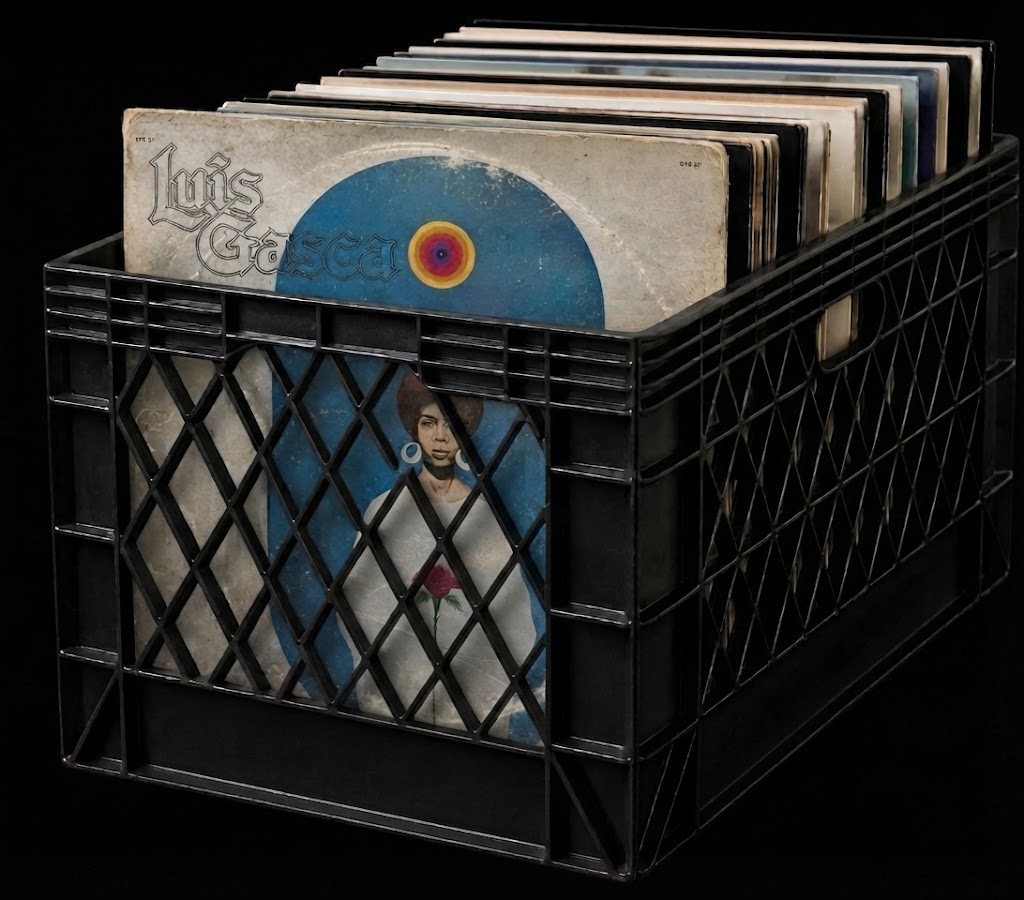
Further listening:
Luis Gasca: The Little Giant (1969)
Woody Herman: Concerto for Herd (1968)
Stan Kenton: Adventures in Time (1962)
Mongo Santamaria: Stone Soul (1969)
Janis Joplin: I Got Dem Ol’ Kozmic Blues Again Mama! (1969)
Hadley Caliman: Iapetus (1971)
Santana: Santana III (1971)
Cal Tjader: Agua Dulce (1971)
Van Morrison: Tupelo Honey (1971)
Malo: Malo (1972)
Bob Weir: Ace (1972)
Luis Gasca: For Those Who Chant (1972)
George Duke: The Inner Source (1974)
Luis Gasca: Born to Love You (1974)
Luis Gasca: Collage (1976)
Leave a Reply
You must be logged in to post a comment.