

In this career-spanning interview, musician and producer Leroy Burgess recounts his formative years in Harlem, his evolution from the soul group Black Ivory to becoming a pioneer of dance-music architecture, and the vital, irreplaceable role of human emotion in musical creation.
___
Multi-instrumentalist Leroy Burgess first made waves as the teenage lead voice and co-writer of soul-harmony royalty Black Ivory before launching an unstoppable string of underground disco, funk, and boogie anthems with Patrick Adams in groups like LOGG and Convertion. Today, the legendary producer and vocal architect’s deep-digging catalog lives on through timeless club classics, rare-groove gems, and foundational samples that continue to echo across hip-hop and modern dance culture.
Sounds Visual: Where does the journey in music start for you?
Leroy Burgess: It started when I was a toddler. Like many Black families in America at the time, ours was rooted in a spiritual background. My mother took my sisters and me to church constantly, and the spirit of the music hit me right there. In addition to that, my mother was a classically trained concert singer. She used to sing around the house, and it always intrigued me because it was so beautiful. That instilled a desire in me to learn to sing. I joined the youth choir at church, but early on, I didn’t necessarily have an inclination to become a professional. I was just singing for my own pleasure and learning. But the music bug hit me, and there was nothing I loved doing more, so I just followed that path.
SV: You’ve mentioned listening to Tubby the Tuba as a child to deconstruct an orchestra into its component parts—strings, horns, percussion. Do you think that early analytical framework shaped the way you eventually produced and arranged dance music in the ’70s and ’80s?
LB: Part of the charm of Tubby the Tuba is that it turns the sections of the orchestra into characters. Because of those characterizations, I identified deeply with the various instruments and their individual sounds.
I was already hearing these elements on the records my parents played at home—the amazing productions of the ’40s and ’50s by great balladeers of the swing era like Johnny Mathis and Frank Sinatra. But Tubby the Tuba explained it to me. It illustrated how the different sections sound, and what each brings to the musical equation as a whole. As I progressed into my musical journey and learned more, I began to understand how to wield those various sections of an orchestra to construct a great record. The original instruction, by default, came from Tubby the Tuba.
SV: Your childhood household in Harlem was essentially furnished via S&H Green Stamps. Looking back, how did that era of community-driven reward programs shape your understanding of value, patience, and the consumer side of the music business?
LB: Back then, it was a profound struggle for families in general, and Black families specifically, to make ends meet—especially with a lot of kids. There were seven of us children, and holding that household together was an immense task for our parents.
The assistance of programs like S&H Green Stamps and surplus food programs are what kept us together. On a deeper level, it kept us humble and taught us to appreciate what we had versus what we didn’t have. It kept our mindset less materialistic and more appreciative of the blessings that kept a roof over our heads, food on the table, and allowed us the freedom to follow our dreams.
SV: You’ve described bursting into song while walking the streets of Harlem as a kid between 110th and 125th Streets, surrounded by jazz, funk, and African rhythms. If you could capture the acoustic fingerprint of that specific Harlem era today, what is the one sound or feeling you miss most?
LB: A true appreciation for what jazz and blues brought into the musical equation. Those were the things that made music matter to me.
When you walked through the streets of Harlem back then, whether a record shop speaker was playing outside or not, you could feel the vibration of the energy. I could literally walk down the street and feel the presence of Billie Holiday, Duke Ellington, and Count Basie. Even without their music physically playing, I absorbed their energy.
I live in the Bronx now, and I’ve lived in Midtown and downtown Manhattan, but I have never felt the creative entity that I felt just walking the streets of Harlem. I was born in 1953, so I was at the tail end of that golden jazz era. The musicians themselves may have moved on, but their energies were still physically present in the neighborhood, and I was sensitive enough to absorb them. It became the primary motivation for my entire musical journey.
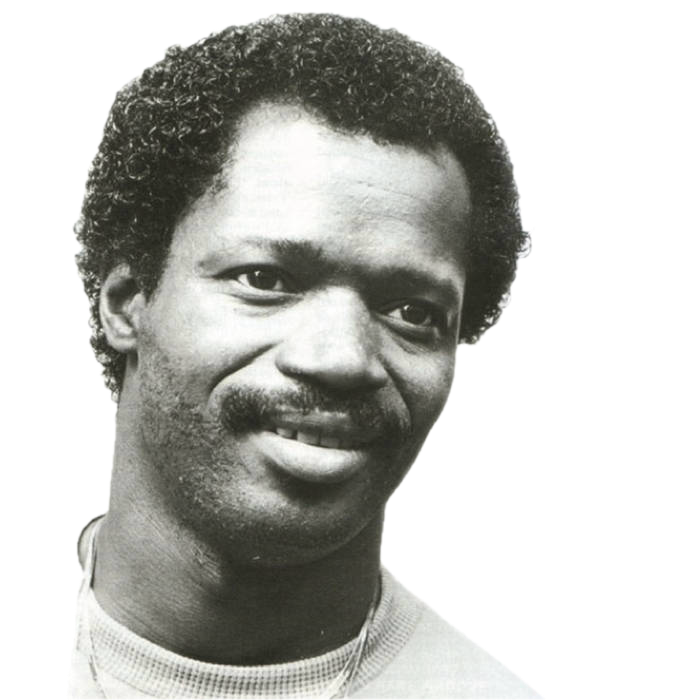
SV: You’ve spoken about being an avid reader of album credits, focusing on masterpieces like Songs in the Key of Life. What specific technical roles or production credits did you obsess over, and did they influence your decision to become an architect of dance culture rather than just a performer?
LB: Composers and the compositions they created were the first things I obsessed over. I loved great songs—how they sound, and moreover, how they felt.
Then, there were the great singers from back in the day, particularly Johnny Mathis, who was a favorite of my mom’s. Finally, I was captivated by the colorations of the orchestras and the emotional atmospheres they were responsible for setting up. Those three factors—composition, artistry, and arrangement (whether orchestral or a small horn section)—deeply inspired me. I gravitated toward that side of creation, and that’s where my focus came from.
SV: You made a conscious decision to transition from your earlier falsetto style to your natural voice for the disco era. Looking back, how did that shift fundamentally change your approach to songwriting and vocal arrangement compared to the slow-jam era of Black Ivory?
LB: I always wanted to stay current with the trends in the industry. When I was in my teens, the biggest thing was slow jams, four-part singing, and the beautiful work of groups like The Delfonics. That became the core direction of Black Ivory at the time. But between the ’70s and ’80s, music evolved. Slow jams started to take a backseat to more up-tempo, progressive, dance-oriented music, and I wanted to evolve with it.
The challenge with Black Ivory was that the public had a tendency to pigeonhole and stereotype us into a certain expectation. I found that expectation too constraining for my continuing evolution. I realized the only way to truly proceed and grow was to step away. I couldn’t do it while remaining in the group because the expectations would force me to stand still. It was a massive decision to leave Black Ivory because we were a successful group on our way up, but my higher power was informing me it was time to move on. In doing so, I was able to step into a further light of my own creativity.
SV: The track “Let’s Do It” was famously composed as an afterthought during an unbooked studio session, meaning you constructed a masterpiece from scratch in just a few hours. Do you think your best production work comes from high-pressure constraints or when you have the luxury of total creative freedom?
LB: I am able to work in both environments effectively—both the demanding, time-restricted situations and the open environments where you have the time to construct, rethink, and revise. But my preference is the environment that gives you the room to allow the music to tell you what to do, and to follow the direction that the music suggests.
SV: One of the most admired aspects of your aesthetic is the use of jazz chords within a disco groove—layering jazz changes and harmonies into dance songs where they technically “didn’t belong.” How did you overcome the resistance of engineers or labels who expected a simpler, more standard disco structure?
LB: My jazz training came from my first dedicated teacher, Herbie Jones. He was the rhythm and brass arranger for the Duke Ellington Orchestra, and he was Duke’s go-to guy. When my family moved to a new place in Harlem, Herbie was working with the neighborhood kids, teaching us what jazz truly meant.
When I looked at mainstream music, I saw certain rules and constraints that typified the industry—things you were supposed to do and things you weren’t supposed to do to be accepted. One of the things Herbie forced upon me was to think outside the box, make that a part of my musical identity, and do things that were unexpected to keep the music interesting.
I could think of nothing better than infusing elements of jazz into popular, mainstream forms of music. I did it in a way where those jazz elements popped in unexpectedly. It held the listener’s interest because it gave the music dimensionality.
SV: Yeah, it definitely imbued your songs and productions with a sophistication that was often lacking in a lot of the music from that era. There was a pivotal moment when producer Patrick Adams told you that you were “at the helm,” transitioning you into the producer’s chair. What was the most difficult part of that shift? Was it the technical demand of writing charts, or the psychological transition of being the one responsible for the final say?
LB: I knew a lot about writing charts and reading music, but I couldn’t sight-read fluently at the time, so Patrick helped me learn that. By the time we did Phreek, I had already been working with Patrick since 1976, and he looked to me as a go-to source for new ideas to infuse into his creativity.
Where he really gave me my shot to produce from start to finish was the Bumblebee Unlimited Herbie Mann Super Mann album. He told me, “This is all on you. From start to finish, you have to arrange the rhythm section and the orchestra.” At that time, it was one of the biggest orchestras we had ever worked with: eight violins, four violas, two cellos, a harp, two trumpets, two saxophones, two trombones, a baritone sax, and a tuba.
Myself, my cousin Sonny T. Davenport, and my partner from Black Ivory, bassist James Calloway, came up with the song “Stomp Your Feet.” I was used to doing rhythm arrangements from my work as the musical director of the Black Ivory road band, but I was unfamiliar with writing for orchestral elements like strings and brass. Patrick didn’t hold my hand, but he guided me. He sent me to the Juilliard Music Store to buy score sheets, and I handwrote the charts out.
I was only about 26 or 27 years old. After the orchestra read through my arrangement in the session, they stopped and asked, “Who did this?” I told them I did. The entire orchestra stood up out of their seats and gave me a standing ovation. What a moment that was for me. That is where the ability to wield the talents of a full orchestra truly came into play.
SV: Larry Blackmon played drums on your early sessions, including Black Ivory’s debut album, Don’t Turn Around. When you were assembling rhythm sections in the late ’70s, what specific DNA did you look for in a drummer? Was it technical precision or a specific pocket?
LB: I thought it was vital that a drummer had a sense of where the song was supposed to go without trying to force their own personal vision onto it. Drummers can sometimes be a little showy—all about wanting people to hear how “dope” they are and how many good fills they can play. In doing so, they can diverge from what the composition actually needs to maximize the song rather than their own ego.
On Don’t Turn Around, Patrick Adams chose the musicians. Larry Blackmon actually lived down the block from me in Harlem, and his performance on the drums was just outstanding. He had a kick foot that was incredibly fast, and that element is exactly what made “You and I”—which was the first commercial composition I ever wrote, at age 16—work so well. All the live drummers we used later were over the moon trying to reproduce what Larry did on that record.
SV: There is a famous rumor that the high-pitched vocals on “Release Yourself” were the result of studio varispeed manipulation, but you’ve noted that it was actually you singing live in that high register, which eventually caused severe vocal strain. Did the prevalence of studio tricks like varispeed in that era create a performance trap for artists, where audiences expected a sound that wasn’t humanly sustainable live?
LB: Yes, we didn’t use varispeed on “Release Yourself” at all—that was truly me singing in that register. Later, when Marley Marl mixed it, he used an Emulator II to sample that vocal part and made the little loop that became incredibly popular. But when it came to performing it live, doing that song just once would completely blow my voice out.
Regarding technology as a whole, I’ve always considered studio tools and technology to be an integral part of creating an effective sound recording. I was never at odds with it; I viewed it as a vital marriage of human performance and technological tools.
That is exactly how I feel about where technology is today with the advent of AI and modern production tools. If properly used in conjunction with live musicians, it is absolutely effective. Everything starts with what is within you, and the tools are simply there to realize your vision.
SV: The song “I Never Used to Dance” was born from a conversation with Eddie Kendricks about his genuine dislike for choreography. Do you find that your most authentic songs come from interviewing an artist to uncover their hidden insecurities or dislikes, rather than just delivering a track you think they should sing?
LB: When creating songs for other artists, it is always best to speak with them directly to find out what they are passionate about. Songs are infinitely more effective when the performer is connected to them emotionally.
In the case of Eddie Kendricks, Patrick Adams asked James, Sonny, and me to meet with him downtown to talk about what he wanted to say. I asked Eddie what he wanted to sing about, and he said, “I know you’re doing a dance album, but I never liked to dance. I hated doing the choreography with The Temptations, but it was part of the job and I had to do it.” He genuinely disliked it.
That gave me the idea to write a song about a guy who doesn’t like to dance, but then he meets the right woman on the floor and she completely changes his mind. That’s where the premise came from: “I never used to dance, but now, you look so good you got me on the floor.”
SV: Let’s talk about “Big Time.” You’ve told a legendary story about running into Rick James at Kenny Morris’s house in 1979 while you were holding the demo tape. When Rick took that demo to California and added his own touch, do you feel his additions kept the core Harlem soul of your vision intact, or did it feel like a completely different record?
LB: It didn’t feel like a completely different record at all. California was where Rick was making his music at the time, and his additions reflected the most talented aspects of his own influences and where he hailed from. It was completely appropriate for him to add elements that pertained to his artistic identity, and I had no problem with that.
I deeply appreciate the fresh inspirational ideologies that come from collaborating and joining two distinct ideas together. I didn’t have a bad vibe about anything his team added. The core of what I envisioned survived, but it was amplified by his energy.
SV: The iconic kick drum and piano intro on “Big Time” was a core part of the original demo you brought to Rick James. Since that sound is so uniquely your signature, did you feel you had to fiercely protect it when Rick’s team began re-recording parts in California, or were you comfortable letting go of the reins?
LB: Rick was actually very happy to keep it in. That intro was one of the things he liked most about how the song built up. I never had to fight or do anything extraneous to retain those parts because he always wanted them there from the start. There was never a problem.
SV: I’d like to ask about the grueling process of stitching together nine different vocal tracks across multiple studios to create the final performance for Christine Wiltshire on Class Action’s “Weekend.” As a producer, where do you draw the line between saving a performance through heavy editing and knowing when a tape simply lacks the necessary soul?
LB: I listen closely to what the vocalist brings to the table. In Christine’s case, “Weekend” was an incredibly difficult song to sing and nail all the distinct nuances required.
Patrick and I had to take multiple passes across several different studios to construct the performance line-by-line and wave-by-wave, rather than having her sing the whole song through in one take. It took about nine different studio sessions and performances to stitch together that final, iconic vocal on the track. You do what is necessary to bring out the magic.
SV: You once said that Stevie Wonder taught you to play without looking at the keys so you could truly feel the music. By removing that visual reliance, did it force you to access a deeper, more spiritual part of your creativity?
LB: It’s even simpler than that: your ears work better when your sight is not in the way. When you close your eyes, the only sensory input you have left is what you hear, which brings you infinitely closer to the nuances in the music.
When Stevie was teaching me, he said, “Close your eyes to listen to it. Don’t just look at it, keep your eyes closed.” When I did that, the music suddenly came alive in a way it never had before. I began to understand how he could create so beautifully without sight. It was a revelation.
To this day, I can create with my eyes open, but to truly understand and QC what I am creating, I listen with my eyes closed. Without the distraction of sight, your ears become hyper-attuned to every single tonal nuance contained in a production.
SV: You’ve documented your descent from the Bell bloodline, alongside luminaries like Thom Bell, Al Bell, and Archie Bell. Do you feel there was a specific, intangible musical philosophy passed down through your family, or was it purely the environment of those East Coast family picnics that nurtured the talent?
LB: I believe there is a vibration of music and creative arts running through my family that, for lack of a better term, is entirely genetic. Thom Bell, Kool & the Gang, Archie Bell, William Bell—they all have it. If you listen closely enough, you can recognize distinct structural and emotional similarities between the works of the different members of the Bell family. It was a fundamental part of my DNA and bloodline.
SV: To tie it all together: Do you feel that a sense of familial shorthand exists in the studio that makes the creation process faster and more intuitive when working with kin? And do you believe in–I guess I would call it a “sonic DNA”–where your soul recognizes music from your own bloodline even before you consciously know the connection exists?
LB: Yes. That is absolutely the case. The sonic shorthand exists, and your soul absolutely recognizes it. Being close to the sonic DNA of my family, being in touch with that—even before I fully understood what it was—influenced me in major, positive ways. It gave me a foundation I didn’t have to think about; it was just there.
SV: I’d love to shift to the topic of mentorship and your time with Stevie Wonder at the Apollo Theater. Today, mentorship often looks like someone watching a tutorial on YouTube. What do you think is lost when the human element—the physical act of a mentor leaning in and whispering guidance into a student’s ear—is removed from the learning process?
LB: The process suffers deeply from the removal of the human factor. One of the things that made my experience so meaningful was that, at the time I was blessed to receive lessons from Stevie Wonder, he was already a global cultural icon. I believe his album Talking Book had just come out when he invited Black Ivory to join him at the Apollo.
He initially invited us for just that one day, for one show. But I ended up coming back for every single show he performed over the subsequent week. What I received from him personally was the profound knowledge that he genuinely cared. He physically knelt down to teach me, to guide me, and to show me things on the keys. For an icon of his stature to see me walk up and be genuinely happy to interact with me was unbelievable.
That specific mentorship only lasted about a week, but a week with Stevie Wonder is worth years with anyone else because his insight is just so gigantic and magnanimous. He taught me how to play without looking at the keyboard—how to use my ears instead of my eyes. He taught me how to develop perfect pitch, which I actually acquired shortly after he instructed me on how to do it. You simply cannot replicate that kind of human transmission through a screen.
SV: There is a famous story about co-producer Greg Carmichael clandestinely taking the master tape of “Barely Breaking Even” to Salsoul Records just to secure extra advance money. Did that incident change the way you structured your contracts and relationships with co-producers moving forward?
LB: It certainly had an impact on me, I’ll tell you that. It didn’t prevent me from working with Greg in the future, but from that point on, I worked with him under a completely different level of trust than I had before.
As I’ve mentioned in the past, “Barely Breaking Even” was originally created specifically to be the seventh track on the Universal Robot Band album—it was meant to close out that record. When it was removed behind my back, I felt like the album was compromised and would forever remain incomplete.
But as fate would have it, “Barely Breaking Even” came out on its own, took on a massive life of its own, and became considered an absolute anthem by so many people, particularly in the United Kingdom. To me, that is just the will of fate—the will of a higher power. I’ve learned to leave it to that and try not to overthink it.
SV: It’s a common thread among artists from that era. Eventually, you have to find peace with how the chips fell.
LB: Before I reached that peace, I was very angry. I was deeply upset with Greg, and I was upset with Salsoul for not pursuing him and insisting that he return the master. But Salsoul’s attitude at the time was, “Look, we’ve got these six other great songs for the album. We don’t want to get into the legal nonsense of having to chase Greg to get that one song back.” So there was a lot of anger I had to process back then.
SV: That wasn’t your only dramatic label encounter. There’s also the story of you, James Calloway, and Sonny Davenport storming the studio to confront legendary DJ and mixer Larry Levan over the track “I Know You Will.” What happened when you walked through those doors?
LB: [Laughs] Oh yeah, that was crazy. “I Know You Will” was the second record we did with Greg Carmichael after Logg’s “Let’s Do It.” Because of how the previous deals had gone, we had to enter an arrangement with Salsoul that resulted in “I Know You Will” becoming the first single. We knew we had to keep the label and the process in check.
When the recording was completed, I had been talking directly with Ken Cayre, the president of Salsoul, telling him not to move forward with anything until we all knew what was happening. But before I knew it, the track was handed off to be mixed by this DJ I hadn’t really heard of or been familiar with yet: Larry Levan.
James, Sonny, and I were outraged. When Ken Cayre casually mentioned what studio the mixing session was happening in and what time it was starting, I looked at the guys and said, “Well, we’re going down there right now.” We were going to confront whoever was in that room, no matter what happened.
When we arrived, the staff initially tried to keep us out of the studio, but I wasn’t having any of it. Larry heard the commotion outside and realized who we were. He said, “Oh no, those are the song’s producers. Let them inside.”
We sat down, introduced ourselves, and he played us the work-in-progress mix he was doing. We listened, and his mix was so exemplary, so completely on point, that all our anger evaporated. We ended up leaving the studio incredibly happy. We actually apologized to Larry for crashing his session, let him know how much we appreciated what he was accomplishing with our music, and left on excellent terms.
SV: Watching him apply his club-tested vision to your multitracks, did you learn anything specific that you later incorporated into your own mixing process?
LB: I wouldn’t say I learned a specific technical trick from Larry, but what he possessed was an absolute command of what worked and what didn’t work on a crowded club dance floor. As a creator, I always look at things through the lens of how I can learn and grow. While I didn’t copy his specific mixing style, the idea of his club-first perspective was something I kept permanently in the back of my mind to infuse into all our future productions.
SV: You’ve beautifully contrasted your signature sound as being tailor-made for a “backyard barbecue” rather than the high-tempo, cocaine-fueled, cardiac-arrest pace of the Studio 54 disco era. Looking at modern music, do you still hear that laid-back, swinging pocket surviving today?
LB: Yes, I do. I think there are still contemporary artists who hold a deep reverence for the vibe and form of Boogie—music that isn’t strictly tailored for that frantic, heart-attack club pace.
Artists like Bruno Mars and October London are keeping that exact vibe alive right now. It’s a beautiful thing because there is immense value in a cool, soulful groove that you can put on at a home party or a backyard barbecue. That laid-back aspect was my entire philosophy when creating within the Boogie genre.
Dance music doesn’t have to beat you over the head at 130 BPM to be effective; it’s permitted to just be cool. The group Fatback Band is a classic example of that—just a beautiful, laid-back groove that forces you to bob your head and enjoy yourself without blowing your heart out.
SV: Does it ever frustrate you when modern music historians lump your specific, swinging “Harlem Pocket” under the generic umbrella of “disco,” or do you appreciate that the tag keeps the music accessible to younger generations?
LB: I look at it like this: names are just names. What’s in a name? To quote Shakespeare, “That which we call a rose by any other name would smell as sweet.”
The terms and labels used to describe music are entirely transitory. You shouldn’t focus on them or overthink them too much. When you get right down to it, our music is nothing but disco by another name, and disco never truly died—it just evolved and changed its title.
The danger is when you get caught up in definitions. If you approach songwriting thinking, “The song has to be this genre, or it has to fit that box,” you restrict your creativity. True creativity demands that you operate without restrictions.
SV: How do you reconcile your historical preference for a collective identity—like Black Ivory or Conversion—with the modern algorithmic pressure for producers to center their own persona? Does building a brand today detract from the purity of the body of work?
LB: : I’ll try to tackle that. I don’t know if I was creating a “brand” when I started doing what I do. It was just the music that came to mind and came out of me. I wasn’t thinking about branding myself or how I could get my name out there; I was just trying to create great music. That wasn’t my focus or a goal. These days, it’s recommended that you do things like that—at least partially—but when I started, that wasn’t the aim.
SV: As an artist whose catalog is constantly re-released and re-edited, do you feel a responsibility to clarify the original intent of your masters, or is the proliferation of your back catalog a living, breathing entity that must be allowed to evolve beyond your control?
LB: First of all, when you put music out into the public sphere, it becomes part of the inspiration that exists in the world. Future generations—the revivalists and all of that—are meant to be inspired by it. As long as inspiration is taking place, I’m good with that.
Now, when a producer grabs a specific musical thread that is clearly derived from the original material rather than just being inspired by it, that’s when licensing comes into play. That is only right, because the new material exists because of the source. Without the source material, the new work would have taken an entirely different direction. But if someone is inspired by my composition to write something with that same vibe? That’s how music is supposed to evolve, regardless of the constraints of what people think they are entitled to.
SV: In the streaming era, which prioritizes short runtimes, do you think we’ve permanently lost the “tension builder,” or is there a way to reclaim that transcendent seven-minute narrative arc in modern music?
LB: Well, streaming has had its own influence on the industry, just as physical media like vinyl and CDs did. But streaming certainly doesn’t pay for the input of the creative people who make the music. That’s been problematic. The model changed back in the late 90s when the decision was made that digital media was the way forward, and essentially, everyone was put on the streaming bandwagon whether they liked it or not. It had a profound impact on the income of those who relied on physical sales to make a living. Now, you have to get a billion streams just to make ten dollars. So, there are immense negatives to the whole streaming model.
SV: I’m curious, Leroy—did it feel more liberating to inhabit a non-existent persona, like for Phreek or Class Action, or do you think your most truthful lyrics come from autobiographical places?
LB: Those non-existent studio groups we created in the 70s and 80s had their place. People knew it was me, but after leaving Black Ivory, my focus was more on my partners and the group concept than on my own name. That was the reason for names like Convertion or Logg. It was a studio concept. Back then, that was the right place for it. Now, not so much.
SV: Regarding the digital grid producers use nowadays—do you think grid-based production has permanently cost us the “human swing” that you perfected, or is that spiritual vibration still achievable?
LB: I was talking to a friend about this very thing earlier today—the human element versus the entirely digital element. My personal feeling is that I prefer music where you can hear a human touch, where it sounds real and you can feel the vibrations of the artist responsible for it. A great example is “Ain’t No Way” by Aretha Franklin. When she sang that, she connected with it emotionally, and that was captured in the performance. That made it more real, more human.
Most of the performances I prefer are human-based. When I listen to entirely digital or AI-generated stuff, I always find something missing—some emotional element is absent. It can be very good, but it doesn’t give me the “goosebumps.” You need to put your heart and soul into the production, and I don’t know if that can be done in a wholly digital environment. Take a song like “MacArthur Park” by Richard Harris and Jimmy Webb—Harris’s voice had a certain shakiness that made it feel so real and made me lock into what he was saying. If you remove factors like that, it becomes less organic and you have less to connect to emotionally.
SV: When a producer turns an eight-minute composition of yours into a two-second loop, do you view that as a loss of narrative intent or as a musical reincarnation?
LB: It may be a loss of narrative intent, depending on what the source material intended to say versus what the new material seeks to convey. But again, the source material is out there to inspire. When a simple line is used as part of a new production, that’s the inspirational factor. You can’t really remove that.
Back in the 50s, when I was a child, we didn’t have tape recorders to capture music from the radio. You had to wait for your favorite song to come on. With the advent of home recording—from cassette decks all the way to the streaming model—I think something changed. I spoke with another artist who has had his music sampled a lot, and he feels it’s a double-edged sword: he’s honored and compensated, but he feels it fragments his work and obscures his scope as a songwriter. I get that. But expecting the entire original vision to be preserved in every derivative work isn’t necessarily fair. You have to open the doors of creativity to everybody. It’s like human sampling. If I wasn’t doing a direct remake or a revisit to the song, that byproduct was just inspiration.
SV: You were mentored by guys like Patrick Adams and Stevie Wonder. In your recent collaborations, do you find yourself playing that same architectural role—are young producers seeking technical instruction or spiritual guidance?
LB: They’re seeking everything they can get—both technical aspects and spiritual guidance. The producers who seek me out are connected to music in the same way I am; they’re looking for guidance in bringing that out in themselves. I don’t overthink it. I just say, “Let the ideas breathe.” That’s what music is meant to do.
SV: You’ve been an architect of dance culture for decades. What is the one lesson about human connection that you’ve learned from the audience—something you didn’t fully grasp as a young man in the studio, but is now crystal clear to you in 2026?
LB: When I started in Black Ivory, we were doing record-store stuff. The audiences were in small basements and clubs like the Sylvia Shack. When disco came along, it opened up a new world. Suddenly, there were gatherings of people who weren’t just there for the performance, but for the atmosphere—people just wanting to dance, have a drink, and enjoy the vibe. That didn’t exist when I started. So for me, it became about adjusting the vibration of my compositions to fit that new model.
SV: Looking back at this amazing career, what would you like your legacy to be?
LB: I would like my work in music to be considered a positive influence. A long time ago, Stevie Wonder said to me: “It’s important to think about what you write and what you share. You want to lift people up, not drag them down.” I took that to heart, not just in my life, but in the construction of the music itself. I’ve always tried to create a positive energy that can be heard and felt instantly.
SV: You spent decades being the architect shaping the sound of other iconic artists. What does it feel like today to be the elder statesman whose catalog is continuously interpreted, sampled, and remixed by the next generation of global producers?
LB: It feels wonderful. It feels like the ultimate validation of what I was trying to accomplish by wielding the musical gifts God blessed me with. My job has always been to extend that inspiration to new generations, younger creators, and anyone who desires to be creative. I am deeply happy and incredibly thankful that this is what ultimately ended up happening with my life’s work.
SV: Thank you so much for your time, Leroy. Really enjoyed the conversation, and of course, all the great music you’ve given us.
LB: That’s kind of you. I appreciate the opportunity to share my views. If anything, I hope it makes a difference in how I’m perceived in the future, and perhaps it serves as inspiration for others.
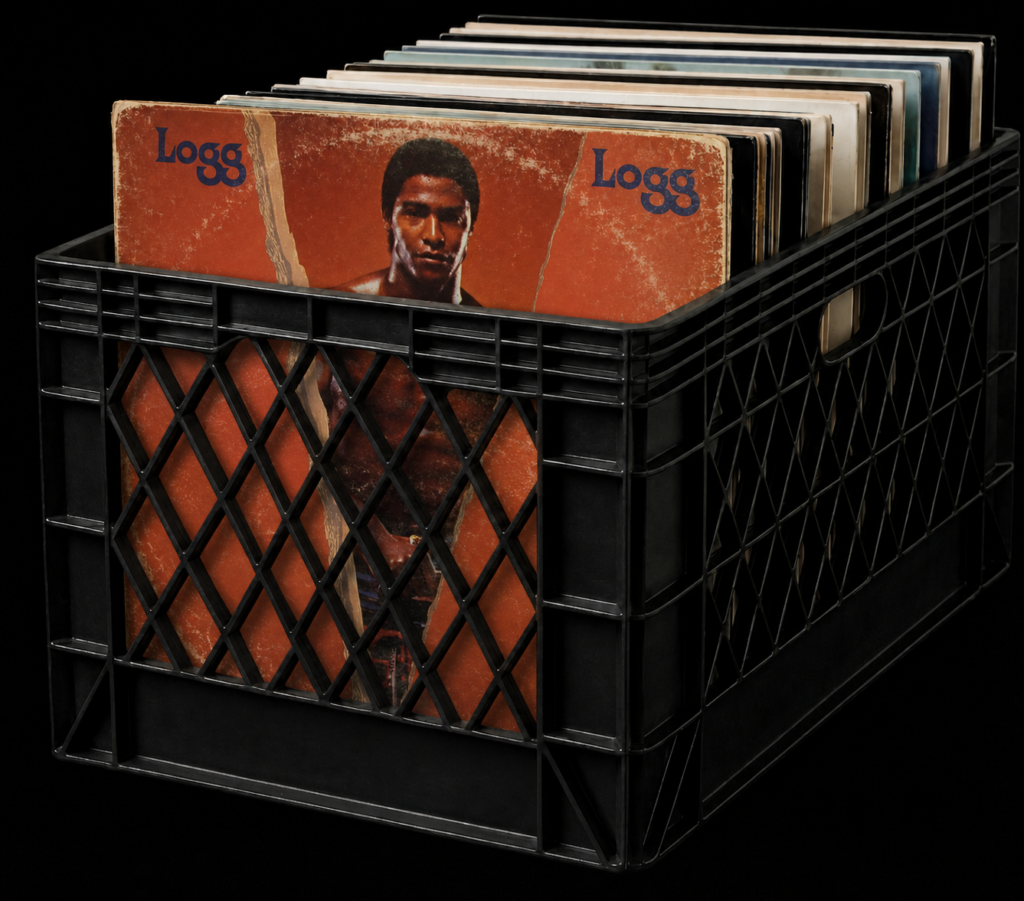
Further listening:
Black Ivory: Black Ivory (1976)
Black Ivory: Baby, Won’t You Change Your Mind (1977)
Black Ivory: Mainline (1979)
Logg: Logg (1981)
Universal Robot Band: Universal Robot Band (1982)
Convertion: Let’s Do It (1980)
Inner Life: I’m Caught Up (In a One Night Love Affair) (1979)
Inner Life: Inner Life II (1982)
Patrick Adams Presents Phreek: Patrick Adams Presents Phreek (1978)
Montana Sextet: Heavy Vibes (1982)
High Fashion: Feelin’ Lucky (1982)
High Fashion: Make Up Your Mind (1983)
Prelude: Prelude (1982)
Rainbow Brown: Rainbow Brown (1981)
Musique: Keep On Jumpin’ (1978)
Musique II: Musique II (1979)
Peter Jacques Band: Fire Night Dance (1979)
Fat Larry’s Band: Lookin’ for Love (1980)
Change: The Glow of Love (1980)
BB&Q Band: The Brooklyn, Bronx & Queens Band (1981)
Aleem: Release Yourself (1984)
Man Friday: Love Honey, Love Heartache (1983)
Two Tons O’ Fun: Backatcha (1980)
Sharon Redd: Sharon Redd (1980)
Sinnamon: Sinnamon (1983)
The System: Sweat (1983)
The System: X-Periment (1984)
The System: Don’t Disturb This Groove (1987)
Leroy Burgess: Destination Love (1982)
Leroy Burgess: One + One (1984)
Leroy Burgess: Heartbreaker (1987)
Black Ivory featuring Leroy Burgess: Continuum (2011)
Leroy Burgess: The Voice: In the Night (2018)
Leroy Burgess: The Producer’s Cut (2021)
Leroy Burgess: Anthology: The Salsoul Years (2023)
Leave a Reply
You must be logged in to post a comment.