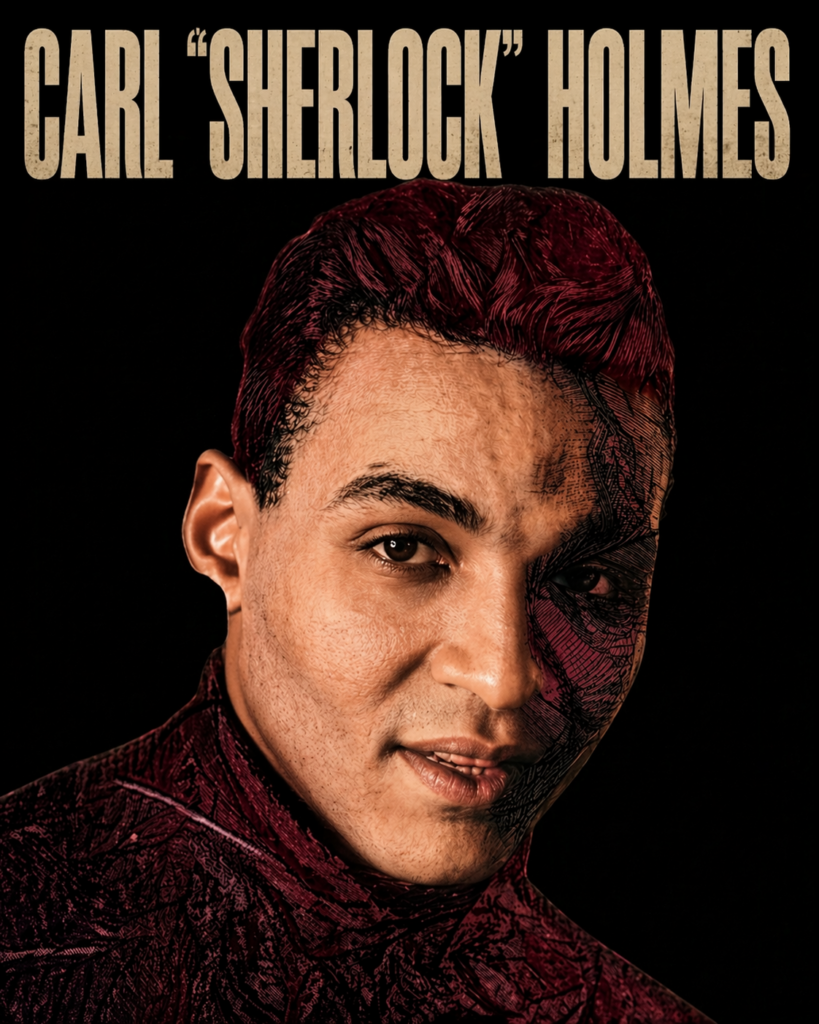
Carl “Sherlock” Holmes charts his path from gigging with Hendrix to crafting the legendary Investigation No. 1, offering a firsthand look at the Philly funk roots that produced a timeless, killer record.
Carl Holmes: I was born in West Philly, and in 1945 we moved to Willow Grove. My sister Mary was studying Spanish and bought a guitar thinking learning Spanish songs would help her. She lost interest and put it in the attic. I started fooling around with it, fell in love, and started taking lessons.
Sounds Visual: Who were you listening to back then?
CH: Les Paul, Louis Jordan, and Ray Charles. Ray Charles was a huge influence.
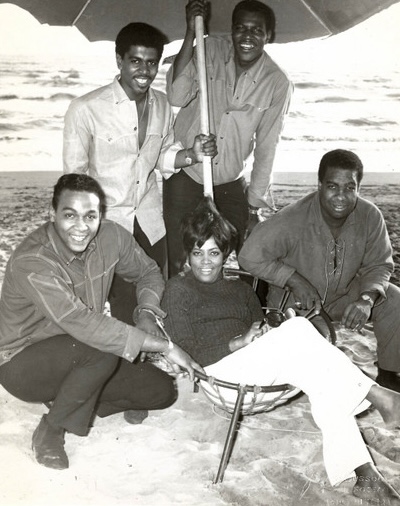
Holmes began gigging in his teens and eventually formed Carl Holmes & The Commanders when he was in his early twenties. The group toured around Philly and East Coast, and were eventually signed to Atlantic Records.
CH: We were playing in New York at the Cheetah, and got signed.
They released their debut album, Twist Party at the Roundtable, in 1962.
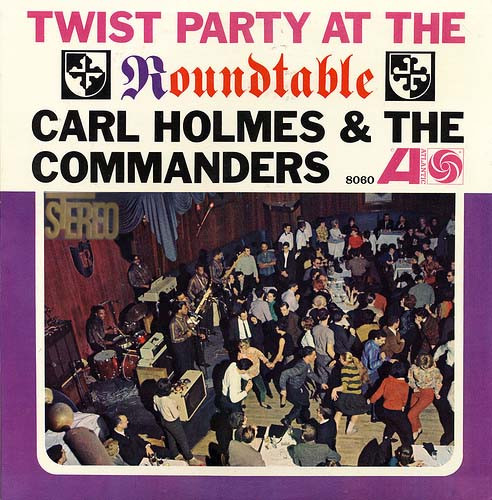
The group continued to release numerous 45’s on the Atlantic, Parkway, Barclay, and Verve labels.
CH: It was after the record that we were still touring internationally a bit. We even recorded some of those singles in Italy.
SV: Is it true that Jimi Hendrix actually gigged with you guys around 1966?
CH: Yes, for about six months. Jimi was a challenge because he played a right-handed guitar upside down, and his sound was so unique it often clashed with the rest of the band. Most groups in New York had already fired him for the same reason. Eventually, I had to let him go; it just wasn’t the right fit at the time.
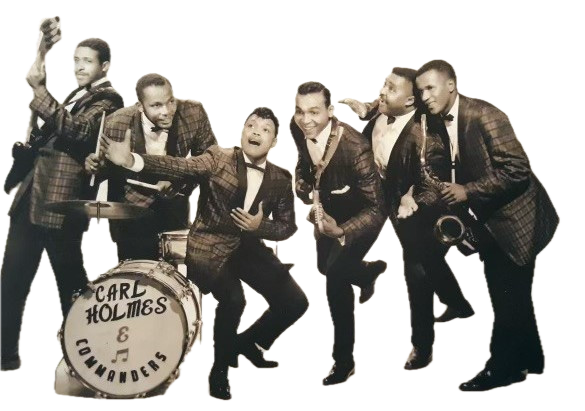
Actually, the band from “Animal House” [Otis Day & the Knights] was based on the Commanders. [One of the writers] went to Dartmouth and saw us play there. We were famous for playing wild parties across the Ivy League. While they used actors for “Otis Day and the Knights,” the inspiration was the Commanders.
After completing one last record for the local Philly label Black Jack, the group officially split up.
SV: What eventually led to the end of the Commanders?
CH: Years of constant touring took a toll. The guys were exhausted, and their families wanted them home. Around that time, my wife tragically passed away from lupus. The group fell apart, and when I eventually reformed the band in Philadelphia, I had to find new members.
SV: Did that lineup change shift your sound toward R&B and funk?
CH: Definitely. Working the East Coast circuit alongside Ray Charles and James Brown influenced us heavily. Ray Charles, in particular, was a massive inspiration. We started incorporating more eclectic elements—congas, vibes, and flute.
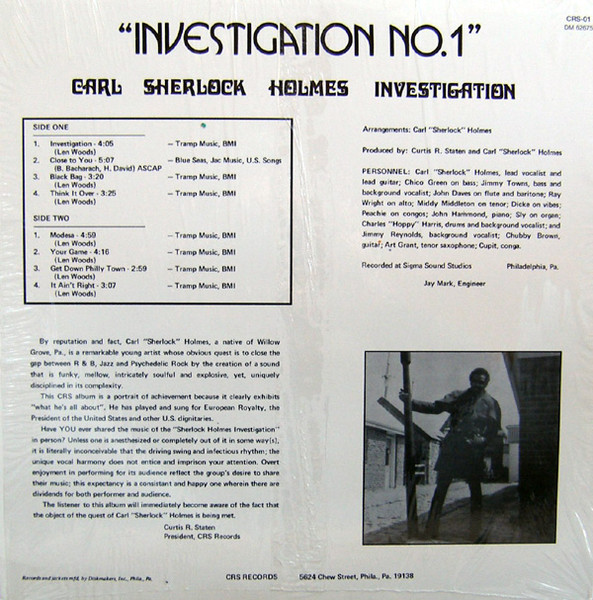
The new band–dubbed Carl “Sherlock” Holmes Investigation–released only one album, 1974’s Investigation No.1. The album is a rare, compelling artifact of early 70s experimentalism that merges raw funk energy with spiritual jazz and Afrocentric consciousness.
Holmes’ guitar work is incredible, characterized by fast, jazzy riffing that feels dirtier and more uninhibited than his polished contemporaries, yet he skillfully retreats into the pocket to deliver sweetly soulful vocals on mellow tracks like “Think It Over.” The record serves as a sophisticated vehicle for both social expression and musical exploration, masterfully pivoting from the hard-driving funk of “Black Bag” and the high-speed groove of “Get Down Philly Town” to the Latin-infused jamming of “Modesa” and the heady, exploratory improvisations that defined the era.
Other musicians on the album included Ray Wright (alto sax), Jimmy Reynolds (background vocals), Chico Green (bass), Jimmy Towns (bass, backing vocals), Peachie (congas), Robert Cupit (congas), Charles “Hoppy” Harris (drums), John Daves (flute, baritone sax), Chubby Brown (guitar), John Hammond (piano), Art Grant (tenor sax), Middy Middleton (tenor sax).
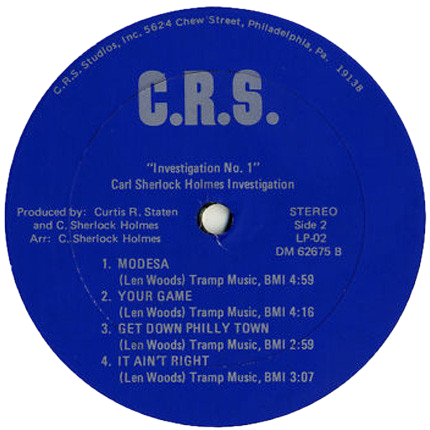
CH: I wanted to make my mark as a writer and producer. I self-financed the sessions at Sigma Sound and released it through Curtis Staten’s CRS label. The title track, “Investigation,” was a nod to what people associated with the Commanders, while “Get Down Philly Town” was a tribute to my home.
We struggled with airplay because I refused to participate in the “payola” system that was dominant at the time.
We got play in New York and Chicago, but the album stayed relatively underground.
It is a classic story of “too ahead of its time.” While the album barely made a ripple upon its initial release, it has since undergone a massive critical resurrection.
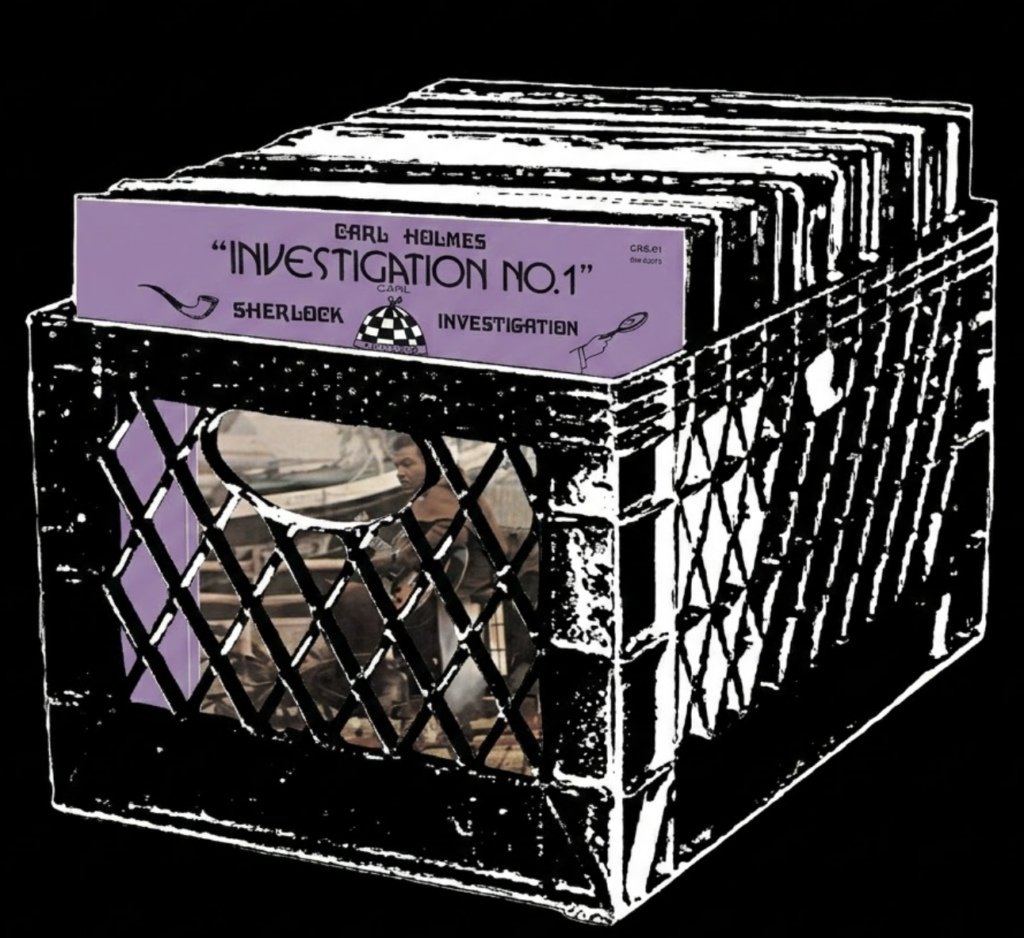
The record eventually found its true audience among crate diggers and beatmakers, who rediscovered its unique textures and sampled it. This cult status has turned the physical artifact into a holy grail for collectors; if you’re looking for an original pressing today, expect to pay a premium. Rare copies in good condition now frequently fetch upwards of $1,200 on the secondary market.
SV: Carl, when did you realize that this record had become such a collector’s item?
CH: I only realized about five years ago—thanks to my niece, who is a DJ.
SV: It’s been sampled a lot [by artists including Beck and Cypress Hill], and often bootlegged and reissued–and I’m assuming very little of it was done on the up and up…
CH: I’m not getting any of [the money from] it! So I’m a bit pissed off about it, sure. I understand, though.
Holmes continued to play in the Philly area for several years, and is now retired.
SV: Carl, thanks so much for sharing your story with me. It’s a beloved record and I’m glad to talk with you.
CH: : Well, I certainly appreciate that. Thank you.
Leave a Reply
You must be logged in to post a comment.