
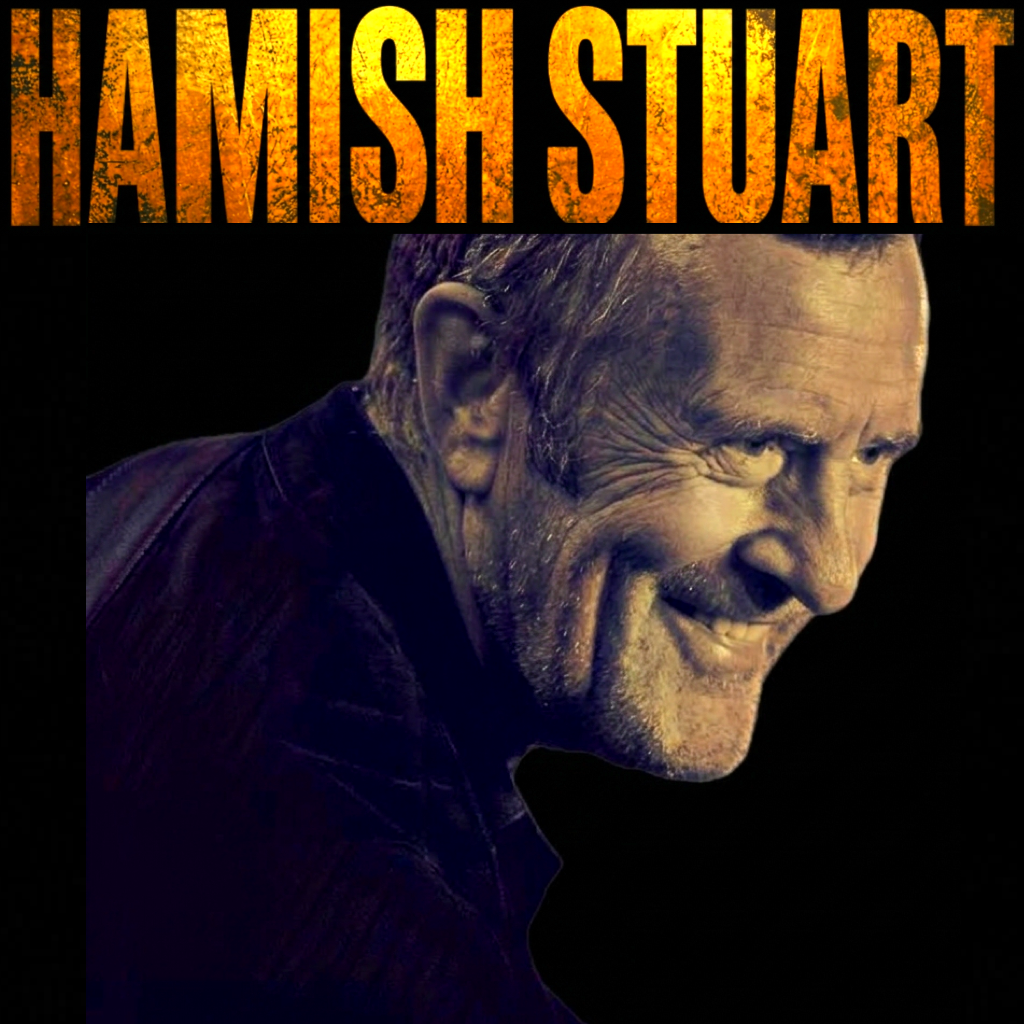
Average White Band co-founder Hamish Stuart breaks down five decades of groove, reflecting on the band’s tight ensemble chemistry, the art of percussive rhythm guitar, and what it was like collaborating with icons like Paul McCartney, Aretha Franklin, and Chaka Khan.
___
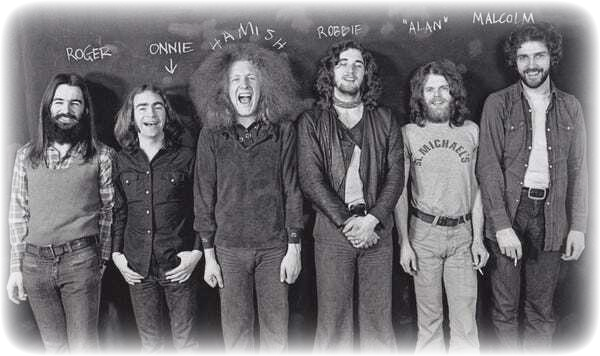
Hamish Stuart was born on October 8, 1949, in Glasgow, Scotland, and grew up in the suburb of Muirend. He attended Queen’s Park Secondary School, leaving in 1964 to form his first professional band, Dream Police, as lead guitarist. After the group released three singles on Decca Records, Stuart joined the Average White Band (AWB) in the summer of 1972, replacing original guitarist Michael Rosen.
___
Sounds Visual: You joined Average White Band in 1972 when the core was already sort of forming in London. What was it about that particular combination of players and the music you all wanted to make that made you jump in so completely?
Hamish Stuart: It was just a perfect storm. The one element I didn’t really know was the horn players, Molly and Roger — I’d never worked in a band with horns before. But I knew Alan, the bass player and singer, I’d worked with him before. And Onnie, the other guitar player, I’d worked with too — when I was starting out, he was in the first semi-pro band I was in, when I was about 16. So I knew all of them, and I knew the drummer, Robbie McIntosh. I think he was really the key to it all. I’d met him when he was about 16 and thought, “Whoa, who’s this guy?” He was great, and then two years later he went off to play with a band, came back fully formed, and I thought, “I want to play with this guy.” So it was an easy decision to make.
SV: You’ve also described that first year as a steep learning curve, with very different musical backgrounds colliding. How did that chemistry actually develop, and what do you think you learned in that first year that you hadn’t learned in the previous five?
HS: I’d been used to playing in a four-piece band — guitar, bass, drums, and keys — so you had to cover a lot of ground, there wasn’t much space. All of a sudden with a six-piece band with two horns and two guitars, the whole dynamic was different, and it took me a while to get it. The first time I really noticed it was during rehearsal, when Robbie the drummer said to me, “Don’t play there.”
That was the first time in my life anybody had ever told me not to play, and I took it on board because I respected Robbie, and of course he was right. Learning the rhythm section was much more complex in some ways but much simpler in others — he played less, but it was about how the constituent parts fit together. That was a great, exciting learning curve. I also learned that my knowledge of jazz was pretty basic, basically nonexistent. Molly Duncan and Roger Ball exposed me to jazz that was simple enough for me to get into, and jazz influenced by people like Les McCann and Eddie Harris — that was a great way in for me.
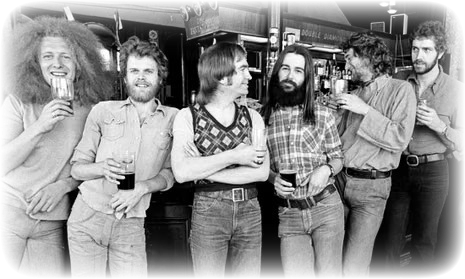
SV: Since you guys came from different backgrounds, was there something everyone in the band understood without necessarily ever having to articulate it?
HS: What we all loved — we understood James Brown and the JBs, that shared love for all that music, Marvin Gaye, Donny Hathaway, Aretha Franklin, and all the rhythm sections we were trying to emulate. And it wasn’t just funk, it was sweet soul too, stylistically, and what was coming out of Philadelphia at that time.
SV: You’ve said the great thing about Average White Band was that everyone could follow an idea if somebody went off after something they felt. Was there a moment when you realized listening to each other was actually more important than anyone’s individual musicianship?
HS: I think that was evident from the get-go, though I was in awe of Robbie’s playing especially — it was inspiring. But I think it was always about the sum of the parts. Technically, some of the guys in the band were more proficient than me — I was basically self-taught, I did some piano as a kid but didn’t retain any of the theory, so it was really about feel and ear for me. Roger Ball wrote great horn charts for us on all the albums. It was about the sum of the parts.
SV: A lot of rhythm guitarists focus on complex chord voicings, but your style relies heavily on space and percussive muting. Who taught you what to leave out?
HS: That came initially from Robbie, very early in Average White Band, but it also became evident as I listened more to records — guys like David T. Walker, just playing beautiful little chords on the top three strings. Coming from a four-piece group, I’d been playing a lot of barre chords because there was a lot of sonic space to fill. But with the White Band it was different — I learned I could play much less, fewer strings, chordally, and that freed me up and taught me a lot.
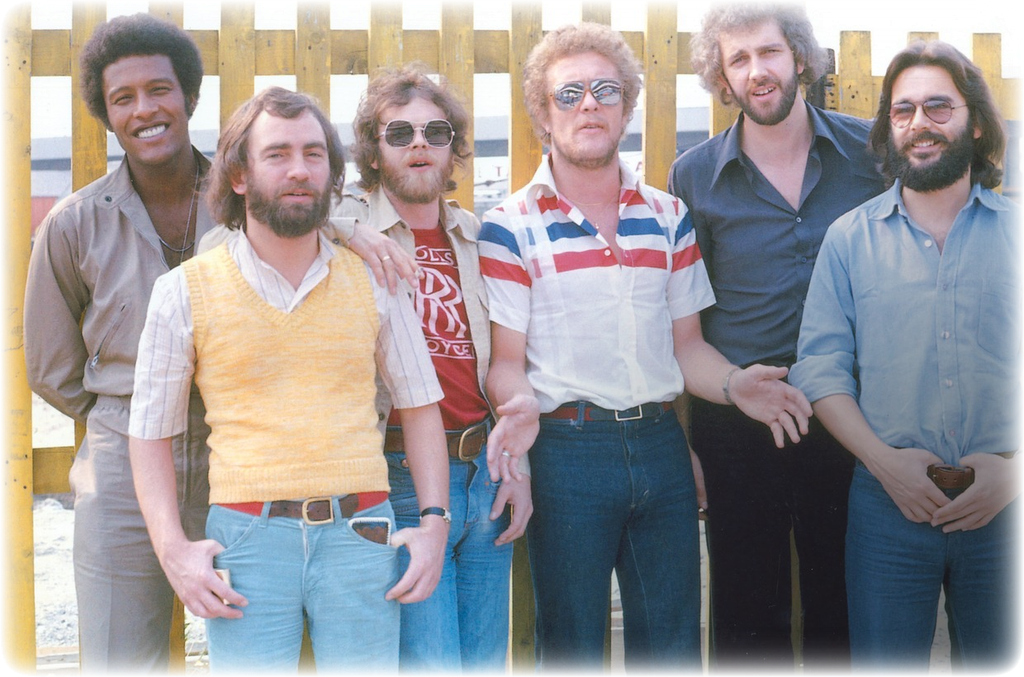
SV: You and Alan swapped between bass and guitar depending on who sang lead. How did switching instruments change your perspective on sitting in the pocket with the drums?
HS: I’ve always felt really close to drummers — I’m kind of a frustrated drummer myself, never tried to really pick it up, but I wish I had. It’s about that foundation of playing with the drummer. There was a track called “T.L.C.” on our very first album — I just happened to pick up the bass while we were jamming, and I started playing that little riff on the tune, heavily influenced by Sly, I have to say. That session taught me a lot about pocket and locking up with the drummer, and it’s my favorite place to be. My favorite instrument to play is actually bass, and with Ringo I play it about 90% of the show — I just try to lock up with the drummer.
SV: You often played rhythm with a pick on a short-scale Fender Mustang. How did that specific gear choice shape the percussive attack of songs like “Schoolboy Crush,” for example?
HS: When I started playing bass, I played with a pick — over the years I learned to play with my fingers, thumb and finger, but starting out I was coming from a guitar player’s perspective, so I played bass kind of like a guitar. It had a bit of a topier sound than I have now — I moved to flatwound strings a long time ago and loved that, went for a deeper tone. But in those early things, it was really just about finding what to play with the drums.
SV: Being Scottish or European musicians making deeply American R&B and funk — do you think being outsiders actually allowed you to hear that music differently from musicians who’d grown up inside the tradition?
HS: I don’t know — maybe we listened to it more intently, whereas for American musicians it was just part of their culture, they grew up with it and grew up playing it, it’s almost in the genes. With us, when I started playing, I was really playing Beatles songs and Chuck Berry songs, that’s how I learned at the beginning.
But then the whole Motown and Stax wave, and Liberty Records out of New Orleans, and stuff coming out of Chicago, the Impressions and things like that — that was all the music I was exposed to when I started playing clubs in my hometown, Glasgow. All the bands played those songs, and James Brown of course. But I don’t think I completely got it until later — it was learning to play those songs and slowly the learning took you to a deeper place, and that’s really where AWB came in. We were fully immersed then, and we were all absolutely on the same page about what we wanted to do, and the music resulted from that.
SV: Do you think it’s often harder to play something simple convincingly than something complex?
HS: Yes, absolutely, and I think “Schoolboy Crush” is the classic example, because the parts are so simple — the rhythm guitar is just bedding, and it’s about economy of playing. That was actually the hardest song for us to cut. We got the arrangement together at the house we were staying in out in the Hamptons, then got into the studio at Atlantic and started working on it — and it was also about learning how to work in the studio. We should have bagged it after four takes, but we did 32 takes, I remember. We got close around take three or four, but it just wasn’t quite right — mistakes here and there. Eventually, about two in the morning, we bagged it and went home. We came back the next morning, everybody set up, and someone said, “Let’s just run it” — and luckily Gene Paul hit record, because we got it on the run-through. But we had to go through all that to get to what I think is the simplest groove we ever recorded.
SV: I have to ask a couple questions about “Pick Up the Pieces,” for obvious reasons — it started as a jam and became the song that changed everything. Can you walk me through how the groove came together, how Roger’s melody appeared, and what it felt like watching it take on a life of its own, especially the way it was introduced to Black radio without photos of the band?
HS: It’s a strange, long story how it became a hit and how long a life it’s had. It started off — we had this house in North Hollywood with blankets over the windows that the PR lady at MCA, the label before we went to Atlantic, lent us. We lived there, set up the living room to play in, and we just jammed and jammed — that one-chord groove for “Pick Up the Pieces,” we must have played it all afternoon into the evening, just feeling out where it was going and getting the groove right.
Roger Ball took away a cassette of that jam with him that night and came back with the horn line the next day. We worked in the two chord changes — the B-flat — and it got a shape to it. It had a different feel originally — the version we first recorded is out on an album called “The Clover Sessions,” and it’s much more of an on-beat kind of feel, more like a JBs thing, really pronounced.
Above: A 2004 UK reissue of the album features a bonus CD of 1973 demo recordings from L.A.’s Clover Studios, made prior to the band signing with Atlantic. This material was eventually released on its own as How Sweet Can You Get?
We’d been playing it live, and by the time we got to Atlantic a few months later and into the studio, Robbie and Alan had started to shift the thing around — my part didn’t really change, but the groove got so much funkier. By the time we finally cut it at Atlantic, we listened to the playback afterward and everybody was dancing around the control room — it was like an instant party, and we knew we’d done something, though we didn’t quite know what.
SV: It’s interesting that the signature song of the band is an instrumental, even though you’re a great singer. Has the enormous life of that song ever changed the way you think about what a song actually needs in order to communicate?
HS: Not really. It’s just very unusual for an instrumental to be a hit — there weren’t many, something like “Take Five” would come out of the blue in the late ’50s or early ’60s, but instrumental hits were few and far between. So it was a real surprise it got as big as it did. We were lucky in that American Bandstand used it a lot during their dance-contest segment, which was a big deal, and all the couples chose it to dance to — that was massive TV exposure that helped move it along. It just took on a life of its own.
SV: I can’t even keep track of the times I’ve heard it as a needle-drop in a movie, TV show, or commercial….
HS: When we cut it, we thought, “This is good, we’ve done something really good here” — we loved the album, we thought song for song it was solid, but nobody expected that. I remember after it became a hit, going out on the road, and one Saturday morning we were in Cincinnati or somewhere, on TV, and there was a college football game with a hundred-piece marching band playing a piece of it. That’s the moment I realized something more was happening with it.
SV: Was there ever a song in the AWB catalog that never became a hit single, but you really felt represented the absolute peak of the band’s musicality? Or was that always “Pick Up the Pieces”?
HS: I’ve never really thought about that — things that weren’t hits, but were huge in performance, like a song called “If I Ever Lose This Heaven,” which was on a Wednesday record [note: When Stuart refers to it as a “Wednesday record,” he is referencing an informal UK/musician shorthand from the 1970s. In the vintage studio world, session musicians and touring bands referred to mid-week studio dates or B-side/secondary album tracking sessions as “Wednesday sessions” or “Wednesday records” — meaning songs that weren’t originally tracked or scheduled to be the main commercial “A-side” single push on a record.]— that became as big for audiences in our live shows as “Pick Up the Pieces” or “Schoolboy Crush.” It was the live thing. Neither of those were ever singles in my language, but they were great parts of the repertoire.
SV: Was there a moment beyond the making of “Pick Up the Pieces” that stands out most vividly — something that crystallized for you in memory?
HS: A couple things — our first two US shows were in ’73, we opened for B.B. King, played those ballrooms in the Midwest, promoted by Alex Cooley I think — Columbus, Cleveland, places like that. And then the next show was in DC, at the Kennedy Center. This was the first time we’d played there, and we had 45 minutes before B.B. came on. The audiences in the Midwest had been very mixed, but in DC it was almost entirely a Black audience, and we went down so well — we were shocked.
We came off stage elated, we were getting through to the audience, and it felt like a huge validation — what we were doing, they accepted it, just like that. That was a great moment. And then later, we played DC again, probably ’76 or ’77 — by that time we were headlining, playing a coliseum of 20,000 people, and we got swamped on the way in, the limo trying to get through the crowd. We eventually got out of the car and were high-fiving people all over the place, the windows down — we were getting pushed along by this tide. It was a wonderful moment.
SV: You mentioned Atlantic a few times — I want to ask specifically about the label. Arif Mardin has come up several times with past guests I’ve spoken to, always spoken of very highly for his ability to understand what an artist needed rather than impose his own aesthetic. What do you think he heard in you guys that maybe the band itself couldn’t hear yet?
HS: I don’t know — he just kind of polished things a little. He was wonderful in that he didn’t really interfere as such, he’d say, “I think if you do that, that would be good.” It wasn’t about imposing his will — he just helped steer us. It was like having a fabulous uncle who understood what you were trying to do and enabled you to get there. For me and Alan, as the two vocalists in the band, knowing the caliber of singers he’d worked with, it was just, “Okay, I’m going to go out there and sing,” and we worked on the vocals together, and it was a joy. He was really fantastic. I was talking to Steve Ferrone recently — we always talk about how much we miss Arif. He was a great presence in our lives, and taught us all a lot.
SV: They just don’t make record guys like that anymore.
HS: No, he was one of the last of those great ones — Tommy LiPuma, Quincy, all those guys.
SV: Let me ask you about another of my favorite AWB tracks–“Person to Person.” That track is so funky. Any memories of making that one?
HS: I remember getting the idea — I remember exactly where I was, in Rotterdam, on our first European tour, after we’d been in America working on the record. Communications by telephone were always difficult back then, through an operator and all that. I’d been thinking about it, and thought “Person to Person” — that’s the title. I couldn’t come up with lyrics, so Alan and I were sitting in the hotel bar, I told him about it, and he went away and wrote a lyric. When we went to cut it, everybody felt there were too many words — again, that idea of making space. There was no melody at that point. I remember Alan and I sitting in the back lounge of Clover Studios in Hollywood, trimming the lyrics, and then saying, “Okay, let’s do it,” and the melody just came off the top of my head — I think we had the chorus melody, but the verse melody just came out with the first phrase, and that was it.
SV: Let me ask you one other thing about the funk inherent in so much of the music — how did you know, or how do you know, when a funk groove is at the right tempo versus being slightly too fast? To me, one of the hallmarks of Average White Band’s rhythm tracks is that they were unhurried but really tight. Is there a way you know when a groove is just sitting right?
HS: We played around with that and just tried to find the right tempo. If we were in the studio doing something like “Person to Person,” we’d play it a bit, then just say okay, let’s hit record, but we’d often establish the tempo before we started the take. We had to do that a few times, but I think that’s the way to find the right tempo and then just go for it.
SV: After Robbie died, did you guys consciously try to preserve something of his musical personality, or did you eventually realize the only way forward was to let the band become something different?
HS: I think it was already something different, because Robbie was such a part of the music we’d made up to that point — he was there. But we needed somebody to fill his shoes — well, not fill his shoes, but work in a similar way. Steve Ferrone was a big personality like Robbie. When he came in, he made himself felt in the playing and writing immediately — “Schoolboy Crush” is his groove. He started playing that beat one night after dinner, and slowly everybody made their way into the room, I got a little bit of the bass thing going, and people just started playing parts that fell into place — that was Steve. He also spent a lot of time on “Cut the Cake.”
What he brought was a strong point of view and strong musicality, and the band did change, but not for the worse, it was just different. It did take a while to solidify, though — I think it took us into ’76, and then ’76 through ’78 we were firing on all cylinders.
SV: Hip-hop producers really began to sample the band in the late ’80s and ’90s. Do you remember the first time you realized that was happening? What was your initial reaction, and does it still feel strange that this music is still being sampled?
HS: I guess the fact that it was being sampled by another generation said a lot about the quality — there are people who aren’t going to pick up some hunk of junk and use it as a basis for what they’re making. It was a strange time — for a while in the early ’90s I was getting a cassette about once a week. I remember a friend calling me from his car and saying, “Hey man, you’re on the radio,” and putting the phone up to the radio, and it was the drum break from “Person to Person” — [it was] the Big Daddy Kane track, four bars looped.
Above: Big Daddy Kane’s sample of “Person to Person” on his track “Mr. Pitiful” (1990)
We didn’t know he’d done it, so it was, “Okay, get him on the phone quick.” That was a great loop, though there wasn’t much else to it besides the drum loop on that particular cut. There’s also somebody who sampled “Schoolboy Crush” — that one’s been sampled by a lot of people. This one particular person sent me the finished record, and I couldn’t find “Schoolboy Crush” in it — maybe it was on a remix, sometimes they do that, and it just got buried somewhere in there. But it was very interesting how it all happened.
SV: You’ve worked with so many extraordinary musicians — Aretha, Chaka Khan, Paul, Ringo. What do you think separates a musician who’s a great player from one who becomes a great collaborator?
HS: That’s a tricky one. Collaboration and songwriting are different — with songwriting, it’s just got to be right, I’ve collaborated with some people where it hasn’t worked, and some people where it’s a great relationship. My partnership with Ned Doheny — we’ve only written about four things, but they’ve all been really solid, and we were friends first, starting to write songs while hanging out. As far as playing collaboration goes, it’s about giving yourself to the music, I think. I’ve enjoyed immensely working with all the people you mentioned.
SV: Do you think groove is something you can teach, or do you think you can only create the conditions in which someone might discover it?
HS: I think the latter. You have to be able to feel it, have an affinity for it to be able to play it really well. I remember being in a club in London playing with a four-piece band back around ’69 or ’70, and the DJ wanted to take a break, so he put on James Brown, “Live at the Apollo,” volume — “Cold Sweat” — and there was just this endless groove, the guitar playing and the bass. I heard that and thought, I want to be able to play like that. That was a formative idea, three or four years before Average White Band.
It’s funny — when we did the big-band version of “Pick Up the Pieces” at Montreux in ’77 with Mike and Randy and Richard Tee and a host of others, a 20-piece big band, it was fabulous, Arif’s arrangement. I remember I played basically just an F9 or a sharp 9 for most of that 20 minutes, and I was just like, yeah, this is good.
SV: Eventually you moved to the US and connected with Jerry Wexler and Atlantic — tell me a bit about that period, the decision, the early sessions, and what it was like finding yourselves in the same studios as your heroes.
HS: It happened very, very quickly. We’d delivered our second album to MCA, and they’d basically said, “I don’t know what I’m going to do with this, take your tapes and you’re free to go.” So we found out where Jerry Wexler was staying and got access to him — we played him the album, which we’d self-produced. He jumped on it, and three weeks later we were at Criteria in Miami. They took us there first, because Tommy Dowd, Arif, and Wexler were all working with Aretha at Criteria at that time.
It was a jaw-dropping moment for all concerned — pretty funny, actually, get your jaws off the floor, boys. We walked into the control room at Criteria — Jerry was working with Aretha at the piano, Tommy Dowd was working with the rhythm section, and Arif I think was working with the backing vocalists — everybody had their separate tasks. And the band was Purdie, Chuck Rainey, Cornell Dupree, Hugh McCracken, Richard Tee — nobody could speak. Everybody in the room, you know — wow.
Then the ice broke, and over the next couple days we worked — after that session finished we went back to the hotel, came in the next day, and it was just us with Tommy, Jerry Wexler, and Arif, basically deciding who was going to produce us. That was the exercise, and they picked Arif. We were there maybe less than a week, then we flew up to New York, they put us in the Mayflower Hotel on Central Park West, just around the corner from the studio at 1841 Broadway. They began almost immediately, we were in there with Arif — it was very quick, but such an exciting time. And working in Atlantic in that room with Gene Paul and Arif was just magical.
SV: Let me ask you about Chaka Khan for a minute. How, when working as a writer and producer for someone like Chaka, did you tailor your songwriting to fit a vocal force as powerful as hers? Did her voice force you to rethink rhythm at all?
HS: I didn’t do anything to change it, if that’s what you mean. Ned Doheny and I wrote “What Cha’ Gonna Do for Me,” and everybody loved it. Chaka actually signed onto our demo of it a year before we cut it properly — we were at the Sunset Marquis working with David Foster on our next album when I’d just written the song, and I wanted to play on the track, not sing it, so Chaka sang on the original track before we put our own vocals on it. It hung around in the air — the AWB version wasn’t that great, we didn’t really get our heads around it before we cut it. By the following year, when we went to Montreux to make Chaka’s third album, the song came up immediately through Arif and Jack Nelson, Chaka’s manager, and her version — wow, that track is born. The rhythm section is so cool, Anthony and Steve just locked up, David Williams and myself on guitars — it was a dream for me to play with David because he’s just so funky. The track was burning.
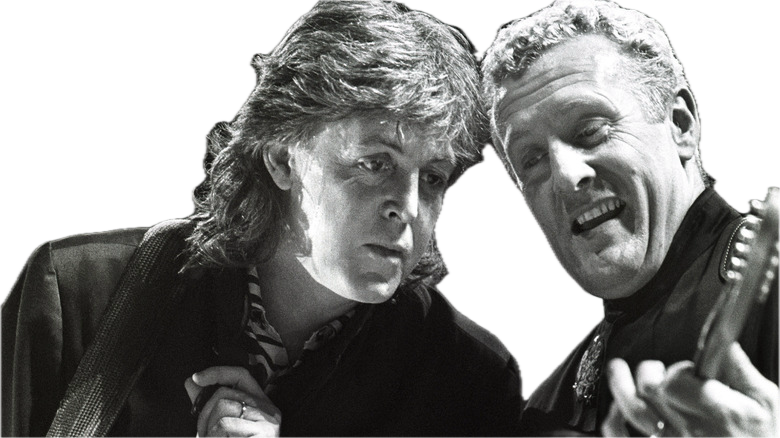
SV: Let me ask a couple things about Sir Paul. I’d love a quick summation of that experience, but I also wanted to ask about his bass lines, which are famously melodic but also kind of contrapuntal. As a bass player yourself, did playing bass alongside Paul teach you anything new about not playing, and about space?
HS: It kind of took me back. When I was playing bass with AWB, it was very much our own music, and I’d never really played bass for anybody outside of that — I played bass on maybe the first and second Chaka albums, but that was basically similar music. I knew those Beatles tunes so well, and I think the parts on the recordings dictate what you have to play — if we’re playing “Can’t Buy Me Love,” for instance, we’d play the guitar solo as it was recorded, because it’s part of the composition and what people want to hear.
That’s not so crucial on bass, though, so I had plenty of latitude to play what I wanted. Playing “The Long and Winding Road,” for instance, gave me a lot of space, because it’s such a musical tune, the chords and melody are great — more freedom on that one than any other to play. But things like “Sgt. Pepper,” I was trying to play what Paul played, with a little of my own attitude.
SV: How did you guys initially connect, how did that call happen?
HS: I got a call from his manager, Richard Ogden, who I knew — I’d worked with him around ’76, ’77 when he was a PR guy and did PR for an AWB tour in the UK and did a great job. By the time he called, late ’87, he just said, “Look, I’m managing Paul McCartney now, he’s putting a band together.” I was having breakfast in LA when the call came in — I was finishing off a new album, and he said Paul was working on one too, and would I want to come play on it. It was a pleasant surprise.
SV: When you’re hired as a session musician or sideman, how quickly do you try to understand the personality of the artist before deciding what to play? How do you contribute something identifiable without ever stepping on the identity of the artist you’re serving?
HS: I really don’t know — it’s pretty organic, I just try to bring something that I feel would fit. With the first thing we cut on “Flowers in the Dirt,” for instance, my brief was — him and Elvis had done the original demo at kind of a breakneck, punky pace, and we thought it would work better slower. I was just trying to play a kind of Memphis-y, chugging guitar part on it, which worked.
So it’s about whatever fits, trying to find a way into whatever’s going on. I’ve never done a lot of sessions — I did three of Chaka’s albums and a few things for Arif, but I don’t get called as a session guy that often, I wish I got called more. I did during a period in New York, late ’70s into early ’80s, doing a lot of vocal sessions — I got to sing with some great singers, Patti Austin, people like that, backing vocals with Luther on some of Chaka’s stuff. I did more of that than guitar or bass sessions, actually. So it’s a funny one, whatever project I get involved in, I just try to do the right thing, whatever fits with the music.
SV: Since you just mentioned “Flowers in the Dirt” — you witnessed the dynamic between Paul and Elvis Costello. What was it like being in the room between two very different lyrical and musical styles?
HS: It was interesting at the start. I think they were going to co-produce the songs they’d written together, and they had very differing opinions on instrumentation, for instance. Paul was very open to using everything available, but Elvis wanted to keep it, as he called it, “keg instruments” — straight, no synthesizers, very rootsy — whereas Paul was open to anything. As the record progressed, it’s amazing looking back on it how well-crafted it is, which really comes down to Paul as producer — he’s a constant stream of ideas, and very quick at coming up with things that are really solid.
SV: I really like that album, I think it’s kind of underrated. As a father, I can’t hear “Put It There” without getting choked up— it’s such an earnest emotion he captured.
HS: Yeah, that’s what his dad used to say to him, and he wanted to pass that on. There’s a lot of great stuff on there. Talking about technology — “Motor of Love” is almost all technology apart from the vocals. The keyboard guy from the band Cars came in with everything, basically all synthesizers on that song, and it really works as kind of 21st-century gospel. There’s so much depth of music on that record — Greg Hawkes, that’s who the keyboard player was, it was driving me nuts I couldn’t remember his name.
SV: Looking across 50-plus years of music-making, what do you think is the single most important rule of rhythm that every young musician should know?
HS: I think learning to play with other people. There’s loads of videos of kids who can shred like crazy by themselves, but for me, from the very beginning it was ensemble playing that turned me on, and it’s still the same — I get the biggest kick out of just being in the rhythm section.
That’s why I love the Ringo gig so much, because I’m not singing all the time, I’m singing background and my own songs, but mainly I’m locking up with the drums and guitars, and that’s the biggest kick for me. Learning how to play with other people and how to give everybody space is the most important thing to learn — it’s not about chops. It’s always about serving the song. Complimenting the melody, not getting in the way.

SV: Hamish, the word “funk” used to mean something very specific musically– but the funk that you and I are talking about is a singular sort of sound, and now I see bands profile themselves as a “funk band” and there’s zero funk, zero feeling, in it. What is something about funk that you think musicians still fundamentally misunderstand?
HS: I think it’s about all the things we’ve already talked about — listening and economy of playing. Like “Schoolboy Crush” we were talking about, Roger’s playing a clarinet, and it’s so funky. I see a lot of what people call “funk” that’s played at breakneck speed with an incredible amount of technique — taking the funk template but missing the point, it’s like, “Look how great my chops are.” It’s not about chops, it’s really simple, it works like a machine, like an engine, where the component parts play off each other and create the motion. Real funk, I don’t think you can help being moved physically by it.
SV: I read something where you criticized the homogenization of contemporary popular music, which I’m totally on board with. Is there something that gives you hope musicians will eventually push back against that pressure?
HS: I think it happens all the time, and everybody who really loves the music will push back and try to create — I don’t think that’s stopped. I think it’s more the mainstream where it’s happened, like when Simon Cowell was head of a record company here before his TV career — he turned pop music into the lowest common denominator, insisting on straight major-minor chords, taking the life and creativity out of it.
If somebody came along with a song like “What a Fool Believes,” he wouldn’t even be able to get it made — I look back at that song as probably the last time there was really complex pop music, lyrically, melodically, rhythmically, that song has everything. But that gets bled out now. I saw somebody say a few years back about something, “It’s too clever” — meaning it had a couple of extra bars in it or whatever, it just flowed naturally, and it wasn’t too clever at all. So Stevie Wonder was too clever? All those wonderful pop records with great chords and great melodies, “too clever,” apparently.
SV: I think it’s also disrespectful to the audience, for the industry to cheapen and dumb it down like that–insulting their intelligence. Looking across this entire journey, from shaping the early identity of Average White Band, through tragedy and reinvention, and playing with Paul and Aretha and Chaka — what has all these decades of music-making really taught you about what makes a great collaborator?
HS: I think listening, first and foremost, and there has to be some kind of mutual understanding — that’s really important, an understanding between the parties you’re collaborating with. I have my own band now, they’ve all been with me since the late ’90s, the rhythm section is the same, and it’s really about serving the song, serving as songwriters — we all know what that produces together.
When I think of collaboration, I think of songwriters like Holland-Dozier-Holland, and Rodgers and Hart, and the Gershwins, and people in the Brill Building — that whole world. It’s a hard one to pin down. You have to be kind of like-minded — my collaborations, like the ones with Ned Doheny, came out of friendship, and the songs that came out of that have been really substantial. It was just piles of us hanging out together, happening to both be musicians. Collaboration is about listening again — I loved singing with Paul, for instance, that was great, a real trip. There’s a two-voice thing on “I Wanna Be Your Man,” and we played off each other on that.
SV: Thanks so much for your time and the great music, Hamish!
HS: Thank you, that’s a real honor.
Leave a Reply
You must be logged in to post a comment.