
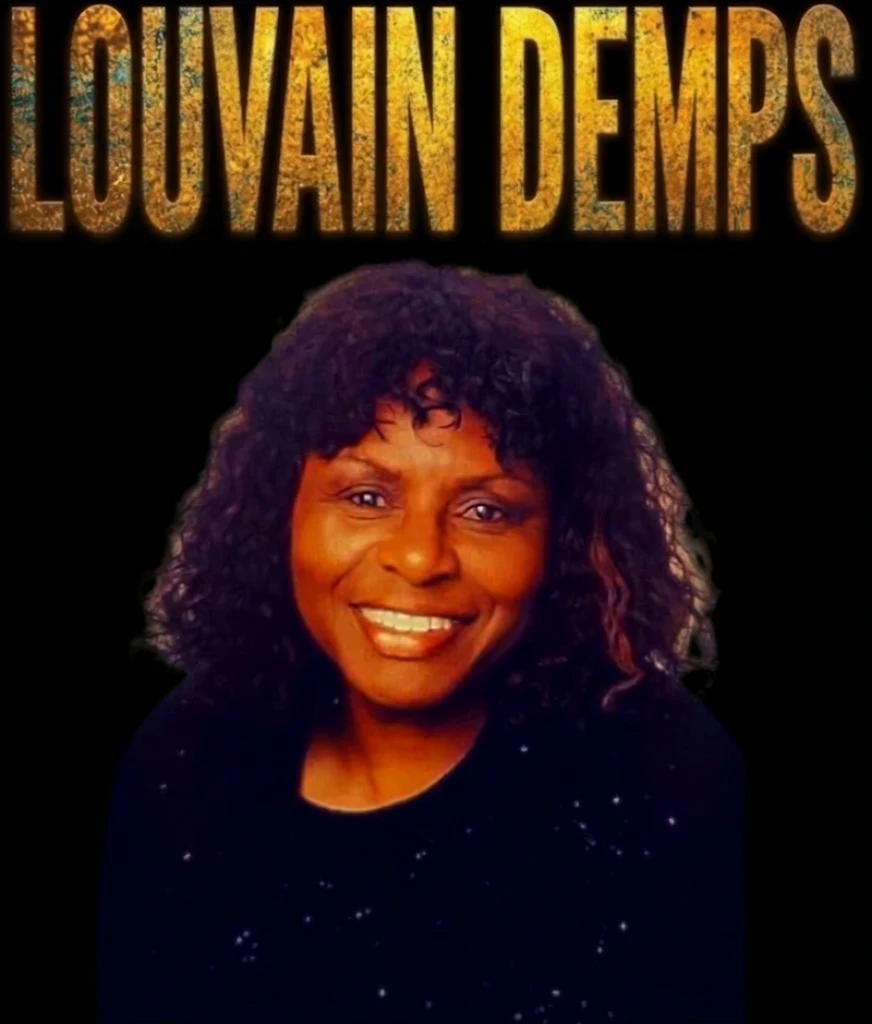
Original Andante vocalist Louvain Demps reflects on the hidden history of Motown, sharing behind-the-scenes stories of recording hits with Marvin Gaye and The Supremes, navigating uncredited vocals, and writing her memoir, “One Step Away.”
___
If you know the sound of Motown, you know the voice of Louvain Demps. As one-third of The Andantes—alongside Marlene Barrow and Jackie Hicks—Demps was the secret ingredient behind almost every major Motown chart-topper of the 1960s and early 1970s, from The Supremes’ “Stop! In the Name of Love” to The Four Tops’ “Reach Out I’ll Be There.”
Her remarkable career has earned her induction into both the National Rhythm & Blues Hall of Fame and the Douglas County Hall of Fame, as well as spotlights in the PBS special Motown: The Early Years and AARP’s Emmy-winning short “The Andantes: Motown’s Secret Blend.” A proud Metro Atlanta resident since 1973, Demps continues to share her gift around the globe as a sought-after speaker and music minister with Gospel Through Music (GTM) Ministries.
___
Beginning in 1962, the Andantes served as prolific background vocalists on Motown singles. They were featured most prominently on all of the Four Tops’ hits produced by Holland–Dozier–Holland, including “Baby I Need Your Loving,” “I Can’t Help Myself (Sugar Pie Honey Bunch),” and “Reach Out I’ll Be There.” Motown also brought in the Andantes to supplement or replace the backing vocals for several of its premier girl groups—starting with the Marvelettes in 1965 and Martha & the Vandellas in 1966. Between 1968 and 1969, they appeared on a significant portion of the Supremes’ recordings, even though Mary Wilson and Cindy Birdsong remained active in the studio.
Alongside their session work, the group released a small number of singles. In 1963, they teamed up with the Marvelettes to release “Too Hurt to Cry, Too Much in Love to Say Goodbye” b/w “Come on Home” under the name the Darnells. The following year, they issued their own single, “(Like A) Nightmare” b/w “If You Were Mine,” though lead vocals on both tracks were actually sung by future Marvelette Ann Bogan rather than a member of the Andantes.
The Andantes occasionally lent their voices to non-Motown productions as well, most notably Jackie Wilson’s “(Your Love Keeps Lifting Me) Higher and Higher,” on which Pat Lewis filled in for Louvain Demps. Later, in the late 1980s and early 1990s, the group signed with Motorcity Records. With Lewis now an official full-time member, they recorded new material of their own while once again providing backing vocals for fellow Motown alumni.
In recognition of their contributions to music, the Andantes earned numerous accolades and were inducted into the Rhythm and Blues Music Hall of Fame in August 2014. Founding member Marlene Barrow passed away on February 23, 2015, at age 73, and Pat Lewis passed away on September 2, 2024, at age 76.
___
Sounds Visual: Do you remember your first session with Marlene and Jackie, and how quickly the band clicked?
Louvain Demps: I don’t quite remember the first thing that we did together, but whatever it was, I was kind of coming in as a substitute for the girl that they had. I think she had gotten married and her husband didn’t really want her to sing anymore.
It was a good session because, by them never hearing about me and me never hearing about them, we clicked right away.
SV: And was “Money” your first Motown recording?
LD: “Money (That’s What I Want)” was my first recording, but it was not with Jackie and Marlene. It was Raynoma and Berry’s project, which they named the group the Rayber Voices—a collection of their names. And that was the first one that I sang on.
SV: What was it like walking in that first day for a track like “Money”?
LD: It was exciting for me. I still get excited every time I think about it, because it was something that I wanted to do. I wanted to sing. Kind of like a dream come true.
Rhoda Collins was a friend of Motown backing vocalist Louvain Demps (of The Andantes) who wrote a song that helped bring Demps to Motown Records around 1959.
SV: What do you remember about Rhoda Collins and your audition with Berry Gordy?
LD: Rhoda was my friend. We lived in Detroit—we lived around the corner from each other. Rhoda was from a big family, and because the family was so big, we exchanged lunches. She always carried tuna, and I loved cheese and she loved it too, so we traded lunches all the time.
Rhoda left home kind of early and I didn’t see her for quite a while. After I had gotten married, I was walking down the street and I saw this girl who looked so familiar. It was my friend Rhoda. We just saw each other and it was like we’d never been apart. We started going back and forth and having a good time together.
She told me that she was writing poetry, which I never knew. And she told me about this company that was advertising on the radio about people that wanted to have their poems recorded. Rhoda wanted to do it, but in order to have it recorded, you had to pay $100, which we didn’t have.
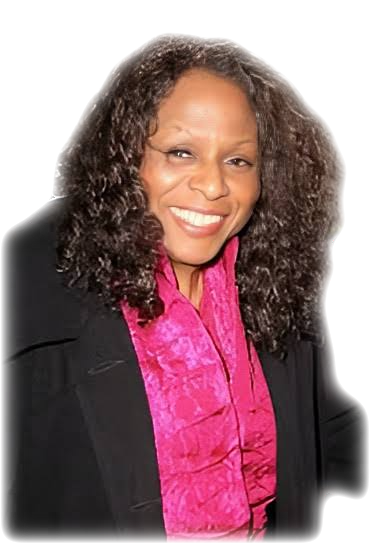
My husband and I got the money and worked out a little thing with our friends—that he would pay them with groceries from the store that he worked at while they babysat. So that was the way that I got over to Motown before it was Motown. Just kind of auditioning her song for her because Rhoda couldn’t sing, and she asked me to go and do that.
It turned out more than expected. The song actually didn’t do that great, but it got me into Motown because of my voice. So it was a good time for me, but not for the song.
SV: How did you, Jackie, and Marlene work out the mic positions and blend without any formal instruction?
LD: You had two girls with good voices, and then you had me, who was already there at Motown. It just happened to be a blessing. They needed a girl and, right off the bat, we just peaked it off. It was a combination of three good voices.
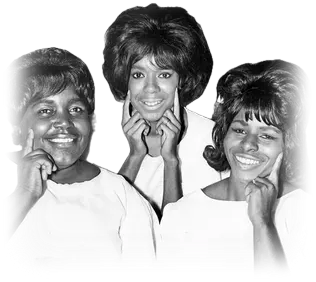
Above: The Andantes in 1964. Left to right: Jackie Hicks, Marlene Barrow, and Louvain Demps.
SV: You’ve said that you close your eyes and picture the sound and the mood. What did you see when, for example, you sang “Stop! In the Name of Love”?
LD: With each song, you visualize something different. To me, it was kind of like a joy and a sad thing together. It’s kind of hard to explain.
SV: Lamont Dozier called you guys the cleanup girls. Can you describe a time where you were called in to rescue a track?
LD: There were several. Mostly the cleanup stuff was when people just couldn’t get it together. They had the name, they could say certain things, but when you get into the intricate stuff, it just wasn’t happening. So they’d call us in.
Sometimes we would be in the studio with whoever we were supposed to be singing behind. They would be on one mic and we would be on another, and they would turn theirs down and turn ours up in the mix. Sometimes they would leave it and sometimes they would just take it out—making it a pretty good product.
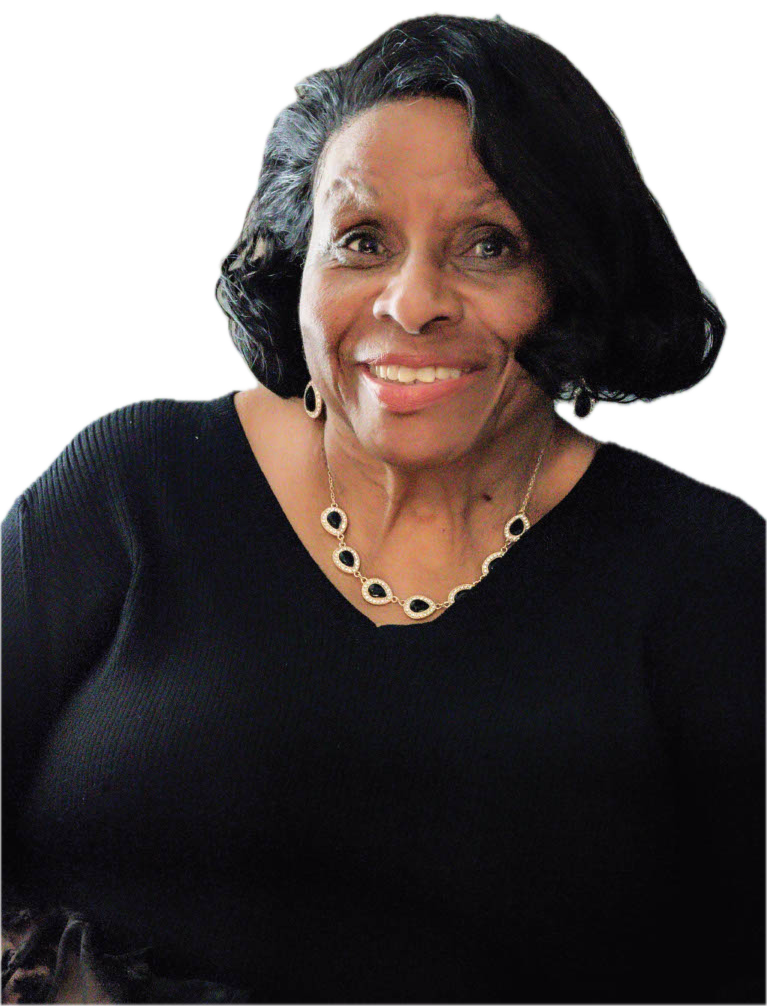
SV: Producers often had you build your vocal parts on the spot. How much freedom did they give you, and was there ever pushback?
LD: There wasn’t any, because every song has a feeling. We had the feeling and the voices, so it all worked out pretty good. And if there was anything that we thought didn’t feel right or sound right, we corrected ourselves.
SV: What was it like doing 45 takes with Berry Gordy, and did that ever pay off?
LD: Berry would be in the studio all the time and he would say, “Okay, take one,” and then it would add up—“take another one, take another one”—and we would end up with like 40 takes. And he said, “Oh yeah, the first one was better. It was better without him in the studio sometimes.
SV: On “Love Child,” your note stayed in after Jackie and Marlene forgot theirs. What exactly did Berry say to you?
LD: “Oh, girl, you sure can sing.” And I thought, “Oh, man,” coming from Berry. It was an honest mistake, but it made me feel pretty good and proud, and the girls seemed to be proud with me.
SV: You were the only singer requested for “Ain’t No Mountain High Enough.” Who asked for you, and what do you think Ashford and Simpson wanted from your voice?
LD: After the take was over, they came and said how they felt about my voice. That made me really proud and thankful, because I never thought that they thought anything really about the voice. It was exciting because of the great writers and great songsters themselves. That’s quite an honor.
SV: What was the mood at the “My Guy” session, and what was it like to get that surprise bonus from Smokey?
LD: That was a wonderful session. Smokey is another one that you had to be on point with. It was a joy. Musically it was real cute, and it just put you in the mood. It was a great session. And it was even greater when he gave us an award for it—and the award was some cash. That was good.
SV: You lived around the corner from Marvin. What did he need from you as a friend, especially after Tammi’s death?
LD: We were friends. We talked a lot, just the two of us. Every time I think about him being gone, I get sad.
One thing that happened was amazing to me and my son Michael—the youngest one. Marvin was performing here in Georgia. We went to the parking lot where they drive up to the Fox Theatre. Someone had told me that they were getting us in. Big fabrication. They weren’t. So we ended up in the parking lot with hundreds of other people.
When the car drove up, everybody was screaming. For some reason, out of all of those people in that crowd, he heard my voice. He came over to me and gave me a kiss.
It was supposed to be a graduation present for my son Michael. Because of the lie that was told, that’s how we ended up in the parking lot instead of backstage.
One thing happened too—when we moved around the corner from Marvin, the babysitter almost had to be revived when the doorbell rang and she opened the door and there he stood.
I miss him greatly. He was the best.
SV: What was it like singing “What’s Going On” in the dark? Was that Marvin’s idea?
LD: Definitely his idea—and the hardest song that we ever had to really work at. He was hearing these sounds that worked in his head and heart. We had to come out with what he wanted. Working with Marvin, he knew exactly what he wanted and you had to be exactly on point. It was a hard, beautiful, wonderful session.
When the report came out about everything—the segment, dark and everything—they left out the real guys that were all there, and they were the originals. They should have given them credit, but they gave credit to other people and left them out, which was sad because we worked so hard and they did too.
SV: You mentioned replaying “Save the Children” in the studio years later and it brought you to tears. What came back to you?
LD: When you really love someone, all of a sudden it’s like a movie that goes in your mind. And you just miss it. There were so many other girls that were crazy about him, because he had a warmth about him. It’s like when you meet people and it’s like you’ve known them for your whole life—that tender touch. And mine was special because we had long talks together. It was no funny business. It was a real love connection.
SV: Is there a small everyday session memory—a joke, a meal, or a studio quirk—that still makes you smile?
LD: There were a lot of times when I would just break out in a laugh. We all had a good time. When they say about family, it really was like that. It was just close. You get people in your heart that feel like your brothers and your sisters. And that’s the way it was.
SV: Your son Max and Stevie Wonder became really good friends. Is there any particular single of his, or any memory working with Stevie, that jumps out?
LD: Working with Stevie coming up every day—it was just awesome. He’s so talented. And he was kind of a little naughty boy. He wanted to come home with me all the time and he would beg me. I said, “Steve, I can’t.” And then he said, “Well, it won’t cost anything. I’m blind. I can ride the bus free.”
I loved him very much. And when my son would come with me, I don’t care what Stevie was doing—he would stop and greet Max all the time. He’s such a warm thing.
Later on, we happened to be at one of the things and Stevie came. He was entering the grand room where we were. Max had just left to go to the restroom. “Hurry up and come out! Stevie’s here!” But Stevie went into the restroom where Max was, and that’s where they met again. It was a happy time.
SV: Credit often went to the group even when you sang the part. You said you pretty much always minded. How did you feel then, and how do you feel now?
LD: It’s like an artist has a beautiful drawing. And he knows that it’s a beautiful drawing. But down at the bottom, there’s somebody else’s name. And that doesn’t feel quite that great. Because you know that it’s yours. But you can’t say anything without a whole thing.
Now I’m finding out that some people did know. But it would have been nice to have been credited.
SV: Kim Weston really pushed for you guys to be seen or credited, right?
LD: When we did go to some of the big performances at the Fox, we sang behind the curtain. And she insisted that we just come out front and be with her. I will never forget her kindness and love. Later on, Kim and I worked together in the UK. That was after Motown.
SV: How did live dates feel compared to the relative anonymity of the studio?
LD: When you sing in the studio, we had worked out a thing for ourselves. You dress like you want to. We took one ear off of the earphones so we could actually hear one another. When it was a song that you wanted the mood to soften, we would move in close. We had different things that we would do.
On stage, everybody is doing the dancing and all that stuff. In the early years it was good that we didn’t have to get on stage and dance, because I can’t dance.
They had little things—I could do footsteps for a couple of dollars, or you could hand-clap for a few dollars, which I could never make because I’d get so excited and happy that I clapped and stomped like I was spastic. So they didn’t want me to do those things. When I think about it, it’s funny because I felt bad I couldn’t make the extra money. But then again, that could have thrown the whole thing down.
SV: You received an Emmy award-winning documentary and a museum exhibit alongside the Supremes and the Velvelettes. What did that recognition finally mean to you?
LD: Recognition is always good. My only thing now is that Marlene didn’t live to see all of the good stuff.
SV: Marlene kept the peace in the trio a little bit, right?
LD: I was the middle voice. Jackie has a kind of fiery personality and I got a fiery personality, and you always need that coating in the middle. I love her very much.
SV: What do you remember about the paycheck at the window when you learned that Motown was leaving Detroit?
LD: Marlene and Jackie called me up in the middle of the night and told me that they didn’t have any money—our checks were not there. I said, “What do you mean?” They said, “We just don’t have any money.” I said, “Okay, I’ll see you in the morning.” And I went to the bank and I was given the money. I told the person to make sure the girls got the checks.
SV: Why did you choose to write your new book, One Step Away, and what story do you want most readers to know that maybe earlier books missed?
LD: I wrote it because I wrote it a long time ago in my head. Going through little slips of paper, I would write stuff and put it down. But it actually came about with the song that I was writing. The song was called “One Step Away,” which I wrote for Gladys Knight.
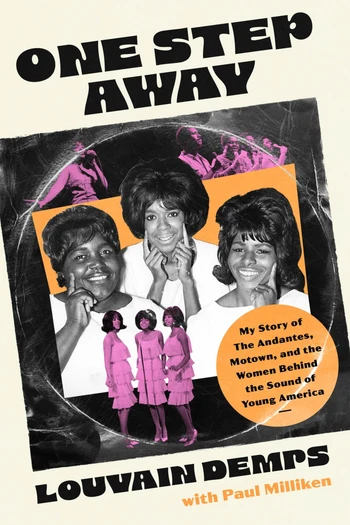
I get this kind of feeling—like something good is getting ready to happen. You just want one step away, and then all of a sudden something happens.
I just really wanted somebody that read it who’s been struggling along or wishing or hoping or dreaming—just don’t give up. It just might be one step away. Whatever you want to do. But in doing so, I would say if you want to sing or you want to do something like that, make sure you get a job to go along with it in case. But it just might be one step away.
SV: Thank you so much Louvain!
LD: Thank you so much. Thank you for the interest. And I just have to tell the people: thank you for the love and the encouragement.
Chart-topping hits
- “My Guy” – Mary Wells
- “Stop! In the Name of Love” – The Supremes
- “I Can’t Help Myself (Sugar Pie Honey Bunch)” – Four Tops
- “Reach Out I’ll Be There” – Four Tops
- “Love Child” – Diana Ross & the Supremes
- “I Heard It Through the Grapevine” – Marvin Gaye
- “Ain’t No Mountain High Enough” – Diana Ross (with Nickolas Ashford, Valerie Simpson, Jo Armstead, Jimmy Beavers, Brenda Evans, and Billie Calvin
Brenda Holloway
The Andantes appeared on many singles for Brenda Holloway. These include:
- “When I’m Gone“
- “Operator“
- “You Can Cry on My Shoulder”
- “Together ‘Til the End of Time”
- “Just Look What You’ve Done”
The Four Tops
The Andantes appeared as backing vocalists on 16 singles for the Four Tops. These releases include:
- “Baby I Need Your Loving“[2]
- “Without the One You Love (Life’s Not Worth While)“
- “Ask the Lonely“
- “I Can’t Help Myself (Sugar Pie Honey Bunch)“
- “It’s the Same Old Song“
- “Something About You“
- “Shake Me, Wake Me (When It’s Over)“
- “Reach Out I’ll Be There“
- “Standing in the Shadows of Love“
- “Bernadette“
- “7-Rooms of Gloom“
- “You Keep Running Away“
- “Walk Away Renee“
- “If I Were a Carpenter“
- “I’m in a Different World“
- “Still Water (Love)“
The Supremes
They appeared as backing vocalists on seven singles for the Supremes. These releases include:
- “Stop! In the Name of Love” (with group members Florence Ballard and Mary Wilson)
- “Children’s Christmas Song”
- “In and Out of Love” (with Florence Ballard and Mary Wilson)
- “Forever Came Today“
- “Love Child“[2]
- “I’m Livin’ in Shame“
- “The Composer“
Martha & the Vandellas
They appeared as backing vocalists on twelve singles for Martha & the Vandellas. These releases include:
- “You’ve Been in Love Too Long“
- “Love (Makes Me Do Foolish Things)” (B-Side of “You’ve Been in Love Too Long”)
- “My Baby Loves Me” (with the Four Tops)
- “I’m Ready for Love“
- “Jimmy Mack” (with the Vandellas)
- “I Promise to Wait My Love“
- “Forget Me Not” (B-Side of “I Promise to Wait My Love”)
- “I Can’t Dance to That Music You’re Playin’” (with Syreeta Wright)
- “(We’ve Got) Honey Love“
- “Taking My Love (And Leaving Me)” (with Syreeta Wright)
- “I Should Be Proud“
The Marvelettes
They appeared as backing vocalists on 15 singles for the Marvelettes. These releases include:
- “Tie a String Around Your Finger” (B-side of “As Long as I Know He’s Mine”)
- “A Need For Love” (B-side of “Too Many Fish in the Sea“)
- “I’ll Keep Holding On“
- “Don’t Mess with Bill“
- “You’re the One”
- “The Hunter Gets Captured by the Game“
- “When You’re Young and in Love“
- “My Baby Must Be a Magician“
- “Here I Am Baby”
- “Destination: Anywhere”
- “What’s Easy for Two Is So Hard for One“
- “I’m Gonna Hold On As Long As I Can”
- “That’s How Heartaches Are Made”
- “Marionette”
- “A Breath-Taking Guy“
The Temptations
They appeared as backing vocalists on seven recordings for the Temptations.
- “It’s Growing“
- “Get Ready“
- “Last One Out is Broken Hearted”
- “Just Another Lonely Night“
- “All I Need“
- “That’ll Be the Day”
- “Love Woke Me Up This Morning”
Marvin Gaye
They appeared as backing vocalists on (at least) 15 singles for Marvin Gaye. These releases include:
- “Baby Don’t You Do It“
- “What Good Am I Without You“
- “How Sweet It Is (To Be Loved by You)“
- “I’ll Be Doggone” (with the Miracles)
- “Pretty Little Baby“
- “Ain’t That Peculiar“
- “One More Heartache“
- “Take This Heart of Mine“
- “Little Darling (I Need You)“
- “Your Unchanging Love“
- “I Heard It Through the Grapevine“
- “Too Busy Thinking About My Baby“
- “That’s the Way Love Is“
- “The End of Our Road“
- “Save the Children“
Marvin Gaye & Tammi Terrell
They also appeared as backing vocalists on these following recordings and singles for Marvin Gaye & Tammi Terrell:
- “This Poor Heart Of Mine”
- “Give In, You Just Can’t Win”
- “When Love Comes Knocking At My Heart”
- “Two Can Have A Party”
- “Come On And See Me”
- “Oh How I’d Miss You”
- “Love Woke Me Up This Morning”
Stevie Wonder
The Andantes have also appeared as backing vocalists on numerous Stevie Wonder recordings, including:
- “Sunset” (B-side of “Contract on Love”)
- “Kiss Me Baby”
- “Music Talk” (B-side of “Hi-Heel Sneakers“)
- “Uptight (Everything’s Alright)“
- “Nothing’s Too Good For My Baby“
- “A Place in the Sun“
- “Hey Love“
- “I Was Made to Love Her“
- “I’m Wondering“
- “Shoo-Be-Doo-Be-Doo-Da-Day“
- “For Once in My Life“
- “Yester-Me, Yester-You, Yesterday“
Non-Motown recordings
The Andantes also appear on several notable recordings produced and/or released by record companies outside of Motown, including:
- “Come On” – The Distants
- “All Right” – The Distants
- “Your Love” – Billy Kent
- “He Gave Me You” – Marv Johnson
- The Big Soul of John Lee Hooker – John Lee Hooker (with Mary Wilson)
- “Prince of Players” – Betty Everett
- John Lee Hooker on Campus – John Lee Hooker
- “To Win Your Heart” – Laura Lee
- “Agent Double-O-Soul” – Edwin Starr
- “Whispers (Gettin’ Louder)” – Jackie Wilson
- “(Your Love Keeps Lifting Me) Higher and Higher” – Jackie Wilson (Pat Lewis substitutes for group member Louvain Demps)
- The Andantes also appear on much of the accompanying Higher and Higher album
- “I Get the Sweetest Feeling” – Jackie Wilson
Motorcity Records
As part of the Ian Levine‘s Motorcity Records project in the late 1980s and early 1990s, the Andantes were signed to the label and once again provided a service in recording backing vocals to former Motown artists. By this time, Pat Lewis had joined Jackie Hicks, Barrow and Demps (from 1989 to 1992).
Levine also recorded several songs with the Andantes, issuing a new single “Lightning Never Strikes Twice”, which featured Demps on lead vocals. Most other songs recorded by the group at Motorcity had Lewis on lead vocals.[citation needed]
Motorcity recordings
Original recordings
- “Lightning Never Strikes Twice”
- “Hurricane”
- “Throw Love Away”
- “Step Into My Shoes” – also recorded by Martha Reeves and the Vandellas
- “Two Sides Of Love”
- “One Drop Of Rain”
- “Will You Always Be There”
- “Love Is A Bumpy Road”
- “All Around the Motorcity”
Cover versions
- “Girls Are Out To Get You”
- “Superstition”
- “Mercy, Mercy Me”
- “I Wish” – cover of the Stevie Wonder classic
- “My World Is Empty Without You”
- “The Boss”
- “Last Dance”
- “Little Darlin’”
- “Why Am I Loving You”
Unreleased tracks
- “Back In My Arms Again”
- “In And Out Of Love”
- “I Wish It Would Rain”
- “Waste of Time” (Instrumental only)
Louvain Demps – Better Times
Whilst under contract to Motorcity Records, Louvain was given the opportunity to step up to the microphone and record a full album, which was released in 1992 under the title Better Times, which includes original tunes and one cover of the Diana Ross hit “Reach Out and Touch (Somebody’s Hand)“.
- “On the Front Page”
- “Better times”
- “One Shot At Happiness”
- “Lost & Found”
- “Good Intentions”
- “Blind Love”
- “On the Beach”
- “My Heart Won’t Say No”
- “No Time For Tears”
- “Reach Out & Touch Somebody’s Hand”
Louvain recorded two further tracks with Motorcity which did not appear on the above album:
- “On Top Of the Mountain”
- “Sight And Sound”
Leave a Reply
You must be logged in to post a comment.