

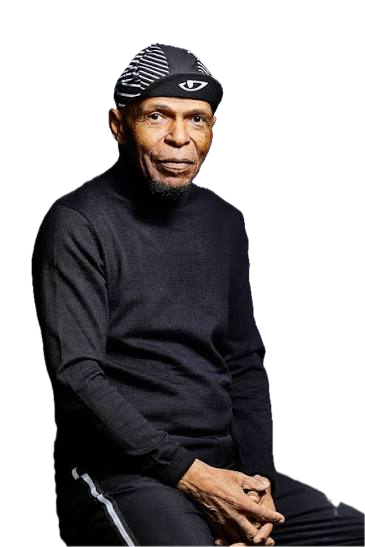
Soul-jazz titan Ronnie Foster looks back on six decades at the Hammond B-3, tracing his journey from a self-taught kid in Buffalo to Blue Note royalty—reflecting on Jimmy Smith’s mentorship, the sampled legacy of “Mystic Brew,” and making a triumphant return to the label that started it all.
___
Ronnie Foster: I started playing piano around four years old. There was a piano in the house. I was raised by my grandmother. I felt fortunate that I have some gift. And so I started playing, and fooling around with that, and I pretended to be a classical pianist playing those types of motifs. An old interview said I was “classically trained,” but I was not classically trained. [Laughs]
I was fooling around as a kid, thinking I was a classical pianist. But I’m actually self-taught. I was doing that and anywhere there was a piano in the neighborhood, I was begging people to play it. That just kind of developed. Then later on I had this little group called the Duo Brothers. This friend of mine was a great drummer, and it was just the two of us. Piano and drums. And we played a really funky tune that I wrote, and then I played the vamp [similar to] Brubeck’s “Take Five,” right? And then, Virgil [drummer] did the drum solo. So we were at little high school talent shows and all that stuff.
Make a long story short, one day his mom, who worked at this club, says, “I’m gonna take you down to the jam session on Sunday, ‘cause I can get you in because I’ll be chaperoning.” So I said, “Oh, they have a piano down there?” She said yes, but I got down there, and there wasn’t a piano. What was there was a Hammond B-3 [organ], which I knew nothing about. I said, “Okay, well, I’ll try that.” And that changed my life. [Laughs]
I was twelve and this club owner, this club called the Royal Arms in [Foster’s home town of] Buffalo, he would sneak me in and he had a place for me, because he knew I loved music, and I was very fortunate for that. He’d have me over in a corner and say, “You can’t move, you gotta stay there. I don’t want to see you anywhere else.” Fortunately that corner was right to the side of the stage when the guys went up, so I had a full view of the stage, of everybody.
SV: Eventually, you crossed paths with Jimmy Smith—the man who essentially defined the modern sound of soul-jazz organ. How did that meeting happen, and what’s the story behind it?
RF: Jimmy was coming in, and I called [the owner of the club] and said, “Where’s he staying?” And he said, “Over at a hotel on Main Street in Buffalo.” So I called the hotel. “Mr. Jimmy Smith, please.” He answered the phone. “Hello?” I said, “Mr. Smith, this is Ronnie Foster, I’m a young organist here in Buffalo, and I need you to show me something.” And he says, “Boy, when you hear me play, you won’t wanna play anymore.”
And I said, “No, no Mr. Smith, I love to play.” He said, “Boy, you’re not listening to me. When you hear me play, you’re gonna wanna throw your organ away.” And I said, “No, Mr. Smith, really, I love to play.” So you know what he was doing—he was testing me to see how hungry I was.
So the next thing he said was, “What time you get out of school?” “Three o’clock.” “Okay, meet me over at the club.” So, next day I met Jimmy over at the club and that started our relationship which was pretty deep. Every time he came to town I was there. We were hanging out. He was like a dad, in a way.
He changed my whole musical career path, not only in what I learned from him. He introduced me to George Benson when I was fourteen. This is when George was on Columbia, and had the Cookbook group which was George, [Dr.] Lonnie Smith [organ], Marion Booker [drums], and Ronnie Cuber [baritone sax].
And George—huge Jimmy Smith fan. And George was starting the next week—this was a Sunday. George came in to catch Jimmy’s last set on that Sunday night before they started. And so after the set, we’re in the back, Jimmy goes, “George, meet a little young [guy] over here, Ronnie.” And then George and I connected, we started hanging out that week. Then Lonnie [Smith] left to go out on his own, and then I started playing with George when I was fifteen on weekends when I was still in school [laughs]. Kinda crazy.
I met Herbie Hancock at the same club when I was thirteen. And a funny story—I have too many stories but I’m gonna go with it [laughs]. This is when Miles was there, at the same club. It was the group—Miles, Wayne [Shorter], Ron [Carter], Tony [Williams] and Herbie. The group.
So after the set, I was in the back and I used to carry a melodica with me a lot. And I introduced myself, big fan obviously. I said, “Listen, I get tired of the same old turnaround on a blues. You have any other alternate ideas you can point me in a direction?” So [Herbie] said, “Yeah, gimme your melodica.” He took it and played this turnaround.
Herbie and I are still friends and I was at his house one time. I said, “Herbie, you remember when we first met and you showed me that alternative turnaround?” He said, “Yeah, I’ll bet you’re still using it, too.” I said, “Yes, I am!” [laughs] There’s a tune on my album [Reboot, Blue Note, 2022] called “Swinging” that actually has that turnaround in it [laughs].
Jack McDuff was another mentor. I used to sit on the organ bench with him when he came to Buffalo, which was enough for me, right? I didn’t have to play. Just sitting there, soaking it all up.
But then one night, Joe Dukes, who was the drummer at the time, he had a solo. And Jack would just hold this chord [plays a chord on his keyboard], nothing else going on, and Joe Dukes would go crazy on the drums.
So one night he says, “Hey Ronnie, grab this chord.” [laughs] So I’m going, “What?!” So I play the chord, that’s all I’m doing, is holding that [chord]. For me, that was like, the world. Jack went down to the bar and he was drinking, and looking at me, and giving me a thumbs up [laughs]. Joe Dukes finished his solo, and Jack came back up. It was funny stuff like that.
I was really fortunate to know these people. Johnny Hammond Smith said to me one time, “You know why we all let you sit in?” I said, “Why’s that, Johnny?” He said, “‘Cause you’re not out to prove anything. You love to play and we love to watch you play, and love hearing you.”
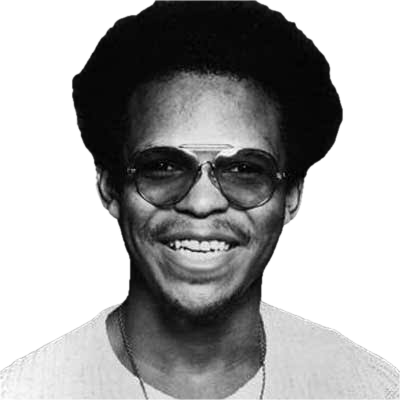
So it was like that. There was another guy, Joe Madison, he was the premiere organist from our hometown of Buffalo, and he showed me a lot of stuff. And he ended up marrying my girlfriend’s mother [laughs] and it was funny because I always ended up at my girlfriend’s house, right? So, when he married her mother, we were both over at her house all the time, so we’d trade stuff. And he [Joe] was in a group with Grover Washington. A lot of people don’t know that Grover Washington was from Buffalo, ‘cause Philly adopted him. Grover’s brother, Darryl, and I went to school together—he was a drummer.
Groove Holmes, too, funny story: I had left my organ at a club, and I was talking to Groove, and I said, “Yeah man, I gotta go pick up my organ and take it home. I gotta get a U-Haul.” He said, “Brother, I got a U-Haul! Where’s your organ, let’s go!” And he went over, [laughs] and he loaded the organ into his U-Haul and took me back.
An hour after I got my diploma, I went with this group called the Billy Wooten Trio. Billy was a vibraphonist, and Harold was a drummer from Buffalo that was playing with Billy. So it’s funny, because they waited for me to get out of high school. And they were based in Indianapolis, but when I met up with them after high school, they had a club they played at all the time in Indianapolis, ‘cause then in the summer they’d go out for a couple months to other places, and they happened to be in this club in Columbus, Ohio. So, I went there, and played basically two years with them.
And then I came back to Buffalo. One day, I’m walking down the main drag in Buffalo, in the hood, which was Jefferson Avenue. And, I don’t know how ‘till this day, we didn’t have cellphones then—this guy walks up to me and says, “Hey, Stanley Turrentine is trying to get a hold of you. You gotta go home and call him.”
I go home and there’s a message there. And I call Stanley, and he says, “Hey, I need you to come up here right now.” Because his wife, Shirley Scott—a great organist—they had a fight, they were married, and she just left. So I went up and finished out the two nights with him, and I was staying with another organist who was living in the city.
And Stanley was calling saying, “I’ve got another gig in Chicago, I want you to do it with me. I’m just waiting to hear from the club owner.” So this happened a couple times. And meanwhile, there was a knock on the door one day—still don’t know how he found out where I was—it was Grant Green [laughs]. Grant said, “Ronnie, you’re coming with me.”
I had met Grant briefly in Indianapolis when I was playing with Billy Wooten Trio, because we opened for him. It was a short thing, “Hey Grant, I’m a fan,” and we took a picture together, and that was it. But then I went on the road with Grant—what am I gonna say? No to one of my heroes?
And then we moved up to [Green’s] Alive! [Blue Note, 1970] album.
Above: “Let the Music Take Your Mind” – Grant Green | Alive! (Blue Note, 1970) — Foster’s searing Hammond B-3 organ ignites this raw, live Newark club groove, laying down the funky, syncopated driving force that cemented the track as a cornerstone sampled by hip-hop icons like A Tribe Called Quest and Kendrick Lamar.
SV: That’s honestly one of my absolute favorite live jazz records of all time. Your organ work on that date is incredible—the whole album is just a burner from start to finish. And it’s amazing to think those dates with Grant Green ended up launching such a fruitful career for you…
RF: That is where Francis Wolff came up to me after the last set, and asked me, [imitates Wolff’s German accent], “Ronnie, how would you like to have a deal with Blue Note?”
And I said, “Yeah!” So I was excited about that, obviously. And unfortunately, Francis passed away [in 1971], and then there was this big time gap/gray area with Blue Note, because they were looking for someone to take over. And that’s where Dr. George Butler came in. So I found out that he was the guy, I called him and said, “Hey, I did this album with Grant, Francis offered me a deal, yada yada.” He said, “Oh, really? Where are you playing?” At that time I was playing with my group in Detroit. He said, “Okay, I’ll fly out and check you out.” Then he flew out, after the first set, I came out, and he said, “Okay, I’m signing you” [laughs]. And the tune that caught his attention was “Chunky,” which was a little different, but that kind of perked his ears up a little bit.
In 1972, Ronnie Foster made his explosive debut on Blue Note Records with Two Headed Freap, produced by Dr. George Butler. A definitive masterclass in soul-jazz and funky Hammond B-3 organ, the album went on to become a cornerstone of the rare groove movement and a rich source of sample material for hip-hop legends like A Tribe Called Quest and Beastie Boys.
RF: You’re kind of in a fog [recording his debut album], and I came in and I was playing with different musicians. Like, the way we played “Chunky” live was not the way it was played on the record. It was a little bit more freer. I’m sitting in Rudy Van Gelder’s studio, which is like, playing on the organ that Jimmy [Smith] had recorded on, and all the other greats. But I really wasn’t super happy about playing a lot of covers [on the record], at the time. It worked out.
Above: “Chunky” – Ronnie Foster | Two Headed Freap (Blue Note, 1972) — Foster sets the tone for his debut album with a thick, mid-tempo groove driven by his nimble Hammond B-3 work and slick basslines, kicking off the project that established him as a premier architect of 70s jazz-funk.
Quick segue: one time I was having a conversation with Dr. George Butler about song selection. And he says, “Oh, man, we gotta get those covers on there. Those are the songs that people know. You’ve gotta play something people know.” I said, “With all due respect, aren’t those covers somebody’s originals?” [laughs] And so, ‘till you hear ‘em, then you decide whether you like ‘em. So anyway, he got it, and then it wasn’t even a thing. I do consider myself a writer.
One of the undisputed standouts from “Two Headed Freap” is Foster’s composition ‘Mystic Brew’. Built on a hypnotic progression and tight rhythmic pocket, the track finds his Hammond B-3 injecting a blend of warmth and nostalgia, punctuated by bursts of dissonance that hint at a deeper, adventurous edge. That distinct mood made ‘Mystic Brew’ a crown-jewel sample in hip-hop history—most famously anchored as the foundation for A Tribe Called Quest’s ‘Electric Relaxation’. Let’s dive into ‘Mystic Brew’ and how it came together.
RF: [It was] written when I was eighteen, in Indianapolis, Indiana. It was just how I was feeling. I really didn’t realize until someone pointed out to me—because I was just dealing with it from a musical and emotional standpoint—that it was a 3-bar phrase/pattern [laughs].
Then here ya go, you wake up one day and this guy from England, I can’t think of his name now because it’s been so long ago, reached out to me, says, “Hey Ronnie, big fan, we’re playing your music here,” so on and so forth. “And we were gonna do a remix of ‘Mystic Brew’ but Tribe Called Quest had already sampled it.” I said, “Oh, really? They did? I didn’t know anything about that” [laughs].
So, I looked into that. And that was very prevalent during those days, guys would just sample and wouldn’t get licenses. But then I reached out to Blue Note, and they took care of everything. [Now] we’re all happy [laughs].
On his sophomore Blue Note release “Sweet Revival,” Foster expanded his soul-jazz canvas by introducing rich Fender Rhodes textures alongside his signature Hammond B-3 organ. Anchored by heavy funk rhythms, tight brass arrangements, and soulful hooks, the 1972 album further elevated his reputation as a master groove builder.
RF: I think that’s kind of my least favorite record out of the collection. I understood what they were trying to do—it was kind of commercial, and it was that time when things were changing with Blue Note going into other areas musically. And I understand that. But I had Bernard Purdie [drums] on there, and John Tropea [electric guitar].
SV: I also dig this live record you cut in ’73 [Ronnie Foster Live: Cookin’ with Blue Note at Montreux, Blue Note, 1974].
RF: That was my trio at the time, and I like it because we were really free then. I go back and listen to it, and there’s things…I was a kid, so you hear some stuff and go “Whoa!” and cringe a little bit here and there [laughs]. But it was really fun and the people were into it. And we were doing things that were a little different. But that was fun because it was a Blue Note night, and Bobby Hutcherson and Bobbi Humphrey and Donald Byrd [were there], so it was a fun thing. And my first time playing Montreux [laughs], so you can’t complain about that.
SV: You mentioned your friendship with George Benson earlier, and he went on to produce your next Blue Note record, On the Avenue in 1974.
RF: Yeah, a lot of people don’t realize that George [Benson] did produce that. Phil Upchurch played bass and guitar on that, and my drummer from my trio played on that. I cannot go past On the Avenue without saying that it was an incredible honor for me to have Ron Carter play bass on “First Light.” Wow, what an amazing experience.
And the funny thing about it, when I started on my solo, he pedaled on the fifth, instead of on the root [note], and it was crazy. It just took me somewhere else. And what a beautiful guy. He came in, he was sitting there reading the newspaper, and then we started playing. It was great.
On his final 70’s Blue Note release, 1975’s “Cheshire Cat,” Foster shifted focus toward his exceptional songwriting and melodic sensibilities. Produced alongside George Benson and featuring stellar cuts like the floating ‘Fly Away,’ the album marked a mature, groove-heavy milestone in his 70s catalog—one that naturally, once again, found a second life among crate-digging hip-hop producers searching for soulful samples.
RF: That record really had all sides of me on it, musically. One of my favorite drummers ever was on there [Dennis Davis], he played with David Bowie for a long time. He was on “Fame” and all that stuff. He was with Roy Ayers, in fact I introduced him to Stevie [Wonder] and he started working with Stevie. Stevie and I are very close. Unfortunately, [Dennis] passed away. You notice a lot of the songs are kind of going in different directions. And then having George play on Cheshire Cat was amazing. And he knows me musically, so it was a piece of cake for him.
It was just a period when I was writing [a lot]. Like the intro [hums the intro to the song “Fly Away”], it was something where, that was where I was in my head musically.
SV: Going back to your friendship with Stevie Wonder for a minute, you also played organ on the tune “Summer Soft” from his landmark Songs in the Key of Life [Tamla, 1976] record.
RF: Make a long story short, we’re very close friends. Born a day apart. I’m the 12th, he’s the 13th, and I always give him a hard time telling him to respect his elders [laughs]. We bust each other’s balls all the time, it’s crazy. I cannot repeat what we say [laughs].
But anyway, Stevie said, “Hey man, I want you to play organ on this tune on the new album,” so I went over. Not an easy song. And Stevie was very particular [laughs] about what he wants to hear, but honored and humbled always to be a part of that record. It’s a historical record.
SV: And back to George Benson one more time—you also played on his massive crossover triple-platinum record Breezin’ [Warner Bros., 1976]. I’m pretty sure I’ve owned at least 5 different copies of this record myself at different times in my life.
RF: Crazy! Crazy. I have a song on there [“Lady”], which I wrote purposely with him in mind. In fact, the idea was, when we first discussed it, was he was gonna scat the melody [hums a melody], but when we got to the studio, he just played it. So I said, “I’m not gonna complain about it” [laughs].
SV: You’re in Las Vegas these days, Ronnie?
RF: Yeah, I came to Las Vegas in 2000, from Thousand Oaks [California], and the industry was kinda changing. I hadn’t been working on any kind of solo stuff, I had been more on the production side and writing. And doing a lot of stuff in Brazil. I worked in Brazil for about four years. And then I moved here [to Las Vegas]. There is a music scene here, it’s just different. I started doing some shows. I was M.D. [musical director] for a show for about 5-6 years. “Human Nature,” which was a show that Smokey Robinson put his name on with these four guys from Australia. It was a Motown-based show. That was great because you go in at six o’clock, soundcheck, and then 9 o’clock you’re done. So if I wanted to do some other gigs, I could do that. The main thing is I was still writing a lot. And my daughter was in college and so when she was on break, she would be at home.
[One of the more recent shows] I did was “Opium.” A friend of mine was the bass player, and he was the M.D. And they had this show, it was kind of based on a cheesy space show, kind of comedy, but the director was a fan of mine, so he really wanted me in the show. I wasn’t sure about it at first, but then I went with it because all the guys in the band I knew except for one guy. And the music was really cool, and creative. And then they dumped the band for [pre-recorded] tracks, and that’s it, but those people are still family and it was a fun situation.
Then I put the old trio together. I had done some gigs like where I first came to Vegas, just keys and vocals, stuff like that. But then we put this trio together, and started to get a little buzz. So we did that for a minute, and that trio disbanded.
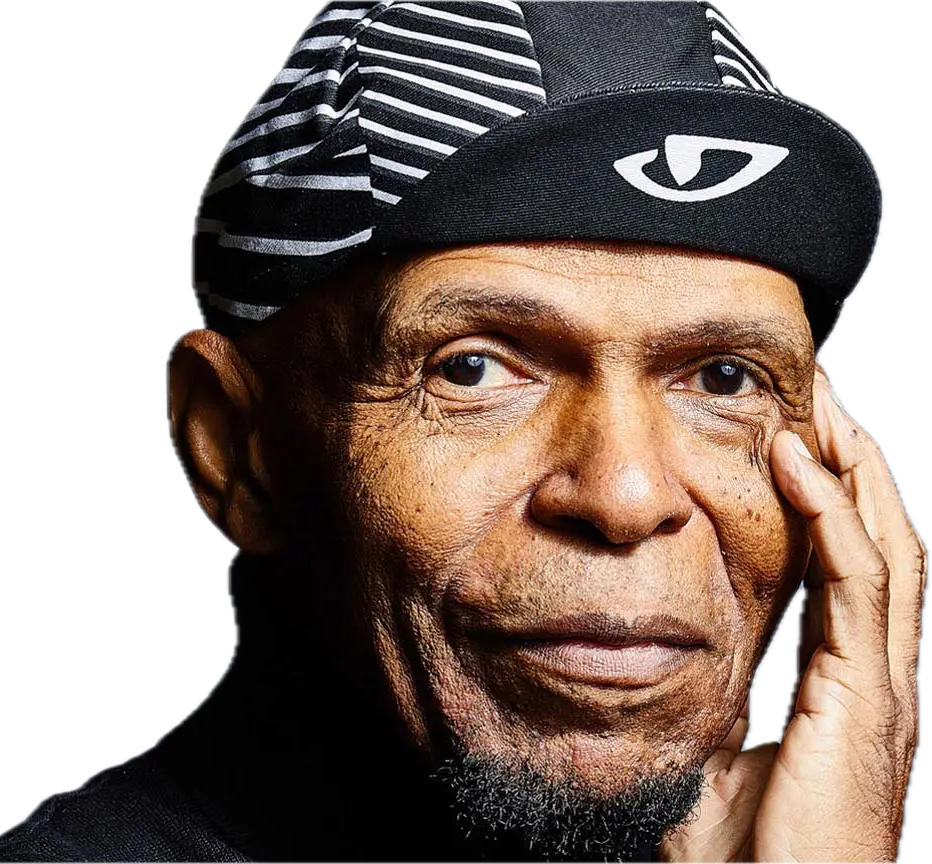
SV: Full circle here–how did you end up back with Blue Note after all these years?
RF: It was kinda crazy. I talked to Don Was a long time ago, when he first took over the label. We talked about the possibility of [me] coming back. At the time, he was signing a lot. You know how that happens, and then the bean counters get involved. So we just waited. And I had been calling him about something else, and I said, “You know, I’d come back to Blue Note in a second.” He said, “Okay, let’s do it.” It was just the right time. And Don, I have so much respect for him. He said, “Send me new music.” And how often does this happen, where the record company says, “We love everything. Do it!” [laughs]
Obviously I’m very humbled by it. With the advent of social media, and all that, I give kudos to the Blue Note team, because they are freaking amazing. Everything they’re doing is just blowing me away.
My daughter also designed the cover for the record. And she’s a singer/writer herself, Kaylie Foster. There’s a code in the cover, but I can’t tell you what it is—you’ve gotta figure it out. Whenever you see the cover, just look at 3 columns, and you’ll see right above the “R” 4 levels, and on each column and level, there’s a code.
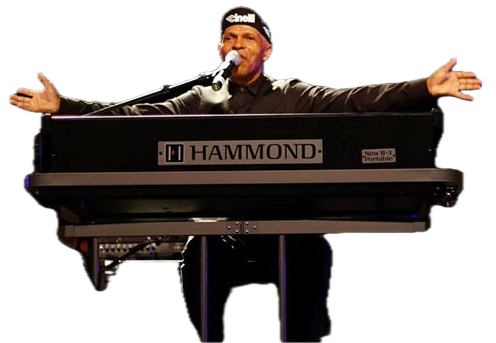
SV: Ronnie, what’s the creative process like for you when you’re composing music?
RF: It’s kind of weird. I don’t want to say I don’t listen to other music. I listen to other music, but I don’t listen a lot because I’m a sponge, and so what happens is, if I hear something that I really like, [I’ll think] “Oh, I better do something like that.” Whereas when I kind of stay away from that, whatever happens, happens organically within me. Because I don’t think normal anyway in my approach. But I’m influenced by rhythm first, or melody.
A melody will come, or words will come. I won’t have the full lyrics, but it just happens because I’m always sitting down, trying stuff. I just go with the moment. I try to keep my head pure in a sense so that I’m just dealing with my own decisions or whatever.
SV: And while you were doing press for Reboot, you must have been ecstatic to discover that you had a new fan overseas who wanted to interview you: Elton John. Elton said, “Since I’ve discovered Ronnie’s music, I’ve bought all his records. He’s an incredible organ player and singer.”
RF: Unbelievable! I’m still in shock over that one, I can tell you that much [laughs]. I got a text from Don Was, it said, “Elton John’s trying to find you, is it alright if I give him your information?” I said, “What? Yeah, of course.”
And then the company sent me an official email. And it’s funny because our first tries at doing the interview, there were some problems on his end, and the second time was problems on my end. We finally got it though. Man, [what a] beautiful guy. He was very warm and it was great. No pressure. First he starts off, he says, “I’m ashamed to say I just discovered your music in the last couple months. I went out and bought everything.” And one of the compliments he gave me that really surprised me was, he said, “You play great, you have a beautiful voice, you sing great.” And I’m like, “Oh, Thanks!” [laughs]
SV: I’m glad to see that you’re really starting to get some widespread and well-deserved acclaim and recognition this deep into your career.
RF: It’s very humbling, and I always think about how fortunate I was to be exposed to masters of their craft at a young age. Jimmy [Smith], George [Benson], Herbie [Hancock], everybody. I knew Chick [Corea], I knew everybody. I met everybody. I filled in for McCoy Tyner one time when he was late driving in from New York [laughs].
One of the things that I’m thankful for is that I feel that I’m not finished, that I have a lot more to say musically, and I’m in good health—I play basketball five days a week, three hours a day. It’s a blessing. But I don’t trip on it, you know what I mean?
SV: I wish you all the best Ronnie. Thanks for talking with me today.
RF: Okay, I appreciate it so much, brother. Thanks so much. Take care.
Leave a Reply
You must be logged in to post a comment.