
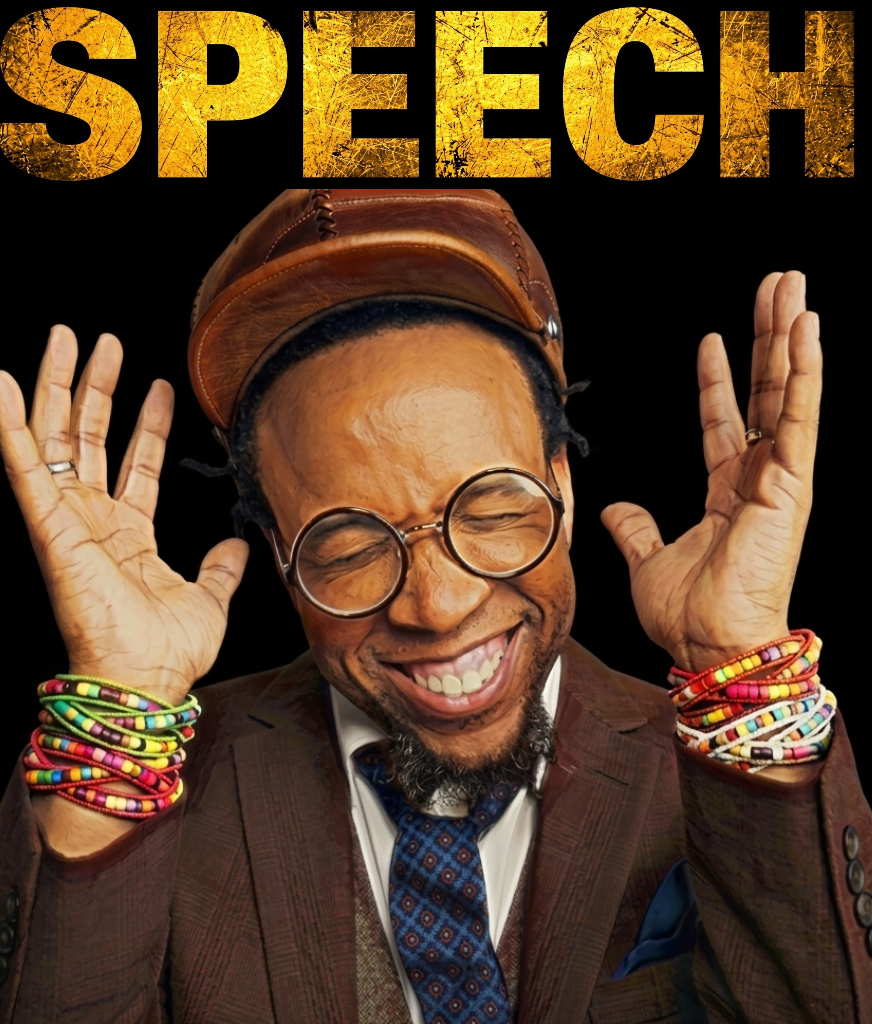
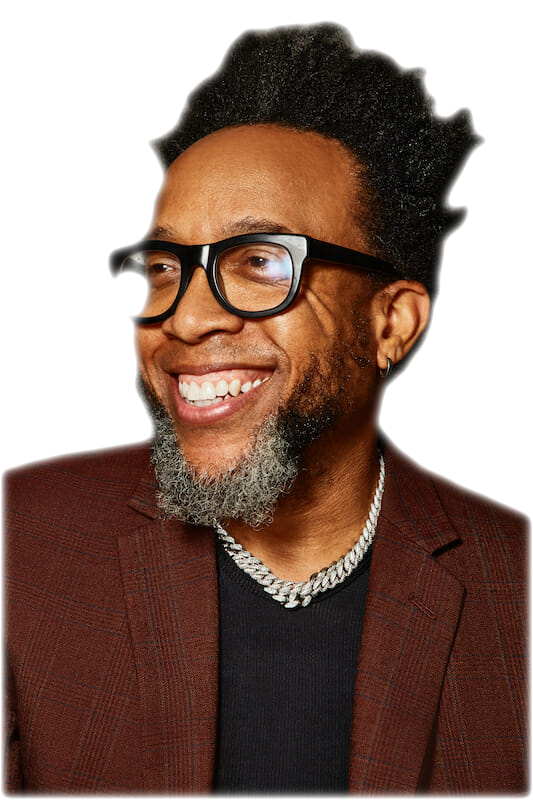
In an expansive interview, Arrested Development frontman Speech reflects on growing up around his mother’s newspaper, the origins and principles behind his group’s groundbreaking agrarian hip-hop aesthetic, and the hard-won creative lessons learned from navigating rapid commercial success and industry evolution over a decades-long career.
___
Born in Milwaukee, Wisconsin, Todd “Speech” Thomas co-founded and fronted the Atlanta-based group Arrested Development, helping pioneer a lineage of uplifting, socially conscious hip-hop in the 1990s. His influential career encompasses critically acclaimed multi-platinum group success, gold-selling solo projects, and widespread production work across film soundtracks and global artist collaborations.
___
Sounds Visual: I want to ask about your parents’ activism and your mother’s work with the Milwaukee Community Journal, because that put you around the idea of publishing truth and solutions from a young age. How did specific stories or editorial decisions you witnessed as a young person influence your lyrical approach on the first Arrested D
Speech: It had the biggest influence. I used to write for my mother’s newspaper — I had an article called “Fishin’ 4 Religion,” for instance, co-written with a friend of mine named Gary Hoover. We were writing for people in college or high school, and those were the issues we addressed. I eventually made a song called “Fishin’ 4 Religion” on Arrested Development’s first album.
But being around the newspaper industry in my family also made me realize the importance of documenting truth, of recording and talking about something that was happening at that time, even if you didn’t have a solution — preferably trying to give solutions, but even just documenting that it happened. That was an important principle I learned from growing up in a publishing family.
SV: You would often visit your grandmother in rural Tennessee as a child. Where did your grandmother live in Tennessee? I’m curious since I’ve lived there…
Speech: A small town, extremely small, called Glimp, Tennessee, near Ripley, about forty-five minutes outside Memphis.
SV: Ah, okay. What elements of that rural Southern experience still surface most strongly in your songwriting or worldview today?
Speech: The self-reliance and self-determination of the people. They grew their own food, came up with their own health remedies, rarely went to a doctor because they had successful ways to deal with sickness. They had successful ways to deal with poverty — everyone in my neighborhood was poor — but they shared food with each other, bartered with each other, shared well water.
SV: A true community.
Speech: It was a true community, and they relied a lot on nature, which is what God has already given all of us for free. But unfortunately the systems man has put in place often make us pay for these things — seeds, which are now copyrighted so you can’t grow certain things without paying certain other humans; land that was just given to us, that no one bought in the initial days, and now we all buy land and it’s owned by somebody. The best land, with the best views and the best water, is owned by those who are richest. But these things were given to us to use, not sold to us — that’s the nature of how we came here when we were born. Those are the principles I saw growing up in very rural Tennessee.
SV: Some of your most lasting songs, like “Tennessee,” seem to have arrived in emotional rushes rather than long intellectual processes. Do you think your best writing happens when you don’t have time to intellectualize what you’re feeling?
Speech: That’s a great question — all your questions have been great. Yes and no. If I judge my best writing by the songs that have done the most and been the most memorable, then definitely the songs I wrote pretty quickly, based on raw emotion, were the ones that did best. I don’t know if I actually feel those are my best. I feel they’re definitely the most commercially successful, and they happen to fall within a major-label era for our group, during a very successful run, with all the toppings of that time — MTV supporting it.
Because of that, the exposure was so high that the songs were more celebrated. I actually think other stuff I’ve written is probably better written, even more dynamic and cool, but it didn’t have all that machinery behind it. So if I look at my best songs as the ones that did the most commercially, then yes, I definitely think those came emotionally, and pretty quickly too.
SV: Visually, you guys also leaned into the aesthetic of Southern soil, barefoot roots, and agrarian imagery when hip-hop at the time was hyper-focused on concrete inner-city imagery, and then it moved into the bling era. Did anyone resist that visual presentation early on, and how hard was it to fight for that aesthetic with video directors and label execs?
Speech: It was definitely tough to fight for with the execs, who were like, “Is this going to work?” I was literally in marketing meetings with the CEOs and presidents of the label convincing them why that fresh visual and perspective could be an asset — that it was something new, something different. I used the fact that most hip-hop was clearly extremely urban — basketball hoops with no nets, shoes hanging on wires, that whole particular thing that was always happening — and we were the opposite.
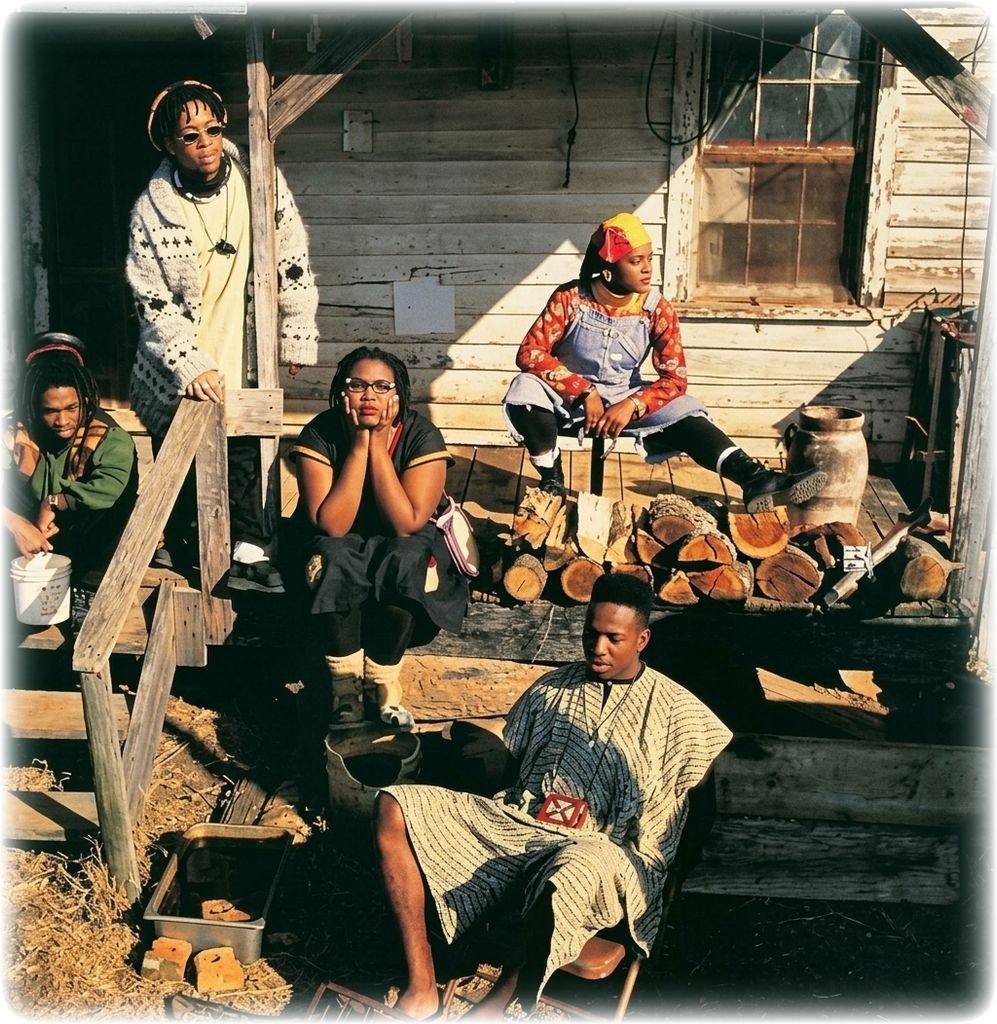
To be honest, after we were successful, a lot of people jumped onto the more rural, agrarian energy. Erykah Badu jumped on it really heavy — she ended up doing a farm-type motif for one of her videos after we came out. Black Sheep did a song that was almost like a copy of “Tennessee.” So many others started to embrace different vibes.
SV: You guys were also intentionally co-ed in an era when hip-hop was aggressively male-dominated. How did having women as equal co-creators, which I think was very ahead of its time, shape the studio culture, and why do you think more hip-hop groups didn’t follow that blueprint?
Speech: That’s a great question. We were the only ones doing it at the time — the only group I knew of in hip-hop before us was Funky 4 + 1. Some people might say Salt-N-Pepa had Hurby “Luv Bug” Azor as their producer, but he wasn’t in the group, he was just the producer. I didn’t know anybody else who was co-ed at the time. For me it just made absolute sense. My mother was the publisher of her newspaper and my father helped her, so I was around Black women’s leadership and women’s leadership, and I saw it as effective and realistic. I championed it right from the beginning, so it wasn’t a weird concept to me.
In our group, Aerle Taree sewed a lot of our clothes and created a lot of our clothing motif. Eshe came up with all of the choreography and our approach to the stage — she came up with all of that. Dionne Farris wasn’t in the group initially but was a guest within the group and our creativity on the first album, and she participated a lot — we had an EPK at the time that she was very instrumental in, coming up with skits that helped explain who the group was. And in the recording studio, the women wrote lyrics too — Dionne wrote and sang all of her parts.
SV: From the beginning, A.D. pushed back against materialism in the music. Did becoming successful ever complicate that anti-materialist philosophy?
Speech: Yeah. I, especially as the leader of the group, had that philosophy in real life too during those times. We were making a lot of money — I was a millionaire — and at the same time I was insisting on flying coach. There was a short stretch when I flew first class, but because I’m the producer and writer of a lot of our material, the other members couldn’t fly first class, so I felt weird, and ultimately it went against my principles of being a person of the people, which I deeply believe in. So I stopped. I did it for maybe a couple of months, and then went back to flying coach. That’s one example of ways I had to recalibrate what I believed about not being ultra-materialistic and staying grounded.
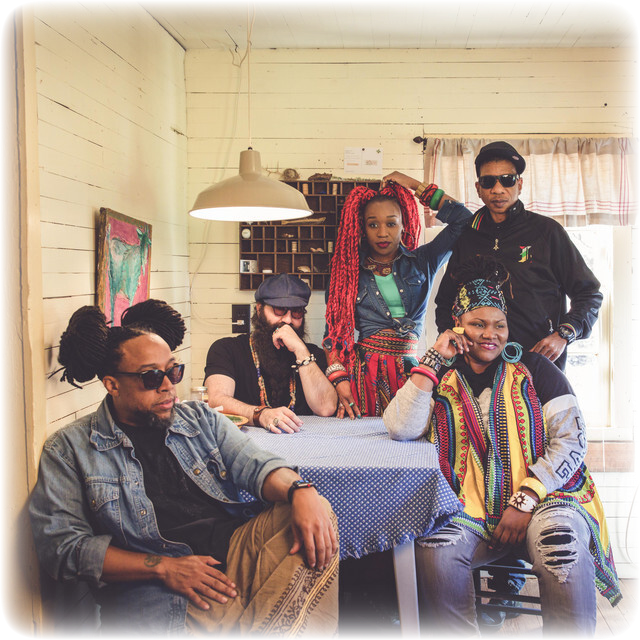
In our early days, I wouldn’t let anybody in the group wear brand names — you wouldn’t see us in Nikes or Converse. Later I gave in, and to me it wasn’t about materialism, it was about loosening up. The group members were like, “Man, I can’t get nice and funky in my dress because Speech is trying to do this crazy thing about not letting us wear anything with a name on it.” So I had to loosen up. There was a lot of that, where I had to reevaluate where I stood, and where we stood, and in particular, as a leader of the group, what I was trying to do out here.
My initial goal was to popularize what Macklemore later tried to popularize with “Thrift Shop” — being fly and being dope without needing that darkness of relying on how much money you have on your body: jewelry, watches, shoes, all that. I think hip-hop didn’t really jump on that train, but songs like “United Minds” — I talked about it a lot in my lyrics.
SV: There was a reported major commercial offer early on that you declined. Tell me about turning down that million-dollar Coke deal and what it taught you about yourself–I think it’s a remarkable story.
Speech: It is remarkable, and I didn’t regret it in the short run. I actually did regret it in the long run. In the short run, it was clear in hip-hop, especially in the early ’90s, that if you really loved the genre, you weren’t trying to sell out or cross over, you weren’t trying to sell the soul of the music for corporate money. You wanted to stay true to the music and the art form, and of course make money and do well, but without selling out to corporate interests. That was the lay of the land at the time.
That obviously changed by around ’94. I remember Hammer did a deal with — I want to say Kentucky Fried Chicken, it might have been Popeyes. EPMD had a song called “Crossover,” Third Bass had “Pop Goes the Weasel,” Gang Starr had “Mass Appeal” — I think all of those were trying to put into the hip-hop world this principle that we’re not going to sell out for corporate interests.
But all of that changed by ’94, ’95, ’96. Puff Daddy came in, and corporate deals were looked at as the prize. Being a CEO was seen as Black excellence, a thumbs up. People like Steve Stoute and others in the hip-hop world were getting deals for various artists with Sprite and on and on, people were diversifying their income, and everything changed. So I say I ultimately didn’t like my decision, because I couldn’t use the money. It wasn’t that I didn’t want the million dollars, or that the group didn’t want it — we all could have used that money. But the principles — we just weren’t down.
SV: You’ve spoken about the “alternative” label, and about how you guys had to operate outside the commercial mainstream for a lot of your career. When did being outside the mainstream stop feeling like rejection and start feeling like freedom?
Speech: That’s a good question. First of all, I never liked the idea of “alternative,” because it felt like an alternative to hip-hop. They started naming us “alternative hip-hop” as opposed to hip-hop, as if we were just different from other hip-hop. I didn’t like that we weren’t included in the general category. It was somehow “other than,” and I didn’t like that.
As far as the mainstream goes, I never actually loved being in it. I loved us getting recognized, despite the fact that I felt our songs were very non-pop-written and the content was deeper than the average pop music of the day, and even of today. So I felt our music was accepted within the mainstream despite being, in my opinion, music of great depth. It wasn’t shallow to me. I never necessarily wanted to be mainstream. I was just glad we were being accepted.
SV: You referenced a conversation with Michael Stipe about R.E.M. having time to grow organically before big success. What do you think the lack of an organic growth period may have cost you artistically, if anything?
Speech: I think it cost us a lot. Every record after our first was expected to do as well as, or similarly to, the first one, as far as radio play and sales and acceptance in the culture. If it didn’t, it was known as a flop, a decline. That’s always tough. The first album sold five million copies, won two Grammys, had numerous hit singles on the charts. If we’d had a chance to start from a lower place than that, I think we could have grown our audience more organically, over a longer period of time. I think we could have experimented a lot more. I think we could have gotten a lot more… while hopefully still reaching a lot of people knowing the music and the group exist. That’s what I think we sacrificed by going the opposite way.
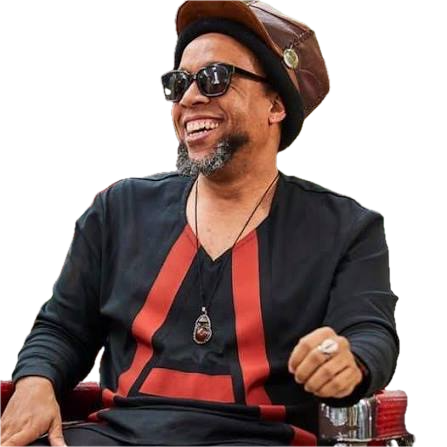
SV: Before Atlanta became the dominant epicenter of hip-hop through trap and bounce, you guys won Grammys out of Georgia in ’93. How did the local scene react to your success then, and what’s your relationship to Atlanta’s current musical identity, if any?
Speech: I’ll start with the last part. We don’t really have a large identity within it now — to some extent we’ve been written out of it. But I don’t want to overstate that, because we do get respect from those who know. Those who were around in the early ’90s understand the very important role we played in the Atlanta music scene. During our success it was very understood how important a role we were playing in putting Atlanta on the map, because this was before the Dungeon Family and OutKast, before trap music, T.I., Young Jeezy, Lil Jon — before any of that.
SV: When I think of Atlanta from that era, I think of you guys and the Black Crowes…
Speech: Exactly. Those were some of the big things happening from Atlanta at that time.
SV: So with the first record came big success, the Grammy, a glaring spotlight. Did institutional acceptance ever feel like a double-edged sword, where industry praise might have caused hardcore hip-hop theorists to question your authenticity?
Speech: It makes sense, but it didn’t happen for us in that era. At least the way I saw it, the Grammys were still deeply respected and desired by hip-hop — it was desirable to get one if you could. I talked to Black Sheep, who were nominated for things, and other hip-hop artists who were nominated, and they wanted it. We all did. For us to win was incredible.
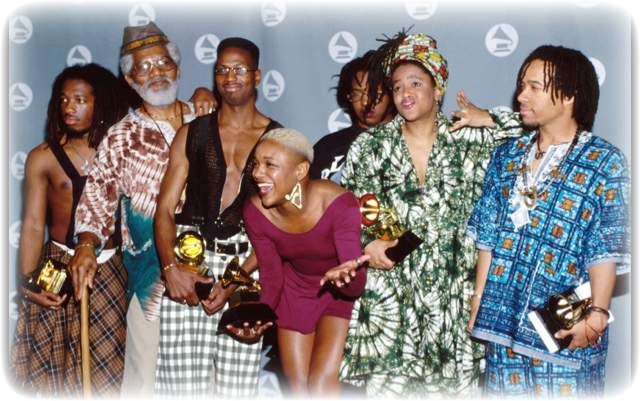
Above: Arrested Development won 2 Grammy Awards in 1993–Best New Artist and Best Rap Performance By A Duo or Group (“Tennessee”).
Now don’t get me wrong — New York was still sort of the epicenter of hip-hop, and there was resistance to the idea of anyone outside New York winning. They made it pretty clear — in ’95 or ’96, when OutKast won Best New Artist at the Source Awards, they got booed in New York. So there was a faction, especially from New York, that was simply mad that a group from the South won a Grammy for best hip-hop when New Yorkers were nominated.
SV: You dealt with a lot of the pressures of fame, internal conflicts, money disputes, eventual legal battles after the huge success of the debut. What did those conflicts teach you about leadership?
Speech: A lot. It taught me to do better at thinking from my group members’ perspectives. And number two, don’t be too hard-lined about what you principally think is right. If you can save the integrity of the group — even if something goes slightly against your principles — have more humility to compromise, save the morale of the group, and do what you’ve got to do to keep things moving, as long as it doesn’t gut your soul, spirit, and principles. If it’s just a compromise, that’s all right. I wish I’d done that.
For instance, me and Headliner had the most beef in the group, and it carried over to other group members because of people aligning with him or with me. But the real conflict was between me and Headliner. We had a great conversation maybe fifteen years ago, because we hadn’t been talking much. One of his biggest beefs with me was that he was telling people I’d stolen music he created, that I’d stolen writings, songs he wrote that I claimed I wrote. That was the crux of our conflict. So as we were starting to mend things, I said, “I’ve got to ask you — did you really feel you wrote this song and that song?”
And he said, “No, I didn’t feel like it, but I knew you wrote it. But I wanted to be known more as a producer, and I wanted to get my name out there.” I said, “Man, if I’d known that, I would have put you down as co-producer, even though that wasn’t the actual case.” That’s what I mean by principles — I understand now that he was trying to branch out and do things on his own. He had musical talent, he didn’t happen to produce the things he said he produced, but he had talent and wanted to get out there. If I’d had the wisdom to put “co-produced by Headliner,” that would have solved a lot of problems for all of us, and probably saved the group from breaking up back in 1995. So those are the lessons: it’s better to compromise than to stay rigid and break.
SV: And that’s very honest of him to come out and say that.
Speech: It is very honest. I was grateful we were able to clear that up, because I knew he hadn’t had a part in those songs, but I really needed clarity, and I’m glad we got some that day.
SV: After the early A.D. explosion, the solo years, and the eventual regrouping, there came a point of clear self-definition. When did you finally understand who Speech was, independent of Arrested Development?
Speech: It took a while, to be honest. My first solo album was in 1996, and it was very experimental — just me being creative, staying in the studio, writing songs. I still didn’t actually know who I was, or what, in particular, I was trying to offer the world. And I definitely didn’t know how to navigate the hip-hop space, because musically and creatively I was such an open, free spirit that sometimes it didn’t fit within the confines of what hip-hop wanted me to do. And this was before the days of OutKast, where, you know, [André] 3000’s work would become extremely experimental, and before Lauryn Hill’s Miseducation, where she was singing a lot.
SV: I want to talk to you about international audiences. The famous joke is “I’m big in Japan,” but you actually are really big in Japan — your solo work found a particularly strong, sustained audience there. What did Japan teach you about your own music that America didn’t?
Speech: Japan taught me there are music fans out there, like myself, who, if they fall in love with an artist, really want to follow that artist’s trajectory to see where they’re going to take them. There are fans like that, not just in Japan, but that’s where it started for us — Japan was our first foreign market, and it grew from there to the UK, Germany, Italy, and so on. America was pretty fast to get off the Arrested Development train; other places weren’t. They wanted to hear what I had to offer.
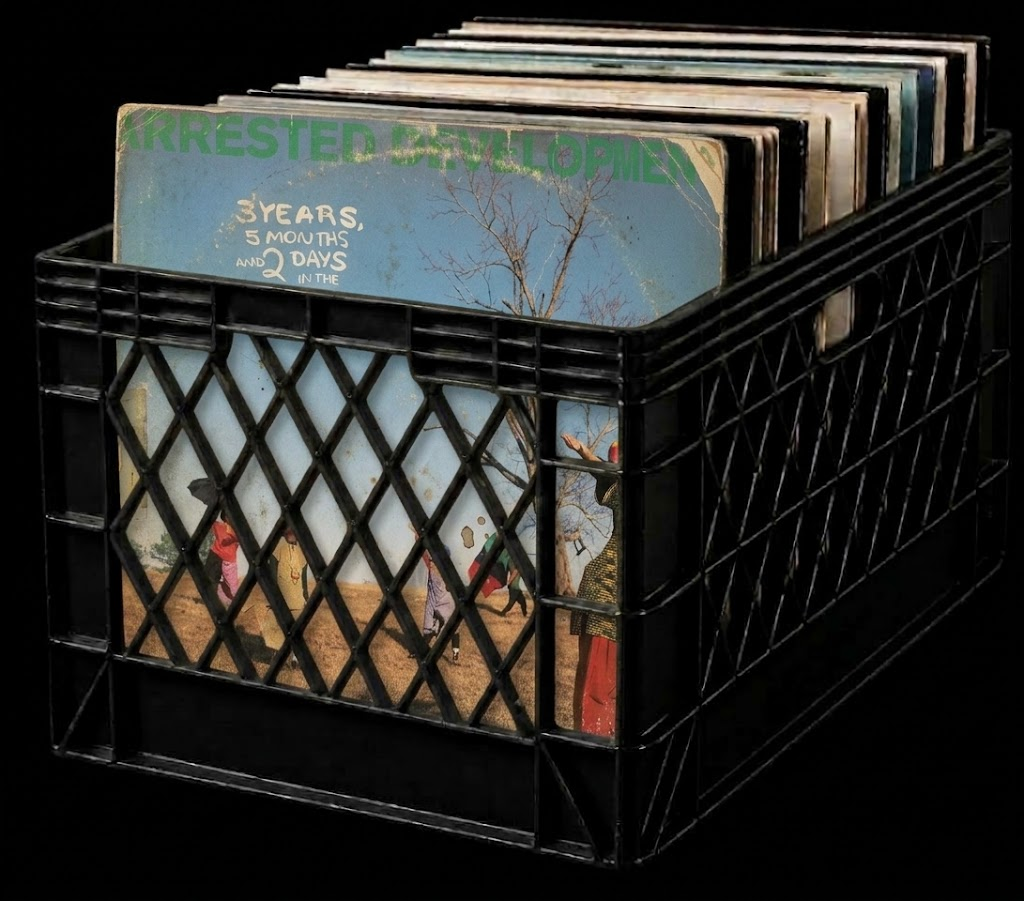
To give you an example, our first album, 3 Years, 5 Months and 2 Days in the Life Of….did very well in Japan. Our second album, Zingalamaduni, did better. Then we broke up here in the States, so of course we weren’t releasing anything. I dropped my first solo album in 1996, it did nothing here, and it did extremely well in Japan — better than both A.D. albums. What that taught me is that they were willing to take the journey with me as a creative. That was not only very important, it was what kept me alive. It was like a breathing machine for me as an artist. If I hadn’t had Japan during that really interesting time, I probably would have had to do something else in life.
SV: They really do go on the journey with you as an artist. When you make a fan over there, they’re a fan for twenty or thirty years. In America it’s, “Okay, onto the next thing.” Very fickle.
Speech: Exactly right.
SV: Looking at the trajectory of the culture since the early ’90s, what part of hip-hop history do you think your generation may have failed to properly pass down? Was there a part that didn’t get transmitted to the ensuing generations?
Speech: There are definitely parts that didn’t get passed down. I just don’t think it was our fault. I mean our generation — a lot of us were trying to create principles. KRS-One had a whole spiel about what is hip-hop: you don’t do hip-hop, you live hip-hop, you are hip-hop. During the high of our run, Arrested Development had a movement that we put money into, called “Save the Vinyl” or “Power to the Vinyl” — you’ll see it at the bottom of any of our vinyl records.
At that time CDs were taking the place of vinyl, and we realized vinyl was key to the art of hip-hop — scratching, and this is prior to Serato, but even just record collecting and all these things were part of the culture. We were pushing that with actual budgets, going to record stores to try to empower them. But new generations, in any music, have their own ideas and priorities.
I think a perfect storm of things happened in that ’94 to ’97 era. One is that the Telecommunications Act was passed by Bill Clinton, which allowed major corporations to buy up smaller businesses and basically monopolize their sector in all the various cities. That was happening at the same time as someone like P. Diddy — I mention him only because he was so successful at what I’m describing — was pushing an agenda of being a corporate mogul, a businessman, heavily influenced by Andre Harrell from the Uptown Records days, and by Russell Simmons and what he did with Def Jam and Profile back in the Run-D.M.C. and LL Cool J days.
He was inspired by that, he wanted to take it further, and he was successful at it. He really did bring about the private jet era and the era of becoming a corporate person, which was perfect for corporations that already didn’t really care about the art form of hip-hop. They only cared about the bottom line. So for hip-hop artists to be excited about joining with corporations and thinking like a corporation was gold for them, and they promoted that thinking to the new generations of listeners, who loved and celebrated it in their own ways.
Gone, in some ways, were the days of more creative sampling — what Gang Starr did, what Premier did — and it was replaced by taking old hits like “I’m Coming Out” by Diana Ross and making a brand-new song with it. That’s what Puff was doing, taking a Sting hit, “Every Breath You Take.” Even with “People Everyday,” we interpolated the chorus of the Sly and the Family Stone song, and we surely didn’t use whole parts of their stuff.
In “Tennessee,” I used a word from Prince, but not whole riffs. And I mention Puff not to pick on him — Hammer did it too, with Rick James on “Can’t Touch This.” Don’t get me wrong, all of those were great musical moments, I’m not knocking the music. I’m just saying there was a perfect storm of thought that left a lot of the old principles behind, and new principles became more prevalent. Before you knew it, even great underground artists, very pure hip-hop-oriented artists like Common, ended up doing Sprite commercials. These things became normalized, the culture changed, and the new generations left a lot of the principles behind.
SV: You’re known for being unusually thoughtful and deliberate in interviews–and our conversation is no exception. Do you ever think overthinking helped your art more than it hurt it?
Speech: I think overall it’s probably hurt it more, but at the same time I’ve accepted that it’s just who I am. I have a choice to dumb down, a choice to simplify, but I’ve always been scared of doing that, for a few reasons. One is: what if I dared to have success doing that? And if I did, how do you maintain that success when it wasn’t your real self in the first place? Now you’re trying to navigate something without your own sight. That, to me, is scary. I never wanted to do that. But I do think being very cerebral — I overthink everything, I overthink marketing — that’s a good quality. I like that quality in other artists too. So I’ve learned to accept it. It’s just part of who Speech is.
SV: You’ve spoken in recent years very openly, which I find admirable, about personal growth, therapy, and maturation. Has therapy changed your writing, or primarily the person doing the writing?
Speech: Definitely the person doing the writing, though they’re inextricably linked. I use the term “therapy” out of convenience, because a lot of people can relate to it. For a long period of time I was part of a church called the International Church of Christ, and in that church we did what’s called “discipling” — basically therapy within the church confines, where church members gave you advice based on scripture. I did a lot of therapy with licensed therapists as well, but I also did way more of that discipling in the world I was in, which was a lot of advice from people in the spiritual realm.
SV: Let’s talk about spirituality for a moment–your views shifted over time toward a more biblically centered spirituality, while still seeing Christ as revolutionary at the root of lasting change. How does that framework guide the balance you strike between critique of systems and messages of personal transformation in newer music?
Speech: It still strikes me as the most effective way I see things working. I believe we’re here for some time, put here on purpose by a creator, and that we’ll leave here on purpose and there’s something after this. I look at God as a revolutionary who cares about the lives of every single created thing, humans in particular, whether lowly or high, rich or extremely poor and unnoticed in society.
I think God sees them as equally important. Because of that, I see spirituality as a great source for a worldview that sees people as equal and inherently valuable, not because of the clothes they wear or the money they’ve amassed, and that sees this earth as purposeful and intentional, not something to take for granted — designed for us to thrive and survive, and as long as we take care of it, it will take care of us. Those are the basic spiritual principles I believe.
SV: I want to ask about the 16 Bars project, which I find extraordinary — working inside a jail with incarcerated men, highlighting the systemic issues endemic to that system. What lasting lessons from those relationships continue to shape how you think about redemption, policy, or storytelling?
SP: I’ll start with policy. To me, policy is the most important thing, because policy is what justifies sending people into basically exile for many years for often nonviolent crimes that hurt very few people, if anybody. I saw so many people there on minor drug charges, spending real amounts of time in prison. They weren’t being rehabilitated, and they were extremely important human beings to their families and neighborhoods. It was a waste of great gift and talent, people behind bars for no good reason.
For those who committed violent crimes, I understand they need to be separated to prevent that from happening again, but so many weren’t violent offenders — it was small drug charges, and some of those drugs are now legal in many parts of the United States, with people making tons of money from it while these people are still behind bars. So policy is deeply important, because once you get wrapped up in that system, the policies that dictate it handicap so many people’s lives, so many families’ and children’s lives. It’s extremely sad, and it’s very changeable.
SV: You’ve also spoken about hope needing to be paired with action, and about refusing to wallow in oppression narratives. Where do you currently see the healthiest expressions of that combination in culture or community work outside of music?
SP: I still see it in the grassroots. Grassroots organizations have always done the best at living with people, staying in the issues affecting the people, and doing the work right there on the ground. I did an event two days ago in San Antonio, Texas, and on purpose we did it for very cheap.
The goal was to bring people out to the theater to watch great entertainment, but while they’re at the theater, have a ton of grassroots organizations set up tables and reach the town. If a thousand people came, those organizations have a chance to share what they’re doing and why it’s important, and the ask is usually either a very small amount of monetary help, or your body, getting out there and serving — but it’s always less than people think, and it actually makes such a big difference. So I think grassroots movements are still where it’s at.
SV: In terms of still actively creating as we get older — you’re in your late fifties. What can a 57-year-old MC say that a 25-year-old can’t?
Speech: A million things. I’ve lived so much life, I have so much water under the bridge, there’s a certain perspective only a person with that much experience can speak from. I’m very proud that with each record I’ve dropped since I’ve been in my fifties, I’ve made it a priority to express these older ideas. I’m not ashamed of my age or the perspective I come from. In fact, for youth and for people around my age, I think it’s the sweet spot of what I offer the world. So I’m very happy sharing things from the perspective that only I can share.
SV: What does the creative process look like for you nowadays — lyrics first, beats first?
Speech: All of the above now. My life is so full — a wife, children, properties, businesses — that inspiration comes in numerous ways, in different waves. I collaborate with a lot of producers, and I produce as well, so sometimes producers send me beats and that starts me writing.
Other times I’m just writing clever bars I think are really well written, throwing them down without a beat or music anywhere in sight, then using them when it’s time to actually write a song. And technology has changed so much that there are so many new ways to create — I can get tracks from somebody across the world via email, they can send me a cappellas, I can sample things on my phone and chop them up instead of using a sampler or sequencer, there are millions of different drum machines. I’m not saying it’s better, it’s just a vast diversity of ways to create.
To be quite honest, if I had my choice, I’d prefer the older ways, because you had to be in the room. There’s an impromptu energy you can’t do as much of today, and there’s a collective, collaborative effort to make something great — an engineer in the room, maybe an assistant engineer, some musicians, all of us with different ideas of what’s great, putting our ideas on the table and trying them in real time. It’s hard to recreate that energy today without bigger budgets, and budgets don’t make financial sense now — even though I have the money to make a record with a big budget, it makes no sense to do so knowing records don’t sell anyway, and there’s no way you’d make that money back. So the new creative ways are great, interesting, and still inspiring in their own way.
SV: You’ve been in the public eye for three or four decades, and when you’re there that long, narratives form around you. What’s the biggest misconception people still have about Speech after all this time?
Speech: Some people think I’m too preachy — that narrative caught on pretty well. There was also a TV show called Unsung on TV One, maybe fifteen years ago or longer, and the episode about us really painted me as a tyrant and the main reason the group broke up, as someone who didn’t want to give people credit, with a kind of Napoleon-complex narrative. That really stuck, so a lot of people feel that way about me. Those are two.
SV: You have a large body of work, but there’s still maybe something unsaid or unfinished. What haven’t you said yet because you haven’t figured out how to say it?
Speech: I’m sure there is. The late ’80s and early ’90s were what people call the golden era of hip-hop, and the reason I think so is because we were able to say so much. During the biggest run of our career, when we were consistently on MTV and the major TV networks, we were using the n-word and discussing the difference between two versions of it, and the difference between a Black man and that word, and the ignorance that can sometimes take over the mindset of people in the Black community. Those are things that now aren’t allowed to be said.
As a songwriter now, there are concepts you just can’t address with any expectation of getting them into the public sphere. I can write it for the sake of writing it, but if I really wanted to reach people with it, there’s much less chance, because things have become more censored. And even what’s considered “conscious” in hip-hop right now is so much less conscious than what we were doing — I’m not dissing, just noting it.
What’s considered conscious now is anything uplifting or anything that touches on politics, whereas back in the late ’80s and early ’90s, they were talking about “Fear of a Black Planet” and Dr. Frances Cress Welsing, who was talking about white people being afraid their DNA would be bred out in future generations. That kind of stuff was mainstream — “Fear of a Black Planet” was a huge record. And N.W.A’s “F— tha Police,” in the ’80s, was a huge record. These kinds of things can’t be said now and still have mainstream success.
SV: You’ve spoken openly about wanting to retire within a finite window while still needing to support yourself through music. How are you balancing the creative drive with financial realities and the desire for a quieter, more rooted chapter?
Speech: To be honest, I’ve had to work because I want to retire comfortably. I don’t want to work like I see so many of my peers in the music industry working until they die — I mean that literally, not figuratively. My mother is now 87 and still works on her newspaper, and I don’t want to do that.
So I’ve been focused on this — on the next record we’re recording now, there are numerous songs talking about financial planning, which is something I’ve been doing a lot of, because I want to retire comfortably and live the rest of my years — however many that is, since a lot of people are living long — without having to go back to work. My wife’s mother, for instance, worked at GM and had an incredible retirement package, and in the music industry, I don’t have that.
SV: No, you certainly don’t. You get “thank you, see you later.”
Speech: Exactly. We’re fighting just to get our rights back to our masters — it’s been about thirty-five years, and even that is tough.
SV: You emphasize high-level entertainment first, with messages of hope, inspiration, and love. When you look at the body of work still to come, what feeling or shift in the listener do you most want to leave as a consistent imprint?
Speech: I hope it’s everything you just said — high-level entertainment, and I agree with everything you just said. I want the music to still reflect that, and I feel we’re doing that. Personally, I think the magic with our first album was the pure exposure — the fact that it was known as a cool record to listen to, so people listened. And I feel that if we ever got that kind of wave again, people would appreciate what we’re doing now possibly just as much or more, because I really believe in this new material.
SV: Speech, thanks for your time.
Speech: Thank you, man — it was a great interview. You asked really great questions, not run-of-the-mill.
___
Speech’s newest album is “Adult Contemporary Hip Hop.”
Leave a Reply
You must be logged in to post a comment.