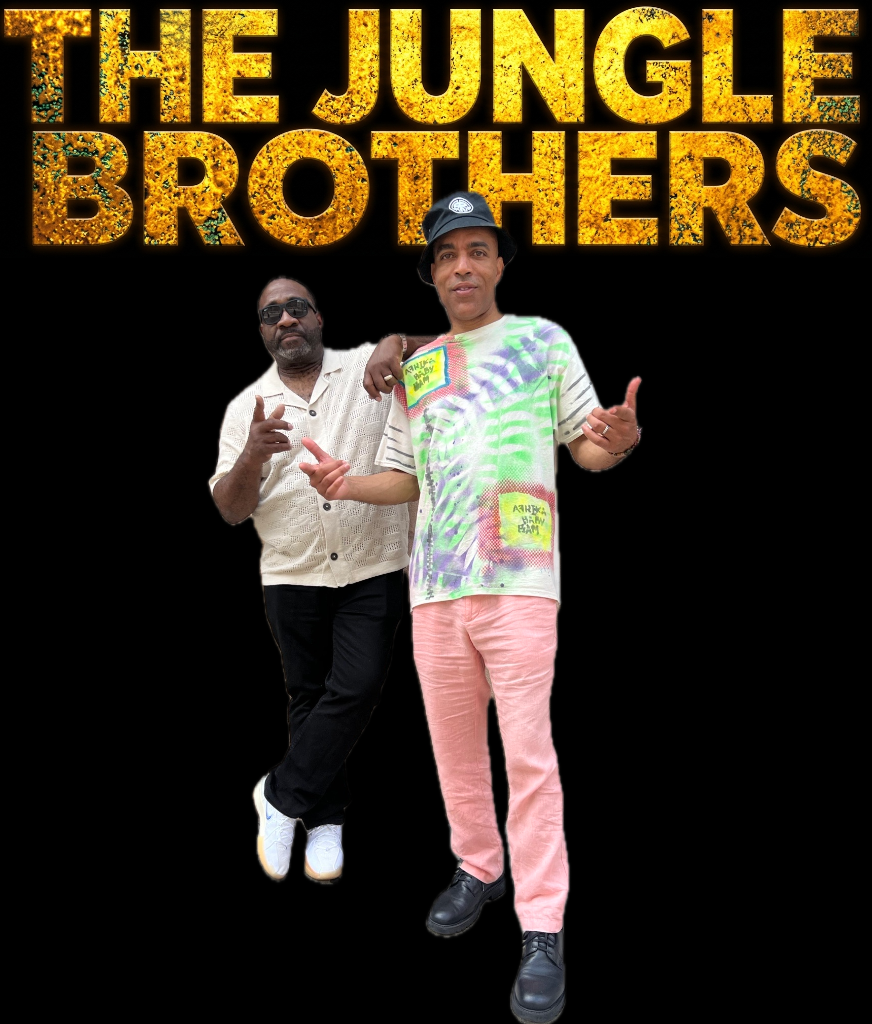
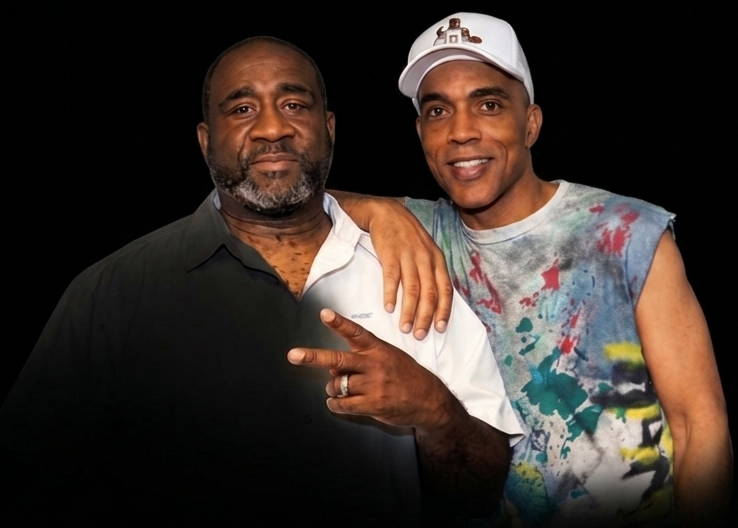
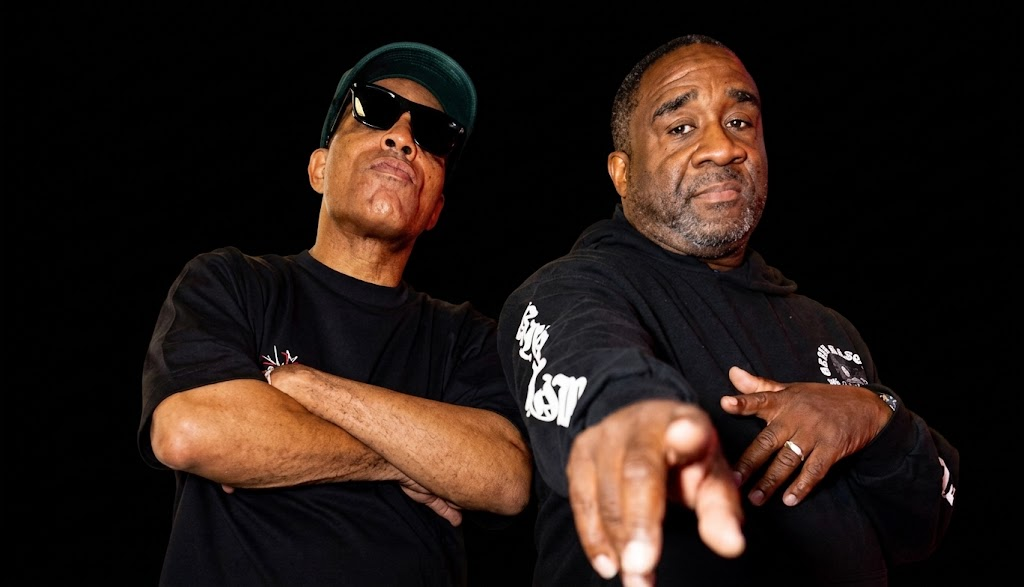
In this candid retrospective, hip-hop pioneers Afrika Baby Bam and Mike Gee of the Jungle Brothers reflect on their organic beginnings crafting pause tapes in high school, shaping the foundational ethos of the Native Tongues movement, and continually evolving their boundary-pushing sound across decades.
___
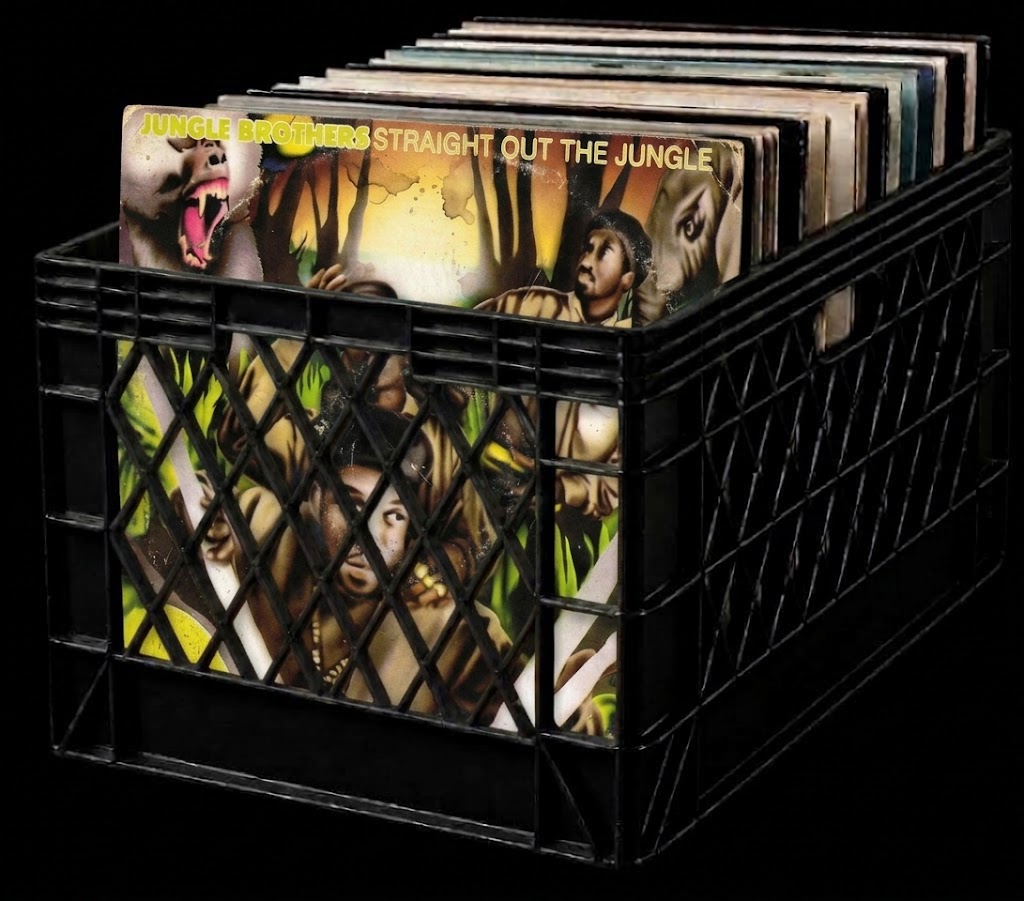
As pioneer members of the Native Tongues collective, the Jungle Brothers—comprising Mike Gee and Afrika Baby Bam—redefined hip-hop history by pioneering the fusion of jazz, hip-hop, and house music, notably becoming the first hip-hop act to collaborate with a house-music producer on their seminal 1988 debut album, “Straight out the Jungle.“
___
Sounds Visual: You guys started making pause tapes before you even naturally thought of yourselves as musicians. When you go back and listen to those early tapes, what do you think you were learning — was it DJ technique, production, storytelling?
BAM: Probably more DJ-like, almost beat-matching, but it was really just about capturing the vibe — I think it was more about developing the ear for the sound. Just like playing on the radio at the time. It was about developing your ear, really putting your finger on what’s hitting, what’s a banger, as they say.
SV: In addition to DJ technique, production, and storytelling — were you also playing with the idea that recorded music could be manipulated?
BAM: I guess so, at that time. My first introduction was pause tapes, but also — my cousin and I would always try to loop things, like an emulated loop. That was one of my first things I’d call a DJ experience.
SV: Talk to me about meeting in high school, then, and what made you guys think, “I need to make records with this guy.” What did you hear in each other?
BAM: I liked that Mike was laid back — his lyrics, everything was laid back. The other guys we were freestyling with in the stairwell at high school were a little more assertive, in-your-face, slightly narcissistic, which was the attitude of the day — braggadocious lyrics. But Mike’s delivery was clever, slick stuff about, I don’t know, a day in the life of Mike G, seventeen years old. It was funny and humorous, but with a straight face. He still has that sense of humor — I like that, it’s understated.
MIKE G: I felt the same way from the beginning about Bam — always had that funny sense of humor, super witty and spontaneous. So when we were doing that original cypher, you could hear the difference — me and Bam just clicked immediately. I was like, okay, this is how it’s gonna go.
SV: Before you guys all got together, did you ever imagine becoming a recording artist, or was hip-hop simply an unexpected vehicle for things you were already doing?
MIKE G: If you go back to those times, I really wasn’t thinking about hip-hop — it hadn’t fully formed yet. I was still hearing things in the streets, or hearing things at my grandmother’s housing project and thinking, “Oh, that’s cool,” but it was alongside other things. You’d hear Jimmy Spicer’s “Super Rhymes,” then Mtume”Juicy Fruit,” then Kraftwerk, then Chaka Khan, then Rick James.
It was more that funk coming out of the Motown era, then electro-funk cutting in, then techno cutting in — a lot of the early rap records, thinking back now, were like Mantronix, more about sounds and what you could do with keyboards and drum machines. Then I discovered the mix shows and heard more rap records, and the radio started playing a few select artists like the Fat Boys, artists marketed more for the mainstream, but they were still surrounded by all these other artists I mentioned — and then hearing jazz records, disco records, not even knowing what to call any of it genre-wise. It was all a melting pot to me. I didn’t even think you needed a studio.
The other thing was the boom box — roller skating, break dancing, it was all centered around the boom box. Then the Walkman came, cassette players. Before that, for our parents it was amplifiers and record players — you’d hear your parents drop the needle on a record and brag about whatever stereo system they’d bought. Then you’d go to a block party and see them take that equipment from the house out onto the street.
So in my mind, I’m thinking, how do I make some of those sounds I’m hearing outside — so I just went straight to my father’s equipment, plugged the turntable into the radio, and started making pause tapes. That was the equivalent of what a nerd would do if given a kit to build a car or a radio. You’re not thinking about being a company, needing a warehouse full of inventory — it’s resourceful, hands-on. I could take this needle, bring it back, bring it back again. Take something off the radio, with my double cassette I could play back one, put in another part and catch just the part of the original recording I wanted, loop it, make it repeat, and then take it outside on my radio and say, “This is my record.”
I wasn’t even thinking about it as a career at all. I hadn’t even seen a studio. In fact, the way Straight Out the Jungle was made was just off the turntables, the way I was mixing records at home — I wasn’t even thinking about getting into a studio at that time. Straight Out the Jungle was almost like a pause tape because there’s no sample involved — it was literally playing the record, playing the beat on track one until it finished, bringing the beat back and playing it on track two until it finished, punching in and playing it back on track one — it’s just overdubbing.
In 1988, “Straight Out the Jungle” didn’t just drop—it detonated as the Jungle Brothers’ raw debut, macheteing open the Native Tongues era with funk breaks, rainforest sound effects, call-and-response fire, and the kind of boundary-smashing, sampledelic innovation that forever rewired hip-hop’s DNA and paved the way for De La Soul and A Tribe Called Quest.
SV: Obviously pause-tape edits were huge for the album’s distinct sound, but was there anything else? An Akai, an E-Mu, an SP-12?
BAM: That stuff was around — there was a four-second sampler, I can’t remember the name, I could Google it later. There was an SP-12, there was a LinnDrum — that was what was in the studio, but we wanted that organic sound, we didn’t really do the drum-machine-keyboard thing. It was more like: find the break, find a bassline that goes with the break, do some scratches, and put down your vocals.
“On the Run” was one where we figured out how to trigger the four-second sample through MIDI with the SP-12 — even that was difficult, but we got around it. It was kind of like, okay, you’ve got turntables in the studio, we’re just going to use that.
Kool DJ Red Alert, uncle to Mike Gee and the KISS-FM legend who fostered the Jungle Brothers from the jump, blasted their early cuts on air and offered mentorship.
SV: Beyond the early radio breaks on Kiss FM, what single piece of advice or example from Red Alert—both as an uncle and as a culture leader—proved most durable when navigating the music industry?
MIKE G: One of the great things he emphasized was our presence on stage — making sure the live aspect of what we always wanted to do was on point, watching your surroundings, staying true to the music. That was kind of the meat of what I took away. Performance was huge — if you had a dope record but didn’t come correct live, it was almost the end of your career. And remember, at that time there was no social media to work around it — you’d be a flop before anybody even knew what you were doing. It was really important to present yourself well on stage.
SV: Different industry, different time.
MIKE G: Yeah, definitely.
Born from an impromptu studio session where the Jungle Brothers slapped their raw New York rhymes over Todd Terry’s “Can You Party” foundation, “I’ll House You” hit late-1988 reissues of Straight Out the Jungle as the first major non-Chicago hip-house smash, detonating a club-conquering fusion that permanently smashed the walls between hip-hop and house.
SV: When Todd Terry brought the beat for “I’ll House You,” rap and house were sort of separate subcultures at the time. Beyond the BPM shift, was there a specific cadence or technique you had to adopt to stay on top of a house track compared to a more straightforward hip-hop beat?
BAM: No, it was just about rocking the beat — that was the approach back then, dropping the beat, like Mike said, your live performance. You put togerher a routine then perform that. You might go through different kinds of beats that match your rhymes. We weren’t thinking about what genre the beat came from.
MIKE G: Exactly. Because at the time, house was just seen as a branch of disco, and it was easy to float right over the beat, and we did it effortlessly. People say “rap and house” for that time period, but it was really all just hip-hop — I don’t remember that actual distinction being made at the time. People would just say “hip-hop jams,” and always at the end of the night the house jams were coming in. There was dance music that had its own full scene playing everything, but house music would always come in at the tail end of a hip-hop party.
BAM: Back in the day, DJs played songs that had the most feeling, the most vibe, for the block party — you could hear Billy Squier’s “Big Beat” played right after Kraftwerk.
SV: A blurring of genres….
BAM: Yeah, but I gotta be clear — I never even heard the word “genre” used for these things. It was just, “This is the jam,” based on the records that had the feeling. You still put on “Apache” and get goosebumps. You put on “The Mexican” and still get goosebumps from that bassline. Timeless because of the feeling in those records.
For us, without a genre, we just had the feeling — that set the intention. You’d dig and look for records that made you feel something as a DJ, decide “I gotta dig in the crate and as a DJ, I’m going to play it at this moment,” or as a rapper, “I’m going to say this at this moment.” The music’s talking to you, and you’re talking back — you’re not thinking, “I’m going to invent a whole new subgenre,” you’re not thinking “I’m going to get into dubstep now.” It was organic. It was all organic and underground.
SV: “I’ll House You” had both a street meaning and a house-music meaning. When you guys wrote that —
BAM: I didn’t even fully register that at the time. When I heard myself say “I’ll house you,” my next thought was, yeah, that’s what we say in the street, “I’ll house you” — and I also slightly registered it as the name of this style of music, but I didn’t put too much weight on it. And then the third meaning was more like, to a girl, “I’m going to put you in my house, you’re in my house.”
I do songwriting exercises now, watch videos about professional songwriting, and when they break down literary devices —double entendre, triple entendre, inversions — I realize, oh, that’s what that was called, what I did. At the time it was just common language, the way we talked to each other. I got lucky in that sense — “Oh yeah, cool, house can mean three different things.” But that wasn’t how I approached the rest of the song, my verses and stuff — it was just going to boost, having fun.
SV: Let’s talk about Calliope Studios in the late 1980s, since it’s legendary for that loose, communal vibe, sharing equipment with De La Soul and Tribe. Could you talk about that era of the studio? And was there ever an instance where you guys had to figure out who got to keep a specific sample or loop or break, if two groups fell in love with the same record?
BAM: I don’t think we had that problem, because — De La, well, we did our first album in Coney Island, and that was done, and then we met De La and did “Buddy” at Calliope. When I started the second album, Pos gave me a four-track, so I was doing a lot of pre-production at home, trying things out. By the time I got to Calliope, I had that four-track material to remake from the turntable. And at that point the Akai S950 and keyboards were there too, but the engineers knew how to use it, so they helped me basically transcribe everything from the four-track onto a twenty-four track.
MIKE G: And a Numark sampler, can’t forget the Numark sampler.
SV: Did you guys ever feel a responsibility as being catalysts for setting the tone of the whole Native Tongues scene before it became a branded movement?
BAM: I guess we were the catalysts, because just before us it was the Run-DMC era — I’ll call it ’84 to ’88 — which was track suits, gold chains, hard brash keyboard and drum-machine beats, loud braggadocious rap. Then Rakim slipped in with this very calm, laid-back flow, and I distinctly remember one of the first sessions, I tried to rap loud and the engineer said, “No, no, no, calmer — might have been “Straight Out the Jungle,” that particular record — and we just kept going with that calm, laid-back flow. EPMD also had that calm laid-back flow. And there was also Nice & Smooth, still doing more of the old-school party style, echoes on their voices, like the Cold Crush Brothers style.
Then Boogie Down Productions were documenting that first era of hip-hop with “The Bridge is Over” and “South Bronx”–he was influenced by Run-DMC but adding some Jamaican patois to it, and the beats were smooth and triggered — Ced Gee was doing a lot of triggering with the SP-1200.
So you can see a shift away from that Larry Smith/Rick Rubin style of production toward what would later be known as the loop-sample-based stuff that Soul II Soul and De La Soul and Tribe used. That was just a moment where things shifted from drum machines into these other styles you could sample and bring under the hip-hop umbrella.
SV: It was the next link in the chain.
BAM: Next link in the chain, and we were there — we were there first.
SV: One of you told a story about hearing a European remix of your record before you even knew it existed. Does that ring a bell?
BAM: Yeah, that was the remix done by Aphrodite. We were doing an interview at a radio station somewhere in Europe — Mike might remember exactly — and the guy said, “Hold on, I’m about to go to commercial break, then I’ll put the mic on you guys,” and he had this tape machine, cued something up, played about four bars of it, and I said, “Whose record is that?” And he said, “Yours.”
MIKE G: They played a bunch of mixes for us, and we honestly couldn’t place it. Turned out it was already out there, a remix of our own track.
SV: Did that experience teach you guys anything about how music evolves once it leaves your hands?
BAM: Not really — I mean, thinking back now I see the logic from the record companies’ side. Remixing was another thing going on then — there was a group called Coldcut, they did “Pump Up the Volume.” We heard that record and thought it was cool, but I didn’t think of it as a remix– because it reminded me of us making pause tapes, and I just thought, “That’s another dope pause tape,” a lot of edits of different records put together — collage-style production. But I never thought to do that with our own records. When I heard the Aphrodite remix, I didn’t overthink whether it was an A&R move — I just thought, yeah, that’s another way you can make a beat out of our lyrics.
In 1989, “Done by the Forces of Nature” exploded as the Jungle Brothers’ golden-age masterpiece, fusing Afrocentric consciousness, spiritual vibes, and eclectic jazz-funk-house sampling into a Native Tongues blueprint that critics still hail as one of hip-hop’s most inventive, influential, and criminally underrated albums of all time.
SV: Speaking of collage-style production — I wanted to ask about Forces of Nature, for example, which features ambient forest sounds, some spiritual elements, layering of jazz horns. Was that environmental production style inspired at all by dub reggae sound systems, or movie sound design, or radio plays?
BAM:: From my angle — before I started making pause tapes, when I first got my hands on a Radio Shack recorder, like a journalist would use, I’d sneak-record stuff off the television, record any sounds, and try to edit them together in a way I found interesting, then play it back. There’s a lot of things we did on “Straight Out the Jungle” that were basically me practicing — auditioning, I call it — trying different things to see what worked best over a breakbeat.
You’ve got to understand, at that point, the break was everything, the drums were everything — we didn’t want to hit the rest of the record, say Billy Squier, once it got to that drum break, we’d stop right there — because these drums coming through with reverb, that big-room vibe, that’s dope. Then what if I put some wind over it — now it means something else.
On Forces of Nature there’s a song called “In Dayz 2 Come” that starts off with something I recorded off the radio when I was twelve years old — I caught this lady who called into the station completely clueless about what rap records were, saying, “Why are you putting your hand on the record and scratching it, what do you call those things? Rap records?” — sounding frustrated because she didn’t understand what was happening. I thought, I’m going to use that. I dug out the tape and put it in. Like what Malcolm McLaren was doing with “Buffalo Gals.” In those early rap records you always heard those interjections of sound effects or phrases.
Bam: It was about putting as much substance into the record as possible.
Mike G: For me, a lot of times when Bam would come and play certain things, I’d think, “Oh, that’s dope” — it was about trying to make all the songs connect and tell one great story.
BAM: And in the cassette culture, you’d hear tapes with the echo and the whole presentation, even if it was just a DJ without rappers — you’d think that’s cool, because even though they’re using other people’s records, they owned it, the way they put it together and put their own top lines on it.
SV: One other thing I’ve always appreciated about you guys — obviously there’s the great narrative sense, the storytelling, and things like on “On the Run” or “Jimbrowski” there’s real humor. A lot of your tracks have this distinct comedic edge, not always but sometimes. Was that influenced by stand-ups like Richard Pryor or Eddie Murphy, or was it just a reflection of how you and your friends joked around in the neighborhood?
MIKE G: A little bit of both. Richard Pryor, definitely a king, along with Redd Foxx, Benny Hill — those are kings of comedy. But I think definitely between me and Bam–I had a group of friends that didn’t joke around like me and Bam did.
BAM: Yeah, it’s like being lighthearted. You in a serious situation, and then you see it in a lighthearted way or let it bring us down. People in England, when we went on our first tours in England and Germany, I remember people trying to say in their best English or German, several times, they’d put their hand up to their mouth like this and say, “It sounds like you recorded with a big smile–this album sounds like you recorded it with a big smile on your face.” And I thought, yeah, we were — we were teenagers, we were happy, we had access to a studio and equipment, and we took whatever we were doing in our bedrooms into the studio.
SV: I also wanted to ask about that era’s gatekeeping — obviously it was a different time of the music business, where gatekeepers had a lot of control over image, from album covers all the way down to themes in the music. A lot of late-’80s rap leaned into street realism, and you guys were rhyming about spiritual balance and Afrocentrism. Was there ever pressure to toughen up your image or lyrics to fit what was current at the time?
BAM: From my perspective, all I was thinking about was the block party, the radio, the boombox, the jam–that’s all I was thinking about— rocking the party, rocking the jam, whatever ideas you had, and being original, not copying someone else, not thinking “this is the move now so I’m gonna do that too.” You customize your style to your own feelings — you pick the records, pick the clothes, pick the way you phrase things, come up with your own concepts from your own thoughts, not by comparing yourself to what other people are doing. But when you bring it to the people, you’ve got to present it well, perform it well, like Mike said.
There were no labels at first — those weren’t major labels at first, they were independent labels. We saw that era come in when — you know, when Warner Brothers bought Cold Chillin’ Records, and messed with the ecosystem — and then Jungle Brothers and other artists started getting on major labels putting out rap records, and you’d think, “What are they thinking, is this even in line with what’s going on in the community?” It was the beginning of corporate interests trying to extract that culture to see if they could make it mainstream, and of course they missed the mark at first.
In 1990, the Jungle Brothers appeared on the Red Hot Organization’s Cole Porter tribute, Red Hot + Blue (“I Get a Kick”). Following a four-year hiatus, they released “J Beez Wit the Remedy” in 1993, followed later by their fifth album, “V.I.P.,” produced by Alex Gifford of Propellerheads. The collaboration led to the Jungle Brothers featuring on Propellerheads’ “Take California (And Party)” and “You Want It Back.” Their last album of original material, “All That We Do,” arrived in 2002.
The group’s work also reached gaming and international charts: “What’s the Five 0” appeared in the 2001 video game FreQuency, and in 2004 they teamed with UK producer Mr On for “Breathe (Don’t Stop),” inspired by a bootleg mashup of Q-Tip and Michael Jackson. In 2005, they issued “This Is…”, a double album showcasing their greatest hits alongside remixes from artists like The Wiseguys and Stereo MCs.
SV: You guys have played in front of everyone from hip-hop purists and house heads to rock and pop crowds. Was there one gig that stands out as the most challenging venue or audience you ever had to win over?
MIKE G: I think performing in front of all those different categories of people made us more well-rounded. The mindset was still, we’re rocking the jam, we’re rocking the party — but now we’re at a drum-and-bass thing, now we’re at Fuji Rock Festival with Fred Durst from Limp Bizkit, now Nelson Mandela’s getting out of jail and we’re on stage with Neneh Cherry, now we’re at Wembley Arena with the Beastie Boys, now we’re at some underground club in Brazil that only plays boom-bap.
We were all over the place, just putting good energy into our show, so for people who didn’t know the origins of it, they still saw it well represented. We didn’t think, “We’ve got to win these people over with our style of music” — we just gave them good energy. People still say to this day, “Man, you have great energy on stage,” whether we played the Montreux Jazz Festival with Kool and the Gang. Box ticked. We weren’t up there with saxophones and drums, but we went up there with great energy, great sound. Major labels [are] bottling and labeling things for market share — dividing things into apples and oranges — but we were just, “This is good food.”
BAM: Exactly.
SV: Major label transitions are notoriously tricky, and so many artists I speak with bring up the same frustrations—promotional drop-off or feeling like no one at the new home truly understood what they were building. How was that move to Warner Brothers for you two? Did those same challenges pop up?
Mike G: We were nineteen years old — marketing, that wasn’t really our department. But going back to your other question, yeah, there was one time they really pushed for “we need twelve more house tracks,” they wanted to push more dance stuff, and we were like, we’re so much deeper than that. That was the time when, as the ’90s progressed and hip-hop’s landscape changed to a certain extent, people would say, “You’ve got to be more strict, more disciplined” — and it’s like, really? People always say “this is the real hip-hop” — do you actually know what the real hip-hop is?
SV: If you guys were sequencing a new project today that deliberately bridges your ’88, ’89 aesthetic with more modern tools, is there a single element from the classic era you’d protect most fiercely?
MIKE G: I think we constantly bring all of that natural energy forward — we bring the whole bag, we don’t just kick out our favorite vegetables, we bring it all. Check out the new EP, Concrete Jungle — we’ve got strong boom bap, melodic flavor, the humor’s in there, a party rocking element. It’s not what we bring, it’s how we bring it that says the most.
SV: We live in the streaming era now, which pays significantly less per play than physical sales or licensing did, even though those deals were screwy too. If you were mentoring a younger group today, what’s the single piece of business advice you’d give them before they sign a deal?
MIKE G: Set up all your platforms first — all your social media, set it all up so you can keep your own ship steady, which is basically streaming your own channel — and manage your ownerships. The internet now gives everyone a TV channel, and it’s like, what are you gonna do? It’s important for people to set themselves off to be ready, because now once you you upload, it’s everywhere.
SV: And it’s forever.
Mike G: And it’s forever.
SV: Documentaries and music journalism often frame De La Soul and Tribe as the center of the Native Tongues movement, even though you guys laid a lot of the groundwork first. Do you feel history is giving you guys proper credit, or does that narrative kind of miss the point of what you were building?
MIKE G: I think history hasn’t even caught up yet. I think you’re correct, but the story’s not over. I remember one time we had an opportunity to do a “Where Are They Now”-style segment, and I was thinking, should we do it? And Bam said, “Man, our story is far from over” — like, they haven’t even caught up yet. So I don’t really pay attention to that narrative anymore. Our story will last forever.
SV: You mentioned the new EP–let’s give it a plug.
BAM: Concrete Jungle came out June 26th. We’ve been debuting it on social media platforms, On the Radar, Okayplayer, a few others, already debuted some of it at concerts. The single is “Make the Party Rock.”
We’re showing people we’re still in good form, and we’ve got a good project out. For me personally, before we made this EP — when I came back to this, I didn’t know how long I’d be doing it — but I did a comedy-rock-rap album called Shut the Fuck Up. The single “Shut the Fuck Up” is about all the gentrification going on in New York City.
I’ve kind of evolved into more of a punk aesthetic over the last fifteen years, living in Europe, painting, painting clothes, experimenting with art — it’s been fun to keep doing the things I was doing before the world knew “Jungle Brothers.” I’m kind of an outlier — I’m from Bay Ridge, not Bed-Stuy, not Harlem, not the Bronx. There was no hip-hop in Bay Ridge except what came through the radio, and I built off that. When I’d go to my grandmother’s housing project, that’s when I’d hear what you’d call hip-hop or rap music. So I had a lot of other cultural influences I didn’t put out there much, that I’m now getting the chance to explore, 38 years later.
SV: After 38 years of music and live performances — is there any unfinished creative conversation, either with each other or past collaborators, or with the wider culture, that still feels urgent enough that you’d want to clear studio time to finish it?
BAM: I just read this book called Assembling A Black Counterculture, about the Belleville Three in Detroit, the guys who invented techno — that really piqued my interest, because we’re known for hip-hop and more electronic-adjacent stuff, and it’s just peaked my curiosity to see what’s going on in Detroit, see if there’s some vibe or grit there I can attack, that I can flow to. It seems like the producers over there — The Moodymans, the J Dillas— are very progressive with the sound, they don’t try to just make hip-hop and R&B, they try to be more futuristic.
SV: You guys once noted that hip-hop became increasingly formulaic after ’96, ’97, and I agree. Is there anyone working in recent decades, in any genre, who reminds you of that pre-formulaic energy?
BAM: Moodymann, for me.
MIKE G: I can’t really name a specific artist, but definitely some producers. I actually introduced Bam to Moodymann — it sounds a little plastic, but even Pharrell to a certain extent–but a lot of the producers, I haven’t heard it as much from the artist side, but I definitely love the way a lot of producers are really crossing genres, if that’s an easy way to explain it, stretching things out.
SV: Your debut was built on that fast, creative sampling era before the whole copyright-lawsuit landscape changed everything. How essential is crate-digging still to your DNA making music in 2026?
BAM: I bought records when I was in Japan, but it was more nostalgic — I’m in kind of a rock-head mode right now. People ask, “Are you going to make beats and stuff like you did before Concrete Jungle?” My answer to that is: yeah, but I’m going to go in with my music-theory lessons and sit with musicians and actually make the records — I’m not going to go buy a bunch of records, sample them, and then have to clear them. I’ve already nerded out enough on that stuff.
I want to evolve — I know how to mic up drums, I know how James Brown got his sound, I know how to put together a horn section, choose bass players and guitar players, tell them what chord progressions I want — evolve to a Quincy Jones level where you’re orchestrating stuff.
But I still like the edge hip-hop had when there was some rock in it — that’s why I made Shut the Fuck Up. All the rules got thrown out the window on that. What I did was, that’s what original hip-hop was — we can’t get into this disco club, whatever, the street was dark, we’re going to find another way, take these turntables, hook it up in the street, put speakers up, give me that microphone, that’s how it’s done. It’s about the attitude.
SV: And evolving–not making the same record over and over again.
BAM: Exactly. It works for industrial purposes, but who wants to make the same nine volt battery forever.
SV: Thank you both so much for your time today!
BAM: Thank you, Justin. Thank you for having us on the platform.
Leave a Reply
You must be logged in to post a comment.