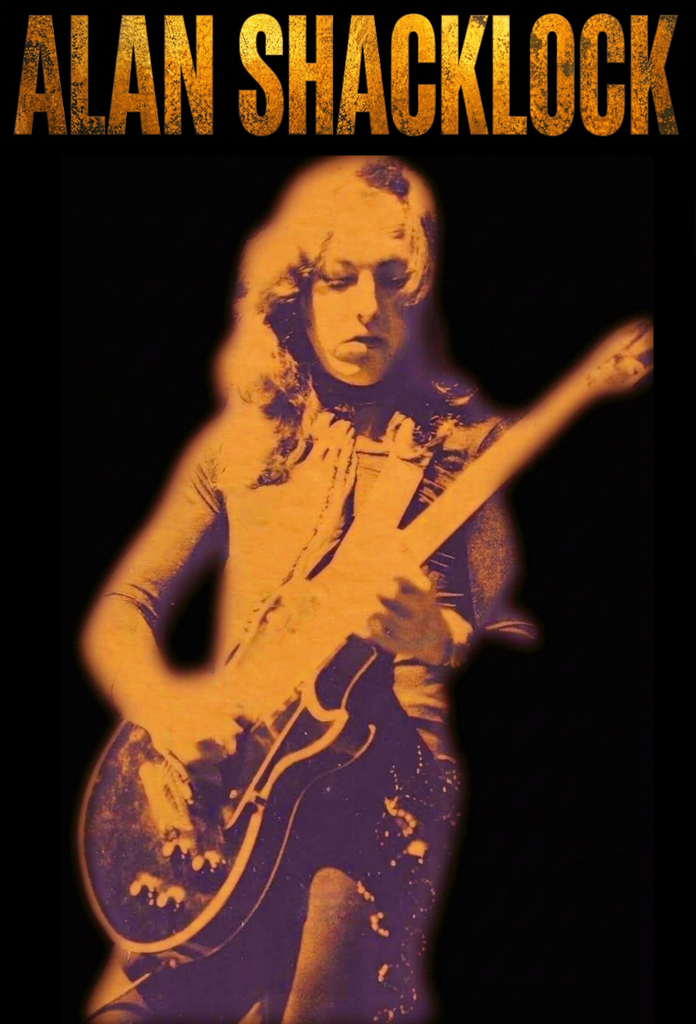
Alan Shacklock details his journey from classically trained guitarist to founding member of Babe Ruth, highlighting how his 1972 composition “The Mexican” unexpectedly became a cornerstone anthem for early hip-hop, breakdancing, and modern sampling culture.
___
Alan Shacklock: Well, let’s start from the beginning. When I was about three, my father taught me to play the piano. I couldn’t really explain even then what music did to me. When I would hear a chord change, it would make a shudder through my body. It would just be crazy. I’m not getting weird and psychedelic. It has continued to do that until now.
But, anyway, I kinda learned piano then and started. He was introducing me to music from the forties of, you know, things like Glenn Miller. And he would play that in the house. And, of course, all those, twenties, thirties, forties hits. So by the time I was single digits, I think I was about six or something, I heard Elvis, and the sound just changed my life when I heard “Jailhouse Rock”– those early Elvis records, the Sun Sessions. And then, of course, we started to dig in. At that point, we only had vinyl, 78s. We graduated to 45s. And that kinda changed our lives again because we could start a record collection.
By the time I was 10, my father had bought me a very bad guitar. It was like an old Spanish looking acoustic guitar where the action was about an inch off the fretboard. I started to get into the music of England at the time, which was actually aping the music of America. We had, what I call –if I may use the term, I’m not sure I can now–whitewashed versions of what you guys were doing.
We had an artist here called Cliff Richard. He’s now Sir Cliff Richard. He started around ’58, and I started to listen to him. What interested me more was actually his backing group, The Shadows.
The Shadows were actually an English treasure, really. And the sound that the Shadows were making just was magical to me. It kind of touched me in a way. If all of the guitarists from that generation–Dave Gilmore, Peter Frampton, Pete Townsend, Brian May–if they’re all honest they’ll fess up to the fact that [Shadows lead guitarist] Hank Marvin was such a massive influence on us.
I started to get friendly with a guy who was a year younger than me. His name was John, and we used to kinda play together on a hill near me. And he said, “My brother and I are getting bass and drums for Christmas.” I said, “Well, great. I’ll come down.”
So we started to rehearse in their living room. Both those guys ended up in very famous bands. John [Glascock] ended up in a band called Jethro Tull. He was the bassist. This is when we were 10 and 11. And his brother ended up in a group called The Motels. We then got a rhythm guitar player who was Michael Taylor. My mother knew his mother from work, and she came home one day and said, “I know you’ve been looking for a rhythm guitar player. Her son has equipment.” So I immediately got on my bicycle and went to his house. I went about three miles, four miles, something like that. Knocked on his door, and I said, “Do you want to join our group?”
And then he already knew John and Brian because they were at the same school. And he went, “Not really. I’m not really interested. I only really know two chords, and I wanna be a soccer player,” or what we call football in England.
So I said, “If you change your mind, just let me know.” Well, he eventually changed his mind. And he came down and we started to rehearse, together. Michael Taylor was the Mick Taylor from the Rolling Stones. We got a singer, and we got signed to EMI records. We took an audition at Manchester Square where you’d see that That band fizzled out, then I’d formed another group, called the Hi Numbers. And we signed to Decca, and got a record out called “Heart of Stone.” It really didn’t do much. We toured around for a year.
I went back to school. I also took an audition for the Royal Academy of Music. By that time, I had a friend of mine who taught me to read music. And I took up the classical guitar–nylon string, classical guitar. And I started to practice like crazy. I took private lessons, and then eventually, I got a full ride. The year before I went to college to the Royal Academy, a friend of mine recommended me to replace a legendary guitar player called Albert Lee. Albert Lee at the time was playing with a group called the Thunderbirds. A singer called Chris Farlowe and I played with them for about a year. The drummers that came through that band your listeners might be interested in. The first one was Carl Palmer from Emerson Lake & Palmer. And then the second one was John Bonham from Led Zeppelin.
So during that time, I started to compose because I had an incredible teacher at the academy who was called John Gardner. He was the harmony and orchestration professor, and he taught me orchestration, to be able to conduct an orchestra and arrange for an orchestra. So during the time I was at the academy, I started to compose, really. And then by my junior year, I formed a little group to try out the compositions. I knew a local pianist called Dave Punshon. I used to go and watch him play. And I would really admire what he was doing. He was well into jazz, and he had chops. So I said, “Listen. I’m forming a little group. Would you be interested?” And he went, “Yeah. I’ll come along for the rehearsals.”
Then we got a drummer called Dick Powell. I stole him from his group. He liked drummers like Clive Bunker from Jethro Tull. He was very into the technical kind of drumming. He knew a bass player from the North Of England called Dave Hewitt. I was aware of Dave because he had a very deep background in the blues. He played with Doctor K’s Blues Band. And, of course, the blues in England was a big influence on all of us in the sixties. Eric Clapton kind of immortalized all of that, and Peter Green with Fleetwood Mac–the real Fleetwood Mac.
So, anyway, we started to rehearse the band, and we were rehearsing in a basement in London. We were about 20 miles north of London where we lived in Hatfield. And then we started to rehearse in a basement in London. At the top of the building, there was an artist who had his studio there, and his name is Roger Dean. And he came down one day and listened to us. And he said, “Hey. You guys are pretty good. You should try and get a record deal.” And I said, “Well, I’ve had a couple of record deals. I’m really not sure how to do that now.” We were just trying material out to see if it worked. And he said, “Well, I know the owner of the Marquee Club, I’ll have a word with him and get you a gig there.” So we went under the name of Shacklock, and we started to play gigs. And I sang because I was really the only one who could do any kind of decent vocals, I guess.
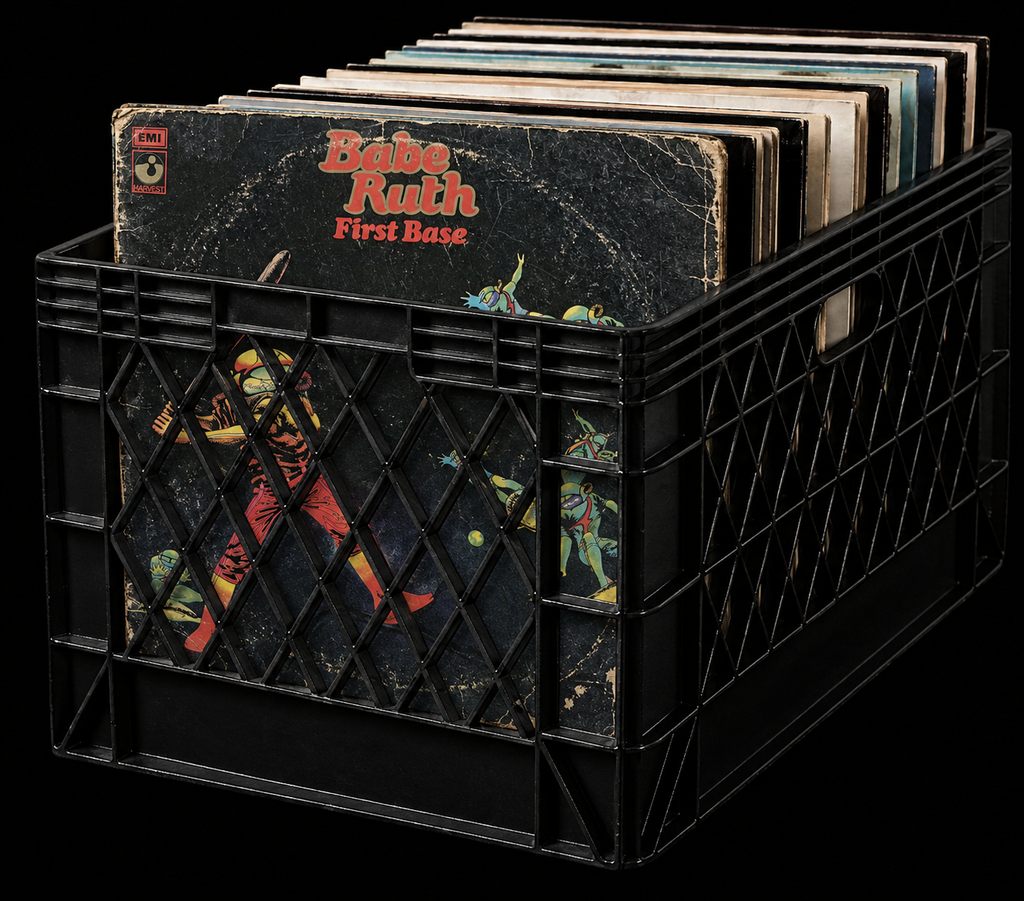
I wasn’t really a singer, but I sang the stuff because I composed it, and I knew it. So we started to play fairly regularly at the Marquee. And then Roger said, “Why don’t you contact record companies and try to get yourself a deal?” And I said, “Well, I have no idea how to do it.” So he gave me a bunch of numbers, and he said, “I’m already doing artwork for bands that are up and coming.” There was a band called Yes which immortalized his work, of course. He was the art director for those covers. And he ended up doing our our first album cover, which was called “First Base.” Anyway, Harvest Records label manager Nick Mobbs came down and saw us at the Marquee. He was the only one who showed up.
And he called us about three months later. We thought it was a dead duck, but he called us about three months later and said, “I’d like you to come in for a meeting, and talk about signing the group.” We were kind of what you would call an art rock band or a prog rock band. We did some tunes from Frank Zappa, and we were doing things with the piano and the guitar in tandem in harmony over over a beat. So this is how it all kinda developed, and Nick Mobbs recognized that we had something and said, “We want to sign you. But I’d like you, Alan, to concentrate on the guitar and produce the record because you know really what you want out of the music because you’ve composed it.” And he said, “We’ll audition for a singer.”
We weren’t really looking for a girl singer. We auditioned several male singers– none really fit the bill. And then this little girl about 19 years old, Jenny Haan–she came along and she kinda tore it up. And we went, “Well, listen. This could be it.” So she agreed, and Babe Ruth was born.
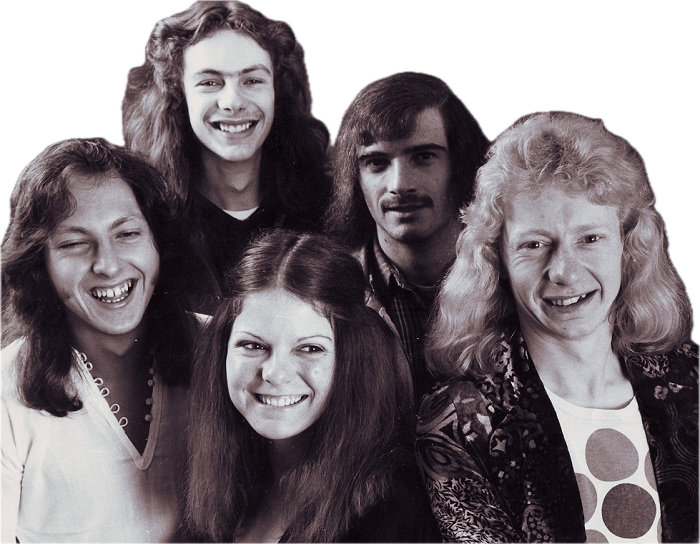
The name “Babe Ruth” really came from an Anglo American manager that we had at the time. Embarrassingly, we didn’t we didn’t know who Babe Ruth was.
Harvest Records was a subsidiary label from EMI, and EMI owned Abbey Road at the time. So we were grandfathered into Abbey Road in April of 1972 to make a record. And, really, that’s how it started.
You know, those were the days of sort of almost unlimited budgets. They said to me, “You want a string section? How many do you want?” I’d say, “You know, I’ll have 20, please.”
The influence of the music was really from all of the soul records and the Motown records that we grew up with. I was just infatuated with Motown and Stax and Hi Records with Al Green and Willie Mitchell. Because of the groove, the beat– we just couldn’t match it in England. We really couldn’t. And I was just enthralled with that.
So I was determined to make a sort of record, which they say in Spinal Tap is something between stupid and clever. I told everybody what notes to play on the very first record apart from Dave Punshon’s brilliant solos. I arranged everything for that first record.
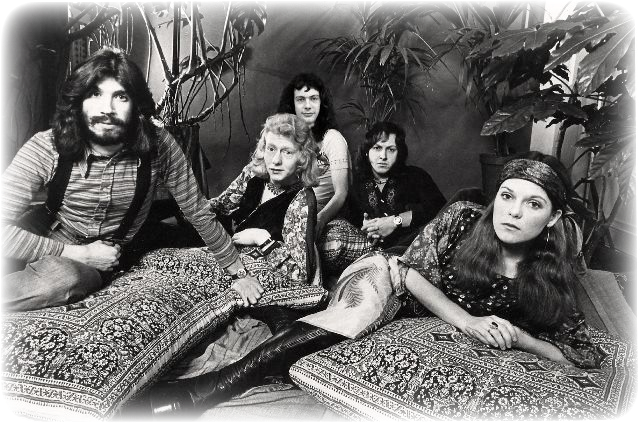
“First Base,” Babe Ruth’s 1972 debut album, was their most successful album, earning both widespread popularity and critical praise. It marked a distinctive crossover between hard rock and progressive rock. The key contributors to the album were Shacklock, who wrote most of the material, and vocalist Janita Haan, whose voice perfectly blended the styles of Janis Joplin and Robert Plant. On the album’s B side was a track called “The Mexican,” which earned decent airplay in The UK and North America and went gold in Canada. It’s impossible to overstate the impact that this relatively obscure art rock track would ultimately have on the nascent cultures of disco, break dancing, remixing, and, of course, hip hop.
Sounds Visual: Alan, let’s talk about “The Mexican.” The arrangement and performances are incredible–the drums and groove are legendary…
AS: Dick at the time was very grumpy about it. He didn’t wanna hold the beat down. But I said, “Look. I’ve got this piece called ‘The Mexican,’ and I want you to hold the beat for seven minutes. Don’t come off the beat. No fills. Nothing. Just straight.” Which now we know as a loop.
We didn’t call it that at the time– I had this rhythm idea. On stage, we had been segueing a Morricone piece called “For a Few Dollars More” because I loved the music of Morricone. You know, being the age I am, baby boomers, we all grew up on the cowboys and Indians. We grew up on all that, and I just loved the music of Morricone. I couldn’t get it out of my soul, you know, and his melodies were just haunting to me, just brilliant. I wanted to include it, so we kind of did a segue in “The Mexican” with “For a Few Dollars More,” where the beat didn’t change. It just kept the same, and then we segued back out and sandwiched it with the back end of “The Mexican.”
It was recorded on two inch tape that was 16 track headstack, which is why it sounded so good. Also, it sounded so good because we had fantastic engineers. Tony Clark, my hat goes off to him. One of my first assistants, believe it or not, was Alan Parsons, and John Leckie— who have all become legends. Alan, of course, recorded “Dark Side of the Moon,” and John Leckie has produced Radiohead and several other things.
So we made that first record, and it came out in the October of ’72 in England. And, we had a look at the royalty statement and it was okay for a first band. We’d sold well in England, and then sold decent in the States and Canada.
It turned out that there was a DJ, God bless him, in Montreal. There’s a radio station up there called CHOM FM. And the DJ there just started playing the stuff. He fell in love with the stuff, especially “The Mexican” and sort of made us legends in Canada before we even got out of England. So our first tour started there when we came across the Atlantic, and, we then came down into the United States. We did three three month tours of the States between ’73 and ’75. So we opened for several people, Humble Pie–ZZ Top opened for us in Milwaukee.
We played LA. We played with Iggy Pop in the Whiskey A Go Go for four nights. And then the label said, “Okay. Time for the second record now.” And I said, “Well, I don’t have any material.” My publisher at the time was going crazy about my songs and saying, “You can really write songs. Let’s get a song to somebody. Let’s get a song to Diana Ross. Let’s get a song to [Greek singer] Nana Mouskouri.” So I was writing for other people and really not the band at that time. We pretty much threw that second “Amar Caballero” album together and I tip the hat to the band. It was kinda like a solo record for me. It was just indulgent on my part, and I got in trouble for it because everybody had said, “Where’s second base? Where’s “The Mexican” Part Two?”
I’m proud of it. It worked for the time, but, of course, there wasn’t the immediate stuff that happened on “First Base” that the record company could fly with. And right at the time then, I was digging hard into Curtis Mayfield.
I was digging hard into all those arrangements of those guys [like Curtis Mayfield] and what they would do. It just got my soul, and I was trying to do a vanilla version of it. But, anyway, we kinda tipped the hat to that.
The third record [1975’s “Stealin’ Home”] was really– I won’t say an industry record, but we got pressure to move back to the original sort of rock style. And, unfortunately, we couldn’t get back into Abbey Road.
And because I’d been a naughty boy on the second record, they wanted to bring a producer in to whip us into shape or whatever they wanted to do. We got dear Steve Rowland, and he was a very nice man. He was a very good vocal arranger, but he wasn’t really the right producer for us, honestly. And he knew that. It was really a record company move. And nothing against Steve. Honestly, we tip the hat to dear Steve, and he’s still a friend. They should’ve just let me have the reins, honestly. Some of the songs I’m proud of. I like “Dancer.” I liked the “The Duchess of Orleans.” But I lost the plot a little bit on that third one, if I’m honest.
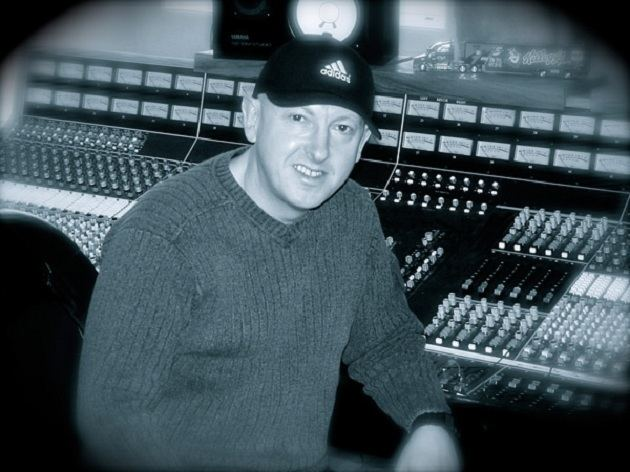
When I was 25, I decided to come off the road. I really wanted to concentrate on record production. I felt like I was very suited to that. I love the recording studio. I love the whole osmosis. I got a baptism by fire in Abbey Road and learned how to engineer. I learned the science side of it. I already had the music down because I was trained in that. I had a gift in that, but the other side was baptism by fire. And so I came out and I spent the next five years just digging into my career as a producer rather than an artist.
When we got to 1980, I’d been working with a couple of bands, just rehearsing and helping them with their material, arranging and getting all the parts right. And actually one got signed. They were called The Look. So that kind of put me in the frame. I think it went Top Five in England. And then I started to get calls from other groups. The first group I got a call from, which I was delighted about, was Dexy’s Midnight Runners. They wanted me to produce an album, which I did. And then the next group that got in touch with me were called JoBoxers. And I was very lucky to go between new artists, baby artists, and the old dinosaurs.
I was starting to produce my boyhood heroes, which was like a dream come true. You know? It was unbelievable. So I would produce people like Jeff Beck, like Meatloaf. Roger Daltrey came to sing a duet on Meatloaf’s record and we realized we knew each other because Babe Ruth had opened for The Who in London. It was the very first shows for Quadrophenia, and they did four shows in the Sundown Theater in London. And we opened four nights for them with Babe Ruth. So there was a kind of a history there with Roger and I. And Roger came and sang a duet with Meatloaf, and I just got talking to Roger and got on like a house on fire because I was a massive Who fan.
And then Roger called me and said, “Would you like to make a record?” And I went, “Absolutely.” So we started the project called Under A Raging Moon. That was the first album, solo album, I did for Roger. I produced a record for Dennis DeYoung from Styx. He heard the Roger stuff and liked what I was doing.
Jeff Beck called me at home and said, “Would you like to make a record?” And I said, “Yeah. I’ll be there in five minutes.” Again, my boyhood hero, the Yardbirds. I mean, I was just 12 and 13 watching him, you know, just amazing. And there he is on the other side of the glass. So it’s crazy. But, anyway, I went through that period of really producing. That was the probably the hottest time for me. Then we immigrated to the United States, our family. My wife was American. She was from Atlanta. So we moved to Atlanta, Georgia. We eventually got up to Nashville about the mid 90s, just because it was convenient. And there were lots of studios here, and it just seemed like a right move. And Nashville, to me, is the most wonderful place to live.
SV: Alan, you’ve obviously gone on to have an enviable career in the recording world. I do wanna drill down a bit more on the saga of “The Mexican” because it’s such an interesting tale in the history of b-boy and hip hop culture. As the seventies progressed, were you aware of the song’s influence, particularly amongst DJs?
AS: This is very interesting because we really didn’t. We really didn’t know what was going on in The Bronx in ’77. I was on to something else. We were considered an art rock band and never thought in a million years that one of the songs would take off on the dance floor. I have a book that’s called “Can’t Stop Won’t Stop” by Jeff Chang. If you don’t have that book, you should definitely check it out. It’s the history of the hip hop generation. I went to our little local Barnes & Noble and I knew the book was coming out because it’s got Crazy Legs on the front of it. He’s like the king of the B-Boys. DJ Kool Herc was also very much instrumental in pushing our stuff.
But anyway, I went to Barnes & Noble and this young lady was on the other side of the counter. I just put the book on the counter to buy it, and the young lady, she’s probably, what, 18? I’m not a great judge of age. But she said, “Why do you want this book? And I went, “What?”
She said, “Why do you want this book? And I said, “Why do you wanna know? I just wanna buy the book. Is that okay?” She said, “Oh, this was the book we studied at MTSU [Middle Tennessee State University] for our our hip hop classes.” So I said, “Okay. I’m gonna tell you why I want it. I’m actually in it.” She couldn’t believe it, and said, “Wow.” So, anyway, that’s a funny little story from my point of view.
When I first started to produce the group called JoBoxers, they had a singer called Dig Wayne, an extremely talented African American young man, a fantastic writer, great character, great singer. We were making our record in London. He said, “I want you to listen to something.” And I said, “Okay.” So he put it on, and it it was “The Mexican” beat. And I said, “Who is this?” So he said, “This is an artist called Afrika Bambaataa. It’s gonna be an album called ‘Planet Rock.’”
I had no idea. Of course, these were the times when we really were not knowing about copyright infringement. But, anyway, I took it to the label, and they said “This is infringement all the way down.” And I said, “Well, it’s bittersweet. I’m kind of flattered that they took my beat.” You know? And this was the first awareness. The second awareness really was when a DJ in England called DJ Hooch reached out to us, in 1982, actually, and said, “We are holding a B-boy reunion.” Or it was actually a championship for them, I should say. And he said, “We want you to play and close out the show.”
And I said, “Well, I haven’t played with the band for, like, seven years, so I’m not sure how all that may pan out.” So I contacted everybody, and everybody was kind of up for it. So we went and played in England, and then we started to realize when all these kids were on their knees at the end of “The Mexican,” like, doing the “We are not worthy!” thing. I’m going, “What is this?” DJ Hooch and all the DJs were saying, “Do you realize the impact this had on the dance floors from even back in 1977, when Grandmaster Flash used this as his anthem?” And he put it on his album called “The Adventures of Grandmaster Flash,” which was extremely flattering, and untouched.
There was no rap on it. He just put it in its entirety on his record, giving it the honor saying, “This is the record that started my career.”
Then in ’84, I was reading Billboard here. I was in the States at that time producing a record, and I noticed that “The Mexican” had reached the charts. It was actually in the dance charts.
I got contacted. I was in Abbey Road Studios at the time, and I got contacted from someone. When the switchboard came through to me there, they said, “There’s a guy on the phone from New York who wants to talk to you. He says he’s Madonna’s boyfriend, and he’s the best DJ in New York.” It was Jellybean Benitez, and he said, “I would like to remix ‘The Mexican.’” And I said, “Well, certainly, if you can get an agreement from EMI. Even if you can find the tapes, I’m not sure, how the protocol of that goes. You will have to go through the official channels.”
And he said, “Well, I wanna do it.” So one thing led to another, and eventually, they didn’t get the original tapes. So he ended up rerecording “The Mexican.”
He didn’t realize I played guitar on it, because when I had a conversation with him when it was number one in the dance chart in over here, he said, “Who played the guitar?” I said, “Well, I did.” He said, “It took me four days to do the guitar.” Right? So that was quite funny. And I said, “You should have just booked me. I could have done it in an hour.”
They ended up getting the original singer, Jenny, over, and they flew her to New York, and she did the vocal on his version. We started to realize we were getting sampled all over the place.
A short list of artists that have sampled “The Mexican” include Pete Rock, Jungle Brothers, GZA, The Prodigy, Organized Konfusion, Grandmaster Melle Mel and the Furious Five, Cypress Hill, Kool Moe Dee, Doug E. Fresh, Three Times Dope, and dozens more.
AS: We couldn’t keep up with [the sampling] and the mashups. I read that if you wanna be a DJ, then here’s the list of records that you need to own. One record that you have to own is “The Mexican.” So that was all new to us, and it was just very flattering. I remember driving home–I think it was the late nineties. I was in my car with my kids. And I heard a song on the radio, and I heard my guitar intro on it in the background for “The Mexican.” The guitar intro on “The Mexican” has two Spanish guitars. Actually, it was double, and it was a sort of a flamenco-esque beginning. It was a tremolo technique going from a minor six to B7. And I played a tune over it, and I played the tremolo technique on one side of it. Well, they’d taken one side of it and put it on a record called “Fly,” by Sugar Ray.
So, again, we’re in lawsuit. They did it with no permission, and God bless them again. It’s bittersweet. It’s very flattering. Next thing we were aware of was R. Kelly, [who] had taken one of the sides, the tremolo side, and actually put it on a song on his album, which went eight times platinum on a song called “Dancing with A Rich Man.” And, again, it was done with no permission. So all these things went to suit.
SV: It’s so wild, Alan. I’ve heard it used SO many times.
AS: Honestly, Justin, I don’t know how to keep up with [the samples] and the mash ups. It really is incredible, and it’s obviously a testament to the song’s endurance.
When we reunited in ’82 to do the B-Boy championships in London, the band said, “Why don’t you write another record?” And I said, “Well, okay. We don’t wanna be, you know, these–pardon the pun– boring old farts trying to make a comeback. I want to make something that I feel is worthy and dignified of us.” So I started to write for four years, and, eventually, we got the record called “Que Pasa” which I’m very proud of.
I’m also working, if I may reveal this for your listeners, with BreakBeat Lou. We’re working together on a project. Daru Jones is our drummer on that project, and Daru is playing for Jack White. So this is new music that will drop very soon, I’m hoping. Lou and I have become dear friends.
When he was [collecting and releasing the “Ultimate Breaks & Beats” series] “The Mexican” was part of his stuff. So we have become great friends.
SV: Alan–what a pleasure to meet and talk today. Thanks so much.
AS: Thank you for doing the homework and reaching out. Take care, mate. Thank you.
Leave a Reply
You must be logged in to post a comment.