
Saxophonist Gary Bartz traces his journey from a childhood encounter with Charlie Parker’s music to his pioneering work in spiritual jazz and fusion, reflecting on his collaborations with icons like Miles Davis and Art Blakey against the backdrop of American racial history.
Gary Bartz: I used to go to my grandmother’s house for dinner every Sunday with my immediate family, my mom, my dad, my sister. My uncle had all these records, well my aunt and my uncle both did, but my uncle had all these records that I would listen to. That was like the highlight of my week, to go to my grandmother’s and listen to these records. I just liked the records. I just liked the music.
But one Sunday, I put on a record and this sound came out, and it was the most beautiful sound I had ever heard. I said, “I want to do that. Whatever this person is playing, I want to do that.” And it turned out it was Charlie Parker, and from that moment on, I started bugging my parents about getting an [alto] saxophone. And it took 5 years to convince them, but finally they bought me a saxophone, so that’s really how it started. But I was listening to music probably from the age of four, just listening to the records, but that Charlie Parker record [I heard at 6] got me, so I’ve been trying to follow that path ever since.
Sounds Visual: What was it like growing up in Baltimore during the era of segregation?
GB: We had to have our own businesses because we couldn’t go places. My mother couldn’t try on clothes in this department store. And as a kid I didn’t understand that. I noticed it but I didn’t understand why. I had a little friend—he was a so-called “white” friend. We were best of friends, we saw each other every day after school. I didn’t think about it, he didn’t go to my school, I didn’t go to his, but we would go everywhere together. We’d go out to the park together, even though the park was segregated. They had so-called “black” swimming pools and so called “white” swimming pools. They had segregated tennis courts. Everything had to be segregated in those days.
Anyway, so I just accepted it because no one talked to me about it. First of all, my family moved into this so-called “white” neighborhood, and I say “so-called” all the time because there’s no such thing as a black race or a white race. There’s only a human race. And until mankind comes to grips with that—especially this country—then we’ve got problems. But it’s a way of dividing of course. I’m sure you understand that.
We were the third black family to move into this neighborhood, which I have a book called “Blockbusting in Baltimore,” and it was a real estate ploy because they were building houses on the outskirts and suburbs of Baltimore, but no one was buying them. But they noticed when a black family would move into a white neighborhood, all the white families would want to move. That was a way for them to sell their houses in the suburbs.
Anyway, little Tommy was my friend and one day after three years of being best friends, he disappeared, he was gone. And I didn’t see him again. A couple years later, I was sitting on my step in front of my house, and I saw him coming down the street riding his bike with two other new friends. And I was so happy to see him, I jumped up and ran, “Tommy! Tommy!” And he ignored me and kept riding.
That’s when I realized something was wrong. Something is really wrong.
SV: That’s awful.
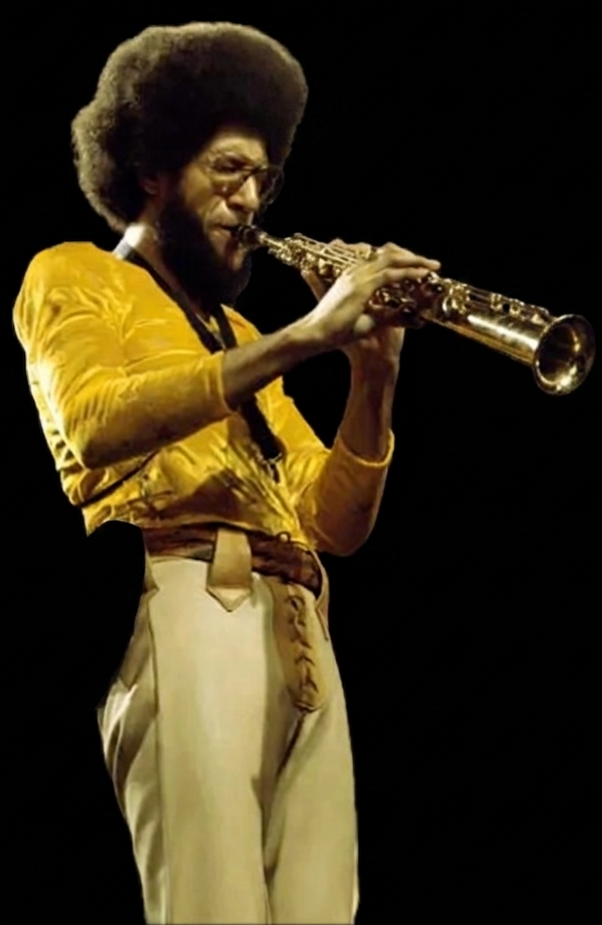
GB: When I was fourteen, my dad started taking me out. I asked him, I found out Sonny Stitt was working at a club in Baltimore, a comedy club down there on Pennsylvania Avenue.
And they did matinees so young people could go. So I asked him to take me, and him and my mom were so supportive, all the way.
So I went down to see Sonny Stitt. The place is packed, and Sonny’s sounding good. He gets on the mic, he says, “Well, ladies and gentlemen, I understand we have a young man who would like to come sit in with me.” And I’m looking around like, “Wow, this is gonna be interesting.” And he calls my name. [Laughs] So I thought, “Oh my God!” My dad had sneaked my horn out without me seeing it, and had gone up and asked if I could sit in. So I sat in with him and he took me through all the keys on the blues and some other songs.
See, I was listening. I was listening from the age of four. From the age of six I was really listening and studying music and really figuring out what music was without even knowing that I was doing that. I just loved it and wanted to do it so bad that I was studying it.
So, I went through all the keys on the blues that he took me [through] because I didn’t know one key from the other. But I could hear where he was going and I always went where everyone went. So that started a lifelong friendship with Sonny Stitt.
I should mention—when I was fourteen [and going out to clubs], I met Benny Golson and John Coltrane one day at a session. They didn’t play, but they were working with I think Earl Bostic, or Bull Moose Jackson, I’m not sure which. And they had come into the club, and they had heard me, and they went back to New York talking about me. “This young alto player…” I didn’t know that until many years later when Benny Golson told me that.
At fourteen I sat in with Max Roach. My dad took me to another matinee and they asked me to sit in. This time I was a little more ready. So I sat in, and [Max] gave me his number, and when I moved to New York, I called him and we became good friends, and I finally ended up working with him.
SV: So eventually you took the significant leap from Baltimore to New York City to study at Juilliard…
GB: I moved to New York as soon as I got out of high school because I didn’t like Baltimore. I didn’t like the racial segregation, and just the feeling of Baltimore. And I’m a Libra, so anything that’s unjust, I have a problem.
I called Max [Roach] and started going around Max’s house, to all the jam sessions. I met Freddie Hubbard really early because Freddy moved to New York in August of ’58 and I moved to New York in September of ’58, so we started going around to jam sessions together. And I met Grachan Moncur and Andrew Cyrille, we met at the registering to go to Julliard. So we met and we became close, and we started a band together. I was happy to be there learning and studying and listening, and doing all the things I wanted to do musically.
It’s so funny, because [at the time] all the older musicians were saying, “It’s not like it used to be.” [Laughs] Because, you know, they came from the 52nd Street era, and even the era before that with the [Harlem Renaissance] Rent Parties, and Fats Waller, and Art Tatum, and all of that. They came from that era. And so now, I find myself saying the same thing to younger musicians: “It’s not like it used to be.” So New York is always gonna be vibrant. In the last centuries of music, with Beethoven, and Mozart, and Bach, you had to go to Vienna. That was the place to go to musically to prove yourself, or to grow. And in the last one hundred years, New York is where you had to go.
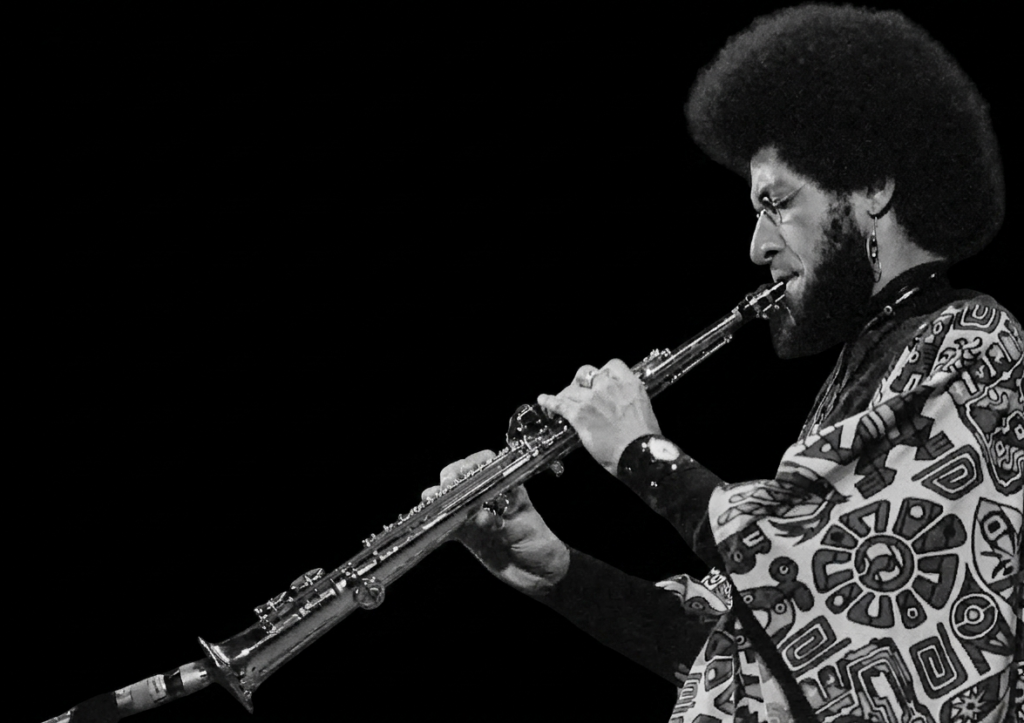
SV: In 1962, you became a member of Charles Mingus’ jazz workshop in New York, where you got to work with stellar musicians like Eric Dolphy and McCoy Tyner. Tell me about the experience of Mingus’ jazz workshop.
GB: Yeah, so Mingus had what he called a jazz workshop. and several months ago I was watching a documentary on Mingus and I realized what it really was. All these years I thought it was a gig, but I understand why he called it a workshop—because he was writing all this music for big bands, and different combinations of groups, and he couldn’t afford to rehearse, he couldn’t afford to rent studios for rehearsals.
So he devised this plan, at a gig every Monday night at the Village Gate, and he would ask musicians to come and sit in with him. And that’s when I met Eric Dolphy and Rahsaan Roland Kirk, and Jackie Byard was in the band. Richard Williams, great lead trumpeter. But what [the workshop] really was, he was rehearsing music and using this gig [to do so.] That’s why he called it a workshop. We had no music. It was a big band but there was no music. So [Mingus] would start up a chord, a harmonic progression, or a melody, or a rhythm or something, and Danny Richmond was the drummer. And [Mingus] would come over to each section and hum to whomever the leader of the section was. In our case, Eric Dolphy was the leader of the sax/woodwinds. So [Mingus] would give him the melody, and Eric would give it to us, and we would harmonize it, and play it whenever Charles wanted us to.
Not too long ago a student of mine was listening to “The Black Saint & The Sinner Lady,” [Impulse, 1963] which I hadn’t listened to for years, so I went back and listened to it. And I’m pretty sure that particular piece came out of this jazz workshop that we were working on.
To me, it seemed random because [Mingus] would just pick out something, but he had already figured it out at home I’m sure, and came in with this plan and would give it to us. I didn’t understand it, I was used to be there playing. I didn’t get paid, I’m sure Eric and the rest of the real band got paid. I was just happy to be there.
SV: In the mid 60’s, you began gigging as a sideman with the Abbey Lincoln & Max Roach group, and then you end up joining Art Blakey & The Jazz Messengers around ’65—and this tied in with your father owning a club in Baltimore. Can you share that story?
GB: Yeah that [Max Roach & Abbey Lincoln] was my first professional band. I joined Max in ’64, and I joined the Jazz Messengers in ’65. I moved to New York in 1958, and [my dad] bought the nightclub in 1960. And Art Blakey & the Messengers were working in his club. I was in New York, and my dad got wind that [Blakey’s] saxophonist John Gilmore was getting ready to leave and go back to Sun Ra, and [my dad] called me in New York and said, “Why don’t you come down and sit in with Art, he might be looking for a sax player.”
So I did, and my friend John Hicks was in the band, and he had been trying to get me in the band anyway. And Lee Morgan, I knew Lee, he was okay with me joining the band. Because he was the straw boss. Art would take his advice because I would be the front line now. So, I came down to Baltimore, and sat in with them, and I joined the band right from my dad’s club.
SV: Shortly after you joined the Jazz Messengers, you made your recording debut with them on the 1965 LP “Soul Finger” (Limelight). Great record.
GB: I mean, how lucky could I be? Two of the greatest trumpet players of that era at least, but I think two of the greatest trumper players ever, Lee Morgan and Freddie Hubbard were on that [album]. We had just gotten back from California, my first trip to the west coast.
We did Seattle, we did Los Angeles and San Francisco. We had driven out there. Art and Lee flew. Lee spent all his money, so he had to drive back with us. [Lee] had all this money from “The Sidewinder” because it was a hit that year, it was big. and so we played “Sidewinder” every show, every set.
Sometimes we would play five sets a night, and we would have to play “Sidewinder” every set. We were sick of it. but, when we got back to New York, Lee disappeared, and Art couldn’t find Lee, so he called Freddie to come down and do the date. And Lee had gotten the message, so he showed up, so both of them ended up on the record date.
I was just happy and trying to grow and learn and study music. because music is something that no one has ever, or will ever, learn. You can’t learn it. You can only study it. It’s too vast. It’s like the universe. So I was just happy that I was in the company of my idols and people I respected musically, and listening, and the vibrant scene in New York. Ornette [Coleman] had just come to town, that was exciting. It was just very exciting.
SV: You eventually landed your own record deal with Milestone Records. How did that come about?
GB: I would go around to different clubs, trying to get a gig, and they would always say, “You got any records out?” and I’d say, “No.” So, I knew I had to get a record out. So I went about trying to get a record out. And I got a record deal probably the most unusual way that anyone has ever gotten a record out, And Orrin Keepnews, who started Milestone, would tell me that story.
I went to the New York phone book, the yellow pages, and I got all the record labels that I thought might appreciate the music that I wanted to present. And I wrote their numbers and addresses down, And I went up to Columbia University, and I did a demo tape up at Wallman Auditorium, with John Hicks, Mickey Bass, and Ronald Shannon Jackson. I shopped that around, took it to all the labels, and some of them listened, some of them were not interested. But I met Orrin Keepnews, and he said, “Look, I like the tape. I’m interested. I don’t have a record label now, I just went bankrupt with Riverside Records, I do want to start another label, so if you haven’t found a deal, give me a call.”
Bartz released his debut album as a bandleader in 1967–“Libra,”–which exemplified his exploratory spirit and featured had a great lineup including Jimmy Owens on trumpet, Richard Davis on bass, Albert Dailey on piano, and Billy Higgins on drums.
GB: Freddie Hubbard was supposed to be the trumpeter on the record, and at the last minute, he was asking for more money, so they didn’t want to pay him more money. That’s when I got my friend Jimmy Owens to do it. I’m sure I asked Lee but I don’t know if Lee was even around at that time. He may have disappeared, gone underground. ‘Cause I know I would have called Lee.
SV: In the late ’60’s, you also made some incredible records with McCoy Tyner for the Blue Note label–two of my favorites from this era are “Expansions” (1968) and “Cosmos” (1970).
GB: “Cosmos.” That particular album really shows the working band of McCoy that I was in when I first joined the band.
That was Herbie Lewis and Freddie Waits and McCoy. That band was my favorite. We added Alice Coltrane on there, and in the horn section we had Andrew White, Hubert Laws…that was the working band. I was happy to have my friend Billy Higgins, one of the greatest drummers ever, on the record. Those are the memories.
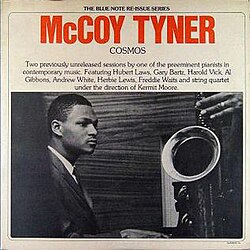
I was just happy to have my own record date. And that was the music you’d hear us play, like that. It was more organic. Blue Note sessions was normally: you have an intro, you do this, you play the melody, you play the solos, fours or whatever. But this was organic, like we would play at Slug’s or somewhere. We just went in…we were a working band, we knew the music, and knew each other. So we just played on that record. and they didn’t understand that record because it was different from other Blue Note records and they sat on it for years before they released it. But that’s my favorite McCoy record.
In 1968, Bartz appeared on Max Roach’s LP “Members, Don’t Git Weary,” an album that represents a turning point not just in Roach’s career, but in the evolution of jazz as a whole– showcasing a blend of modal and post-bop influences that foreshadowed the Afro-conscious spiritual jazz that would emerge in the coming decade.
GB: That was also was a working band. That was Charles Tolliver, Stanley Cowell, and Jymie Merritt. We had been out on the road, and had been working. This music can, and has, only grown through a working band.
Every innovation in this music has come from a working band. You can’t innovate and you can’t grow just throwing pieces together. They have to stay together for at least a year, and that’s from the King Oliver days. That’s to the Louis Armstrong days. Count Basie, Duke Ellington. They were all working bands, and so they all made innovations. Miles Davis, all those bands. Horace Silver, Cannonball. The music is suffering because there are not many working bands nowadays.
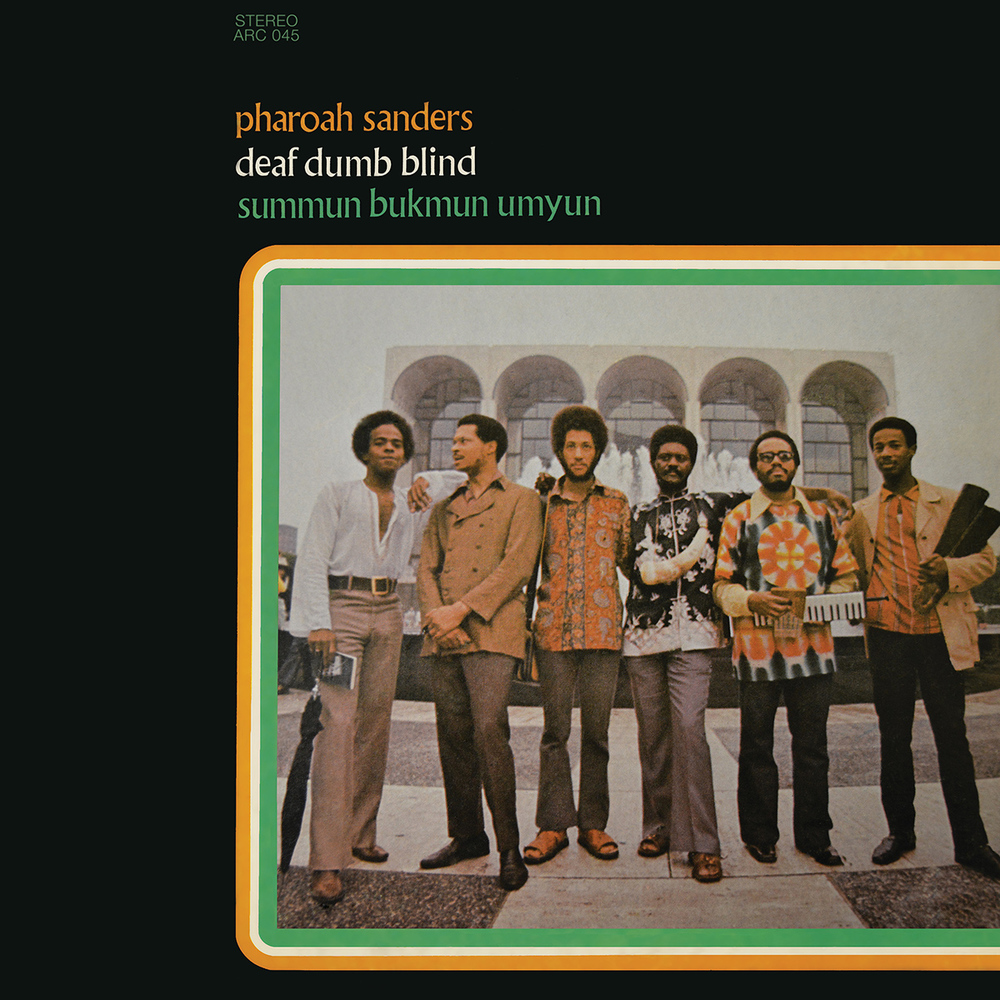
SV: Let’s talk about spiritual jazz for another minute: you’re on a date with Pharoah Sanders called “Deaf Dumb Blind,” (Impulse, 1970). Any memories of this session?
GB: Pharoah and I, we were hanging out. We would practice together, and I guess it kind of evolved out of that. So we knew each other playing, and that’s what we did on our gigs. He would come sit in with me, I would go sit in with him, and we’d play….trade ideas, go to the park together, West Side Park on Riverside Drive, and practice. We’d try to play so loud that we’d make the cars on the West Side Highway turn and say, “What is that?” Which of course is never gonna happen, You’d need a boat whistle, or a boat horn or something. But that’s what we were going for.
SV: Back to some of your own records as a bandleader: you followed up “Libra” with an album called “Another Earth,” (1969) which, thematically, showcased both your interests in astrology and cosmology.
GB: Well, I was into Astrology, as you could see from “Libra.” So I was into Astrology, and making charts for people, and doing all that. And then I realized that what a chart is, is just a photograph of the sky at a particular time. So, then I got a telescope to look at it.
And I got more into Astronomy. and then I had read that Beethoven–one of my great heroes–he would write a piece, like “The Pastorale,” he would write a nice light piece, like a symphony or piece of music which was light, and he would follow that with a heavier piece like “Eroica,” or something. and I liked that idea, and I felt like “Libra” was my light piece, and now I wanted to do something more serious. That’s how “Another Earth” came about.
And I also look at recordings like writers look at books. “Libra” would have been a book of short stories. “Another Earth” would have been a novel.
SV: Gary, you joined Miles Davis’ band in 1970, right at the height of the “Bitches Brew” era, and performed at the Cellar Door in Washington, D.C. that December. How did it feel to be part of such a groundbreaking period in Miles’ career, and what was it like to contribute to the recordings that eventually became “Live-Evil“?
GB: I had met Miles many times through the years. I would go to see him all the time even before I moved to New York I had seen him, and talked to him…but, he finally met me when I was working with Max [Roach] opposite Miles at Count Basie’s club in Harlem. We did ten days up there opposite Miles and I guess he heard me every night and liked what he heard. He came into Slug’s one night when I was working with McCoy Tyner and the following week he called me to join his band. I didn’t believe that was him–I thought it was one of my friends!
We would always call each other and imitate his voice. [laughs] But I found out it was him, so he called me. In those days, he was hands on. He would call you about everything. He didn’t have managers and people calling you. He called you. I really was disappointed, because the music I wanted to do was the music that they were playing earlier. That’s what I grew up on. “If I Were A Bell,” “Woody ‘n’ You,” “Airegin,” all of that. That’s how I learned how to play, studying that kind of music. So I said, “Oh man…now he calls me!” [laughs] But I can’t turn him down, so I said, “I’ll give it a few weeks and see what happens.” And I saw that he was playing better than ever. He wasn’t playing different–he was just using new sounds and new rhythms. So that’s what caught me–I was okay with that, once I found my place.
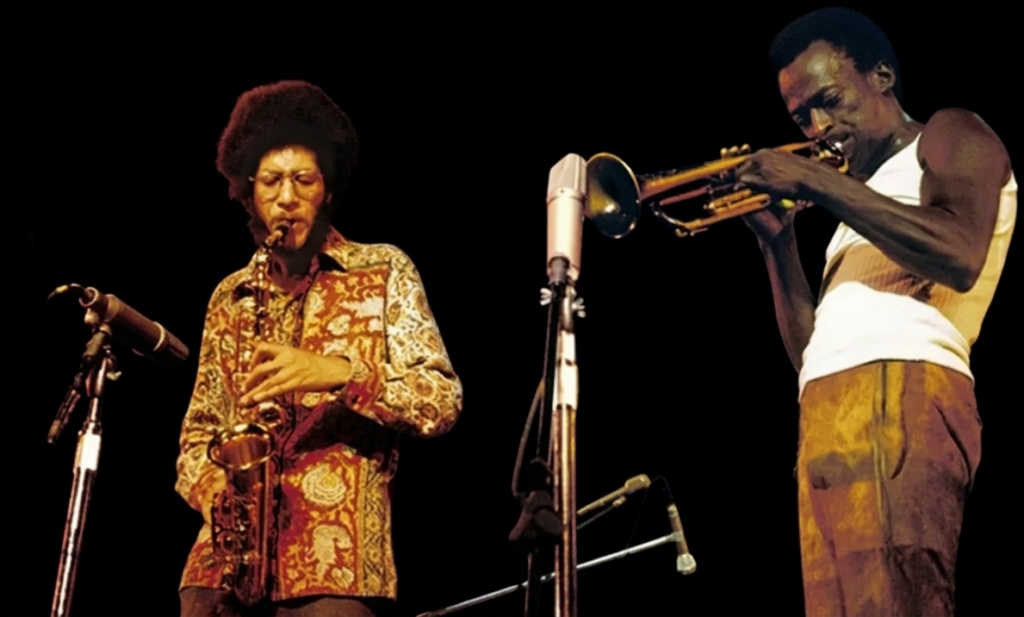
I look at each gig, each job, each show, like an actor would look at their role. “What’s my role in this band? Am I here to help the soloists, help the horns in the section, what is it?” That’s what I’m looking for.
And it’s funny because [laughs], I talked to Jack DeJohnette about this, none of us ever knew the names of any of [Miles’ “Bitches Brew”] songs. We’d have to listen to the record to see. We knew the melodies. I had one rehearsal at Miles’ house before I joined the band, and Miles didn’t even play. He just gave us melodies and lines to play, and rhythms, and he’d go upstairs and listen. And later I found it that Gil Evans was either on the phone upstairs, or he might have been upstairs, but I think he was on the phone listening to it. So he would come down, and make his comments, and we would do something else. But that’s the only rehearsal we ever had. Everything else we learned on stage.
After his time with Miles, Davis, Bartz went on to form NTU Troop, a group that combined spiritual jazz, funk, African folk music, and hard bop.
GB: The first incarnation of the NTU Troop was the “Home!” album (Milestone, 1970), with Woody Shaw, Rashied Ali, Bob Cunningham, and Albert Dailey. That was the first NTU Troop.
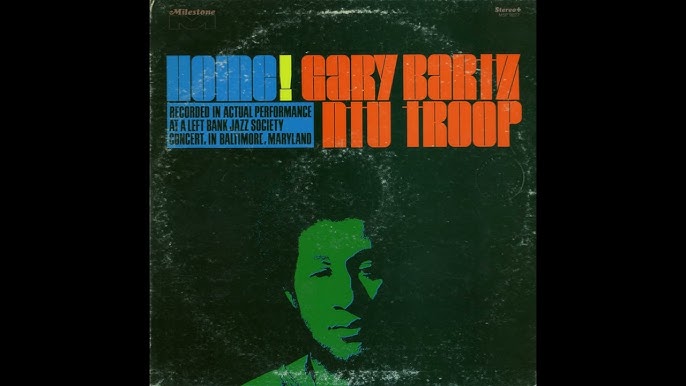
I needed lyrics…I felt that the message wasn’t getting over. The names of the songs were…I thought that would be enough, but that wasn’t enough to get the message that I was trying to give, or trying to talk about. So that’s when I started writing lyrics and looking for a vocalist.
I had known [vocalist] Andy Bey. Living in New York, you know everybody. My first choice [for a vocalist] was actually Leon Thomas. I was thinking about Leon. but he had just done “The Creator Has A Master Plan” (1969, Flying Dutchman) with Pharoah. and so, [I thought] that wouldn’t look good. So I said, “Well, who else?” And Andy turned out to be the right person. [With Leon] it would have gone in another direction. Andy, having perfect pitch and playing piano, we had many options.
SV: “Harlem Bush Music-Taifa,” (1970, Milestone) and the follow up, “Harlem Bush Music-Uhuru,” (1971, Milestone) were originally recorded as one cohesive album, but Milestone split the sessions into two different pieces, correct?
GB: They were all recorded at the same session. It was supposed to be a double record, two volumes at the same time, but the record label didn’t want to do that. So it came out in two separate records, but now it’s all one.
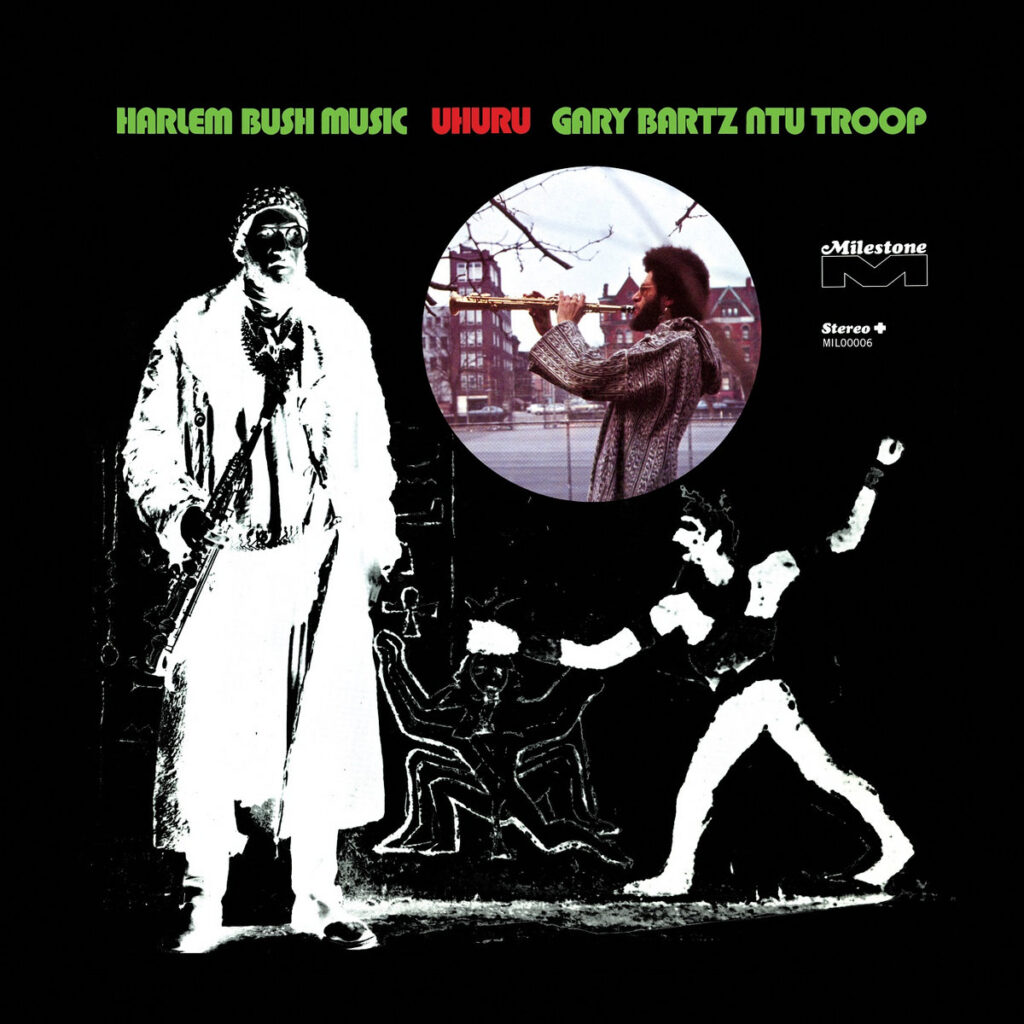
Released during the height of the Black Pride movement, the Harlem Bush Music albums became the most celebrated works of Bartz’s career. Their adventurous spirit has lent the recordings a lasting sense of timelessness.
SV: I’d like to briefly talk about some of the extraordinary songs on these sessions. First up, “The Drinking Song,” which was a reflection of the fact that, as you once said, “You can find liquor stores on almost every corner in Harlem, which I didn’t think was a good thing.” The lyrics of the song feature Andy Bey singing, “You will never have a revolution while you’re drinking wine,” which revealed a dissonance between the era’s bold proclamations of black pride and the sobering reality of social issues that remained unaddressed.
GB: GB: It was a record that I was creating for my community. That’s who I was really speaking to, rather than everybody. It was more to the community, and so of course you always want it to be accessible to everyone, but I was really talking to my community. It was during the [Vietnam] war, and the ’60’s were a very volatile era. We had a blood coup. the president got shot, leaders got killed in public, which is the hardest place to kill someone, in public. So they were messages, not just assassinations.
It was more than that, they were messages, which is still going on today, as a result of all of that. That’s a whole other problem. That’s what NTU Troop was about: talking to our community.
SV: Speaking of the Vietnam war, and the volatility of the political climate in America, there’s a song on the “Uhuru” record called “Vietcong,” which features the lyrics, “Why don’t all of you foreigners leave them folks alone/Pack up your guns, go home where you belong.”
GB: The war that I would have had to go to was Vietnam, and I was not going. I was not going to fight for this country who will not fight for my people, you know, but they want me to go fight and kill some other people.
They teach you, “Thou shalt not kill,” and then when you become eighteen, they say, “You can kill, but you have to kill the people we want you to kill.” The whole thing is a farce.
SV: Perhaps the best known track from the NTU Troop era is an Andy Bey song, “Celestial Blues,” and this song ended up being sampled frequently in hip-hop. Tell me about “Celestial Blues.”
GB: I loved the song, I loved playing it with [Andy]. Because [Andy] has perfect pitch. He was my front line partner. He was the voice. I still play it every now and then.
“Celestial Blues” sampled by Black Sheep on 1991’s “To Whom It May Concern.”
There was an album I did in 1975 that was the last NTU Troop record. I was living in Los Angeles at the time. Howard King was still with me, and Curtis Robinson on bass, and Charles Mims on piano. and we did a tour of Europe, and they found a recording in Germany and they just released it.
I don’t remember doing those songs like that, but we did medleys, we did “Incident,” we did “Celestial Blues.” I was singing, the whole band was singing. See, my concept of the NTU Troop was everyone who loved this music, or came to see us, was part of NTU Troop. It wasn’t just a band. So we would ask people to bring percussion instruments and play along with us as we’d play. Drumsticks or cowbells or whatever they had. So we were all NTU Troop. So that particular concert that came out [in Bremen], I really liked that. We were tight, everything was tight. That was the initial concept.
SV: Gary, I want to ask you about another live record called “I’ve Known Rivers and Other Bodies.” (Prestige, 1973) It was captured at the Montreux Jazz Festival, and you and the band are really in top form.
GB: Andy had just left the band, and so I no longer had a vocalist, and I used some different people. Dee Dee Bridgewater made some gigs with NTU Troop. Julie Wilson, who I love, did it. Everytime you change a member of a band, everything changes. It has to, because it’s gonna be different. and so they each brought different things. By the time we did Montreux, we didn’t have a vocalist, so I said, “I guess I have to sing these parts.” So I really started singing more in earnest during that time period.
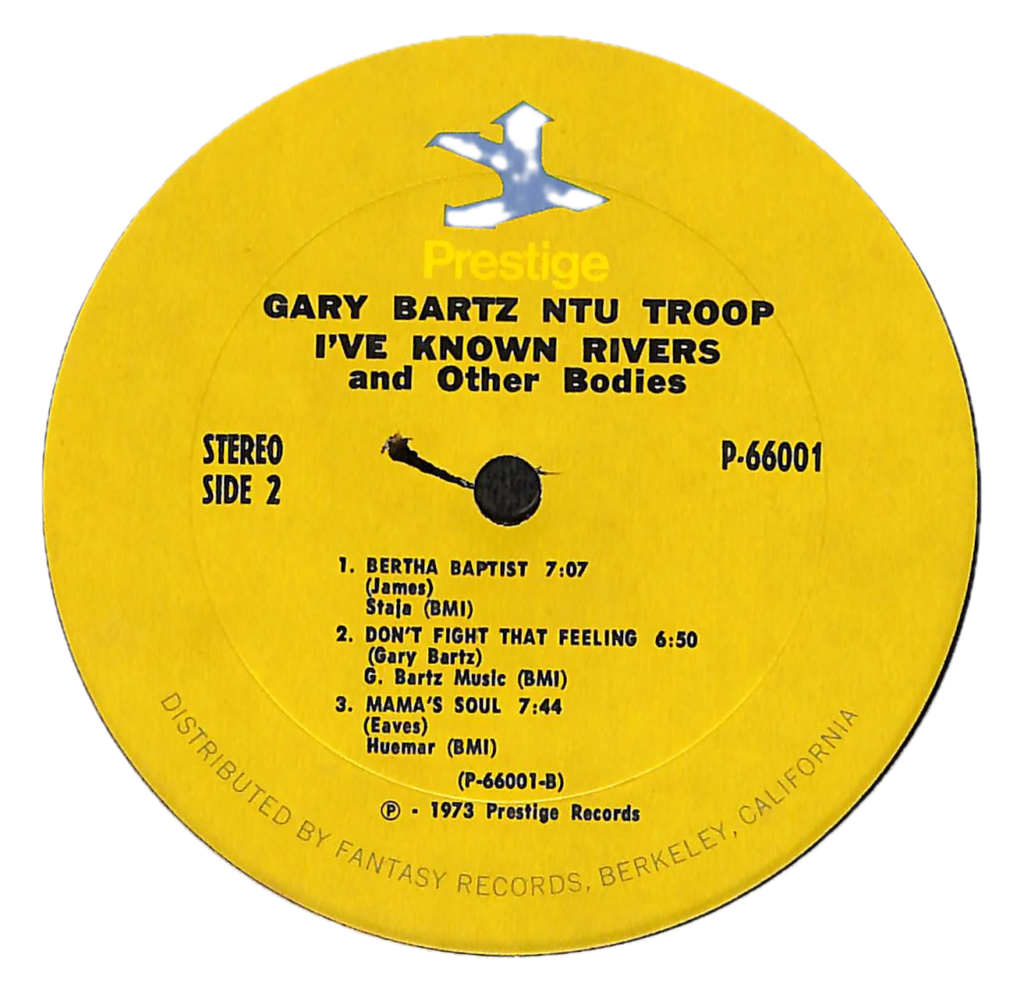
That was a great tour. I’ve seen a few things from that tour. We went to Kongsberg [Norway] during that tour, and I think they found some tapes or something from that. That was a good period. At Montreux, each record label had a night, so that was Fantasy’s night, or Milestone’s night. So Cannonball was there, Dexter Gordon, Gene Ammons. That’s when I met Gene Ammons.
In 1975, Bartz released “The Shadow Do!” on Prestige, which marked his first collaboration with producers the Mizell Brothers. While traditionalists once saw “The Shadow Do!” as a departure from jazz, the album is actually a charming and soulful gem that hides a playful, experimental spirit beneath its warm funk exterior.
GB: Michael Henderson (bass) is on that one, and I had been doing the Donald Byrd records that the Mizell Brothers were producing. So I met them, I loved their work. I asked them if they’d produce this [record] for me. I learned how to produce records by myself, and loved it, but a lot of times the record labels, they’ll give you more money if you have really great producers, because they think that helps.
The ’70’s and the ’80’s became a time when no longer were the musicians the stars of the recording–the producers became the stars. The producers would be signed to a record deal, not the artist. The producer would hire musicians and you’d put it out under your name, but it was really the producer’s contract.
That was the record industry, the way it worked. But I loved working with the Mizell Brothers, and the way they produced, and their concepts.
“Gentle Smiles (Saxy)” from The Shadow Do!, later sampled by A Tribe Called Quest on “Butter” (1991).
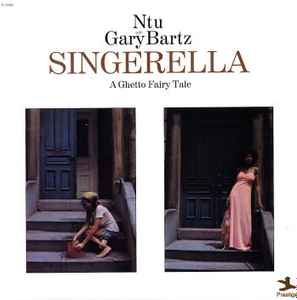
SV: Larry Mizell also mixed your album “Singerella: A Ghetto Fairy Tale,” (Prestige, 1974) which you imagined as a thematic concept record about life in the ghetto.
GB: That was another concept album. Concept albums, for me, are novels. That means everyting is tied together, And all thematic material. I envisioned that as a musical play, That was more of a theater production in my mind, which never got to the theater, but that’s how I envisioned it.
In 1977, Bartz released “Music is my Sanctuary” on Capitol Records, which crystallized his partnership with the Mizell Brothers. It’s one of your Bartz’ most polished and focused records–and also sold quite well.
GB: I was living in Los Angeles. I had signed with Capitol Records. and I had my Teac 4 track tape recorder in the house, and I wrote all of this music for this record. And I knew I had a budget. It was a good deal at Capitol. I knew I had string sections, and all of that. So I was thinking along those lines when I was writing that music.
It was a good period. I liked the L.A. scene. I had fallen in love with that city. My first trip there I didn’t like it, with Art Blakey & the Jazz Messengers. And about two days after we left–we had been at [jazz club] Shelly’s Manne-Hole, and [I thought], “There’s something about this city…I don’t like it.” Two days driving back when we got to Texas, it was the Watts Riots that happened. We understood the feeling of why we didn’t like it. [But eventually] I fell in love with Los Angeles and ended up moving there.
Over the next few decades, Bartz went on to appear on dozens of records, collaborating with artists like Woody Shaw, Christian McBride, Dennis Chambers, and Benny Green, just to name a few. He made a standout record called “The Red & Orange Poems” (Atlantic, 1994) that earned widespread critical acclaim, and jazz critic Stanley Crouch said “Gary Bartz is one of the very finest to have picked up the instrument.”
SV: Tell me about “The Red & Orange Poems.”
GB: Yeah, that’s also a novel…that’s my detective. If I hear a song and I love the song, I have to find it. And there’s nothing I won’t do to find it. It’s taken me years sometimes to find a particular song. But [the album] was my detective, Private Irie, who’s from the West Indies, the Caribbean. A fictional character, but he finds these songs. Some of the songs on the record were songs that I found, that I had been looking for and found.
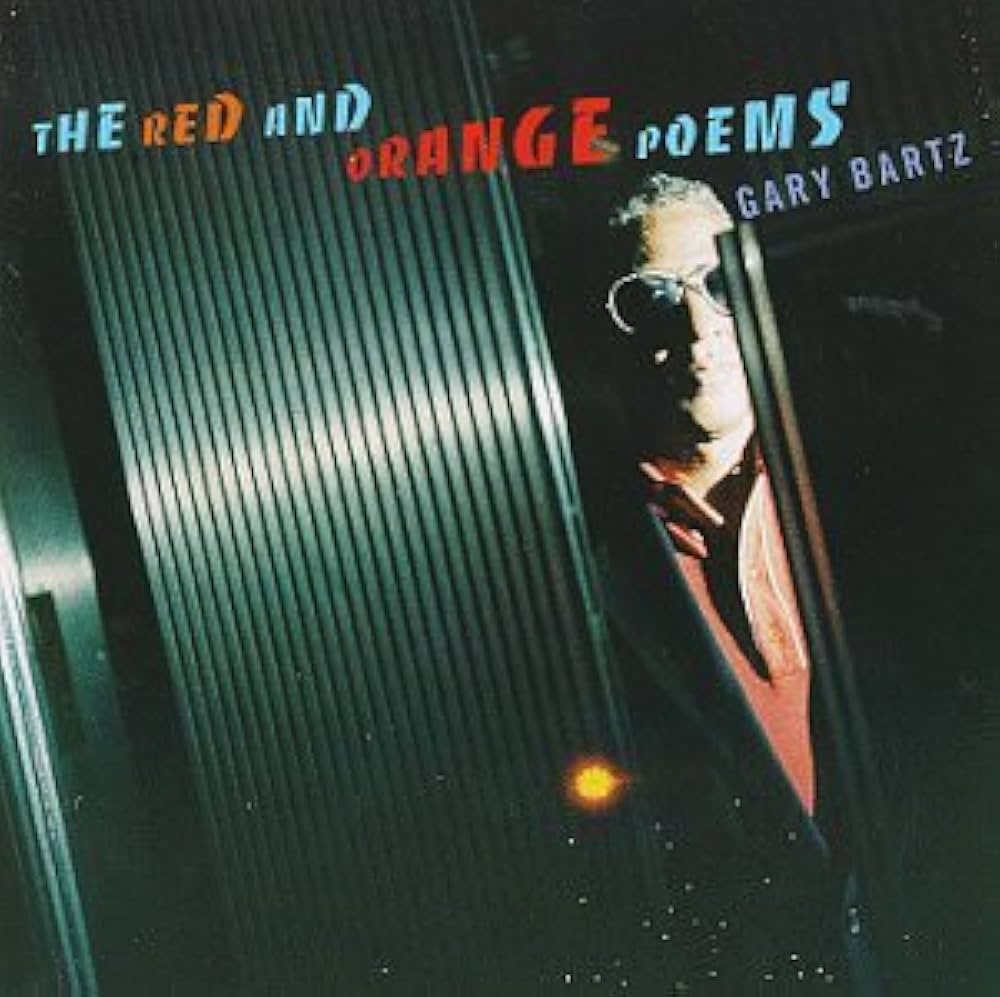
But that was the concept of that record. And what a band. Mulgrew Miller, Dave Holland. And actually Tony Williams was supposed to be the drummer, ’cause we had never done a recording. I had met Tony when he first came to New York, when he was like fifteen years old. so I said, “Man we gotta do a record.” He was happy to do it but I found Greg Bandy, who ended up playing with me for ten years. Great drummer.
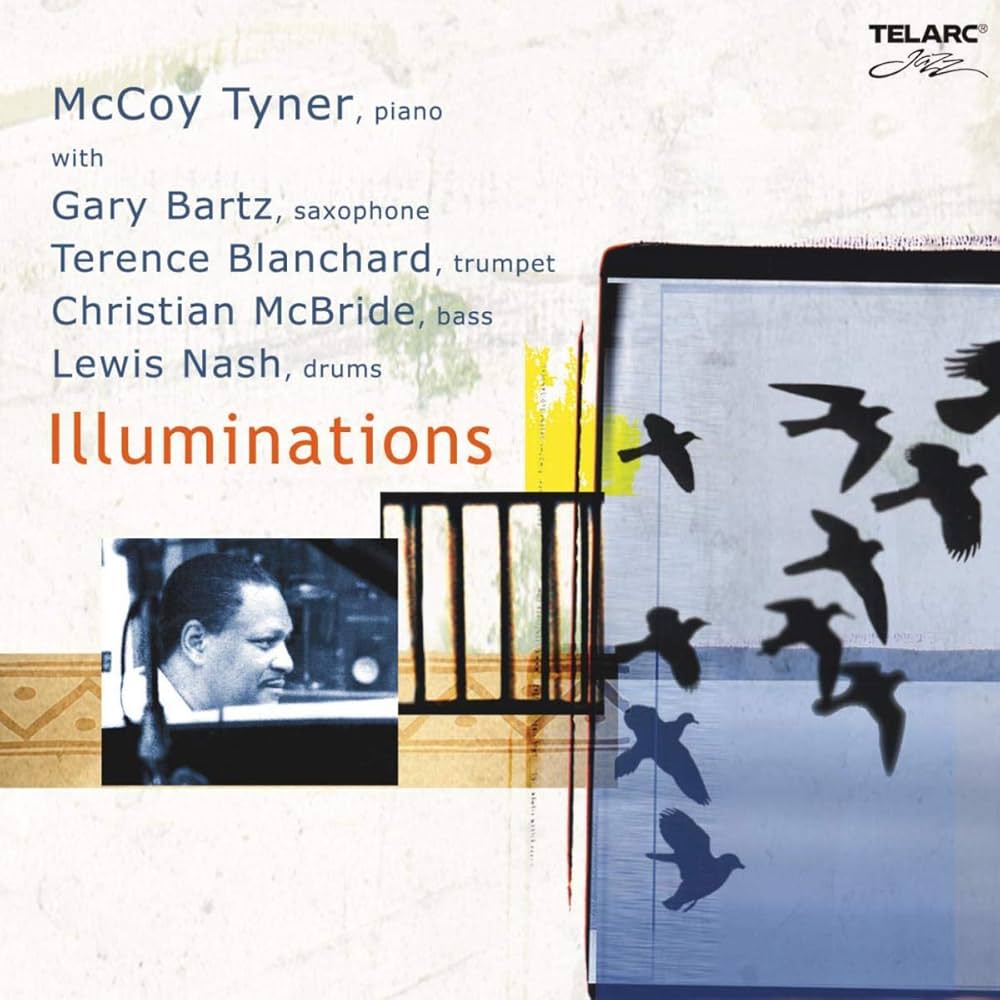
SV: A decade later in 2004, you reunited with McCoy Tyner for a record called “Illuminations” (Telarc), and this album won a Grammy for “Best Instrumental Jazz Album” in 2005.
GB: Yeah, that was a surprise. [laughs] I remember watching [the Grammy ceremony] and saying, “Ah, we didn’t win…Oh, we won it! Wow!” It was a shocker. First time I went to the Grammys was when I was living in Los Angeles. We were way up front. It was for a Donald Byrd record with the Mizells.
So we all went. and I look behind me in the next row, it was the Jackson 5, with Michael before he even left the Jackson 5. I look over there, there’s Marvin Gaye, there’s Smokey Robinson. You know, I was in heaven. [laughs]
SV: More recently, you worked with producers Adrian Younge and Ali Shaheed Muhammad for the “Jazz is Dead” series…
GB: That was really a pleasure. Adrian called me and asked if I would be interested in doing a show in L.A. So I said yes. We got a band together [with] Theo Croker, the great trumpeter, Doc Cheatham’s grandson. Put a great band together and went down there.
They took me by their studio, which is all analog. That’s how I recorded most of my records up until the ’80’s and ’90’s. I loved the studios, so they said, “Well we got some tracks if you’d like to play on them.”
SV: Thanks so much for your time today, Gary.
GB: Thank you, Justin. It’s been a pleasure talking to you.

Further listening:
As Bandleader:
Gary Bartz: Libra (1968), Another Earth (1969), and Home! (1970).
Gary Bartz NTU Troop: Harlem Bush Music – Taifa (1971), Harlem Bush Music – Uhuru (1971), and Juju Street Songs (1972).
Gary Bartz: Follow the Medicine Man (1973), I’ve Known Rivers and Other Bodies (1973), and Singerella: A Ghetto Fairy Tale (1974).
Gary Bartz: The Shadow Do! (1975), Juju Man (1976), and Music Is My Sanctuary (1977).
Gary Bartz: Reflections of Monk: The Final Frontier (1989) and The Red and Orange Poems (1994).
As Sideman:
Art Blakey & The Jazz Messengers: Soul Finger (1965)
Roy Ayers: Stoned Soul Picnic (1968).
McCoy Tyner: Expansions (1968), Extensions (1973), Asante (1974), Sama Layuca (1974), and Focal Point (1976).
Woody Shaw: Blackstone Legacy (1970), For Sure! (1979), and United (1981).
Miles Davis: Bitches Brew (1970), Miles Davis at Fillmore (1970), and Live-Evil (1971).
Pharoah Sanders: Deaf Dumb Blind (Summun Bukmun Umyun) (1970).
Jackie McLean: Ode to Super (1973).
Norman Connors: Dance of Magic (1973), Love from the Sun (1974), Slewfoot (1974), Saturday Night Special (1975), Romantic Journey (1977), and This Is Your Life (1977).
Gene Ammons: Goodbye (1974).
Donald Byrd: Stepping into Tomorrow (1975) and Caricatures (1976).
Phyllis Hyman: Phyllis Hyman (1977) and You Know How to Love Me (1979).
Roy Hargrove’s Crisol: Habana (1997).
Heads of State: Search for Peace (2015) and Four in One (2017).
Leave a Reply
You must be logged in to post a comment.