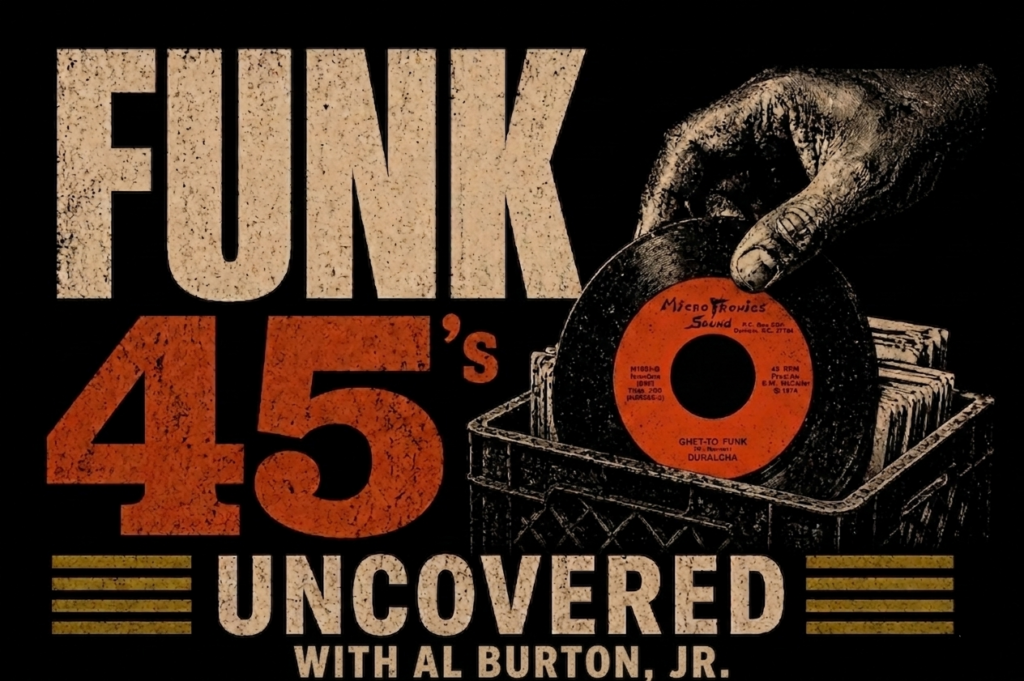
Al Burton Jr. started out “riding the horse” on a plastic bucket in Durham before anchoring the teenage funk of Duralcha. Recorded when he was just a teenager, his raw “Ghet-To Funk” break transformed from a local high school session into a classic funk 45 and a staple for hip-hop’s elite.
___
Al Burton, Jr.: I’m from Durham originally. We were just high school guys from around the area—Hillside High and Durham Jordan. Durham is a small place, but it’s always been big for music. Back in the day in the Hayti district, most of the famous Black musicians would stay there when they came through. Durham had a reputation; gospel greats like Shirley Caesar and John P. Kee came out of here.
My grandmother raised me, and I had a great-uncle named Sonny. Everyone called him Sonny. He was a guitar player and very popular locally in the gospel field. As a child, maybe six or seven years old, I was fascinated by him. He’d come to town wearing these bright yellow and red shoes, sit in the backyard, and talk about his travels. To a child, hearing about him traveling through Virginia and South Carolina felt like he’d been to New York.
He didn’t have a drummer, so he’d call me and say, “I need you to come keep a beat for me.” I didn’t know what he was talking about. I didn’t have a drum set, so I used a plastic bucket. He’d say, “I need you to ride the horse for me.” In gospel, “riding the horse” is that specific hand-clapping, foot-stomping rhythm. That’s how I started. I wanted to be like Ulysses Turner and Grady Tate. My uncles were all in the church singing gospel, so there was always music in the house.
Sounds Visual: When you started playing in earnest, which drummers influenced you?
AB: Back then—and I’m an old guy now—it was Buddy Miles, Alphonse Mouzon, and Jack DeJohnette. But really, coming up in the South, you had to be able to play that “Cold Sweat” beat. If you couldn’t play like the James Brown drummers Jabo and Clyde Stubblefield, you couldn’t play!
SV: So how did Duracha come together?
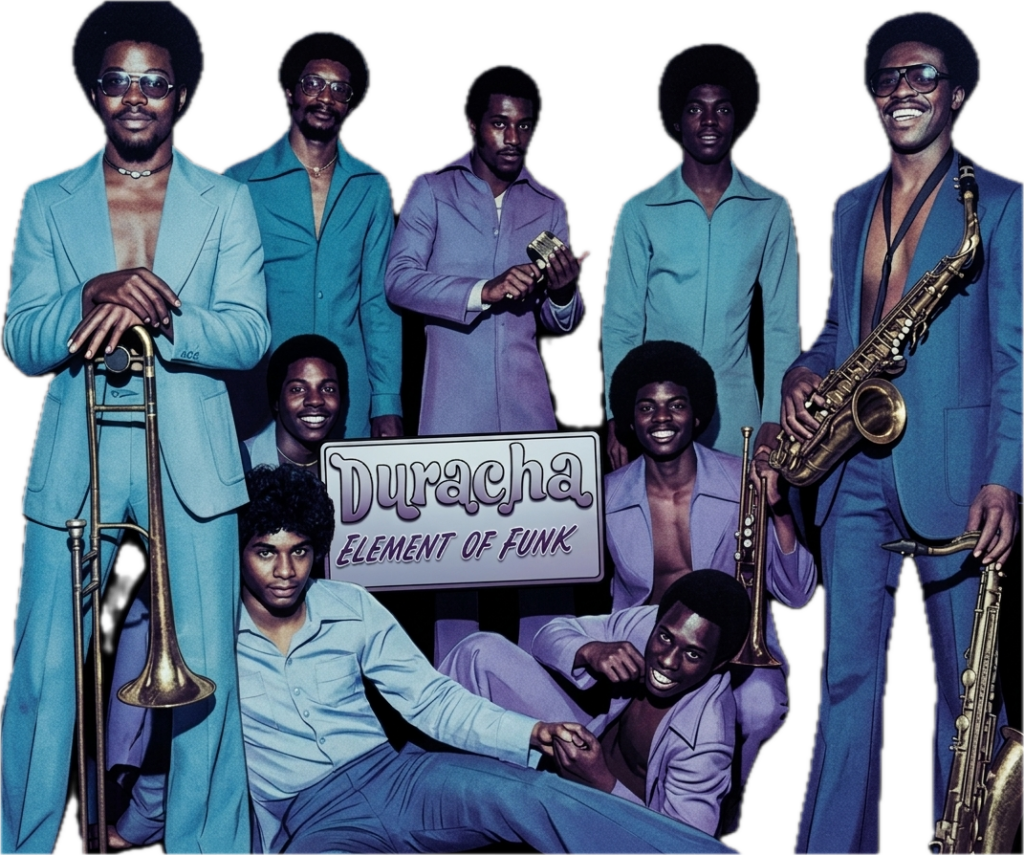
AB: We all knew each other and decided to put a band together. We had an audition at our guitar player’s house—Darrell Kelly—and about 15 guys showed up. Fortunately for me, I was the only one on drums, but there were maybe eight horn players! We narrowed it down to the main guys: myself, Darrell Kelly, and Stanley Saunders, who played trombone.
We called the group Odyssey initially, but there was already a disco group from New York with that name, so we had to change it. We decided to merge the names of the cities we were from: DuRham, CHApel Hill, and RAleigh. That’s how Duracha came to be.
SV: Once the band got together, were you gigging around the Southeast?
AB: Yeah, mostly North and South Carolina. We were all still in high school, so we couldn’t go too far. It’s funny looking back; we had a nine-piece band, a manager, and all our equipment—custom square speakers, mics, the drum kit—and we fit it all into one station wagon. Like the Griswolds! [laughs]
We played a lot of clubs and got a reputation for being very good. Our main competition was a group called The Black Experience Band; they were the “older guys” who backed up all the big acts. Whenever a big artist came to Durham, they usually chose us or them.
There was a record company in Durham called Duplex Records, owned by a guy named Jim Liggins. His dream was to have the first major Black-owned record label since Motown. We recorded at a studio in Durham where most of the local acts went.
The song “The Road” was actually written by the guys in The Black Experience Band. We went in and tracked it, and there were supposed to be lyrics, but they never made it onto the final cut.
Jim wanted to push the band, but back then, you didn’t always know what was happening with the business. The song was out for probably six months before we ever heard it. We were just young guys playing for the love of it; we weren’t making money—maybe $15 or $20 a man—but we were having a good time. We didn’t even know the record was doing well until a year later when we heard it on AM radio.
SV: Al, just to make sure I have the story straight, you’re saying that although “The Road” is credited to “Communicators & Black Experience Band,” it’s actually Duracha playing on it? This is an incredible record!
AB: Yes, sir. That’s us playing. On the 45 it’s listed as The Communicators, but that’s Duracha.
SV: That’s incredible. I had no idea! How did “Ghet-To Funk” happen?
AB: Same thing. Jim Liggins was managing both groups. The Communicators were the older guys, and they gave us the foundation or the basic idea of the song, but we went into the rehearsal and made it what we wanted it to be. We re-recorded it and gave it that feel.
Editor’s note: Though originally named “Duracha,” the group is officially known as “Duralcha” because of a misspelling on their debut—and only—single.
SV: Now, when you guys did these sessions, do you remember anything about the studio or the dates?
AB: It’s slipping my mind a bit—I’m getting to be an old guy! But it was done at Mega-Sound Studios (or what became Duplex) in Bailey, NC. All the Durham and area musicians recorded there. Us, the Black Experience, The Communicators, a group called The Superiors… we were all in and out of that studio. Like I said, we were just teenagers. Only one guy in the band even had a driver’s license! That was our lead singer. The rest of us were just 16 and 17-year-old kids being driven around to play.
SV: What ended up happening to Duracha?
AB: We just grew up. We were young, and once we hit that age, everyone started moving on.…everyone just headed in different directions. We just went on with our lives.
SV: Al, did you know that your drum break from “Ghet-To Funk” has been sampled dozens of times?
AB: Get out of here! Really?!
Above: Just one of the many times that the opening drum break from “Ghet-To Funk” has been sampled–in this example, Jadakiss featuring Nas on 2015’s “Rain.”
SV: I’m serious! You’ve been sampled by Pusha-T, Ghostface Killah, and several others.
AB: You’ve got to be kidding me. That is a surprise. Fantastic! I did that recording when I was 16 or 17, and I’m almost 70 now. That is unbelievable. It puts me in the same division as the greats. I had no idea. It’s funny because we were just high school kids. We’d go into the studio at two o’clock, record the tracks, and then just go back to our lives.
SV: What are you up to these days?
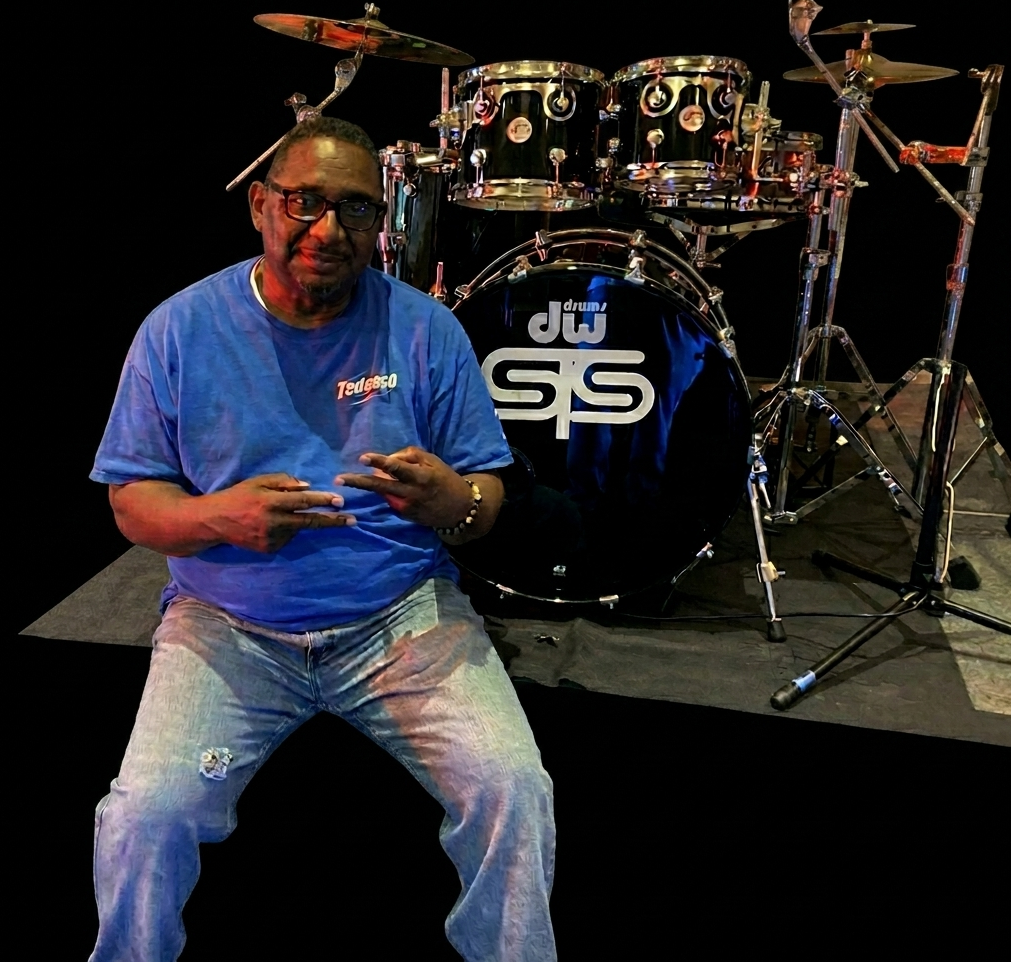
AB: You can find me on Facebook under Al Burton Jr. I’m still very active. I manage and play in two bands: Seven Til Sunrise and Eight Past Midnight under Sam Hill Entertainment. We still do 50 or 60 shows a year. I’m still productive!
SV: Al, thanks so much for sharing your story.
AB: Thanks for the interview.
Leave a Reply
You must be logged in to post a comment.