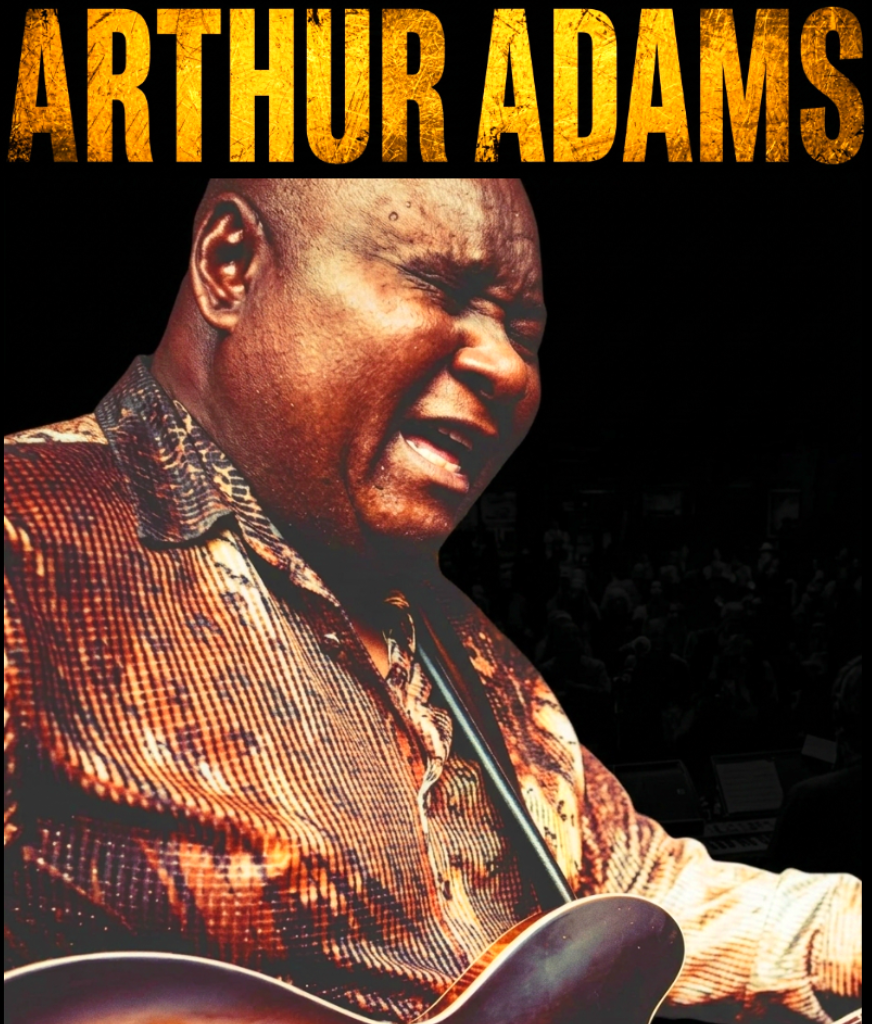
From his humble gospel beginnings in Tennessee to becoming one of Los Angeles’s most requested studio guitarists, Arthur Adams built an extraordinary six-decade career collaborating with icons like Sam Cooke, Quincy Jones, Jimmy Smith, The Crusaders, Nina Simone, and B.B. King.
___
Arthur Adams: I’m from a town called Medon, Tennessee. That’s eighty miles northeast of Memphis. That’s where I was born. I started off with my cousin’s gospel group [the Gospel Travelers]. We didn’t last but maybe a year or two. Then I left there and went to Nashville, to Tennessee State University for about six months, and I left there and started playing at the Club Baron in Nashville. Started meeting different musicians, like [singer] Larry Birdsong, [R&B singer] Gene Allison, [saxophonist/bandleader] Jimmy Beck, and I was just learning how to play, how to tune my guitar. Started playing around Chattanooga and Murfreesboro, Tennessee.
In late 1957, Adams was hired by R&B singer Gene Allison as a backing vocalist. He appeared on the charting single “You Can Make It If You Try.”
Went on the road [with Allison] from Nashville throughout the South. Wound up in Dallas, Texas where we were playing at a place, and Gene Allison and the promoter didn’t have a good contract agreement, so Gene left us in Dallas. He went back to Nashville in his car. I started doing the same thing in Dallas—meeting different musicians, playing around Dallas in different clubs.
While in Dallas, Adams backed traveling musicians including Lowell Fulsom, Chuck Berry, and Houston’s Lightnin’ Hopkins.
This was around 1961, and during that time, I met Sam Cooke. I didn’t play with Sam, but I had written a song—myself and another gentleman—called “Somebody’s Gonna Miss Me.” Sam heard it, and he recorded it. And it was on the “Twistin’ the Night Away” album [RCA, 1962]. That song did real well. After that, I started playing at a place called the Blackout Club in North Dallas.
In 1961, Adams released the solo single “If It Ain’t One Thing It’s Another”/”Willin’ to Die” on Jamie Records, “I Had a Dream” on Dutchess, and “The Same Thing”/“Tend to Your Business” on the Valdot label in 1963. He also sang backup and played guitar in the studio with Sam Cooke. In 1964, Adams moved to Los Angeles and got work as a session player for Vee-Jay Records.
Vee-Jay Records had heard of me, and they wanted to sign me. So they sent me a contract. I decided that I was gonna go to California because Vee-Jay had left Chicago and moved to California.
So I went to California, never had been there before. When I got there, I sat in with a band and started playing in the clubs. Then I went over to Vee Jay, and they assigned a producer to produce a song on me. I think it was two songs. They never did put it out, I was just getting started.
I ran into [football player/actor/singer] Rosey Grier. He had a TV show, Bobby Womack was on that show. He asked me if I wanted to do a recording session. So I told him, “Sure.” Then I went in the studio and did some recording, and then I got into the studio work in Los Angeles. Started playing all over the city. Quincy Jones was one [of the producers I worked for], the Jazz Crusaders, Jimmy Smith, James Brown…all these different individuals I came into contact with. Sonny and Cher. Soundtrack work with Quincy.
Thanks to his excellent reputation for punctuality, quick learning, and professionalism, Adams enjoyed a wealth of studio work. He was constantly in demand, playing sessions for Quincy Jones and Hugh Masekela (on Chisa Records), as well as for the Bihari Brothers on Kent Records. In addition to his studio work, he became a sought-after live sideman and headliner at clubs. His success in the studio also led to appearances on movie and TV soundtracks, as well as commercial jingles. Some of the sessions he played on included those for Lou Rawls (with David Axelrod producing) and Bobby Bryant. He recorded a cover of the Carter Family’s “Wildwood Flower” b/w the original track “Beetle Bust Out” for Jetstar Records.
He also produced blues and soul singles for Modern, and teamed up with Edna Wright for the duet “Let’s Get Together” under the name Arthur & Mary. Adams also contributed to recordings by the Jackson 5, Henry Mancini, Willie Hutch, Nancy Wilson, Kim Weston, and numerous others.
In 1967, Adams made a cameo appearance in the made-for-TV movie “The Outsider,” where he performed the song “She Drives Me Out of My Mind,” That same year, he also led Fulsom’s studio band on the single “Push Me”/”Tomorrow” released by Kent. In 1968, Adams joined the South Central Avenue Municipal Blues Band, a group of top-tier musicians who recorded “The Soul of Bonnie and Clyde.” [Bluesway, 1968] The band featured drummer Paul Humphrey, trumpeter Bobby Bryant, saxophonist Clifford Solomon, and Crusaders members Wayne Henderson [trombone] and Joe Sample (pianist). Henderson would go on to become both a close friend and a frequent collaborator of Adams. Sample and Henderson recruited Adams to play on several recordings by their band, the Jazz Crusaders—who eventually shortened their name to The Crusaders.
Sounds Visual: Arthur, you’ve played on way too many iconic records for us to cover today, so I’ve picked out just a handful of your key collaborations to dive into.First up–I love some of these Crusaders records you’re playing on, like “Old Socks, New Shoes” and “Pass the Plate.” Tell me about these sessions with The Crusaders.
AA: I learned so many many things working with them. They were very organized. They really got into their productions. They wrote out different parts for me. They had different parts they wanted me to play. It was like going to school working with them. They talked about how [in a piece of music] they were gonna use the coda, or the second ending, the tempos, listening to each other. They had good music fights you could call ‘em. They really got after each other, got into each other musically speaking. I’m sure you know what I’m talking about. Matter of fact, I did maybe 8 or 10 albums or more with them. That’s where I got a lot of my music education from them because I wasn’t fortunate enough to get as much education as they did. They took me to school. I learned more working with them than I did with anyone musically speaking. That’s some of the good memories I have. I appreciate all those memories.
SV: In no particular order, let’s first talk about South African singer Letta Mbulu. You’re on her wonderful self-titled album from 1972.
AA: Yeah, I remember working with Letta. That was another good experience. Her husband, Caiphus Semenya, was very musically educated. And I also wrote some songs for Letta. One was called “Open Up Your Heart.” Another was called “I’ll Never Be the Same.” Caiphus did most of the arrangements for her, and he always did these different rhythmic patterns he wanted me to play. African style guitar patterns, and he always liked what I did musically on those different African grooves. It was very interesting because I had never played anything like that, but I could feel it.
SV: You did a lot of soundtrack work for Quincy Jones on films/records like “The Heist,” and “The Lost Man.” [Adams also wrote a song for Jones that Jones recorded called “Love and Peace,” from Jones’ 1969 LP “Walking in Space.”]
AA: Did many soundtracks with Quincy. TV shows, films. Great time working with Quincy. [Adams was also one of the studio guitarists playing on Jones’ great 1971 record, “Smackwater Jack.”]
SV: Arthur, here’s a killer record from organist Charles Kynard: “Woga,” released in 1972, on Mainstream Records.
AA: Yeah, I remember that one. [laughs] That was a fun, fun album. I used the wah-wah pedal. I was surprised that I didn’t hear more of that record. It was so good. I had so much fun playing it. We recorded it here in Los Angeles.
SV: Arthur, next up in my stack is a 1972 LP called “Universe” by Hampton Hawes, released on the Prestige label. This record is a gem.
AA: [Laughs] You’re really taking me to school. Hampton was a great piano player, a real, nice wonderful guy. We went up to San Francisco and recorded that record. It was just a pleasure working with him. He had some very, very innovative songs that he recorded. I think we did that whole album in a whole day. And it was so beautiful.
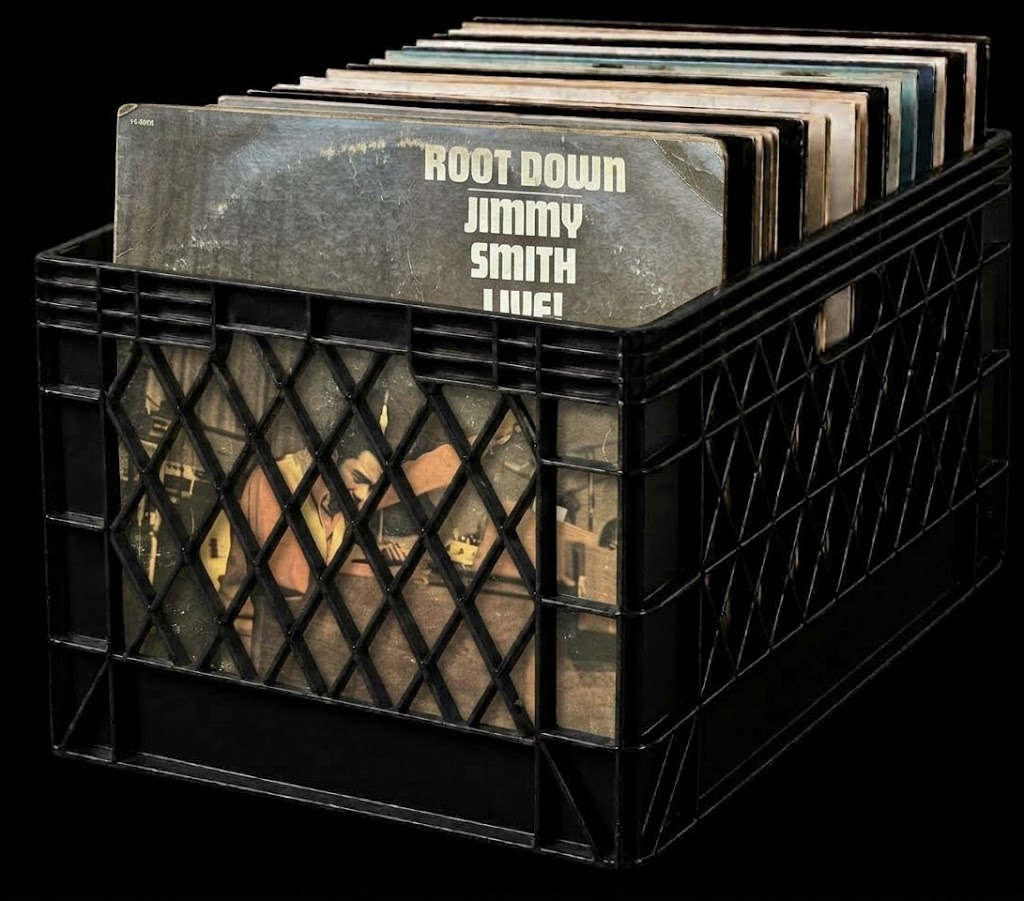
On February 8, 1972, Adams accompanied Hammond B-3 jazz legend Jimmy Smith for his live album “Root Down” in Los Angeles for Verve. The album features the title track, which later gained popularity when it was sampled by the Beastie Boys for their song “Root Down.” The album peaked at No. 24 on the Billboard Top Jazz Album charts.
AA: “Root Down” is interesting. I got the call for it, with [bassist] Wilton Felder, [drummer] Paul Humphrey, and the rest of the band. I couldn’t believe it when they said they wanted me to do a live album with Jimmy Smith. I said, “You’re kidding!” They said, “No, no, Jimmy wants you to do it.” “What do they want me for?”
Jimmy was so nice, he was a real quiet kind of a guy, and I was playing my wah-wah on most of the songs. We did some of the oldies but goodies. We did it at Redd Foxx’s club at 3rd and La Cienega. Never forget that, that’s where the club was. We had a packed house, club wasn’t that big. Jimmy was just—you know how he could play. They told me, “Just play.” And that’s what I did. Jimmy was just sitting there rocking his head and going crazy on the organ. And they just told me to be myself and go for it, and I took everything and put it into that session. It’s one of my favorites, too.
SV: Arthur, the next one is called “Darkness, Darkness” by guitarist Phil Upchurch. [Blue Thumb, 1972]
AA: On that one, I basically just played rhythm. They didn’t want me to get in the way of Phil, because it was his record. He really got into it, and it was a great album.
In 1972, Adams released “It’s Private Tonight,” his solo debut on Blue Thumb. Studio musicians included included Paul Humphrey, Joe Sample, Wilton Felder, Ernie Watts, Phil Upchurch, Clydie King, and Vanetta Field.
Following a tour, Adams returned to backing soul and jazz performers, especially the Crusaders, whose albums he regularly contributed to. He also assisted in the recording sessions that netted Grateful Dead guitarist Jerry Garcia’s sophomore solo album “Garcia.”
In 1975, Adams played on Al Jarreau’s debut “We Got By” (and the following year’s “Glow”) while also releasing his own sophomore album, “Home Brew.” Produced by Henderson, “Home Brew” featured notable musicians such as Sample, Ronnie Laws, and Dennis Coffey (guitarist with the Funk Brothers) and bassist James Jamerson. It received widespread acclaim from critics in the U.S., Japan, and Europe. After touring, Adams returned to the studio with Henderson and a stellar lineup, including pianist/keyboardist Bobby Lyle, to arrange all the tracks on “Midnight Serenade” (1977), released on Fantasy.
In 1979, he recorded “I Love Love Love My Lady” with producer Stewart Levine, featuring contributions from Neil Larson, Harvey Mason, and the Seawind Horns. The single “You Give Me Such Good Feelin’” showcased Adams on vocals and gained international attention from soul fans. Although Adams continued to write, produce, do session work, and tour, it would be 20 years before he released another solo album. In 1979, Adams also appeared on the Crusaders’ hit disco track “Street Life.” Over the next decade, he contributed to albums by artists such as Felder, David Axelrod, Marlena Shaw, Larry Graham, and Bonnie Raitt, including her multi-platinum “Nick of Time.” In 1985 Adams became the bassist for Nina Simone on her 1995 European tour as well as recording on and contributing songs to the “Nina’s Back” album.
SV: Arthur, what was your experience like working with Nina Simone?
AA: [Before Nina] I was at a low point in my music career. You have some situations that happen. I didn’t know how I was gonna make it. I saw in Billboard where [producer] EddieSingleton had a deal with a company and I’d worked with him before, so I sent him some songs. He liked them, called me back, and we met up. Though he couldn’t offer anything at the time, he was co-managing Nina Simone and said she needed a bass player.
We went to her house in the San Fernando Valley. Eddie had told her I was coming, and as soon as I walked in, she said, “Where’s your guitar? Don’t you come in here without your guitar.” It was my first time meeting her. We started rehearsing and she asked if I could play bass. I said, “No, but I can learn.” I didn’t own a bass, so I borrowed one from my friend Victor Smith. Eddie gave me tapes of 40 of her songs, and I practiced until I learned them all—in my own style. By the next rehearsal, I knew most of them.And then when she didn’t want the bass, and wanted guitar, I would put the bass down and pick up the guitar on that particular song. So after that, we got the itinerary to go to RonnieScott’s in London.
We did the show, and then she sang one song a capella, just her. Then she would play the piano, and then I would play the guitar. And then she says, “Okay, now we’re gonna do this one…now we’re gonna do that one.” And I would switch from guitar to bass, bass to guitar. She was very interesting to work with, and I’m glad I worked with her because I learned a lot. She wanted me to come back with her, but I had my own band.
By 1987 Adams had formed a blues band to play clubs and was writing songs for other performers. Among them were “Mean and Evil” and “Something Up My Sleeve.” B.B. King caught his band from the front row of The Mint Club and loved them. He and Adams became fast friends, and King hired him to appear on 1991’s “There Is Always One More Time” and cut both of those songs. In 1994, he became the bandleader at King’s Los Angeles club and remained there for decades.
In 1997, Adams covered Ann Peebles’ brooding soul classic “I Can’t Stand the Rain” for the soundtrack to the movie “Town & Country.” Two years later, he released “Back on Track” for Blind Pig. Self-produced using his own band, Adams wrote or co-wrote eight of the set’s 11 tracks, and enlisted King to sing with him on “Get You Next to Me” and “The Long Haul,” both co-written with Will Jennings. Following an international tour that took him as far as the Netherlands, Adams resumed his studio activity and assisted on recordings by the Crusaders (“Rural Renewal”), Masekela (“Still Grazing”), and Simply Red (“Home”).
In 2001, Adams and Jennings contributed and co-produced “Get You Next to Me,” for “Here and There: The Uncollected B.B. King.” In 2004, he issued his own “Soul of the Blues,” also co-written and co-produced by the pair. Following a tour, he returned to playing King’s club in Los Angeles. Adams returned to the scene with “Stomp the Floor” for Delta Groove Music in 2009. He produced the set and wrote or co-wrote all 12 songs. His sidemen included drummer James Gadson, bassist Reggie McBride, keyboardist/arranger Hence Powell, and a horn section composed of saxophonist David Woodford, trumpeter Lee Thornberg, and trombonist Garrett Adkins.
In 2009, he joined the Mannish Boys, Delta Groove Music’s house band, as lead guitarist and vocalist. They issued “Shake for Me” in 2010. In 2012, Adams released the EP “Feet Back in the Door” (produced by Keb Mo’) and played alongside zydeco accordion master C.J. Chenier and guitarist Ray Parker, Jr. on Sample’s fine, if underrated Creole Joe Band. Spending the majority of his time playing clubs, Adams returned to recording for Cleopatra with 2019’s “Here to Make You Feel Good” with bassist Freddie Washington, Gadson, and Powell, and session players who included Thornberg, McBride, and Bruce Fowler. In February 2023, Adams released “Kick Up Some Dust,” a scorching, self-composed and produced soul-blues date, just in time for his 80th birthday. The recording also featured his working quartet — Powell, Washington, Gadson — with old friends the Waters Sisters on backing vocals.
SV: Arthur, thanks so much for talking with me and sharing these memories!
AA: Thank you, Justin.
Leave a Reply
You must be logged in to post a comment.