
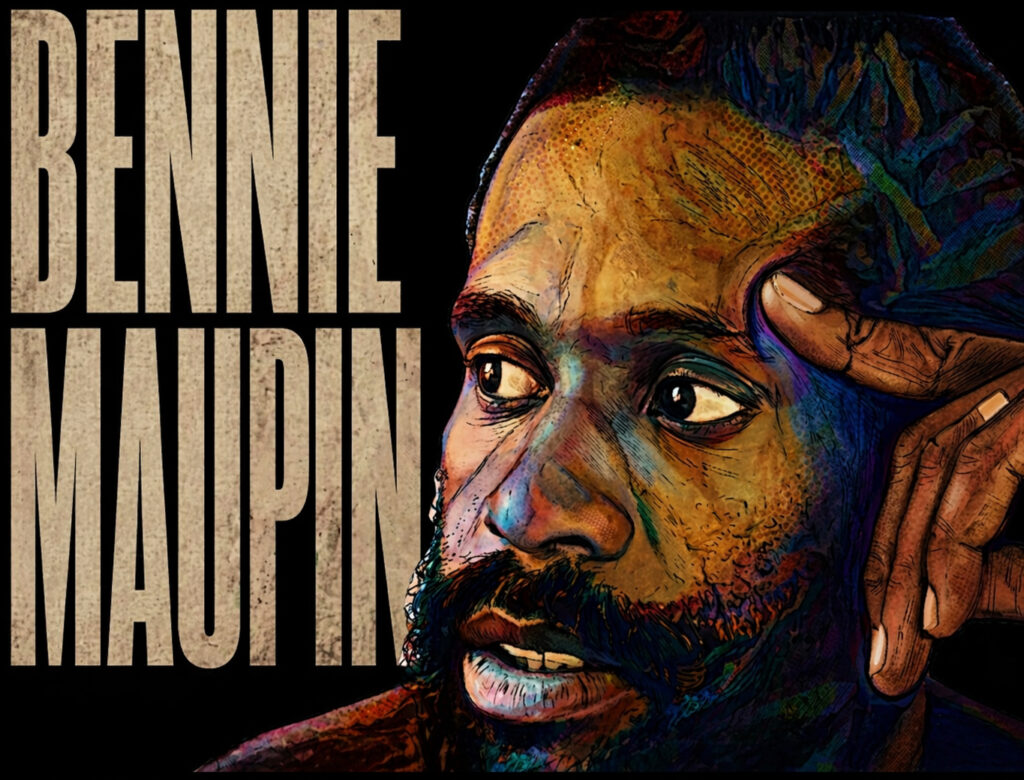
Legendary multi-instrumentalist Bennie Maupin opens up about his Detroit upbringing, his pivotal role in the Miles Davis fusion era, and the Buddhist philosophy that breathed life into his spiritual jazz classic, The Jewel in the Lotus.
___
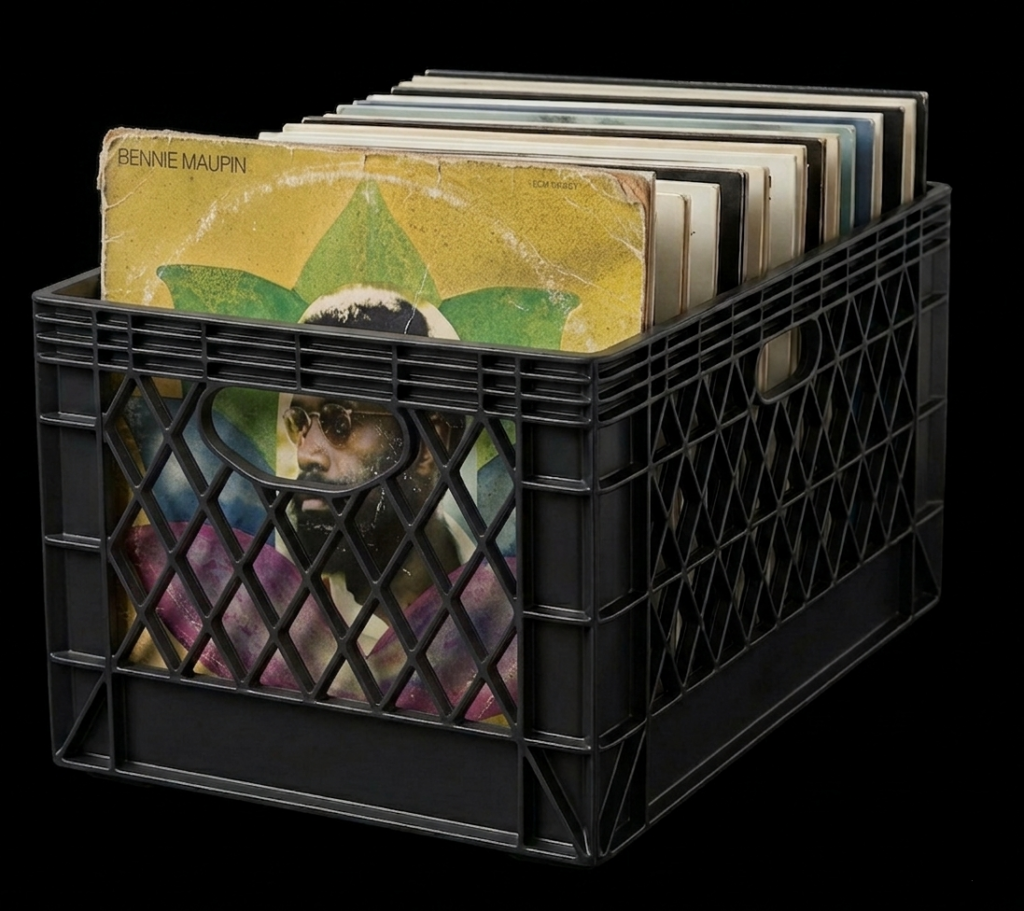
Sounds Visual: Bennie, we’re gonna start a bit out of order here, because I just listened to The Jewel in the Lotus for the first time in a while last night–it’s such a transcendant, beautiful record. I’d love to hear about the resonance that record has had for you over the years, its personal meaning, and your mindset when you went in to make it.
Bennie Maupin: Well, I was at a point where I was very much involved with practicing Buddhism. Myself, Herbie Hancock, and Buster Williams all started practicing Nichiren Buddhism around the same time. I came across a particular book that influenced my thinking, and I wanted to capture something related to how I was feeling. I don’t know if I succeeded, but I did my best to bring forward something reflective of how I was doing at the time.
SV: Listening to it again last night, I was reminded of just how singular and complete a vision that album is. It’s remarkable how you synthesized such harmonic complexity into a statement that feels both cohesive and deeply inviting.
BM: Thank you. I had some really incredible musicians with me. We didn’t discuss the music that much; we just looked at the fragments of melody I had and let it unfold. It happened exactly the way it did.
I had a very good connection with Manfred Eicher at ECM. He wanted to record me, so I told him what I wanted to do, and we did it. He was very happy with it. It’s received a lot of attention lately, which was a surprise to me. You never know how things will be received, but it seems we touched on something.
SV: The Jewel in the Lotus communicated a wordless narrative so effectively. Jazz has often been called “communication without words.” How do you think the language of music allows for a depth of expression that words struggle to convey?
BM: Your question is a very intellectual one, and I’m not the kind of person who is going to break it all down and say, “Well, this is that.” It was a moment in time created by the chemistry of the people involved. It wasn’t so much about what I wrote, but how it developed through brief discussions.
Music, like any art form, is mystical. I wasn’t trying to dictate anything to those musicians; I just wanted to see what we could do in that moment. It wasn’t an intellectual pursuit—it was my first recording as a leader, and I wanted to make a statement. I was fortunate to have the greatest musicians in the world with me, and it happened. Back then, I had my best friends there—Herbie and Buster—and we captured a moment. I’m not trying to recapture that exact moment; I’m just going to present it as best I can today.
SV: I’d love to hear about your early years in Detroit. What was the scene like on the East Side when you were growing up?
BM: Early on, I was too young to go to the clubs because they were restricted to people 21 and over. However, I was fortunate because the local musicians formed a performance space known as The World Stage. You didn’t have to be 21 to get in because they didn’t serve alcohol—it was just music.
That’s where I first heard Dr. Yusef Lateef, Barry Harris, and Donald Byrd. That was the beginning of my awareness. Before that, my exposure was just in the community—the church and the doo-wop groups. Smokey Robinson and the Miracles were right in my neighborhood. It seemed like everybody in Detroit could sing, but I was never a singer.
When I got to Northeastern High School, I was surrounded by greatness. People like Barry Harris, Alice McLeod–who later became Alice Coltrane–and Donald Byrd all went there. I was just absorbing it all. Alice was a phenomenal musician even then; she was the first “genius” I heard, playing in a piano trio at high school.
SV: You also studied with the famous Larry Teal, right?
BM: Yes, I studied classical saxophone with Larry Teal. He was a renowned teacher who also taught Donald Sinta, Charles McPherson, Yusef Lateef, and Joe Henderson. My high school band director directed me to him. Detroit was a very fertile place. Beyond the local scene, the big bands were coming through—Art Blakey and the Jazz Messengers, Horace Silver.
I also spent a lot of time with Barry Harris. He made it clear to us that we couldn’t just “guess” at what we were doing. We had to understand scales, relationships, and chords. I would sit in the corner during my friends’ lessons and just listen. Afterward, I’d grill my friends: “What was he talking about? What are those chords?” I was curious.
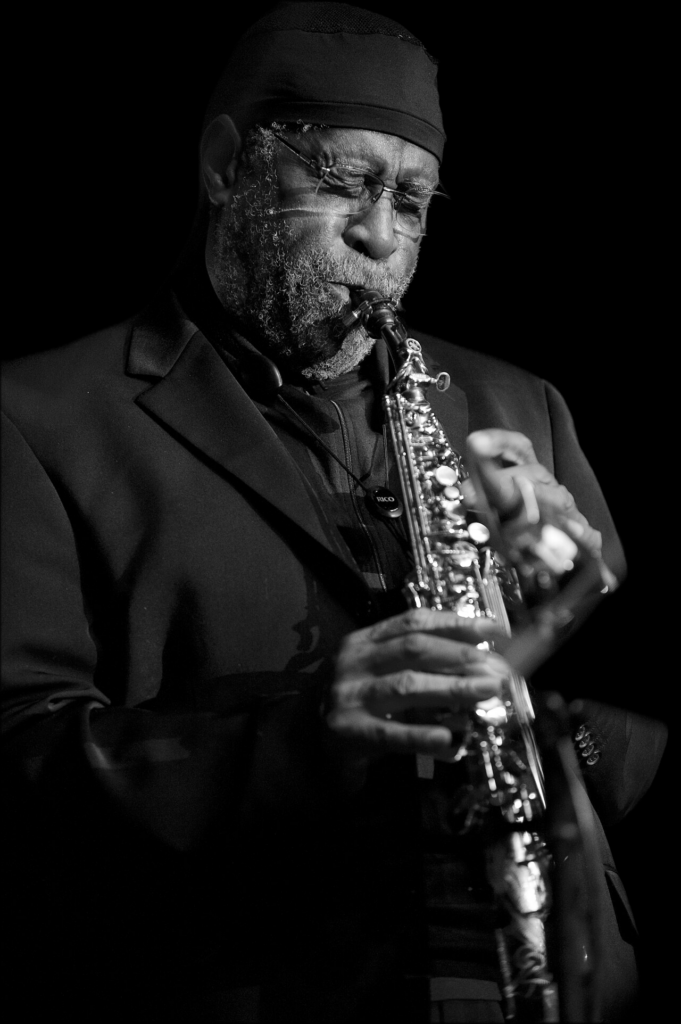
SV: How did the transition to New York happen? I read that Thelonious Monk or John Coltrane might have played a role…
BM: Well, before Monk, my first trip to New York was with The Four Tops. They weren’t famous yet, but they were getting there. Their pianist and bandleader was Johnny Griffin–the pianist, not the saxophonist. I went to high school with his sister, Sandra, who was a percussionist. She told Johnny about me because he was looking for a sax player for gigs in the Catskills and New Jersey.
I went to his house, showed him I could sight-read, and he hired me. During that first visit to New York, I made up my mind: I was going to live there. I went back to Detroit, got my money together, caught a Greyhound bus, and moved.
SV: Did you meet Eric Dolphy while you were in Detroit?
BM: I didn’t get to talk to Eric much, but I met him when he came to Detroit with John Coltrane. Hearing them together changed my life.
However, I did spend a lot of time with John Coltrane. After the clubs closed at 2:00 AM, we would go to the house of a musician named Joe Brazil. Joe was an electronic engineer and had a Steinway grand piano in his basement where everyone jammed. I had many one-on-one conversations with Coltrane there. He was so warm and encouraging. Years later, he was the one who truly encouraged me to move to New York.
I’ve been very fortunate with mentors: Yusef Lateef, Coltrane, and Sonny Rollins. I met Sonny in Detroit when my group actually opened for him. Billy Higgins took me to the dressing room to meet him, and it changed my life. By the time I moved to New York, I was ready to do my thing. I took a day job at a hospital taking care of research animals to pay for my studies at the Detroit Institute of Musical Art, and the rest is history.
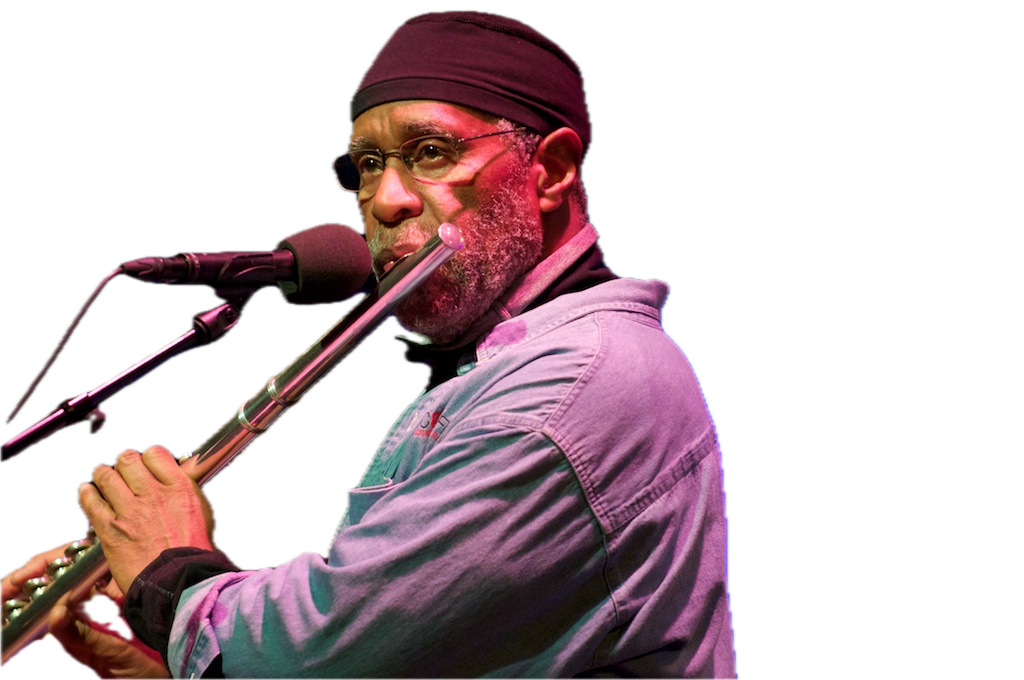
SV: You moved to New York and hit the ground running, establishing yourself with Horace Silver, Andrew Hill, and Lee Morgan. But you were also working a day job at the same time?
BM: That’s right. I worked at the Jewish Memorial Hospital in Upper Manhattan, taking care of research animals. I almost became a veterinarian! At that time, there was a lot of pioneering medical research going on. In Detroit, I had worked at Harper Hospital, where they developed some of the first open-heart surgery techniques. They used large dogs for the preliminary surgeries—German Shepherds and Boxers—because they had large heart systems. I learned a lot about medicine and animal husbandry.
That job supported my life in New York. I worked every day, and it became a running joke. I would go to jam sessions in the evening, stay for a couple of hours, and then leave. The guys would say, “Man, why are you always leaving?” I’d say, “I have a day job.” They’d look at me like I was crazy. In that scene, if you had a day job, you were considered “square.” But I always had money, and it allowed me to pay for private lessons.
SV: Who were you studying with then?
BM: I started with Joe Allard. Joe taught everyone—Yusef Lateef, Eddie Daniels, Donald Sinta. He gave me the technical information I needed. I actually met Eddie Daniels through my mentor, Sonny Rollins. One time, Sonny hired both of us to play with him at the Village Vanguard.
Sonny is my mentor eternally. He encouraged me to move to New York, and once I got there, he made sure I was cool. After I finished work at the hospital, I’d go home and call him. He’d say, “You want to practice?” Then he’d come pick me up and drive us out to an isolated spot off the New Jersey Turnpike. He didn’t want to practice in his apartment because he didn’t want to upset the neighbors. We’d pull over, take out our horns, and just play. He would show me things, and then he’d ask me about what I was playing.
I eventually moved into a loft on East Broadway in Lower Manhattan. These were old warehouses used by Jewish merchants that had become vacant and cheap. I told Sonny about the loft, and he came over one day. The other guys in the building almost fainted when they saw him. We stayed in that loft and jammed for six hours straight. Not long after, he recorded East Broadway Run Down.
SV: You mentioned playing the Vanguard with him. How did that go over?
BM: It was magnificent for us, but the owner, Max Gordon, was upset. He told Sonny, “These guys are running people away! They want to hear you, not them.” Sonny just said, “Well, these are my friends, and they’re helping me out.” Sonny was going through a lot of dental trouble then—he was getting full-mouth implants—and it was hard for him to play. He took us on a voyage I’ll never forget.
SV: Let’s talk about Miles Davis for a minute. You met him through Jack DeJohnette, right?
BM: Jack was my champion. We became fast friends. I was playing a gig at Slugs’ Saloon one night and the door opened—Miles Davis walked in. He famously parked his car right in the middle of the street and just walked in to listen. I eventually met him through Jack, and that led to Bitches Brew.
SV: Your contribution to that record—those dark, brooding bass clarinet lines—is iconic. Did Miles specifically ask for bass clarinet?
BM: Yes, that’s what he wanted. He had heard me play it in public, I think when I was playing with McCoy Tyner. He always called it “the funny horn.” He’d call me up and say, “I want you to play that funny horn.”
For those sessions, I entered a state of total focus. I stayed home, practiced, did yoga, and meditated. I wouldn’t talk to anyone. I wanted to be a “blank slate.” I would be the first person at the studio; the janitor would let me in to warm up.
SV: What was the vibe like in the studio during those recordings?
BM: I was in a small isolation booth with Wayne Shorter on one side and Miles on the other. Miles gave very little instruction. He really trusted me. He’d motion for me to play, and if I attempted to stop, he’d make a circular motion with his hand—don’t stop, keep going. He gave me carte blanche. That session definitely put me on the map.
SV: Did he ever try to get you to join the touring band?
BM: He did. He called me up once and asked me to join. But at that exact moment, I had just committed to a gig with Lee Morgan. When I told Miles I couldn’t do it because of the Lee Morgan gig, he just said, “Oh, shit,” and hung up on me! [laughs]
But our relationship continued. We did On the Corner and several other recordings. I remember a meeting at his house with just me, Miles, and Wayne. No written music, just us three playing a few notes and “tuning in” to each other. He was very gracious and gave me the space to be myself. Miles really opened up a lot of doors for me. I always wanted to work with him, but the timing for the touring band just wasn’t right.
SV: Right, and by then you were working with Lee Morgan…
BM: Yes, I had just taken that gig with Lee. The first thing we did was an album called Caramba!, which actually became a bit of a hit. I was just able to contribute what I could, and it seemed to work because people kept calling me more and more. It’s all about being in the right place at the right time.
SV: Bennie, I appreciate your time today.
BM: Okay, thanks.
Leave a Reply
You must be logged in to post a comment.