

Saxophonist Ronnie Laws reflects on his Houston roots, from hearing his mother direct church choir rehearsals to the moment he first picked up a horn and realized his life’s calling.
Sounds Visual: Can you talk a little bit about what it was like growing up in Houston as one of eight children in a very musical family?
Ronnie Laws: Well, you know, it was very unique in the sense of being part of a family of eight siblings. Having a mother and a father who were very supportive and loving parents—and very principled in raising us to be good representatives of the family—was key. That applied in a musical sense as well. Growing up in the South, it was a different situation. As I said, we grew up in a very small community called Studewood. My mom was the local choir director and my dad was a deacon in the church. Because my mom was the choir director, there was an engagement of a lot of rehearsals in our home, practicing for the Sunday services.
SV: Growing up in the church is a common thread among the musicians I’ve spoken with. In your case, how did your mother’s leadership in the choir—and your parents’ involvement overall—impact your early musical development?
RL: My mother specifically, because she was very much involved on all levels of music. She introduced us to so many different genres. Whether it was gospel, blues, or even classical music, she instilled that in us. We would wake up in the morning listening to the blues station—KYOK—listening to B.B. King and Muddy Waters. That was a regular part of the musical environment; it just became part of our daily thing.
SV: When did you first realize that you had a natural talent for music?
RL: When I was about 11 years old. At the time, I had multiple interests; I loved baseball and played in the Little League and the whole thing. But I took on the music thing because my brother-in-law was freshly out of the military and he was a “wannabe” saxophone player. My older brothers, Hubert and Johnny, had already left home—Hubert was studying at Juilliard in New York and Johnny was in the military.
My brother-in-law sort of took the spot of a surrogate brother, and I would just follow him around. He would put music on the turntable—usually a lot of jazz like Ray Charles featuring David “Fathead” Newman or Sonny Rollins—and I would just sit and observe him trying to play along with the records. He wasn’t really good, but it sparked my interest. It got to a point where I decided to take very close attention to what he was doing as far as his fingering on the horn.
One day, we were listening to Ray Charles, and I think David “Fathead” Newman was the featured player on a cut called “Hard Times.” Man, when I heard that—his tone—it just reached out and did something to me. During that time, my brother-in-law decided to take a break. He went in the kitchen to fix himself a lunch and laid the saxophone on the couch. I went and picked it up, tried to apply the fingering I saw him doing, and within a few minutes, I was able to construct a scale. It blew him away. He heard me playing and knew it had to be me because no one else was there. When he approached me, he was totally blown away. He said, “You know, the horn is yours. You can have it.” That was the beginning.
SV: You’ve mentioned both David ‘Fathead’ Newman and Paul Desmond as early influences. On the surface, they represent very different ends of the tonal spectrum—the soulful ‘Texas Tenor’ grit versus Desmond’s ‘dry martini’ cool. How do those two distinct sounds coexist in your own playing?
RL: With David “Fathead” Newman, it was just his style, his tone, and his flavor. The way he approached the horn, it was like he was singing. And of course, you mentioned Paul Desmond. I later grafted into what he was doing with the solo on “Take Five,” which I learned verbatim.
But Fathead… I was really very much inspired by that. So when my brother-in-law gave me ownership of the horn, I was totally enthralled and pursued it further. I went and purchased a method book and learned proper fingering. I was always blessed with a very good ear, so when I got the book, I was able to learn more scales. Then, whatever I heard on recordings, I would spend a lot of time mastering—I spent a lot of time learning David Fathead’s solos.

SV: In your development as a musician, how would you weigh the importance of formal training against the tradition of learning by ear?
RL: I think [learning by ear] initiated an attachment to the instrument and a love for it. There is a Japanese method of approaching an instrument—I can’t think of the term for it—but it’s basically establishing a relationship with the horn rather than necessarily dealing with theory first. Being blessed with a good ear, as I said, I could listen to certain things and break them down. If I spent enough time, I would eventually master it.
SV: And you also had a band teacher, Ed Trongone, who also really shaped your understanding of theory and performance?
RL: Exactly. When I went to high school—Robert E. Lee High School—they had just integrated the school district in Houston. Of course, I wanted to go to the school my brother Hubert attended, Phyllis Wheatley, because it was a Black high school with a very good music curriculum. That’s the school the Crusaders—Wayne Henderson and Joe Sample—were alumni of. I was really anticipating going there.
But as it turned out, it was the Civil Rights era and there was a lot going on. I didn’t want to go to Robert E. Lee because I was among only 10 Black students integrating a school of 2,500 white students. But interestingly, my total interest was music. On day one, I immediately sought out the music room. The director of the music department was Ed Trongone. It ended up being a huge blessing because Robert E. Lee actually had the reputation of having the top music curriculum in the whole state of Texas. That was because Trongone’s brother was a music professor at Berklee School of Music in Boston, so there was a strong connection there.
When I first enrolled at Lee, I met with Trongone and told him I had a strong interest in the music department. He arranged to audition me the following day before class. He put music in front of me, and I was struggling with the reading because up until that point, I had always learned by ear. He saw I was having a problem, so he pushed it to the side and said, “Look, just play something for me. Play anything.” What he didn’t know was that I had learned that Paul Desmond “Take Five” solo note-for-note. When I finished playing it, he was totally blown away. He recognized the potential and said, “Look, if you meet me at seven in the morning before class, I’ll teach you how to read.” I followed up on that, and shortly afterward, I was able to take full part in the music program.
SV: Ronnie, I’m curious: since you’re from Houston, were you familiar with the Kashmere State Band?
RL: Absolutely. Kashmere was the other school, but it was way across town. Conrad Johnson—”Prof”—was an icon, man. In fact, when I was at Lee, we competed against Kashmere in stage band festivals throughout the state. Conrad would always take me to the side and say, “Man, I wish we could have had you.”

SV: Wow! So you ended up moving to L.A. in the early ’70’s. Tell me about that.
RL: I did a lot of freelance work. When I got here, it was like starting all over again, even though I had accomplished quite a bit in Texas on the club circuits. My sister was a background singer for Kenny Rogers—
SV: Another Houston connection!
RL: Yeah! She was in a group called Kenny Rogers and the First Edition, before he became a solo country singer. She told him, “I have a little brother who plays sax, you should check him out.” Kenny said, “Bring him on board,” and I actually had the opportunity to perform with him in a couple of club spots.
I moved to Los Angeles in 1971 shortly after getting married. Like I said, it was like starting over. I did freelancing and sessions. One of the big gigs I got was through my brother, who recommended me as a sub for Pete Christlieb for a big concert at the Greek Theatre with Quincy Jones and Roberta Flack. Pete couldn’t make the gig, so my brother recommended me to Quincy. Quincy approached me and said, “You ready for this?” and I said, “Definitely.”
I had known of Quincy for a long time. During the summer months, I would go and stay with my brother in New York while Hubert was a session guy. I would tag along to all the sessions I could attend. I met Quincy, Benny Golson—all the big heavyweights. As a matter of fact, I was there for the whole Walking in Space session at Rudy Van Gelder’s studio in New Jersey. I went there every day.
Anyway, going back to the concert at the Greek with Quincy: the sax section was Ernie Watts, my brother Hubert, Tom Scott, Jerome Richardson, and me. I was only 20, man! Tom Scott was already a heavyweight. It was mind-blowing.
I got more involved in the circuit. I did a lot of freelancing and sessions, including work with Wayne Henderson. I also joined up with Walter Bishop Jr. and Doug Carn.
Through Doug Carn, I had a relationship with Maurice White, who later founded Earth, Wind & Fire. When Maurice was starting out and auditioning, he needed a sax player and Doug recommended me. That’s how I joined Earth, Wind & Fire and became one of the original members.
SV: Amazing. Tell me about how that impacted your career.
RL: Well, Maurice contacted me and I went in to audition. Maurice knew I was Hubert’s younger brother and was anticipating meeting me. My concept at the time was that I was going to be part of a horn section. But after I played, Maurice decided he was just going to go with one horn. It was a little different because most R&B bands had full horn sections, but he wanted to do something more innovative.
We were part of the original LA group and we did “Last Days and Time.” Clive Davis signed the group after about a year. I toured with them for about a year and we did a showcase for Clive. At that point, Maurice signed the group with Columbia. However, everyone had to sign through Maurice’s production company, Kalimba Productions. I decided at that point that I wanted to take a different path.
That’s when the opportunity came with Hugh Masekela. Wayne Henderson—my homeboy from the Crusaders—was actually playing drums on tour with Hugh. Wayne is a trombonist, but he also played drums. He came off tour and told me Hugh was looking for a sax player. I auditioned and got the gig. I really loved playing with Hugh. It was the fulfillment of a dream I’d had in college. When his hit “Grazing in the Grass” was released in the late ’60s, I remember hearing it blasted in my music class and telling my classmates, “I’m going to play with this guy.” We became very close, man. Very, very close.

SV: By the mid seventies, you decided to pursue a solo career. Tell me about the challenges of making that transition.
RL: Well, when I left Hugh Masekela, he literally had to kick me out because I was very content just working with him. But he was cognizant of the response I was getting on stage. Coming off one of the tours, I noticed he didn’t call me for any further dates. I thought maybe something had occurred that I wasn’t aware of. After a few weeks of me anticipating going back out, he called me and said, “Ronnie, look, I think it’s time for you to do your own thing, man. You’re ready.” I took that and ran with it. I dedicated my aspirations to being a solo artist, started writing, putting a band together, and shopping demos.
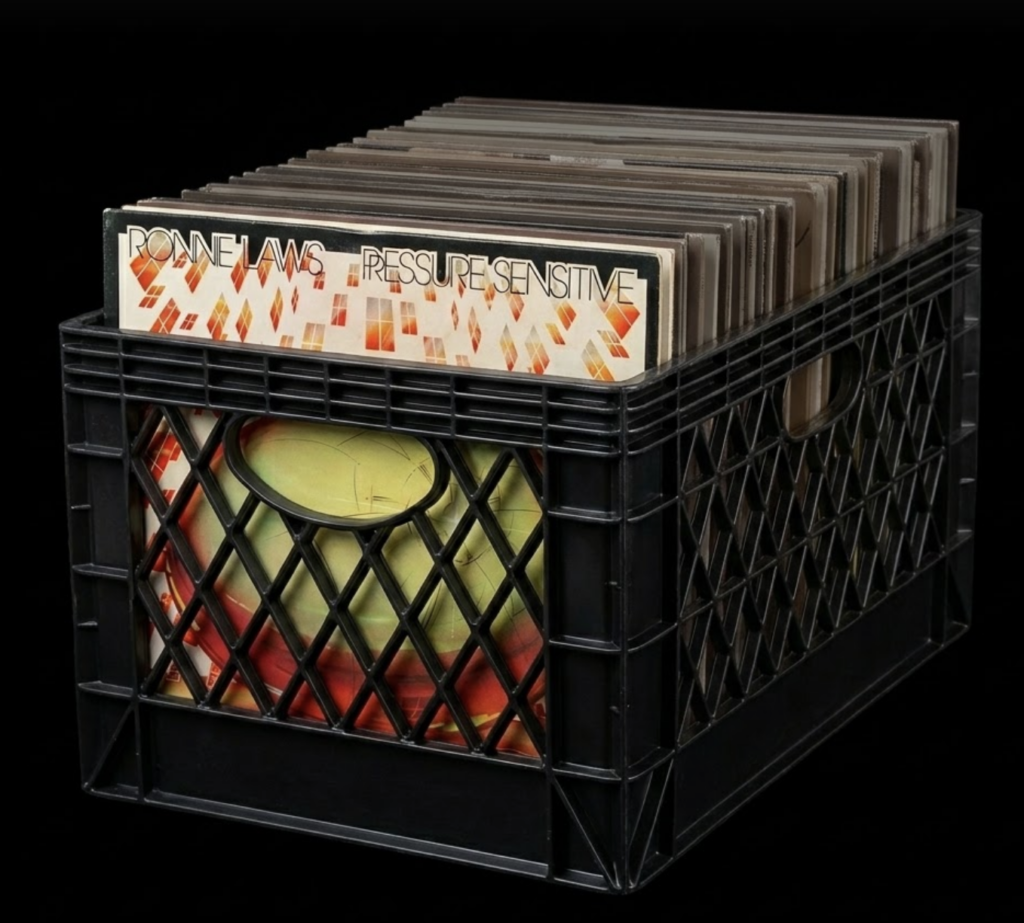
In 1975, Laws issued his debut album entitled Pressure Sensitive on Blue Note Records. The album reached No. 25 on the Billboard Top Soul Albums chart.
RL: I went to Blue Note Records and George Butler was the president. I took the demo to him for a listening session. At that time, Donald Byrd was one of the artists on the label with the Blackbyrds. He happened to be in the office when George was playing my demo. After listening, he approached me and said, “Is that you on soprano? The sound you have on the soprano sounds different.”
He expressed interest in signing me to Blue Note, but it didn’t transpire immediately because he was touring. I would meet at his home in the Hollywood Hills when he was off the road, and he had great intentions, but schedule-wise, it just wasn’t going to happen. So I hooked up with Wayne Henderson because we had been doing some writing together. Wayne took my demo to George Butler. Knowing who the Crusaders were and having Wayne’s recommendation opened the doors for them to eventually sign me.
During that period, I was doing a lot of writing and collaborated with one of my best friends from college, William Jeffrey. He had moved to LA a year before I did. One of the songs we wrote was “Always There.”
SV: What do you think made that song resonate so strongly with audiences?
RL: During one of the writing sessions, William said, “Ronnie, check out this rhythm thing.” I took my flute and constructed the melody on flute, not saxophone—and the rest is history. We eventually recorded it in the studio on tenor, obviously.
In 1976, Laws released his sophomore LP, Fever, which climbed to No. 13 on the Billboard Top Soul LPs chart. He followed this success in 1977 with his third album, Friends & Strangers, released via United Artists Records; the record eventually earned a gold certification from the RIAA.
SV: How do you think albums like Fever and Friends and Strangers built on your early success?
RL: I attribute it to my musical background in Texas. I grew up in the ’60s with the Motown roster, but on the other hand, I was introduced to jazz through my brother-in-law and my brother Hubert. Even though Hubert was off studying at Juilliard, he had a great impact on me. I was inspired by different genres—the blues my mom played, Ella Fitzgerald, Dinah Washington, Ray Charles, and even classical stuff.
Growing up in the sixties, there was quite a bit of integration of different musical styles at that time, and I was impacted by that. I could listen to Stevie Wonder and then turn around and listen to John Coltrane. Coltrane had a huge impact on me; when my brother first introduced me to his music, I was never the same.
When I approached my first album project, all of that came into play. I had the straight-ahead chops because I did all that in Texas. Leonard Feather followed my career through high school and college competitions because of Hubert. I won a lot of “Outstanding Musician” awards and he even wrote a write-up on me in Downbeat. In college, I competed in the Villanova Jazz Festival; I’ll never forget it because Michael Brecker was there with Indiana University. We were in the same competition and I knew from the moment I saw him that he was a monster. We kept in close touch.
When I did Pressure Sensitive, I got a little negative feedback from Leonard Feather because he was expecting me to take a strictly straight-ahead jazz approach. But my brother Hubert understood I came from a different place. He encouraged me and said, “Do what you feel is best for you musically; you can’t be discouraged by how critics look at what you’re doing.” Eventually, that album changed things. They called it “fusion,” but it was different, and eventually, it earned the respect of critics like Leonard Feather.
In 1980, Laws released his follow-up album, Every Generation, through United Artists Records, which successfully climbed to No. 4 on the Billboard Top Soul Albums chart. Throughout his career, he became a prolific collaborator, frequently working with his brother Hubert Laws as a performer and co-producer, and contributing to notable projects by The Crusaders, Sister Sledge, Deniece Williams, and Earth, Wind & Fire. His extensive session work spanned decades, featuring performances on albums by Ramsey Lewis, Jeff Lorber, Guru, and Brian Culbertson. This diverse body of work established a lasting legacy, directly influencing contemporary jazz figures like saxophonist Boney James and guitarist Norman Brown.

SV: Ronnie, how do you balance technical skill with emotional expression in your playing?
RL: That’s interesting. As I mentioned before, being blessed with a good ear has a lot to do with how I approach whatever I’m playing. I relate to the players who influenced me, but I eventually grew to establish my own signature sound and tone. To me, performing is about drawing from your life experiences—living the life and the culture of where you came from.
The people I listened to were part of that. We lived across the street from a juke joint in the neighborhood I mentioned earlier. Listening to B.B. King and observing that whole environment… you attach all of that to who you are. It’s all a part of growing and extracting from those experiences.
SV: You’ve worked with so many greats. What have you learned from working with artists across different genres, and which collaborations had the biggest impact on you?
RL: I can start with my experience in Earth, Wind & Fire. Working with Maurice White gave me the opportunity to learn what record production is really about—how he approached setting up tracks, doing live rhythm sessions, and then bringing in overdubs. I extracted my recording techniques from Maurice White.
As far as performance, I extracted a lot from Hugh Masekela. I learned a lot from how he interacted with the audience on stage. Beyond that, my solo experiences have just been the maturation of growing as a musician and an artist.

SV: In later projects, you explored more traditional jazz and did a tribute to Eddie Harris. Talk to me about that.
RL: Eddie was a very inspirational artist and eventually became a very good friend. When I first heard him, he had the big hit “Listen Here.” I was just a teenager then, but I remember seeing him perform in Central Park when I was staying with my brother in New York.
As time went on and I started experiencing success as a solo artist, we would run into each other. He knew I looked up to him as a mentor, and he was very supportive. If I was performing in LA, he would come with his wife and sit in the front row. He used to say to me, “Ronnie, of all the young cats, I would go buy your records.” That stuck with me. He was a genius—an absolute genius. He was a great piano player and could have been a stand-up comedian, too; he was a very funny guy.
I’ll never forget: I was scheduled to do a concert in Sacramento and the opening act couldn’t make it. The agent called and suggested Eddie Harris. I said, “Man, there is no way Eddie Harris is opening for me. I’ll open for him!” I totally refused to have it any other way because of my respect for him. The agent told him, but Eddie called me himself and said, “No, I want to do it this way.” We ended up flying on the same flight, and he shared his life experiences with me, like playing with Charlie Parker. I was so honored, but intimidated at the same time because he really did open for me!
When I later heard he was battling cancer and having issues with medical expenses, I contacted Bruce Lundvall at Blue Note Records. I told him I wanted to do a tribute album to help Eddie with his medical situation. He didn’t live to see the finished product, but we talked daily while I was doing the project. He really appreciated that tribute.
SV: Ronnie, how have you adapted to the changes in the industry over the decades, and what keeps you motivated?
RL: You have some great questions! You know, a famous football coach was once asked a similar question, and he made the point that the central issue is having a passion for what you do. Money has never motivated me. When I was younger, my brother Hubert would always say, “Master your craft.” Having that passion and love for the thing has been the carrying force for me.
I’ve been very blessed and successful, but it’s the love for giving to the people. Music is therapeutic; it helps people get through things. If you can contribute to that, you’re sharing a gift given to you for the masses. When people share how “Friends and Strangers” or “Always There” helped them, that is the motivation.
SV: Your music has been sampled extensively in hip hop. How do you feel about sampling?
RL: Once again, it’s complimentary to be recognized for your body of work. They wouldn’t sample it if they weren’t inspired by it. But I am always concerned about how the music is represented. I wouldn’t want anything attached to it that contradicts the intentions behind why I wrote it.
SV: One track that’s been sampled a ton is “Tidal Wave” from Pressure Sensitive. (The song has been sampled by artists including Black Moon, Quasimodo, Usher, Peanut Butter Wolf, Queen Latifah, and Rob Swift, among others.)
RL: “Tidal Wave” was written by William Jeffrey. William and I were very close; we met at Texas Southern University and were in a group together. He was a great drummer and an excellent writer. When I got to LA, we continued our relationship as writers. He wrote “Tidal Wave,” “Friends and Strangers,” and “Thoughts and Memories.” He was a brother to me.
“Tidal Wave” (1975) sampled by Black Moon’s “Who Got Da Props” (1993).
SV: How about “Friends and Srangers?” I know we talked about the album before, but the title track is another one that got sampled a bunch by artists like MF Doom.
RL: Larry Dunn from Earth, Wind & Fire was the keyboardist. I brought Larry on, and he really took that track over the top. The initial track was sort of “naked,” but Larry did his thing with the synth parts. They didn’t have sequencers back then, so he was just stacking parts on top of parts. It was genius.
SV: So many great songs to ask you about, Ronnie–just a few more. How about “Alwys There?” This one also got sampled by Björk…
RL: Wayne Henderson was the producer and he brought in Joe Sample and Wilton Felder. That’s Joe Sample on the clavinet. That whole take—the solo and the tracking—was just one take, man.
SV: And the Beastie Boys sampled “Tell Me Something Good” on their breakthrough record, Paul’s Boutique.
RL: Wayne [Henderson] really wanted us to do a cover of that track. Roland Bautista’s performance was a standout, the guitar work was also incredible—it was just such a fun thing he did. It was one of those special tracks, and my sister actually wrote the lyrics.
SV: Last song I want to ask about is “Every Generation,” the title track of your 1980 album. This one later got sampled by Drake and Mary J. Blige…
RL: That was inspired by my grandfather, whom I never met. My mother’s father was a street musician in Texas who played the blues harmonica on streetcars. My mom shared the story with me at the kitchen table one day. People always ask where the music started in our family, and when she told me about her biological father being a musician, it inspired me to write “Every Generation.”
In February 2026, Laws released his latest single, “Ribbon in the Sky,” which is currently gaining strong international traction and charting worldwide. The release features an all-star lineup including Stevie Wonder on harmonica, Larry Dunn of Earth, Wind & Fire, Howard Hewett of Shalamar, and his sister Debra Laws.
SV: Looking back on this incredible career, what were the most defining moments for you?
Ronnie Laws: There were several pivotal points. One was my marriage, because that brought a new level of responsibility and the realization that I had to provide for a family. Having children brings a recognition of who you are and what you want your future to be.
SV: What advice would you give to young jazz musicians today?
RL: Learn your craft. Exercise discipline and avoid distractions. Be dedicated and serious about your aspirations. Achieving your expectations requires discipline, passion, and a love for what you do. Keep your eye and your heart centered.
On May 2, 2026, Laws will be honored at the Edison Arts Foundation in the Houston area, a meaningful recognition in the city where his musical journey began.
RL: I was approached by representatives of the Edison Arts Center; they wanted to acknowledge a “homegrown” Houstonian. It’s a credit to growing up in Houston and experiencing this success. There is a strong legacy with the Laws family, starting with my brother Hubert.
SV: I’m glad you’re getting that recognition. Thanks so much for your time today, Ronnie.
RL: I appreciate you, man. Thank you.
Leave a Reply
You must be logged in to post a comment.