
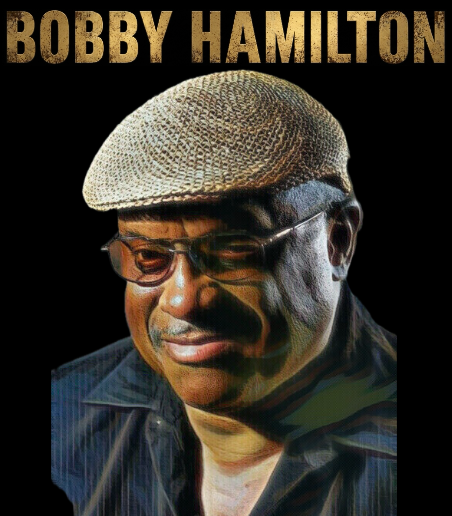
Bobby Hamilton describes his legendary 1970s spiritual jazz album, Dream Queen, as a raw love letter to a genre that offered little commercial reward, transforming it from a self-pressed obscurity into a sought-after collector’s holy grail.
___
Bobby Hamilton was born in Yonkers and grew up in New York City. He went on to attend Syracuse University and later studied theology at the Colgate-Rochester Divinity School. While living in Syracuse, NY, Mr. Hamilton hosted the “All American Jazz” series on WCNY-TV and managed jazz programming at WAER-FM88. He also performed as a featured artist in a Syracuse Symphony Orchestra jazz concert and taught piano and music theory at the community arts school.
___
Sounds Visual: How did you first find your way to the piano?
Bobby Hamilton: Oh my goodness, I’ve been playing the piano since I was six years old. I found a piano right away. [Later on at Syrcacuse University] I was in a freshman dorm and there was a piano down in the lobby. Of course, I just sat down and started playing it, and playing it, and playing it every day. Until someone came along saying he was a bass player. He brought his bass down, and that turned into him and me doing that in the lounge. Then we found a drummer, and we went out to a local restaurant somewhere and started playing together, calling ourselves the Bobby Hamilton Trio.
SV: Backing up for just a second, were you born in Yonkers?
BH: I was born in Yonkers. Right. I was born in Yonkers, and then we moved to New York City, to Queens. I was 16 when we moved.
SV: So in Yonkers during your childhood before Syracuse, were you exposed to a lot of jazz music?
BH: No, no. I was exposed to bicycles, snowballs, and running up and down [the street.]
SV: So when did you get into jazz?
BH: That’s a good question. That’s a very good question, because I never even asked myself that. Somebody asked Bob Marley about his music, and when he was asked when he got into reggae, he said, “When I come out the womb.” So that’s a very good question! I don’t remember a lot of jazz going on. I guess it was something that happened when I got into college.
[At college] I was taking regular stuff, you know, sort of general studies. There’s a name for when you don’t have a specific major. But it can stem from a major—I started out in psychology. But the psychology got a little too deep, so I went into fine arts. All the time I was in Syracuse, I was playing in my group—me, the drummer, and the bass player. By the time I got to be a sophomore, we added a vibe player. We added one of the players from the football team, who was a congressman’s son. We became known as the Bobby Hamilton Quintet.
SV: Eventually, you ended up forming a group called Anubis–tell me about that.
BH: Well, it was the same group as the Bobby Hamilton Quintet, but we discovered we were playing too much jazz to get the kinds of gigs we wanted. The drummer, who played the conga drums, was also a singer. So he started singing, and we started doing rhythm and blues and rock and roll—a little bit of rock and roll—and we got better gigs. We got dancers, you know what I mean? You get dancers when you don’t play straight jazz, so we still did a couple of jazz concerts here and there. Remember, you’re going back way far [laughs.]
SV: Let’s go back real quickly to the Bobby Hamilton Quintet, with whom you made the album Dream Queen. It was billed as a quintet, but there were actually about seven or eight musicians on the record, right?
BH: Not that many. Well, there was a sax player, a trumpet player, and a drummer—well, not a drummer, a sax player and a trumpet player. Still, I think we called it the Bobby Hamilton Quintet Plus Two.
SV: And you had a vibes player too, right? Mike Gipson?
BH: [He] came from the original group.

SV: So, there’s no guitar on Dream Queen. Was that an intentional choice, or did it just happen with the players you had?
BH: I think it was just the way it was, because I wasn’t really schooled in playing with a guitar. It seemed like the guitar was always in the way, you know, because the guitar played chords, and I wasn’t really looking to do what guitars do with the whole sound and everything. Not that I didn’t like guitars, we just didn’t have one.
SV: Let’s talk about some of the specific songs on the record, Bobby. The album opens with “Roll Your Own.” Do you remember that one?
BH: “Roll Your Own”—that came from the reefer culture, you know? And “Roll Your Own” meant that you didn’t have to borrow someone else’s weed.
SV: [Laughing] I get it. How about the title track, “Dream Queen?”
BH: Oh, there was a friend of mine, and I thought she was a very nice-looking lady, and she seemed to be very nice. A lot of our music just came together organically; I didn’t look for a name for the music until after it came together. It was a bluesy kind of piece that I was playing, and we decided we needed a name, so I just named it after her.
SV: What about “Priscilla?”
BH: Oh, one of my greatest friends in life was a lady named Terry Burrell, and she ended up on Broadway and going around the world and all that kind of stuff. When I met her in high school, I used to go by her house, and they had a piano there, and I used to play it. She had a sister named Priscilla who was a lot younger, of course. She just jumped up and down with a wonderful personality, and I named the song after her persona.
SV: How about “Pearl Among the Swine”?
BH: Oh, now you’re really bringing up memories here. That’s because we found that there were a lot of musicians [at that time] that weren’t so exciting. As you go into jazz, you basically get really picky, and there are some players that are really good—those are the pearls. And the swine… well, that was just the stuff that wasn’t good.
SV: And “In the Mouth of the Beast” is the last one.
BH: Oh boy, yeah. That was something that the football player, DeWayne Walker, came up with—that name and the poetry that was in it. It’s kind of like in the ’60s, there was this whole thing about…it is basically a commentary about wrong things and tough things. Back in the day, I used to say: if you could explain it, why would you have to sing it? If you can explain it, why would you have to play it? And I’m still kind of that way now. If you can explain a work of art, why did it have to be painted?
SV: You guys recorded the album at Dell Studios in Utica. Is that right? And how quickly did it come together—like a week, or a few days?
BH: The music was coming together as the group came together, so we didn’t do special writing just for the recording. We had already been playing it out on our gigs. Then somebody came around—man, how long ago was that? In the early ’70s. A long time ago. We knew some people who knew some people, and we ended up in a recording room and put the music down.
SV: And it was originally private pressed on the Alafia label…what was that?
BH: Alafia was the name that the vibes player took because he was very associated with African kind of stuff. This was in the ’60s, and he named himself Alafia. It wasn’t a nickname; it was just spiritual. He created a store where we sold a lot of jewelry, and I think that had something to do with it.
SV: I also read that during this time, in the early to mid-’70s, you actually shared stages with people like Alice Coltrane and Rahsaan Roland Kirk. Does that sound right?
BH: Yes, sir.
SV: So what did that period of spiritual jazz feel like from the inside? Did it feel like a movement, or did it just feel like playing?
BH: It’s all of that. We enjoyed it. It was just what you said—it was a movement. Jazz was spiritual. And playing before Rahsaan Roland Kirk, that was a real moment. I think we did that three times. There was someone else we did that with, too.
SV: When the album was reissued, in the liner notes, you described Dream Queen as your “raw love letter to the music that didn’t seem to love you back.” What was the industry or the world not giving you at that time?
BH: Money. Yeah, it’s as simple as that. Money and attention. Because you know, that was the day of rock and roll, rhythm and blues, dances, and things like that. Jazz was something you just sat around and listened to, or went to bed by. It wasn’t a commercial movement. I had a gig down at a joint—you know what I mean by a joint, a real neighborhood kind of place—and they were happy with anything we played. Jazz was one of the things we played down there every Monday night. People just enjoyed it; they got high in the cars, came and sat down, and listened to the music. Sometimes there was a fight outside, and it was just very street-level and earthy. Dream Queen came out of that.
SV: The album was originally pressed in only about 500 copies and essentially vanished for decades. What happened after it came out? Did you know at the time that it wasn’t reaching people?
BH: We didn’t know what we were doing in the first place anyway! We were just musicians from Syracuse, New York. If you’re gonna make a record, you gotta be down in New York City or somewhere with major people looking at you. We didn’t do all of that. Basically, what happened is it just survived. It’s weird how that happened. One by one, the band members started passing away—the drummer passed away, the bass player passed away. And I was in theology school, because the quintet was just a four-year moment in my life. You can use that: “a four-year moment in my life.”
SV: Record collectors and spiritual jazz collectors still talk about Dream Queen like it’s a holy grail. What’s it like knowing that a whole generation found Dream Queen decades after you made it through crate-digging and reissues instead of the radio?
BH: I feel incredible. This is… what’s a good word for it? Special. I’d say even this interview—that anybody would even be interested in it. I am the only one left alive from the group. Well, the first drummer left, and another drummer came in. But there’s nobody left. I think the wife of the bass player is still around, and the girl who was named Dream Queen might be around somewhere. But I haven’t made a big deal out of it in the whole business of music.
I turned into playing on ships, doing a lot of theater direction and gigs—whatever would make me able to play the music. The whole thing about Dream Queen kind of just faded away. That’s why we did the write-up on the back of the reissue, and why I came across a couple of copies of the Dream Queen CD. That was a moment that touched me. I had forgotten that we had done so many CDs. What we needed back then was production, and somebody in the business. But we were young men—well, I’m 78 years old now! So it’s not something I constantly think about, but I appreciate you bringing it out.
In 1981, Bobby Hamilton became a founding member of the Paul Robeson Performing Arts Company of Greater Syracuse, serving as musical director to guide productions and develop the organization’s theatrical and musical talent. He also worked extensively with the Salt City Performing Arts Company and Syracuse Stage Professional Theater.
Alongside his theater work, Hamilton led his own jazz combo, performing across New York in lounges and solo venues. In 1986, he began working internationally as a pianist-entertainer in the cruise industry and at five-star hotels.
SV: You now live in the Phoenix area–what have you been upto?
BH: : Well, it’s an end of the musician life—I didn’t officially retire. Actually, the last major thing I was doing was playing on the ocean. I worked with Norwegian Cruise Line, Chicago Cruise Lines, and Disney. But I think it was Norwegian where I did all the continents, seas, and ports. All told, I think I did music at sea for about 33 years, and then I just moved away from it.
SV: Beyond Dream Queen, is there a session, a gig, or a recording from your years besides Anubis that never got its due but still means something to you? What is your career highlight?
BH: You’re talking about it—Dream Queen. There wasn’t much going on after that; it was just playing to make a living. I did a lot of theater and teaching, and nothing really pushing out in the recording phase. That’s why I bring up the ship life. That started in 1986, and I could play just about anything I wanted to. I did a few things with orchestras, but what I did mostly was in the lounge, where you walk in and there’s a piano player. That was a heck of a moment because they had Yamaha pianos that were tuned in every port. The electronics were coming in, but I told myself, “If I start bringing in electronics, that’s what’s gonna have to happen every time I want to get another gig.” So I kept it at the acoustic piano. And that was a smart move, because that’s where I was able to just play a really well-tuned piano and do two gigs for myself.
Here’s a funny story. When I first started playing on ships, I was in a lounge and somebody asked me to play “Satin Doll.” Anyway, I’m saying to myself, “This is your gig, you want to keep this gig.” So I started singing the words. The next day in my cabin—you know where you sleep on a ship—I brought my electric piano into my room and I taught myself how to sing. Because I said, “If I’m going to keep this gig, I’m going to have to start singing.” And when I was singing the words, I was also playing the melody over the words, and you should never do that if you’re a guitar or piano player—you don’t play what you’re singing, that’s kind of corny. So I taught myself how to separate them.
That was a big moment for me, because I was able to do anything I wanted to do. And I sang it, and people were more interested. I came up with this rule: People will listen to bad singing sooner than they will listen to great playing. That’s a rule that came out of my mind! And that goes back to what we were talking about with jazz—why would somebody want to hear a song instead of just instrumental playing? But I had to do what I had to do, and I turned into a lounge singer. I did all the jazz tunes, and I was able to bring jazz back into my music because people will listen to the words sooner than they’ll listen to the instrumental playing. I know that doesn’t apply to everybody, but in general, I was a lounge singer. And after that incident with “Satin Doll,” on the next gig I learned that my pay was double, because I was not only a musician, I was also a leader. I was playing as a musician and paid as a leader. So I made the rest of my gigs double! That’s really what pushed it along.
SV: Thanks for your time today, Bobby!
BH: Well, thank you very much, Justin, and call me anytime.

Purchase Bobby Hamilton’s Dream Queen via Bandcamp or Now-Again.
Leave a Reply
You must be logged in to post a comment.