
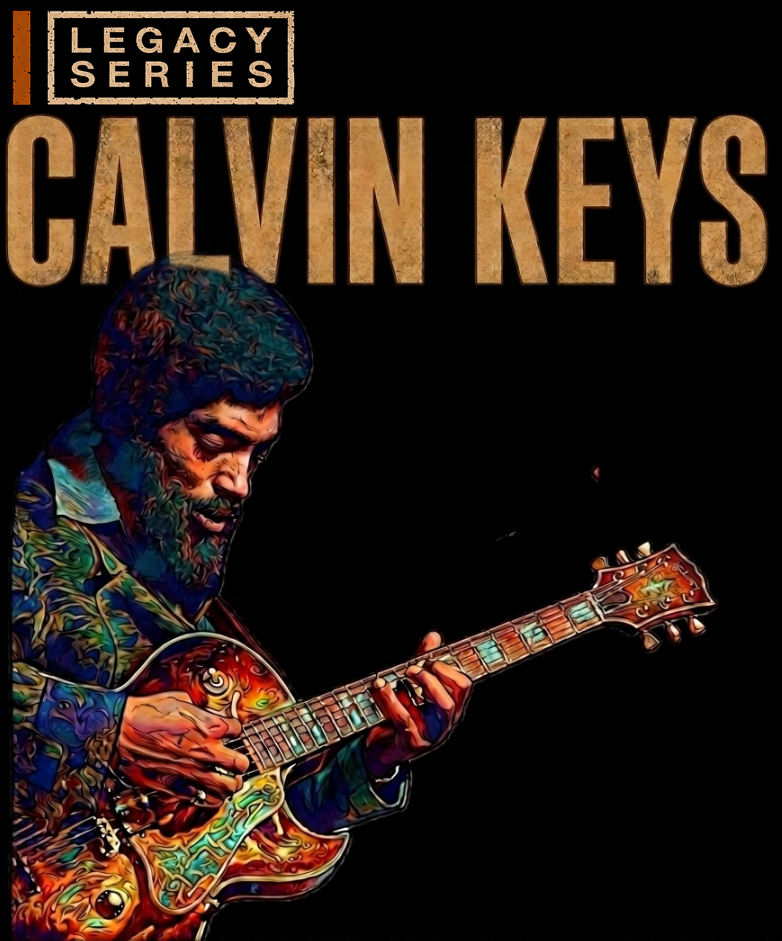
The Legacy Series cuts through the static to pay dues to the departed masters. In this reflective piece, guitarist Calvin Keys charts his 65-year musical journey from sneakily practicing on his uncle’s guitar in an Omaha basement to recording seminal albums for Black Jazz Records and touring the world alongside icons like Ray Charles and Ahmad Jamal.
___
Calvin Keys: I’m from Omaha, Nebraska. I’m first grandchild of fourteen kids. [laughs] My dad was a drummer, and my mother and my grandmother’s philosophy—they thought all musicians was drug addicts, pimps, gamblers, and so on and so forth. So he didn’t have a chance. So I think that’s what I inherited the musical germ from. And my uncle played guitar. He played the delta blues on guitar, and I used to watch him play when I came home from school and stuff. He had the guitar down in the basement, and I used to sneak down there and get it and mess around with it. And I picked up a few things that I’d seen him play. And he told me and my two cousins if he ever caught us, he was gonna put his foot you know where. [laughs]
So, one day he came in and he caught me and he said, “Yeah, nephew, I know you’ve been coming down here and messing with my guitar. Mama [Keys’ grandmother] told me. Play something for me.” And I played this little lick that I had seen him play. He said, “How’d you learn that?” I said, “Watching you.”
He said, “Really? You got anything else you picked up?” I started trying to play a couple songs I heard on the radio and stuff. And he said, “Hmm.” I said, “You know, I’m working at the car wash on weekends, and after I get me a couple of checks, I’m gonna buy me a guitar.” He said, “Well, you can have that [guitar].” I said, “Huh?” He said, “Yeah, go on and take it, you can have it.”
And that was the beginning because he must have seen and heard something. I’m thinking I was about twelve, thirteen, something like that. I’d come home from school and go upstairs and get on that guitar and man, I’d be there until somebody knocked on my door at 2:30 in the morning, and it was the police saying, “Young man, can you turn your instrument down? People are trying to sleep.” I had no idea I would actually become a guitarist as a profession, but that was the beginning of it.
I started meeting other musicians, exchanging ideas, and before long, I was playing blues in a club. My first real gig was in Sioux City, Iowa, with a band called Doctor Spider & His Rock n’ Roll Webs. [laughs] We played a club called Po’Boys, and I made fifteen bucks—I was about fifteen or sixteen. We played around Omaha in field clubs where we could sneak in underage, except for Spider. One spot was the First and Last Chance near the meatpacking plants.
Later, I joined Andre & the Ramrods, and we played every weekend at the Workman’s Club. We’d stay up late listening to Stan the Record Man from Tennessee to hear the latest blues hits—that’s how we stayed in the loop.
Then we would go buy ‘em somewhere, and try to learn all the melodies and chord changes and stuff. And there was another club called The Off Beat, where we used to have jam sessions on Sunday. So, one day I was over at the Offbeat playing, and this gentleman walked up to me and said, “Calvin Keys?” I said, “Yeah…” He said, “I was listening to you play. I’m a saxophone player and I need a guitar player for a month. Would you be interested in traveling a little bit?” I said, “Of course. But you’d probably have to come talk to my mother, because she’d have to give me her [okay] to be able to do that.” So he said okay.
His name was Little Walkin’ Willie, and he had a group that he played with. He had a girl he sang with called Jewel Brenner. He came by my house and asked my mom, said, “I got some jobs, and I need a guitar player, and I’d like to hire Calvin because I think he might be able to fill the void. And I’ll pay him $125 a week, plus I’ll pay for his hotels and food.” And I said, “Whoa.” And she said, “Well, I don’t think so. He’s young, he’s still in school.” I said, “Mom, I’ve got enough credits to graduate.” She said, “No, I don’t think so.” So he went on and left.
And that really upset me. I said, “Mom, you always taught me to speak my mind about certain things. Well, I’m really upset that you said I couldn’t go with Little Walkin’ Willie.” She said, “Really?” I said, “Yeah. I made up my mind that I’m gonna go with Willie. If I have to wait ‘till you go to sleep…” And she said, “Wow. Well, since you put it like that, you can go ahead and go with him, but I don’t want you to be no musician. But if you’re going, just try to be the best.” I said, “Okay, thank you.” And I called Willie and told him, “I talked mom into letting me go.” He said, “Okay, beautiful.”
So we left Omaha, Nebraska and went to St. Louis, Missouri, and there was a club there called the Riviera Ballroom. I’ll never forget that. And we played—I think we did three nights. Then we left there, and went to Cleveland, Ohio, and we were in Cleveland for two weeks at a club called Gleason’s. I stayed at the Majestic Hotel on 55th and Quincy. [laughs]
The thing was, Little Walkin’ Willie was one of them saxophone players who likes to walk the bar and everything. He did his thing, and people was just crazy, screaming and hollering, and he was doing his thing.
Then, he took a break and then he called on the girl to sing. See, I didn’t know about this hook—that was the hook. She couldn’t sing a lick, but she was gorgeous. And when she sang a couple of songs, she’d bend over a take a bow, and her wig would fall off. She was bald-headed.
So, we did two weeks in Cleveland, then we went to another town which was a suburb of Pittsburgh, Pennsylvania, and I think it was McKeesport. We played there for a week, and then it was time for his guitar player to come back, and I had to come back to Omaha. I can’t remember the name of his guitar player, but he came in and played so much guitar, man, I crawled under the table. [laughs] And he showed me a couple of chords. Willie said, “Calvin, I really appreciate you doing what you did. It was really nice you were able to come and play. You sound good.” He gave me some props and gave me $500 and put me back on the train to Omaha.
When I got back to Omaha, I told moms, and she said, “What’re you gonna do now?” I said, “I think I’m gonna go to Kansas City.” That’s where my daddy was. And I ain’t never recovered. [laughs]
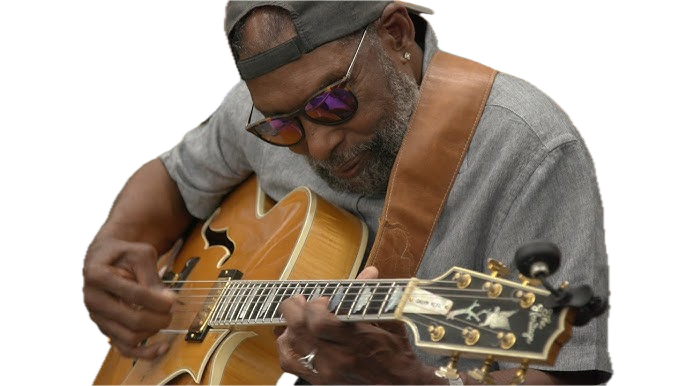
So I went on down to Kansas City and got this gig at a club called the Nightingale on 12th and Water. I had this trio playing the blues. And being in Kansas City, there was a lot more music going on too. I stayed down in Kansas City for about a year, ‘cause my dad was there. So I had a little toehold with my dad being there, ‘cause I had somewhere to stay. Then I started working in different clubs in Kansas City.
Then I came back to Omaha after being there for about a year, year and a half. Now I’m really getting established, playing a lot more music, learning a lot more songs. [By this point] I’ve gotten better. I was getting a lot of calls from different bands in Omaha to play. I started playing at the Showcase, that was a popular club. They would have some out-of-town artists play.
For some reason, [the club owner] took a liking to me, ‘cause we had four or five different guitar players around Omaha, but they considered me one of the top at the time, because I had traveled a little bit and got some experience. We had a brother named Frank Edwards who was an organ player, he was in the Army and got out of the service and ended up in Kansas City. He was playing for [restauranteur] Ollie Gates down there in Kansas City, he was the barbecue man. He decided to come to Omaha, and he needed a guitar player.
He ended up selecting me, and I worked with Frank. Frank was on the so-called Chitlin Circuit, and he knew Jimmy Smith and Jack McDuff, he knew all them organ players, and he could actually play. And he knew all the songs, the Duke [Ellington], the Count Basie songs, and all the tunes that were popular. [Keys also briefly played with organists Jimmy Smith, Jack McDuff, Groove Holmes, Jackie Ivory, and Jackie Davis.]
The Chitlin Circuit [for us] consisted of Kansas City, Omaha, Denver, San Francisco, Oakland, and then back to Kansas City. And we would work two months in each club, eight weeks. And I was making $150 a week. This was in 1960, 1961. That was really a beautiful thing, and I’m working with Frank who has some knowledge of the music. And I’m steady learning, and steady getting better, and meeting musicians. I guess I did that with Frank for about four or five years.
I got to the point where I’d study with different guys, and the stuff that I was learning on the guitar, I couldn’t play with [Frank]. And I said, “Uh-oh. All this music that I’m learning to play on this guitar, I’m not able to do it with the organ, so I’m gonna have to get me a piano player.”
And so after working with Frank all them years, I went back to Kansas City and started my own organ trio group. That was in 1967 and 1968. So I stayed there working, and I said, “If I wanna do some recording and make a record, I gotta go to one of the coasts.” ‘Cause I hadn’t been that familiar with New York, so I said, “I better go to California, that’s where I’ve been and know a little bit more about it.”
And that’s what I did—I stayed in Kansas City and worked long enough to get me a brand new car, I had me a new guitar, I had me a new wardrobe, and a few dollars in my pocket. And my father had came back from Kansas City to Omaha, and he said, “Calvin, why don’t you stay home with me?” I said, “Dad, I would love to do that, but I’ve got something else on my mind of what I wanna do. I’m still searching for that note.” And he said, “Okay. Well you playin’ awful good…” I said, “Dad, I’m just scratching the surface.” And so I drove to Los Angeles.
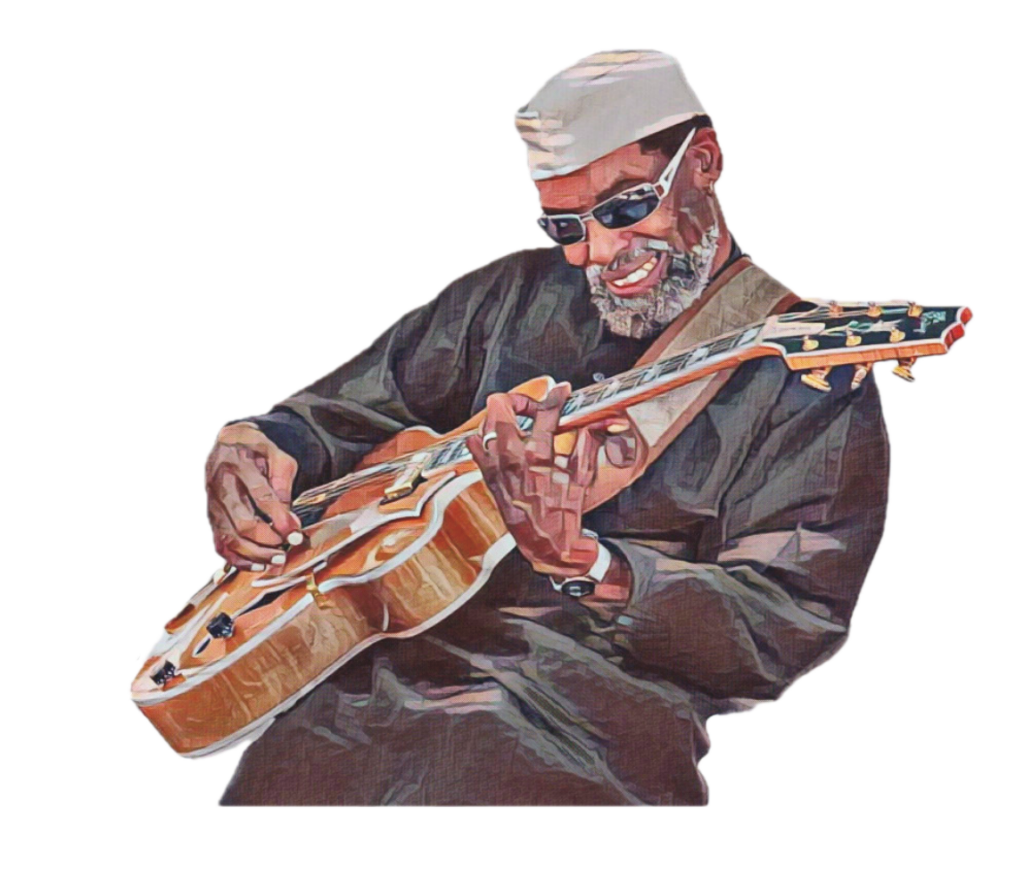
Once settled in L.A., Keys became the house guitarist at the Pershing Room alongside Red Holloway. During this time, he also co-led a band with Blue Mitchell and performed with Oscar Brown Jr. at the iconic Memory Lane club.
CK: [I’m the] new guitar player in town, got me a brand new ride, and I’m sharp and manageable, and [I] can play. So I worked all over Los Angeles, I didn’t see anything that I would be interested in. I went out to Sonny & Cher’s house and auditioned, and all kinds of situations, you know.
And I said, “Well, no.” So I ended up at the Tiki Alley, which was a bar on Western Avenue. [The owner] would have [big] name artists come in like [pianist/organist] Bill Doggett, [who did] “Honky Tonk,” Clifford Scott, who played saxophone on “Honky Tonk,” [organist] Charles Kynard. And I’m meeting organists and other musicians and stuff.
One night I got a call from Ray Charles. He said, “Calvin Keys, I’m having auditions for guitar players. You wanna come down?” So I said, “Of course.” I went down to his office on Washington Street and I ended up getting the gig. [laughs] I worked with Ray off and on for about two, three years. ’71, ’72, maybe ’73-’74.
We took a hiatus and I went to get me a new organ trio together. I was working in different clubs, the Tiki Alley, Parisian Room, Shelley’s Manne-Hole, and a few other places. The Lighthouse, and so on.
In the meantime, while I was working with Ray the last couple years, I ended up getting a recording contract with Black Jazz Records, [which was run by keyboardist/composer] Gene Russell. [Bassist] Larry Gales had left Thelonious Monk, and moved to Los Angeles, and he started a coffeehouse after hours.
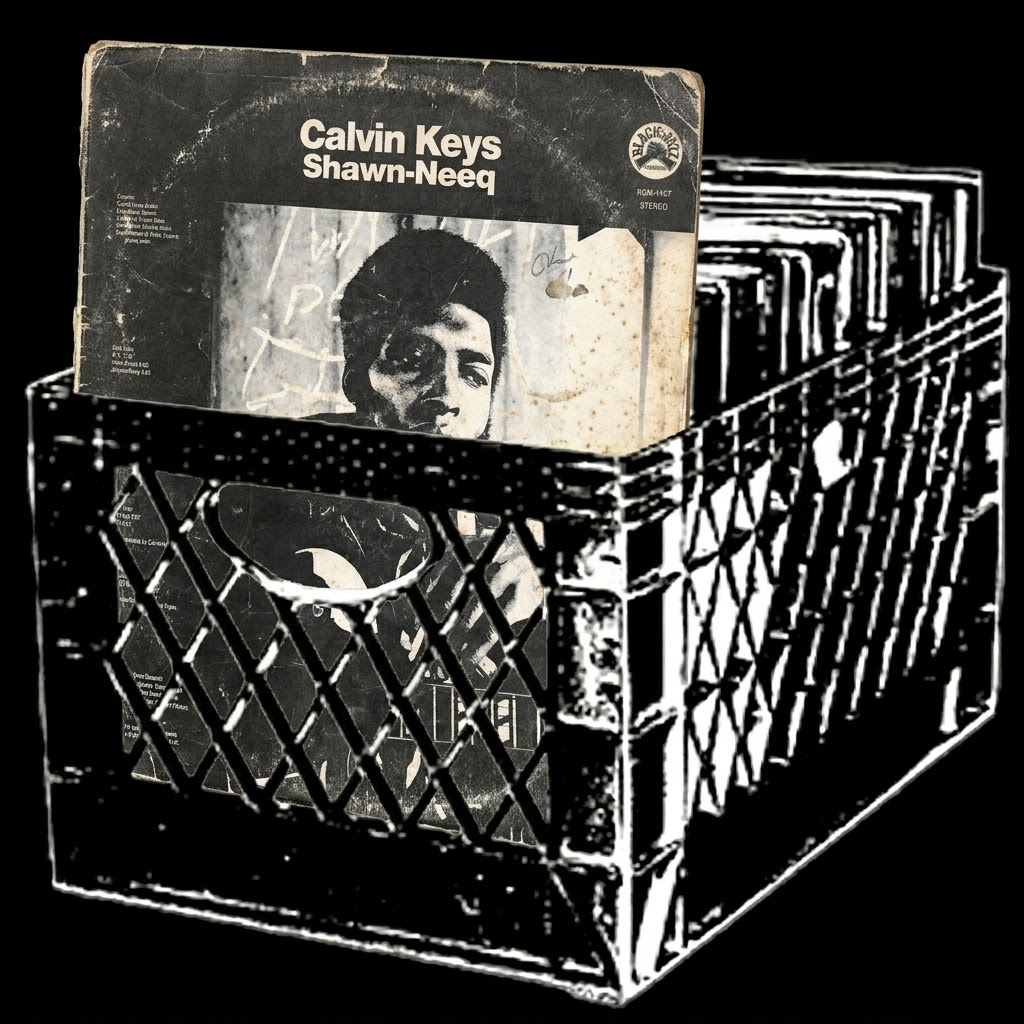
We used to go there and jam all night long, all the musicians come through because Larry was quite famous himself. So I used to go around there and that’s when I met Gene Russell, and he started talking about doing that Black Jazz label. And I ended up doing my first album, which is called “Shawn-Neeq.”
Released the same year that also birthed future Black Jazz classics like Doug Carn’s “Infant Eyes” and Walter Bishop, Jr.’s “Coral Keys,” Keys assembled a crack rhythm section for “Shawn-Neeq”: Larry Nash on piano, Lawrence Evans on bass, and Bob Braye on drums, with Owen Marshall on flute and bass clarinet. “Shawn-Neeq” announced the arrival of a new star in the jazz guitar scene, and showcased a masterful blend of soulfulfulness and adventurous improvisation, with innovative arrangements that veered from greasy, funky blues to ethereal spiritual jazz. What adds extra depth to “Shawn-Neeq” is its heartfelt authenticity, and it not only highlighted Keys’ exceptional guitar artistry, but also embodied a timeless creative spirit that defined a new decade—and era—of musical exploration.
Sounds Visual: Calvin, I’ve always been curious, where did the title for this record, and song, come from?
CK: Shawn-Neeq was my baby niece. My younger sister had a kid, and I remember her bringing Shawn-Neeq home, and I’m holding this little girl who’s my niece. And she was the prettiest thing. So I said, “I’m gonna have to write some music about this.” And that’s when I wrote [the title track].
SV: Let’s talk about some of the tracks on here. “B.E.” opens the record and establishes a moody funk vibe right away, riding an undulating, almost-sinister modal vamp, and you’re playing some great single-string phrases.
CK: Owen Marshall had an instrument that he made up called hoseaphone. He had taken a piece of a water hose and cut it up into about two, two and a half, three feet, put holes on it, and put a reed mouthpiece on it. [laughs] And he got a sound of out of it. He played that, it sounded like a soprano sax, and he wrote “B.E.” And I don’t know how he wrote it or what, but we ended up playing it. And then the girl that I was going with then, her name was B.K. Barbara Kaye. And I wrote a song called “B.K.” and that was a fun thing.
“Gee-Gee” was another song that I wrote. We had a French poodle named Gee-Gee.
SV: How about “Criss Cross?” You’ve got a great solo on this one.
CK: “Criss Cross” was [pianist] Art Hillery’s composition. He wrote it. I used to work with Red Holloway and Art Hillery at the Parisian Room. When Jack McDuff broke up his group, Red Holloway became the bandleader at the Parisian Room. And I think that was the last jazz club on the southside of Los Angeles. He was in the house band, and I ended up becoming his guitar player for about a year or so.
We went in the studio [to make “Shawn-Neeq”] and it wasn’t no bigger than a Volkswagen. [laughs] We ended up doing that album and man, it came out pretty good.
So that record came out, and I’m still working with Ray. And that’s right around when when I made the transition from working with Ray to Ahmad [Jamal], around 1973. I got a call from the girl I was with, she said, “Calvin, I’ve been trying to catch up with you.” I said, “What’s up?” She said, “Ahmad Jamal done called here. He’s looking for a guitar player. He’s opening up at the Troubadour for two weeks, he told me to tell you.”
So I went on up there, and I got there I think about eight o’clock, and he’s supposed to hit [the stage] at nine thirty. I went up into the dressing room and everything, and we was going over some music and stuff. He looked me and said, “Calvin…” I said, “Yes, sir.” “Have we met before?” I said, “Yeah.” He said, “Really?” I said, “Yeah, I met you in Denver when you were at the Red Ember and I came up and asked you to sit in.” I had gone to his gig and asked if I could sit in with him. And he said, “No, young man, I have a closed set.” Now, you know, [at the time] I’m nervous to even do that. The world famous Ahmad Jamal?!?!
I said, “You said you had a closed set.” And he said, “I think I remember that! So that was you, the guitar player.” I said, “Yeah, it wasn’t time.” [laughs] And so he kind of laughed and then he said, “Do you read music that well?” I said, “Not really, but I know a few little moves.” And he said, “Well, you’re playing this music like you know it.” And I said, “Look, I had fourteen uncles and aunts, and on the weekends, they used to get your music and party all weekend, listening to albums. That’s how I learned a lot of your stuff.” And he said, “Wow.”
So I worked there with him [at the Troubadour] for two weeks. [The female singing trio] Hodges, James and Smith opened up, I never will forget it. [After the two weeks], he said, “Calvin, would you like to join my band?” I said, “I would.” He said, “I’m going back to New York, I got some other things to do, but I’m gonna call you and I’d like for you to come back and be in my band.” So I just started studying and trying to sharpen my game up.
And I used to go out to Paris, California and study guitar with Irving Ashby. He played with Nat King Cole. So I went out there and was studying with him, learning and doing a good job ‘cause he was a beautiful teacher and player too. And he had a Stromberg guitar, and he said, “Calvin, when you learn how to play this guitar, I’m gonna give it to you.” I said, “Really?” I was small and very petite at that time, and I couldn’t really play it because it was too big. It was a hell of a guitar. And he had another guitar that I played a little better. I think both those guitars are in the Smithsonian right now. He gave me a book that he had put together. “Irving Ashby’s Guitar Styles,” or something. And at the beginning of the book, he had some quotes and stuff, and he said, “’Calvin, if you really wanna learn to play guitar, go through my book one. If you go through book one, you’ll learn how to play the guitar. If you go through book two, then you will become a guitarist.” I never forgot that. I said, “Wow.”
[I worked and studied] with him for a few months—and I hadn’t heard nothing from Ahmad. He would call me every few weeks, but he ain’t send me no tickets. So I said, “I think I’m gonna have to go back out with Ray, because I ain’t got no work.” He said, “You think you’re gonna go back out with Ray Charles?” I said, “I might have to.” He said, “Okay.” Three days later, I got a call. “Mr. Calvin, you got a ticket on United Airlines.” And I picked it up at such a such a time, and so I got on the plane and went back, and [Ahmad] picked me up.
I started working with Ahmad, I think that must have been a good ten, eleven years. And that was one of the greatest musical conservatories I’ve ever been to in my life. I did four or five albums with him.
Keys relocated from Los Angeles to Oakland the next year and spent the remainder of the decade touring globally as a member of Jamal’s quartet, alongside bassist Jamil Nasser and drummer Frank Gant. In 1974, Keys released his second LP on the Black Jazz label, “Proceed with Caution,” and picked up right where “Shawn-Neeq” left off—plunging the listener into a dreamy, funky, slightly psychedelic post-bop atmosphere. The arrangements grew more intricate, and the instrumentation became more varied. In essence, it was a huge leap forward for Keys.
He assembled a talented band to bring his ambitious musical ideas to life, featuring the legendary drummer Leon ‘Ndugu’ Chancler, fellow Black Jazz stalwarts Henry Franklin on bass and Kirk Lightsey on keyboards, along with Charles Owens—known for his work with Horace Tapscott, Buddy Rich, Terry Callier, and John Mayall—on sax and flute.
CK: That was when we were going and doing marches and protests [against] all this capitalism, and racism, that we was going through as a group in this country. And the black panthers—everything was up in the air, crazy. But the music was one of the outlets because they had a couple of other independent labels come out during that time, like Strata-East, along with Black Jazz that was getting popular. Philadelphia International [Records] was another one back east. Blue Note and all of them had already become established, Prestige and all of them. So we got in on that wave of [what] the new music [was] supposed to be, through Black Jazz Records.
Even the [company’s] handshake [logo] was controversial, they came up with a huge bunch of stuff about the label. But it sold records, because the music was good. I did that second album, which was a good record too because it was vinyl and they had come out with this 4-channel Quad release. So you had to have a certain machine to be able to hear the whole mix in all four channels. And [Quad] didn’t last that long, but when it first came out, it was quite popular.
I said, “Whatever you’re about in this date and time in the United States of America, you have to proceed with caution, ‘cause if you [didn’t] you mightrun into some things that could cause you a problem.” That was the message. And if you notice [on the album] I had on the African dashiki, made out of leather, with the hat, and in my left hand I had an African spear. And in my right hand I had the guitar. That was the protest I was doing, to make my peace and say what I was feeling back then and there. The music had really taken an out-type of form, we was playing all kinds of stuff, man. And that’s when the music really started [moving] into shapes and forms. We was in the middle of it.
SV: One of my favorites on this record is called “Tradewinds.”
CK: That was written by [arranger] David Durrah. He’s a piano player, and he passed [about three or four months ago]. I used to talk to David everyday, man.
SV: How about “Effulgence?”
CK: That was written by the trombone player [and arranger], Al Hall. He wrote that for me. And that was interesting, it was challenging because I hadn’t ever written an arrangement for horns and stuff.
SV: Side B opens with a great cut called “Aunt Lovey.” It starts off with a Grant Green vibe, but becomes increasingly chaotic with Charles Owens’ soprano solo, which really channels the spirit of Pharoah Sanders…
CK: Aunt Lovey was my father’s aunt in Omaha. She was one of my favorite Aunts. When I was growing up, she would take me fishing every weekend. She had her boyfriend, we called him Uncle Johnny. And they used to come get me and my other cousins and take us to this little creek about 30 miles from Omaha called Salt Creek. We’d go Friday, fish all day, Saturday and Sunday, and come back Monday. And she’d do this every weekend with us. I said, “I’m gonna have to write some music about my Aunt Lovey.”
SV: Calvin, because there’s an undercurrent of funk in so much of your music, how do you feel that funk specifically shaped your sound over the years, and in what ways do you think it’s evolved from your early work to your current projects, if at all?
CK: The drummer that I broke bread with [often] was James Gadson, and he was part of the Frank Edwards Trio when I first joined. And James was very instrumental in his rhythm called the Louisiana Popeye, that’s what we used to call it. It was kind of a second-line funk thing that the New Orleans drummers used to play. And he did a lot of it on those Bill Withers records. And then he also did stuff with the Watts 103rd Street Rhythm Band, too. So he incorporated that rhythm into Los Angeles, doing that funk thing, and that’s where that came from [and inspired me].
We all played the blues, and that was the funk thing. That was very popular back then, during that time. Every time I played something, or wrote it, we had that funky feeling about it. And it lasted until today, man, I still do that. I was doing an interview with a guy once, and he said, “Calvin, what’s the difference between how you played then and how you play now?” I said, “I’m doing the same shit I played back then, only difference is now I’ve been doing this so long, I’ve sharpened it up a little bit.” [laughs]
During that time, we were doing so much [work for Black Jazz]. The fact it’s been fifty years [since making these records], it’s incredible. I’ve been getting calls from different cats like yourself, wanting to interview me about [these records]. I said, “Man, I had no idea this music was gonna have that type of impact on today’s music even.”
We went over to Europe a year or two ago, and did a fifty year Black Jazz concert. I got the same reaction from that, when I went over there, man. People just keep asking me about “Shawn-Neeq.” Back here they reissued it two or three times too. I’m beginning to realize that it is something special.
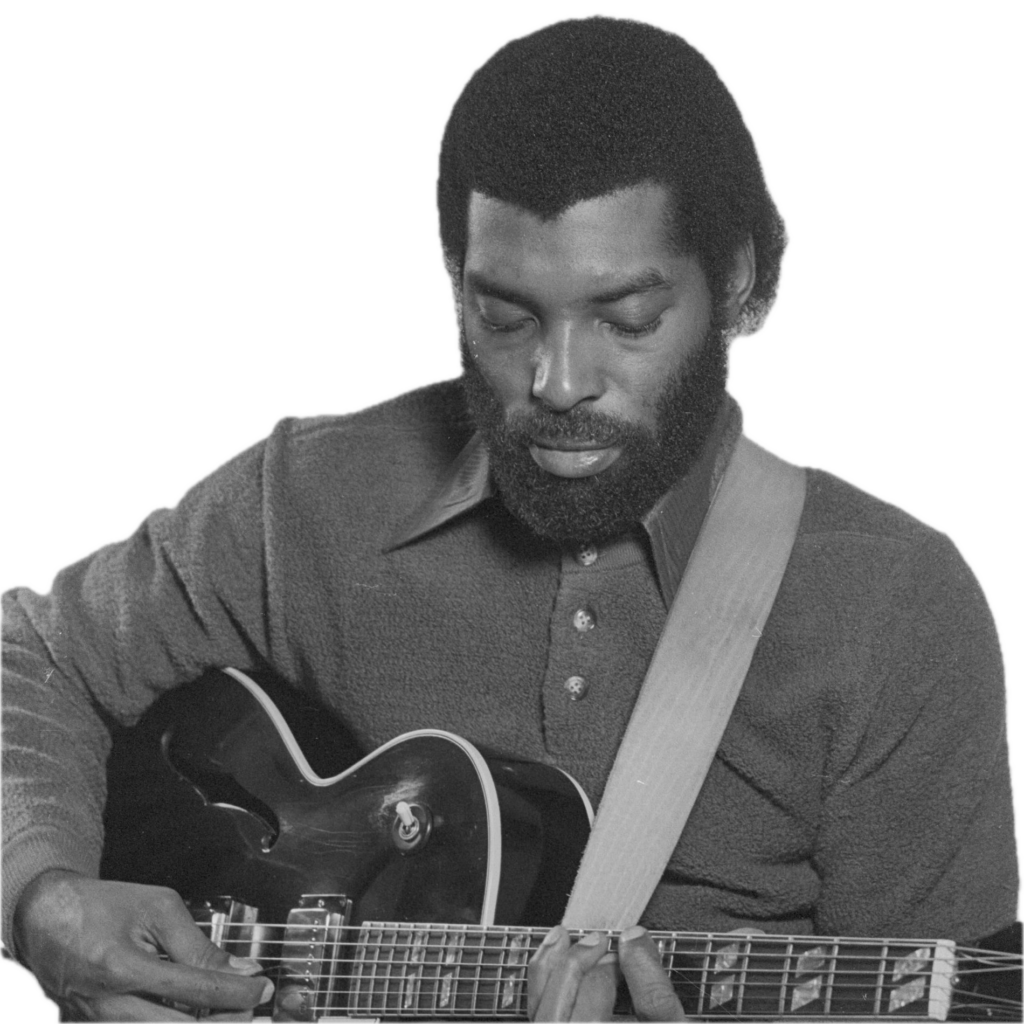
The 1980’s were a significant time for Keys, as he collaborated and toured with notable artists like Earl “Fatha” Hines, Tony Bennett, Pharoah Sanders, and Sonny Stitt. In 1997, Keys faced a health setback when he underwent heart surgery for a quadruple bypass.
CK: I went to Paris with Ahmad, we did a couple countries. I was in Milan, Italy, and I got sick, I caught a cold and couldn’t get rid of it. So I came back to the States, and we had did a live album. September 9, 1997, I went to my doctor and he told me, “Calvin, I don’t like what I’m seeing here in your chest.” I said, “Really?” I had been running and jogging for a mile or so, and he took some tests, and I had a burning in my chest. So he told his nurse, “Call up there and get a bed for Calvin.” The hospital was a block away.
So I went up and they took a test on me on the 10th. The 11th I had a quadruple heart bypass, and I will never forget it. When I woke up in the hospital, they had just wheeled me out of the operating room into an intensive care unit. The nurse came in and I looked up at her. She said, “Calvin, how you feel?” I said, “Well, I’m a little dizzy.” [laughs] She said, “Your operation turned out to be beautiful. And secondly, your cousin came through here yesterday and told me to tell you when you wake up that your guitar was delivered this morning.” I got an endorsement with Herod’s guitars, and they built me a guitar. I said, “Whoa,” and went back to sleep.
The first gig I played after the bypass with that new guitar was with Harvey Wainapel at the San Francisco Hilton. I remember coming back home across the Bay Bridge, and I went through a physical experience that was so beautiful, that I can’t even explain it. I walked in the house, and I walked through my front door, and my wife looked at me, and she said, “I’m going to bed.” I said, “You don’t wanna ask no questions?” She said, “I don’t have to. I can see it in your face.” [laughs] And so, that was the beginning of a whole new chapter in my life.
Undeterred, Keys released the highly praised “Detours Into Unconscious Rhythms” through Wide Hive Records. This album featured a diverse ensemble, including organist Chester Thompson and upright bassist Kenneth Nash. Following its launch, Keys toured extensively across the U.S. and Europe before returning to the Bay Area, where he played with organists Big John Patton, Dr. Lonnie Smith, and Taj Mahal. In 2005, he recorded “Calvinesque” for Silverado, which reached number 30 on the European jazz charts. His second album with Wide Hive, “Vertical Clearance,” came out in 2006, reuniting him with Carn and featuring musicians like Phil Ranelin, Sonny Fortune, Roger Glenn, and Babatunde.
The next year, Keys released “Hand-Made Portrait” on Silverado, which garnered attention from fellow Midwesterner Pat Metheny, who paid tribute by composing the track “Calvin’s Keys” for his album “Day Trip”. Keys also contributed to Ranelin’s “Living a New Day” for Wide Hive and collaborated with organist Gloria Coleman on “Sweet Missy” for Doodlin in 2009. In 2012, “Shawn-Neeq” was reissued on vinyl by Tompkins Square Records, and Keys supported this release with a full album tour. In 2018, he launched the single “Nigerian Marketplace” with his quartet, and the following year he played on Marty Krystall’s Liquid Krystal Displayed, alongside bassist Buell Neidlinger and drummer Peter Erskine. His final album, “Blue Keys,” was released in 2022 on Wide Hive Records.
CK: I feel as though I’m one of the luckiest, most fortunate human beings on the planet, because the Creator chose this music. I didn’t choose it, He chose it for me. And that’s what He does. He has a plan for us all, and for me to be able to have been involved in this music for the last 65 years, and working with some of the most beautiful human beings on the planet, is a blessing. Certain things you can’t explain, you just go along with it. I’ve got a beautiful wife, I’ve got a beautiful family, and I’ve been so fortunate to experience that. And I’m grateful, and I’m still searching for that note.
SV: Calvin, thanks so much for talking with me today.
CK: Oh, beautiful man. It’s been my honor. Thank you Justin, and you keep doing what you’re doing because we need more people like you that have some insight and can share some of this history that the whole world needs to know about.
SV: All the best, Calvin.
CK: Alright. Thank you again.
Calvin keys passed away on April 14, 2024.
___
Further listening:
As leader
Shawn-Neeq (Black Jazz, 1971)
Proceed with Caution! (Black Jazz, 1974)
Criss Cross (Ovation, 1976)
Full Court Press (Olive Branch, 1985)
Maria’s First (Olive Branch, 1987)
Standard Keys [live] (Lifeforce Jazz, 1992 [1997])
Detours into Unconscious Rhythms (Wide Hive, 2000)
Touch (Olive Branch, 2000)
An Evening With Calvin Keys [live] (Lifeforce Jazz, 2003)
Calvinesque (Silverado, 2005)
Vertical Clearance (Wide Hive, 2006)
Hand Made Portrait (Silverado, 2007)
Electric Keys (Wide Hive, 2013)
Close Enough For Love (Lifeforce Jazz, 2015)
Simply Calvin (Lifeforce Jazz, 2022)
Blue Keys (Wide Hive, 2022)
As sideman
Billy Brooks Windows of the Mind (Crossover, 1974)
Doug Carn Adam’s Apple (Black Jazz, 1974), Higher Ground (Ovation, 1976)
Ahmad Jamal Recorded Live at Oil Can Harry’s (Catalyst, 1976), Steppin Out with a Dream (20th Century Fox, 1976), One (20th Century Fox, 1978), Night Song (Motown, 1980), Live in Paris 1996 (Birdology/Dreyfus, 1999)
Gene Russell Talk to My Lady (Black Jazz, 1973), Listen Here (Ovation, 1976)
Leave a Reply
You must be logged in to post a comment.