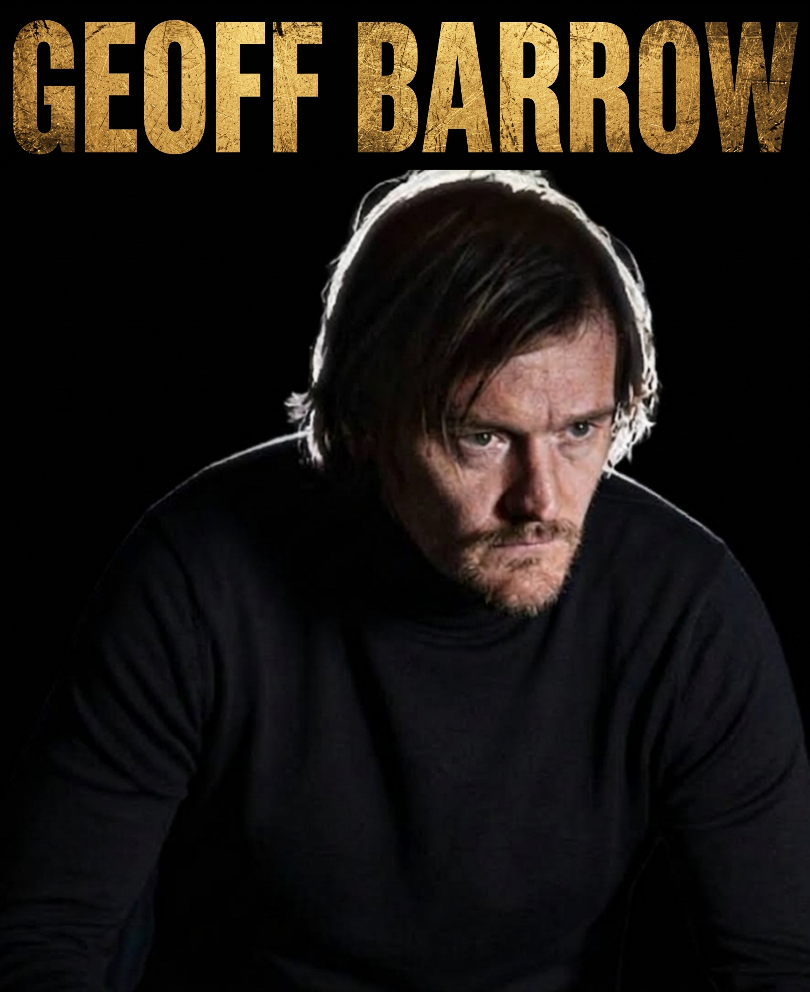
Grounded in a DIY ethic, cassette-loop experiments, and a slow climb through Bristol’s studio scene, Geoff Barrow traces a restless career built on instinct over expertise — from teenage sampler experiments through Portishead’s breakthrough and eventual burnout, a decade-long walk away from music, and a late-career rebirth as a film composer and band member several times over.
___
Geoff Barrow: My name’s Geoff Barrow. I’m an English record maker. I’ve been doing it for a long time — started when I was about 14, trying to make records. Gone through lots of different experiences making records, some positive, some negative, as you do. I started the band Portishead in the late ’80s, and then went on to do a lot of film soundtracks and scores. I’m in a kind of hip-hop collective with a guy called DJ Katalyst from Australia called Quakers. And I’m in a band called Beak [editor note: Barrow departed Beak in 2024], a three-piece band — we’ve been together 13 years, and we just travel the world playing weird music to weird festivals. But my main job now is a film composer.
Sounds Visual: You’re from Somerset originally?
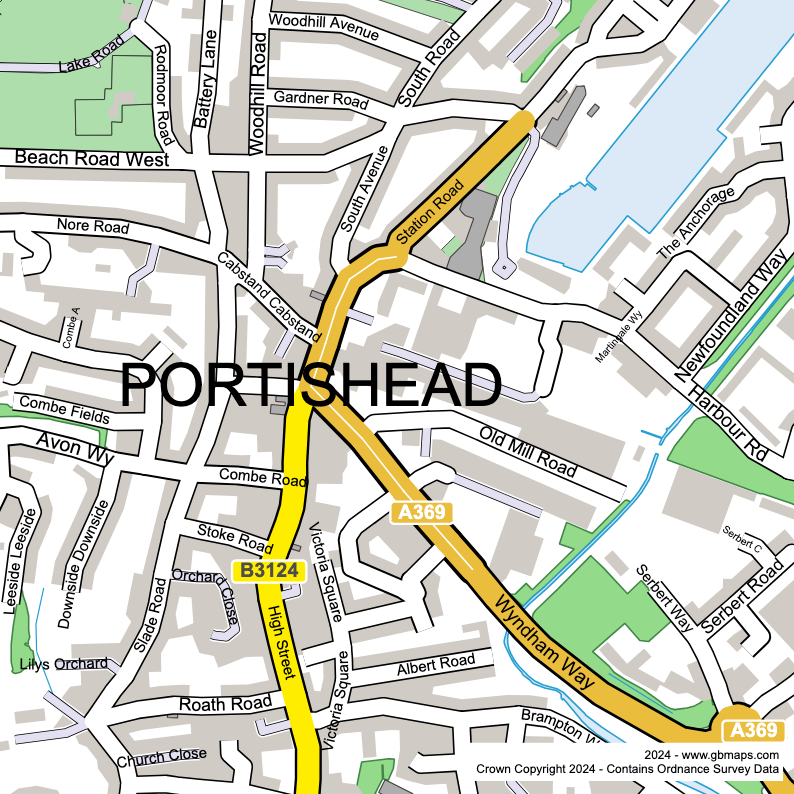
GB: Yeah, it’s a weird place — the boundaries are really small in England, you can literally drive through a county in 20 minutes. I’m sure you’ve got small counties in the States too. Basically there’s Bristol, the main city, a bit inland even though it’s a port, and then places like Portishead in an area called North Somerset. Somerset’s more agricultural, Bristol’s the city — Portishead is literally about 13 miles outside Bristol.
I grew up and started playing drums when I was about nine, because I didn’t really know what else to do, and I kind of liked music. I had a problem because I had dyslexia really badly, so anything to do with reading and writing, I instantly shied away from. Even though my drum teacher was really nice, as soon as we got into reading drum music it kind of put me off. Then I got a really old drum kit, set it up in my old house, and just started playing along to records. I’ve never really been particularly good at drums — I’m probably the best now that I’ve ever been, if you know what I mean. I’ve never been technical, never really played strict time — I’m more of a vibe drummer. I err on the side of jazz guys who play soul and funk rather than rock guys who play soul and funk, that’s more me — even though I play more like a pub drummer than a jazz drummer. I’d like to be a jazz drummer, but there’s no chance.
I carried on playing. My parents broke up, I moved to the town of Portishead, a small satellite town outside Bristol, about 15 miles out, and then got smacked in the face by electro music and the beginnings of hip-hop — not the beginnings for you guys, but the beginnings for us. This would’ve been early ’80s. We had electro music, breakdancing, graffiti art, all hitting around the same time — where you had it in the States in the late ’70s, we had it in the ’80s. If you lived in suburbia outside the main city hubs, I’m sure it hit you a bit later too.
SV: So you start getting exposed to early hip-hop and electronic music — does this coincide with you figuring out how to use turntables and scratch?
GB: A friend of mine called Patrick had a set of disco decks — like disco units, two decks together with knobs for volume instead of faders, no speed controls, none of that. We used to have mobile discos over here — a guy in a van with some lights, it was a big thing for weddings, funerals, engagements, that kind of stuff. You could pick up these decks that way, but trying to find the actual records on import was impossible — you had to have money, and we definitely weren’t rich. We got lucky because there was a record compilation series called Electro that ran from zero to 23. It had “The Real Roxanne” on it, Mantronix — one side would be New York, one side would be LA, all the fast electro stuff on one side, and the other side more like Teena Marie or Whodini. They were licensed in the UK, so that was really the only way to buy records like that unless you were wealthy or had someone in your family shipping stuff from America.
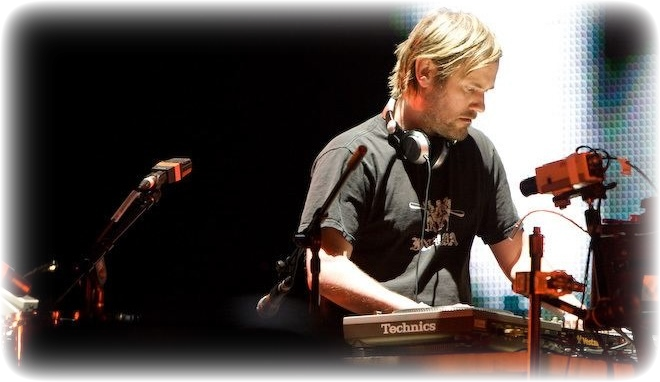
So I got into DJing, got into scratching, became a DJ at a local youth club — that was the breakdancing era. I entered one DJ competition when I was about 15, but I wasn’t used to Technics decks, didn’t know how they sped up and slowed down, tried to use them in the competition and failed badly — I sped it up way too fast trying to mix. So I stopped and just decided to scratch for the rest of the set, since you only had a couple minutes anyway.
Then I bought a little sampler that had the dog barking on it — I looped stuff up, but I never really wanted to loop up hip-hop tunes themselves, I always wanted to loop the breaks. Things like the “Grease” soundtrack break was always a big one for me. We’d try to rap on it — we were rubbish, and we continued to be rubbish. Then I played drums in a couple bands, heavy metal bands, rock bands, and started to get music together. I went to college, did graphic design — I left school without any qualifications, failed everything, went to college, failed at that too, left after nine months, and just tried to get into the music industry somehow. I phoned up a load of studios trying to get work as a tea boy, no joy for ages. I worked in kitchens washing up, and just kept digging hip-hop.
Around that time, when I was really young, I met Andy Smith. He was a few years older than me, already DJing in Bristol, already buying records because he worked in a record shop. I used to buy tapes off him — mixes of WBLS and stuff. Me and him got on really well. He had his own crew — a guy called Al, a guy called Rich, they used to wear these big BDP tour jackets, cool dudes. I was never really into that mixing-and-DJing-out world myself — I was always more into mixing to tape or scratching rather than being Mr. Hip-Hop DJ.
A big moment in my life was when I went to a nightclub called the Studios in Bristol. Most towns had these nightclubs, and around that time they’d play a bit of LL Cool J but mainly soul — pop soul, a bit of early dance music, early Chicago house coming in, and they’d all play a bit of hip-hop. It was an under-18s nightclub, so you’d finish school, get the bus up to Bristol. On the way up you’d get taxed — since we were the white kids from the outer regions, we’d have to give our money to the local kids, which was fair enough, I was never into fighting, so I’d just give them some money.
I remember being upstairs — it was a huge nightclub with a massive sound system, called the Studios, where people would get dressed up on normal nights, wearing smart shirts. But on Wednesday nights they did an under-18s night, no alcohol, kids from all over Bristol. It wasn’t really breakdancing by then anymore, more people doing the Wop, early stuff like that, maybe before the Running Man.

I remember this guy legging it through the crowd with a record, and he gave it to Tristan, the DJ, who was also a local radio guy. Tristan stopped whatever was playing — Whitney Houston or whatever — and said, “I’ve got to play this.” It was “Rebel Without a Pause” by Public Enemy. He put it on loud on that huge system, and something dramatically changed in my life right then — it blew me away so much I had to sit down. I’d always been into music, but as you get older you get distracted mucking about with friends, going out with boys or girls, whatever your preference. But that tune was like an anchor that just smashed me and said, “No, you’re staying here, you’re staying on this path, music is your path.” From then on, that was it — there was nothing else but music.
After that I got more into making music. I had a home hi-fi with twin decks, and I learned how to loop with the cassette pause button, because I didn’t have the money for real records to do it properly. I learned to loop stuff and overlay scratching on top. Then I bought a drum machine — the kind you’d see in a catalog, pay for over installments, ending up paying three times what it’s worth over 98 months or whatever. I scrounged around and got bits and pieces together.
Barrow landed his first job as a tape operator at Coach House Studios shortly after it opened in 1989.
Then I got a call from a guy named Andy Allen, who’d kept a message I’d left with him a year or two earlier and held onto my number. He’d closed down a studio and was opening a new one, and said if I came and helped him build it, he’d give me a chance to work there. So I spent about eight months building it — carrying stuff around, sanding, making tea, sweeping up. When he opened, I went onto a government scheme that would pay you about 30 pounds a week — 60 bucks or whatever — while you worked at a studio. I learned how to use a sampler called the FZ-1. What was crazy was he had a huge collection of library records because he did film music, all kinds of makes mixed together, including a big batch of synth-y, breaky library stuff, and I used to sample them.
At that time I was a huge fan of a production duo in Bristol called Smith & Mighty. There was a hip-hop crew in the ’80s called the Wild Bunch — Nellee Hooper, Daddy G, Milo, DJ Mushroom — the coolest guys in the world, an international crew DJing in Japan, New York, the real deal, from Bristol. Smith & Mighty were a reggae sound-system duo who made these stripped-down reggae-beat cover versions with drum machines, and I really loved them. They came into the studio for a session producing a hip-hop crew, and I was just the guy making tea, but they were wicked, nice dudes, and I got on with them.
Then their whole crew, about 20 guys, would rock up and hang about — all nice guys. Eventually they left, and then some guys who were called Massive Attack at that point came into the studio, along with their manager Cameron, whose wife was Neneh Cherry. I got to know them, played them some of my tunes, and they said, “How do you fancy doing some beats for Neneh?” I said yes please, left my job, and Neneh and those guys bought me a sampler, a mixer, a deck, and put me on a bit of money. I wrote beats, as many as I could each week, put them on cassette, sent them up to London. That’s how it all started.
At the same time I was working with different singers and rappers, none of whom were particularly great, and then I bumped into Beth, because I was on that government scheme where they’d give you about 60 bucks a week if you set up your own company — it kept them from knocking on your door asking why you didn’t have a job, gave you a year’s breathing room. I went to this meeting where one guy wanted to be a mobile hairdresser, another wanted to sell chocolate out of his van, and Beth was sitting on the other side and said, “I want to be a singer.” I was there with a guy called Rich, and we said, “Oh, we’re a music production company.” We got chatting, and that’s how it started, just by luck.
Above: Neneh Cherry’s “Somedays,” co-written and co-produced by Geoff Barrow, 1992.
So I’m working for Neneh Cherry giving her beats, and at the same time I’ve got my own band going — me, a guy called Rich, a guy called Mark, a guy called Tim who went on to do a band called Earthling, and a couple of different singers. None of it was reaching the spot. Then Beth came from a completely different angle — she was a singer-songwriter playing with just an acoustic guitarist, and she had a gig lined up but didn’t want to play it just off the guitar, wanted some beats underneath it. I made her four backing tracks in an afternoon, quick — just breaks and bits her guitarist could play over, and she could sing on top. Beth liked that I made decisions — I’d just say “yeah I can do that, how about this,” very workmanlike, not precious about it, and I think she dug that.
She sang on a couple of backing tracks, and it was very different from all the other singers I’d worked with — different lyrically too, grown-up and real. So the other artists faded away. What happened was I went to London for a bit with the rest of the band, stayed at Neneh Cherry’s house, recorded some tracks as Portishead — that recording period was pretty unsuccessful.
When I went back to Bristol, everybody fell off except me, Beth, and our engineer Dave McDonald. So there were three of us, and I moved back into the coach house, the original studio. That’s when I met Adrian [Utley], a local jazz player and producer, ten years older than me or more, getting really into A Tribe Called Quest and Public Enemy later on, and he had that musical knowledge of how to play, how to record — he could play drums and everything. We got together, put our heads together, and I got him to play on “Sour Times,” and then he was in the band. So it was me, Adrian, Dave McDonald, and Beth — that was the band.
We had some demos from London with Beth, and it took a while — our manager dropped out and moved with Neneh to Sweden, so we were on our own, and we owed him something like £60,000, so we were in debt. It didn’t feel good, even though the music was getting better. Then a woman who worked in the management office, who we were friends with — there was a guy who worked for a record company who’d heard a demo of ours from our ex-manager, and I phoned him up because I was skint and asked if he could give me any remix work. He said sure, remix this, do that, and I kept working with him. When he wanted to sign us, I got the woman from the office to be our manager, since I didn’t know anyone else. We got signed, and about six to nine months later the album was ready. It was tough work.
SV: I want to briefly talk about crate digging for breaks and samples you would use for Portishead. You clearly respect the craft of DJing and finding great samples, but you stay far away from vinyl snobbery and the whole status-symbol side of collecting…
GB: I completely get that a lot of people, especially through hip-hop, got really into the technical stuff and how rare a record was, how technical you could be — and I just couldn’t give a monkey’s about any of that, honestly. I’m not a record person at all — I don’t care what it is, how much it costs, it’s never interested me. I’m terrible with records, I’d leave them all over the floor, stand on them, never looked after them. I don’t really talk about records, I don’t know the names of classic hip-hop albums, I haven’t got a clue. I’ve got lots of friends who are like that — Andy’s an encyclopedia, into the whole library-record, rarity thing — and I just take whatever, whether it’s off a cassette, off YouTube, it doesn’t matter to me. I’m not a collector, and I’ve got nothing against people who are into that.
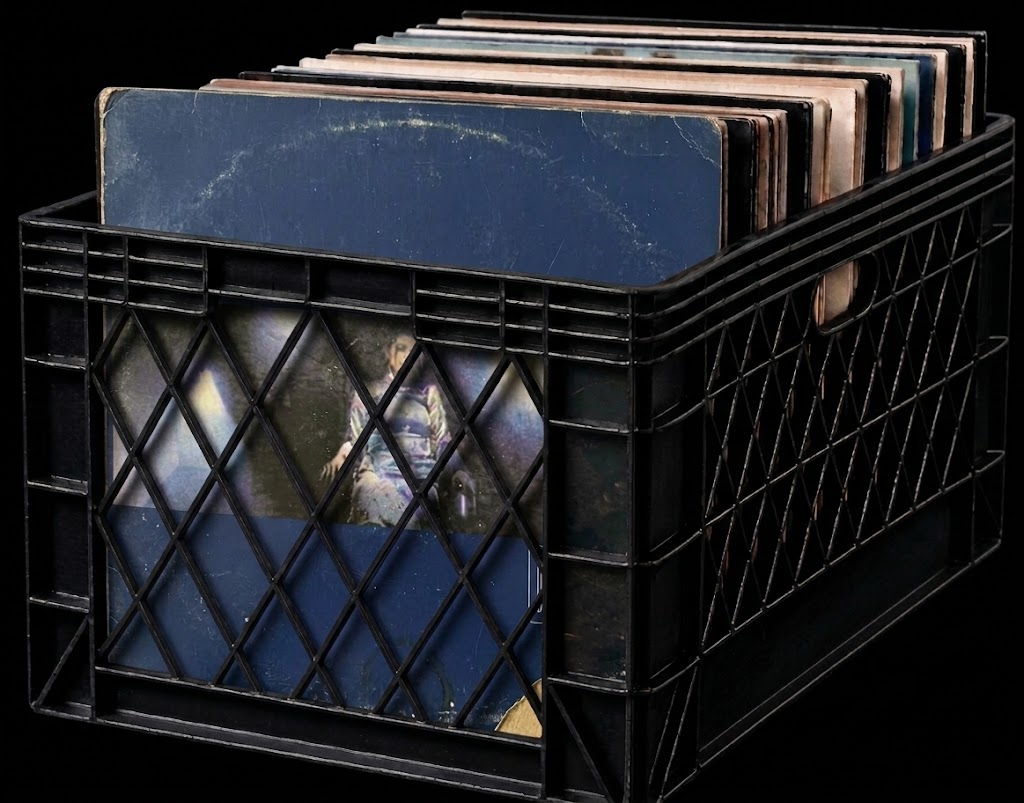
A lot of breaks come from terrible records, honestly. There was a label that used to put out compilations where the breaks were good but the tunes sucked. There’s a shop in Bristol called Prime Cuts, run by my mate Mike Savage, a secondhand shop, and I used to go down there every day and dig through his records. Then I moved about ten years ago, and I put all my records — except a few things like Electric Mud — into storage, and they’re in terrible shape. Most of them are rubbish anyway, like a break on some British easy-listening album, a cover of “Strawberry Fields” or something, complete rubbish, but that’s where you find them.
In the early days, Andy used to supply me with a lot of records — he was the big collector, would drop off a new box every week. A lot of what ended up on “Sour Times,” the Isaac Hayes stuff, all came from Andy — he was always delivering the goods.
Basically, there were no professionals involved in making those albums. We didn’t believe anything anybody had to say about it, we didn’t really care — we recorded and mixed everything ourselves, me and Adrian, and Dave Mac on the first album, and I think on the second album too. Even the mastering — we didn’t believe in the word “pro.” Pro-audio, pro-mastering, whatever — it was a path we followed ourselves. I think if we’d listened to other people, it would have sounded very different, and I’m glad we didn’t, and I’m glad we never have — we’ve just gone with what we felt.
SV: The Portishead records are so sonically enthralling, and even decades later they still sound not only relevant but completely singular and ahead of their time. A lot of this is due to the strength of the songs, but also some unusual recording techniques. Is it true that to achieve a distressed sound, you actually pressed original music and beats you’d produced onto vinyl records before manipulating them on turntables to sample?
JB: Yeah, absolutely. We used to make white labels, test pressings of loads of our beats — I’d fill it up with samples, but mainly our own stuff, a little kick drum, a couple hi-hats and a snare, all kinds of things. Then we’d screw them up by standing on them. That idea came from the Wild Style guys — they were cutting up their own beats on that soundtrack, weren’t they. I always remember my mate Scott Hendy telling me the whole story about that record, because someone had done a deep dive into it — it’s half Blondie and half this other drummer, and that record is so good, the bass, the guitar. It’s a massively inspirational record because it breaks the boundary between punk, funk, and hip-hop, almost like Liquid Liquid and those guys.
With Dummy, their debut album, Portishead didn’t just fuse hip-hop’s gritty breakbeats with cinematic noir scorecraft; Geoff Barrow and Beth Gibbons distilled urban paranoia and heartache into a pitch-black masterpiece of atmosphere that redefined electronic music.
SV: Geoff, the classic Portishead “sound” is really an incredible mix of hip-hop, electronica, blues, jazz, and cinematic soundscapes that all blend together seamlessly. But when Dummy first came out, it felt like every single reviewer was practically legally required to stamp it with the ‘trip-hop’ label…
GB: It’s weird, isn’t it, because — all that beat music people called trip-hop, I’ve never listened to any of it. I have absolutely no interest in it whatsoever. The only person I listen to from that whole scene who got put into that genre is DJ Shadow — he’s actually the closest to that stuff, because he’s hip-hop. I’ve never listened to anything like Mo Wax or that scene, it just never interested me at all.
That’s always been the weirdest thing about us — we had no tie to any of that, and neither did Massive Attack, nor did Tricky. Tricky’s a punk — in the British sense, not the American sense — he’s a traditional poet, you know, and people couldn’t deal with the fact that he was a Black poet coming from his upbringing, and everything else about him, brilliant. Massive Attack’s first record was a soul record, an out-and-out hip-hop soul record, but very British. It’s always been a strange thing — we’d be listening to Silver Apples, Hendrix, Can, Teena Marie, we wanted the root of stuff, not a modern version of it–it seems weird why you’d want to do that.
What happened over here was we released it, it became popular, and then dance music became really popular — people went to raves, did a lot of ecstasy and pills, and it became this “come down” record for people. People who didn’t really know where it came from saw it as a chill-out record — but if you listen to the lyrics, look at the production, it’s the opposite of that. It’s not supposed to be fondue music, it’s supposed to be raw, as raw as the lyrics are.
So it’s strange that it got perceived that way. Strangely enough, it got perceived in a better way in the States than in Europe or the UK — that’s when we started finding out that people like RZA, or Primo, Prince Paul, were digging it, and I thought, no way. That, for me, I could have quit literally from that day onward, because it feels — without blowing my own trumpet — against the odds for someone like me to make a record that those people like.
Refusing to coast on the acclaim of their debut, Portishead doubled down on raw, uncompromising darkness with their self-titled sophomore record. Instead of leaning on nostalgic samples, they built their second album from the ground up, replacing dusty crates with their own live, jaggedly arranged grooves and letting Beth Gibbons’ vocal performance cut through with raw, breathtaking honesty.
SV: Making that record wasn’t a particularly fun experience for you at the time, right?
GB: Yeah, that was a fairly awful experience, because you realize you’d done something you got right, and it doesn’t feel like there’s any more point in doing anything else. It felt like there was really nothing to say, so we had to kind of manufacture it, and it felt wrong, still feels wrong to me.
It’s more of an escapism record, almost play-acting. It was painstakingly difficult, we tried to build something interesting around it — the live band got really good around that time — but ultimately it never really worked for me. I achieved a couple of production things I wanted to do, but that’s all I can say about it, really. If Beth did interviews, it might be different. The thing is, we never wanted to repeat ourselves — what’s the point of making a “Dummy Part Two” that’s just worse? You’ve always got to move on.
The following year, Portishead released a live album, “Roseland NYC Live,” with a full orchestra of strings and brass.
SV: I can’t imagine how much preparation that must have required. Was documenting that performance any more enjoyable?
JB: No, it was awful, yeah. If I ever listen back to it, I enjoy it in a really remote way — like, “well, at least we made it happen.” Adrian would probably say something very different about it, but I felt like I had a hand tied behind my back, because I wasn’t a good enough musician to really get what I wanted out of it.
All the players on it are brilliant — Nick Ingman is a legend, I grew up listening to his music on TV shows. Adrian worked really hard on it, we all did. When we came back and went into a studio in the UK to mix it, we pulled up the tapes, and basically the choice was: either the strings sound really good and the drums and band sound really bad, or the band sounds good and the strings sound awful — you couldn’t have both, because there was a PA playing to the audience bleeding into the orchestra’s microphones. So Adrian and I had to do this weird flowing dance of a mix, and we never got exactly what we wanted. But loads of people really enjoy it, and that’s cool.
SV: And after that, you essentially took a hiatus from music?
JB: Yeah, I was done with it. I moved to Australia and quit music. I didn’t think I could make another record until I’d worked out in my own head what I wanted to make, because there was no way I was going to force another record before that. There was lots of music I really liked, but I’d think, “I don’t understand how that’s sounding like that, I don’t know why,” and I had to know why before I could make another record — that’s why it took so long.
I was completely done with sampling, DJing, decks, records — that was the end of that period for me, and I never really went back. I don’t have much love for DJing, scratching, or making beats with a sampler anymore. I just moved on. What I did do was a single as Jimi Entley, which Dilla sampled on “Donuts” — me, Ade, and a couple of Australian guys made it, “Apache” on one side and a thing called “Charlie’s Theme,” basically the theme from “Psychomania,” and now it goes for stupid money, I’ve got to get it repressed so it stops selling for that.
After a decade-long hiatus, Portishead released their third album, appropriately titled Third, in 2008.
GB: We got together, I felt like I had some ideas, we got back together and made it, and I felt like the way we played it, everything was good, really enjoyed it. There were things on that record I’d struggled with before that I’d overcome by then. There were lots of bands that influenced me during that period — I’d left electronic music behind and gone back into rock music. For some reason I thought all the interesting music being made was coming from live bands — bands like Black Mountain really inspired me, bands like OM, heavy rock bands. That’s where I felt creativity was happening — I couldn’t hear anything coming through hip-hop or electronic music that really inspired me anymore, it was just, “Yeah, I know, you’ve chopped up an old soul record, great.”
In 2009, Barrow formed Beak with Billy Fuller and Matt Williams.
GB: Beak came around because I set up a label called Invada Records — we set it up in Australia. Then I moved back to the UK and set up Invada there, mainly a heavy-rock label, because I never really got on with dance music, or the people in that scene either — I don’t know, I didn’t do drugs, and they were kind of party people, and I’m not really a partier.
I brought the label back to the UK, and we had a Christmas party where we did this thing called the Invada Acid Test — a group of friends got together and just jammed, played music without really knowing what we were playing. It felt like a bit of a dream come true, being able to sit with a group of people and make interesting music without overthinking it. There were two guys I played with, Billy and a guy called Matt — I asked if they wanted to come to the studio and play some music, we got in, started playing, I recorded it, and that’s basically our first album. We just played and sang, and it didn’t matter if it was in tune or out of tune or sounding crap — the complete opposite of Portishead, basically, and I’ve thoroughly enjoyed it. I’ve been doing that for the last 12, 13 years, and we’ve played pretty much all over the world. Our last album was probably the most together record we’ve ever made — I know some beat-heads really dig it because it harks back to some of the original breaks.
Then me and a real friend made the Quakers album, because we’d always wanted to make a proper hip-hop record. We made the first one back when we were using MySpace, finding MCs on there, hitting them up saying we wanted to make a hip-hop record that might come out on Stones Throw, would they want to do a verse — everyone said yes, some well-known people, some completely unheard-of people who’d never rapped before. So it was me, Stuart, and Ash who made that record, really enjoyed it, and we’ve done another one recently.
So that’s it — Quakers, Beak, and, like I said, my main job now is doing film scores — Ex Machina, Devs, I just did Archive 81 on Netflix, and all of Alex Garland’s films really. I feel like I’ve got a new career, and it’s good. We release loads of really interesting scores, the kind of thing people into experimental music would like. I send stuff to Ashley in Australia and he’ll say, “Man, we’ve got to sample that.” There’s so much interesting stuff, original soundtracks and things — Invada, yeah.
SV: Geoff–great to connect. Thanks so much.
JB: Oh, thanks, man. Thanks for having me. Take care. Cheers.
Leave a Reply
You must be logged in to post a comment.