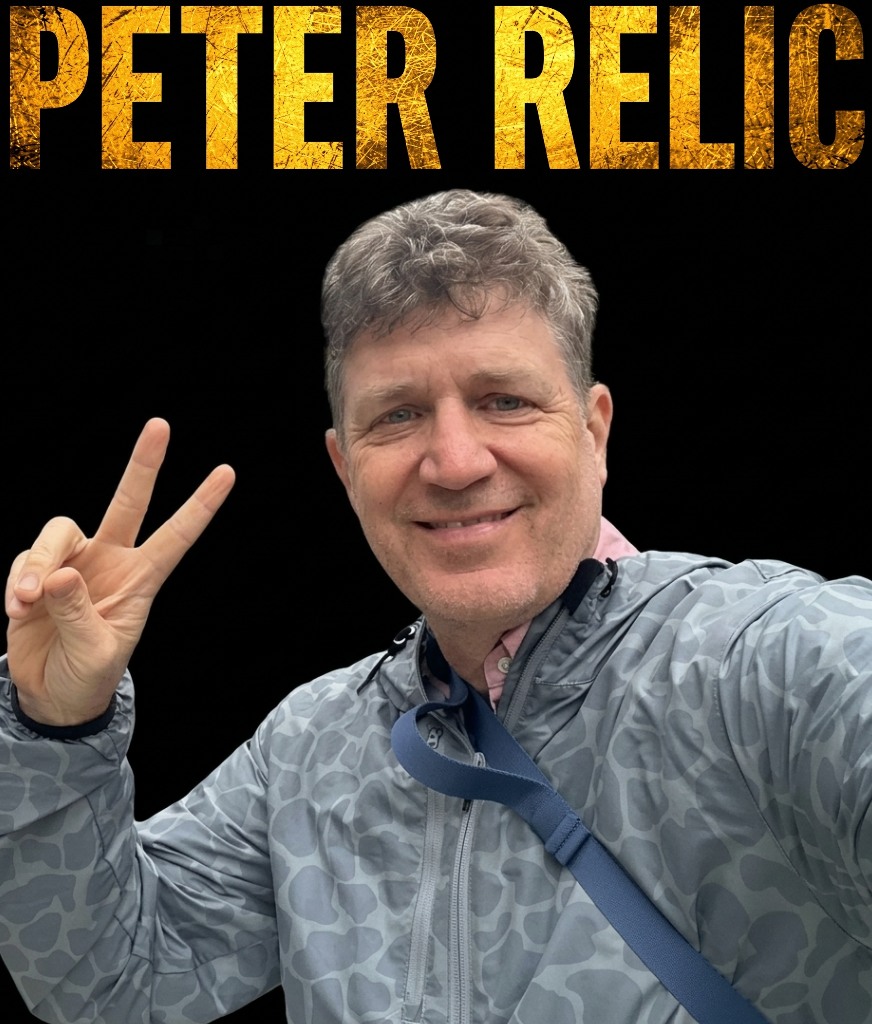
In his book “Bust a Move,” (Kensington Books, 2026) music journalist Peter Relic chronicles the meteoric rise of Delicious Vinyl—the independent LA label behind massive late-’80s hits like “Wild Thing” and “Bust a Move”—while unraveling the mystery behind its co-founder, Matt Dike, who seemingly vanished at the height of his fame.
___
Sounds Visual: Peter, first off–this book is amazing! I couldn’t put it down. You went into writing this book thinking you were writing a standard label history, but it became kind of a mystery, which I thought was a really clever way to frame it, around Matt Dike. What was the first piece of evidence or reporting moment that made you realize those were the exact same story?
Peter Relic: Thanks for the kind words about the book. I’m glad you read it so closely and thoughtfully.
So, to go back to when I started working on it, in 2010, I was about to turn forty and decided that writing about popular music was a young person’s game, and that I could maybe step away from it with some modicum of dignity intact— I wanted to write a book as sort of an ender. Right around that time, it seemed like an increasing number of books and documentary films about hip-hop were being made, and it felt like Delicious Vinyl was getting overlooked, , not even mentioned in these larger histories or roundups of West Coast rap.
There wasn’t much information about the label’s history out there, but because of the ubiquity of the songs and the continuing omnipresence of the logo t-shirt, it’s almost a paradox — these songs and this logo are super well known, but the story is completely unknown. I actually realized that was an asset going into the book. Even now, giving a talk recently to SCAD students in Savannah — they know the songs, know the logo, but the story is unknown, even though there’s already an active interest.

So, back in 2010, I wrote a letter to the label at their old Sunset Boulevard address, addressed to Michael Ross, saying this label was significant across multiple eras of hip-hop and I’d like to write a book about it. There are some good label-history books out there — David Cavanagh’s Creation Records book, My Magpie Eyes are Hungry for the Prize is amazing, and it’s this seven-hundred-page book with granular detail. I’m an obsessive too, so I planned three sections for my book about Delicious Vinyl: the ’80s, the ’90s, and bringing it up to date with the Illa J/Yancy Boys project they were putting together at the time.
When I went to their office — 6607 Sunset, they’re not there anymore — and met Mike Ross for the first time, one of the very first things I asked him was, “Where’s Matt Dike?” He said, “I don’t know, your guess is as good as mine.” No rancor in it —Mike’s a pretty chill guy, though maybe I was projecting some sense of longing onto him for what he’d done with his old partner. But at that moment I thought, there’s a mystery here — how could these two label co-founders who did this amazing thing still be alive, living in the same city, and Mike hasn’t seen him since 1994? That’s fifteen years at that point.
During that first year I interviewed the original stable of artists, the KDAY mix masters, women who’d been go-go dancers at the clubs, Matt Dike’s older brother Lane and sister Vikyana. Matt’s friends all said some version of the same thing: if you talk to Matt, tell him I love him, tell him I miss him, tell him he was responsible for the best times I ever had in my life. That gave me a reflective picture of what that era might have been like, and deepened the mystery of Matt.
SV: And that’s how the book starts, essentially — you calling his phone, wondering if anyone’s even home. You’ve described what happened when he finally answered as something that changed everything. Tell me about that call.

PR: I’d read Dan LeRoy’s 33⅓ book about Paul’s Boutique, where he manages to get Dike on the phone. I thought, if Dan LeRoy could get Dike on the phone, maybe I could too. So I called and called Matt Dike, over the course of a year, into a second year, with the phone just ringing. Eventually I broke a promise to myself — my mother always said don’t call people during or after dinnertime — and one night I called after midnight, and Matt Dike picked up.
That’s essentially the penultimate chapter of the book — we get into a conversation and discover we have a shared love of Bill Withers. This isn’t in the book, but I’m sure you’ve seen the documentary “Still Bill?”
SV: Yup–great.
PR: It’s insanely great. The more I reflected later, the more I thought there’s actually a lot in common between Bill Withers and Matt Dike — that disaffection with the whole industry machinery. I’d brought a copy of Still Bill on a thumb drive up to Matt’s house that first night, handed it to him, and he looked at it for a long time and said, “Dude, what is this?” I realized — oh, he’s still watching VHS tapes. Matt had no idea what a thumb drive even was, let alone where you’d stick it.
But once he knew I had some deep Bill Withers knowledge, that was all the authenticating he needed. He said, “Just come on up to the house, dude.” I asked when, and he said, “Now’s good.” I thought, are you kidding me? And that’s what happened.
It was extraordinary, and honestly part of why the book took so long to finish was I didn’t quite know how to present the surreal aspect of that visit. I had a hard time processing the reality of it.

Above: Matt Dike as a child. Photo: Tanya Dike.
SV: That comes through in the book — it’s almost Howard Hughes-ish when you finally meet him…
PR: Yes. And at the same time he was warm, welcoming, funny. Even in the book, he speaks in complete paragraphs — once he latches onto a memory, he tells you the whole thing verbatim, almost as if, because he’d been relatively on the disabled list all those years, no other events had occupied his mind, so there was all this extra memory-bank space filled only with the past, and he could tell those stories in incredible, vivid detail. A trip, to put it mildly.
SV: You’ve described something like a hypnotic beat running through the book, around Matt’s absence. Did you consciously build the narrative around that mystery, or did it force its way into the structure?
PR: I think the framing device — the mystery of Matt, the payoff at the end — plus everyone else’s stories being interesting enough to hold attention on their own. I tried to include some info or insight about Matt in every chapter, because everyone who’d met him had something to say — Young MC saying Matt mattered because he took ideas off the beaten path, N’Dea Davenport saying Matt was a rock star without even trying, Chris Goss from Masters of Reality talking about a phone call from Dike that saved his life. I wanted everyone talking about Matt so that by the time you get to the last chapter, driving up to his house, you finally hear his own version, or at least his reflection on the era you’ve just been walked through.
I read a lot of narrative nonfiction while working on this, not necessarily music books. There’s “Shooting Midnight Cowboy” (FSG, 2021) by Glenn Frankel, about the making of the film “Midnight Cowboy” — it convinced me you could write an entire book around one film, right down to a chapter on how “Everybody’s Talkin’” became the theme song. There’s “Wanderlust” (HarperCollins, 2024) by Reid Mitenbuler, about an Arctic explorer, Peter Freuchen, that ends up telling the whole story of exploration through one guy. And “Invisible Child” (Penguin, 2021) by Andrea Elliott, a New York Times reporter who documented an unhoused girl in New York from about age five to nineteen — there’s a chapter where she interrogates her own ethics about going home to her nice apartment after spending the day with this homeless child.
Those books shaped how I approached this. I have some misgivings about first-person memoiristic writing infecting narrative nonfiction — does the author really need to make it about themselves? But when it works, it works, and I put myself in this book with some hesitation, because the search format is really driving the whole narrative, and the reader needs some stake in my obsession with this guy to feel invested themselves.
It comes back to the fact that these songs are still everywhere — commercials, film, TV — but the driving creative force behind them is unknown. That’s why I wanted Matt Dike’s name on the cover. Not that I expect this book to bring him to the cultural currency of someone like Rick Rubin, but I hope to attach Dike’s name to his actual accomplishments in the historical record.

Above: Mike Ross and Matt Dike. Photo: Ted Soqui.
SV: Did you ever reach a point where you thought you’d solved the Matt Dike enigma, only for another interview to blow that theory apart?
PR: Not exactly like that. One reason I pulled the book back out of the closet when Matt died in 2018 was realizing no one else had done an in-person interview with him in the last quarter-century of his life. Phoebe Hoban talked to him by phone for her Basquiat biography; Dan LeRoy talked to him by phone for the Paul’s Boutique 33⅓ book. Those are really the only other interviews since he disappeared from the scene.
The last in-person interview in print I found was in a magazine called Egg, written by a well-known LA journalist named Sandra Tsing Loh in 1990. She goes up to Matt’s apartment, and you can tell she isn’t smitten, seems a little dubious about him, maybe sensing something that was acceptable and funny in the ’80s wasn’t landing the same way anymore, that he wasn’t growing with the times. There are photos in that piece, by Dewey Nix, where you can see Matt reaching a tipping point—smoking out of some novelty pipe shaped like a Harley-Davidson, hair really long, reading an adult film guide with Ginger Lynn on the cover. Kind of funny, if you think that’s funny — but you’re not so sure anymore.
Moving on, I want to say that one good thing that came out of interviewing Matt Dike, was I told him that people loved him, missed him, that he was responsible for the best times of their lives.
That gave him the emotional space to reconnect with some old friends towards the end of his life — him showing up at Mike Ross’s birthday party after not seeing him for so long is a genuinely intense act of vulnerability for someone whose whole thing is staying behind a wall. I think Matt realized that accepting love from other people, which can be the harder half of that equation, was something he still wanted. I was glad he got a sense that he was loved. Also, the fact that music can outlive its creator is sort of the whole point of what your project does too, talking to people in the twilight of their lives as artists. That’s beautiful.
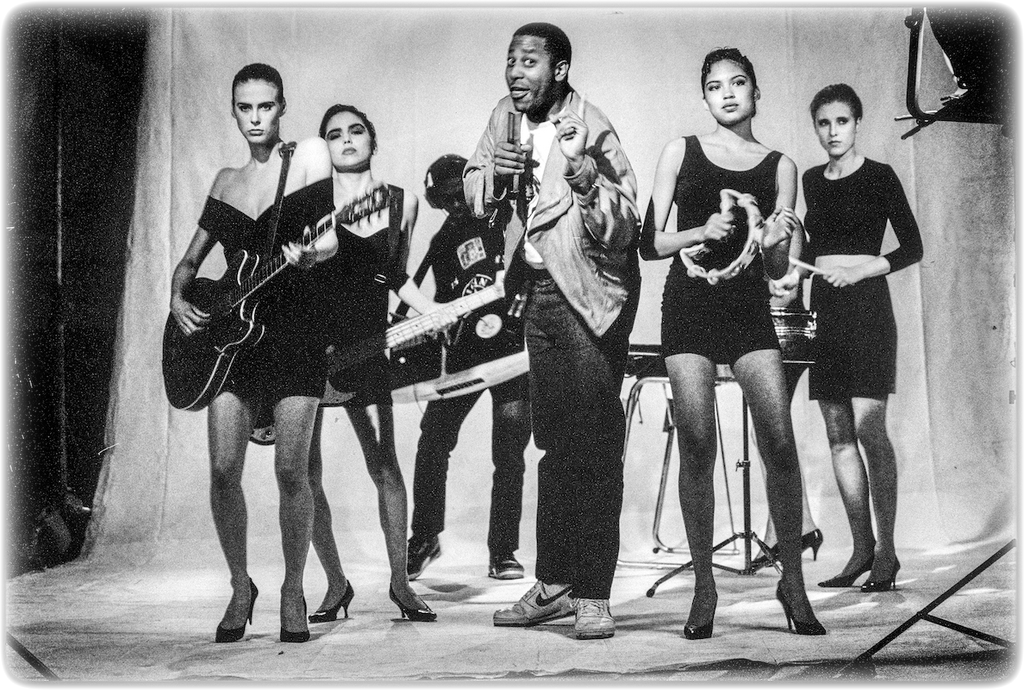
Above: Tone Lōc and company at the “Wild Thing” video shoot. Photo: Salomon Emquies.
SV: When you actually met Matt that night — the Bill Withers connection and everything — what do you think he understood about his own legacy at that point?
PR: I don’t think he was legacy-minded at all. I don’t think he was sitting at home thinking about how dope it was that he’d made these great records — if anything the opposite. He was probably thinking about whether he had enough root beer in the house.
SV: The root beer float story is amazing…[note: this refers to an anecdote from Relic’s meeting with Dike.] I hope people read the book so they can understand what happened there. Moving on–I wanted to ask about how you traced Matt’s Jehovah’s Witness upbringing to explain the almost devotional intensity of his crate-digging.
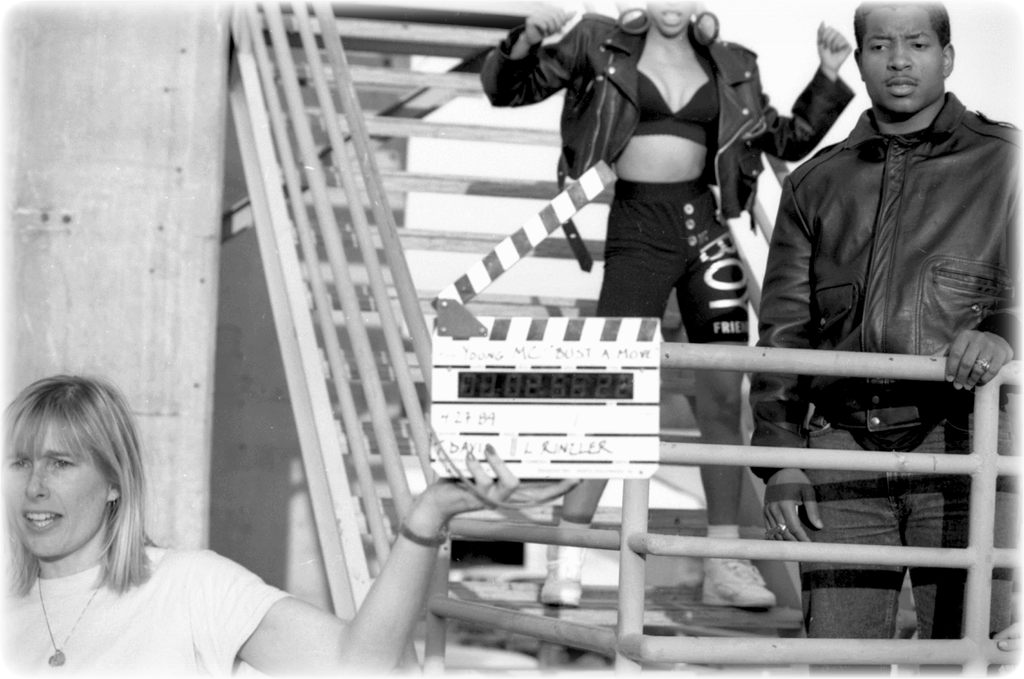
Above: The video shoot for Young MC’s “Bust A Move” with Tamra Davis. Photo: Salomon Emquies.
PR: Devotional intensity — what a great way to put it. With some religions you can participate partially and it’s accepted; with others, like Jehovah’s Witnesses, you’re either all the way in or out, which is why people use the word “cult.” I was raised Catholic — I can go to church on Christmas and still call myself Catholic even with real apprehension about the institution. But I think that devotional intensity Matt brought to collecting records maps onto that same all-or-nothing framework from his upbringing. There’s also this idea that for most of us, everybody just knows what fun is — but for Matt, even the notion of fun represented something transgressive, which maybe traces back there too.
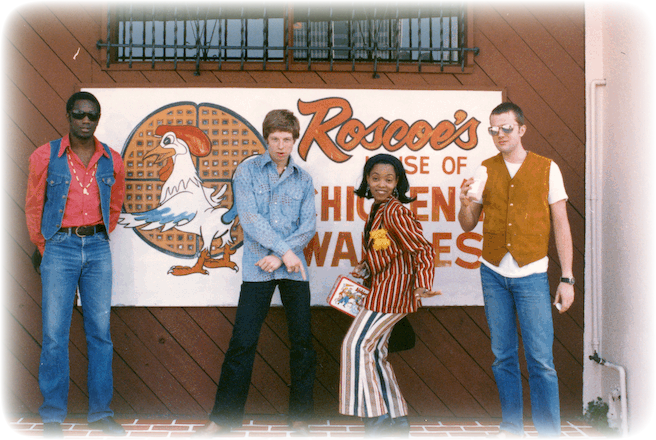
Above: The British acid jazz and funk group The Brand New Heavies signed with the American hip-hop label Delicious Vinyl in the early 1990s. Courtesy of Delicious Vinyl.
There’s something I cut from the book because it felt sort of speculative, though I do believe it — around ’74 or ’75, Jehovah’s Witnesses were told the world was going to end, and many gave away their possessions because they wouldn’t need them. Imagine being told your whole childhood that the world’s ending but you, chosen, will be okay — and then it doesn’t end, and instead Foghat releases “Fool for the City,” and you think, well, you guys lied to me, but Foghat never lied to me — I’m going to follow this instead. That’s where the cowbell comes in. I think that was a real turning point for Matt — the world didn’t end, but here’s this record, and he never stopped going in that direction.
Growing up under nuclear fear in the ’80s myself — I read Orwell’s 1984 in 1984, was convinced from about age ten that the world would end any day — gave me a way to reflect on what his religious upbringing might’ve similarly instilled: that same fatalism, and disappointment that this was the world adults had made.
I wanted to present a balanced picture of the Witnesses too — his sister is still active, I believe, and even Matt, his brother Lane, and his childhood friend Phil find things to admire in it, like pledging no allegiance to any single country, or conscientious objection to the war in Vietnam. But in Matt’s case specifically, wanting to create joyous, ecstatic communal experiences through dancing became almost a make-your-own-religion thing for him.
SV: And that root beer float moment — “I can have ice cream whenever I want” — ties right back to fun as something transgressive. Do you think he was trying to make hip-hop as we now define it, or was he just following his own record-collector logic and letting the music emerge organically?
PR: Both. Dike and Ross were both born right around ’61, ’62 — the perfect age to catch hip-hop at its very beginning, the way I caught its first cohesive development and you caught its golden era. Matt and Mike were both setting the table and watching it being set — there’s a chapter about record pools and how they got early access to labels like Tuff City, Enjoy, Sleeping Bag, before they founded Delicious Vinyl.
The influence of Def Jam can’t be overstated — Mike Ross told me “Wild Thing” was their version of Run DMC’s “It’s Tricky,” which sampled The Knack’s “My Sharona” and Toni Basil’s “Mickey,” and Dike did the same thing by chopping up a Van Halen song. So both Dike and Ross genuinely loved hip-hop as it developed in real time.
Then there’s the other part — Matt’s enormous record collection let them spend absurd amounts of time digging for breaks, which reaches its peak with Paul’s Boutique, helped along by sampling technology and sample-clearance laws that were still loose enough to get away with things, plus the Beastie Boys being on Capitol. When I described Matt to students recently, I called him a “sound collage artist” — might sound cheesy to hip-hop purists, but it fits: creating sonic portmanteaus out of vinyl. What still shocks me, even now, is that they made these records in Matt’s apartment — not demos later recut at a proper studio, but the actual finished, enduring recordings, with Mario Caldato engineering right there. That’s an incredible, under-recognized example of DIY culture, especially once you factor in they got lucky with distribution too.

Above: Matt Dike. Photo Credit: Mario Caldato, Jr.
SV: How much of his genius do you think was raw musical instinct versus an ability to spot value in other people’s work that they hadn’t seen in themselves?
PR: I’d attribute that second quality more to Mike Ross, who worked closely with Young MC and Tone Lōc as people, getting Tone into the pocket of his rhymes, making Young feel good about his contributions — at least until that relationship soured. But both Dike and Ross were sensitive music fans, attuned to song structure, to what makes a classic song classic — and I think that superior songwriting structure is part of why these songs have lasted. When Dike told me “Funky Cold Medina” is basically a version of “Love Potion No. 9,” I nearly fell out of my chair — that’s exactly what it is. These are songs that tell stories, which is real, old-fashioned songwriting craft, not just self-aggrandizing braggadocio — “Wild Thing,” “Funky Cold Medina,” “Bust a Move” hold up as classic songs on that level.
SV: What do you think was the specific point where the label’s success stopped feeling like a happy accident and started operating like a machine?
PR: Success was the product of so many factors coming together — being in LA, access to those records, years of DJing in clubs watching what people danced to, meeting Marvin as a precocious college kid, meeting Tone at loose ends and thrown a lifeline by his cousin.
A good example of the shift is the Jesse Jaymes album, the white rapper’s tracks made for what was intended as Young MC’s second album — full of KC and the Sunshine Band samples — and you can feel, this feels like they now know how to manufacture a radio-crossover pop hit, and it just isn’t as fresh. Mike Ross has said if Young MC had rapped over those tracks, they’d have sold ten million albums — maybe true.
But the gap between what was cool in hip-hop in ’88 versus ’90, let alone ’92, is enormous —drum machine sounds, everything. It took a while for them to shake off the illusion that they knew how to reliably manufacture success, especially once Dike disappeared and their internal production setup stopped evolving. Mike Ross, to his credit, kept bringing in new people, which eventually led to J-Swift and the Pharcyde.

Above: The Pharcyde, who signed with Delicious Vinyl in the early 1990’s. Photo: Mark Humphrey.
SV: What did you discover about the studio assembly of “Bust a Move” that changed how you hear it?
PR: The Bette Midler sample in the middle [Bette Midler’s “Daytime Hustler” was sampled] — once I reverse-engineered that, it’s funny in itself. This massive, historically significant pop-rap record contains a Bette Midler sample, heavy-breathing included. It’s proof that a lot of the best hip-hop came from producers looking outside the established “Ultimate Breaks and Beats” sandbox.
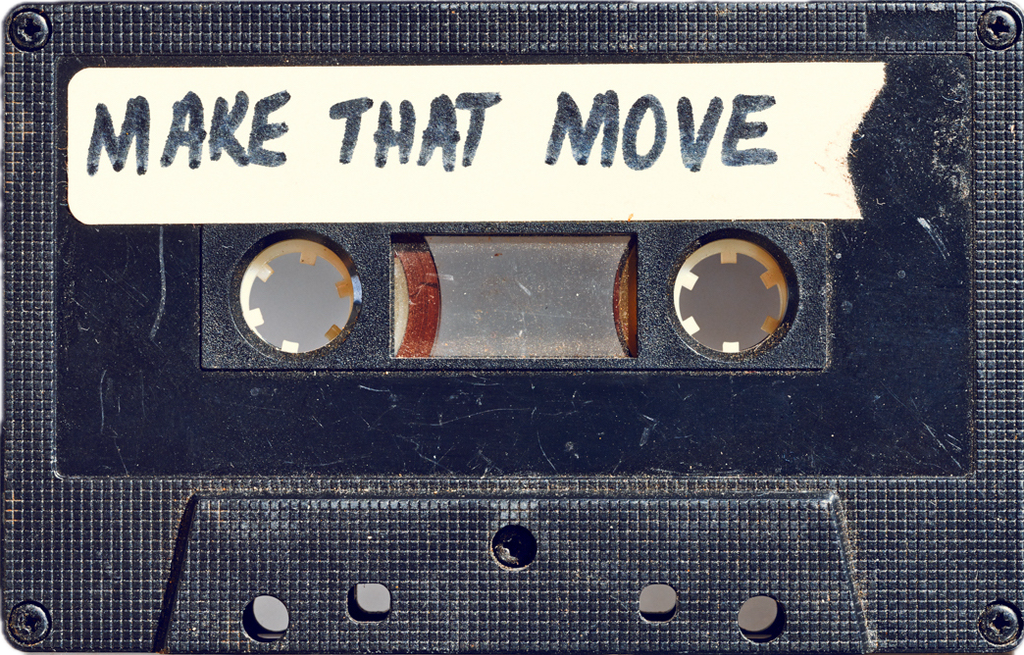
Above: The original demo cassette for Young MC’s “Make A Move,” later retitled “Bust A Move.”
That’s a key moment around ’89 — sampling splits into two directions: genuinely creative recontextualization of obscure material, versus something like “Can’t Touch This” basically just using “Super Freak” wholesale, which is closer to a cover version than a new creative act. I think that’s the exact moment you can point to — once they started working on what was meant to be Young MC’s second album, thinking “this will be a hit,” it’s like the bank vault suddenly swings open, and Vanilla Ice and MC Hammer prove you can score a massive hit with lowest-common-denominator material. That pushes the “real” hip-hop heads to carve out “underground hip-hop” as its own category — up to that point there wasn’t really a hard line between pop-rap and underground rap, it was all just hip-hop. Delicious Vinyl’s hits unintentionally helped create that fork in the road.
There’s a story Mike Ross told me, which is not in the book because I didn’t dig too deep into that era — the same week they were trying to get the Pharcyde’s “Passin’ Me By” video onto MTV, Onyx released “Slam,” and MTV said they only had room for one hip-hop video in regular rotation, and picked Onyx. Mike’s theory is that’s the difference between selling 300,000 Pharcyde albums instead of three million.

Above: Body and Soul, one of the earliest foundational acts signed to Delicious Vinyl. Courtesy of Rose Hutchinson.
SV: What made mid-to-late-’80s LA — Power Tools, the Rhythm Lounge — this space where skaters, punks, drag queens, goths, and rappers could all share the same physical room?
PR: I think those subcultures recognized they had more in common with each other than with mainstream preppy, Gordon Gekko-style greed. LA also had the literal geographical space — much less densely populated, so these things could happen with almost no cost overhead.
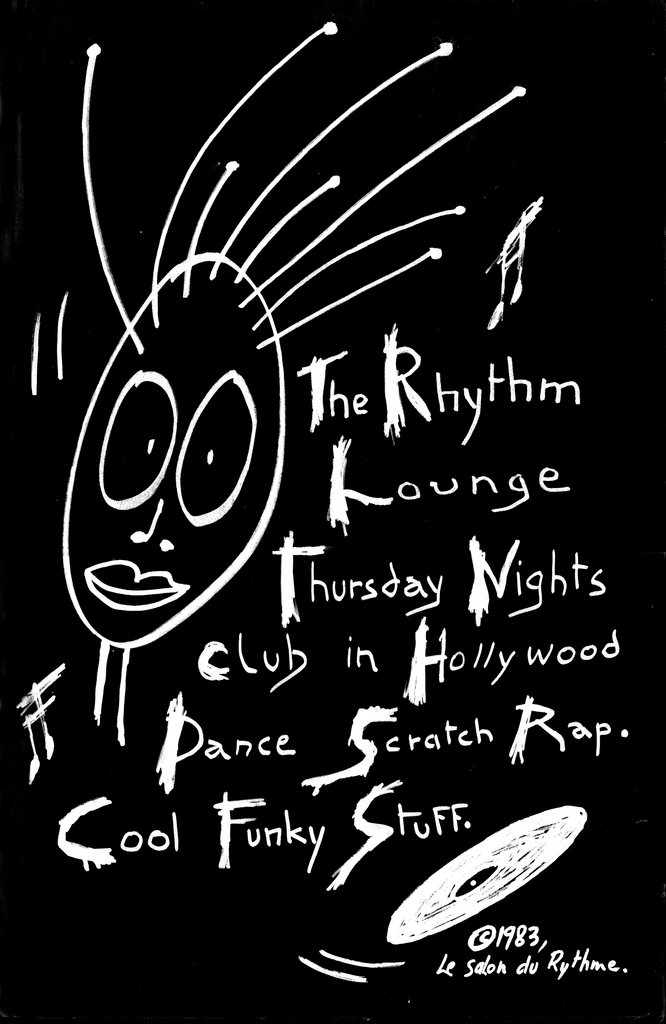
Above: Rhythm Lounge flyer: Salomon Emquies.
SV: Could this label have existed in New York?
PR: No — I think it depended on LA specifically: cheap apartments, cheap venue rentals, like the Grandia Room where Dike and Ross met at the Rhythm Lounge, arrangements where nobody’s really going out of pocket. There was also no real psychological pressure — Delicious Vinyl’s original stated ambition was just to sell a few thousand records at swap meets and local shops. If you make a half-decent song, you clear that bar easily, and it turned out the songs were much more than half-decent. That kind of freedom feels distinctly Californian, distinctly LA, in that era.
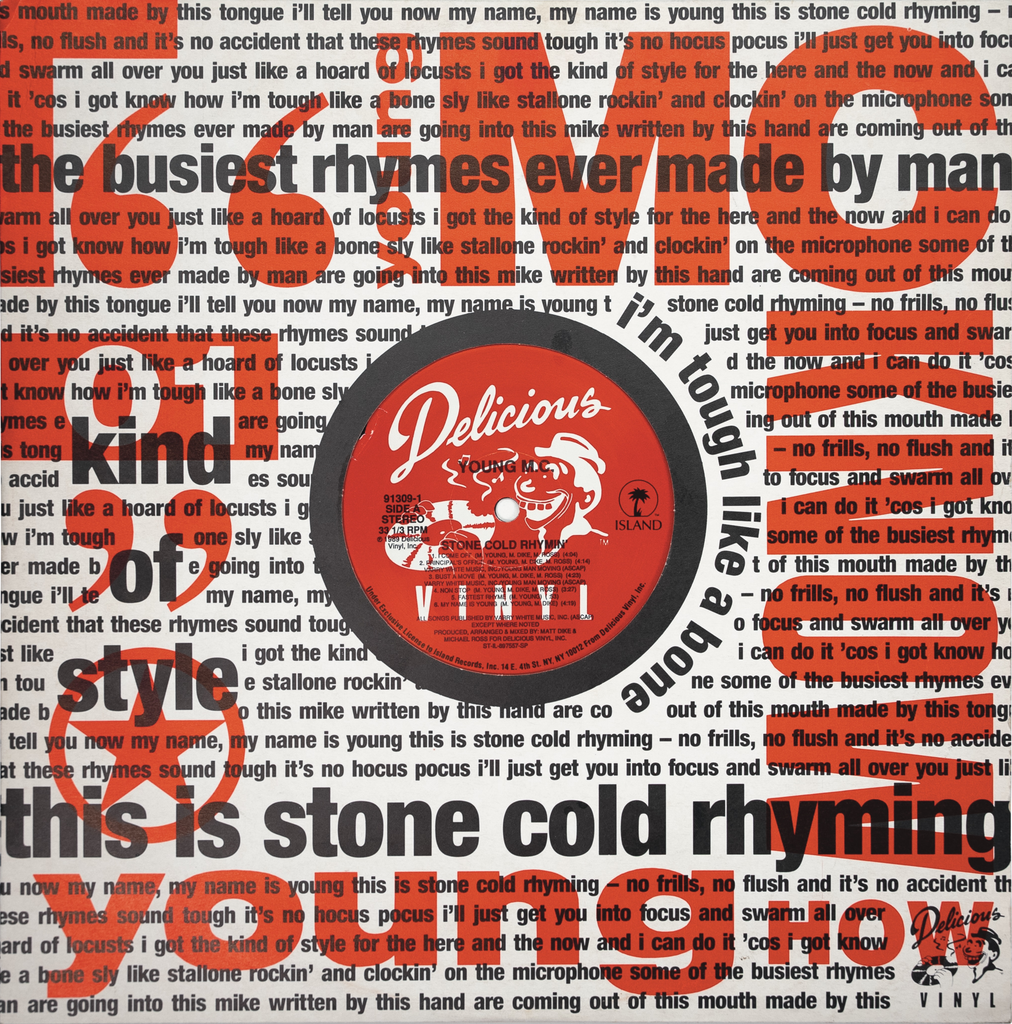
Above: The 12″ sleeve for Young MC’s “Stone Cold Rhymin’” UK release, designed by Stephanie Nash.
SV: Do you think that subcultural cross-pollination was consciously cultivated, or did people only realize how rare it was in hindsight?
PR: I think the conscious awareness came later, with reflection. Those clubs creating shared space feels genuinely special, even if it wasn’t fully a conscious political act at the time — more likely a baked-in sense that things would just be more fun if everyone had fun together. Looking back now, people have told me, “That’s exactly what it was like,” but I think there’s an added layer of appreciation now, beyond nostalgia for being young — a recognition that they were doing something in the right spirit to recognize our collective humanity.
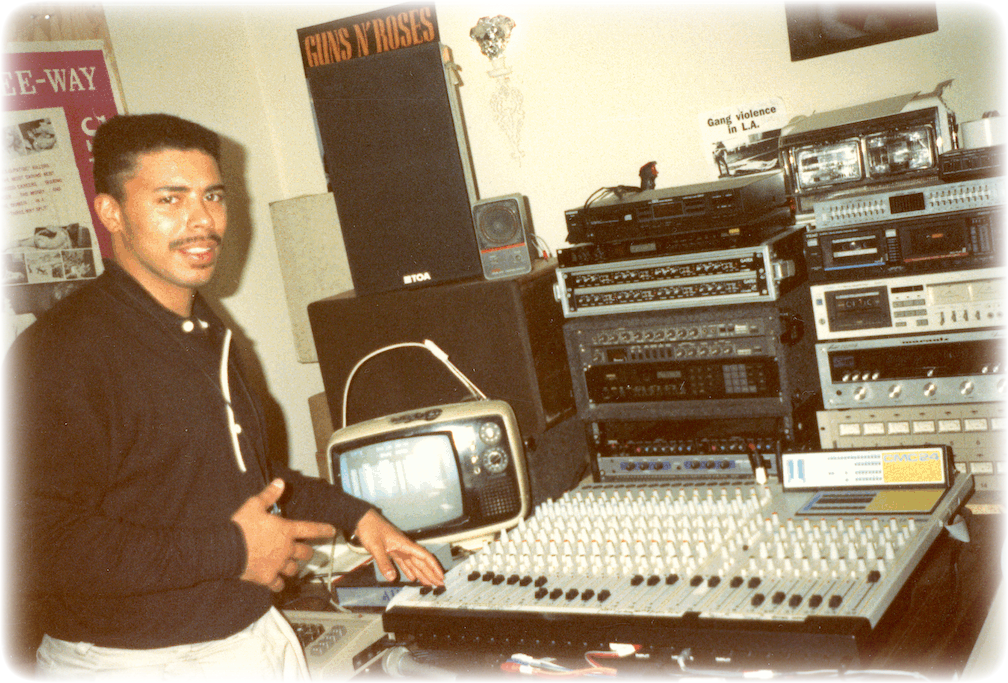
Above: Delicious Vinyl artist Def Jef in the studio. Photo: Mario Caldato, Jr.
SV: What do you think the LA scene understood about hip-hop’s potential that New York and London had missed?
PR: My glib answer is that acting like a tough guy is kind of overrated — so much of New York hip-hop ran on B-boy braggadocio. Delicious Vinyl’s stuff, especially Young MC’s lyrics for himself and for Tone Lōc, actually undercuts the idea that pure self-aggrandizement is the only mode available to a rapper. It’s interesting, it applies to a label like TommyBoy too — a group like De La Soul, being from Long Island, were far enough from the city that they had freedom to be the weirdos they already were.
SV: You deliberately avoided telling readers what to conclude about the racial dynamics surrounding the label. Can you talk about that?
PR: The racial dynamic is real and foregrounded upfront in the book — white label owners, largely Black and Latino artists — but I didn’t think it was my place to cast an interpretive scrim over it, because the whole point of what was happening at Delicious was arguably the opposite of drawing hard racial lines. We’re living in a moment where racial identity gets treated like a battlefield, and the point of that scene was, “No, we’re going to be in the same club, be cool to each other, make things together.”
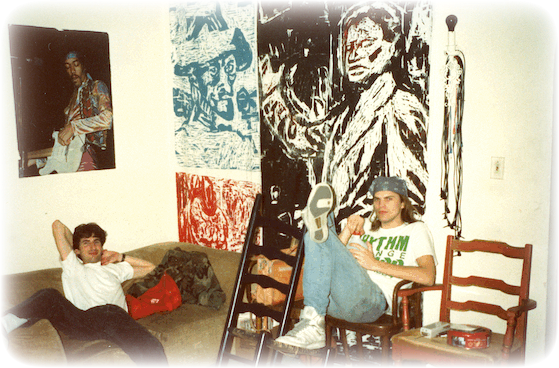
Above: Matt Dike with Mario Caldato, Jr. Photo: Courtesy of Mario Caldato.
I do think Mike Ross and Dike made a real misstep naming their publishing company Varry White Music — probably seemed funny to them at the time, less so in hindsight. As for me being a white journalist writing this book — I’m just a person doing careful, deep work on something I genuinely care about, and trying to make it worthy of the story.
I also think Delicious Vinyl got somewhat overshadowed by gangsta rap rising right around the corner — the N.W.A album comes out at almost the same time as “Wild Thing.” Gangsta rap then dominates the West Coast narrative for a long stretch afterward.
SV: Between gangster rap’s dominance of that narrative and Delicious’s own pop-crossover success eventually working against its critical reputation — which do you think did more long-term damage?
PR: I’d actually blame the record industry itself — they recognized that selling a “bad guy” narrative would be enormously profitable. What interests me more is that G-funk, as a sound, took its architects a while to find, and I genuinely believe Dre was listening closely to what Delicious was doing — that stuff actually helped push the G-funk sound toward slowing things down. Something also gets lost when West Coast hip-hop history gets told almost exclusively through N.W.A and the East-West rivalry — that’s a great, well-told story, but there’s also this other story, the one everybody knows the songs from but not the story behind them.
There was something genuinely seductive to a young person in the ’90s about the fully packaged gangsta-rap aesthetic — the clothes, the cars, the whole translatable visual identity — in a way Delicious Vinyl’s success never had; there was no unified “look” attached to it. Ironically, on Tone Lōc’s second album, “Funky Westside” leans into actual gangster imagery with his real Crip friends in the video, and the twist is that was genuinely who Tone was, unlike some artists who successfully performed a gangsta identity without living it. It’s all some blend of fantasy and reality — and it’s all great art until somebody actually gets hurt.
SV: What was the single biggest surprise among the people you interviewed — someone you initially thought was peripheral who turned out to be vital to the story?
PR: Several. I told writing students recently: when you get the chance to talk to Black women who were around a scene like this, take it, because they saw situations clearly for what they were, usually knew they wouldn’t be properly credited or compensated for their part, and did the work anyway because it was the right thing to do.
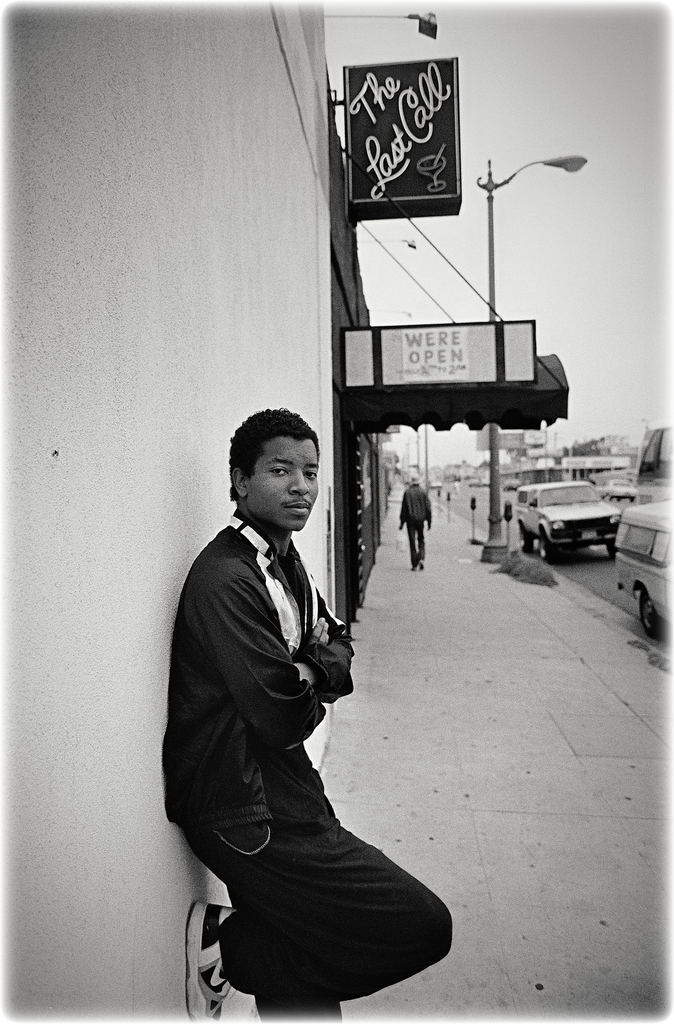
Above: Young MC. Photo: Derek Ridgers.
Silky D — real name Delphine Williams — back in the eighties she did the uncredited gasping and moaning on “Tell Me Freak,” she was fourteen at the time, working with Egyptian Lover. I met her by chance at Delicious Pizza when Mike Ross introduced us in I think 2023, and she told me how she remembered the day Mike called looking for a rapper — she connected Mike to Tone through Tone’s cousin. That’s basically how I finally learned how they found Tone Lōc, since Mike himself didn’t fully remember the details.
Cheryl Dickerson, head of A&R at MCA’s Black Music Division when Mike Ross was a college intern there — talking to her unlocked the mindset of what a successful Black music division at a major label looked like in the early-to-mid ’80s. Talking to Ms. Dickerson was like someone opening a door from the inside of a building I thought I already knew.
Those threads through Black women in the story are actually the part I’d want to foreground in conversation — people who made essential connections and provided essential insight, who might look tangential at a glance but turn out to be central to understanding how and why everything happened.

In 1987, Cuban-born rapper Mellow Man Ace released his debut 12-inch single “Do This” on Delicious Vinyl. Above: Mellow Man Ace (center) with Sen Dog (left) and B-Real (right). Photo: Brian “B-Dub” Williams.
SV: Was there an interview that was hard to conduct — not from uncooperativeness, but because memories clashed?
PR: I don’t mind when that happens — you want the truth, but you also want to respect the personal validity of someone’s memory. Honestly, no interview was difficult in terms of people’s demeanor — everyone had something interesting to say, most people knew they’d been part of something irreplaceable and were happy to share their version. Even Tone Lōc, who took years to pin down, gave me a great interview in the end.
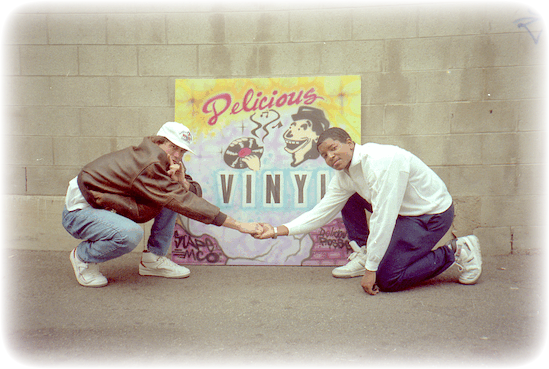
Above: Mike Ross and Young MC. Courtesy of Delicious Vinyl.
SV: What’s the best anecdote you uncovered that didn’t make the final book?
PR: Matt told me about a date he went on with Traci Lords — didn’t make the book. I don’t think anything salacious happened; I think Matt actually panicked once he realized who he was on a date with.
There’s also a section I cut about the Young MC follow-up single “Principal’s Office,” which sampled a Lee Michaels piano riff they never cleared. Lee Michaels sued. I spent a month reading through the legal paperwork — his lawyer used the phrase “reverse palming off,” meaning people would assume Delicious wrote the music since they never credited or paid for the sample. Delicious ended up paying legal costs plus roughly $80,000, I think, and Michaels also sued A&M, his own label, for allowing it — and got all his masters back as part of the settlement, which is wild. Then, as the kicker, Michaels used that settlement to open his Killer Shrimp restaurant in Marina del Rey, which is still there. Great story, but it bogged down that section of the book too much, so I cut it.
SV: I want to ask about Basquiat, since he appears in the book through Dike’s early years as a studio assistant. How much of that history was previously unreported?
PR: There’s information in the book about Basquiat that’s genuinely never been published before — stories from people who knew him as a teenager in New York, who hung around Basquiat when they were all teens, including a story about going to see the Tubes together. These humanize Basquiat in small but meaningful ways — just a guy hanging out, rolling huge joints, always painting and thinking with real skill and intellect.
The book tells the story of how Dike and Basquiat first met in the basement of a dorm at NYU and the story Dike tells about the last time he saw him, when Basquiat came by asking to borrow money — the way Dike recounted that to me was genuinely heartbreaking, this normally guarded, “cool” person letting real vulnerability show, for maybe the only time in a decade-plus friendship.
One anecdote about Basquiat that Matt Dike told me is something I didn’t put in the book, but I’ll tell you now. It’s about a Basquiat painting from 1983 called “Eyes and Eggs,” of a chef holding a frying pan of eggs. Dike said one day they were hanging out in LA and Basquiat was on the phone, doodling absentmindedly, and he sketched a chef with a frying pan, and Dike said, “You should make that into a big painting!” — and immediately felt he’d overstepped, that you never tell Basquiat what to do. But Basquiat did end up making the painting, and Dike was delighted.
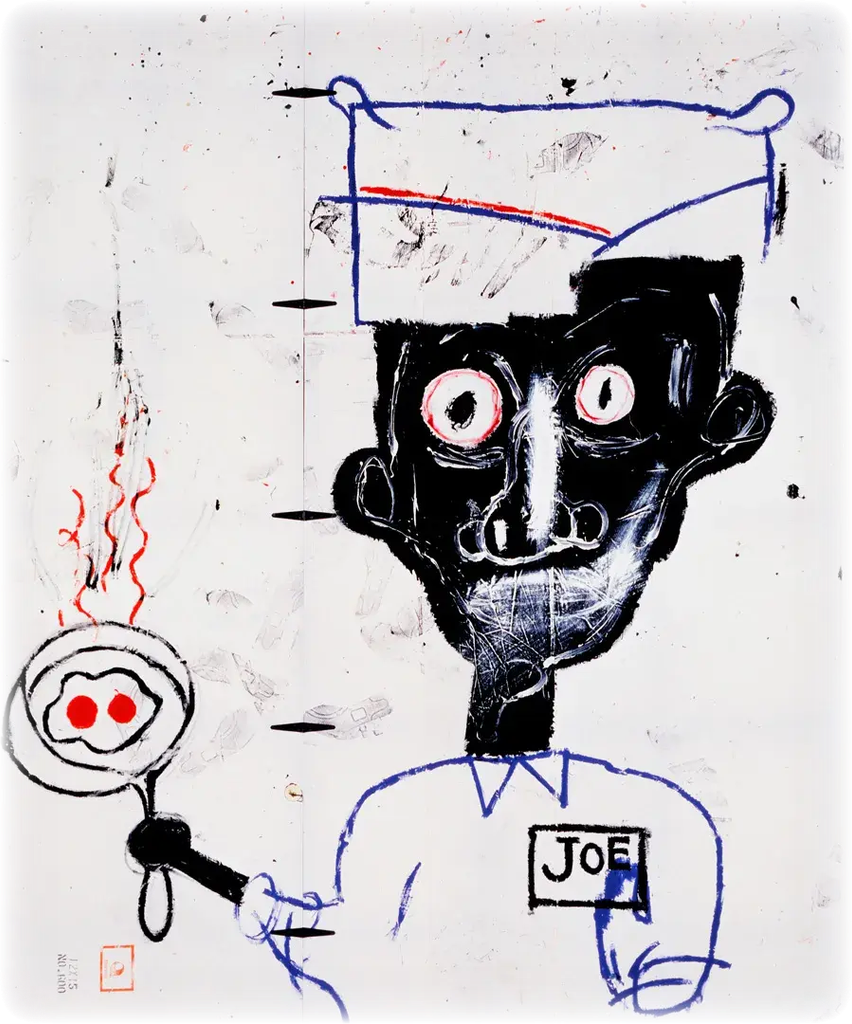
Something else that Dike told me: Right before Basquiat died, the last time they saw each other, Dike played him a dub mix of what became “Shake Your Rump” — meaning Basquiat heard Paul’s Boutique material before it was even released. It’s tempting, maybe overly indulgent, to wonder whether some of the sensibility in Paul’s Boutique was shaped by Dike literally watching Basquiat’s paintings come together — both artists pulling from a lot of different sources, some consciously, some intuitively.
SV: What did your years of investigation teach you about the difference between a great story and a true story?
PR: When I started, I had no idea how great a true story this would turn out to be — I thought I was writing a label history, not a cultural history. Working on a book like this is like driving on a winding road in fog — you can’t see how far you’ve come until later. The more I drove towards the actual truth, the better the story got.
People sometimes ask, “How do you know exactly what was said in that room?” — the answer is triangulation: enough interviews to nail down specific, verifiable details, what someone was wearing, the fact that Mike Ross and Def Jef were literally sampling The Politicians’ record while the Rodney King beating was happening outside. The more sources converge on a single point, the more confident you can be the truth lives in that narrow space — and that convergence is also what makes the story richer and more vivid, because it’s built on real specificity rather than invention. Once I understood how genuinely remarkable the true story was, I felt like the writing had to live up to it.
Note: the audiobook version for Bust A Move will be released on October 20th, 2026.
Leave a Reply
You must be logged in to post a comment.