
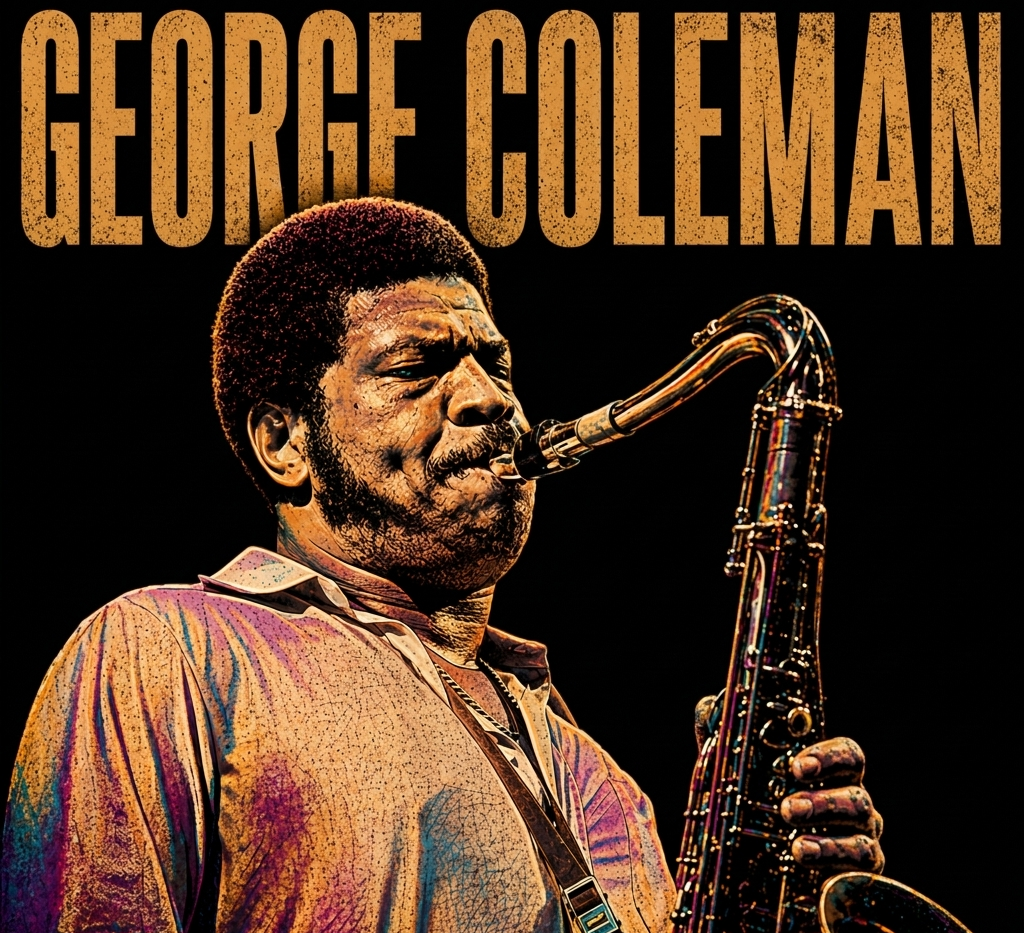
From his early days with B.B. King and the Miles Davis Quintet to his status as a legendary NEA Jazz Master, 91-year-old George Coleman reflects on a lifetime of virtuosity, mentorship, and the enduring art of entertaining the audience.
Born in Memphis, Tennessee, Coleman taught himself the alto saxophone as a teenager before switching to the tenor saxophone, which became his signature instrument.
His professional journey began in the early 1950s working with Ray Charles and B.B. King. After moving to Chicago and eventually New York City, he built a reputation as a highly versatile performer, recording with Jimmy Smith and playing in the quintet of Max Roach. He gained significant acclaim during his tenure with the Miles Davis Quintet from 1963 to 1964. Davis famously praised his technical prowess, noting that Coleman played everything almost perfectly and was a stellar musician.
Throughout his extensive career, Coleman has collaborated with a vast array of jazz legends, including Chet Baker, Herbie Hancock, Elvin Jones, Ahmad Jamal, and Charles Mingus.
Coleman’s contributions to the art form were formally recognized in 2015 when he was named an NEA Jazz Master and inducted into the Memphis Music Hall of Fame. He also holds a brass note on the Beale Street Brass Notes Walk of Fame. As of 2026, he remains an active performer and recording artist, continuing to release music and lead his own groups, such as the ensemble featured on his 2024 album, Big George. His recorded legacy is immense, encompassing numerous albums as a bandleader—such as Amsterdam After Dark, Manhattan Panorama, and A Master Speaks—alongside hundreds of appearances as a highly sought-after sideman for many of the most influential figures in jazz history.
___
Sounds Visual: George, where did the journey in music start for you?
George Coleman: Well, it really started right after high school. I graduated when I was about 17, and not long after that—in 1955—I went on the road with B.B. King. Before that, I’d been playing a bit around Memphis, but that’s when things got serious.
He had a strong band—not quite a big band, but we had multiple horns: two trumpets, alto, tenor, and baritone sax. We played jazz-style arrangements. There was an arranger in Memphis named Onzie Horne, who wrote for us, and also Maxwell Davis from California. Maxwell was incredible—just a great musician and arranger.
Above: Coleman is featured on B.B. King’s “Woke Up This Morning,” 1953.
SV: When were you first drawn to the saxophone?
GC: That happened when I was around 15 or 16, after I heard Charlie Parker. Like a lot of people, he was my inspiration.
SV: I want to talk about Memphis for a second. You came up alongside musicians like Booker Little, Harold Mabern, Hank Crawford, and Phineas Newborn Jr.—and you also taught Charles Lloyd. That’s an extraordinary concentration of talent. What was it about Memphis at that time that produced so many world-class musicians?
GC: That’s a great question. Memphis was almost like a smaller version of New York. You had people coming in from everywhere—especially from New Orleans and other parts of the South—and they were all performing there.
There was just a lot happening musically. People brought different influences with them, and it created this rich environment where everyone was learning from each other.
SV: I also wanted to ask about the blues. Your early years with B.B. King on Beale Street must have given you something no conservatory could. When you play complex bebop today, do you still feel that blues foundation underneath it?
GC: Oh, absolutely. It’s all connected—it’s all transitional. Jazz comes out of the blues. All the great jazz musicians played the blues in their own way, incorporating it into their phrasing and improvisation. That foundation never leaves you. It’s part of the music and part of the people who created it.
I also played with blues artists like Howlin’ Wolf and Memphis Slim. There’s even a recording out there where I sat in with Memphis Slim—I didn’t even realize it was being recorded at the time. [laughs]
A lot of those guys eventually moved to Paris—Memphis Slim, others too. James Cotton, all those guys. They found appreciation and opportunities there, and they made some great records. Some of those guys used to ask me, “Man, how did you learn how to play in all those keys?” A lot of that came from necessity. Sometimes the pianos we played with were out of tune—flat or sharp—so I had to adjust on the spot. That forced me to get comfortable playing in any key.
But I was also learning from musicians around me in Memphis. I didn’t go to a formal music school, but I learned the same concepts—chord changes, harmony, all of that—from older players.
I’d sit at the piano with them, sax in hand, and they’d show me things: “This is a minor seven flat five, this is a major seven, this is a minor nine…” I absorbed all of that just by being around them. There were guys, Justin, that played like Fats Waller, and some that played like Bud Powell. So I had the best of both worlds in Memphis.
We’d play gigs from 9 at night until 4 in the morning. I was living in a hotel on Beale Street at one point—I could walk straight from my room to the bandstand. So when people later asked me where I studied, I’d tell them: I learned all of this in Memphis.
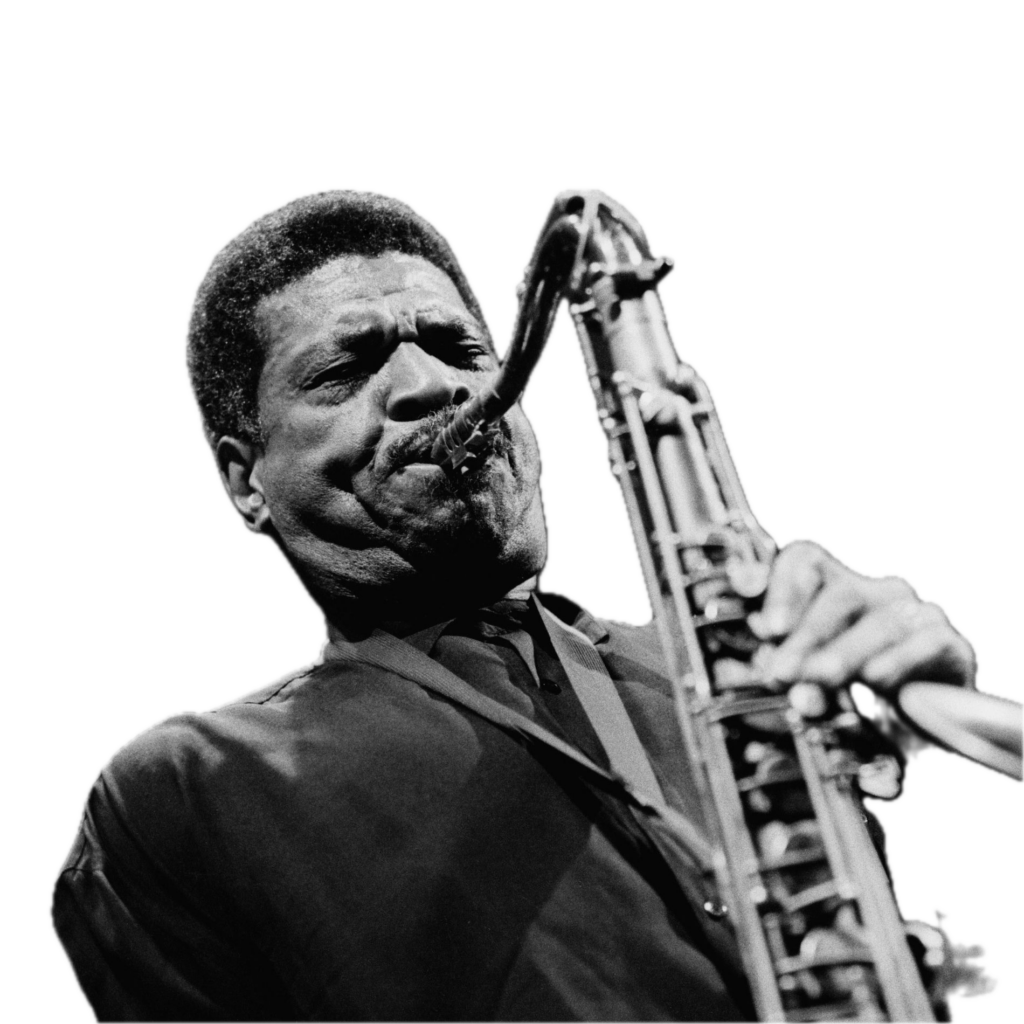
SV: I’ve also heard a story about you transcribing music early on for Ray Charles. Is that true?
GC: It is. Ray came through town and needed a band. My biology teacher knew I was capable of arranging and transcribing, so he recommended me. I was skeptical, but I did it—I wrote arrangements for four horns and a rhythm section.
When Ray came through a decade later, he was amazed. He said, “You mean George did these?” He couldn’t believe an 18-year-old kid had written them. The only thing he changed was one note in a final chord. Everything else—the phrasing, the sound—was exactly how I wrote it.
SV: That’s unbelievable—at 18 years old! One more thing: I’d read that B.B. King actually bought you a tenor saxophone. Is that how you transitioned from alto?
GC: That’s right. He needed a tenor player, so he bought me a Martin tenor saxophone—a really good one. I recorded a couple of jazz records with it. After that, I moved to the saxophone I’ve been playing for the last 70 years. I’ve still got that saxophone, and it still plays well.
SV: So, how did that involuntary switch from alto to tenor shape you as a musician? Did it have a huge impact?
GC: Well, you see, the tenor became the dominant saxophone for a while, especially out in California. Everyone was playing it. But, of course, Charlie Parker really popularized the alto. Then you had the older greats—Benny Carter, for instance. Benny was a force of nature; he played the trumpet, the alto, and the piano, and he was a brilliant arranger and composer. I grew up around these masters, though I didn’t fully realize the extent of their genius until later. That era was defined by the multi-instrumentalist—guys who could do it all.
I picked up a little bit of piano myself, which is why I’m still able to compose and arrange today. Back when I was 18, I was already writing charts. I grew up quickly.
My career has been overwhelming. I’m 91 now, still here, though sadly, most of the peers I grew up with have passed on. I actually just called Sonny Rollins—he’s 94 or 95 now—just to touch base, as we had a history. You know, when I first joined Miles Davis’s band, I had an incredible experience. One night, I saw John Coltrane, and I was brave enough to go up and ask, “Hey man, can I sit in and play one?” He said, “Yeah, sure.” I said, “Well, I don’t have a horn….” but Coltrane was so gracious. He said, “You can play mine.” So I played on his horn and his mouthpiece.
That was my introduction to Miles. Eventually, Coltrane recommended me for the job in the band—I think I was taking over for either Hank Mobley or Sonny Stitt. And after that, the rest is history.
I’ve had so many moments like that. I remember playing, and I didn’t even realize that people like Coleman Hawkins were in the audience until later. We were friends, you know? Harry “Sweets” Edison and all those guys… I’d sit in with them, and the energy was just incredible. Looking back, everything that happened to me has been so rewarding. If I were to go tomorrow, I’d be at peace, knowing I’ve been blessed with these accomplishments. It’s been a glorious ride.
I’ve always been so blessed. I was teaching everybody and playing with everybody, and the greats—guys like Eddie “Lockjaw” Davis—would hear me play and say, “Hey, look at this young buck, look at the way he’s playing!”
Joe Henderson and I also have a great history. Back in 1955, I was on the road with B.B. King, and I ran into Joe in Lima, Ohio. He introduced himself, but I didn’t really know who he was at the time. It wasn’t until I got to New York later and saw how great he was that it hit me. He told me, “We actually met back in 1950 when you were with Memphis Slim. You were 18, and I was 20.” I was stunned—I remembered talking to a young guy back then, but I never realized it was Joe. When he eventually hit the New York scene, he was already so great.
You know, looking back, I’ve had a complicated relationship with the media. Even now, it feels like they don’t always pay attention to me; I don’t often see my name in publications like DownBeat. But none of that ever bothered me too much—the music has always been the blessing. I never let the industry stuff bother me. People would always ask, “George, why do you think you’re overlooked?” And I’d just say, “I don’t worry about it.” Because the people who really mattered—the great players like Coleman Hawkins and John Coltrane—they were my greatest admirers. And that’s what really counts.
SV: I want to make sure people know about the George Coleman who has been out here teaching and playing for so long. To that point, you, Coltrane, and Clifford Brown all came up through R&B bands before you ever hit the bebop scene. How would you teach that kind of street-level rhythmic connection to a student today who has the technical chops but has never had to play a dance hall or a juke joint?
GC: I’d tell them to go back and listen to the records from the ’50s. They need to study the lines that Charlie Parker played—they are technically intricate and complex. A lot of young players today call that “old-fashioned bebop,” but I’d tell them to try playing “Confirmation” or any of those Parker lines. They’ll see quickly that it’s not just “old-fashioned”—it’s the foundation.
They need to go back to the source: Coleman Hawkins, Don Byas, Ben Webster. Those guys had so much to offer. “Body and Soul” by Coleman Hawkins? That’s going to be a classic forever. You have to understand that history to really play the music.
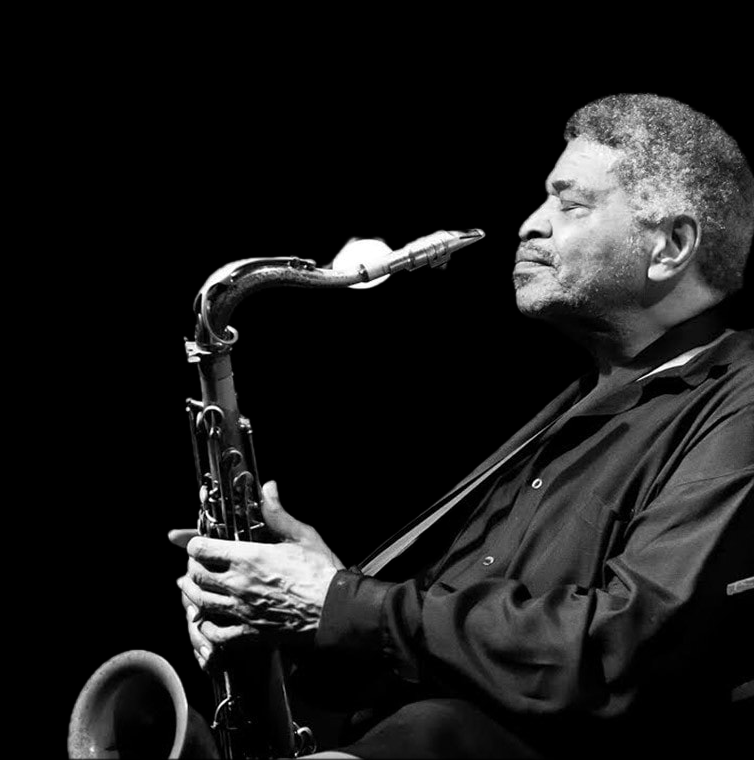
SV: Eventually you moved to Chicago, in 1956. You’ve mentioned that the Chicago scene was like a 24-hour cycle of music. You had dozens of clubs on the South Side alone—Club DeLisa, the Pershing Lounge—and places with revolving bandstands where you’d play every Sunday. Since that environment is, unfortunately, mostly a bygone era, what do you think is the single most important element of that continuous, “live-every-night” experience that the modern, conservatory-focused jazz world can’t replicate?
GC: [Pause] It’s the audience interaction and the sheer volume of experience. In those days, we were playing nine hours a night, six or seven nights a week. You weren’t just practicing in a room; you were learning how to communicate with a live crowd in real-time. You were playing with the best in the world, night after night, in a space where the music had to be alive, functional, and swinging.
The conservatory can teach you the scales and the theory—and that’s important—but it can’t teach you how to read a room or how to sustain that level of intensity for hours on end. That comes from the bandstand, from living in the music, and from being forced to find your own voice while standing next to the masters. That’s the “street-level” education that you just can’t get in a classroom.
It’s interesting, Justin–a lot of young players today are deeply focused on their own generation, like Joshua Redman or Chris Potter, but they aren’t always listening to the older masters. Sometimes, they even dismiss that foundation as “old-fashioned.”
They need to go back and listen. And honestly, I’ve been through that “old-fashioned” label before. I remember when I was playing in Miles Davis’s band with Ron Carter, Tony Williams, and Herbie Hancock. They were the young bloods, and this was the era of the so-called “avant-garde.” They were all turning their noses up at me, thinking I was playing too traditionally. Miles, though, he loved what I was doing because he knew I was holding the front line.
Finally, one night at the Jazz Workshop in San Francisco, I decided I’d had enough of the ridicule. I told myself, “I’m going to show these guys that I can play that ‘out’ stuff too.” So, I got up there and played some really wild, “out” stuff. I mean, I went way outside.
But because the band—Tony, Ron, and Herbie—was so incredible, it still swung. When I finished, Miles rushed over from the bar and asked, “Man, what the fuck was that?” They were all shocked. They were amazed that I could play that way. After that, I didn’t feel the need to prove it anymore. I went back to playing my changes, which is where I’m most comfortable. It’s all discipline—if you want to play outside, you have to know how to swing, and you have to be harmonically and melodically connected to the inside. Even Coltrane, as far out as he went, could only play those 16th and 32nd notes because he had mastered the inside first.
SV: Changing gears for a second, I’m curious about the personality of the saxophones. Do you treat the tenor, alto, and soprano as having distinct personalities? Is switching between them a conscious effort to adopt a different voice, or does the physical change in resistance and pitch naturally guide you?
GC: It’s a combination of elements. You have the mechanics of each instrument—the tenor and soprano are in B-flat, while the alto and baritone are in E-flat—but each one has its own individual voice. You have to make adjustments to your embouchure—the formation of your mouth on the mouthpiece—for every single one. You have to be able to play them all in tune. Through the years, you’ve had guys like Sidney Bechet or Charlie Barnet who played the soprano and alto with such great control, and they could really bend those notes. It’s a huge achievement to play all of them well.
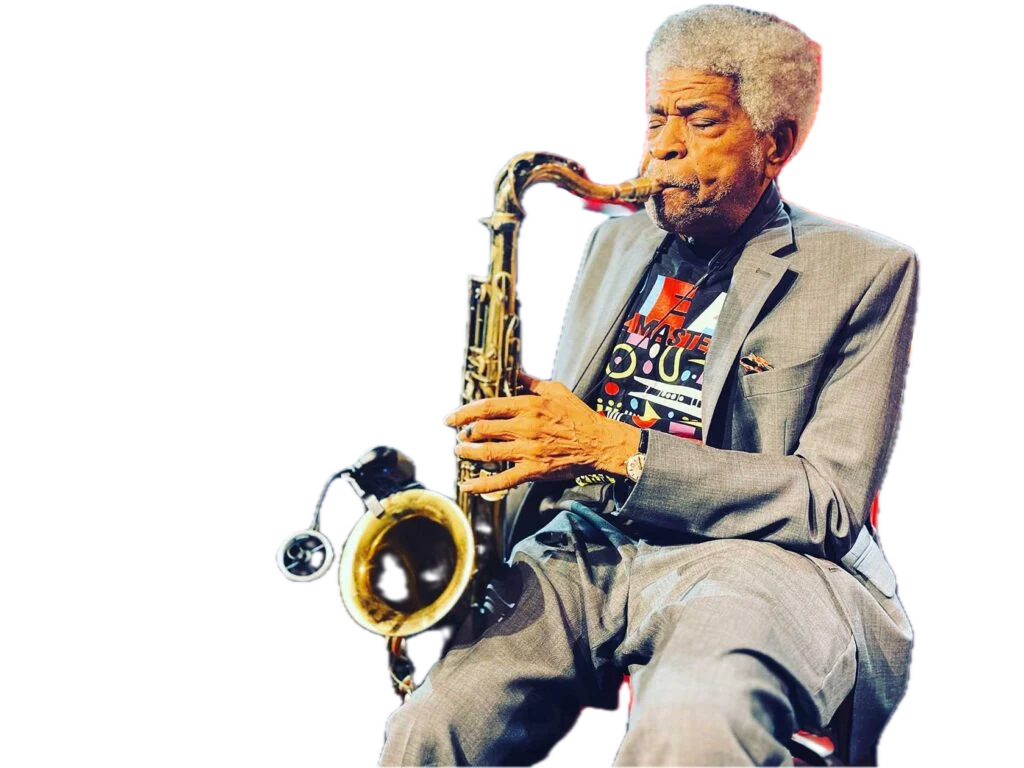
SV: A lot of students today learn on perfectly tuned digital pianos. Do you think that robs them of the ear training you received by having to compensate for out-of-tune instruments, which forced you to really hear rather than just finger the right notes?
GC: You know, I’ve had a piano in my home for over 30 years, and I teach on it all the time. When piano players come over to sit down at it, they tell me, “Man, this is a great instrument.” I never really thought about the pitch issues back in the day as a negative; in retrospect, it was a huge plus. If I hadn’t had to deal with those flat, out-of-tune pianos, I might never have learned to play in different tonalities.
It forced me to learn all 12 keys. People ask how I’m able to do that, and it’s just because I had to. If I know a tune in one key, I can play it in any key. It’s an accumulated art form. These days, if a singer wants to perform a song in a different key—say, moving from E-flat to E-natural—it’s no problem. It keeps you sharp technically and harmonically.
SV: A lot of musicians still fear keys like D-flat, even though those were staples for you. Is that a technical deficiency or a mental block?
GC: It’s a matter of wanting to do the work. I knew a guy who played everything in F-sharp—all the black keys on the piano. He’d play complex songs like “Body and Soul” or “Stella by Starlight” in F-sharp. It’s entirely possible if you commit to it. That’s why I don’t just show students one key. If we’re doing a tune in B-flat, I’ll say, “Okay, now let’s play it in C. Let’s play it in D-flat.”
SV: My 13-year-old son is in his school jazz band, and he’s actually learning to transpose songs right now for his auditions.
GC: That’s a good thing for him; it will help him immensely. But you know, it’s funny—I’ve had a couple of well-known piano players stay mad at me for years because I’d change the key on them during a set! I remember one well-known player was venting to someone on the phone about how I’d embarrassed him by shifting keys and throwing him off. His wife actually overheard him and told him, “Don’t you say a word against George Coleman! When you were having your troubles, he’s the one who looked out for you and brought you home.” After that, we were good friends. I’ve always tried to be there for the people I play with, even if I’m pushing them musically. It’s all part of the journey.
I had another incident at a club in Boston. I was playing “Surrey with the Fringe on Top,” and I started running the tune through all twelve keys. I watched the piano player just stop playing after the key of D; he didn’t want to try to follow me. He didn’t want to be embarrassed in front of the other notables in the room. They had the technique, but they didn’t have the stomach to risk looking bad.
SV: A lot of your improvised work has been transcribed—I’m actually thinking of that classic “Surrey with the Fringe on Top” solo that you played. When you see your work written down on paper, does it change the way you think about what you played?
GC: It’s amazing sometimes. A guy once brought me a transcription of that “Surrey” solo—it was about 20 choruses long. It was full of 16th notes, quintuplets—just incredibly dense. We put the record on, and the transcription was remarkably accurate. But when we got to the last chorus, the transcriber said, “Man, I got to the end and I just had to leave it blank. I couldn’t figure out what you were playing!” Even I don’t know what I played there, but it’s all documented now. You can find that performance from the Left Bank in Baltimore online.
I remember finishing a solo with a big band once, and all 17 musicians stood up and applauded. That kind of praise from the people who actually play the music is worth more than any review.
People ask why the media often overlooked me, but it never bothered me. I’ve always been blessed to have the respect of my peers. I’ve had the privilege of playing with the greatest drummers in the world—Max Roach, Elvin Jones, Jimmy Cobb—and I tell young players today: you might want to do your own thing, but you’ve got to entertain the audience. Whether you’re playing “out” or traditional changes, you have to be able to swing. If the people can’t tap their feet, you aren’t doing the job. You have to feel good about playing it, and they have to feel good about listening to it.
SV: Another one of your most legendary solos is “My Funny Valentine.” What do you remember about that date with Miles?
GC: A lot of those things, like “Valentine” or “Stella by Starlight,” weren’t planned out. People always ask, “Did you give him the changes?” and I’d say, “No, I just started playing, and he listened and followed right along.” That’s how it was with Miles. He was always listening to exactly what I was doing, ready to mirror or support whatever harmonic variations I introduced. We were always in sync because he was truly listening. Miles never really played those “little things” I would play; he played his own style, which was great.
I’m glad I’m giving this to you so you can lay it out and let the people know what’s going on, because a lot of them will never know. Some of them probably don’t even know who or what I am, or how I am, but a lot of them do. They know the records I’ve done, the ones I played with Herbie Hancock and Mal Waldron. Of course, I started with Max Roach. People talk about the fast tempos—I was doing that when I was just starting to play. In Memphis, we used to do that. I knew the technicality of all the harmony and the stuff they learn at Berklee and the University of Miami. I knew this stuff when I was a kid. I’m not bragging about it; it’s just an absolute fact.
SV: One of the things I love about your playing is that you build ideas rather than just displaying them—you favor melodic development over virtuosic spectacle. Was that a conscious philosophy from the beginning?
GC: I absorbed a lot of stuff at a young age. I was motivated by the constituents that surrounded me—Charlie Parker, Sonny Stitt, Gene Ammons. All those players were part of my heritage. I got something from everybody. When people ask me how I learned to play, I say, “I listened to all these people.” My creativity is surrounded by my constituents, past and present.
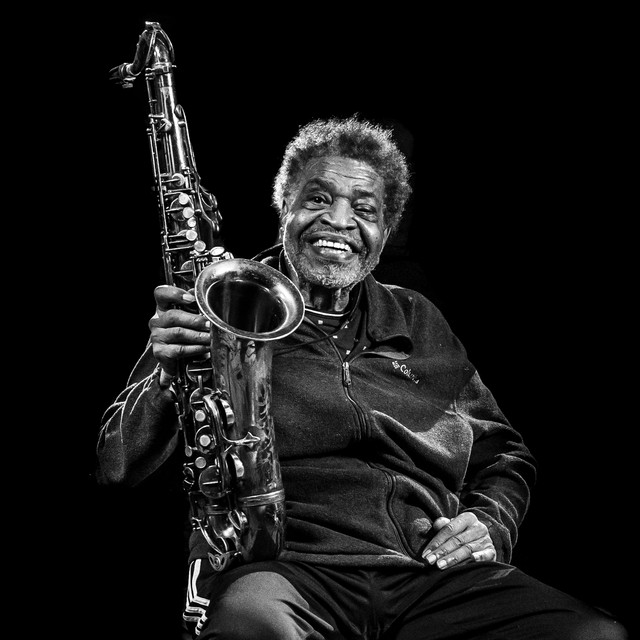
SV: Your sound has been described as smoky and luxurious on ballads, brawny and warm on harder-driving material. Which comes first — does the tone shape the feeling, or does the feeling produce the tone?
GC: There are mechanical elements—mouthpieces, reeds—but I always thought about having a good sound and the right pitch. I never wanted to play out of tune. First of all, it had to sound good to my own ear. If it sounded good to me, then I thought it might be acceptable for my audience. I was my greatest critic, which I still am. I’ll hear something I did, and I’ll be like, “Oh damn, I played that pretty damn good.”
Now, I’m a little freer and more adventurous than I used to be. Back in the day, I always wanted to play the perfect stuff. Now, I’m slightly reckless. I’m still on the money, but I can venture outside the changes. I have earned that freedom to go outside, but I always know how to come back. I’ve learned this through the years, and now I’m expanding on different devices. I’m doing double-time, all the stuff the other players do.
SV: You’ve compared music to cooking — that true creativity is in how you prepare the dish, not just the ingredients. When I spoke with Dizzy Reece, we also had a similar conversation. What is the secret ingredient that takes a performance from good to genuinely unforgettable?
GC: There are so many—it’s not just one thing. True creativity is how you prepare the dish, not just the ingredients. I’ve had some great players. Frank Strozier and I were like two peas in a pod—I’d play a figure, and he’d play the harmony right along with me. That’s the communication you strive for. People thought I wrote out parts for the band, but I never played on the bandstand with charts; I just played in the studio.
SV: George, your solos are often veer from loping to erupting. Is that surge a release of tension you’ve been deliberately building, or an instinctive reactive pulse to what the drummer gives you?
GC: That’s just the bandstand. It’s an important element. I always tell saxophone players, you’ve got to have a good, swinging beat. The drums aren’t just “boom-boom-boom”—it’s music. You’ve got to know the dynamics. My son is doing quite well with that. He’s got a lot of broken rhythms—he sounds a little bit like Roy Haynes.
But you have to entertain your audience. You might want to do your own thing, but you’ve got to play music that is appealing to the jazz audience. You’ve got to let the people enjoy what you’re doing. You have to feel good about playing it, and they have to feel good about listening to it. I’ve always been there trying to fit into whatever groove we were playing.
SV: George, I know we’ve been talking for a while, and I don’t want to keep you any longer–thank you so much for your time.
GC: Thank you. I’ve been so blessed to be on this planet for 91 years. I’m not looking for a job; I’ve lived a wonderful life. I recently did a concert where I had 20 musicians on the bandstand—guitar players, keyboardists, bass players, drummers. We were playing in 7/4 time—that’s a weird time element. You’ve got to put five and two together to get back to the top of the bar [laughs].
It’s been a pleasure talking to you. When you write this, talk about the things we’ve discussed so people will know where I’ve been and what I’ve achieved. I’ve always been there, and God has been good.
___
Further listening:
Miles Davis: Seven Steps to Heaven (1963), Four & More (1964), and My Funny Valentine (1964).
Chet Baker: The 1965 Prestige Quintet series, including Smokin’, Groovin’, and Comin’ On.
Max Roach: Deeds, Not Words (1958) and The Max Roach 4 Plays Charlie Parker (1958).
Elvin Jones: Live at the Village Vanguard (1968) and Poly-Currents (1969).
Jimmy Smith: The Sermon! (1958) and House Party (1958).
Booker Little: Booker Little 4 and Max Roach (1958) and Booker Little and Friend (1961).
Ahmad Jamal: The Essence Part One (1995) and Ahmad Jamal à l’Olympia (2000).
Slide Hampton: Sister Salvation (1960) and Somethin’ Sanctified (1961).
Charles Earland: Soul Crib (1969) and Mama Roots (1969).
Harold Mabern: Rakin’ and Scrapin’ (1968) and Workin’ & Wailin’ (1969).
Cedar Walton: Eastern Rebellion (1975).
Notable Single Sessions: Herbie Hancock’s Maiden Voyage (1965), Lee Morgan’s City Lights (1957), and Charles Mingus’ Three or Four Shades of Blues (1977).
As bandleader:
1971 (rel. 2020): The George Coleman Quintet in Baltimore
1974 (rel. 2020): On Green Dolphin Street
1977: Meditation
1977: Revival
1978: Amsterdam After Dark
1979: Playing Changes
1985: Manhattan Panorama
1989: At Yoshi’s
1990: Convergence
1995: Blues Inside Out
1998: I Could Write a Book
2002: Four Generations of Miles
2016: A Master Speaks
2018: Groovin’ With Big G
2023: Live at Smalls Jazz Club
Leave a Reply
You must be logged in to post a comment.