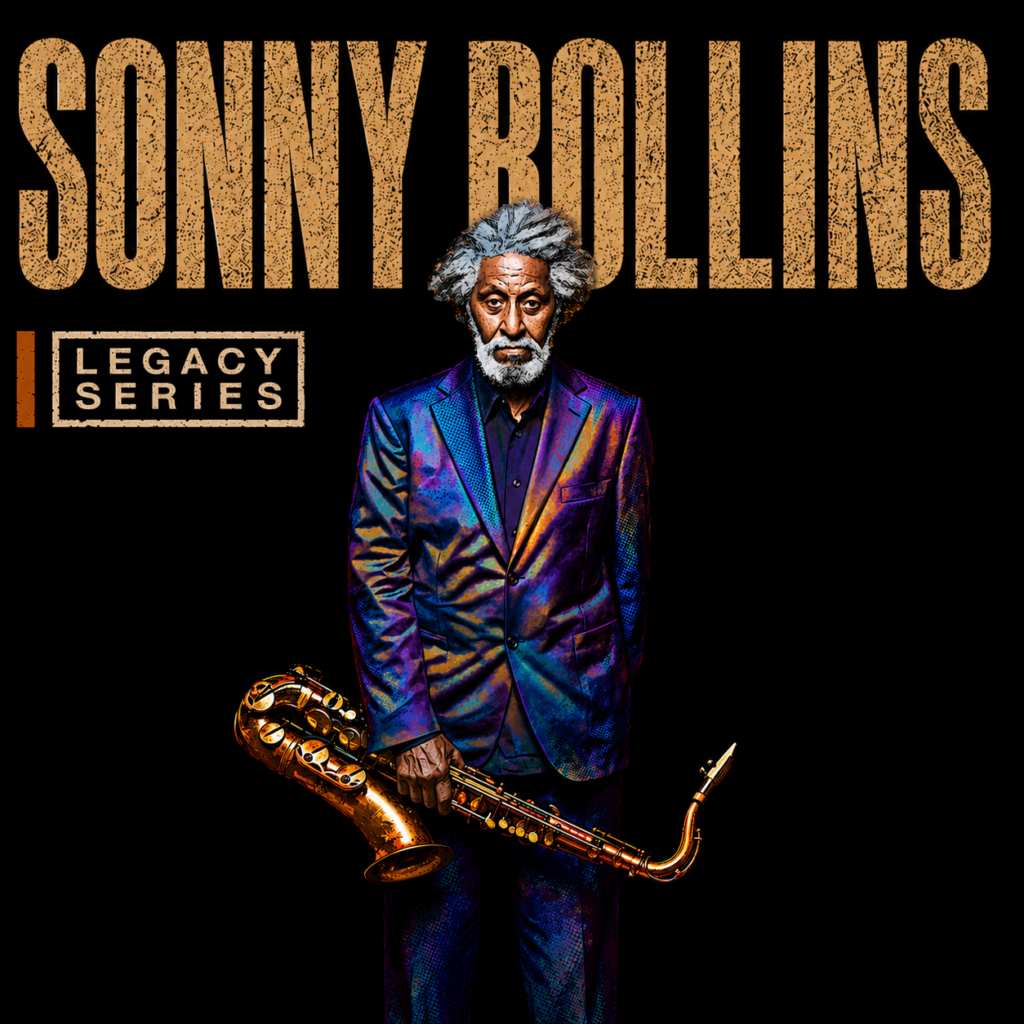
The Legacy Series cuts through the static to pay dues to the departed masters. Surveying a career of monumental influence, Sonny Rollins reveals an unyielding hunger for evolution, anchored by the serene realization that his search for perfection is a path without a finish line.
___
Sounds Visual: I’d like to start off by talking about this new initiative called the Freedom Suite Foundation. Can you tell us about what that is?
Sonny Rollins: Well, basically, Justin, the Freedom Suite Foundation aims to combine music with the study and practice of music, alongside the golden rule of ethics in human life. In other words, these two things are interconnected. Music is something monumental, and living an ethical life is also monumental. They enhance each other.
If you recognize this connection and integrate ethical living—living by the golden rule, for example—into your music studies, you will achieve a certain level of progress. How else can I put it? Perhaps a level of greatness, if I can go that far. But certainly, it will be a benefit to both you and society. It will be a win-win situation: you become a better person, improving your relationships with others, and your musical endeavors will be significantly enhanced. Music is something extraordinary, though we can’t quite fully describe what it is. It’s a wonderful way to express ourselves and connect with others. When you combine this with being a good human being, the two should go hand in hand. That’s basically what I’m trying to accomplish here.
SV: It’s a truly noble pursuit, Sonny. I love that your focus goes beyond just academic learning to include the growth of the soul and spirit as well.
SR: Yes, exactly. We need to focus on the spirit. Otherwise, we’re just getting less, which is fine, but I think we need more, especially in today’s world. You and I can agree on that. What’s happening in the world right now shows that we don’t need less; we need more. We need to aim higher. This is something universal, something that can be applied everywhere. The planet needs this. If it catches on, and people begin to understand it, that’s what I’m hoping for.
Right now, I’m struggling with how to make people realize this. Can I actually change the way people think and help them become more ethical? That’s my goal, but it’s not easy. I’m trying to figure out how to make it work. It’s about encouraging people to be better—thinking about what’s good for others, how it’s better to give than to receive. In giving, you also receive. These are spiritual principles, biblical even, but they’re universal.
I’m working on how to present this in a way that resonates without coming across as preachy. I don’t want to be like Billy Graham or some religious figure. But when this idea comes to fruition, it will accomplish the same thing that religion aims to do: helping people become better individuals. You’ll feel better as a better person. Everyone wants to improve themselves, and I believe there are enough people out there who want to be better for this to work. It’s just about getting it right and finding the right way to put it all together.
SV: Sonny, how do you navigate the balance between spontaneity and structure in your playing, and do you think this approach to improvisation has evolved over time?
SR: A lot of what I do is very moment-to-moment. See, I’m a great improviser, and things come to me in the moment. It’s hard for me to look back and say, “I did this for this reason” or “I did that.” I don’t know why I do things when I play; it just comes to me.
When I think back, I know there have been performances where I went home happy after playing. I was happy for a while, but then I realized I had to do it again, and that’s when I understood the struggle goes on. But yes, I’ve had moments where I felt I achieved something in my playing. I’m not one to brag, but I can say that because I couldn’t do it all the time. My goal was to reach a point where I realized I couldn’t do it all the time, and I found that out. But I’d get close enough to where it was satisfying for me.
SV: How has your exploration of spirituality and practices like yoga and Buddhism influenced a sense of mystery and the unknown in your music?
SR: My type of music, as you know, is an adventure in each selection. Every piece is its own journey, within the context of the composition. I can look back on my playing and say that, for each section of something—whether it’s a song or an arrangement—sometimes I succeeded, and sometimes I didn’t. I’m trying to get to a place that’s indescribable.
Some of the things I’ve done–I don’t listen to my music, but when I read about it or hear about the records I made with other people, like some of the early records I made with Miles Davis–I realize a lot of that stuff was just the unknown coming through. That’s why music is so powerful—it’s the unknown. That’s why music is such a spiritual thing.
There’s a very strong spiritual element in the production of music and what it is. It’s a mystery to me as well. Over the years, I embraced and practiced yoga, Buddhism, ancient Egyptian magic, and other mystical religions and practices. These helped me quit a serious drug habit. I’ve been clean for more than six decades.
SV: Let’s stick with spirituality for a minute–specifically in terms of Egyptology, which I’ve always been fascinated by as well. You’ve once said that the pharaoh named Akhenaten was a guy that influenced you to be serious. Can you elaborate on that a little bit?
SR: I was very much interested, as you were, and I think a lot of people are, in looking back at that civilization and what they did. I studied it for a while, not formally, but through reading and gathering books.
But I realized that when I was learning about history, I learned a lot about Greece. We’re all sort of taught about Greece, but what about Egypt? Greece got many of its ideas from Egyptian culture. At first, I thought, “Well, that’s just ignorant people trying to build themselves up.” But I began to realize there was something in Egyptology.
And of course, there’s the artistry, the pyramids — how can we not be fascinated by that? But the point is, I started to think, Egypt is great, but what about what came before that?
That’s what I began to focus on. What existed before Egypt? What did all these civilizations contribute? Eventually, I came to the realization that all humans are seeking the same spiritual understanding, no matter where they’re from — Egyptians, Romans, Americans, or people from other cultures. We’re all trying to figure out the same thing.
I also believe in reincarnation. I don’t believe that we live, die, and that’s the end. We don’t just live one life. We pass through different lives, through different civilizations, and the goal is to reach spiritual enlightenment.
That’s what it’s all about. We’re not just defined by one culture or civilization. We’re all human beings, or “humanoids,” going through different lives, all heading toward the same goal.
I don’t identify as just an Egyptian or a Roman. We’re just people, trying to reach that spiritual ideal, whatever that may be. For me, it’s not something we can name, because what’s the use? Some people call it God, others call it Jehovah, Allah, or different names. The truth is, we don’t know what it is, so I refer to it simply as “it.”
Ultimately, it’s about reaching “it.” That ‘it’ is complete knowledge, understanding of the whole picture of what we’re going through in life. Without that, nothing really makes sense. Otherwise, we’re just focused on our individual, localized identities — “I lived in Paris, I’m a Parisian, I’m from this culture.” But that’s not enough. It’s about having a broader understanding of what this whole journey is.
SV: Right. We’re spiritual beings living in a human world, not the other way around.
SR: Amen. Amen. You know what I’m talking about. So that’s where it’s at. It’s not just about living here, you know? “I’m a musician. I’m a doctor. I’m a scientist.” These are just small aspects of our development as humanoids. They don’t mean everything.
The good part is that if we don’t get this life right, there will be another one. There’s always another life. This is just one part of the journey we go through as we learn the real essence of life.
This technology, all of that—it’s just the world we’re in now. But what about all the other worlds we’ve talked about, like those in Egypt, or other ancient civilizations? We can look back and see how they were all still learning. There are other worlds we don’t yet understand. We know they exist, we can see traces of them in history. And of course, it’s all leading to the wonderful things to come. That’s a comforting thought, especially in today’s world, where everything seems uncertain. But that’s why there’s no such thing as a perfect civilization—there’s always something more to learn.
SV: Developing a high level of technical facility—mastering rudiments, scales, and the complex language of music—is only one half of a musician’s journey. The other involves learning how to translate the subtle nuances of the human experience into sound. Sonny, during those early years when you were practicing up to fifteen hours a day, did you find that your technical command grew in tandem with your emotional voice, or did one have to wait for the other to catch up?
SR: It was both in tandem because when I practice, I follow one rule I discovered. I start by practicing my rudiments. There are always rudiments to work on—long tones, exercises, and things like that. I include all of that in my practice.
But then I also just play, and I try to incorporate the rudiments into my playing. Sometimes, I begin with my rudiments, and I think that’s mostly what I do unless I feel inspired and just start playing freely, improvising without thinking about anything. But usually, during my practice sessions, whether I’m on the bridge or anywhere else, I do a certain amount of rudimentary work, which is necessary to gain control of the instrument.
And then I do other things. I don’t stop and think, “Okay, I’ve practiced for today.” No, that’s just one part of the process. Those rudiments become part of a solo. A lot of what I do comes from things that grew organically over time. I learned this, then that came out of it, and I didn’t really focus on what got me there. I just took it in, and whatever else enlightened me in the moment, I moved on to.
SV: Sonny, we’ve talked a lot today about your evolution as both an artist and a person. While the internet connects musicians like never before, it also fosters a culture of instant gratification and constant distraction. Most concerningly, this digital landscape often discourages people from leaving their comfort zones—yet real growth happens in the analog world, not behind a screen…
SR: Yes, well said. I just dislike technology because, like you said, it can put you in a place where you think, “I’ve got it made.” You can sit back, watch TV, and the world just passes by on TV. It’s true, but that’s just the world we’re living in right now.
At this point, we are what we’ve learned. We’re growing, and each person is at their own level of understanding and achievement. I might meet someone who’s learned things that I haven’t, and vice versa. But I’ve never changed that much. I’ve learned more, but the essence of who I am has always been the same. Who I was then is who I am now. You can’t really change that much from who you were born as.
The tree is the tree—you can’t stray far from it. Justin, that’s your tree. Sonny, that’s mine. You can enhance and learn, but at the end of the day, I am who I am. That’s like what Popeye the Sailor used to say: “I am what I am.”
But I’m not satisfied. As I go through life, I want to get better. Still, I guess you’re always who you were born as. It’s a bit discouraging to think about, but that’s just how it is. I want to be something different, but you can’t deviate that much from who you came into the world as. We’re all coming into this world from a past incarnation. So, you can’t be someone new.
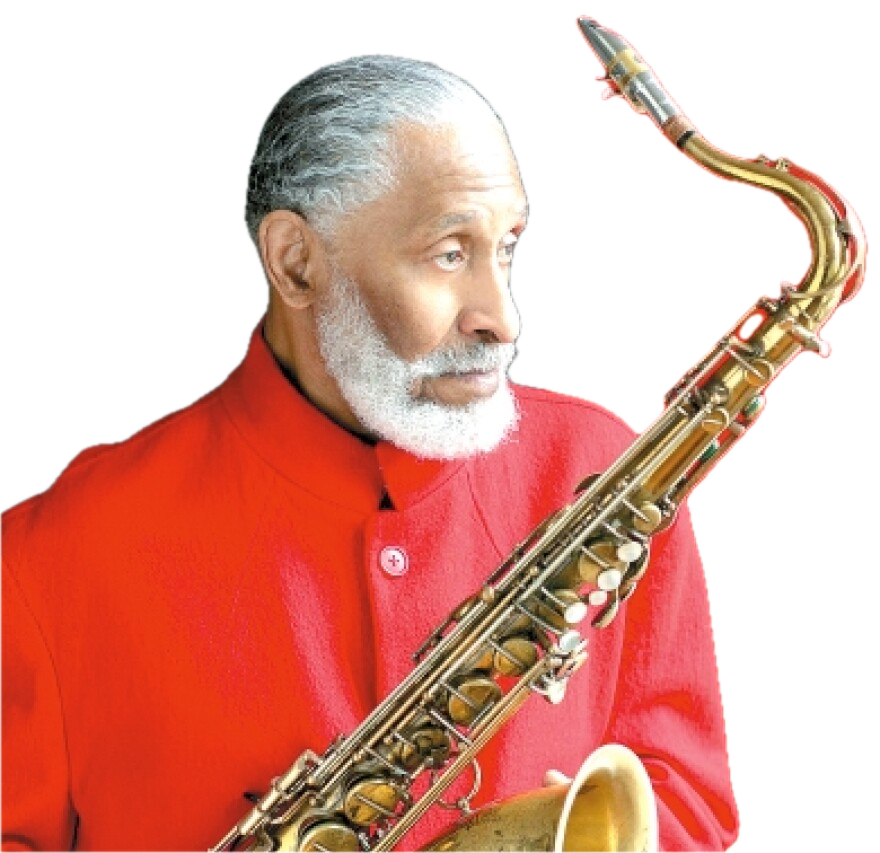
SV: So then how do you personally navigate this journey, and how do you stay focused on learning and growing, especially in a world that often feels distracted by technology and superficial concerns?
SR: Everyone is at a different level of understanding, and we’re all learning. Some people are further along than others. There are people who are further along than me, too. We’re all on this journey, moving toward that thing I call “it.” We’re all getting there, but not in this lifetime—not as “John Jones,” for example. We’ll get there, but not as the person we think we are. You may get there as someone else. You’re not going to be “you” because this is all part of learning.
I’m happy because I don’t think I’m supposed to be God. I don’t want to skip through life without learning. I’m supposed to learn. If I don’t learn everything in this life, I’ll learn it in the next one. I believe that God, or ‘it’—whatever you want to call it—is good. The whole thing is good. It’s all here for us to learn and become more enlightened until we reach whatever that place is. It’s all good. God is good. You framed it so well. You were right—there are things here, like technology, that can set us back. I really dislike technology, but the way you put it was perfect. You described it so accurately.
SV: Sonny, looking back at the years we spent under the shadow of COVID, we all had to retreat into our own cocoons for a while. Now that we’re on the other side of it, I’m curious how that period of quarantine and isolation shaped you, if it did at all.
SR: In my case, I was somewhat physically unable to get around as I used to, so I spent a lot of time away from the hustle and bustle. When the pandemic hit and people were saying, “Oh, we can’t go out, we can’t see what’s happening, we can’t go to a new play, we can’t have dinner with our friends,” that never affected me. I was already in my own cocoon, so to speak.
Thanks for that word, by the way. I hadn’t used it in conversation until today. Whatever the pandemic did to other people’s lives, it didn’t really affect mine. Not that I think I’ve learned everything, of course, but I don’t really need to go out that much. I have a radio here, and I listen to it when I want to. I don’t listen to music as much as I used to, but I feel like I’m in my own cocoon, and the pandemic didn’t change that for me.
SV: When we first spoke over the phone, we spoke about how a lot of your peers and contemporaries have passed away. And while many people tend to avoid any conversation about their own mortality, you once shrugged it off with a great quote, which was, “Death ain’t what it used to be.” I’m assuming that given your spiritual nature, you probably see death as just another part of the journey.
SR: Yes, exactly. I would agree with that 1000%. I think it’s all part of the journey. If you look at my life experiences, each week feels like a different journey, but the pandemic didn’t change that. Also, I don’t believe in death the way most people do. We call it “death” because we think the body is dead in the funeral parlor or something, but I don’t accept that. People who think like I do, we see death as not really a reality. We don’t die; we go someplace else.
People are afraid of death because it’s the unknown, but it’s not as vital a factor as we make it out to be. Many people say, “Oh, I’m ready to die,” but when the time comes, they call out for help. I understand that. I’m not saying I know everything about it, but I accept reincarnation, and that makes a lot of sense to me. So thinking about death isn’t a big factor for me.
As humans, of course, we feel it. We get anxious about dying because we’ve never died before, and I would call that ignorance. We’re all human, so we sometimes get trapped in those kinds of ignorant feelings. But in general, no, I’m beyond that. I like to read people who inspire me—figures like Confucius, Buddha, and other enlightened individuals who can show you a deeper way of thinking.
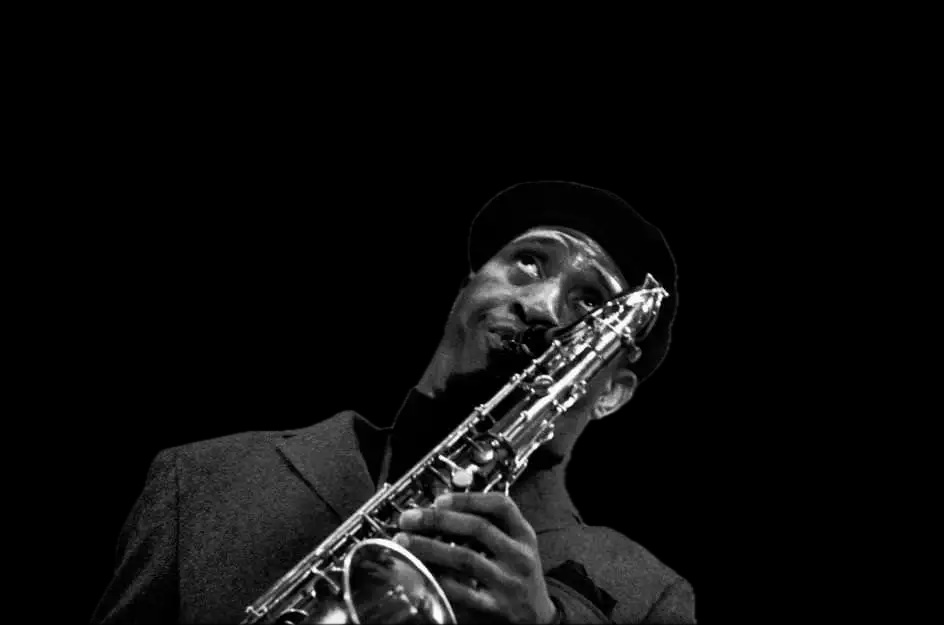
SV: Sonny, just one last question. As you look back at your life and career, do you feel that you achieved what you set out to? In other words, what does success mean to Sonny Rollins?
SR: I’m still searching for that. I don’t know exactly what it is, but when I find it, I’ll know. Fame and money, I’ve had a little bit of that in my life, and I realized that’s not success. Success? I’m not sure I’ve reached it yet. I can feel that I haven’t grasped it. Someone else might say, “Oh man, I’m successful,” but for me and my journey, I haven’t achieved that yet. I’ve always felt like there’s more for me to do.
It started early in my life. My older brother, who was five years older than me, wanted to be a classical violinist. He went to Music and Art in New York and even had the opportunity to join the Pittsburgh Symphony at one point. He was really good, studying from an early age. I had an older sister who also played piano in church, but for me, music didn’t come as naturally. I loved it, but I was too busy playing spitball on the streets of New York. I didn’t get serious about it until later when I heard certain musicians, and something clicked. I realized that music was what I should be doing.
But I always felt like I missed out on the earlier training I could have had. That’s why I practiced so much—why I spent hours on the bridge, or in the park, with my horn, always trying to practice. I was always looking for a place to play. In New York, with neighbors everywhere, it wasn’t always easy to find somewhere to practice. I felt like I never had a proper musical foundation, and I was trying to make up for that.
I love practicing, even though I can’t do it exclusively. I enjoy it as much as I enjoy performing. Just playing, being out in the open, looking up at the sky—that’s what excites me. I used to do concerts in the afternoon in various places, and that’s when it first hit me. I’d look up at the sky and think, “Wow, I’ve got another helper.” My environment was helping me, guiding me. And so, in a way, I always feel like I need to do more. I know I need to do more, and I’m okay with that. I’ll keep going through that until the end of time because I’m sure, in retrospect, I’ll see that I’ve been progressing.
SV: Sonny, It was an immense joy and honor to get to have this conversation with you. I wish you the best of luck with the Freedom Suite Foundation. And on behalf of everyone reading, I’d like to express gratitude for the incalculably large impact you’ve made on the world of music.
SR: Well, thank you. I enjoyed the conversation, and God bless you. And thank you for the conversation and the words and everything. I thank you.
Sonny Rollins passed away on May 25, 2026.

Leave a Reply
You must be logged in to post a comment.