
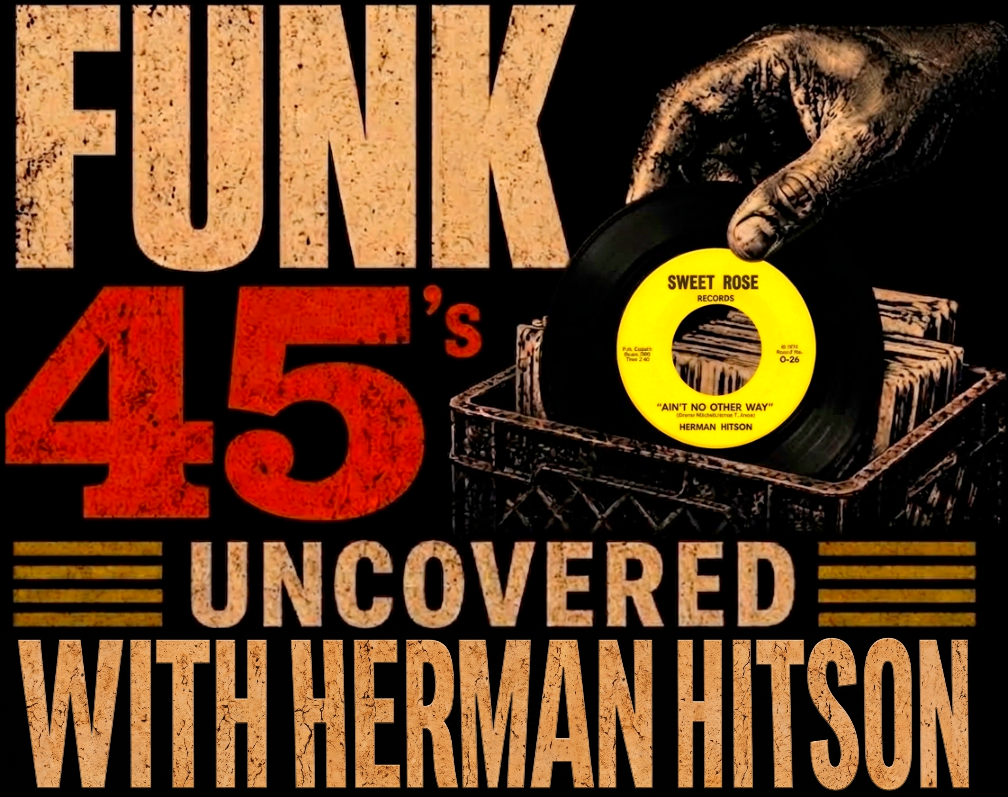
“Let the people know I’m still here.” Soul survivor Herman Hitson opens up about his journey from country-soaked Georgia to the Atlanta R&B scene, sharing the wild stories behind his rarest 45s, high-stakes tours, and decades on the road.
___
Sounds Visual: Herman, you’re from Georgia, originally?
Herman Hitson: I didn’t only grow up in Georgia — I spent time in Philadelphia too. My mother brought me from Philadelphia to Old Sylvania, Georgia, where her parents — my grandmother and grandfather — and their brothers and sisters actually lived. I was about ten years old at the time.
Then my mother took me to Jacksonville, Florida. I was there until I was about eighteen. Before I got a band together and got on the road, a friend of mine — who’d been part of my band — came back into town. He had a tour coming up and asked if I wanted to go on the road with him. I told him, of course, yeah.
He said we’d go first to the place where his people were. We didn’t have any money, so we stayed there for about two months, playing around town. Then, on my last gig there, I got word — a letter — and that’s really where it started. It started in Jacksonville, Florida.
The country music part, though, was back in Ocilla, Georgia. There was no Black radio there, and I never heard Black blues or anything like that — just country and western. And I loved it. I still love it today.
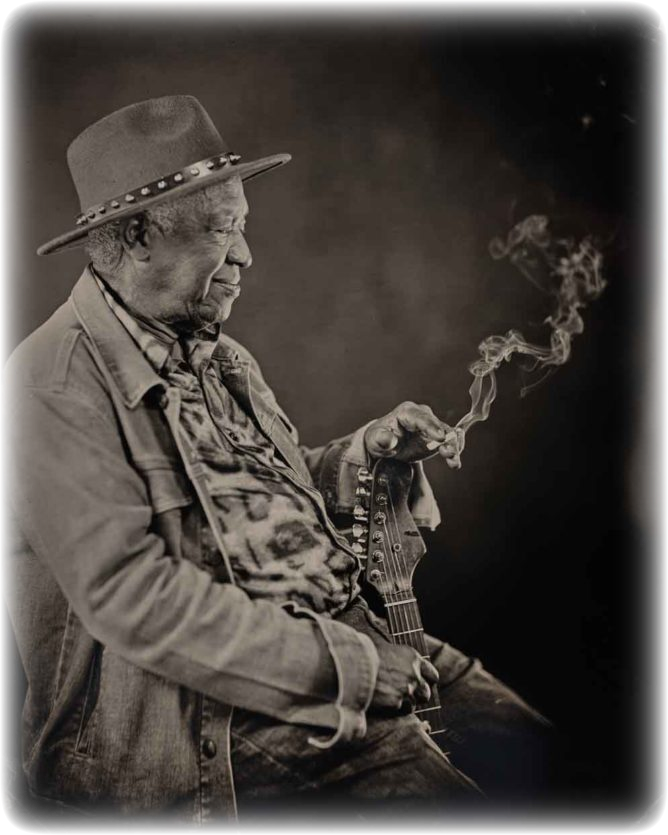
When I got to Jacksonville, that’s when it happened — I saw all these guitar players, these blues players, walking up and down the street with guitars strapped on and harmonicas in their mouths, playing the blues. That’s when I began to hear Black radio, and I loved it.
Back in Ocilla it was mostly gospel and country music — that “glory gospel” sound. My stepdad actually wanted to put together a gospel group, a spiritual group.
Then, when I got to Atlanta — man, I couldn’t believe it. I thought, this is a Black town. Black people living everywhere, working everywhere — places I’d never seen. I got to play behind acts like Jackie Wilson, Major Lance, Wilson Pickett, and Gladys Knight and the Pips — I worked with all of them.
There was a guy everybody called Gorgeous George. He was the real deal — the emcee, the cleanest-dressed man you ever saw. If there was a show, he’d change outfits multiple times. He was one of the guys who really helped me get my start, because the tours would go out with all the big-name artists, and George would tell people I was his cousin to help me get on.
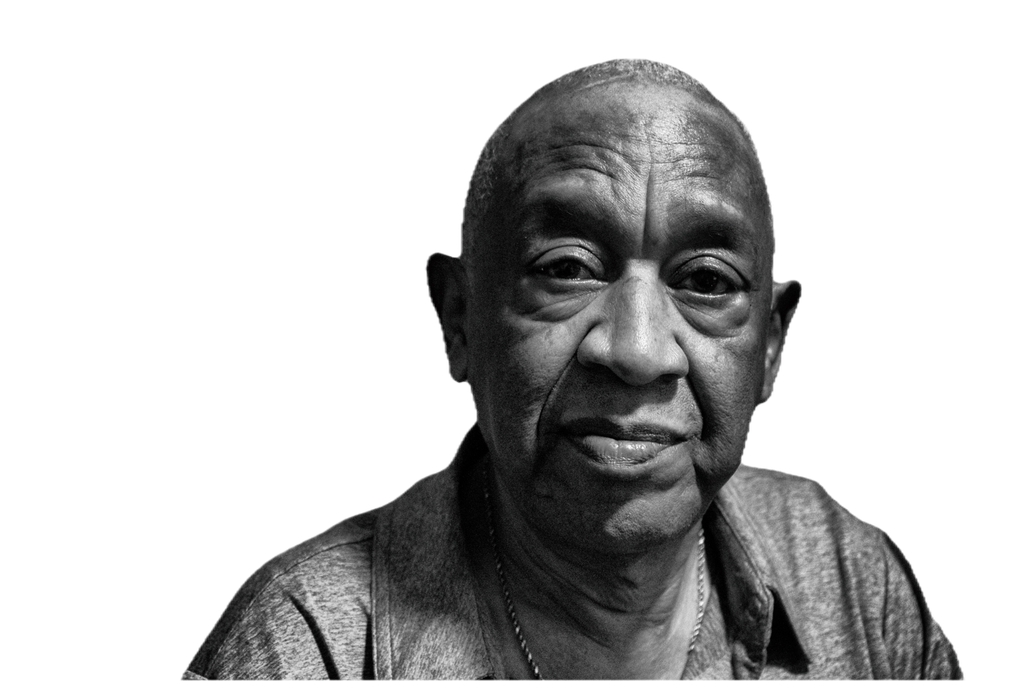
That’s how I started playing behind all these artists. We’d play a show, then he’d book us on the road, we’d come back, and go play some more — Hamilton Bluitt, and guys like that. That’s where I got my first record deal, out of Georgia, in 1964.
I owe a lot to Sam Cooke, in a way — though the way my contract actually came about was through a manager who approached me at a club called Mike’s Lounge, the first place we played when we got to Atlanta. I didn’t know Sam Cooke well, but I saw him around a lot; we crossed paths often.
This manager came up to me at the club and asked if I’d like to record. I’d never recorded before, and I said yeah. He asked if I had any songs. I didn’t, really, but I told him of course I did. So I came up with a couple — one I’d written for my wife called “Been So Long,” and another one, more of a “Shout” tune, that people actually thought was a James Brown song.
James Brown himself called me about it — he never called me by my first name, always “Mr. Hitson.” People thought that record was him. We became friends after that.
At first nobody knew who I was as a recording artist, but then I started getting calls — bookings coming in from California and other places. I had a gig at a club, and while I was traveling I heard my own record playing on the radio and thought I was dreaming. When I got to Augusta, people were dancing in the streets and calling my name. That really excited me — I thought, I’m on my way now.
Above: Hitson’s “Love Slipped Through My Fingers,” a popular Northern Soul track.
I ended up going to record in New York with a man named John Brantley, who sat in with me in the studio. Once that record came out, I had my first real hit — it came out in the 1960s and started to take off.
Then I got into some trouble. There was an incident — I didn’t mean for anyone to get hurt, but it made the news, even the New York Times. People were saying all kinds of things.
What happened was: I was doing a show, and on a break I was going to walk a young woman home who’d come by with her camera for my birthday. I had a friend take her home and bring me back instead. When we got to her door, three men I didn’t know approached us. One of them said something threatening. We ended up near some stairs with a low railing — if they’d pushed me over, I probably wouldn’t have survived.
Despite being innocent, Hitson was initially arrested after witnessing his girlfriend’s murder, leading ATCO to drop him from the record label.
In the end, I was found not guilty — I hadn’t had a weapon and hadn’t started anything.
During the trial, there was a man who showed up in the courtroom every day. When it seemed like things might not go my way, he — I believe he was there because he wanted to release some of my material — spoke up for me. It was a strange, tense time, but that’s part of my story.
After my deal with the earlier label ended, I started my own label in 1970. I recorded “Ain’t No Other Way” and “You Can’t Keep a Good Man Down” and put them out on my own label — [the label was] called Sweet Gold. I even named my guitar Sweet Rose. That was a real break for me.
Above: Hitson’s classic 1972 funk 45.
I recorded that song here in [Georgia], at a studio called Sound Pit, with a guy whose real name was James — but he went by the Mighty Hannibal, or King Hannibal. We recorded it together. I also wrote “You Can’t Keep a Good Man Down” around the same time.
We went up to Nashville to handle the pressing and the labels — that’s where you had to go to get all that done. I put it out on my own label, Sweet Gold — yellow label. That song did pretty well; people really liked it.
That’s the life you live on the road — overseas flights, one-nighters, being away from your house for long stretches. You end up missing your family. Honestly, that’s part of what strained things with my wife — being gone so long. You’d go from New York to Amsterdam to Germany, playing different countries almost every day — three countries in a day sometimes. Over here we’d say “Alabama’s basically its own country,” but overseas, that’s literally true — you’re crossing borders constantly.
And after all that, you come home and the money’s not always right. You’ve been gone that long, and you still come back without what you need. That’s just how it was.
Me and Joe Tex used to tour together, and he and James Brown had this little rivalry — good friends, but always ribbing each other. One night James told me to have my wife stop looking at him a certain way — that was just how those two joked around.
Another night, someone got me up on stage to sing when I wasn’t planning on it. I did a song the band could play along to on the spot — a blues number — and it worked out fine.
I was there when James Brown passed and his body lay in state at the Apollo Theater. Security had the street blocked off; we went in through the back alongside people like Michael Jackson and Jesse Jackson.
Early in 1966, Hermon began working on his own psychedelic rock album, Free Spirit. He took on lead vocals and guitar, while Jimi Hendrix contributed bass tracks to several songs, though ATCO ultimately left the recordings unreleased at the time.
These lost tracks resurfaced in the 1980s, triggering a controversy that thrust Hermon back into the spotlight under very different circumstances. The issue centered on the album’s title track, “Free Spirit,” which was leaked and packaged on two separate compilation albums as “lost” Hendrix recordings.
There was a mix-up on one of my albums — the label put two other guys’ pictures on the front instead of mine. People assumed I did that on purpose for some reason, but I didn’t even know about it until later; I’d honestly forgotten I’d recorded some of that material. I worked with Lee Moses on some of it — he was a fine artist in his own right.
The last time I talked to [Hendrix], he said he was heading back to England and that he’d see me when he got back. Then I got a call saying he’d passed away. I couldn’t believe it — they said it was related to drinking, but that didn’t match the man I knew. He wasn’t someone who drank like that, as far as I ever saw.
There was a song called “Let the Gods Sing” — that was on my last album, one of the tracks that ended up on the record where they put the wrong photos on the cover. I recorded it in Memphis, Tennessee, with Bruce Watson and a group of musicians. They were great — all white guys. I’d never recorded a whole session with an all-white band before, though I’d always played with plenty of white musicians along the way. It turned out to be a really nice record.
Sounds Visual: Thanks for sharing your memories with me, Herman!
HH: Thanks for the chat, man — I appreciate you. Let the people know I’m still here.
Leave a Reply
You must be logged in to post a comment.