
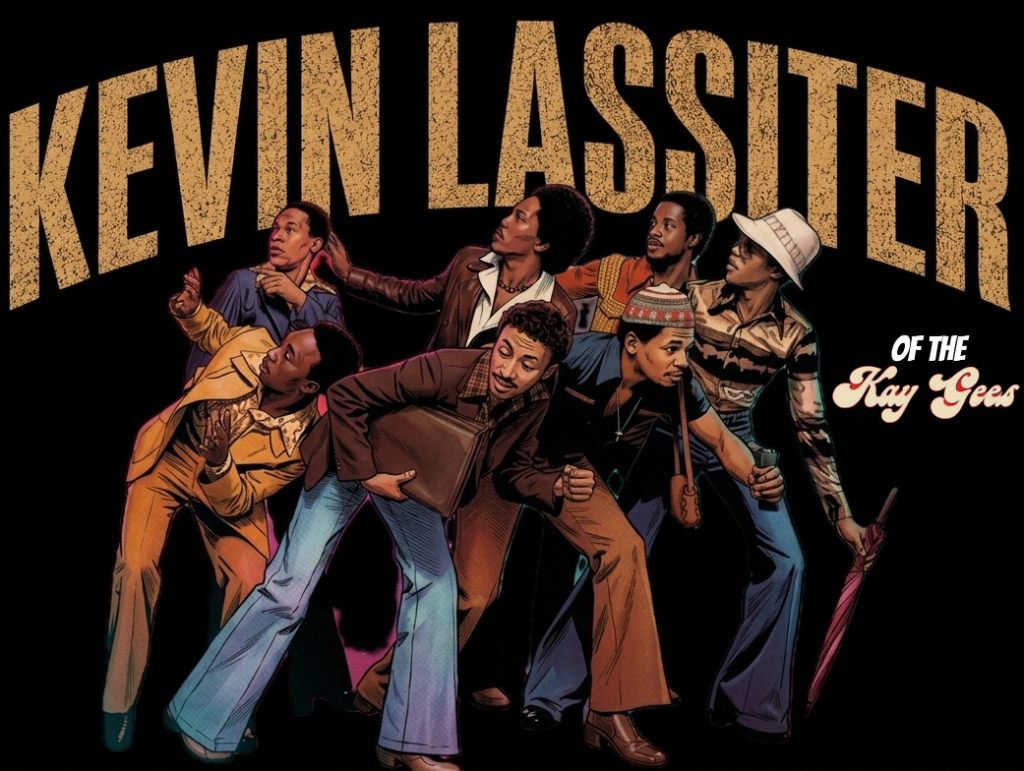
Keyboardist Kevin Lassiter’s musical journey, fueled by the rich sonic landscape of his Jersey City upbringing, saw him evolve from a young drummer tapping on the dinner table to a pivotal keyboardist for funk legends The Kay-Gees and Kool & The Gang.
Kevin Lassiter: I grew up in Jersey City, New Jersey, and my musical journey truly began at our family home on Astor Place. My father first noticed my interest while we were sitting around the dinner table; I’d be tapping out rhythms with my fingers, trying to kick off a beat. That Christmas, he bought me a small drum kit, and that was the spark.
Music was everywhere in that house. We had a piano in the upstairs living room where my mother played classical music. I was fascinated watching her read the scores, and I’d often find myself messing around on the keys after my drum practice. Meanwhile, my older sister was constantly spinning records—artists like The Caravans or The Five Blind Boys of Alabama—and my brother would host parties downstairs. He was always playing whatever was current: heavy rotations of Motown and James Brown. I’d hear those grooves and pick up on them instantly.
The neighborhood was just as musical. A guy from the other end of the block, Frankie Mayo, used to bring his drum set down to our place. We’d all rotate between houses to hear what everyone was listening to. While some of us were into the Motown sound, other guys were listening to Jimi Hendrix, Sly & The Family Stone, and the “British Invasion” groups like The Zombies, The Turtles, and everything in between.
The neighborhood alone provided a wide spectrum of music; we could go from house to house and hear everyone’s different favorites. But mostly, I spent my time at home. After I finished practicing the drums, I’d move to the piano. I had a good ear and could pick up on songs and melodies pretty quickly.
That eventually led me to playing with several groups in Jersey City, often as part of the rhythm section backing up local vocalists. One of the most notable was Soul Generation. They had hits like “Body and Soul” and “Million Dollars.” We served as their rhythm section, recording the backing tracks for their singles and albums, and then spent a couple of years touring all over with them.
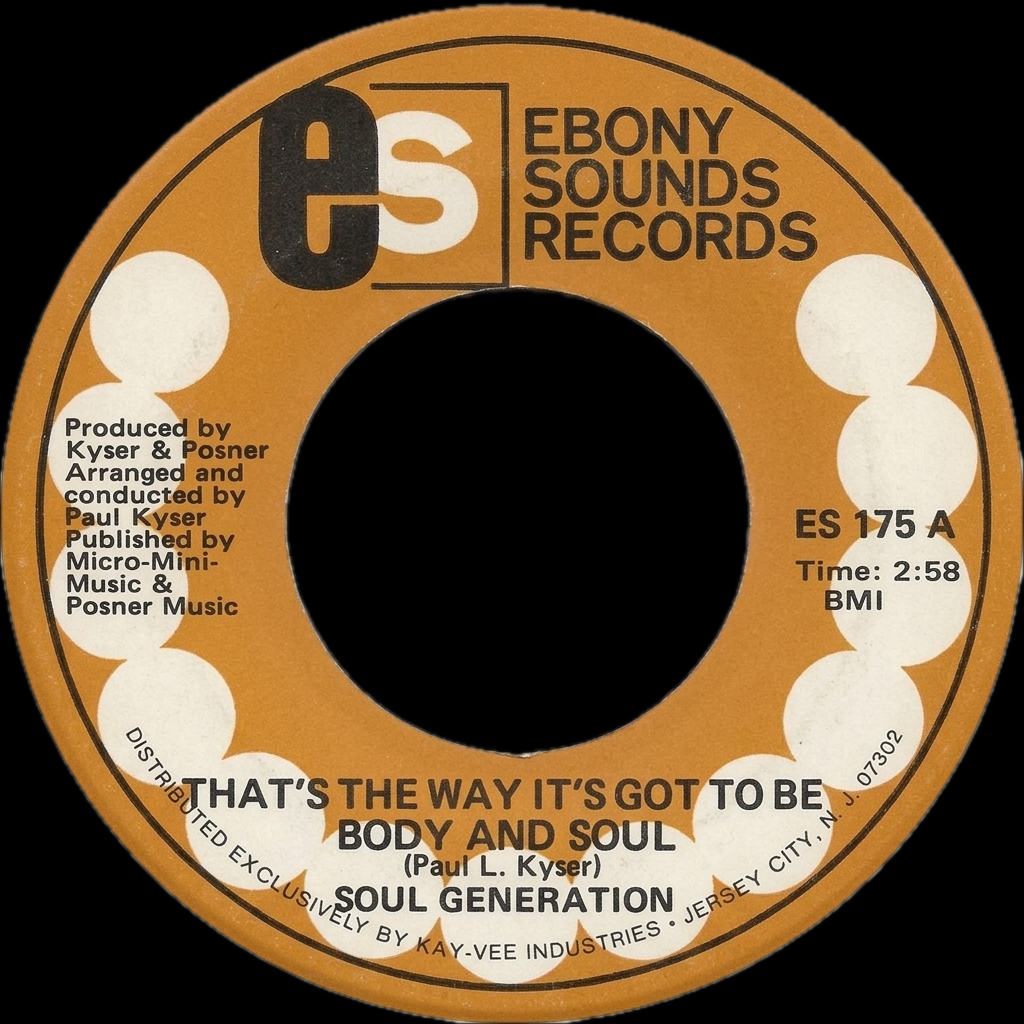
That was my first time really hitting the road, and it was an incredible experience. Backing up those artists and sharing the stage with people who had hits on the charts was a thrill.
Shortly after high school, I connected with The Kay-Gees. They came out of the same high school as Kool & The Gang and were essentially the ‘little brother’ group, formed by Kool’s younger brother, Kevin Bell (Amir Bayyan). They mirrored the Kool & The Gang setup—three horns and a full rhythm section—and were really doing their thing. When their first record, ‘Keep on Bumpin’,’ came out, it became a massive hit.
They had recently parted ways with their keyboard player while I was still on the road with Soul Generation. I went in to audition, and because I already knew the record and had picked up all the licks and textures, they accepted me on the spot.
We immediately moved toward recording an album. The project was produced by Ronald Bell (Khalis Bayyan), Kevin’s older brother and the mastermind producer for Kool & The Gang. We were signed to Gang Records, their own label.
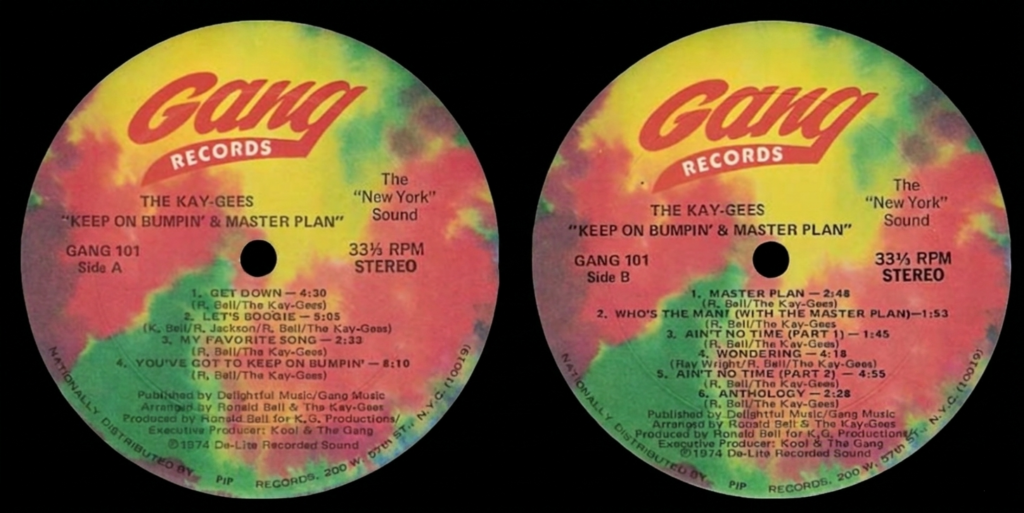
Recording the album, Keep on Bumpin’ & Masterplan, was a defining experience for me. It was my first time in a professional studio. Back then, everything was live; the rhythm section—drums, guitar, bass, and keys—would go in and lay down the foundation together. Then the horns would come in. Khalis, who was the saxophonist for Kool & The Gang, arranged all the horn parts and brought in the songs he’d written, which we then helped bring to life.
When we recorded [the song] “Master Plan,” it was a heavy time. Like the record says, food prices were sky-high and people were really hurting. Ronald was tapping into the politics of the day—looking at the President and asking, ‘Who is the man with the master plan? What are you actually going to do for us?’
He mixed those political questions with the religious shift happening in the group as they started following Elijah Muhammad. He took those two worlds—politics and faith—and put them together into that one track.
On the technical side, I’ll never forget the ARP 2600. We used that synthesizer to lay down some really nice, heavy basslines. That and the Fender Rhodes were everywhere back then, and they really gave the music its character. Whenever I hear those tracks now, it’s that specific sound that stands out to me.
“Get Down” was our absolute favorite opening for the live shows. It was a pure party song, and it never failed to get the crowd going. It holds a special place in my heart because it was our first time in the studio—the first track we ever put down. We just loved the energy of that one.
For “My Favorite Song,” we brought in these backup singers called Something Sweet, who were actually from the same block where I grew up. They were younger than us, and we collaborated with Khalis to set up a duet. We had our sax player, Dennis White, perform with their lead singer, Cynthia Huggins. That blend of the saxophone and her voice was a great call—it came out sounding really beautiful.
“Ain’t No Time” was another one of Ronald’s songs, and man, it was brilliant. He put it together with this feeling that time was winding down and we had to get serious. Musically, it was cool—it moved between F# minor and E Major, giving it a real unique mood.
Even though it’s a fun song to listen to, it really took us into a serious mode. It tied right back into that mix of politics and religion I mentioned before. It wasn’t just a party track; it was a wake-up call.
Our trumpet player, Ray Wright, wrote a tune called “Wondering.” It was a really nice, melodic song. We had four female vocalists on the background: Jo-Ann Mottley, Renee Connell, Cynthia Huggins, and Beverly Owens. I got to help out with the vocal arrangements for that track, making sure those harmonies sat just right. It was one of those sessions where everything just clicked.
Released in 1974, the Kay-Gee’s debut record sold well and garnered positive reviews. Snagging a copy feels exactly like unearthing a “lost” early Kool & The Gang record. It makes perfect sense, too, considering Ronald Bell was behind the boards, co-writing and producing the whole session. The band is locked in and lethally tight, driven by heavy drums, scratchy rhythm guitar, and that unmistakable, rolling party energy that defined the Gang’s golden era.
KL: The record was moving, so we went out on tour. Promoters were putting together these big packages with all the groups that had hits out at the same time. I loved it, but man, it was hard work.
When you’re on the road like that, you’re basically living on a per diem. Our manager had to handle all the logistics—food, hotels, you name it—and it wasn’t always glamorous. But the camaraderie was great. We’d be the opening act, so we’d get on stage, do our set real quick, and then spend the rest of the night watching the stars of the show from the wings. It was just a fun, great time in my life.
The Kay-Gees second album, Find a Friend, was released in 1976.
KL: The trombone player, Otha Nash, was with Kool & The Gang at the time, and man, he was the real deal. He wrote “Find a Friend”—you know, ‘just look around and find a friend.’ I really feel like that whole album was based around the vibe of that one song. It set the tone for everything we were doing.
I came up with ‘I Believe in Music’ while I was just sitting at the keyboard, I think during one of our rehearsals. Once I had the main idea, the rest of the guys jumped in with their suggestions. Khalis helped me out with the lyrics and coordinated with the vocalists to get the right sound on the track. It was a real collaborative effort, like most of our stuff, but that one was my baby.
In 1975, the Kay-Gees also released another successful non-album cut 45, “Hustle wit Every Muscle.”
KL: We were recording down in Philly at the time—I forget the name of the studio, but we were spending a lot of time down there working on the album. There was this TV show, a lot like Soul Train, that wanted a theme song. [The show was called “Party.”]
We put together ‘Waiting at the Bus Stop (Parts 1 & 2)’ [from the “Find A Friend” album] specifically for them. We recorded it right there in Philly, and it turned out to be a huge success. It was one of those moments where being in the right place at the right time turned into a hit. It got a lot of airplay around the east coast.
By the time the recording sessions were taking place for what became the Kay-Gees third album, 1978’s Kilowatt, Lassiter’s full-time involvement with the band began to diminish.
KL: The Kay-Gees were ready to do another record. By then, I was actually out on the road with Kool & The Gang. I had taken over for Ricky West on keys after he left to do his own thing. They needed someone who knew the songs and could jump on a plane immediately, and since I grew up with the music, I was the perfect fit.
Even though I was touring with the main group, they called me in to do some session work for the Kay-Gees album. Amir—Kevin Bell—was incredible; he could play every instrument on the stage. He was playing drums, bass, and guitar, but he couldn’t do everything at once. He needed me to come in and lay down the keyboard tracks on a few different songs to round out the sound.
“Cheek to Cheek” was supposed to be the big one. We really thought that track was going to hit number one. We were modeling it after that Ohio Players-style funk—just a massive, explosive groove. We put the whole thing together with the idea that it would be our definitive hit. We were certain it was going to take off and just explode on the charts.
Kilowatt marked Lassiter’s last recording session with the Kay-Gees, while he continued performing a bit with Kool and the Gang.
KL: I had to leave to help out Kool & The Gang—they were in a spot and needed a player right away. I joined them just as they were finishing the Open Sesame album at Mediasound in New York. Once the studio work was done, we hit the road playing all the hits like “Jungle Boogie.”
Then Ronald put out that 12-inch of “Open Sesame” and it just took off. It hit right at the start of the disco craze. But even with that success, they eventually had to cut back on the size of the touring band.
After that, I teamed up with Amir (Kevin Bell) and his cousins, Adel and Royal Bayyan, to start a group called Forecast. We had Huey Harris and Arminta Richardson on vocals. We were on Ariola, which was connected to Arista back then. We put out two tracks, “Non-Stop‘”and “Love Line,” and really did our own thing for a while.
Lassiter then joined up with the group Rhyze.
KL: When their keyboardist moved out to California, I took over. We all knew each other from back home in Jersey City, but we’d never shared a stage until then. I stayed with them for about two years on the road.
Then, around ’89, a pastor asked me to play for his church. Now, I’d never touched gospel music in my life. I went in, heard the choir, and just started picking up the chords and the feel. Before I knew it, I was a gospel player.
While the Kay-Gees’ 1974 debut remains a quintessential funk classic for its deep pocket of rare grooves, it later became a foundational blueprint for hip-hop when producers began harvesting the band’s high-octane drum breaks and syncopated horn stabs to anchor the Golden Era sound.
SV: Kevin, thanks for your time! It was great to hear your story.
KL: Oh, wow. Thanks a lot, man.
Leave a Reply
You must be logged in to post a comment.