
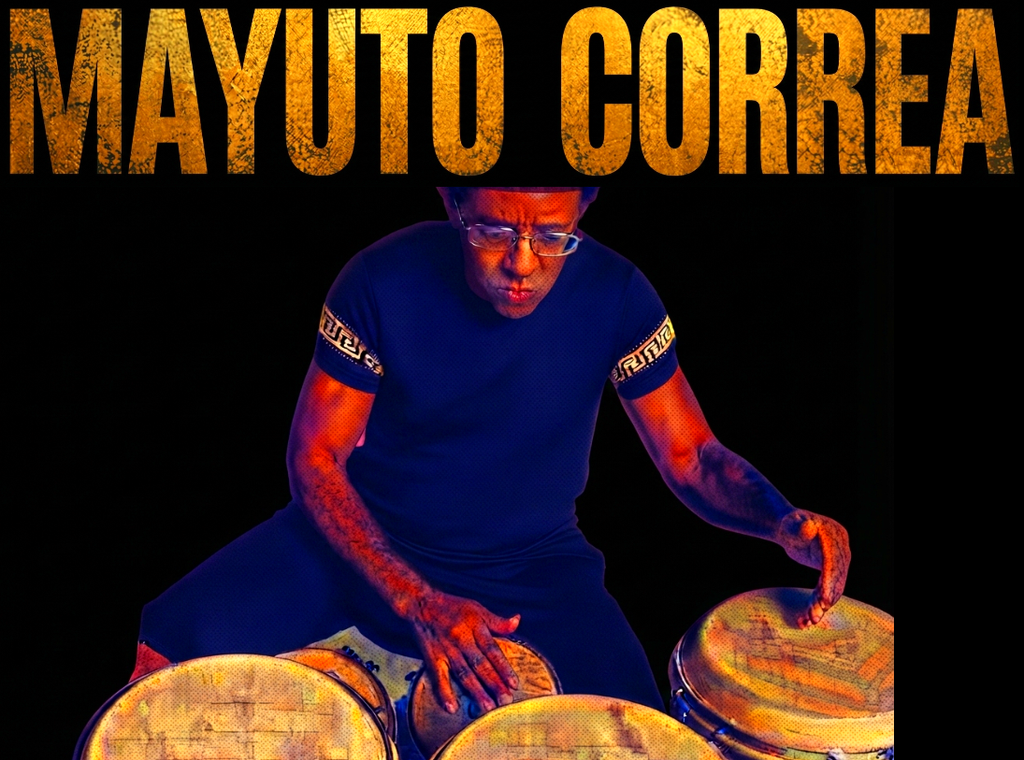
In this exclusive interview, legendary Brazilian multi-instrumentalist Mayuto Correa kicks back and shares his wild ride from a child prodigy in Rio to ruling the LA session scene on hundreds of iconic jazz and pop records.
___
Brazilian percussionist, guitarist, and composer Mayuto Correa became a vital fixture of the Los Angeles music scene, lending his talents to hundreds of major albums. He recorded extensively with jazz and soul legends such as Donald Byrd, Freddie Hubbard, and Johnny Hammond. By 1977, jazz critic Leonard Feather noted that Mayuto Correa had cemented himself as an essential presence on hundreds of major and minor albums recorded in Los Angeles.
___
Sounds Visual: You mentioned that an event at age seven turned you into a lifelong “behavior researcher.” What shifted for you then, and how has that observational habit shaped the way you read a bandstand, an audience, or a recording session?
Mayto Correa: My childhood wasn’t a typical one — I was considered a prodigy, though I only realized that myself once I was a bit older, around nine or ten. From the very beginning I was drawn to anything that made a sound — banging on wood, furniture, whatever was around — starting from about three years old. By the time I was four, it became a bit much for my family, so they’d send me outside, and I’d bang on trash cans instead. That constant activity with my hands became a kind of transition point for me. By six or seven, what I was doing had started to make real musical and rhythmic sense. By ten, I was playing in a full band of adults — a family friend named Romualdo, a professional musician who decided to become a taxi driver, gave me his instrument and told the other band members he wanted me to take his place. That band was called “Rapazes da Alvorada.” That’s where my life in music really began.
Behavior is very flexible — there’s no real age limit on it. The body has an age, but the spirit doesn’t. Even a baby is absorbing everything around it — they just don’t yet have the maturity to apply what they’re absorbing. But the absorption itself has no age limit. My family nicknamed me “old man” around that same time, because I was always shut away developing something on my own — I liked to isolate myself, even sleeping in the maid’s room so I could concentrate. But I wasn’t a strange kid — I played marbles and all the normal children’s games too.
SV: You were also juggling professional soccer in Brazil at one point…
MC: Soccer came to me very young too — it felt completely natural, the way it does for most kids in Brazil, where you can barely find twenty square meters without a soccer game happening. I was already a perfectionist by nature, which helped me in soccer as much as in behavior and correctness generally. By around age eight, my brother and I were considered the best kids in our neighborhood, and I started actually getting paid — about ten cruzeiros a game, good money for a kid at the time — playing for a local club called Zumbirinha, owned by a family whose sons weren’t especially strong players themselves. I wore the number 10 shirt; my brother wore 4 and played defense. It was all informal — a verbal agreement with the club owner, no real contract — but soccer and music ran in parallel through my whole early life.
SV: When you eventually walked away from soccer, was asking your father for permission the first real definition of who you are?
MC: By the time I was sixteen, my father — who had a certain standing locally as a benefactor to the poor — decided to take my brother and me to Flamengo, the most followed club in Brazil, still considered the country’s top team even today. He knew people there, and he arranged a meeting with two of the top coaches in the country at the time — one from Flamengo, one from the national team. I went straight into Flamengo and immediately into the national team as well — once you’re on the national team, that supersedes your club.
My brother went to Botafogo instead and ended up playing alongside Pelé, both for the club and the national team; I also played with Pelé, at the under-17 to under-18 level, the step below the full national team. But by then, my music career was already colliding with soccer — by sixteen, I was performing with top Brazilian stars like Cauby Peixoto, often called Brazil’s Frank Sinatra, and singer Elza Soares. That level of music work meant travel and unavailability that increasingly conflicted with soccer, and eventually I had to choose.
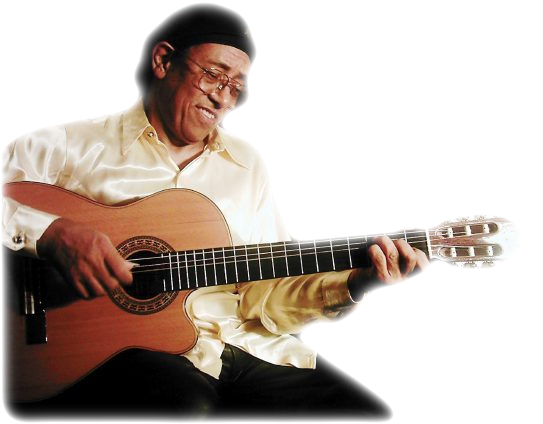
At just 16 years old, Correa formed the ensemble Samba Show with musicians from Niterói, recording multiple tracks for the CBS label. His early career in Brazil flourished as he served as the musical director for acclaimed artists like Maria Bethânia, Elza Soares, and Eliana Pittman. He also played in Roberto Carlos’s backing band, RC-7, and frequently performed on popular television programs hosted by Chacrinha.
Seeking new horizons, Correa left Brazil for Mexico in 1969 to collaborate with the renowned bossa nova group Tamba 4 before eventually relocating to the United States.
SV: You left Brazil while artists around you were being imprisoned under the dictatorship. How much of that decision was fear for your own safety versus concern for your family?
MC: Well, my first concern was survival — when you’re in that kind of situation, you’re not sure if you’re going to live or die. The generals had actually called to have me stopped from appearing on live television. So my safety was my main concern, and I was afraid of being caught. At the same time, I had to keep concentrating on my work — it was an extremely difficult period.
SV: You were also artistic director at a university that was a center of resistance. Does any of that confrontation still surface in your music, or did it stay behind in Brazil?
MC: PUC was a very politically charged place — the students and professors were deeply engaged. But it didn’t affect me much, because I was careful. I avoided things there that would have exposed me more. PUC and the Sorbonne in France were considered the two most politicized universities on the planet at the time.
SV: When you first began working in Los Angeles, did you feel your Brazilian identity was something you had to protect, or something the American industry was eager to define for you?
MC: It was a mix, but overall being Brazilian gave me an advantage rather than holding me back. My style — completely my own — let me move into spaces nobody else was occupying. I ended up playing with roughly two hundred major jazz figures over the years, and I built my identity as a jazz percussionist specifically through that lens.
SV: What was the first thing you learned about being a successful session musician that had nothing to do with playing your instrument?
MC: Professionalism itself. I’ve never once worked with a second-rate musician in my career — of the roughly eighty names I’ve compiled from memory, every one is top-tier. Part of that comes from what drew me to America in the first place: even as a small child, watching Westerns at the local theater, I absorbed an idea of America as a place governed by clear rules of right and wrong. That’s part of why I chose America over Europe, even though I already spoke fluent French and no English when I left Brazil.
SV: When you walked into a studio with a major artist, how did you decide whether the music needed something unmistakably “you,” or whether your job was to disappear into the arrangement?
MC: There’s a special question, my friend–wow, you’re tough, man. I like it. (Laughs)
It’s always a combination. My mind works like a researcher’s — flexible enough to do whatever the moment calls for. But I always observed the specific style of whoever I was playing with. If I was playing with Cannonball Adderley, I’d play within Cannonball’s musical world — not changing who I fundamentally am, but absorbing that artist’s style and folding my own sensibility into it. I turned down more time with certain artists — like Santana, who I did tour with in Brazil in the 1970s — simply because I was too busy, not because I lacked interest. I never played with anyone I’d consider second-rate — only the top tier: Herbie Hancock, Ron Carter, and Cannonball Adderley’s band, which I stayed with until he passed away.
SV: When you landed in LA and joined the AFM Local 47 within days, what made a Brazilian multi-instrumentalist so quick to trust an American labor institution?
MC: The musicians’ union was, to me, the best thing, because in Brazil I was always involved with the union there too. So it was easy for me to look for musicians through the union.
SV: You later encouraged Arco Iris to hold onto their indigenous and regional identity rather than simply becoming an American-style jazz-rock group. Was that advice born partly from your own experience of leaving Brazil?
MC: They were politically-minded kids. Ara Tokalquian, the sax player, was very, very good — his heritage was Indigenous, from Argentina. I felt like they needed guidance, because I already had a lot of experience politically, dealing with the military dictatorship in Brazil.
SV: I’ve got some records here in my stack that I want to ask you about. You played on a couple of records with Johnny Hammond Smith — Forever Taurus being one of them. Do you remember those sessions?
MC: I don’t always remember details — I’ve done so much — but as an artist I do remember what became a real mark in my life. Every artist has their own specific sound, their own signature. Gato Barbieri and George Benson — two guitarists I worked with — were completely different from each other, and I enjoyed becoming part of each of their separate universes.
SV: The percussion on those Johnny Hammond, Freddie Hubbard, and Donald Byrd sessions sits in a pocket that’s driving but open. How much of that feel came from your own Brazilian patterns versus the Mizell brothers’ production?
MC: We’re going to have to meet very soon, you and I — you’re going to have to come down and have lunch together. That question is amazing. (Laughs) The artists I worked with were all great, and each one gave me the opportunity to put something into the music that was already inside me. It felt like putting on the perfect glove.
Above: “Think Twice” – Donald Byrd | Stepping Into Tomorrow (Blue Note, 1975) — Correa’s congas anchor this atmospheric Mizell Brothers masterpiece, creating the deep, hypnotic pocket that made it a holy grail for hip-hop producers like J Dilla and A Tribe Called Quest.
SV: What was it like working with the Mizell brothers?
MC: They worked as a real unit, and I got along well with all of them. They had a solid organization and a gift for finding the right people — that’s how they found me. They came to me directly: “Mayuto, we want you.” It was simple to work with them because they had a clear goal, even though the music leaned pop in some ways, built around a strong backbeat.
Above: “Forever Taurus” – Johnny Hammond | Forever Taurus (Milestone, 1976) — Interlocking seamlessly with Sheila Escovado’s congas on this expansive nine-minute title track, Correa provides a deep, textured percussion bed that keeps the sublimely funky groove boiling underneath Hammond’s fierce ARP synthesizer and electric piano solos.
SV: You did three records with Freddie Hubbard — Liquid Love, High Energy, Windjammer. Do you have any memories of working with him?
MC: Every time I think of Freddie, I laugh — he became a close friend, and we worked together for many years. My agent at the time, John Levy, represented all the greats. The first time I met Freddie was at a Concert by the Sea show — I’d never met him before that night. My equipment was already set up on stage. When the set was about to start, Freddie looked over at me, waiting for me to get up from behind my instrument — he expected me to bow out of a very fast tune most percussionists couldn’t handle. He looked at me a second time, a third time, and then just counted off the song. Afterward he hugged me and told me I’d done a great job.
Above: “Liquid Love” – Freddie Hubbard | Liquid Love (Columbia, 1975) — Adding a thick, funky rhythmic bed underneath Hubbard’s soaring trumpet lines, Correa’s percussion keeps this sweeping jazz-fusion cut grounded and intensely danceable.
SV: You played with Gato Barbieri on records like Chapter Two and Ecstasy, doing congas and triangle. Was there a conscious effort to blend Brazilian phrasing with the Argentine, Latin intensity he brought, or did it happen instinctively?
MC: I’d already played with Argentine musicians before, so I was familiar with that sound. Gato came to me because he knew I understood what he was going for.
Above: “To Be Continued” – Gato Barbieri | Chapter Two: Hasta Siempre (Impulse!, 1973) — Correa’s fiery congas and triangle work provide the spiritual, heavy Latin-jazz breaks needed to back Barbieri’s intense, roaring tenor saxophone excursions.
SV: What was different about playing with Carl Tajder compared to the more funk-oriented, electric sessions you were doing around the same time?
MC: Cal was a visionary — always interested in finding new, unusual territory in music. With Cal, the approach wasn’t about being cautious — he wanted things to happen fully in the moment on stage.
Above: “Tambu (Tombo In 7/4)” – Cal Tjader | Tambu (Fantasy, 1973) — Correa navigates the complex, infectious 7/4 time signature with ease, providing the driving Latin jazz-fusion heartbeat to this classic Airto Moreira composition.
SV: What about working with Moacir Santos?
MC: I’m so glad you brought him up. Moacir Santos was a beautiful person — a true master, one of the most complete musicians anyone could work with. He was also a poet, an inventor of sound and rhythm.
Above: “Nana” – Moacir Santos | Saudade (Blue Note, 1974) — Delivering incredibly tight and complex Brazilian jazz-funk rhythms, Correa’s congas and percussion lock flawlessly into the lush arrangements of his fellow countryman.
SV: What about Henry Mancini?
MC: I love Henry Mancini — one of the greatest, most complete musicians I’ve ever known: sound, creativity, genius, composing, arranging, all of it. We loved each other. He liked me so much, from very early on.
SV: Being a fan of hip-hop and jazz, have you ever recognized one of your own recordings being sampled?
MC: I’ve heard it many times, though with so many records, I don’t always remember which specific one is being sampled. I’m at peace with every movement in music; if I’d stayed rigidly “pure,” I’d have missed so much, good and bad.
SV: On a broader level, how do you feel about sampling — hearing your percussion recontextualized for a new audience?
MC: I feel proud of it. It’s simple — that’s the truth.
SV: You developed your right-hand technique for years before ever putting your left hand on the fretboard. When you finally asked Waltel Branco for help, you needed only one lesson. What did it feel like to finally connect the two hands after building each in isolation?
MC: I have to make a little space here to compliment you for being as good as you are. I hope you don’t mind me saying this, but your perspective, your way of asking that question, is very rare — it’s very special.
That question goes right to the heart of who I am. Even as a kid — the “old man” who isolated himself in his room — I was always developing things entirely on my own terms. I have an intense, almost obsessive focus: I can spend ten hours on one thing without eating or sleeping if what I’m looking for hasn’t arrived yet — I still do that today, and my wife knows it well. I never wanted to copy anyone or learn technique from watching others; I wanted to build my own approach from scratch. That’s the real secret behind my success — my technique belongs only to me. Nobody else plays the way I do unless they’ve specifically learned it from me.
Above: “Uno Esta” – Bobbi Humphrey | Fancy Dancer (Blue Note, 1975) — Providing a thick, syncopated bed of congas, Correa lays down the heavy Latin-jazz funk breakbeats that perfectly counterbalance Humphrey’s breezy flute lines.
In Brazil, most percussionists were essentially copying Afro-Cuban and Latin patterns. I refused to watch or study any of that — I never learned from Mongo Santamaría or Armando Peraza, even though we became good friends and had mutual respect. Because my approach was so distinct, producers in Brazil started booking me constantly — I became the busiest, most in-demand percussionist in the country, playing on every major orchestra and on Brazil’s first television station, TV Tupi, even though we didn’t own a television ourselves; I’d go watch my own performances at a neighbor’s house. When I came to America ten years later, at twenty-six, I found that jazz drummers were tightly locked into a straight, driving pulse that didn’t leave room for the way Afro-Cuban conga players typically phrased against it. My style was accepted immediately — within my first week, playing at Disneyland, drummers were already telling me how well my approach fit with jazz specifically.
SV: You taught students to make the drum part of their body and to reach a “zero state,” rather than simply concentrating on technique. What does a musician have to unlearn before reaching the zero state — is it musical, psychological, or spiritual?
MC: Wow. That’s incredible, man. I have to meet you in person! These are the kind of questions I appreciate. I actually coined that term myself — the zero state is when you get rid of everything the world puts on you and become absolutely connected with God. I carry peace of mind every day, no matter what — even if you’re dying, you can die in peace in front of God, because God is peace, and I am at peace. The zero state is releasing everything that isn’t truly yours, that comes from outside you, and making space inside yourself that nobody else can enter — a space of peace. Music should live there, because music is extremely powerful, and if you’re not careful, you create pollution instead. That’s what I try to teach people.
SV: Do you think a musician can have extraordinary technique but still be disconnected from rhythm?
MC: Technique and talent are two different things. Technique is something built up over many years by many people putting things together — it becomes a technique. Ability, on the other hand, comes from inside; it has nothing to do with the outside world. To reach the zero state, a person has to be totally free and deeply connected with themselves, with purity, with God. You can’t be fully present in your music, acting, or any art while also being dishonest or treating people badly — those things can’t coexist with real artistic connection.
SV: You created two performance methods — Pertheter and Zero State — blending drama training with music. Is there a specific exercise from either that a musician might find strange or uncomfortable?
MC: Not really, because whenever you’re doing that kind of work — whether as a musician or an actor — it’s like jumping with a parachute. You go into something completely unknown and unpredictable, but you have to stay absolutely concentrated so that nothing shakes you from your destination.
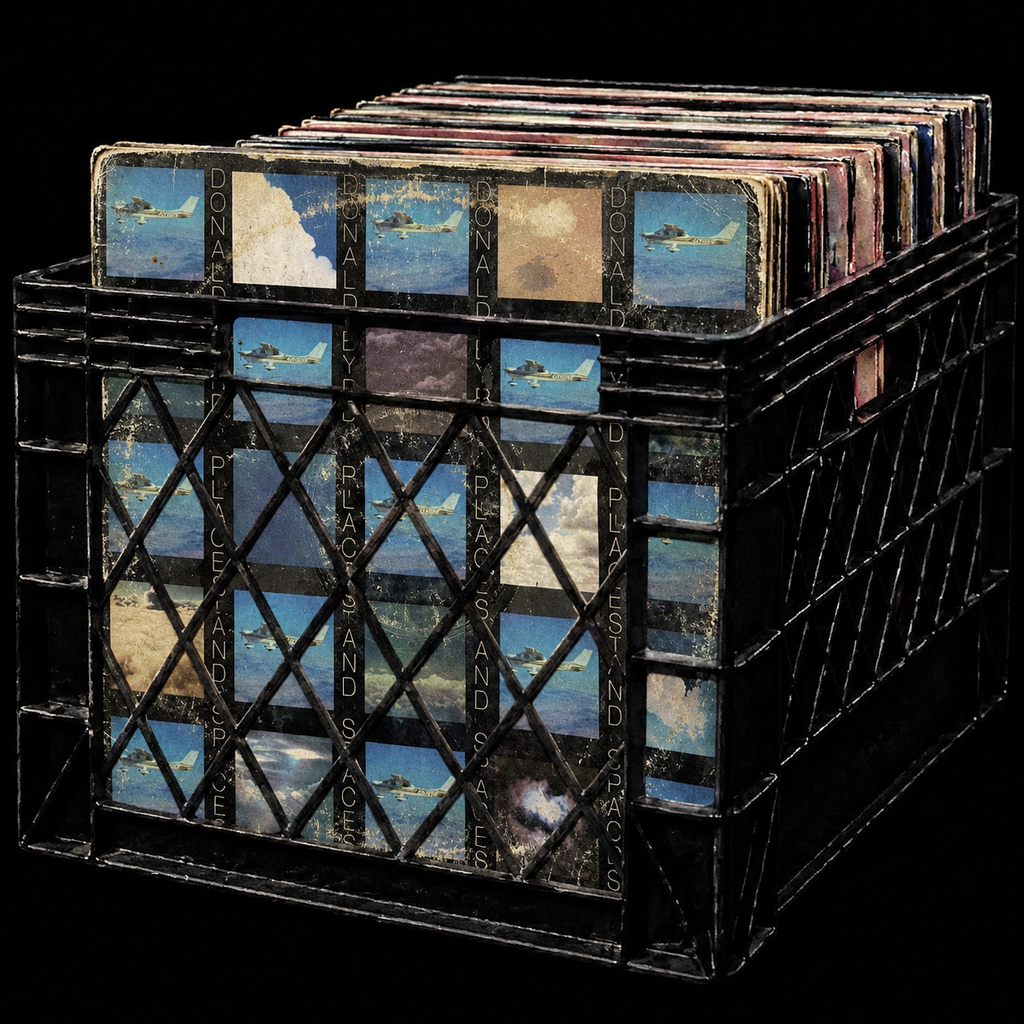
Above: “(Fallin’ Like) Dominoes” – Donald Byrd | Places and Spaces (Blue Note, 1975) — Correa’s precise percussion work adds a crucial rhythmic texture to this lush groove, layering perfectly with the driving rhythm section and iconic string arrangements.
SV: When you’re deep in that musical flow on guitar or percussion, at what point do you step back and use your conscious mind to edit?
MC: Wow, you’re tough, man. I like it. That’s the zero state I described. When you’re in it, things happen automatically and correctly. You’re completely outside any interference, any pollution — your inner self is in such harmony that you don’t even think or fear; nothing happens except the best of you.
SV: You named your first song after a wasp that landed on your guitar string and wouldn’t let you play. Do you still write by letting the world interrupt you, or has that changed?
MC: I haven’t seen any change in myself. Whatever I do comes from me, and I try to be honest. Because I’m honest, whatever I do comes out as one solid block, with no real risk in it — not because I think I’m perfect, but because my integrity doesn’t let me think about anything other than something pure. Sometimes I don’t even like what I’ve done, but later I realize the doubt itself was the wrong thing — I should be satisfied with the results.
SV: Is there a favorite record of yours that you feel like you never get asked about?
MC: Gabor Szabo, for sure — people used to say we were almost one unit together. And Henry Mancini, like I mentioned. Those two stand out.
Above: “Spellbinder” – Gabor Szabo & Charles Lloyd | Gabor Szabo Live With Charles Lloyd (Blue Thumb, 1974) — Credited under the variation “Mailto Correa” on the liner notes, his driving congas and percussion provide the essential rhythmic engine for this expansive, record, locking deeply with electric bassist Wolfgang Melz to keep the groove hypnotically steady while Szabo and Lloyd stretch out,
SV: A percussion part can transform a recording but often stays invisible to the casual listener. Do you take pleasure in that kind of musical invisibility?
MC: I’d never really thought about that concept. When I hear a recording, I recognize my own signature immediately — there’s no beat like mine. I even invented some of the instruments I use. I can’t expect every casual listener to notice, but the musicians who become prominent always recognize me, the way everyone recognizes Tito Puente by his sound.
SV: Is your teaching less about formulas and more about self-discovery, because you believe imitation is one of the biggest obstacles to finding an individual voice?
MC: Yes — unless you actually want to be an imitator. But if you’re doing serious art, that spiritual space I described is the key to reaching an ideal place in your art. That, to me, is the secret.
Above: “Up The Street, ‘Round The Corner, Down The Block” – Kenny Burrell | Up The Street, ‘Round The Corner, Down The Block (Fantasy, 1974) — Adding the crucial rhythmic pulse to Onaje Allan Gumbs’s upbeat composition, Correa’s precise percussion work intertwines with Lenny McBrowne’s drums to keep this seven-minute, lightly funky post-bop groove locked firmly in the pocket.
SV: You’ve worked as a musician, composer, guitarist, artistic director, writer, actor, and teacher, and even played professional soccer. Did you experience these as separate careers, or as different expressions of the same instinct to study rhythm, people, and performance?
MC: Man, you’re incredible. Yesterday I was actually thinking about that. I’ve known for years that I have more than fifteen basic professions, and each one exists as its own separate self for me — there’s no mixing between them. Once you reach the zero state I described, you naturally become distinct within each of your roles. In any other part of my life — with my wife, for example — I’m a completely different person than I am in my art.
SV: After decades in the United States, what is something about Brazilian rhythm that you believe American musicians still misunderstand?
MC: Brazilian rhythm is built on a two-four feel, while American music is built on four-four. American musicians at that time weren’t as open to the world as they are today. I felt they’d welcome a two-four feel, and every time I played with an American drummer, I pushed that.
SV: A great deal of your work lives inside recordings made by other artists. Millions of people have heard your percussion and rhythms without necessarily knowing your name or who created it. How do you think about legacy when so much of your artistic life has been spent helping other people’s music become more complete?
MC: There’s no question that you ask that’s not important. You’ve got something special, man. That’s a hard question to answer, because legacy is really decided by what people do with your work, not by what you’d like it to be. But if I had to say — as a percussionist, I changed the genre in several ways: in jazz, in pop, in every type of Brazilian music since the 1960s.
Above: “Terri’s Tune” – David Axelrod | Strange Ladies (MCA, 1977) — Acting as a vital rhythmic layer, Correa’s precise percussion work weaves effortlessly through Axelrod’s dense, cinematic string arrangements and heavy jazz-funk grooves, locking in tightly with legendary session drummer Earl Palmer.
I leave my legacy up to time and to the world’s circumstances — I know each generation becomes a little more disconnected, and that’s not going to change. But I do care about it — an interview like this one matters to me, because if people hear a conversation like ours, they’ll know more about me and might look deeper into what I’ve done. I’m not desperate to be recognized everywhere, but I am genuinely interested in being recognized for what I’ve done.
SV: Thanks so much, Mayuto!
MC: Before you go, I have to say to you one thing. I’ve been having a lot of interviews since 1969 — quite a few interviews. But you are the best interview that I ever heard. Very best, because of your questions. The way you ask — you are the very best. Whenever you come to Los Angeles, I would like you to make an appointment with me. I would love to have lunch together.
SV: It’s a deal.
MC: Fantastic. I appreciate you very much.
Leave a Reply
You must be logged in to post a comment.