
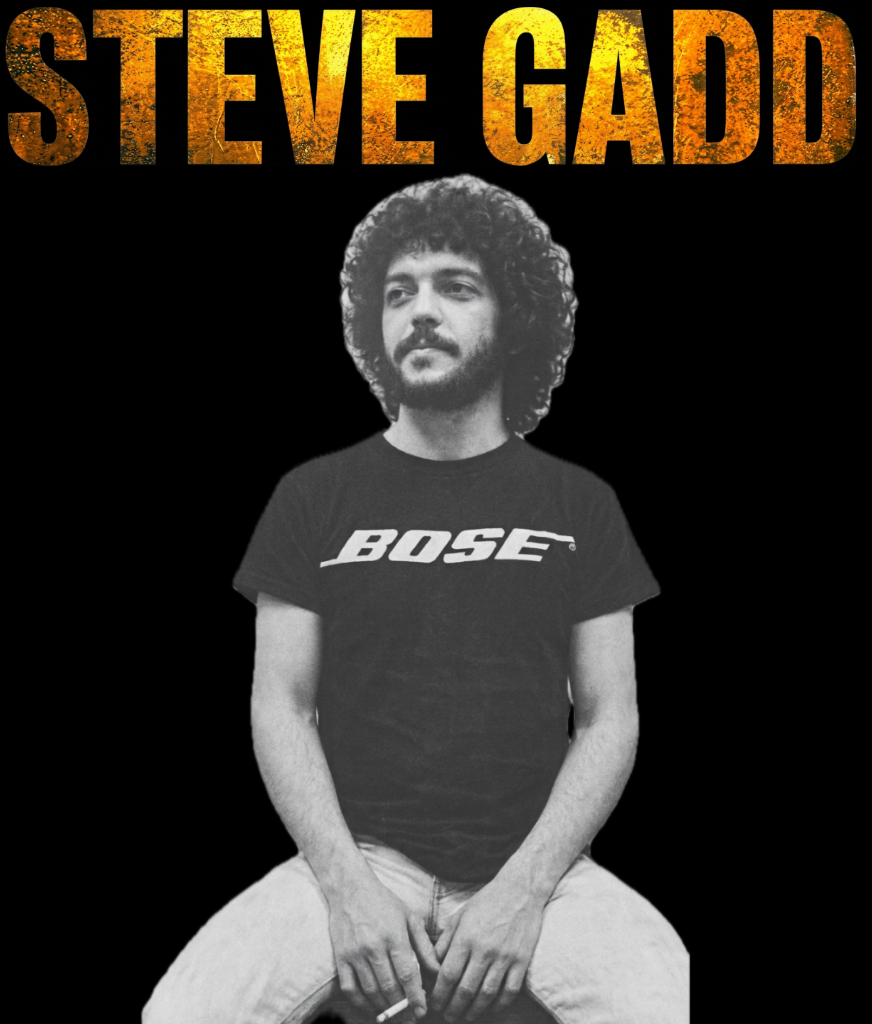
From his childhood days playing in Rochester drum corps to becoming a cornerstone of the New York studio scene, master drummer Steve Gadd shares the behind-the-scenes stories of crafting iconic grooves for Steely Dan, Paul Simon, and Chick Corea.
___
Steve Gadd: [My uncle Eddie] saw that I was interested in drumming because I was banging on everything. We were living with my dad’s parents and my uncle, my dad’s older brother. It was a lot of fun. The fact that there were so many grown ups meant that no one person had to spend all their time with the kids, so they could spend less amounts of time and not get worn down. It was great, you know. The time for me and my uncle was when he got home from work. He’d put on some John Philip Sousa marches, and this is when he showed me how to hold the sticks, and gave me a pair of sticks. And he had a little piece of wood, and I had something, and we’d play [those marches] along with the record player while everyone else sat and listened.
My uncle introduced me to people that he liked, and he had great ears. He introduced me to [the music of drummers] Gene Krupa, Buddy Rich and Louie Bellson. Later on, Philly Jo Jones, Max Roach, Art Blakey, Elvin Jones. Just one after another, great guys that could play. And my family, including my parents and grandparents and uncle and brother, they’d take us to this club on Sunday afternoons. They had a matinee. It was called the Ridgecrest Inn [in Rochester, NY], and they used to have matinees there, and in those days, they would let musicians from the town sit in.
That was the time for them to get to meet local musicians, and for the local musicians to get a chance to hang and play. And we were kids, but these acts would let us sit in. Art Blakey let me and Chuck Mangione, and Benny Salzano, and Gap Mangione, he’d let us all sit in when he came to town. Dizzy Gillespie, Kai Winding, Oscar Peterson, Ray Bryant with Papa Jo Jones, Carmen McRae, Dakota Staton, Gene Krupa, Charlie Ventura…I mean, it just went on and on. And then, that was going on for a while, in another part of town, when I was a little bit older, my dad would take me to hear organ guys playing, you know what I mean?
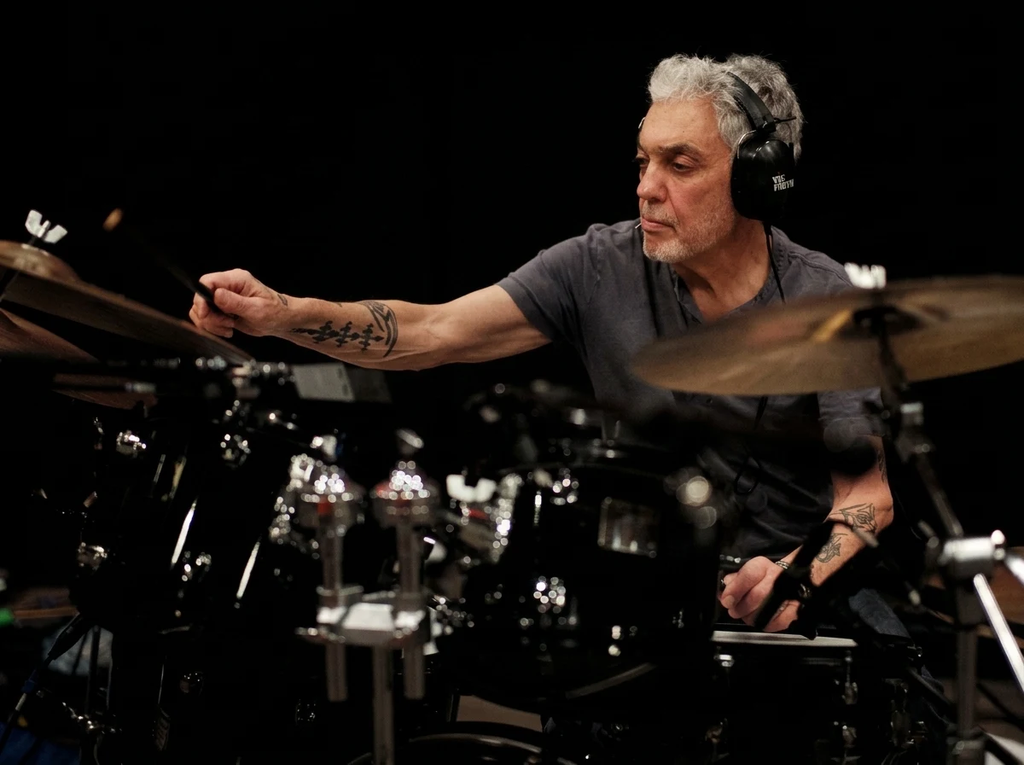
I was taking lessons, listening to that kind of music, getting a chance to play with Chuck and Gap sometimes, you know, it was just great. I was [also] playing in drum corps.
I don’t think back on it a lot, but when I really get into it, it was pretty amazing. There was so much stuff available. My grandmother, she would come over after school and she would take me to drum lessons, and my brother to trumpet lessons, and me and my brother to tap-dancing lessons.
At the age of 11, Gadd participated in the Mickey Mouse National Talent Round Up contest and emerged as one of the winners. His prize included a trip to California, where he had the chance to meet Walt Disney and perform on The Mickey Mouse Club, showcasing his talents with a drum performance and a tap dancing routine.
Sounds Visual: And while you were still in high school, you got to tour Europe with the Band of the Americas?
SG: That was like a concert band, and they broke it up into a stage band, a Woody Herman kind of band. And I was in high school band, and I was in drum corps.
SV: Since you brought up drum corps, I have to say I really hear that influence in your playing. I read where you mentioned it taught you the power of musicians locking in together to achieve a singular sound. As a lifelong drummer myself, seeing how you take that rudimental precision and translate it into such a deep pocket has been huge for me—and I know for countless other drummers, too. So thank you for that.
SG: I’m glad to hear you say that. I love the snare drum, you know what I mean? I love the rudiments, I love the way the roto drums sound. I love the rudimental things. They’ve got a feel, they’re technically challenging, and I’ve always had an interest in that.
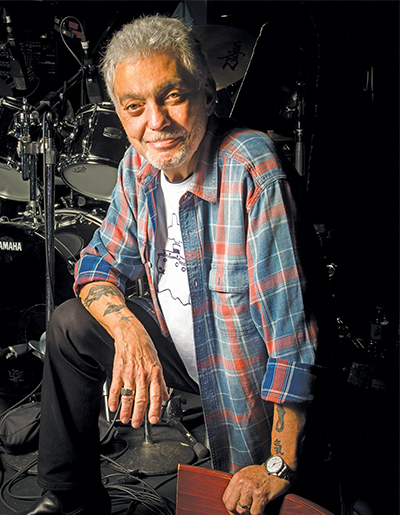
Gadd graduated from Eastridge High School before attending the Eastman School of Music, from which he graduated in 1968.
SG: I had been studying with John Beck who came to Rochester when he got out of the Marine band, which was in the late ’50’s. And he became the timpanist in the Rochester Philharmonic and was teaching students in the preparatory department to go to Eastman, or to go to music school. But my marks weren’t good enough academically to get in Eastman, so John helped me get into Manhattan School of Music. I had to go audition, because back in those years, if I didn’t get [into] someplace to go to college, I would have ended up going in the army to Vietnam, or having to go to Canada, if I wanted to avoid it, you know? It was a big deal those days, what was going on [politically].
I got into Manhattan, and I was good. I went there for two years. I loved New York [City]. But Eastman was a better fit for me. There were more ensembles to play in, not only wind ensembles and orchestras, but percussion ensembles. And so I got my grades up and I transferred. So because I went back to Rochester where I knew people and grew up, I got work. I was working six nights a week with Gap Mangione and [bassist] Tony Levin when I was in college there, at this dinner club.
And then Tony and I would be in almost every class during the day, and then we’d show up at the club and do this trio thing. We had a trio with Gap.
Gadd made his recording debut on Gap Mangione’s album “Diana in the Autumn Wind.” [GRC, 1968]. The title track would be sampled decades later by artists including J Dilla and Madlib, among several others.
SG: The first album I ever did. We did it right before I went in the Army, and Tony and I were still working six nights a week with Gap, even after we graduated. And then Gap wanted to do an album, and Chuck wrote the songs and did the arrangements. We went to New York [to record], and Mike Manieri [vibraphonist] was on that, he was [also] a producer who was working on a project called White Elephant [a jazz-rock big band composed of session and studio musicians based in New York City.], which I got invited to play on and became a member of.
He also had a jingle company called GNU Music. And every time you get called to do a [recording] date, it was exciting because whatever the music was, it was done very professionally. Not a lot of wasted time. These guys took care of business. So it was exciting on that level and it was exciting because we were gonna meet new musicians. Sometimes they would be guys I listened to growing up on records.
Studio musicians like Joe Farrell [saxophonist/flutist] was on that [“Diana”] session. Clark Terry [trumpeter], Snooky Young [trumpeter], Bill Watrous [trombonist].
After graduating from Eastman School of School of Music, Gadd was subsequently drafted into the United States Army, where he served for the next three years as a drummer in the United States Army Field Band (as well as military and stage bands) at Ft. Meade, MD.
SG: I graduated in June, and during my last year of college I went and auditioned for different bands in the Washington [D.C.] area. John Beck had been in the Marine band for four years. When you go in one of those bands, you don’t leave the states. You live in D.C. or Maryland right there. It’s good duty. After basic they give you the pay of a sergeant, and if you get promoted, you get more money. But I hated it, you know what I mean? I didn’t want to be in the Army. But looking back, I had fun. I met some good guys, played some good music, and I was able to serve without having to go do it with a gun. I didn’t wanna do that.
SV: After your discharge from the military, you end up back in New York and start getting steady session work, seemingly right away.
SG: When I got to New York, [one of the the first sessions] was with the Artie Kornfeld Tree [“A Time to Remember!” ABC/Dunhill Records, 1970]. I got on it from being recommended by Tony Levin. Tony was my foot in the door in terms of meeting people in New York, because he didn’t go in the military. He went to New York and he was meeting [people] like Mike Manieri, Joe Beck [guitarist], he went and played with [vibraphonist/composer] Gary Burton, [bassist/cellist] Sam Jones. He introduced me to all those people. It was a great introduction for me.
SV: And then you’re off to the races. Steve, you’ve played on so many incredible records and laid down so many iconic drum tracks that it’s honestly hard to know where to begin. That said, I pulled a few from my stack here that I’d love to dive into today.
In no particular order, let’s start with the Chick Corea fusion record “The Leprechaun” [Polydor, 1976]. You ended up working with Chick pretty frequently over the next few decades. Tell me about working with Chick, and any memories of this date.
SG: Well, he’s a good leader. He was very clear about things that he wanted. He wrote the same way, in a clear way, and knew what he wanted, harmonically. Rhythmically, for me, it was great. We rehearsed in the studio with the [ear]phones on and recorded “Leprechaun” on a weekend, live, with horns and strings, everything.
The thing I remember about that session is—if I ever had to use every ounce of knowledge that I had learned musically up to that point in terms of drumming, and reading music, and trying to play, whatever I knew I used on that [session]. And it wasn’t like I had to dig deep for it. Chick brought it out of you. The music dictated it. At the time it just felt so clear to me what it should be.
SV: You also worked extensively with Paul Simon. Now, I know everyone asks you about “50 Ways to Leave Your Lover,” and you’ve covered that in depth—so I’d actually love to pivot to a different track: ‘Late in the Evening’ from 1980’s One Trick Pony. You lay down this incredibly funky, Cuban-style Mozambique groove against Paul’s irresistible pop arrangement. Take me behind that performance.
SG: I went in the studio and was playing, just laying down some tracks for Paul to take as a writing thing, you know what I mean? I used four sticks [when I played the drum part] because I wanted it to sound like it was more than one guy playing, I wanted it to sound l like a group, like it was festive. So that’s why I did it.
And then I played it on the rims with the toms, because I had been practicing it that way. I had already done it with the cowbell. Then I was practicing it where I would hold the tip end of the stick against the second rack tom rim, and hit that rim and the first floor tom at the same time. I was playing between the drum and the rim with my left hand, and Paul liked that feel. So we built it from that.
It is a fun groove, man. I love the horn part. I love a lot of what happens when Paul does live stuff. He never stops trying to do [his songs] in a different way. He’s always trying to change something. I hate to interrupt the old way, but what I learned is, if you dig deep enough, he comes up with new ways that are just as much fun in a different way. But when you’ve got it to one level where it feels so good, it’s not easy for me, anyway, to start all over. But I learned from Paul that it can be worth it if I do it. You keep learning.
SV: Steve, next up is a record from keyboardist Ben Sidran [“The Cat and the Hat”, 1979, A&M]. You guys do a cover of Miles Davis’ “Seven Steps to Heaven” on here that features a performance from you that is so influential, it’s been transcribed and passed down to successive generations of drummers. It’s an astonishing display of technique.
SG: That was hard. I love [drummer] Tony Williams [who played on the davis recording of “Seven Steps to Heaven”]. I would try to emulate him. I never heard anyone play it better than he did. I wasn’t even gonna go there and try to attempt that, to do what he did, to approach it that way. I just went to where I felt the most comfortable, and tried to create a feel that felt good. Trying to do it the other way, man, [Miles’ original version] is a classic. It’s a classic. That band is a classic. That music is…it’s like, it’s almost irreverent to try to play some of that shit.
SV: I know we talked about working with Gap and Chuck Mangione a bit earlier in our conversation, and I want to quickly talk about a record Chuck released called “Alive!” [Mercury, 1972]. It’s a live recording of his band at the time, and of course, you’re in the mix. “Alive!” features a great cover of the Sonny Rollins classic “St. Thomas,” and you’ve got a phenomenal solo on there.
SG: We played that in clubs in Rochester with Chuck and Gap’s band. And it was Tony Levin and me, and [saxophonist/flautist] Gerry Niewood.
We knew the music, and Chuck had a tour, and we had to come up with stuff to play. And that was one of them. Also, that’s the tour where we got to Montreux, and we played our show, and then Stan Getz was playing there with Chick and Stanley Clarke and Tony Williams. Tony borrowed my drums and played on those, that little 18” Gretsch kit. I still got ‘em. That was a big deal for me.
SV: Steve, let’s talk about this Joe Cocker record you’re on [“Stingray,” A&M, 1976]. To me, this is just a perfect example of less-is-more simplicity in your playing, where you let the groove breathe. When people talk about the “Steve Gadd pocket” or the Steve Gadd “feel,” I think of songs like “The Jealous Kind.”
SG: We recorded it in Kingston, Jamaica. Richard Tee [pianist] and I were flying over to Jamaica during the week, and then going to play concerts on the weekends with Paul Simon. I remember that, yeah. That’s a good album.
SV: You also did a fair amount of session work alongside the Brecker Brothers, [Michael, trumpet/sax; Randy, trumpet, flugelhorn]. I love these great records you cut with them in the mid 70’s, particularly the tune “Night Flight” from “Back to Back.” [Arista/BMG, 1976]. You’re absolutely killing it on there, it’s so frenetic, yet completely focused.
SG: The Brecker Brothers wrote great stuff. It was innovative, it was challenging, it was funky, it was progressive and a little bit out there. It was everything.
SV: Let’s talk about some of your work with [saxophonist/composer/bandleader] Tom Scott.
SG: Oh, yeah. A lot of memories working with Tom in the studio and live, and on different projects where he was a soloist, not the artist and not the producer.
SV: The record that stands out for me is called “New York Connection.” [Ode, 1975]. I think my favorite cut opens the record: “Dirty Old Man.” Another prime example of your masterful ability to intertwine rudiments into the rhythm—specifically, and not to get too into the weeds here for non-drummers—you’re playing a 32nd note paradiddle variation between the hi hat and snare on this track and it’s just so funky. I’d venture to say it’s one of your signature grooves. And what a great lineup on this record too…
SG: Yeah, that’s the first one I ever did with Tom Scott. We did it in New York, and it was Richard Tee, Hugh McCracken [guitarist, harmonica], Eric Gale [guitarist/bassist] was on some of it.
SV: Next up in my stack, I’ve got what I think is a bit of an overlooked fusion/jazz-funk record by Polish musician [violinist, saxophinst] Michael Urbaniak, and it’s called “Funk Factory” [Atco, 1975]. (The “Funk Factory” LP eventually became an oft-sampled crate digger staple, perhaps the most famous sample coming from the Urbaniak tune “Rien Ne Va Plus,” which the Beastie Boys used for “Car Thief” on their classic album “Paul’s Boutique” [Capitol, 1989]).
SG: It was challenging. Michael can play those odd time signatures in his sleep because I think he grew up with that stuff. I was challenged by everything, I loved it all. It was great to be able to play that music.
SV: Speaking of oft-sampled records, you did a bunch of albums with [keyboardist/composer] Bob James, my favorite being “One.” [CTI, 1974] (One of the tracks from this record featuring Steve’s drumming, “Night on Bald Mountain,” has been sampled by Eric B. & Rakim on their 1990 song “Let the Rhythm Hit ‘Em” and Large Professor on his 2012 song “Straight from the Golden.”)
SG: All of those albums, all the horn stuff, we did all of those tracks as a rhythm section. Bob wrote out what the [horn and drum] hits were gonna be, and what the dynamics were. But we just read the music and tried to imagine. Pretty amazing how he put that shit together. And there’s a certain amount of trust that those kind of dates bring out in people, because we’re flying blind.
We’re just reading [sheet music]. But Bob is such a great arranger and writer and player and artist, that he could lead us through this thing, man. Like Chick did for his music. Bob had a way of doing that and getting it together for his stuff, and they overdubbed all the orchestra stuff. [But] it felt like we did it in the room live.
SV: You went to do a ton of studio work for the beloved CTI label in the ’70’s, with one of the first being Joe Farrell’s “Penny Arcade” (1974). Your drumming on the track “Hurricane Jane” is spectacular.
SG: That was the first album I did for [producer] Creed Taylor. I did some live gigs with Joe Farrell and Joe Beck, and I met Joe [Farrell] in the studio doing some other things. That’s what opened the door to do other stuff with Creed Taylor. So after that, I started to get more CTI stuff.
SV: Sticking with CTI here: let’s talk about “In the Beginning” by flautist Hubert Laws (1974). I think Laws’ version of [Sonny Rollins’] “Airegin” is one of your finest moments for a few reasons: the incredibly fast samba beat you’re playing effortlessly, but also because this track features just you and Hubert. Even with just the two of you, the song manages to maintain its intensity over five and a half minutes.
SG: I did albums at Rudy Van Gelder’s, and CTI, and Creed would use Hubert on other artists that were recording. I’m not sure how many of Hubert’s albums I did, but he was also doing freelance sessions. So I would see him on dates for other people.
SV: Jumping out of the jazz world for a minute here, skipping ahead to 1979. The song is called “Chuck E’s in Love” [Warner Bros.] by singer/songwriter Rickie Lee Jones.
A surprise pop hit, it went to #4 on Billboard that year. There’s a blink-and-you-miss it drum fill on there, a classic Steve Gadd moment [at the 1:56 mark] where you play this perfect fill. It’s wonderfully simple and perfectly pulls the song back to its original halftime shuffle feel.
SG: That was her first record, I think. I remember it was Russ Titleman and Lenny Waronker producing it. Willie Weeks was playing bass. I just remember it being very painless, those things just happen naturally. We didn’t spend a lot of time on it. Her music was great, and the guys allowed [her music] to play them. They put a good band together.
SV: Finally, we arrive at what is arguably your signature performance: Steely Dan’s
“Aja.” That track has taken on a life of its own—generations of drummers have studied it, transcribed it, and dissected every single bar online. The solos are breathtaking, and the kit jumps out of the speakers with pure musicality and fire. What do you remember about cutting “Aja?”
SG: I was just in a zone then. I was on a Zoom call for the bass players at Berklee School of Music, and [bassist] Chuck Rainey was on it. And Chuck Rainey was on that date. And I asked him, because I didn’t remember. He said I went in, I didn’t really talk to anyone, I didn’t go in the control room. I don’t know even if I [had] even met Chuck Rainey before [that session]. I had gone out to do some other stuff, to L.A., to do some other recording. I guess [producer] Gary Katz heard that I was out there, and got a hold of me to do something.
It was surreal, you know? I had heard that they tried [“Aja”] with different people. I had to try and not get up in my own head about it. Just sort of, creating scenarios in my head before I got there and heard the music. I would just get in a zone. I don’t remember it being a big hang. It wasn’t like I knew these guys. It was my first time meeting a lot of those guys, Donald [Fagen] and Walter [Becker].
I went and looked at the music, briefly said hello to everyone [in the studio]. I was in awe of most of the guys there, so that puts you in outer space, too. I went in and just did the best I could. And the only thing they wanted me to do differently, I think, maybe it was the first take, but I know they asked me to do things crazier. So maybe we did a second take, and I got even crazier in the end.
But I’m sure a lot of guys had a communication problem understanding what Donald and Walter wanted because in those days we were trying to simplify our playing for pop records. Normally people want a backbeat, they want the thing to feel good. And these guys wanted it to go like jazz, and sort of a little bit more freer at the end. So I tried it and it worked. Just happy I got it, you know what I mean?
Gadd was a member of the Manhattan Jazz Quintet from its inception in 1983 until 1987, when he was succeeded by Dave Weckl. Despite his departure, he has reunited with the group several times since then. In 1991, Gadd toured with Paul Simon for the entire year. He recorded and toured with Eric Clapton from 1994 to 1996 and again from 1997 to 2004. Additionally, Gadd contributed to the blues album “Riding with the King,” featuring B.B. King, Eric Clapton, Jimmie Vaughan, and others.
In 2009, Gadd rejoined Clapton’s band for a series of 11 shows at the Royal Albert Hall and toured with him throughout May. That same year, he reunited with L’Image for performances at the Iridium Jazz Club in New York City, a tour of Japan and Europe, and the release of the album “L’Image 2.0.” Gadd has also toured extensively with James Taylor. Since 2014, he has been part of the soul-jazz trio Blicher Hemmer Gadd, alongside Danish Grammy winner Michael Blicher (saxophone) and Dan Hemmer (Hammond organ). The trio has released four albums.
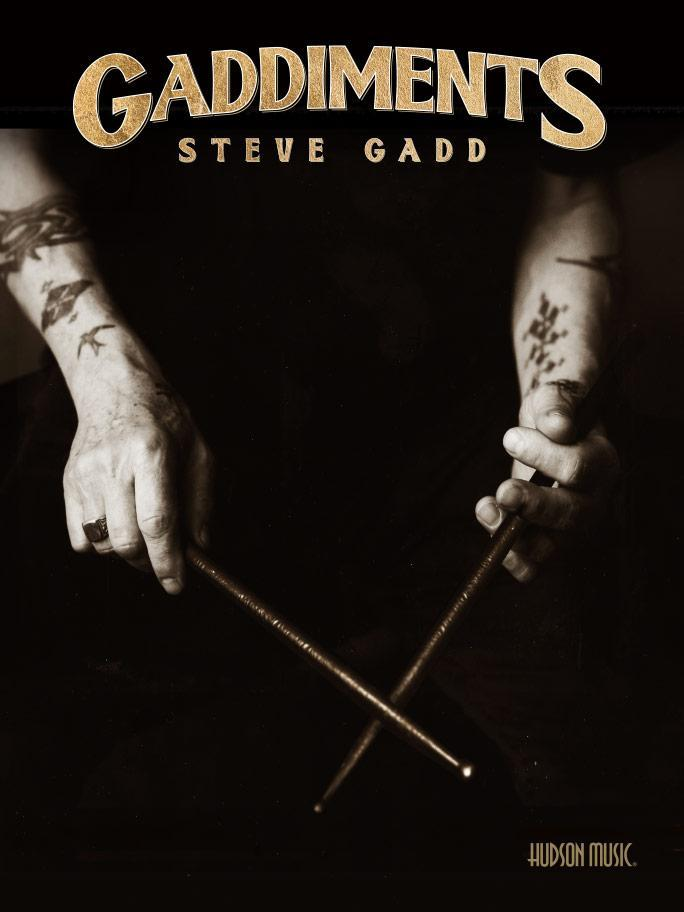
SV: You mentioned when we spoke on the phone that during the pandemic, to keep your chops up, you wrote a book of drum rudiments [“Gaddiments,” Hudson Music, 2021].
SG: I didn’t plan on writing a book. But I started practicing rudiments to keep my chops in shape, and the more I did it, the more I started discovering some different, new ways to do some old things. I’m real happy about it. I like to share stuff, and I wrote it all down because I wanted to be able to share it. There’s some different stickings that I just thought of, that I had never thought of.
And there’s a live album from the Steve Gadd Band [“Steve Gadd Band at Blue Note Tokyo,” BFM Jazz, 2021]. When the pandemic was going, and I was not working, we got a hold of a live tape from the Blue Note when we were there, and it was a tour we did with [guitarist] David Spinozza. It was a pretty good night, and my son and I spent a lot of time on it. I wanted it to feel live but I wanted it to feel real. Like you were in the club. So, I’d love to have you hear it, if you listen to it, it’ll take you for a little ride.
SV: Steve, I can’t tell you how honored I am that you joined me today. You’ve been one of my favorite drummers for so many years, and your work continually inspires me. I know you have to run, but this was a real treat!
SG: Alright, thanks man.
SV: Hope to talk with you again down the road.
SG: Sounds good.
Leader & Co-Leader Highlights
- Steve Gadd Band: Gadditude (2013), 70 Strong (2015), Way Back Home (Live from Rochester, NY) (2016), At Blue Note Tokyo (2021)
- Stuff: Stuff (1976), More Stuff (1977), Live in New York (1980)
- The Gadd Gang: Gaddabout (1984), The Gadd Gang (1986), Here & Now (1988)
- Manhattan Jazz Quintet: Manhattan Jazz Quintet (1984), Autumn Leaves (1985), My Funny Valentine (1985), My Favourite Things Live in Tokyo (1987)
- Steps Ahead: Steps Ahead (1983)
- The Chick Corea + Steve Gadd Band: Chinese Butterfly (2017)
- The Gaddabouts: The Gaddabouts (2011)
Essential Sideman Credits
- Paul Simon: Still Crazy After All These Years (1975), One-Trick Pony (1980), Hearts and Bones (1983), You’re the One (2000), Surprise (2006)
- Steely Dan: Aja (1977), Gaucho (1980)
- Chick Corea / Return to Forever: The Leprechaun (1976), My Spanish Heart (1976), The Mad Hatter (1978), Three Quartets (1981)
- James Taylor: JT (1977), Flag (1979), Dad Loves His Work (1981), Hourglass (1997)
- Eric Clapton: Pilgrim (1998), Reptile (2001), One More Car, One More Rider (2002), Back Home (2005)
- B.B. King and Eric Clapton: Riding with the King (2000)
- Al Di Meola: Elegant Gypsy (1977), Casino (1978), Electric Rendezvous (1982)
- Paul McCartney: Tug of War (1982), Pipes of Peace (1983)
- David Gilmour: Luck and Strange (2024)
- Peter Gabriel: OVO (2000), Up (2002)
- Quincy Jones: Sounds…and Stuff Like That!! (1978), Q’s Jook Joint (1995)
- George Benson: Bad Benson (1974), In Concert-Carnegie Hall (1976), Good King Bad (1976)
- Grover Washington, Jr.: Feels So Good (1975), Winelight (1980)
- Al Jarreau: This Time (1980), Breakin’ Away (1981), Jarreau (1983)
- Stanley Clarke: Journey to Love (1975), School Days (1976)
- Bob James & David Sanborn: Double Vision (1986)
- Frank Sinatra: L.A. Is My Lady (1984)
- Aretha Franklin: With Everything I Feel in Me (1974)
- Barbra Streisand: Superman (1977), The Broadway Album (1985)
- Rickie Lee Jones: Rickie Lee Jones (1979), Pirates (1981)
- Carly Simon: Boys in the Trees (1978), Torch (1981)
- Michael Franks: The Art Of Tea (1975), Burchfield Nines (1978)
- Weather Report: Sweetnighter (1973)
- Jim Croce: I Got a Name (1973)
- Charles Mingus: Me, Myself An Eye (1979)
Leave a Reply
You must be logged in to post a comment.