
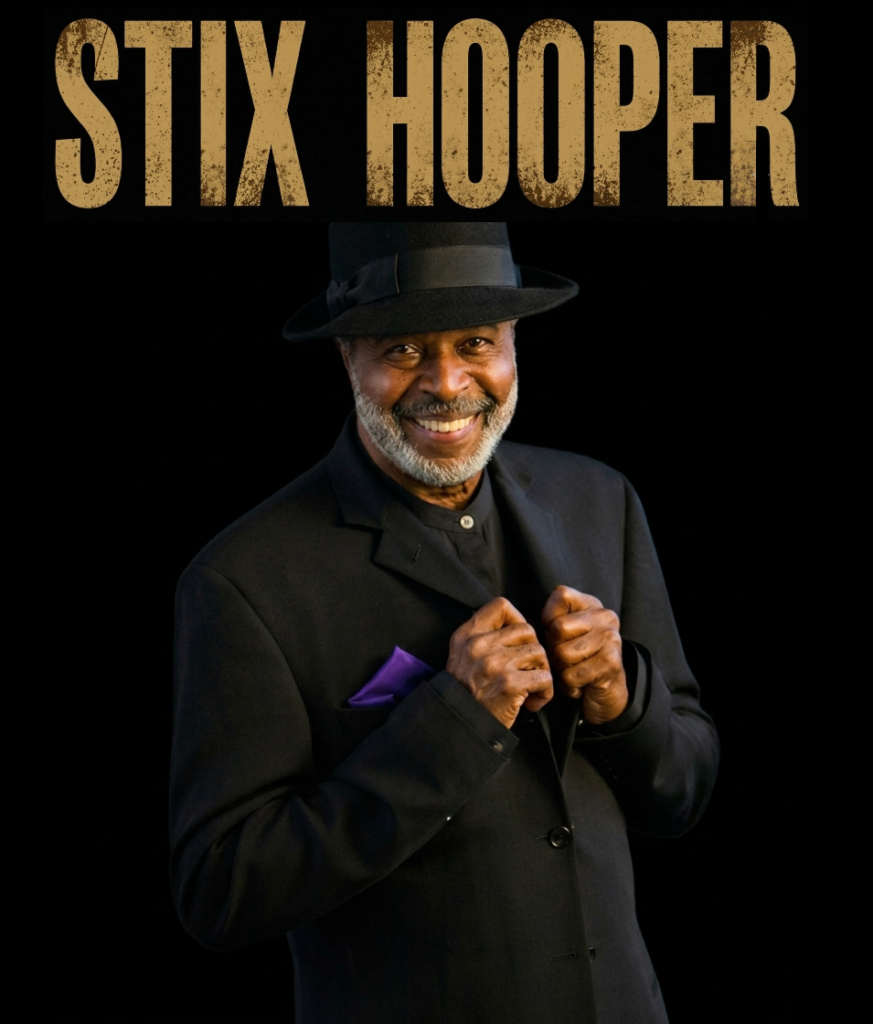
Stix Hooper on the discipline of the pocket, the evolution of jazz-funk, and why true musicianship transcends the marketing-driven trends of the modern era.
___
Nesbert “Stix” Hooper (born 1938) is an accomplished jazz drummer, songwriter, and bandleader best known as a founding member of the influential group The Crusaders.
Sounds Visual: I want to start with your Houston roots and formation. Your band directors, George McGruder and Sammy Harris, shaped your earliest training. Is there a specific lesson or habit from those junior high and high school band rooms that is still in your hands when you sit down at a kit today?
Stix Hooper: Well, one thing is that I was dedicated and convicted to what I’m supposed to be doing. Do a lot of practicing, and keep yourself physically shaped to do what is necessary because the drum is like playing a piccolo. That was one of the lessons they taught me—to practice and study and be able to relate to other musicians and see what they’re doing, and not necessarily to copy, but to have other references of how to approach your instrument.
SV: You also studied at Texas Southern and got coaching from Houston Symphony Orchestra members before touching jazz and later on funk music. How did that classical legit style training clash or blend with the kind of groove-based playing that you became known for?
SH: Hmm, that’s a very interesting question. Let me see if I can answer that appropriately. It gave me discipline in terms of my reading skills and also to get those different textures on drums. You mentioned working at TSU; my dear friend Joe and I, we were studying music there. We also were singing in the chorus there for the people that were doing the singing at the school. All of those things were definitely influential in shaping my career.
SV: Looking back at the music curriculum at Wheatley High School — which produced you, Joe Sample, Hubert Laws, Wilton Felder, and Wayne Henderson — what specific elements of that public-school education do you think are missing from how young musicians are taught today?
SH: A lot of it is missing because they’re going to private school, and private school is very private. I shouldn’t be so facetious, but I think public schools in those days—I don’t know how it is now—was very influential in shaping a student’s life because the teachers were dedicated, they were paid good salaries, and everything was hands-on. You had to be hands-on in every aspect of your life in terms of writing skills, not just music and everything else. There was no such thing as computers and all those things in those days. The computer was your brain.
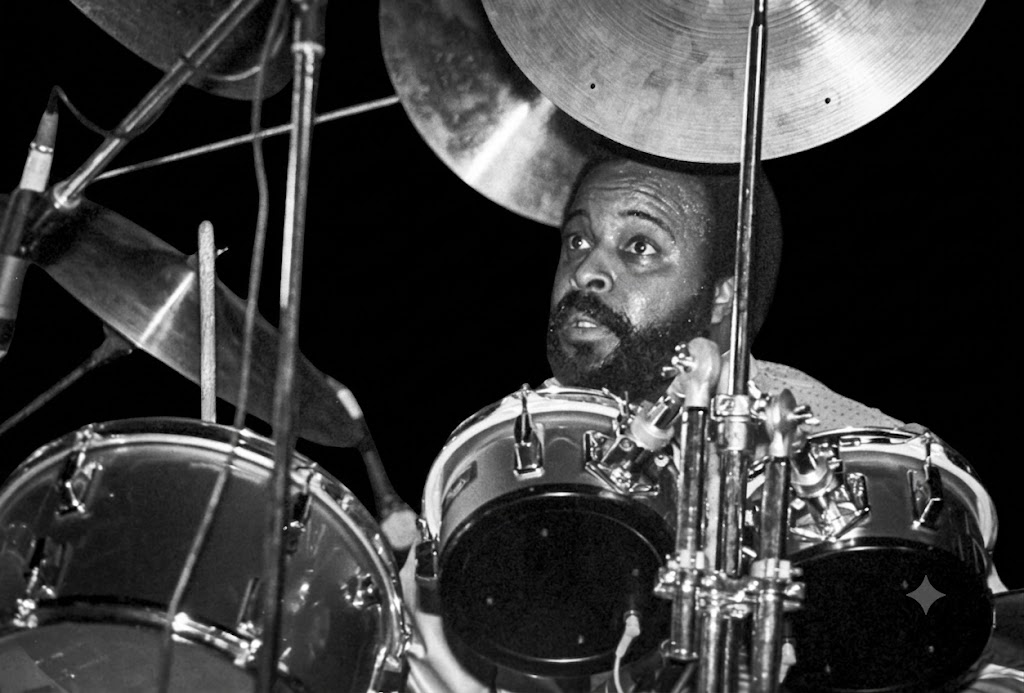
SV: You, Joe Sample, and Wilton Felder formed the Swingsters as teenagers in Houston, which evolved through several names into the Jazz Crusaders. What was the chemistry like in those early days, and how far was that early sound from the jazz-funk people associate with you now?
SH: Well, because of being in Texas and in Houston, [we] had a lot of blues influence, both in terms of the tone and the grooves, and we would have all kinds of different kinds of things that were related to rhythm and blues. They had, the shuffle rhythm, you’ve heard of that…
SV: Of course.
SH: All of those things were influencing how we shaped the music. Because in later years, I was talking to Art [Blakey] about that stuff, and he would understand how we played jazz in a different framework than what you know as a band drummer and the spang-a-lang. (an affectionate, onomatopoeic nickname for the classic jazz ride cymbal pattern)
SV: The Nighthawks played R&B and dance music six nights a week just to survive. Do you think that grind is what ultimately gave the Crusaders their signature, unshakable groove?
SH: I think it’s significant. The Nighthawks was a way to develop that, but it was also because of the musical sense I brought to the unit. We never wanted to put my name on the front, but that group definitely influenced the dance music scene. We had a certain air about us as the Nighthawks that was different from the Crusaders.
SV: Recording at the Lighthouse in 1962 was strictly “take one” on a two-track machine — no safety net. Did that pressure tense the band up, or fuel the telepathic chemistry you became known for?
SH: It fueled a kind of telepathy. We were so well-rehearsed that the spontaneity, the creativity, and our awareness of the charts all happened simultaneously. I remember the Lighthouse in Hermosa Beach, California, of course. Howard Rumsey, the bass player, used to come in and—joking, of course—say he was taking a lesson from us. I’m not sure if the Lighthouse is still standing, but it was such a prominent jazz club back in the days when jazz held a certain kind of prestige in the United States. I’m not going to speak negatively about the country, but I think you know what I mean.
SV: When The Crusaders dropped “Jazz” from the band’s name in 1971, was that a marketing decision, a musical one, or did it feel more like a personal identity shift?
SH: It was, I guess you might say—for lack of a better term—a mixed blessing. We ultimately dropped the ‘Jazz’ from our name because there were so many associations attached to the word, both negative and positive. We decided we just wanted to be ‘The Crusaders’ and let the music speak for itself. Whether people wanted to call it jazz, swing, or anything else, that was up to them; we made the decision to move on from ‘The Jazz Crusaders.’
Ironically, a lot of that had to do with the racial climate at the time. And I want to make sure you get this on the record: it was interesting, and almost to the point of being frightening, that the ‘King of Jazz’ was Paul Whiteman and the ‘King of Swing’ was Benny Goodman.
SV: You’re credited with helping originate an actual named style — jazz-funk — rather than just a feel. When did you realize you weren’t just playing jazz with a backbeat, but building something new?
SH: I don’t know exactly what year that was, but I realized—perhaps it’s not a religious thing, but I feel blessed by the fact—that I understood the ‘two and four.’ The two and the four are the universality of music. That is the rhythm that travels around the world. I don’t care what you’re listening to; even in a rock band, if the music has real, genuine appeal, it’s because of that backbeat—as you know.
SV: Let me ask you about Street Life for a minute. That was a crossover into pop and R&B charts in a way that a lot of jazz records weren’t doing or never did. Do you feel like you were playing differently on that record, or was it the same pocket, just dressed in different clothes?
SH: That’s a great way to put it. You know, a lot of people don’t realize that the personnel for that record was originally supposed to be Nancy Wilson.
I actually had Randy Crawford in mind, but many people didn’t know the backstory. She had been recommended by my good friends John Levy and Cannonball Adderley. John knew of her, but at the time, Nancy wasn’t able to commit to the project due to other obligations. So, John recommended we try Randy Crawford instead.
We really had to be completely in sync to pull off ‘Street Life.’ It was a challenging process—not just in terms of working with her—but it was the right move. We felt that, yet again, we were expanding the horizons of music.
SV: You had to fight record executives to keep the 11-minute runtime and floating, rubato intro on “Street Life” instead of dropping straight into the beat. What was your core argument in that room?
SH: I said, ‘Well, you won’t get the record at all unless you keep that on there.’ And in a room full of business people, they decided, ‘Well, maybe we could go with that,’ because they’d never had a jazz record that didn’t start with the groove from the very inception. So, I convinced them to do that, and it ended up becoming the biggest record for The Crusaders, and one of the biggest records on the label itself.
SV: At what point did you realize The Crusaders weren’t just a jazz group anymore — they’d become part of popular culture?
SH: I’ve realized that the universe of music speaks for itself; it’s popular all over the world because there are no language barriers. Music transcends all of that. We realized that music, by its nature, speaks for itself. And when we talk about pop culture, we have to recognize that music is pop culture. If I play the same song today, it would resonate in Iran just as much as it would in Chicago—regardless of what else is going on in the world.
SV: Wilton Felder was a perfectionist who essentially laid the bass foundation for Barry White’s career. When the band started overdubbing so he could play both bass and sax, did that change the rhythm section’s natural vibe?
SH: Not really. I established the groove on the record and played it live. Sometimes we would try to record it that way, or we would establish the groove the way he would play it, and we would hope we could transfer that to the other musicians—to me or the bass player—to be able to come close to duplicating it.
SV: Which Crusaders album do you think history has underrated, and which recording best captures the band exactly as you remember it in the studio — not necessarily the biggest hit, but the truest representation?
SH: There’s no way I can remember every record, but I do remember certain moments in the studio that were truly outstanding. I recall recording ‘Put It Where You Want It.’ Shelly Manne—who was a good friend of mine and owned a jazz club—was in the room adjacent to ours. He heard the groove we were laying down, knocked on the door, and came in to ask, ‘What are you guys doing in here?’ I told him, ‘We’re playing funk.’
SV: Every great band has unspoken rules–did The Crusaders have any musical rules that outsiders never knew?
SH: I don’t know if you’d call them ‘rules,’ exactly. It wasn’t about setting hard policies, but rather advocating for creativity in everything we did. We didn’t really need a list of strict regulations because we didn’t have issues with drinking or substance abuse; we didn’t have to manage that kind of behavior. We just had a set of good, normal standards, as I’m sure you understand. The most important one? Don’t be late for the gig. We simply did not show up late.
SV: The track “Spiral” was rare in that it actually required rehearsal, because of its rock-influenced fusion of groove and harmony. What did you have to adjust technically to anchor something that different from your standard jazz or R&B feel?
SH: That’s true. On that particular record—I’m reflecting back, and it was many years ago—I think I had begun to listen to Chick [Corea] or a couple of other people. There were the elments and all the musicians who were doing things that were spontaneous but not necessarily locked into a groove. Because of that, I had to adjust my mind to realize that I should try to enhance the compositions with certain textures and nuances. That’s why I realized that a pocket groove, as you say, isn’t always necessary, nor is it always the most appropriate way to approach a composition.
SV: Opening for the Rolling Stones at Boston Garden, you went to the mic with finger cymbals instead of trying to match their volume. How did that crowd react to the sudden, intimate shift in dynamics?
SH: It was big laughter until the groove got so strong, because I was playing finger cymbals.
SV: What made the chemistry between you, Joe Sample, Wilton Felder, and Wayne Henderson so instinctive — and how did trust develop within that rhythm section before the music did?
SH: Wow, I have to think about that. Part of it was possible because of what you referred to earlier in this conversation regarding high school band directors and that environment. We had a certain amount of confidence and trust in each other. We wanted to isolate ourselves from the regular band to put something else together, and we were able to build that kind of trust.
It’s interesting—I think the music, or the music business, or whatever you might call it, has become a little bit more visual these days. I’m going to send you a picture of the original high school orchestra band; I don’t even think people know that Hubert Laws started out as an alto saxophone player.
SV: Looking back, what ingredient do you think people most often overlook when they talk about The Crusaders’ success?
SH: That’s really interesting. But you know, to try and encapsulate that sense—that lack of ego—is that our success was based on something that doesn’t exist as much today: our ability as musicians, our craftsmanship, and our creativity. It was the opposite of today’s marketing-driven industry, which can make a person who isn’t even able to fart in tune a success.
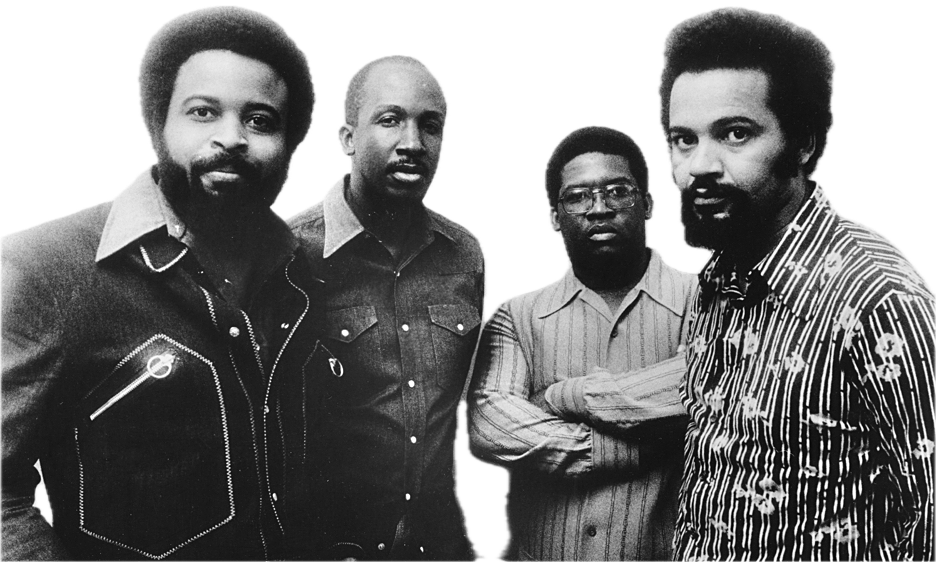
SV: You’ve recorded with everyone from George Shearing to the Rolling Stones to Marvin Gaye, B.B. King, and Quincy Jones — even soundtrack work like Enter the Dragon. What’s the one adjustment to your playing that never changes, no matter who’s in the room?
SH: I had to discipline myself to be an accompaniment to whatever situation I was working in—whether it was for Lalo Schifrin, Quincy Jones, B.B. King, or whoever the case may be. I have a lot of funny stories about all of that. I remember when we were working on ‘Never Make Your Move Too Soon’—and that title really speaks for itself—B.B. came into the studio. In those days, studio musicians, especially guitar players, would come in with ten amps and four guitars. B.B. came in with one little, small amp. He played a single note, and everybody else in the room had to step back and leave so they could catch their breath.
SV: Is there a session among those that completely upended how you thought about timekeeping or groove?
SH: Hmm, that’s an interesting question—it’s a bit of a double-barreled one. I think when it comes to keeping the groove, especially when I was working with producers on projects like the one I did with Gerald Wilson, New York, New Sound, I had to notice more than just the groove. You have to listen closely—I mean, did the third trumpet player even play in tune? [Laughing].
SV: How do you define groove beyond simply keeping time — and how do you know when a groove has “settled in” versus when musicians are just playing in time?
SH: That’s another great question. But like I said, when you reflect on what I mentioned about the ‘two and four,’ you’re trying to keep everything locked into that specific pocket. Regardless of the music, you have to make sure it’s steady and locked in. You don’t need a time machine to maintain a groove; the groove is about the feel, and as long as you feel it, your job is to make sure that execution remains consistent and steady.
SV: Your drumming rarely calls attention to itself, yet it’s instantly recognizable. Was that restraint intentional from the beginning, or did it evolve?
SH: It really evolved over time. I’ve always viewed the drums as, theoretically, a supporting instrument. That’s why I’ve enjoyed working with everyone—from hardcore funk musicians to the people I’ve collaborated with on movie soundtracks, and even someone with the nuance of George Shearing.
SV: For younger drummers obsessed with technical complexity, high-velocity playing, or rigid click tracks, how do you explain the discipline required to serve the song rather than the ego?
SH: Wow, that’s a topic in itself—it’s something I could probably dedicate an entire seminar to. But there is certainly no room for ego. Ego should never be part of the equation. What should be applied to the music is discipline, focus, and a commitment to structuring what’s within the framework of the composition and the arrangement.
SV: You’ve said an aspiring drummer needs to understand chords and how melodies flow — never just blindly “play time.” Can you elaborate a bit?
SH: That’s true. When you’re dealing with a raised ninth or certain types of complex chords, there is a specific tone and feeling that needs to come through the drums. If you’re aware of that—beyond just having the fortune to be creative and the ability to work with piano or audio samples—it changes everything.
It is vital for drummers to understand harmony and the full scope of a composition, not just ‘playing time.’ You need to understand dynamics, from pianissimo to fortissimo, and how to navigate the piece as a whole. I’ve had many conversations with musicians about this. I don’t want to put down my rock friends, but if you play the same tone and the same sound all the way through a song, it doesn’t necessarily kill your creativity, but it does become very stagnant.
SV: After a Japanese-made snare drum literally blew apart onstage in Tokyo under a funk backbeat, you went to Chiba the next day to help rewrite the blueprint for what became Pearl Drums. What was the #1 piece of structural advice you gave those craftsmen?
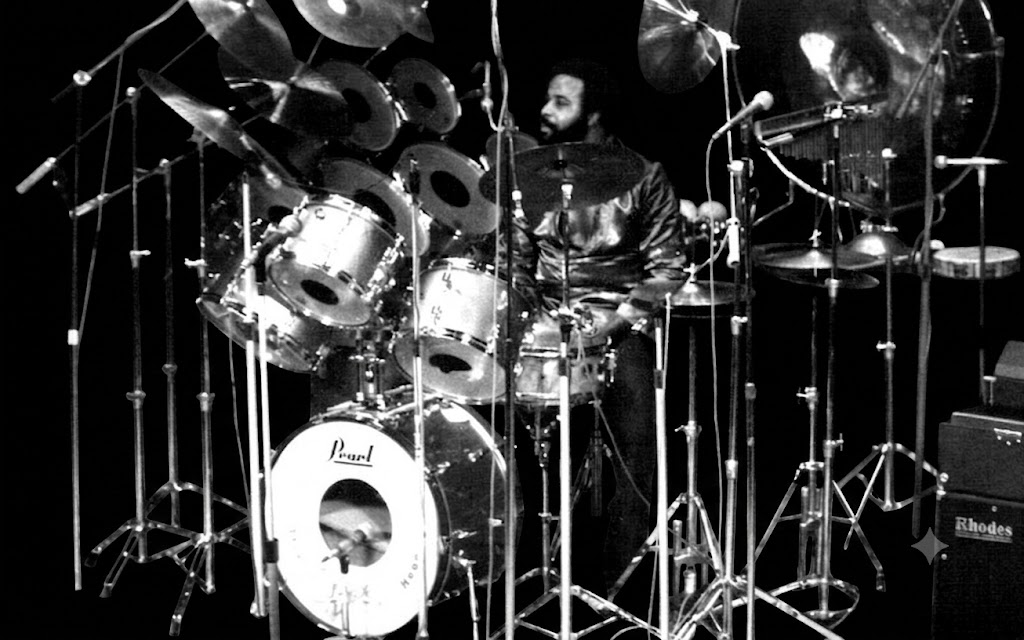
SH: You have to make sure that everything is balanced and even, particularly on the rims. You have to get a certain sound and a certain feeling—it has to really own the rim when you play the cross-stick. That’s what I told them to do: make sure everything is balanced and even, and make sure that’s pretty much where it stays, with the structure being substantial, I guess, in general.
SV: Instead of handing studio musicians rigid sheet music, you’d give general direction — “Letter A should be funkier, Letter B lighter” — and let camaraderie take over. How did you maintain control of the band’s identity inside that loose, democratic process?
SH: We all shared a common sense of reality regarding dynamics. As for me, when I speak of pianissimo, fortissimo, forte, or crescendo—all those musical terms—I’m fortunate that my Italian fans understand exactly where those terms originated. You simply have to acknowledge those nuances, which is something you can’t really do in much of today’s music. You set a button, and it’s just ‘boom, boom, boom, boom’ all the way through.
SV: You’ve spoken about the importance of “roots school” rather than just “old school.” Can you elaborate on why understanding the foundation is so vital?
SH: If you don’t know the roots, there’s no such thing as the old. It’s like farming—if you don’t root, you can’t grow a plant. You need to know the foundation of everything, whether it’s harmonic, rhythmic, or the dynamics of tonality. If you understand those roots, it allows you to be spontaneous and truly understand your place in the jazz world.
SV: When did you realize that a younger generation was discovering your music through hip-hop sampling?
SH: I realized it when I started hearing my work sampled in songs, and I didn’t see any money in the bank! [Laughs] But beyond that, it’s a point of reference. The hip-hop movement started in the late 80s and early 90s, but many of those artists didn’t realize that their own roots traced back to people like Eddie Jefferson.
SV: Has being sampled and hearing your own music recontextualized changed how you approach your own recordings or live playing?
SH: No, I kept the same groove. But I did establish myself with my lawyer to make sure that if I hear something that sounds like what I did, I get paid for it.
SV: Is there one groove you’ve never gotten tired of playing?
SH: There are so many different grooves, but the main thing is to be able to not only keep time on the hi-hat cymbal but to be able to open that hi-hat to enhance the texture of the groove.
SV: Stix, thank you so much for your time!
SH: It’s been a pleasure talking to you, too. Keep doing what you’re doing, and keep spreading the word—not so much about me, but about the true value of musicianship: being a respectful craftsman and honoring music for what it actually is, rather than focusing solely on the marketing. You can chase the money, but that well can run dry pretty quickly. As the cost of living and other expenses continue to rise, it’s the genuine substance and quality of the music that will provide the real, lasting sustain.
Stix Hooper’s most recent album, Cookin’ Up the Groove, is available here.

Leave a Reply
You must be logged in to post a comment.