
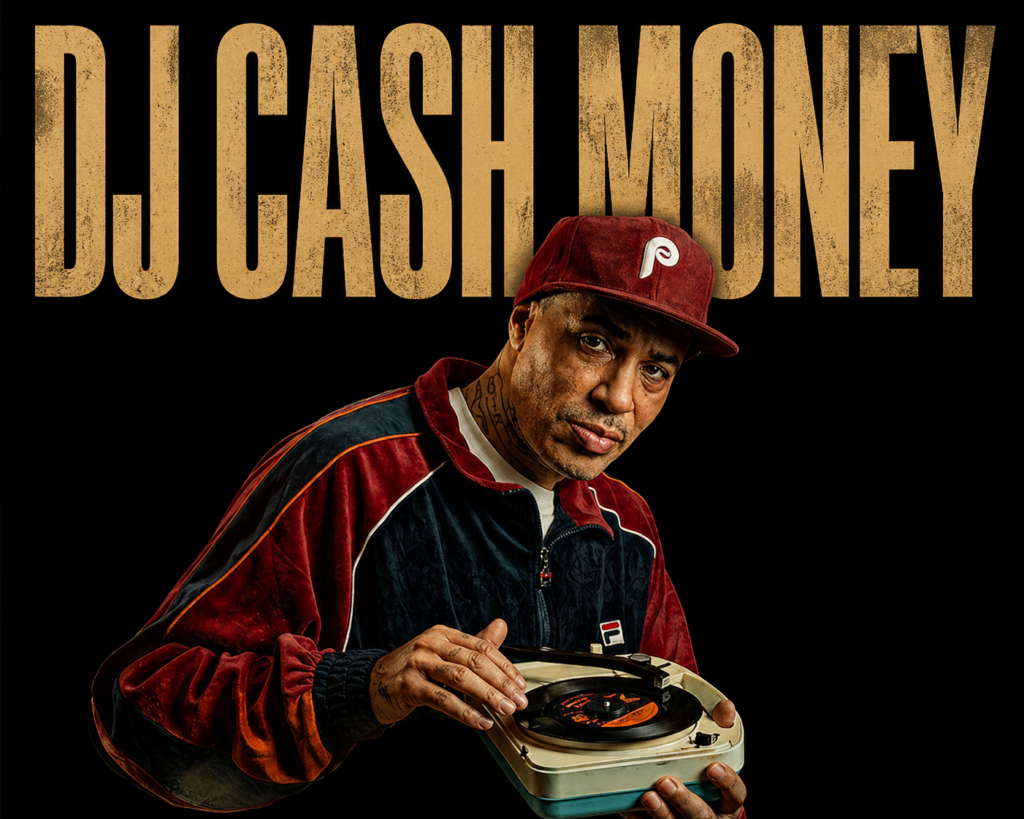
Moving from rhythm-obsessed dancer to architect of the scratch, DJ Cash Money defends hip-hop’s “analog” soul by showing how physical rhythm transformed the turntable into a true musical instrument.
DJ Cash Money (Jerome Hewlett): My journey started with my parents. They were both huge music lovers, so there was always music playing in my household. We had everything—Marvin Gaye, The Carpenters, Frankie Valli and the Four Seasons. We had a crazy amount of soul 45s and different genres playing constantly. That’s where I learned the foundation.
It wasn’t until the Jackson 5 came out that I really found my own thing. They were children at the time, and I felt I could relate to them because I was a child myself. I gravitated toward trying to imitate what Michael Jackson was doing; I learned how to dance and all that. Then hip-hop arrived, and I just fell in love the first time I ever heard Grandmaster Flash scratching on a record.
Sounds Visual: I read that you were a “franchise dancer” before you were a world-class DJ. How do you think that physical understanding of the “Fred Astaire step” influenced the way you approach the rhythmic clicking of something like a transformer scratch?
DJCM: You shocked me with that [question!] How did you know about that? [laughs] Okay, now we’re digging deeper! Well, back then, James Brown was my number one musical hero. In my neighborhood, we used to have these block parties. There was a group of about five or six people who wore matching uniforms, and they would do these steps in a circle. It was like Fred Astaire tap dancing or the Nicholas Brothers—that type of stuff. The crowd would go crazy. They would dance to James Brown breaks, or that big song by Black Heat, “Love the Life You Live.” That was their signature song for “getting busy.”
As a kid, I was amazed. They eventually allowed me to join the group, and that’s how I learned about rhythm, how to twirl a hat, how to twirl canes—all of it.
SV: So, carrying that influence over—the rhythm in your feet—when you ultimately started DJing and scratching, did it feel like you were dancing with your hands?
DJCM: Absolutely. Everything is about rhythm. My friends call me “the human metronome” because in my mind, there’s a constant clicking noise. You have to be in time and on beat with everything you do.
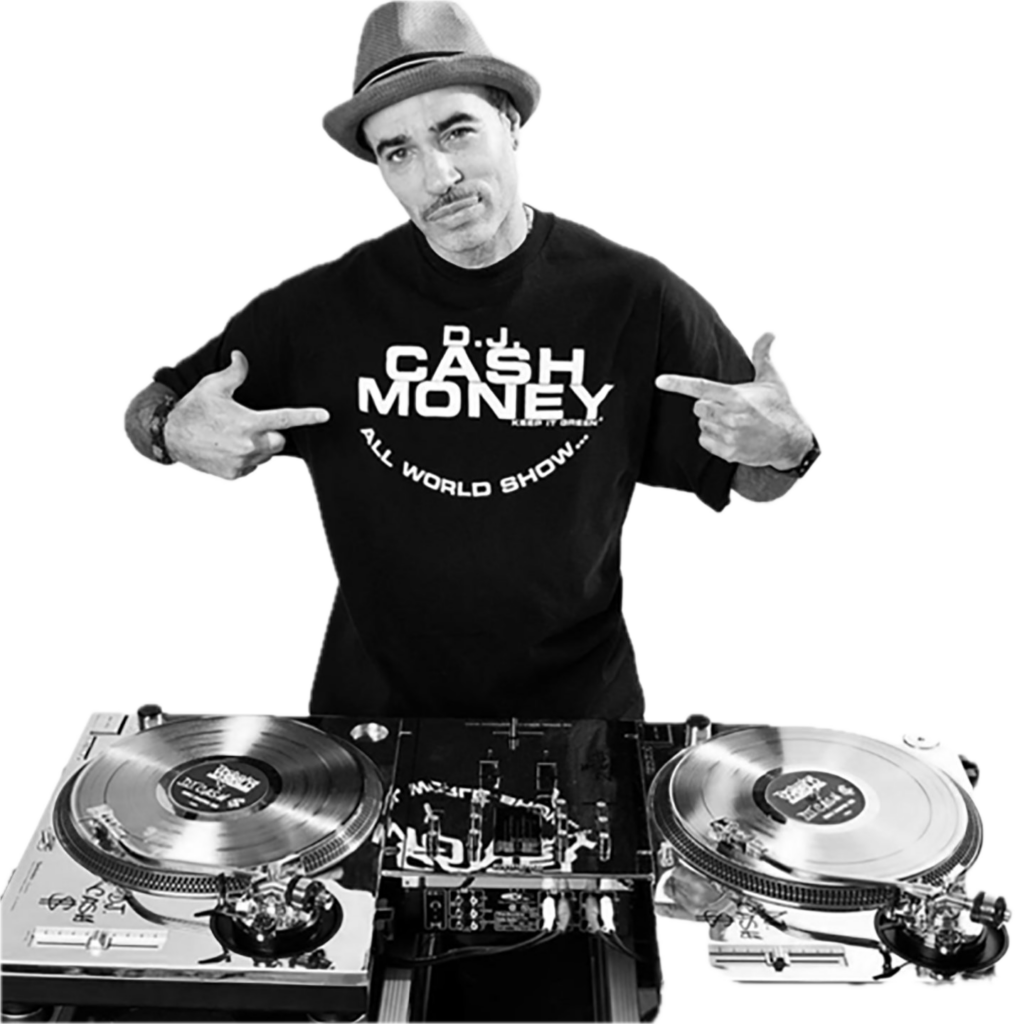
While Hewlett began his college career studying engineering, it wasn’t long before he swapped the slide rule for the turntables. His DJ moniker was born on the basketball court; whenever he’d sink a basket, onlookers would shout, “There’s the money shot!”—a phrase he eventually adopted as his professional identity.
SV: What was the next step in your immersion?
DJCM: When I first heard Flash on records, there wasn’t actually much scratching yet because they were still using live bands on the recordings. But then I started hearing these underground party tapes from New York that my cousin brought down. I was like, “What the hell is he doing?” I started really studying.
I found a few of the records he was using and realized there was no way he was catching the record that fast—that’s why they called him Flash. He was catching the breaks right in the middle of a record, looping the beat for the MCs to rhyme over. He was essentially a drummer. That’s what amazed me, and I fell in love with the art of DJing from that perspective.
SV: I want to talk about the ergonomics: you ended up turning the turntables sideways, “battle style.” You’ve mentioned before it was done to keep your sleeves from catching the tonearm. Can you elaborate?
DJCM: First of all, it shouldn’t be called “battle style”; it should be called “DJ Cash Money Style.” Nobody was doing it at the time. The Philly style back then was two turntables on one side, or a mixer in the middle with the tonearms on the side. When I practiced, my sleeve would always hit the tonearm, so I thought, “Yo, let me put this at the top.”
When I started DJing out like that, people laughed at me. In New York, they said, “Oh, he’s whack,” before I even started playing! But it became popular because I was the new kid and I wanted a “block.” Nobody had a sound or an approach like mine. It really took off when I won the DMC World Championship.
SV: Let’s talk about that. You had to win the New Music Seminar in New York first, right?
DJCM: Exactly. I entered the New Music Seminar, which was incredible. Some legendary DJs were there. I won that, and then I met Tony Prince, the owner of DMC. He asked me to compete, but I had to win the American Championship first to represent the US in the World Finals. They flew me to San Diego, I won, and then I went to Royal Albert Hall in London.
I’ll never forget it because by then, the other DJs had been studying me. When I got there, the guys I was competing against were asking for my autograph! After I won, the whole world wanted that setup. I was using a Gemini mixer—it was an inexpensive piece, all I could afford at the time—and suddenly Gemini became huge because everyone wanted the mixer I used.
SV: I want to go back to the New Music Seminar briefly. The organizers told you to “coast” against Joe Cooley because you’d already won on points, but then he came out with that Kraftwerk routine?
DJCM: Yeah, that was wild. Joe Cooley had actually lost in the preliminary rounds, so he was eliminated. The big battle was supposed to be between me and Bobcat, but Bobcat never showed. So it was down to DJ Pooh and me. Then they said Pooh got sick, and they put Joe Cooley back in. The other DJs were furious—they were yelling that I shouldn’t even compete because it was “BS.” But I’d driven all the way from Philly, so the organizers told me, “Cash, just coast. You’ve already won.”
I went first and coasted. Joe went second and did this incredible routine that threw me off. I didn’t have Serato or a laptop back then; I only had the records I brought. I ended up doing this “drumming” routine on Peter Piper. DJ Qbert later told me nobody was doing that yet. I was making a beat out of the record. The crowd went crazy. I won by like one point. If I had known that battle would actually count, I would have done the routine I’d actually planned!
SV: In the ’88 DMC, you used the “pushing a broom” line from LL’s “Get Down.” How much of a battle is won through technicality versus the psychological choice of a lyric to “sweep” your opponent away?
DJCM: That record was a pivot. A DJ named All Star Fresh went before me. He was a friend, but he decided to diss me in his set, cutting a record that called me a “sucker.” I was standing next to Flavor Flav, and he was like, “What you gonna do, G?”
I didn’t have a hard drive to find a rebuttal; I had to look at the records I had. I took a record Jazzy Jay had used against me previously and flipped it. Instead of “calling me a sucker boy,” I cut it to say “you’re pushing the broom.” It killed. I’m very spontaneous—my best moments happen in real-time when I have to pivot.
DJ Cash Money is now considered a foundational architect of turntablism, widely recognized for perfecting the Transformer scratch alongside DJ Jazzy Jeff to mimic the robotic sound effects of the 1980s cartoon. He also created the “Pee Wee Herman” scratch and pioneered the Chirp, or Babuggamas, technique.
In 1987, he partnered with MC Marvelous to release the single “Ugly People Be Quiet” and the album “Where’s The Party At?” on Sleeping Bag Records.
Beyond his solo work, he has contributed production and remixes for iconic artists such as Snoop Dogg, Busta Rhymes, Public Enemy, and Mantronix.
SV: What’s the story behind “Scratchin’ to the Funk?” It’s a 12″ that was released in 1986, and it’s credited to you and Doctor Funnkenstein…
DJCM: I was in the studio doing scratches for another artist in Philly when this guy came in with these go-go records. He offered me $500 to just do a mix. I had never cut those records before and knew nothing about them, but we did it in one take.
The next thing I knew, the record was becoming incredibly popular. It was originally credited to “DJ Cash Money and Dr. Funnkenstein.” I actually had my lawyer get involved and then they took my name off it. And then the story gets deeper: the guy who brought me the records was Max Kidd. At the time, I knew nothing about him. It turns out he was the manager for Trouble Funk—so he was essentially bootlegging his own group! I’m actually cool with Trouble Funk now, and Big Tony didn’t even know about it back then. It’s hilarious in hindsight.
SV: And then Public Enemy ended up sampling your record on “Fight the Power!”
DJCM: It’s crazy, man. Just wild.
SV: You toured with Paul McCartney at one point for Greenpeace, right?
DJCM Yeah, I was DJing for P.M. Dawn around ’94. We were on the bill with him. I’m a huge Beatles fan, and it was amazing—he stood behind the curtain every night just to watch my hands. His daughter Stella introduced us, and he was amazed by the turntable. He asked, “Don’t you destroy the record?” I had to explain it’s about the needles and the weight of your hands—it’s all about balance.
SV Speaking of P.M. Dawn, you’ve mentioned you initially thought they were a bit “weird” before realizing their Jersey roots. What did you learn from them?
DJCM: When I first saw their videos, they seemed very psychedelic. But when we got into the studio in London, we hit it off. Prince Be was a massive record collector just like me. Every town we went to, we were at a record store.
His bodyguards used to beg me, “Cash, please don’t tell him you’re going to a record store, we need sleep!” I tried to sneak out once, and Be saw me from the hotel window and called me: “Where you going? You’re going to a record store. I’ll be right down.” He once spent 10 grand in one sitting. He’s actually the reason record prices went up—dealers would hold the best stuff for him because they knew he’d pay whatever they asked.
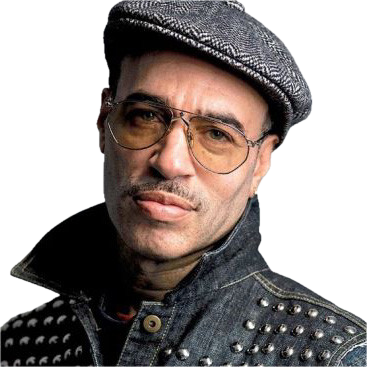
SV: You view the turntable as an instrument. In a world of sync buttons and AI, is the human element—the risk of a needle skip or an off-beat scratch—what gives music its soul?
DJCM: Yes. I’m an analog guy. Imperfections make things great. We’re trying too hard to get away from imperfections now, but most of the scratches I “invented” were accidents. I didn’t sit down to create the “Transformer” sound; it happened by accident.
SV: You were imitating sound effects, right?
DJCM: My whole career was based on sound. I did a “drag scratch” because I was trying to imitate the tape-splicing edits the Latin Rascals were doing in the studio. I wanted to do with my hands what they were doing with machines.
SV: You’ve mentioned that the 45s scene has become ‘watered down’ with common records being treated like trophies. In your eyes, what is the ‘litmus test’ that separates a true collector from someone just following a trend?
DJCM: It’s all about having something unique. If you hear a track and you want it, you can just grab an MP3 from YouTube, but having the original record is different. To me, that’s everything. I’ve been collecting 45s since long before it was “the thing” to do. It’s cool to see guys playing 45s now, but it’s become very watered down. I’ll see a guy spinning “All Night Long” by Lionel Richie on a 45 and he’s acting like it’s some rare find. I’m like, “Are you serious? That’s not a rarity.”
SV: Not only is it not rare, but we live in a culture soaked in irony. You have to wonder: are they playing it ironically or do they actually enjoy it? It’s a banger, sure, but…
DJCM: It’s a banger, but come on! What’s crazy is that people are getting records pressed up now, but they aren’t pressing up super rare stuff. They’re pressing up album cuts.
SV: It trips me out to walk into a record store and see a used copy of Thriller on the wall for $30, $40, sometimes even $50…
DJCM: Listen, that’s the crazy part. You go into Target or FYE and they have Thriller there for $30, and it’s a reprint. It’s not even an original. Half the time they just take the audio off a CD; it’s not even from the original master. That’s why I tell people: go to your second-hand record stores. Support them.
SV: After decades of listening to music to find breaks and scratches, do you still hear music the way a normal person does, or is your brain permanently wired to deconstruct everything you hear?
DJCM: I deconstruct everything. My approach is extremely different. We could listen to the same song, but I’m going to hear something entirely different than you. It’s just the way my mind is wired.
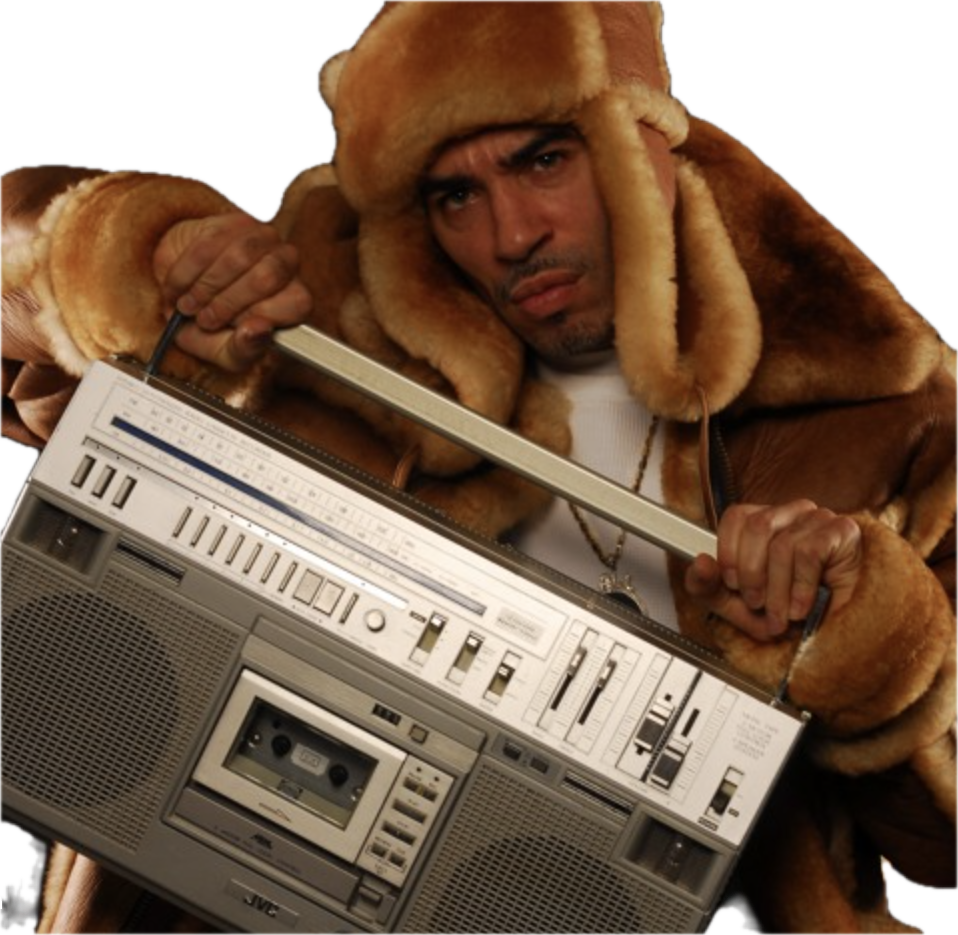
SV: You have an incredible collection—1,500 sealed 8-tracks, a hundred boomboxes. Do you feel a responsibility to keep the physical evidence of the culture alive?
DJ Cash Money: I do. Everything is being watered down now. People have “bump boxes” that look like the old boomboxes, but they don’t have the same mechanics. They’re just replicas. When you had to “dig” for a record, it made you special because you had something not everyone could get. Now, everything is a search bar away. I post things online so people can see: “This is an original copy. This isn’t an imitation.” The struggle of the hunt is part of the creative process.
SV: You’ve also talked before about “earning your stripes.” We live in a world that prizes instant gratification and viral moments. Do you think the concept of a lifelong apprenticeship is still valid, or has the definition of mastery changed?
DJCM: It’s over, man. It’s over. It’s crazy to me—I’ve been in this game 40 years, I have the legacy, the discography, and the consistency, yet I still feel like I have to be “validated” by someone just to prove who I am. The “button pushers” out there don’t even know who I am. It takes someone popular to say, “Hey, this guy is the guy,” and then suddenly everyone catches on.
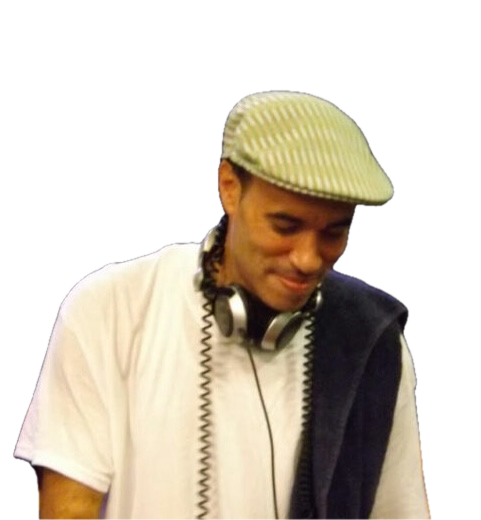
SV: When you take a piece of a James Brown record and transform it into something new, do you feel like you are borrowing his energy, or are you liberating that sound from its original context?
DJCM: You’re definitely borrowing it. But it’s about what you do to enhance it. I hate the line “imitation is the best form of flattery.” No, it’s not. If you can’t take something that inspired you and add to it, why do it the same way you saw someone else do it? That’s just stealing.
I was inspired by Grandmaster Flash, but do I sound like him? No. I took what Flash was doing and upgraded it. Then guys like Qbert and Craze took what I was doing and upgraded that. That’s evolution. If you can’t add to it, leave it alone. I can’t stand “biters” and copycats who become popular by doing exactly what they saw someone else do without giving any credit to the source.
SV: It’s like cover songs. If you’re going to do a note-for-note, pitch-perfect cover, what’s the point? I’d rather just listen to the original.
DJCM: Exactly. We’re seeing the beginning stages of Total Recall and The Terminator. AI is taking jobs, writing songs… whatever happened to the creative flow of being a human? I’m just happy I lived in a time where we were all still human. This younger generation doesn’t even have the social skills to talk to a woman in person; they have to go online for everything. It’s a sad state of affairs.
SV: Is there anything in there so sacred that you won’t even put a needle on it? A record where you just sit back and keep your hands off the vinyl?
DJCM: Nope. Nothing is too sacred to play. My records are like my kids—they’re all special in their own way. I have radio spot 45s that were never for sale, every blaxploitation and Kung Fu soundtrack, and even old commercials. I have reel-to-reels of McDonald’s commercials and boxing promos, like the Sugar Ray Leonard vs. Roberto Durán fight. I have every Right On! magazine from the beginning through the ’90s.
SV: Tell the readers what you’re up to now and where they can find you.
DJCM: You can find me at @therealdjcashmoney on Instagram, and DJ Cash Money on Facebook. Right now, I’m going back to the essence—DJing and party rocking. I took a break because I was getting burned out on the club scene, and for a while, me and Marvelous were doing shows, but we weren’t on the same page. So I’m back to my roots.
Next month is busy—I’m spinning at the Roots Picnic and I’ve got a tour coming up in June and July. I may not be as “popular” as the big pop guys, but the phone is still ringing. That’s all that matters.
SV: All the best, brother.
DJCM: Take care.
Leave a Reply
You must be logged in to post a comment.