
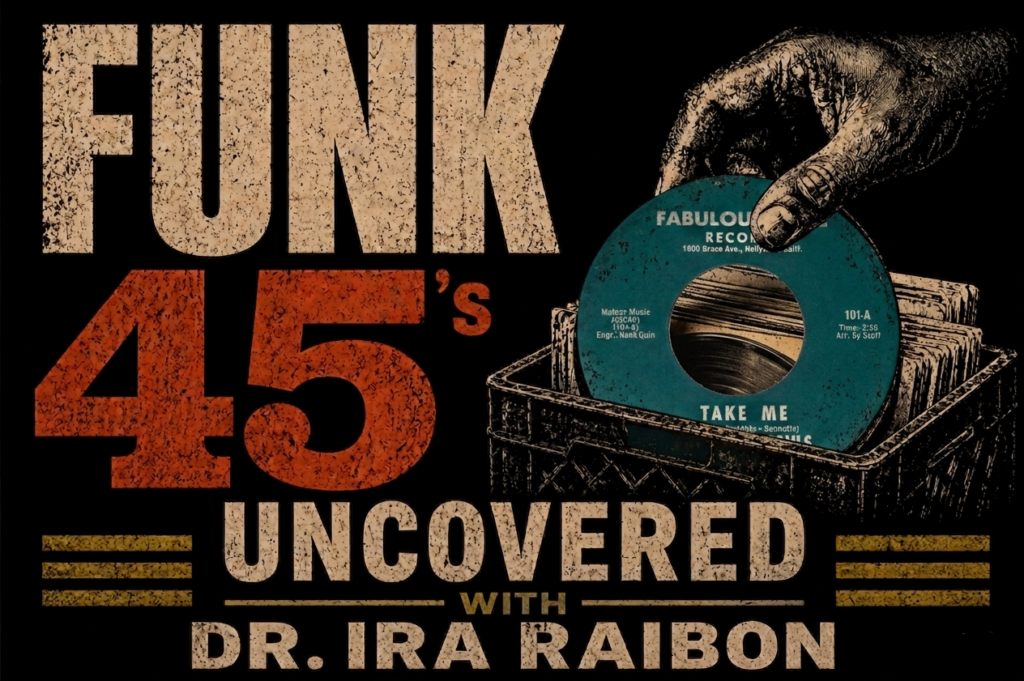
Multi-instrumentalist/composer Dr. Ira Raibon details the creation of the legendary Fabulous Souls funk 45 “Take Me” and his prolific career, navigating the highs of the California scene and the complexities of the music business.
Sounds Visual: Where did your musical journey begin?
Ira Raibon: Honestly, I was born with it. I remember crawling around my grandfather’s house looking for a piano. He had this massive roll-top desk, and I was convinced that when it opened, there’d be a keyboard underneath.
My mom was a singer, and I’d follow her around the house all day. I’d hear the rhythm of the washing machine while she worked; I’ve just always had this gift for sound. It’s actually one of the reasons I “disappeared” for a while—I wanted to protect that gift. It’s almost like AI; I have a radio in my head. All I have to do is be quiet and listen, and I hear all kinds of music.
SV: Where were you born and raised?
IR: I was born in Tyler, Texas. We moved to California in 1952, just before I turned two. I’ve been on the beach ever since.
SV: So you’ve always been inspired by music. I’ve heard you mention that “washing machine” story before—finding industrial, mechanical sounds and using them to shape your internal sense of timing. Is it true you threw away your piano books as a kid because you felt you could already play by ear?
IR: I did. Every Sunday, I’d sit on the front pew of our church because there wasn’t childcare back then. I’d sit right there so I could watch the piano player’s hands. I’d go home and mimic exactly what I saw.
I figured a lot of it out on my own, though I didn’t know the terminology until I started studying theory. To be honest, theory was a struggle at first because it intimidated the “internal guy” who just wanted to go where the music led.

SV: I heard a rumor that you play upwards of 30 different instruments?
IR: It’s 40. The flute took the longest to master. I actually caught walking pneumonia and could only manage a tiny “peep” of air. But with that restricted air, I found the biggest, purest sound of my life. It’s like the voice: the smaller you get, the bigger the sound. I picked up the sax and sounded like I do now by the second day.
SV: You’re a staple of the California coastal scene, but for years, many people assumed you were part of the Indiana scene. Where did that misconception come from?
Ira: That came from a guy stealing our masters. He stole from our first session—that’s where “Gotta Have Love” came from. Those were songs I’d written for Linda Foreman while I was producing her for Public Records. My masters were stolen and suddenly reappeared in Indiana.
SV: That’s wild. We’ll get to the Indiana years naturally, but before that, what was the actual music scene like in Oceanside and North County during your formative years?
IR: I had my own high school band. My mom actually made me join sports to get me out of the house, and I discovered I had incredible “hops.” My long jump record stood for 58 years; I’m still in the Book of Records for the Southern Section CIF.
All my buddies were athletes. In my first band, I had the second kid in America to high jump over seven feet—he played baritone sax. Willie Buchanan, who became NFL Rookie of the Year with the Packers, played trumpet for me. My rhythm section was the National 440 Relay team. I taught them all how to play, and we just blew everyone away from North County down to San Diego.
We once entered a Battle of the Bands at the Civic Center in San Diego. When they announced another band as the winner, a riot started. People were throwing chairs—it was crazy. After that fiasco, I hooked up with June Jackson. He made me the leader of his horn section and gave me complete freedom. That’s why I don’t like record companies—they don’t give you freedom. It’s like being a scientist in a lab but being told what you can’t research.

SV: So, from San Diego, how did you end up in the LA scene?
IR: San Diego was too sleepy back then. All the pros worked in Vegas. When Hendrix or anyone big came to San Diego, they were usually fried, and the concerts weren’t great. I eventually hooked up with Venture Records in LA. I didn’t know it then, but Venture was essentially Motown moving to California.
I learned studio techniques from Mickey Stevenson and Clarence Paul (who produced Boz Scaggs’ Silk Degrees). I worked with James Bell, Stevie Wonder’s first producer, and Willie Hutch. We called them “The Suits,” but those guys really knew music. They were development coaches. That’s what’s missing today. People say the talent pool has dried up—it hasn’t. But music skills are applied skills that need to be taught.
SV: You eventually wrote a single for the General Soul Assembly called “Hiwaymen,” right?
IR: Yeah, “Hiwayman (Will Steal Your Heart.)” Dallas Smith mixed that. If you take the horns out, it sounds like “Easy” on a Sunday morning. It was actually “Pick of the Week” in Lionel Richie’s hometown in 1968.
Because of that song, Columbia Records tried to sign me. They wanted to get into R&B and I would have been their first R&B artist. But my manager at the time blew the deal, and I got blacklisted. I was the only artist to ever get the “Full Artist Tour” of Columbia Studios—playing the 20-foot grand piano and everything—and never get signed.
Right after that, the deal with Roulette fell apart. My manager and the label guys got caught with their “hands in the cookie jar,” and they dissolved the label. I had a nervous breakdown at 20 years old. I was just recovering from that when The Fabulous Souls came to my family’s house in Oceanside. They asked me to live with them, teach them, and write them a hit. That song was “Take Me.”
SV: “Take Me” is a legendary funk 45. What was the secret sauce in the studio?
IR: I was learning production on the fly. I realized that instead of forcing the band in a direction, I needed to see what was “sticking.” I observed them for six months to see their strengths. I designed “Take Me” around the individuals: Johnny on drums, Michael on bass, Lance on guitar. I taught the keyboard player a specific Sharp-9/13 chord and told him to just play that rhythmically all the way through.
The day of the session, I’m helping Johnny (the drummer) carry his gear into the parking lot. He says, “Ira, I want to change the drum beat on ‘Take Me.’” I said, “What?!” He told me he’d been hanging out with some percussionists from New York and to trust him. He played this new rhythm and added a conga part in the middle. It turned out to be the “hip-hop” beat before hip-hop existed. And Johnny was only 14!
SV: So how did the Indiana move happen?
IR: After the Columbia deal fell through, my manager Jim said he’d start his own label and make me the Music Director. I knew the business side—publishing, copyrights—because I’d helped him set it up. I told the guys we needed to keep ownership of the masters, so we paid for the session ourselves.
A few weeks later, Jim calls from Indiana. He pressured us to send the masters so he could “tweak” them. That’s when he added the panning effect between the keyboard and sax. We sent the masters, and he never gave them back. He told us, “You guys are hot, you have to come to Indiana!” When we finally got there, he looked at us and said, “What are you doing here?”
We ended up living in a hotel for weeks until I landed us a gig at a club five nights a week. Eventually, I got us a 20-room house on three acres. We opened for The Jacksons and backed the Vanguard. We even did a fundraiser with the Staple Singers and Muhammad Ali. Pops Staples loved my playing; he asked, “Is that you blowing that horn?”
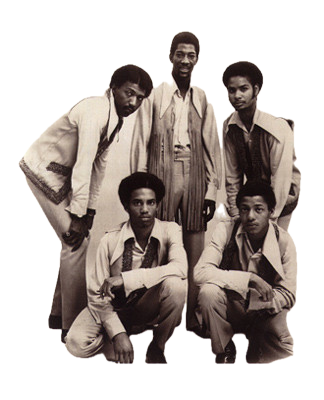
SV: So why did the band break up?
IR: We had a big concert coming up with the O’Jays and Curtis Mayfield. I walked into the house and the guys were just sitting there in the dark. They said, “We want to go home.” And that was it. Lionel Richie and The Commodores actually replaced us on that circuit.
In 1974, Raibon joined the Newport Institute of the Arts in Corona Del Mar as an original faculty member and Woodwind Instructor. His former students have since excelled across the industry as major-label recording artists, executives, producers, engineers, and conductors. From 1980 to 1985, Mr. Raibon taught instrumental music for the Saddleback School District and served as the Woodwind Clinician for the Mission Viejo High School Jazz Band, which was ranked #1 in the nation during the 1984–85 school year. He later directed the choir and band programs at Laguna Beach’s Thurston Middle School (1988–1990) before teaching at the historic Mission School in San Juan Capistrano from 1990 to 1992.
IR: During those “missing years,” I was just working. I was playing what they now call “Yacht Rock”—Steely Dan-style music that was instrumentally and vocally challenging. Then suddenly, I find out J Dilla and Erykah Badu are sampling me. Erykah took a track, and she liked it so much she used the whole six minutes and dedicated it to me. I haven’t even had the chance to thank her yet.
SV: You’ve taught music business at the high school and college levels. What is the “harsh truth” you want students to understand?
IR: That talent only gets you to the door to knock. It’s what you learn before you knock that matters. All music skills are marketable, and literacy—the ability to read music—is the cornerstone.
My ear was so good that it actually hindered my reading at first, because my brain wanted to improvise. I tell kids: if you can’t play it, it’s because you can’t sing it. If you can sing it, you can play it. Be independent. Learn the tech, learn the theory, and learn the business so you don’t have to rely on anyone else.

SV: Are you surprised “Take Me” still has such a resonance today? I still hear it and see it on funk compilations, and DJ mixes…
IR: Not really, because I always believed people would love the music if they were exposed to it.
I’m still writing. I have a new song called “Joy” on YouTube. (Raibon also has songs on Apple Music.) My message to young people is: if it doesn’t happen now, that’s okay. Just keep studying and practicing. The industry wants to put you in a box. Most executives are hedge fund people who know nothing about music. But if you keep your skills sharp, you’ll always have a place.
SV: Thanks so much, Ira!
IR: Take care. Thanks Justin.
Leave a Reply
You must be logged in to post a comment.