
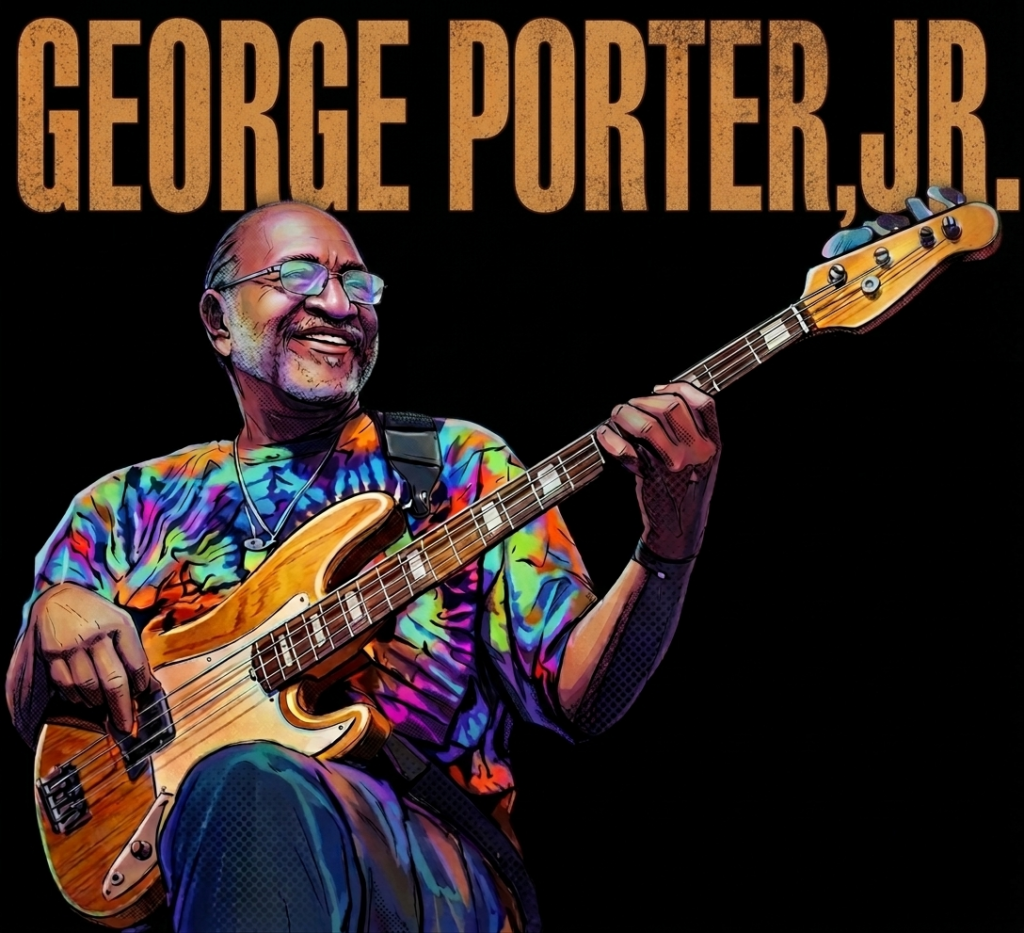
George Porter Jr. traces his evolution from a young classical guitar student to a pioneer of New Orleans funk, detailing the chance encounters and deep-seated grooves that defined the legendary sound of The Meters.
George Porter, Jr.: I got an acoustic guitar for my eighth birthday, and the deal with my mom was that I had to take lessons—formal lessons. So I went to a gentleman named Hamilton Brown, who started teaching me how to play the instrument. Because of the type of guitar my mom got me—it had nylon strings—it kind of led him toward a classical approach. He began teaching me the classical formula, the nine-finger technique. Actually, yeah, it’s really nine fingers—the thumb on that hand doesn’t really do much.
So I was learning that nine-finger formula for classical guitar. But the songs I was playing were country western, cowboy songs—like “Red River Valley” and “Home on the Range”—which, at the time, seemed to make sense. I was learning how to play, I was reading music, and it all felt like it had a purpose.
But in my second year, one Saturday on my way to class, I took a different route from my house to the bus stop. On that route, I heard guitar music coming toward me as I was walking toward it. When I turned the corner, I saw a young guy and his grandfather sitting on the steps, just playing guitar.The younger one was playing the top four strings—mostly bass lines—and his grandfather was using that same nine-finger technique I was being taught.
But the songs they were playing? They were blues songs. That’s when something in my brain just snapped. I thought, That’s what I want to play—not cowboy songs, but that. Songs like “St. Louis Blues” and “St. Louis Woman.”
At that point, my guitar teacher was a little upset with me and told me I shouldn’t come back. So from there, my journey basically became spending Saturdays across the street, watching Papi and his grandfather play. Sometimes I’d bring my guitar with me, sit across the street, and just watch and listen—trying to pick up what they were doing. I didn’t know the names of most of the songs, but I was learning them by feel, learning that sound, that vibe. That was pretty much my humble start—my humble beginnings.
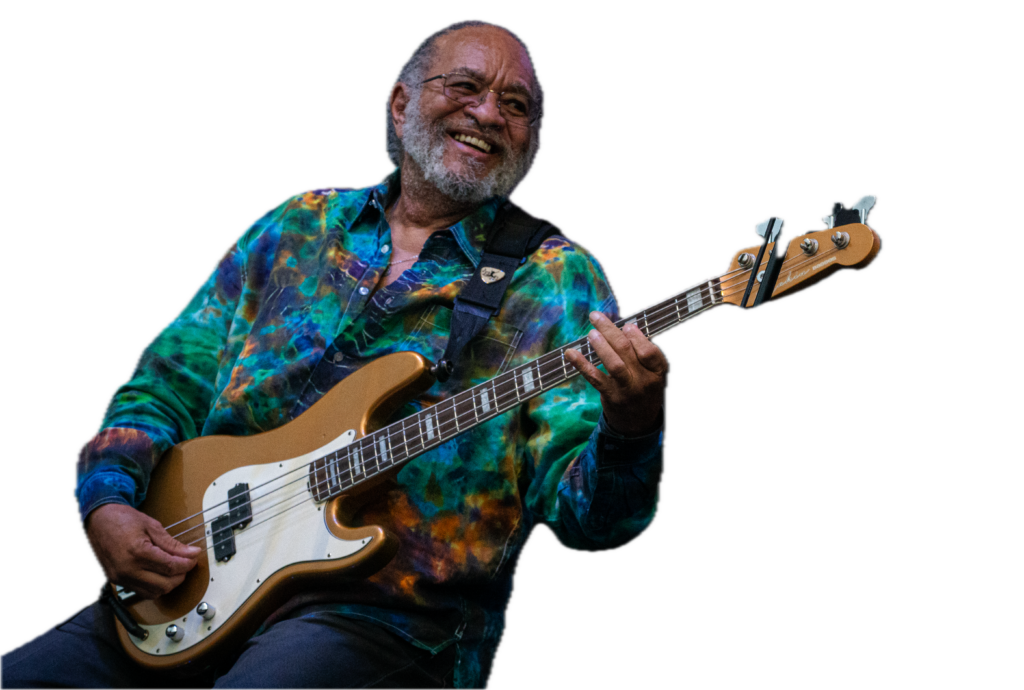
Sounds Visual: You mentioned your humble beginnings—and how lucky for you that you were born and raised in New Orleans, a city with such a rich and vibrant musical heritage. Did growing up there shape the kind of music you gravitated toward? What influence did the city itself have on your development as a musician?
GPJ: Absolutely. Absolutely. You know, one of the things I never really paid attention to when I was young—growing up on Padilla Street—was how much music was around me. Once the sun went down, my mom would always bring us inside to watch TV, so I didn’t notice what was happening outside in the evenings.
It wasn’t until a few years later that I started to realize what was going on just one corner away from my house. A group of musicians—mostly guitar players and bass players—would gather there. Sometimes there were a dozen of them, drinking beer, smoking cigarettes, and just playing music for hours.
Once my mom started giving me a little more freedom to stay out later, I’d grab my little guitar and walk down the street. I’d sit on the steps nearby and play along with them. That became a big part of how I learned—just being around that energy, listening, watching, and picking things up by ear.
SV: Is it right that your friendship with future Meters drummer Zigaboo Modeliste dated back to childhood?
GPJ: My mom knew Zig’s older brother, Clinton. Back when I was a kid—maybe six and a half, going on seven—my mom was in the Catholic school choir. One of the choir directors suggested she get her sons involved in music. Clinton, Zig’s older brother, was a violinist in the New Orleans Philharmonic Orchestra, and he also taught piano.
So my mom talked to Clinton about giving me piano lessons. I started taking lessons with him, but that didn’t last long. See, Clinton’s younger brother—Zig, or Joseph—also lived in the house, and I think he wanted more of his brother’s attention. It became this little rivalry, like a fight for supremacy in the house. Eventually, their mother had enough of the tension and shut it down.
That was around the time I found out something else. The woman who raised Zig was actually related to my grandmother. So we were always brought up as kin, distant cousins. Even though Zig’s biological parents weren’t directly related to my family, we were raised like family. Zig and I eventually figured that out—probably about ten or fifteen years ago. But by then, we had already been raised as cousins for well over forty years.
SV: Were you listening to a lot of the radio or your parents’ record collection at the time?
GPJ: When my pop wasn’t home and playing his music, we’d usually listen to whatever my mom had on. I remember at that time, she would listen to WBOK—that was the local Black radio station. I think there were only two main stations back then: WTIX, which was the white station, and WBOK, the Black station. Both stations actually played a lot of local music. WTIX would spin artists like Frankie Ford and Huey “Piano” Smith and the Clowns. Meanwhile, WBOK was playing cats like Fats Domino, Earl King, Ernie K-Doe, and Eddie Bo. Those were the guys getting real airplay back then.
For me, Earl King was the most important. He was a guitar player, and I was an aspiring guitarist at the time. What Earl King did spoke to me way more than the piano players or front-line singers. I never saw myself as a singer—I just knew I wanted to be a musician. Singing, to me, didn’t seem like it was part of that path.
As a teenager, I actually got to play with Earl King at frat parties. There was this guitarist named Herbert Wing who had a band called the Royal Knights. They’d get hired to play frat houses over on Broadway Street. And those gigs would often include Earl King, Eddie Bo, Tommy Ridgley, Ernie K-Doe, Benny Spellman—all of them. That’s how I got to play with those legends—through my relationship with Herb Wing.
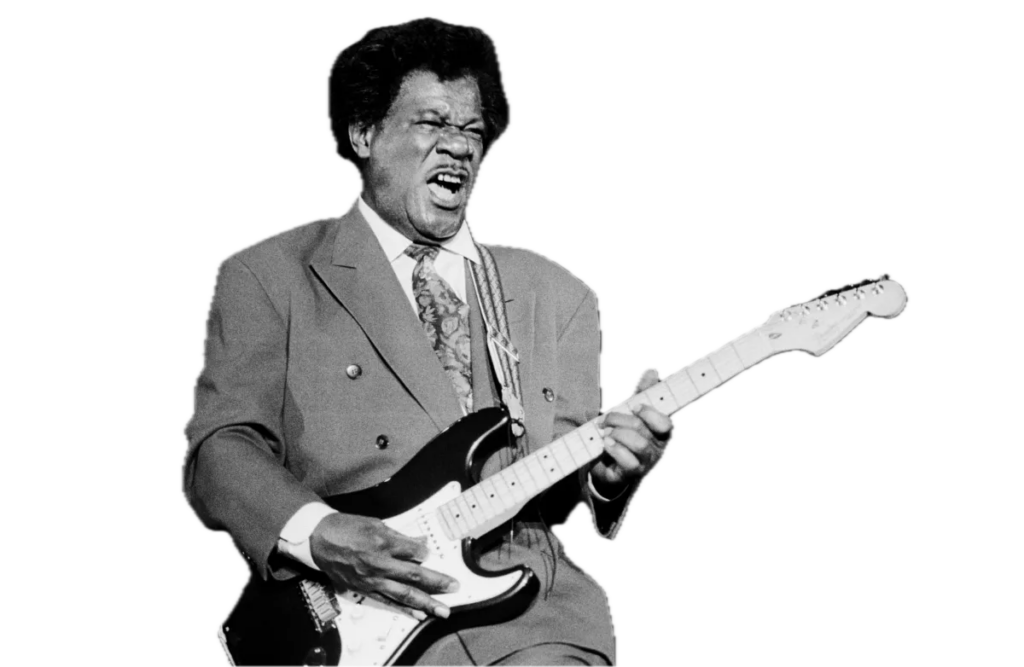
Above: Earl King.
While playing around New Orleans, Porter was called in to sub on a gig with keyboardist Art Neville—who would later become his bandmate in The Meters.
GPJ: Herbert Wing sent me to sub for him one night. Earl—Earl King—used to call Herb when he had gigs where he needed someone to back him up, especially if he wanted to focus on singing or soloing. Herb would usually go play those gigs with him. But on this particular night, Herb already had a frat party booked, so he couldn’t make it. He felt confident enough in my rhythm guitar playing to send me in his place.
So, he sent me to do the gig with Earl. It was at a place—I think it was called the Mass Lounge, a bowling alley that had a bandstand above the bar. The band would play while people bowled. Earl actually came by my house to ask my mom if I could do the gig, and she said okay.
I went and played that night, but the bad part was… well, Earl wasn’t really a soloist on the piano. He could play well enough to accompany himself while singing, but he relied on the guitar player to take the solos. Every time he turned to me for a solo, I told him, “No, man, I don’t solo. I can’t solo.”
And that went on for most of the night. After the gig, he didn’t say a word on the ride home. But once we got near my house, he looked at me and said, “Man, you’re the worst guitar player I ever heard.” At that point, I figured he’d never call me again. And, you know, Earl was kind of famous to me. So I just figured that was it. But by that time, I had already gotten pretty good at playing bass, and I could play drums decently too.
There was this guy named Irvin Bannister—his claim to fame was that he played guitar on Danny White’s “Kiss Tomorrow Goodbye.” Irvin had a gig at the Cindy Club, which was across the street from a place called Charlie’s Corner. Charlie’s was right there on the corner of Galvez and Washington. The Cindy Club was halfway down the block between Washington and either Third or Fourth Street.
Charlie’s was kind of a secret club. You didn’t need a key, but they had a little slide window at the door. The doorman would peek out, and if he knew you, he’d let you in. Fats Domino used to hang out at Charlie’s a lot. He’d get a few drinks in him, and next thing you know, he wanted to play. So he’d cross the street to the Cindy Club and sit in on Irvin’s set.
As soon as Fats walked in, the regular piano player would just get up—he knew what was about to happen. Fats would take over. That happened a couple of times a month. One night, Fats came in—and Earl came with him. By then, I was playing bass with Irvin. Earl stayed for the whole set, and after it was over, he came up to me and said, “Now that’s the instrument you ought to be playing.” Then he asked me if I was interested in a gig. He said he had something I might do well with.
That gig turned out to be at a club called the Nightcap. The band was Earl on vocals, Leo Nocentelli on guitar, Gary Brown on tenor sax, a drummer named Glenn—I never could remember Glenn’s last name—and me on bass. We were a five-piece. But Glenn had to have a minor surgery that took him out for about two weeks. So Earl brought in Zigaboo, who at that time was the drummer for Deacon John’s band, to sub in.
We played Thursday through Sunday every week. Then that second Sunday, Glenn came back just to check in and let Earl know he was ready to return. But when he heard Zig play, he turned to the club owner—who was also the doorman—and said, “Man, I’m not getting this gig back.” And that was that.
The five-piece band moved from the Nightcap to a spot in the French Quarter. Gary stayed with us for a few months, but he and management didn’t really get along, so he eventually left. Then it became a four-piece: Zig, Leo, Earl, and me.
That’s when Allen Toussaint started paying more attention. He used to come see us at the Nightcap, but once we were in the Quarter, he’d show up more often. He wouldn’t come into the club—back in those days, you could still park on Bourbon Street—so Allen would pull up in his big Cadillac and just sit outside. The doorman would tell us during our break, “That man in the Cadillac was out here again.”
Eventually, Earl got a call from Marshall Sehorn, Allen’s partner, saying that Allen wanted the rhythm section to come to the studio and cut some tracks. So we did. And, well… the rest is in the history books.
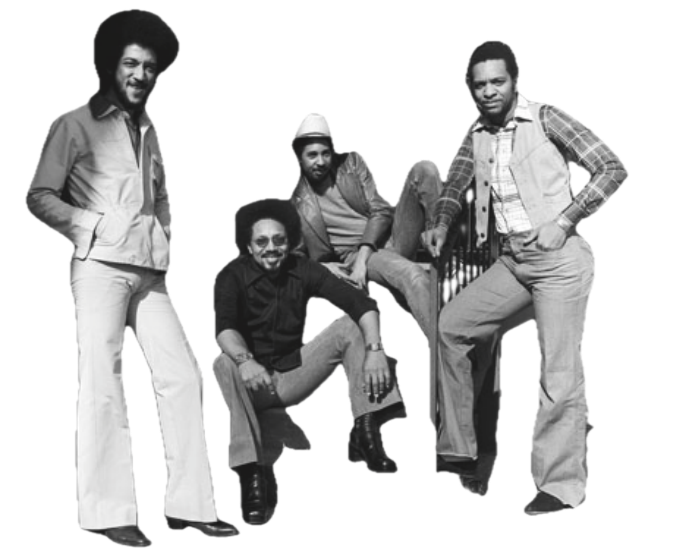
SV: George, once the lineup was firmly in place with you, Leo, Zig, and Art, was the chemistry pretty much instantaneous?
GPJ: I don’t know how instant it was, you know, the chemistry—but it was definitely happening, especially because we were playing so many nights a week. At the Nightcap, we were doing four nights a week. Back then, we were pretty much a cover band.
We played a lot of New Orleans stuff—Earl King tunes, Ernie K-Doe songs, that kind of thing. But we also stretched out. We’d do stuff by The Fifth Dimension, some Wes Montgomery pieces… we were kind of all over the map musically. Whatever Arthur—Art Neville—wanted to throw in, we’d figure it out.
Now, Art wasn’t really into a lot of the songs he had recorded early on, especially the stuff from his Specialty label days. He felt like he got burned by the record labels, so he didn’t have a whole lot of love for that material. He was big into doo-wop, though. He loved that stuff. So we’d play songs by Johnny Ace and other doo-wop cuts he liked. And we were just playing so much together, so often, that we really started to move as one unit.
Thing is, we didn’t rehearse much. Maybe Thursday afternoon before our weekend gigs, we’d get together if someone had a new song they wanted to try. Art would sing it down, and we’d just figure it out from there.
But really, most of what we were playing came from what we called “common knowledge”—songs we had all grown up hearing, stuff that was just in us already. And what made it special was how we played those songs. Our own interpretation, our own feel.
I think that’s what Allen Toussaint picked up on. He saw how we moved through the music together—not just playing the notes, but listening to each other. We were always locked in. It was never just going through the motions. We were paying attention, musically tuned into one another. That’s what made it work.
SV: At what point did you guys officially become known as “The Meters?”
GPJ: We didn’t actually become The Meters until probably about a year into our relationship with Allen Toussaint. I think it was around the time of Lee Dorsey’s second record. Before that, we were just the studio band—no name, just the rhythm section.
I wanna say we did a whole string of 45s for Lee. Track after track. That’s really where it started to come together—our sound, our identity. But the name “The Meters” didn’t come right away. That came later.
Allen would come in and we’d track with him. Sometimes, we might be in the studio with him for nine, ten, even twelve hours. You know? And then he’d just leave, and Marshall—Marshall Sehorn—would say, “Okay, guys, he’s done for the day. Y’all can go.” But this one particular day, instead of using the talkback mic, Marshall actually came into the studio and said, “Why don’t you guys just lay down some tracks? Just cut something—play whatever you feel. Let’s see what you’ve got.”
So at that point, we had this—I think it was kind of a sophisticated groove we used to play during our breaks at the Ivanhoe. You know, when it was time for us to take a break, we’d always play that groove, just messing around. And we kind of built off of that and it became “Sophisticated Cissy.” That became one of the tracks we cut.
”Cissy Strut” was [another] one of those tracks. Now, if I remember correctly—and I think I’m right about this—I believe the lick for Cissy Strut was something Zig [Zigaboo] came up with in the studio that day.
“Here Comes the Meter Man” was another one of those tracks that came together in the studio. Zig just started playing a groove on the drums, and then Leo came up with these two licks—and boom, there it was. The song titles didn’t even exist at that point. We hadn’t named anything yet. They were just labeled “One,” “Two,” “Three,” and “Four.”
About two weeks later, Marshall called us into the office and put a contract down on the table in front of us. He said, “So guys, why don’t y’all sign this?” And then he handed us each a check for twenty grand. I’ll never forget that—that was the most money I’d ever seen on paper that was gonna be mine.
So, you know, it wasn’t even something I thought about. I just signed the paper. I don’t think any of us actually read it. And even if we had, there were so many “herebys,” “therefores,” and legal terms in there, we wouldn’t have understood what it meant anyway.
They made sure we never even thought about getting a lawyer to look at it. That was just the nature of the beast back then—that was the business era we came up in.
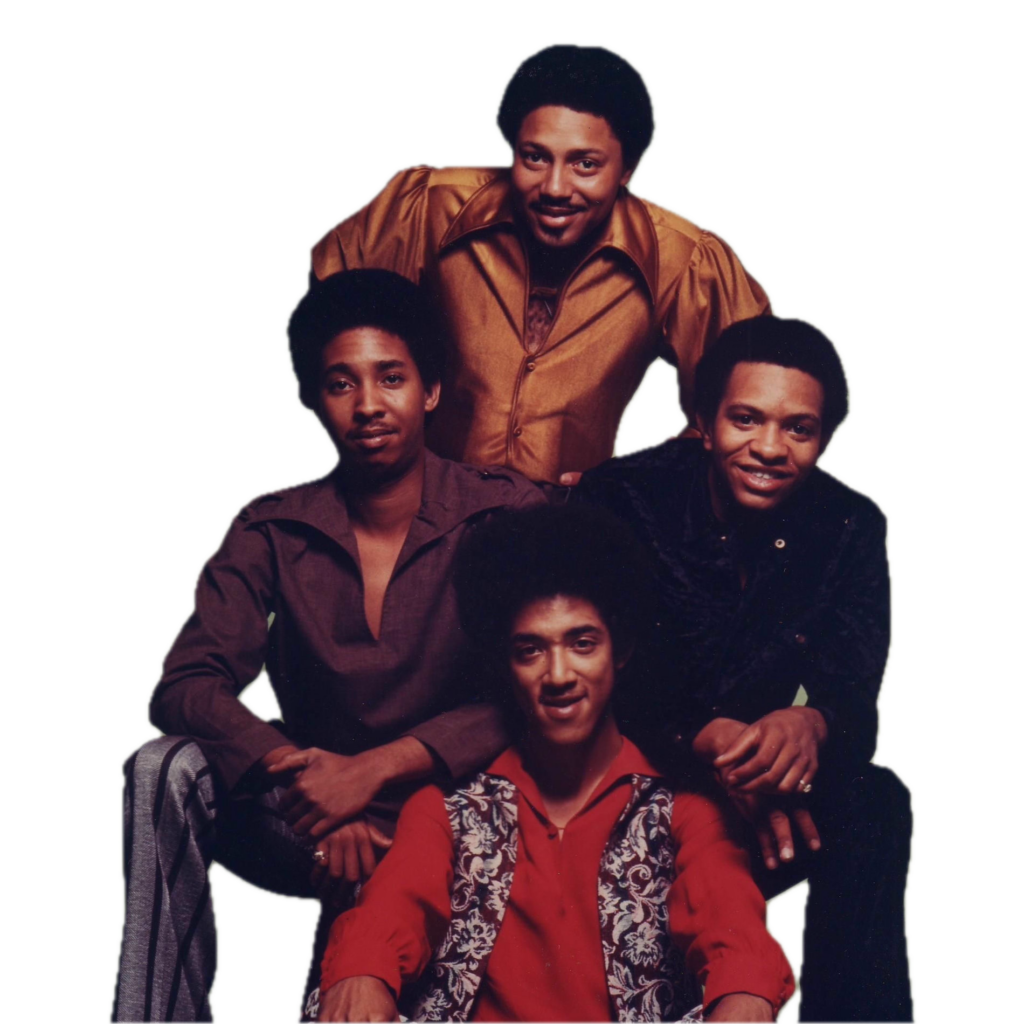
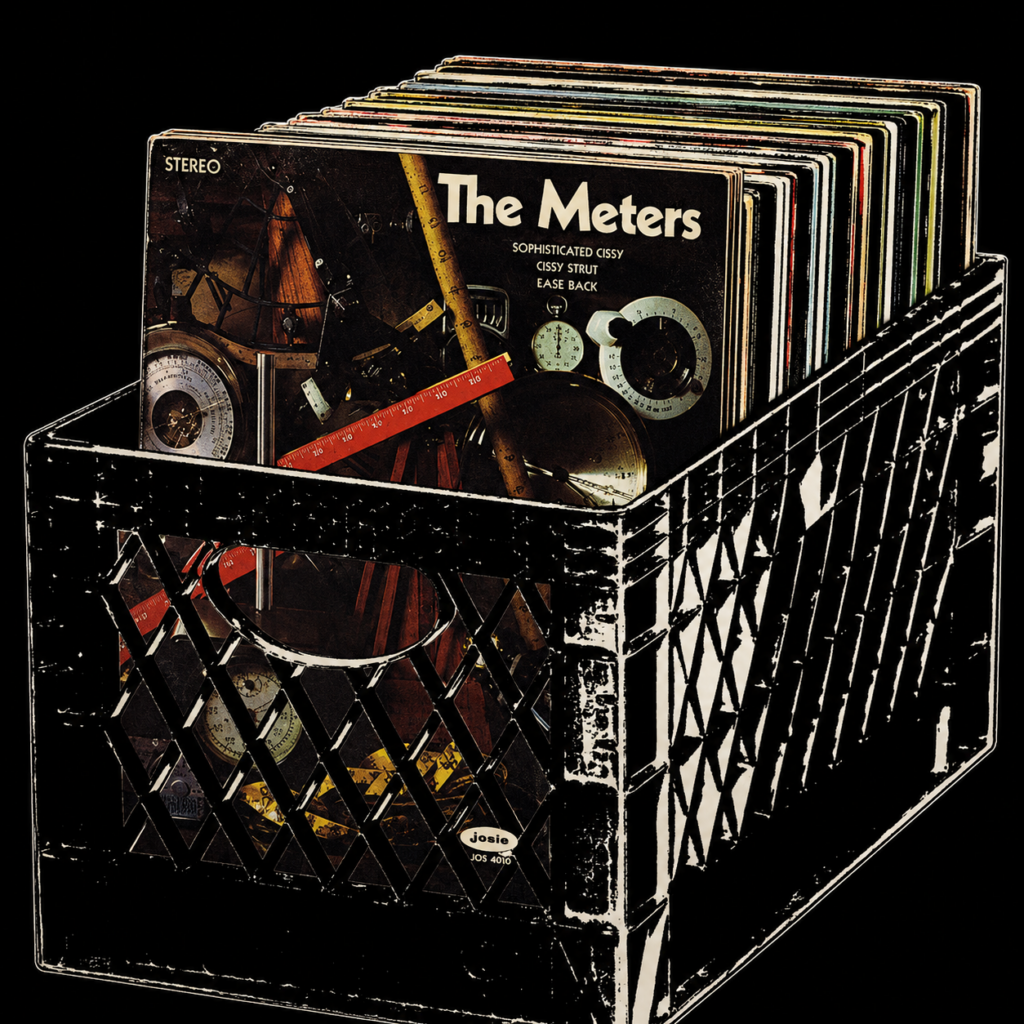
The Meters’ 1969 self-titled debut album introduced their signature blend of tight, syncopated funk and New Orleans rhythm, anchored by George Porter Jr.’s deep grooves and Zigaboo Modeliste’s inventive drumming.
SV: Zig once described the Meters songs as “sound bites…entries of different grooves, and different ideas about grooves.” I love that.
GPJ: Oh, absolutely. You know, when we cut those tracks for the first record, we weren’t thinking ahead like that. There wasn’t any time or space to do overdubs. What you played in that moment—that’s what ended up on the record.
I always felt like those songs were kind of like platforms, you know, like beds for melodies to be built on top of. I think Leo said something similar once—that we were laying grooves that left space for something else to happen over them. And over time, the hip-hop community really embraced a lot of that music—especially from that very first record.
The Meters’ second album, “Look-Ka Py Py” (1969), solidified their reputation as pioneers of funk with tighter arrangements and greater instrumental interplay. George Porter Jr.’s bass work on the record is especially notable—melodic, precise, and deeply rhythmic, it became a defining element of the group’s sound and a major influence on funk and soul bassists. They followed this with 1970’s “Struttin’,” the first album of theirs to feature vocals on classic tracks like “Hand Clapping Song.”
Released in 1972, “Cabbage Alley” marked The Meters’ first album on Reprise Records and showcased a broader musical palette, incorporating elements of rock, reggae, and psychedelic funk. The album highlighted the band’s evolving sound and featured George Porter Jr.’s fluid, expressive bass lines as a driving force throughout.
GPJ: I think that was the point when we really abandoned the idea of being an instrumental band and shifted toward being a vocal group—trying to highlight Art Neville’s vocals more than we had on the previous three records.
Now, it wasn’t that I didn’t wanna hear Art sing—I did. But I wasn’t comfortable with totally stepping away from the instrumental grooves we had built. I felt like those pockets we created—that was our strong suit.
But I think Leo and Zig were looking at what was happening around us. You know, bands that used to open for us were suddenly topping the charts. And there was this feeling like, “Man, we’re not using all our tools.” But the truth is, it wasn’t really about us—it was about the management.
We gave management the music. They were the ones who chose how to use it. And I think that’s ultimately what kept us from being able to really compete in the popular music world.
Released in 1974, “Rejuvenation” is considered one of The Meters’ most fully realized albums, blending deep funk with swamp rock, Mardi Gras, country, gospel, soul, and–of course–classic New Orleans R&B. George Porter Jr.’s bass playing is at its peak here—locked-in, melodic, and relentlessly funky—helping to create timeless tracks like “Just Kissed My Baby” and “It Ain’t No Use.”
GPJ: Well, I mean, “Rejuvenation” was absolutely our strongest effort—going in, and even through the production. The band actually had hands-on involvement almost all the way to the end of making that record.
We were working in a studio here at home that we had daily access to. So, for once, management—Marshall Sehorn—couldn’t just take the tapes, go off somewhere, work on it without us, and then come back with, “Here’s your new record.” That’s what had happened on the previous four albums.
This time, Leo, Zig, and I—and I’d say Art, too—were seriously involved in the day-to-day process. So, yeah, as far as I’m concerned, “Rejuvenation” stands as one of the best recordings we had made up to that point.
SV: “Just Kissed My Baby” is just incredible. What a groove.
GPJ: That was Zig’s idea—he wrote Just Kissed My Baby. He had a specific pocket he wanted to play, and he kind of laid out the rhythmic feel to Leo. Leo mapped it out, and Zig made a few tweaks to what Leo came up with.
With Art, though, nobody really ever told him what to play. He just had a knack for knowing exactly what the song needed—it was always like, “Leave Art alone, he’s gonna handle it.”
The real magic of “Just Kissed My Baby” was the space. That bassline—that was it. It was all about the space we left. Allen Toussaint used to always say, “It’s not what you play—it’s what you don’t play.”
SV: What can you tell me about “It Ain’t No Use?”
GPJ: That was Leo Nocentelli’s song, all the way through the jam section at the end—it was pretty much his full vision. He even pushed Art to sing it a certain way, telling him, “Don’t sing it how you’d normally sing it—do it like this.” He pulled Art out of his comfort zone to get a different kind of vocal performance. That kind of approach—getting people to stretch beyond what they’d usually do—we learned from watching Alan Toussaint. He was a master at that.
During this period, the Meters also served as in-demand session musicians, contributing to major hit records like “Right Place, Wrong Time,” “Lady Marmalade,” “Sneakin’ Sally Through the Alley,” and “Southern Nights.”
Despite the warm critical reception of albums “Rejuvenation,” and the follow-up “Fire on the Bayou,” [1975] neither album sold particularly well–and Porter–along with the band–entered a darker period.
GPJ: At that time, I was deep into cocaine and drinking, so even though there was good music being made, I was pretty hands-off. That was a rough chapter in my life. Thankfully, I made it through and have been sober now for over 32 years. Looking back, I think the worst part of those years was that I just eliminated my own voice. I didn’t offer an opinion or push back, and that silence may have played a part in the band eventually falling apart—there was no voice of reason in the mix.
In 1975, Paul McCartney invited The Meters to perform at the release party for his “Venus and Mars” album, held aboard the Queen Mary in Long Beach, California.
GPJ: We got the Queen Mary gig because of a party thrown after Paul McCartney recorded his Venus and Mars album in New Orleans. There was a celebration on a riverboat, and The Meters played. The Who’s Who of New Orleans entertainment was there—Earl King, Ernie K-Doe, everybody. Paul had a great time, and he’d always been a fan of The Meters, so it felt natural for us to be invited later to perform at his birthday party on the Queen Mary in California.
That night was recorded on a 16-track. Art Neville and I each had a cassette copy of the show. Unfortunately, Art’s copy was stolen, andsomehow that recording was mastered and released as “The Last Night on the Queen Mary”—apparently with our management’s knowledge, but without Paul’s permission.
McCartney’s people were furious. It effectively ended our relationship with him and Linda. We had been close—we used to get birthday and Christmas cards from them—but after that record came out, I never heard from them again. And to make it worse, we never got paid for that release. It was a heartbreaking loss of a great friendship, all because management went behind their backs.
Mick Jagger of The Rolling Stones reportedly attended the Queen Mary gig and was deeply impressed by The Meters and their distinctive sound. Following the event, The Rolling Stones invited The Meters to join them as the opening act on their 1975 Tour of the Americas and their 1976 Tour of Europe.
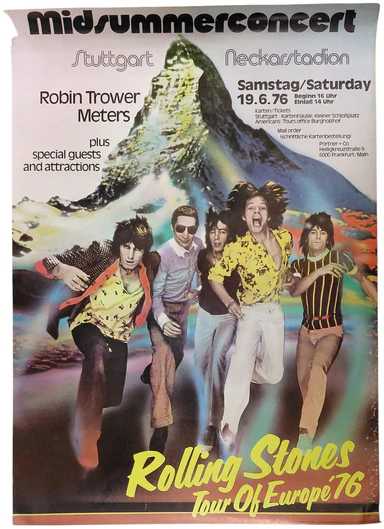
GPJ: The story I heard was that Ronnie Wood and Keith Richards were the ones who made it happen. They were both big fans of the band, and since the tour was kicking off in New Orleans, they said, “If we’re starting in New Orleans, we need to have The Meters open the show.”
So we got the opening slot for the first night of the tour in New Orleans—and ended up doing 13 shows at the start of the tour. We got some great exposure and some really nice press. I remember one Baton Rouge paper wrote something like, “The Stones finally found an opening band that makes them come out and play.”
Porter has described one of the most defining moments of his musical career as performing with The Meters while opening for The Rolling Stones in Paris in 1976. When the crowd began to boo, Keith Richards and Mick Jagger stepped onstage to show their support, telling the audience to be quiet and listen—an intervention Porter credits with helping sustain the band during that period.
GPJ: Yeah, that was in France—on the ‘76 tour. And, man, France did not care to hear anything from us. They didn’t want to hear nothing but The Stones. We were overdressed, looking too sharp, and they weren’t having it. We’d hit the stage, and they just wanted us off the stage.
The Meters’ final two albums, “Trick Bag” (1976) and “New Directions” (1977), reflected the band’s efforts to evolve their sound amid changing musical landscapes, incorporating funk with elements of soul and disco. While both records showcased their signature grooves and tight musicianship, they also revealed the pressures the group faced as they navigated commercial challenges and internal shifts. These albums marked the closing chapters of The Meters’ original run before their eventual disbandment.
GPJ: After the “Trick Bag” album, we basically set up in the studio together, all of us in the main room, and tracked the whole record live. We didn’t isolate much because we wanted it to sound like we were all playing in the same room. That was the vibe we were going for.
But after “Trick Bag,” with the “New Directions” record, the band was really unhappy with management at the time. We decided not to do any more sessions, which created tension with management. Allen Toussaint was listed as our producer, but he didn’t actually touch our music. I think he did some horn arrangements on “Rejuvenation,” but he never guided the music or made production decisions. We felt frustrated because he was taking credit for something he didn’t do.
We were always over budget, and the label kept charging us for it, which didn’t make sense since Allen wasn’t producing. So the band decided no more sessions — we basically walked away from that contract. Zig and Leo did some legal homework and handled the issues, though I didn’t get involved much.
A few months later, Marshall Sehorn called us in and told us the label was moving us to California to work with David Rubinson. Everyone was excited, especially Zig and Leo. I didn’t even know who David Rubinson was at the time. They told me he produced “Yes We Can Can” and a lot of important records. I mostly listened to Earl King and Eddie Bo, so I wasn’t familiar with a lot of the bigger names.
When we got to San Francisco and started recording with David, he came in after we had been setting up for about an hour and said, “I’m not exactly sure how to produce you guys because I’ve been listening to your music my whole career.” Zig and I just looked at each other like, “What are we doing here?”
But what happened next was incredible. David came in after we laid down the first track for each song and gave input, suggestions, and asked questions. He really produced the record. That was my first time seeing real production — someone guiding a self-contained band, shaping the music with us.
I remember, for example, on the song “Be My Lady,” the lick I was playing in the chorus was something David suggested. I was hesitant at first, but after playing it a few times, I knew it worked and made the song better. Every change he suggested felt positive and made the music stronger. I really enjoyed that experience.
Unfortunately, as we were finishing the record, the tour manager, Rupert Surcouf, started pressuring Art Neville to sign a new contract. He threatened that if Art didn’t sign, he would leave the band to start a new group with his brothers. Art signed, and then the rest of us were handed contracts too. Most of us refused to sign, having learned our lesson about contracts and not wanting to sign something without legal review.
I ended up quitting the band after that “New Directions” session. The record label, seeing our division, basically pulled the plug on the band. We were supposed to perform on Saturday Night Live to promote the record, but when Cyril didn’t show and Art quit, the band wasn’t the same. The performance wasn’t terrible, but it wasn’t great either. The keyboard player filling in for Art was in a tough spot, and the label stopped promoting the album. The record just died on the shelf.
SV: George, let’s go briefly rewind and talk about some of these other classic records that the Meters were featured on as the studio band. Tell me about “Right Place, Wrong Time” by Dr. John.
GPJ: It was a fun session. I remember watching Allen Toussaint take Dr. John out of his comfort zone. He pushed him to make music that was totally different from his usual “Night Tripper” style—the loose, raw stuff he was known for.The label had sent Mac down to work with Alan because they believed there were songs in him that needed to come out, something more polished, more commercial. They were looking for a hit record from Dr. John, and honestly, I think they got what they were after.
SV: How about Labelle’s “Lady Marmalade?”
GPJ: Those were good sessions, but they were also tough. We actually went through three drummers during that time. Zig and Allen had stopped talking to each other—there was no communication, not even musically. So Allen brought in a second drummer, James Black. But again, there was a disconnect—no real communication happening there either. Eventually, Herman Ernest was brought in as the third drummer on the session.
SV: You guys also worked on Robert Palmer’s “Sneakin’ Sally Through the Alley” record.
GPJ: Well, you know, I have a love-hate relationship with that record. I understand there’s a new reissue that actually credits The Meters for being on it—but the original release? Nothing. No mention of us at all.
And the truth is, The Meters basically produced that record. Robert came in with his guitar, played a riff, said, “This is my song,” and we built the rest from there. We wrote all our own parts—there were no instructions from Allen Toussaint or anyone else. I think Toussaint may have been hands-on for just the first three songs that were tied together, but beyond that, it was all us. Robert left New Orleans, I think, with a bad taste in his mouth— some anger, maybe. I don’t know for sure. Once I laid my parts down, I was out. I didn’t stick around to deal with any of that.
When he came back to do the second record—sent again by the label—we sat there with our arms folded. I remember saying clearly, “I’m not writing another record for you that’s gonna succeed and then have you act like we weren’t even there.”
So, yeah—that whole thing went up in smoke. I don’t think we ended up cutting anything for that second one.
SV: Another great one is Albert King’s 1978 LP, “New Orleans Heat.”
GPJ: Well, the only thing I really remember about that record is this one moment with Albert and Leo. See, Leo played a lick that Albert had been playing—and the next time we ran the song, maybe the second or third take, Albert didn’t play it. So when it came around again, Leo jumped in and played that lick.
Albert got really upset with Leo. He said, “There’s only one soloist on this gig.” And he meant it. I mean, when a big guy like Albert gets mad, you notice. He was pissed that Leo played his part. It definitely caused some tension in the room.
Following the breakup of The Meters, George Porter Jr. remained deeply active in the New Orleans music scene, forming the band Joyride and collaborating with numerous local artists throughout the 1980s. In 1989, he reunited with Art Neville and Leo Nocentelli as The Meters, with Russell Batiste Jr. replacing Zigaboo Modeliste on drums. This group evolved into The Funky Meters in 1994, joined by guitarist Brian Stoltz and later Ian Neville, continuing to perform into the 2010s.
Porter also founded The Runnin’ Pardners in 1990, a band still active today, and became an in-demand session bassist, recording with artists such as David Byrne and Tori Amos. The original Meters occasionally reunited, most notably for a 2000 one-night show in San Francisco and a 2005 performance at the New Orleans Jazz & Heritage Festival. In 2011, they played Bonnaroo and the Voodoo Experience, and in 2012 Porter joined Nocentelli and Modeliste to form The Meter Men with Phish’s Page McConnell, performing nationally through 2015. As of 2017, The Funky Meters continued to tour regularly, while The Original Meters performed selectively—their final show with all founding members taking place at the Arroyo Seco Festival in Pasadena, California on June 25, 2017.
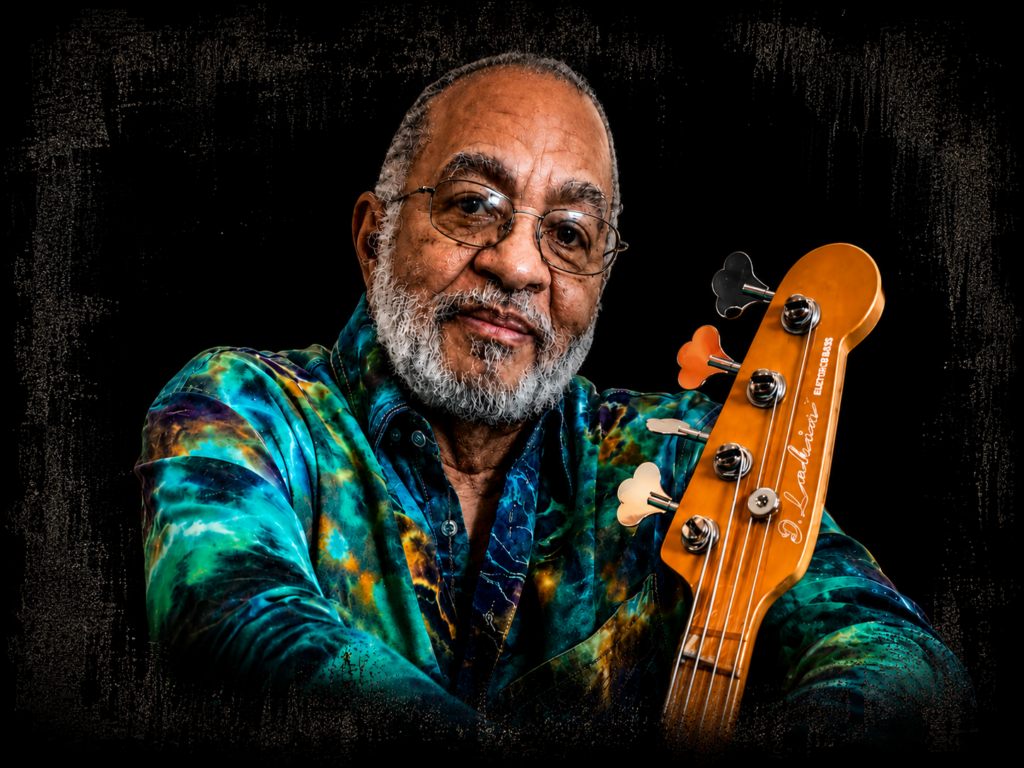
SV: I was fortunate enough to catch the reunited lineup play at the Hollywood Bowl circa 2006.
GPJ: Oh yeah. A few years ago, I went to the guys in my band, the Runnin’ Pardners, and told them I was getting frustrated with the Meters reunion shows. Every time we did one, we’d play the same 15 songs—great tunes, sure, but we had over 70 others we never touched. That really bothered me. At one point, I even declined a reunion because I didn’t want to play “Cissy Strut” or “People Say” again unless we were also willing to dig deeper into the catalog.
When I started focusing on my own music with the Runnin’ Pardners, I moved away from the old Meters stuff. I wanted to write and perform songs that meant something to me, not just play the hits for a paycheck.
But one day at home, I started revisiting those early Meters albums—listening back to back—and I realized there were so many tracks we recorded but never played live. I picked out 27 songs that deserved to be heard again.
I sent those to my band, and we decided to record some. We tracked 16 of them, and 14 ended up on a record. The other two we gave away as downloads on my website. Even after recording them, we hadn’t played some of them live, partly because a few younger players had trouble finding the “one.” That’s where the groove lives. But eventually, thanks to the encouragement of my young guitar player, we brought them into the set—and now we’re finally giving that overlooked material the spotlight it always deserved.
In 2021, Porter and the Runnin’ Pardners released the album “Crying for Hope.”
GPJ: “Crying for Hope” came together during the pandemic, when we were all stuck at home with nothing to do. One day I went into the studio and started listening to some recordings from 2017 with my original Runnin’ Pardners lineup, back when Brent Anderson was still on guitar. I really liked what I was hearing and called up Mike Lemmler, our keyboardist, and said we needed to revisit those sessions—this time with Chris Adkins on guitar. Mike figured out how to make it work through the cloud, so I upgraded my Pro Tools, uploaded the old sessions, and we got to work remotely.
While we were reworking those tracks, I started writing new music—just playing acoustic bass in the mornings while waiting for my dog to finish her business. I’d record ideas on my phone, then lay them down in Pro Tools later. I ended up sending Mike new material every day for a couple weeks, and he helped piece everything together digitally. In the end, seven of the twelve songs on the album were brand new. I’m really proud of this one—it might be my favorite record so far. The title track opens the album and speaks to the frustration we’re all feeling, and it’s my way of calling people to pay attention and act.
SV: George, the legacy of The Meters as one of the all-time great funk bands—or simply one of the greatest bands, period—has long been cemented. Your music found a whole new audience when Meters records and drum breaks began to be heavily sampled in hip-hop. In your view, what is it about The Meters’ music that still makes it feel so fresh and vibrant after all these years?
GPJ: The music really speaks for itself. It came from great bands, especially on those first three records—they were something special. That’s where most of the sampling and spiritual energy that resonates with young people today comes from. It was all instrumental. We were just innocent musicians making honest music, and that innocence is still alive, still vibrating through the world today.
SV: George, your music has inspired for me so many years–this was such an honor. Thank you so much!
GPJ: Thank you, Justin. It was a pleasure talking to you.
__
Further listening:
The Meters: The Meters (1969), Look-Ka Py Py (1969), Struttin’ (1970), Cabbage Alley (1972), Rejuvenation (1974), Fire on the Bayou (1975), Trick Bag (1976), and New Directions (1977)
Dr. John: In the Right Place (1973) and Desitively Bonnaroo (1974)
Robert Palmer: Sneakin’ Sally Through the Alley (1974)
Labelle: Nightbirds (1974) and Phoenix (1975)
Patti LaBelle: Patti LaBelle (1977).
Albert King: New Orleans Heat (1978)
Robbie Robertson: Storyville (1991)
David Byrne: Uh-Oh (1992)
Solomon Burke: Soul of the Blues (1993)
Tori Amos: Under the Pink (1994), Boys for Pele (1996), and From the Choirgirl Hotel (1998)
Taj Mahal: Maestro (2008)
Diane Birch: Bible Belt (2009)
Ruthie Foster: Let It Burn (2011)
Devon Allman: Miami Moon (2024)
George Porter Jr.: Runnin’ Partner (1990), Things Ain’t What They Used to Be (1994), Count On You (1994), Funk This (1997), Funk ‘n’ Go Nuts (2000), Searching for a Joyride (2005), It’s Life (2007), Can’t Beat the Funk (2011), Porter’s Pocket (2025)
Johnny Vidacovich, June Yamagishi, and George Porter Jr.: We Came to Play (2003)
Porter Batiste Stoltz: Expanding the Funkin Universe (2007)
Leave a Reply
You must be logged in to post a comment.